
Your Spine and Excelsius GPS Learn about potential
Your Spine and Excelsius. GPS® Learn about potential surgical treatment options and how you may be a candidate for Robotic Navigation Assisted Surgery with Excelsius. GPS® 1
CONTENTS 1. General Spine Anatomy 2. The Healthy Spine 3. General Conditions of the Spine 4. General Surgical Treatment Options • What is Minimally Invasive Surgery? • What are the Benefits of Minimally Invasive Surgery? 5. What is Excelsius. GPS® and how does it work? 6. Why robotic navigation in Spine Surgery? 7. What to expect after surgery 2
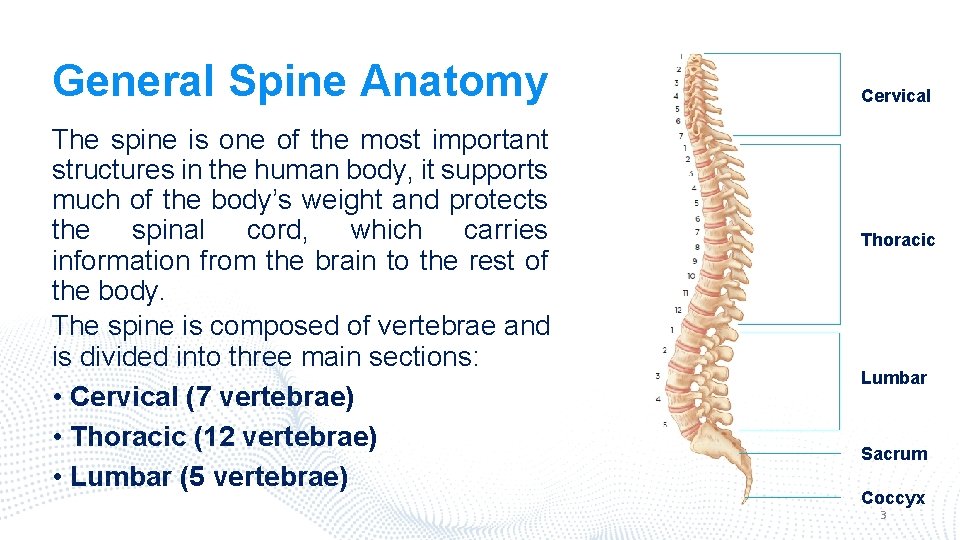
General Spine Anatomy The spine is one of the most important structures in the human body, it supports much of the body’s weight and protects the spinal cord, which carries information from the brain to the rest of the body. The spine is composed of vertebrae and is divided into three main sections: • Cervical (7 vertebrae) • Thoracic (12 vertebrae) • Lumbar (5 vertebrae) Cervical Thoracic Lumbar Sacrum Coccyx 3
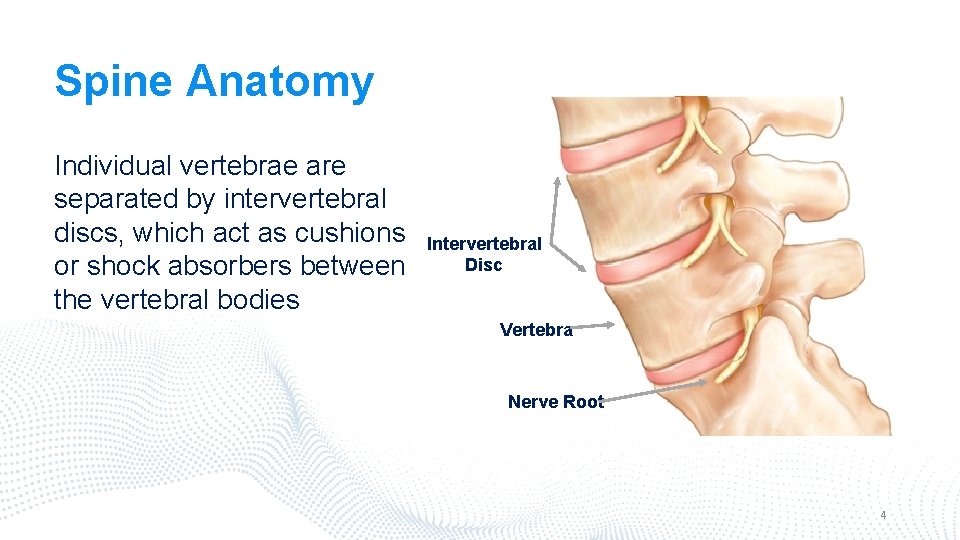
Spine Anatomy Individual vertebrae are separated by intervertebral discs, which act as cushions or shock absorbers between the vertebral bodies Intervertebral Disc Vertebra Nerve Root 4
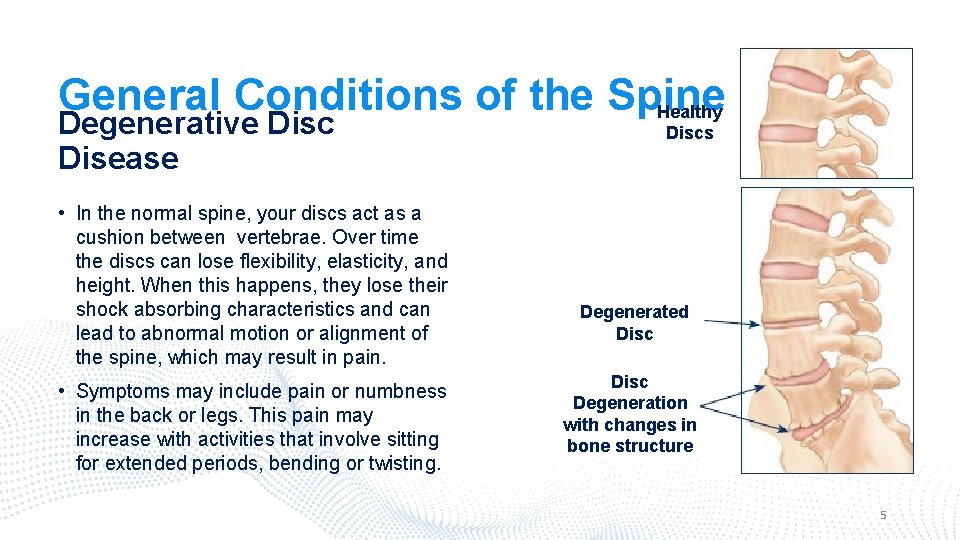
General Conditions of the Spine Healthy Degenerative Disc Disease • In the normal spine, your discs act as a cushion between vertebrae. Over time the discs can lose flexibility, elasticity, and height. When this happens, they lose their shock absorbing characteristics and can lead to abnormal motion or alignment of the spine, which may result in pain. • Symptoms may include pain or numbness in the back or legs. This pain may increase with activities that involve sitting for extended periods, bending or twisting. Discs Degenerated Disc Degeneration with changes in bone structure 5
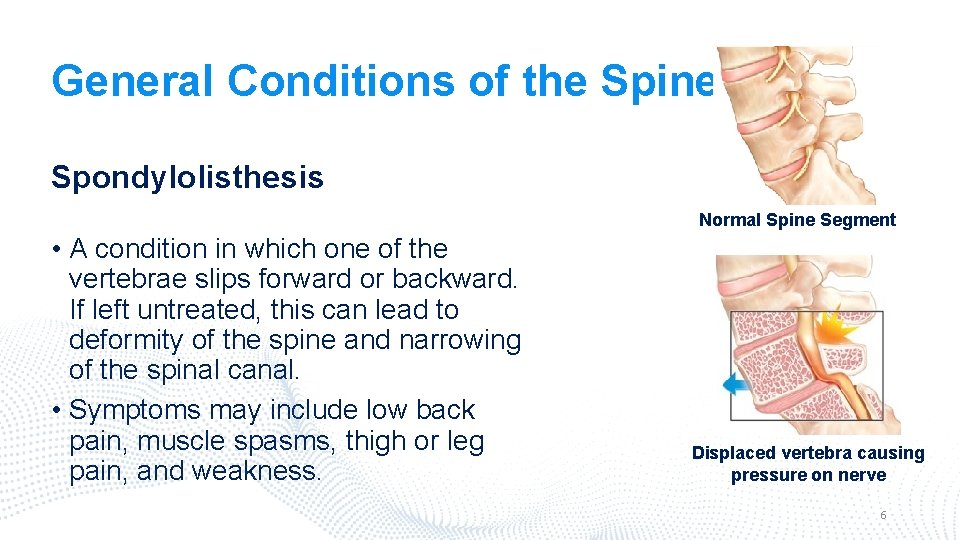
General Conditions of the Spine Spondylolisthesis Normal Spine Segment • A condition in which one of the vertebrae slips forward or backward. If left untreated, this can lead to deformity of the spine and narrowing of the spinal canal. • Symptoms may include low back pain, muscle spasms, thigh or leg pain, and weakness. Displaced vertebra causing pressure on nerve 6
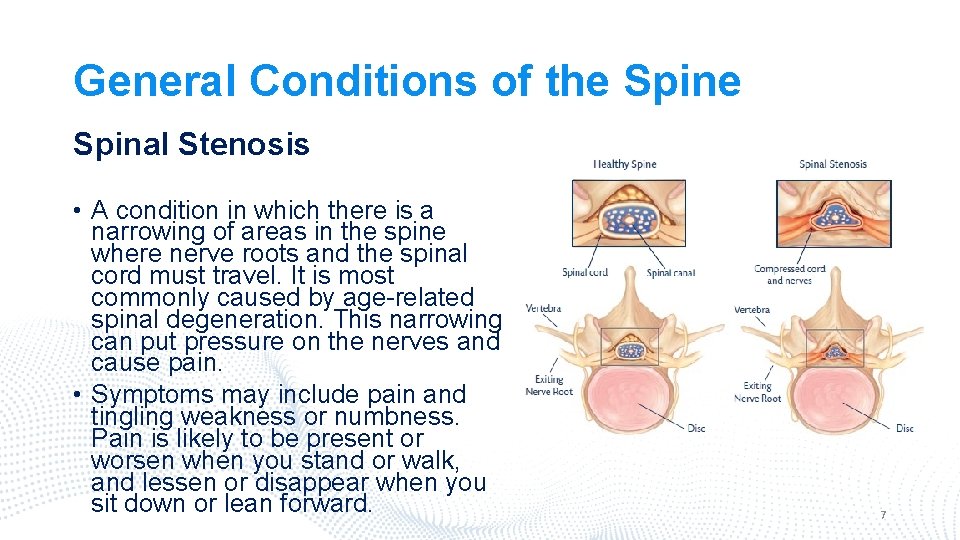
General Conditions of the Spinal Stenosis • A condition in which there is a narrowing of areas in the spine where nerve roots and the spinal cord must travel. It is most commonly caused by age-related spinal degeneration. This narrowing can put pressure on the nerves and cause pain. • Symptoms may include pain and tingling weakness or numbness. Pain is likely to be present or worsen when you stand or walk, and lessen or disappear when you sit down or lean forward. 7
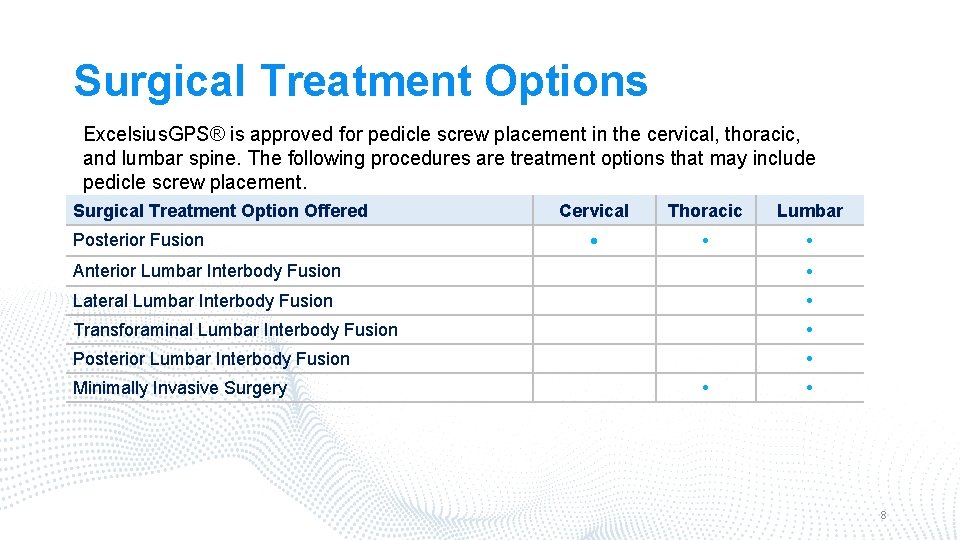
Surgical Treatment Options Excelsius. GPS® is approved for pedicle screw placement in the cervical, thoracic, and lumbar spine. The following procedures are treatment options that may include pedicle screw placement. Surgical Treatment Option Offered Posterior Fusion Cervical Thoracic Lumbar • • • Anterior Lumbar Interbody Fusion • Lateral Lumbar Interbody Fusion • Transforaminal Lumbar Interbody Fusion • Posterior Lumbar Interbody Fusion • Minimally Invasive Surgery • • 8
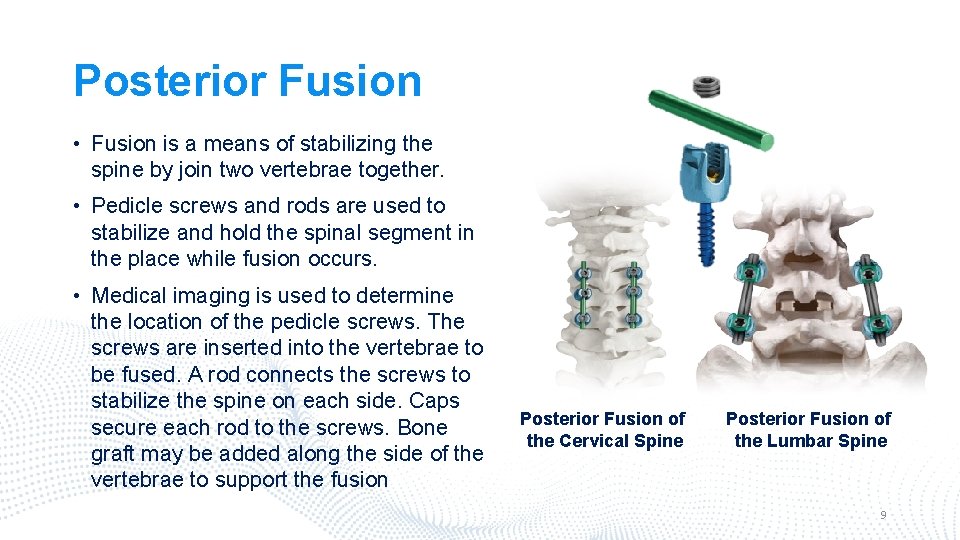
Posterior Fusion • Fusion is a means of stabilizing the spine by join two vertebrae together. • Pedicle screws and rods are used to stabilize and hold the spinal segment in the place while fusion occurs. • Medical imaging is used to determine the location of the pedicle screws. The screws are inserted into the vertebrae to be fused. A rod connects the screws to stabilize the spine on each side. Caps secure each rod to the screws. Bone graft may be added along the side of the vertebrae to support the fusion Posterior Fusion of the Cervical Spine Posterior Fusion of the Lumbar Spine 9
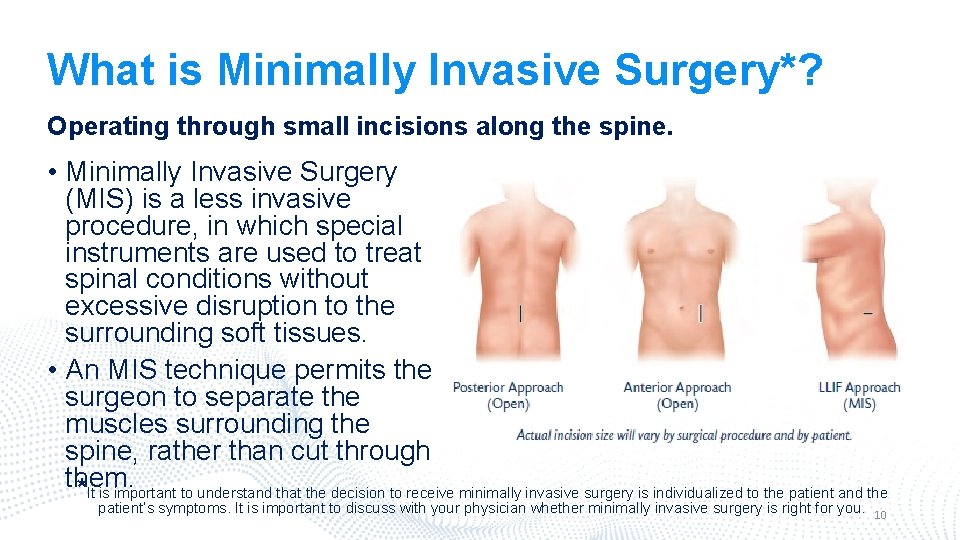
What is Minimally Invasive Surgery*? Operating through small incisions along the spine. • Minimally Invasive Surgery (MIS) is a less invasive procedure, in which special instruments are used to treat spinal conditions without excessive disruption to the surrounding soft tissues. • An MIS technique permits the surgeon to separate the muscles surrounding the spine, rather than cut through them. *It is important to understand that the decision to receive minimally invasive surgery is individualized to the patient and the patient’s symptoms. It is important to discuss with your physician whether minimally invasive surgery is right for you. 10
What is Minimally Invasive Surgery*? • Minimally invasive surgery combines your surgeon’s understanding of anatomy with x -ray imaging to treat spine conditions using small incisions. A minimally invasive technique permits the surgeon to separate the muscles surrounding the spine rather than cut through them. The surgeon operates through small incisions along the spine. • It is important to understand that the decision to receive minimally invasive surgery is individualized to the patient and the patient's symptoms. It is important to discuss with your physician whether minimally invasive surgery is right for you. 11
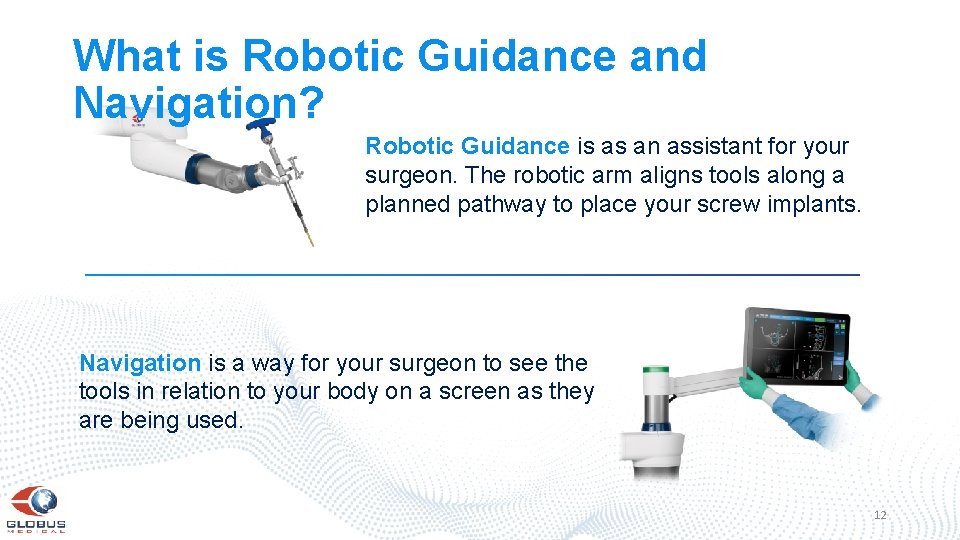
What is Robotic Guidance and Navigation? Robotic Guidance is as an assistant for your surgeon. The robotic arm aligns tools along a planned pathway to place your screw implants. Navigation is a way for your surgeon to see the tools in relation to your body on a screen as they are being used. 12
Designed to improve accuracy of screw placement and optimize your care by using robotics and navigation. Much like a GPS in your car, the surgeon plans the route to place your screw implants and Excelsius. GPS® aligns your surgeon along that pathway. 13
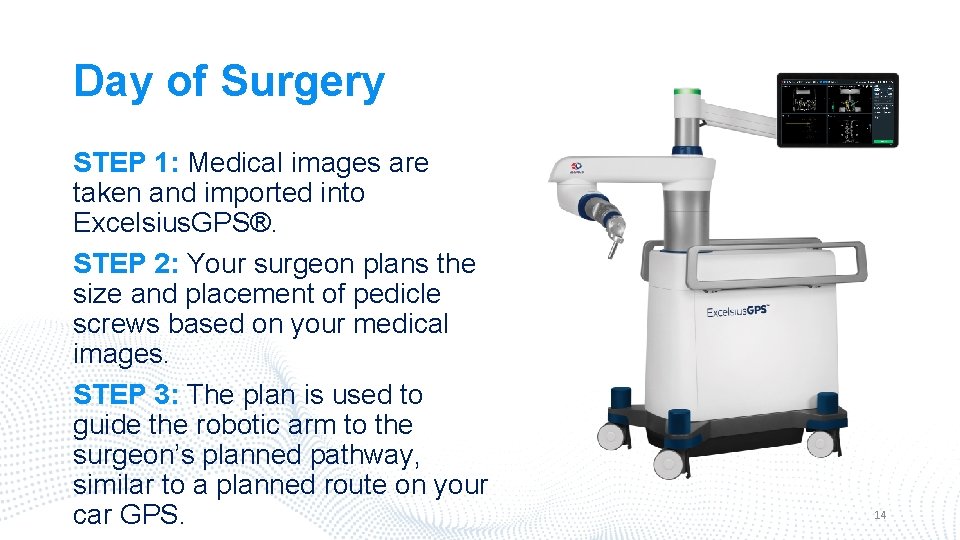
Day of Surgery STEP 1: Medical images are taken and imported into Excelsius. GPS®. STEP 2: Your surgeon plans the size and placement of pedicle screws based on your medical images. STEP 3: The plan is used to guide the robotic arm to the surgeon’s planned pathway, similar to a planned route on your car GPS. 14
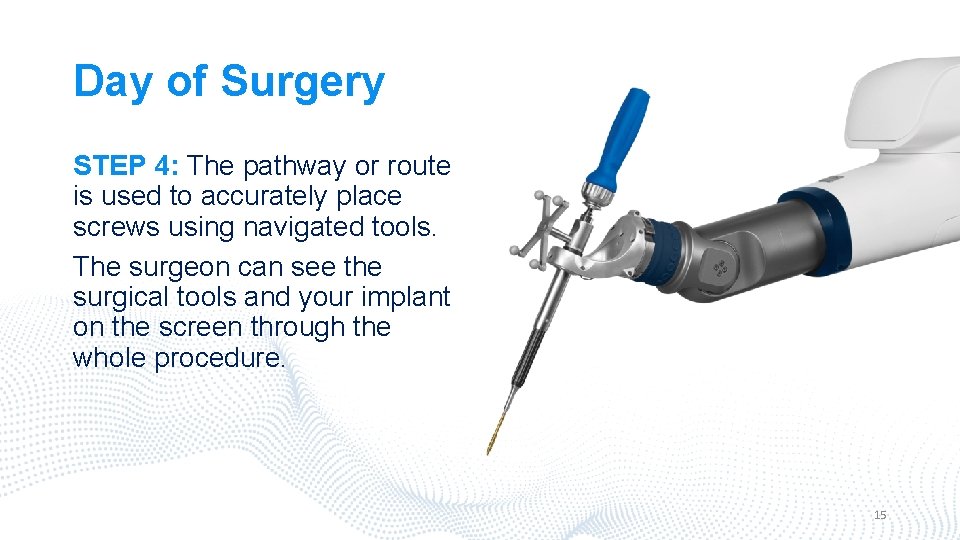
Day of Surgery STEP 4: The pathway or route is used to accurately place screws using navigated tools. The surgeon can see the surgical tools and your implant on the screen through the whole procedure. 15
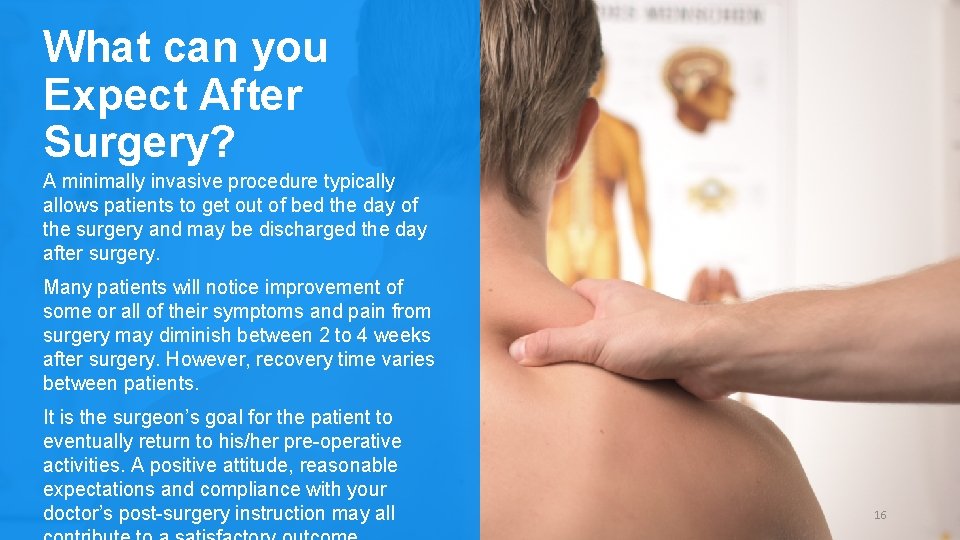
What can you Expect After Surgery? A minimally invasive procedure typically allows patients to get out of bed the day of the surgery and may be discharged the day after surgery. Many patients will notice improvement of some or all of their symptoms and pain from surgery may diminish between 2 to 4 weeks after surgery. However, recovery time varies between patients. It is the surgeon’s goal for the patient to eventually return to his/her pre-operative activities. A positive attitude, reasonable expectations and compliance with your doctor’s post-surgery instruction may all 16
Thank You Ask your surgeon if you are a candidate for Excelsius. GPS® spine surgery and how it may benefit you. For additional information about the Excelsius. GPS® system, visit www. Excelsius-GPS. com. 17
- Slides: 17