
Your senses and food British Nutrition Foundation 2010
Your senses and food © British Nutrition Foundation 2010
Our senses We all like and dislike different food and drinks. Our senses help us decide what we like and dislike. What food and drinks do you like? Why? © British Nutrition Foundation 2010
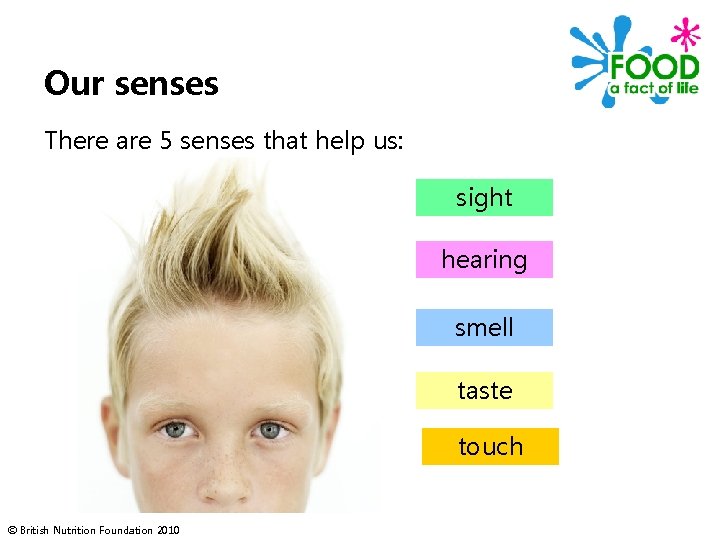
Our senses There are 5 senses that help us: sight hearing smell taste touch © British Nutrition Foundation 2010
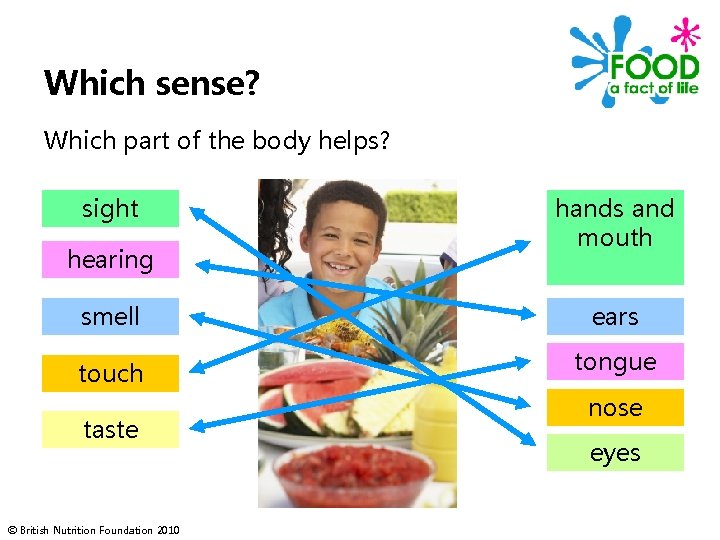
Which sense? Which part of the body helps? sight hearing hands and mouth smell ears touch tongue taste © British Nutrition Foundation 2010 nose eyes
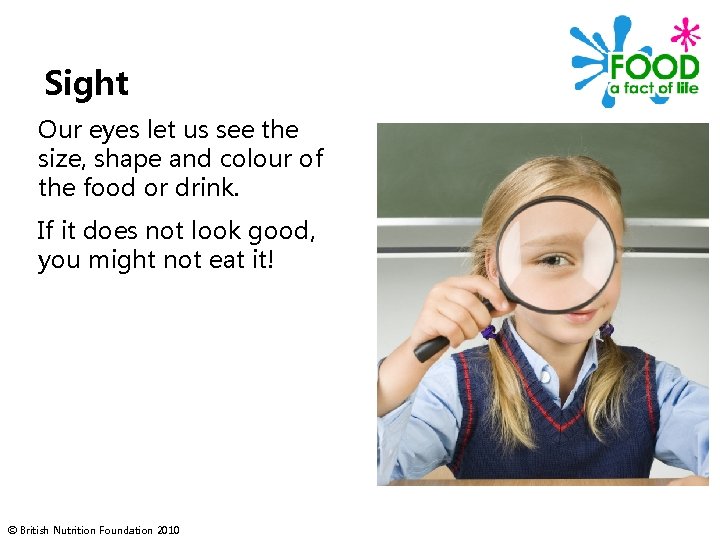
Sight Our eyes let us see the size, shape and colour of the food or drink. If it does not look good, you might not eat it! © British Nutrition Foundation 2010
Sight Helpful describing words: stringy firm heavy flaky dry crumbly flat crisp lumpy fizzy fluffy smooth hard mushy dull cuboid sticky fragile © British Nutrition Foundation 2010
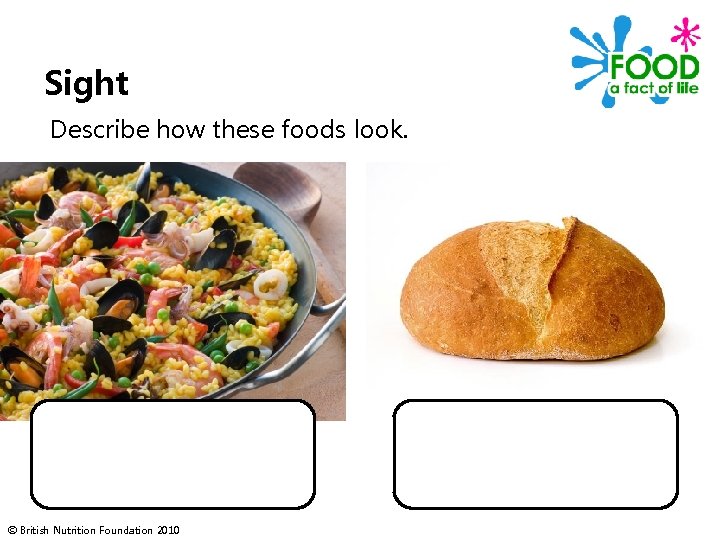
Sight Describe how these foods look. © British Nutrition Foundation 2010
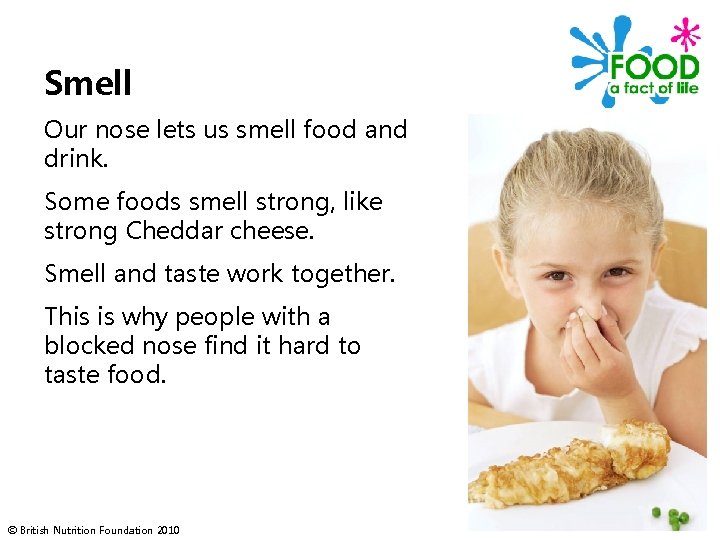
Smell Our nose lets us smell food and drink. Some foods smell strong, like strong Cheddar cheese. Smell and taste work together. This is why people with a blocked nose find it hard to taste food. © British Nutrition Foundation 2010
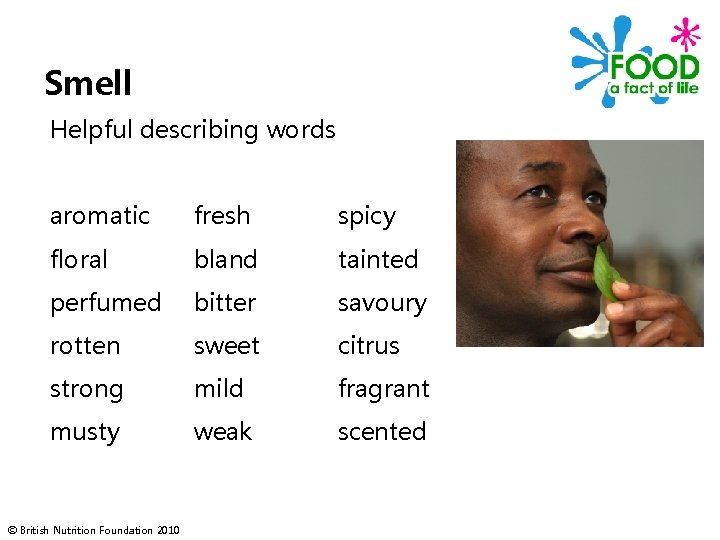
Smell Helpful describing words aromatic fresh spicy floral bland tainted perfumed bitter savoury rotten sweet citrus strong mild fragrant musty weak scented © British Nutrition Foundation 2010
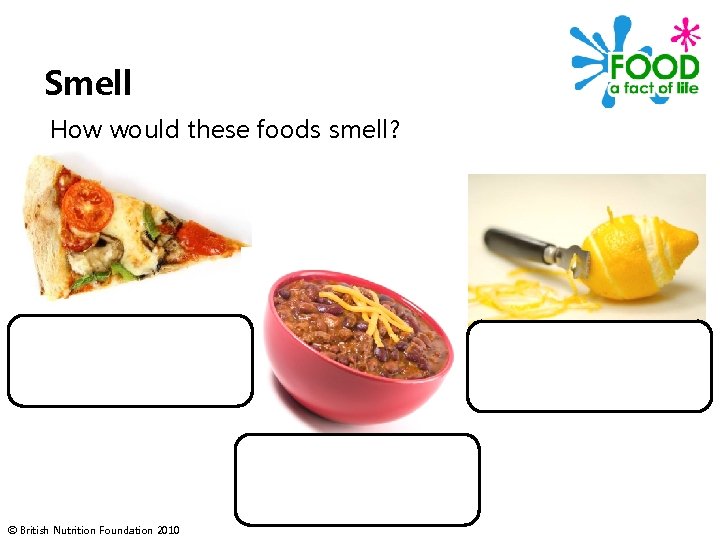
Smell How would these foods smell? © British Nutrition Foundation 2010
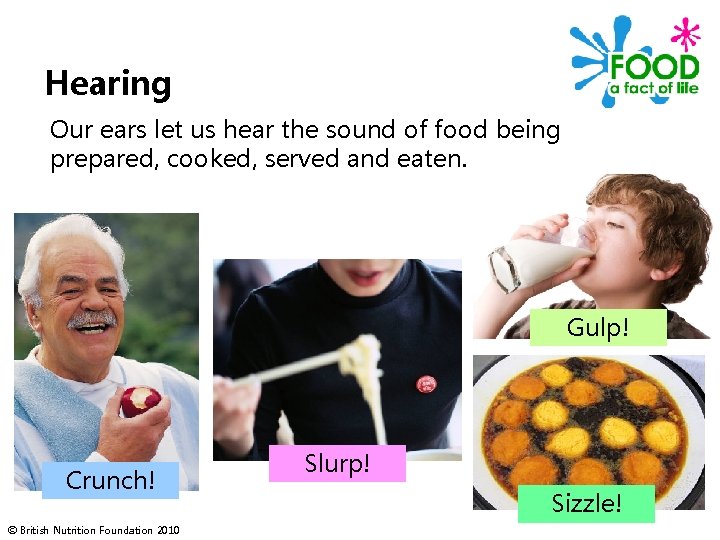
Hearing Our ears let us hear the sound of food being prepared, cooked, served and eaten. Gulp! Crunch! © British Nutrition Foundation 2010 Slurp! Sizzle!
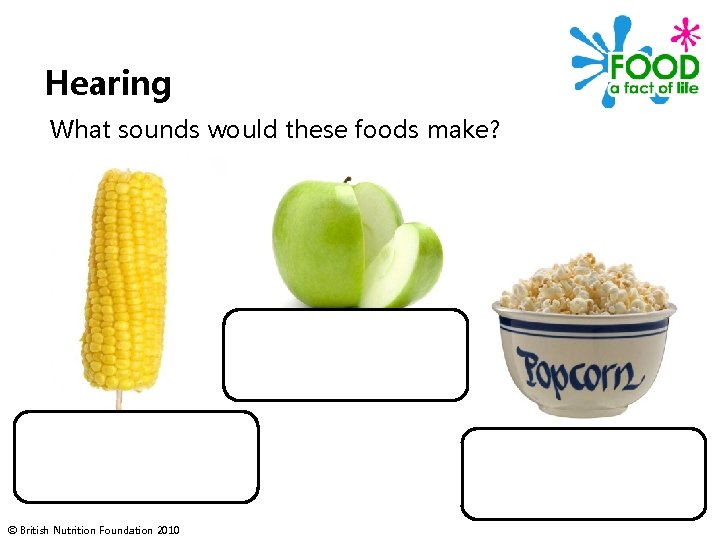
Hearing What sounds would these foods make? © British Nutrition Foundation 2010
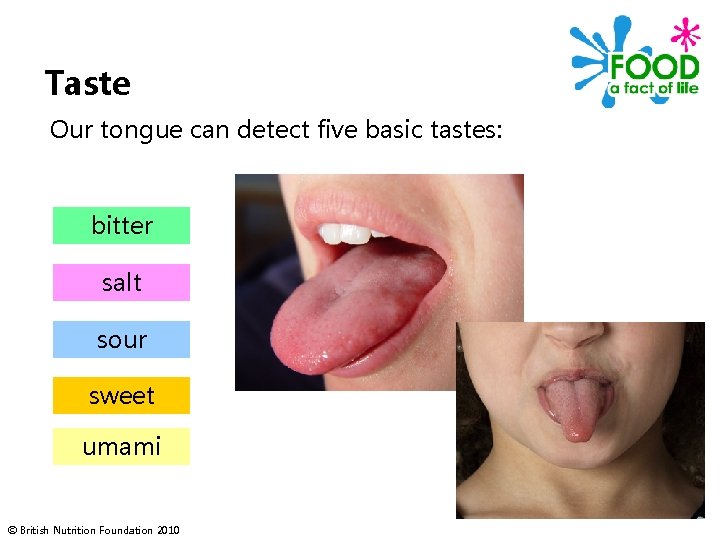
Taste Our tongue can detect five basic tastes: bitter salt sour sweet umami © British Nutrition Foundation 2010
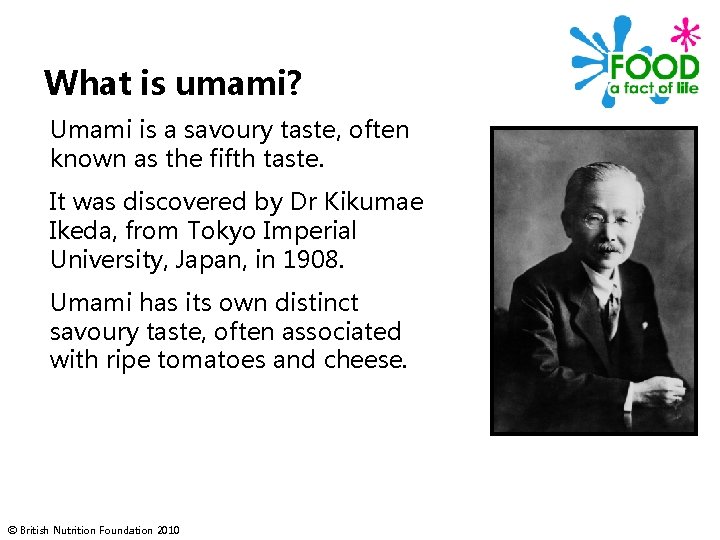
What is umami? Umami is a savoury taste, often known as the fifth taste. It was discovered by Dr Kikumae Ikeda, from Tokyo Imperial University, Japan, in 1908. Umami has its own distinct savoury taste, often associated with ripe tomatoes and cheese. © British Nutrition Foundation 2010
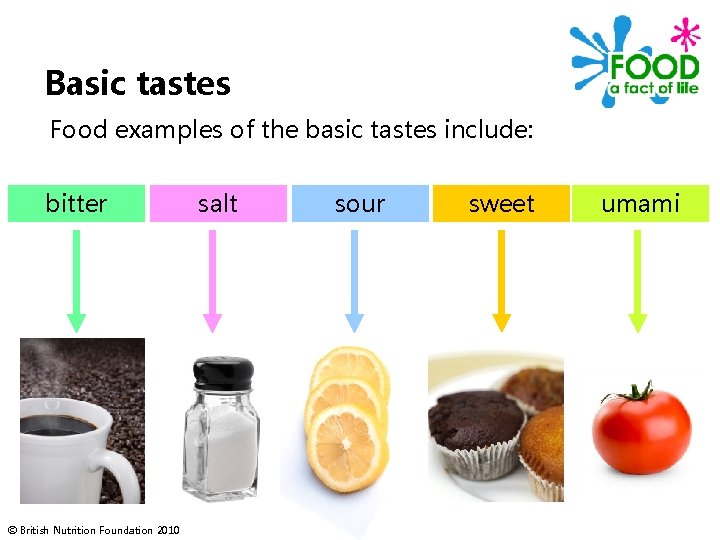
Basic tastes Food examples of the basic tastes include: bitter © British Nutrition Foundation 2010 salt sour sweet umami
Taste Useful describing words: sweet cool bitter zesty warm hot sour sharp rich bland rotten tart strong citrus umami tangy savoury spicy © British Nutrition Foundation 2010 mild salty
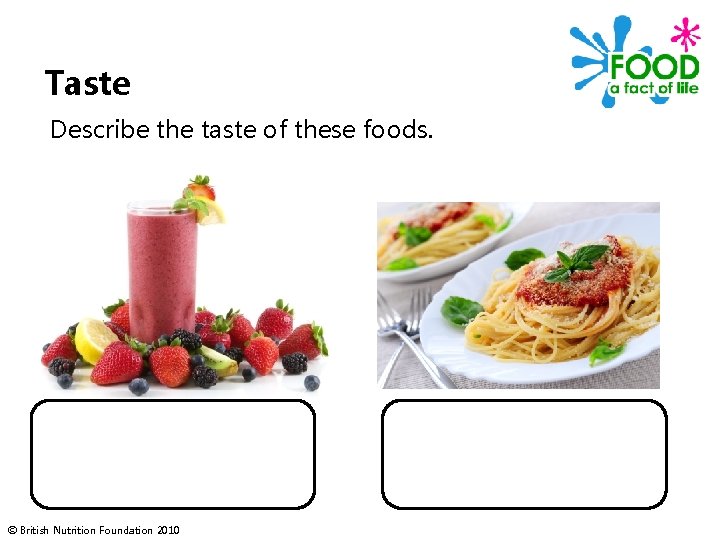
Taste Describe the taste of these foods. © British Nutrition Foundation 2010
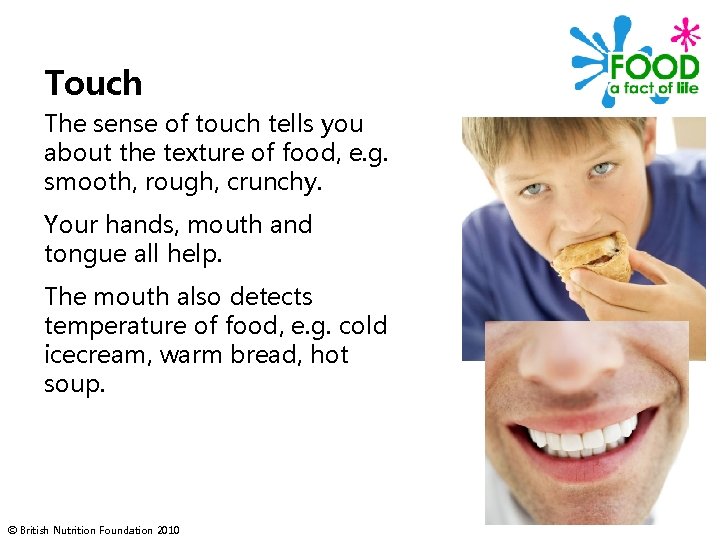
Touch The sense of touch tells you about the texture of food, e. g. smooth, rough, crunchy. Your hands, mouth and tongue all help. The mouth also detects temperature of food, e. g. cold icecream, warm bread, hot soup. © British Nutrition Foundation 2010
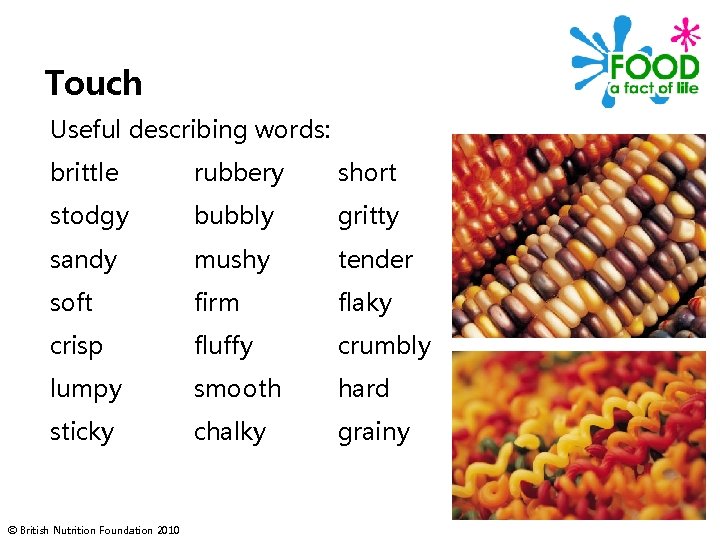
Touch Useful describing words: brittle rubbery short stodgy bubbly gritty sandy mushy tender soft firm flaky crisp fluffy crumbly lumpy smooth hard sticky chalky grainy © British Nutrition Foundation 2010
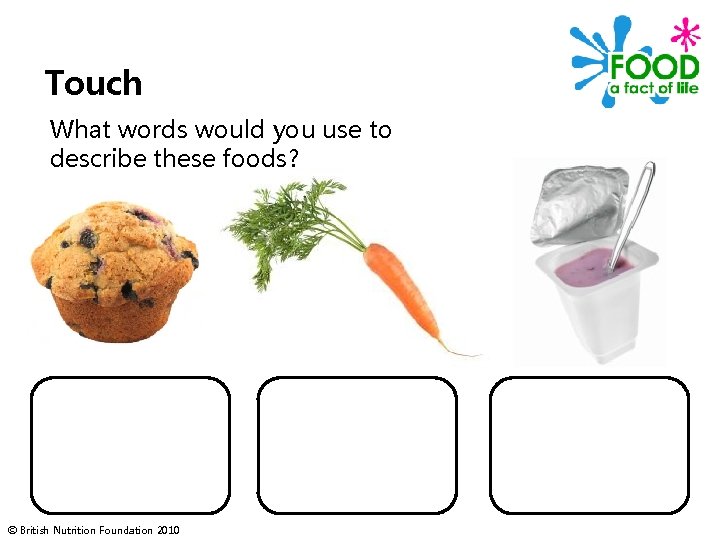
Touch What words would you use to describe these foods? © British Nutrition Foundation 2010
For further information, go to: www. foodafactoflife. org. uk © British Nutrition Foundation 2010
- Slides: 21