
Your Organisations Contact with Children and How Well
- Slides: 33
Your Organisation’s Contact with Children and How Well You Deal with Child Protection Issues Child-Safe Organisations (Date) (Place)
“I can tell you now, that many organisations – especially those that do not work directly with children – do not believe the [child protection] standards are relevant to them because of many factors. I disagree, and believe that every organisation (whether they work directly or indirectly with children, whether they are funding or being funded) must take responsibility for child protection. ” - Setting the Standard
Revisit Module 1 You can never tell where, when and how child abuse will happen • Organisations have a responsibility to care for and to protect children • Therefore, there is a need to create a child protection system – a ‘buffer’ to reduce the possibility of child abuse happening within an organisation or community •
In Module 2, we will … • Assess the nature of contacts between organisational staff and children • Identify the risks of child abuse (or false allegations) happening within our own organisations • Think about our responsibility to deal with risks, the child protection mechanisms we have in place and how we can improve them, and what we already do well – the first step in creating a child protection system
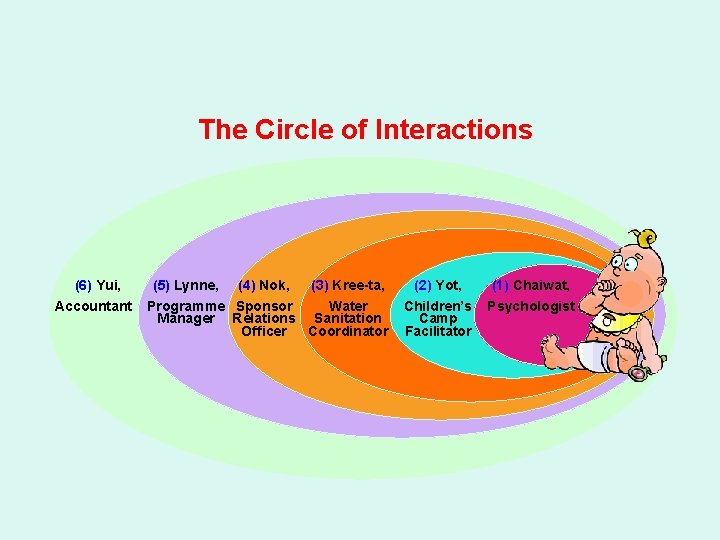
The Circle of Interactions (6) Yui, Accountant (5) Lynne, (4) Nok, (3) Kree-ta, Programme Sponsor Water Manager Relations Sanitation Officer Coordinator (2) Yot, (1) Chaiwat, Children’s Camp Facilitator Psychologist
Humanitarian workers interact with children in many different ways, all of which have wide-ranging potential impacts on children
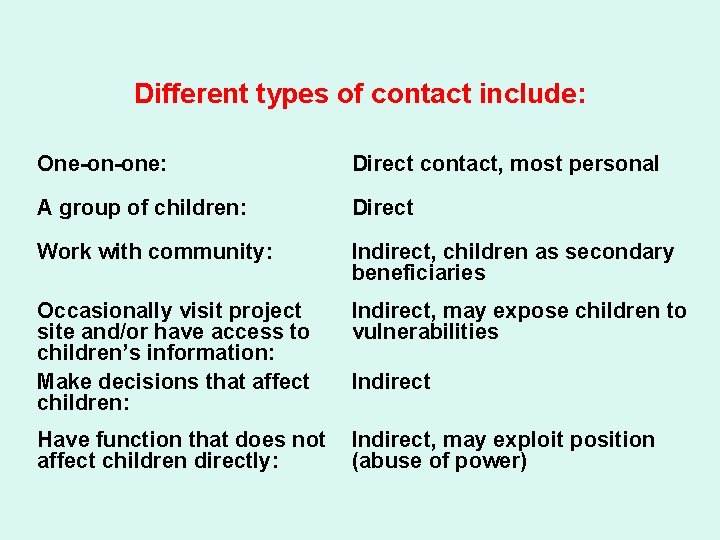
Different types of contact include: One-on-one: Direct contact, most personal A group of children: Direct Work with community: Indirect, children as secondary beneficiaries Occasionally visit project site and/or have access to children’s information: Make decisions that affect children: Indirect, may expose children to vulnerabilities Have function that does not affect children directly: Indirect, may exploit position (abuse of power) Indirect
Risk Factors Goal: For organisations to assess possible child protection risks in their practice
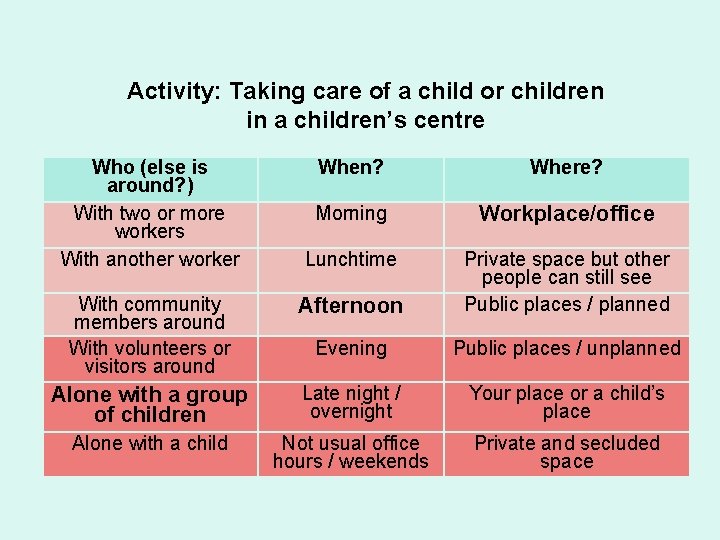
Activity: Taking care of a child or children in a children’s centre Who (else is around? ) With two or more workers With another worker When? Where? Morning Workplace/office Lunchtime With community members around With volunteers or visitors around Afternoon Private space but other people can still see Public places / planned Evening Public places / unplanned Alone with a group of children Late night / overnight Your place or a child’s place Alone with a child Not usual office hours / weekends Private and secluded space
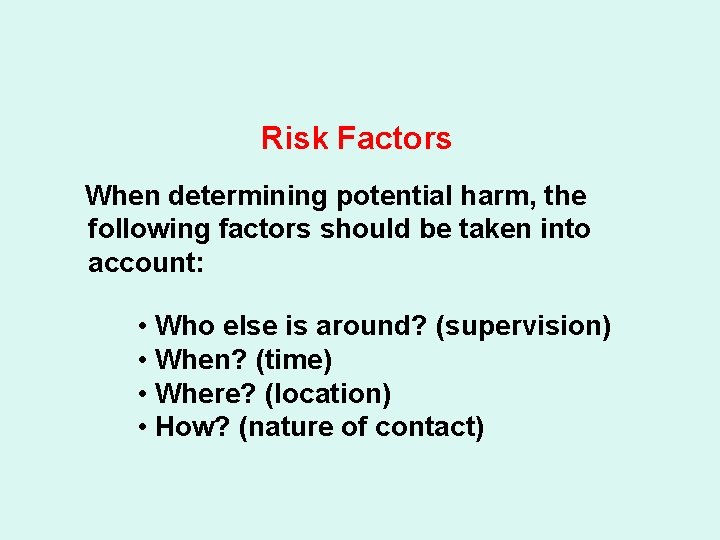
Risk Factors When determining potential harm, the following factors should be taken into account: • Who else is around? (supervision) • When? (time) • Where? (location) • How? (nature of contact)
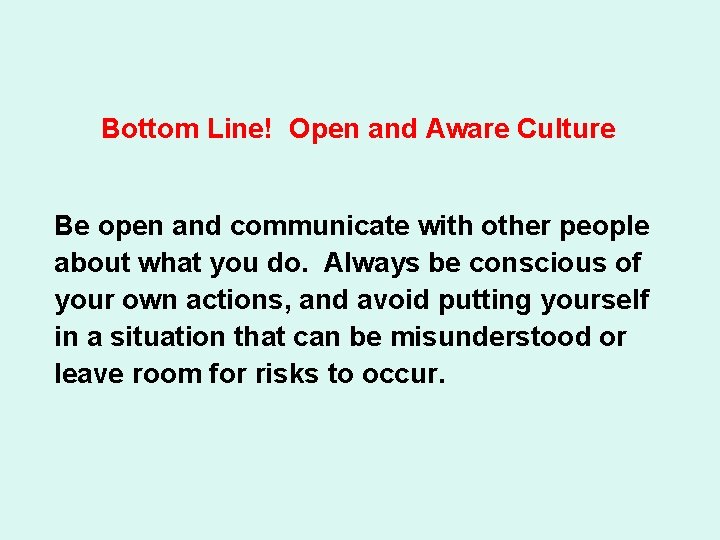
Bottom Line! Open and Aware Culture Be open and communicate with other people about what you do. Always be conscious of your own actions, and avoid putting yourself in a situation that can be misunderstood or leave room for risks to occur.
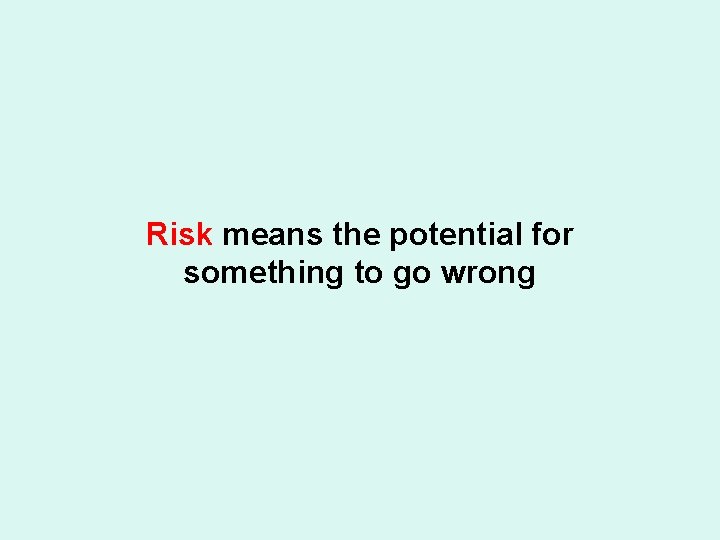
Risk means the potential for something to go wrong
A risk assessment is a means of identifying the potential for something to happen that will have an impact on children, your staff, organisational objectives and reputation
Risk management means identifying the potential for an accident or incident to occur and taking steps to reduce the possibility of it occurring
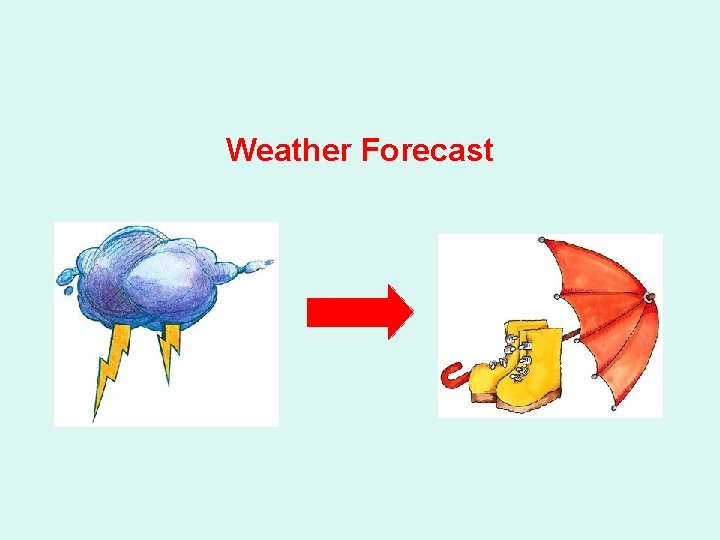
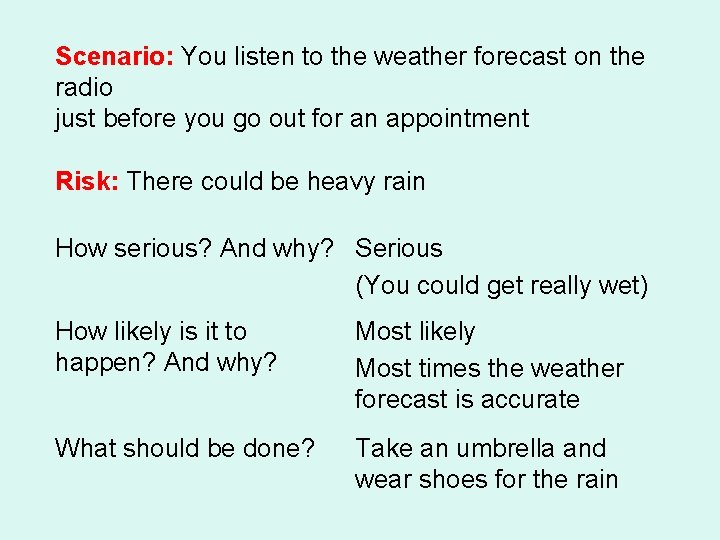
Weather Forecast
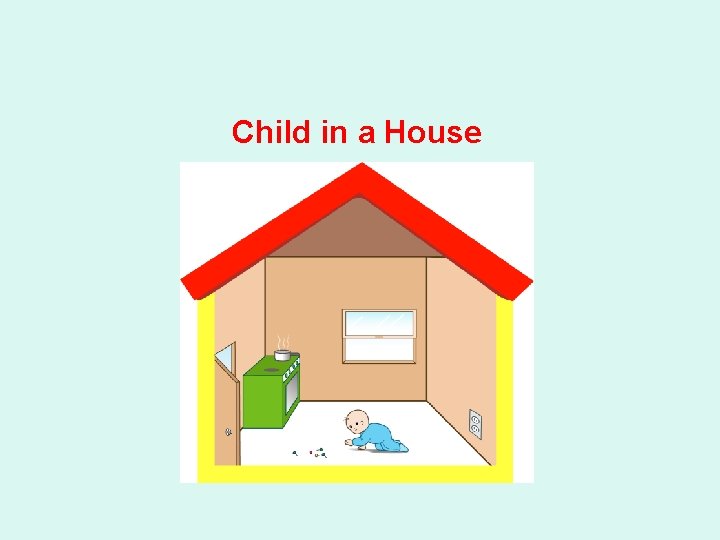
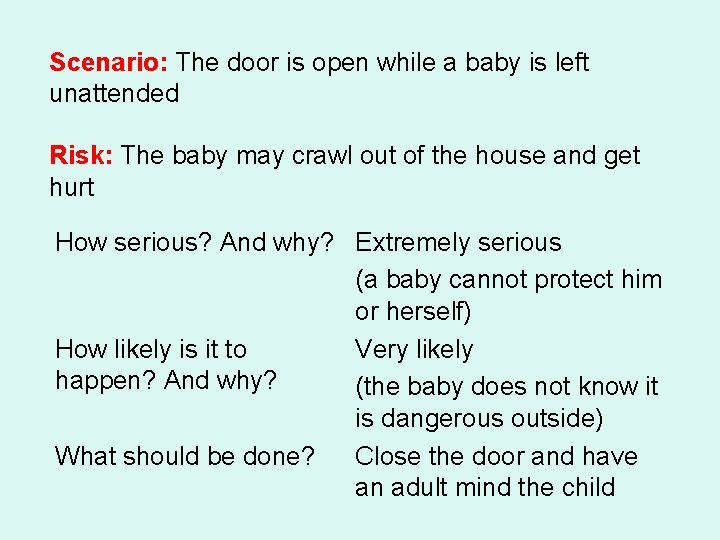
Child in a House
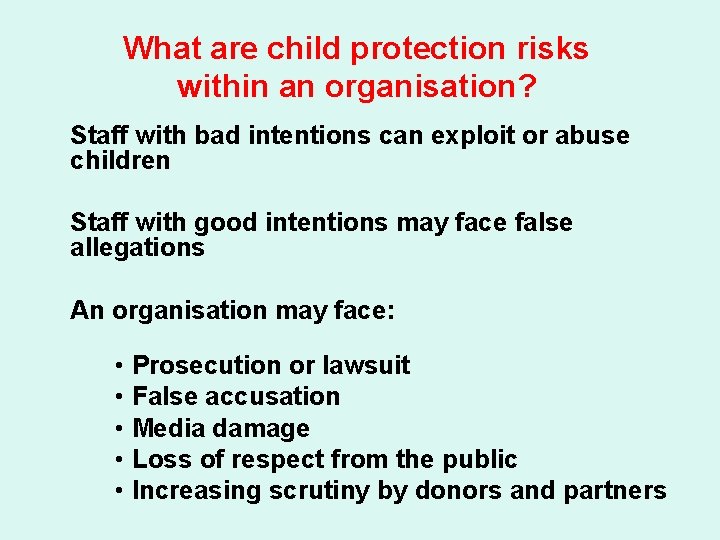
What are child protection risks within an organisation? Staff with bad intentions can exploit or abuse children Staff with good intentions may face false allegations An organisation may face: • Prosecution or lawsuit • False accusation • Media damage • Loss of respect from the public • Increasing scrutiny by donors and partners
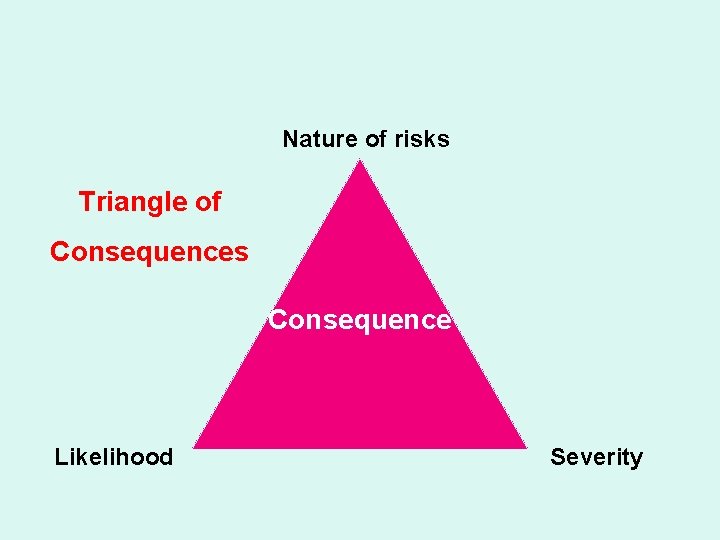
Nature of risks Triangle of Consequences Consequence Likelihood Severity
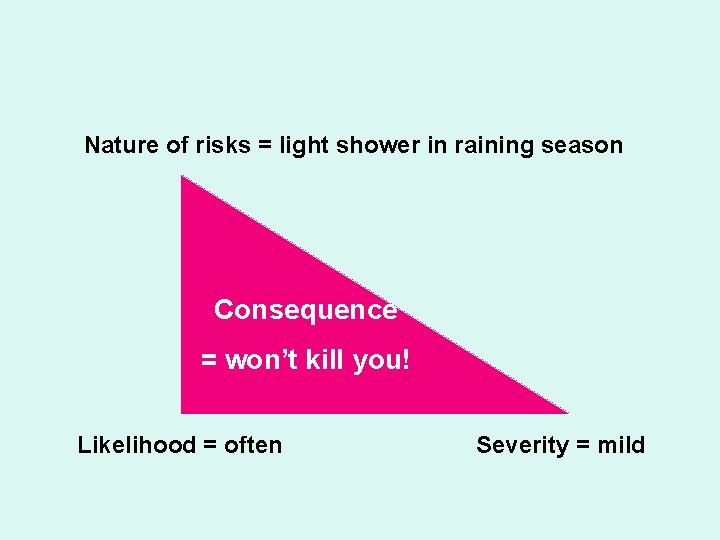
Nature of risks = light shower in raining season Consequence = won’t kill you! Likelihood = often Severity = mild
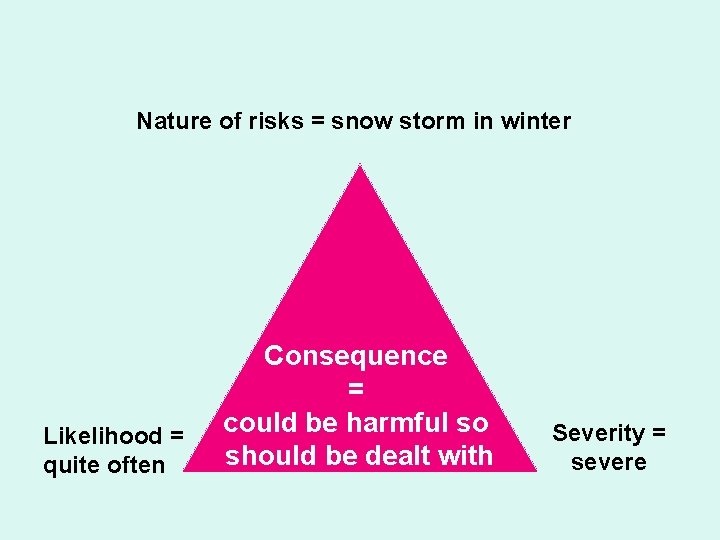
Nature of risks = snow storm in winter Likelihood = quite often Consequence = could be harmful so should be dealt with Severity = severe
In considering the consequences, it is important that you consider all the factors that are in play. This also helps us to prioritise our interventions.
Child Protection Scenarios • What are the child protection risks in this scenario? Why? • How serious? Why? • How likely is it to happen (in your organisation)? Why? • What should be done? Why?
Scenario: You listen to the weather forecast on the radio just before you go out for an appointment Risk: There could be heavy rain How serious? And why? Serious (You could get really wet) How likely is it to happen? And why? Most likely Most times the weather forecast is accurate What should be done? Take an umbrella and wear shoes for the rain
Scenario: The door is open while a baby is left unattended Risk: The baby may crawl out of the house and get hurt How serious? And why? Extremely serious (a baby cannot protect him or herself) How likely is it to Very likely happen? And why? (the baby does not know it is dangerous outside) What should be done? Close the door and have an adult mind the child
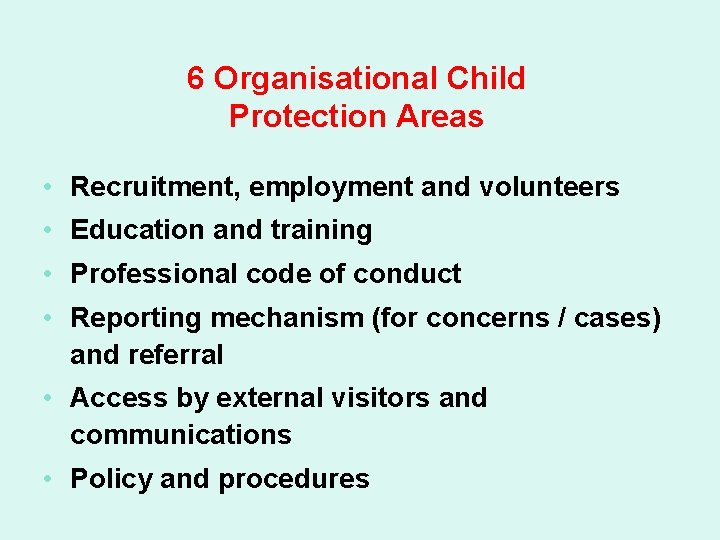
6 Organisational Child Protection Areas • Recruitment, employment and volunteers • Education and training • Professional code of conduct • Reporting mechanism (for concerns / cases) and referral • Access by external visitors and communications • Policy and procedures
Whisper Down the Lane
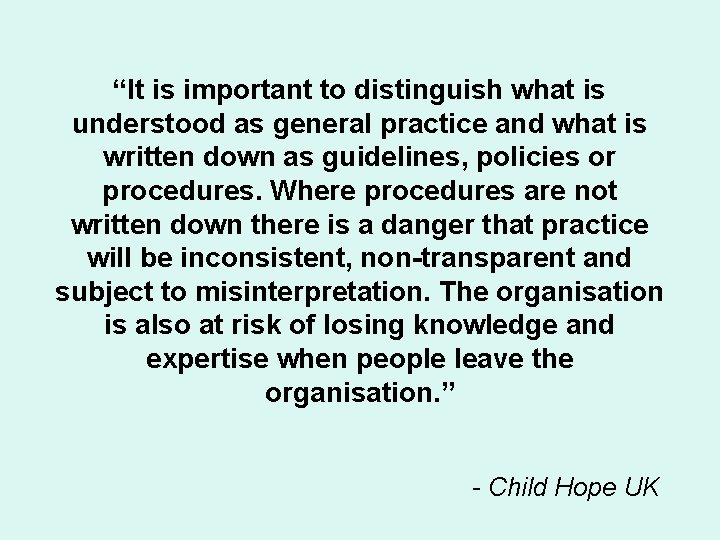
“It is important to distinguish what is understood as general practice and what is written down as guidelines, policies or procedures. Where procedures are not written down there is a danger that practice will be inconsistent, non-transparent and subject to misinterpretation. The organisation is also at risk of losing knowledge and expertise when people leave the organisation. ” - Child Hope UK
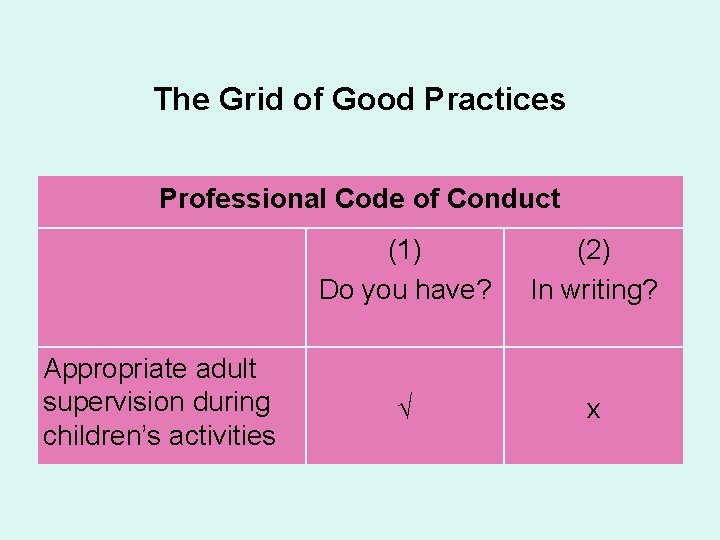
The Grid of Good Practices Professional Code of Conduct Appropriate adult supervision during children’s activities (1) Do you have? (2) In writing? √ x
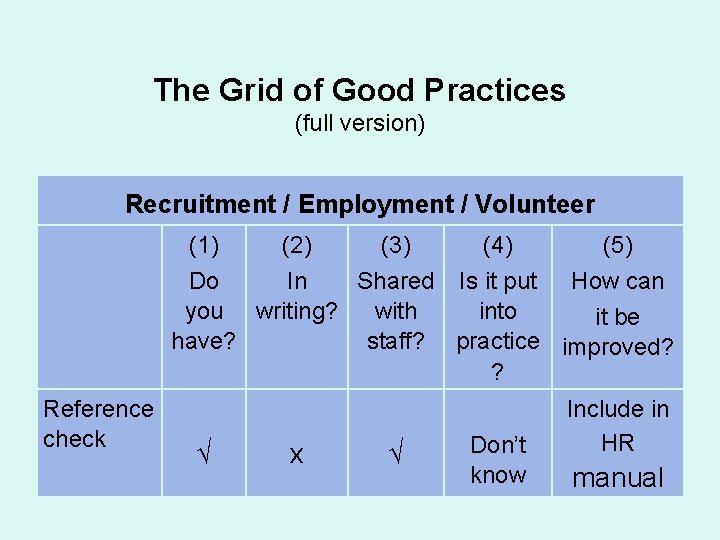
The Grid of Good Practices (full version) Recruitment / Employment / Volunteer (1) (2) (3) (4) (5) Do In Shared Is it put How can you writing? with into it be have? staff? practice improved? ? Reference check √ x √ Don’t know Include in HR manual
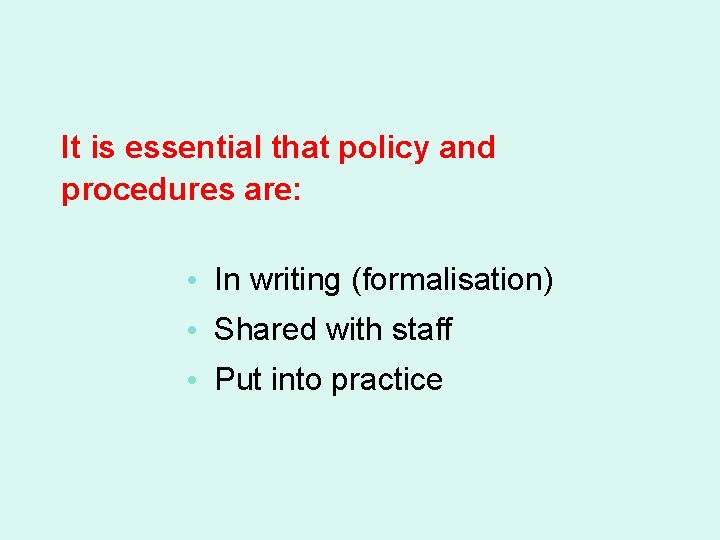
It is essential that policy and procedures are: • In writing (formalisation) • Shared with staff • Put into practice
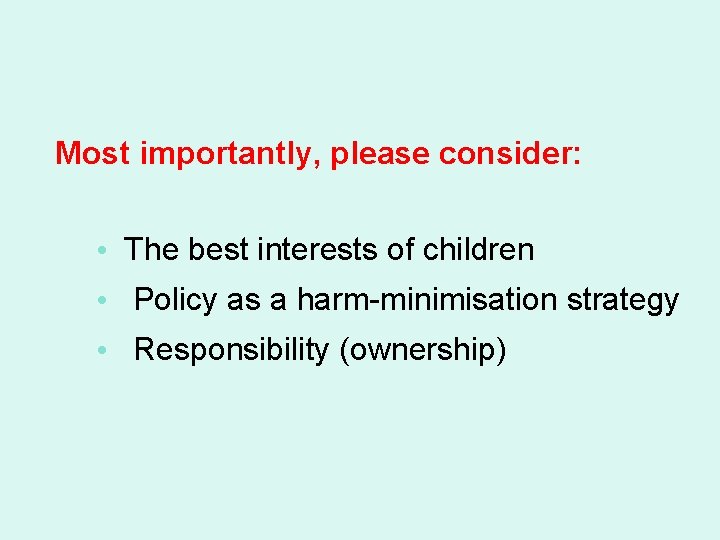
Most importantly, please consider: • The best interests of children • Policy as a harm-minimisation strategy • Responsibility (ownership)
The Office Plant
For more information on Child-Safe Organisations, please contact: Host organisation