
Your Introduction card Name Contact email Experience as


- Slides: 58
Your Introduction card • Name: 你的名字 • Contact email: �子�件地址 • Experience as a conductor: ���体 • What you hope to learn from this course: 你希望是什么 ���程的学�? • Send info and any questions to tholmchor@gmail. com
Foundations in conducting • Three sessions • • #1 Tuesday July 9, 7 -10 pm #2 Saturday July 13, 6 -9 pm #3 Tuesday July 16, 7 -10 pm This class • • Presentation of basic techniques Much practice in class Optional assignments to practice between class times Last class: bring your conducting problems
Topics and order • Posture, arm/hand positions • 4 - and 3 -beat patterns • Preparatory gestures • Articulations: legato, staccato, etc. • 2 - and 1 -beat patterns • Dynamic changes gradual: right hand & left hand • Dynamic changes subito • Fermatas
Topic order (cont. ) • Right-hand cues • Left-hand cues • Compound meters • Divided patterns • Changing meters • Tempo changes gradual • Tempo changes subito
Topic order (cont. ) • Basic principles of rehearsal • • • KNOW your score Planning and review Rehearsal pyramid Prescription vs description What does the choir need from you NOW? Optional topics (if interest and time) • • Score analysis: Foreground, middle ground, background Choral tuning aspects • • Unified vowels Overtone series and ‘just’ intonation
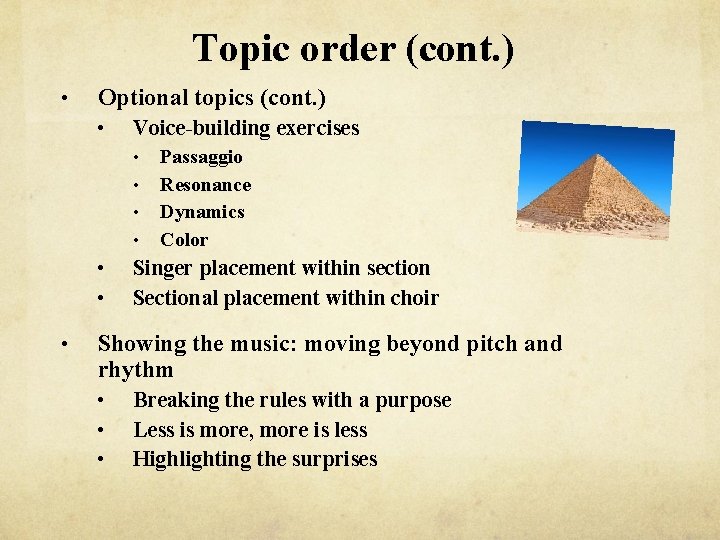
Topic order (cont. ) • Optional topics (cont. ) • Voice-building exercises • • Passaggio Resonance Dynamics Color Singer placement within section Sectional placement within choir Showing the music: moving beyond pitch and rhythm • • • Breaking the rules with a purpose Less is more, more is less Highlighting the surprises
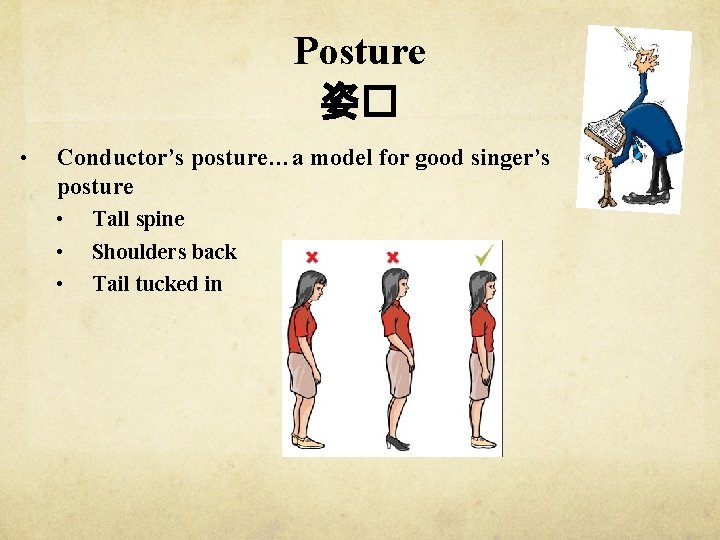
Posture 姿� • Conductor’s posture…a model for good singer’s posture • • • Tall spine Shoulders back Tail tucked in
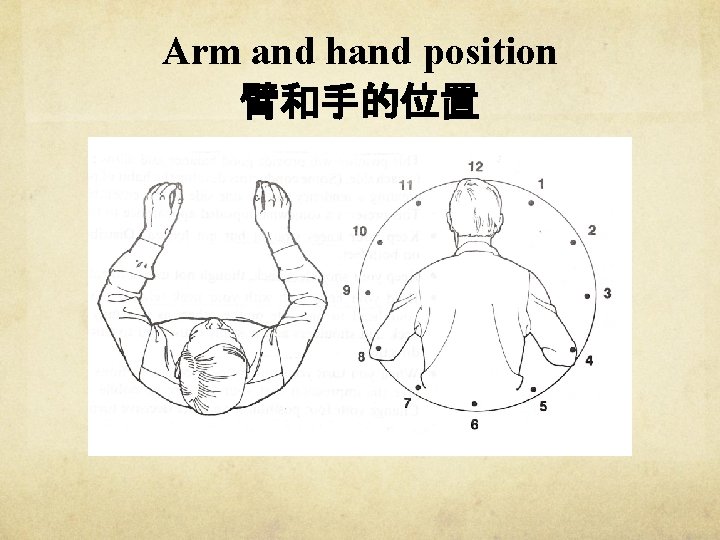
Arm and hand position 臂和手的位置
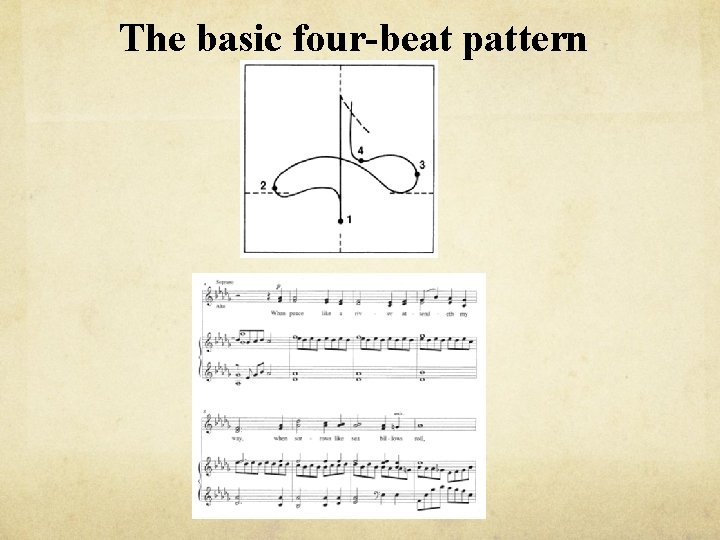
The basic four-beat pattern
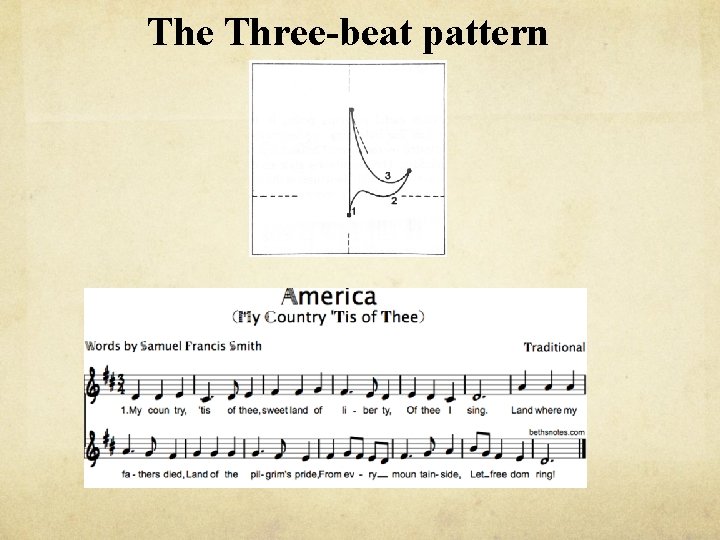
The Three-beat pattern
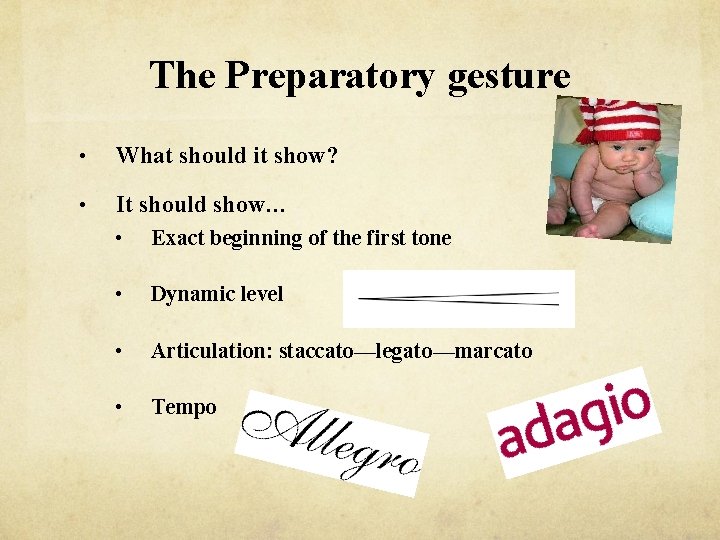
The Preparatory gesture • What should it show? • It should show… • Exact beginning of the first tone • Dynamic level • Articulation: staccato—legato—marcato • Tempo
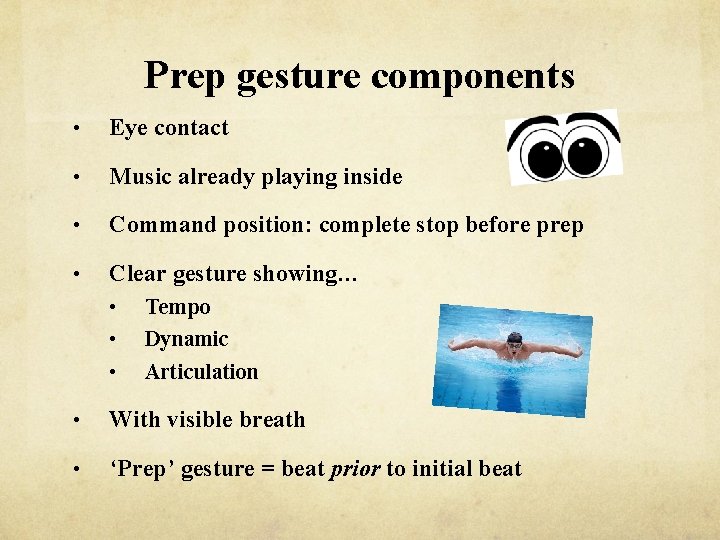
Prep gesture components • Eye contact • Music already playing inside • Command position: complete stop before prep • Clear gesture showing… • • • Tempo Dynamic Articulation • With visible breath • ‘Prep’ gesture = beat prior to initial beat
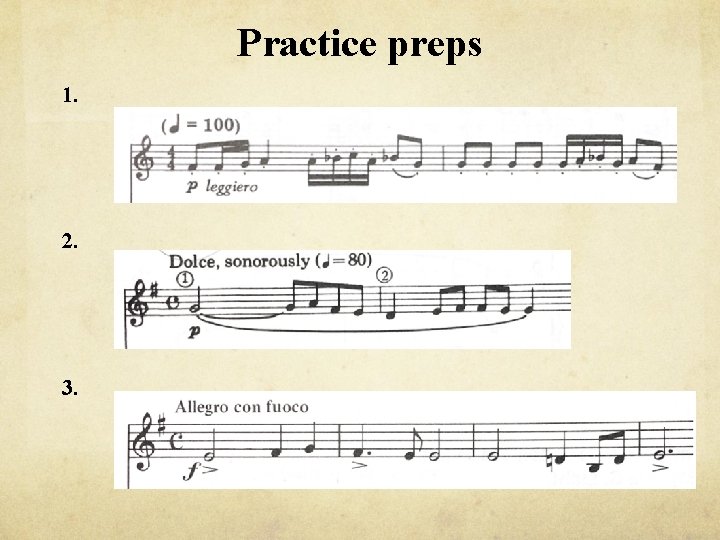
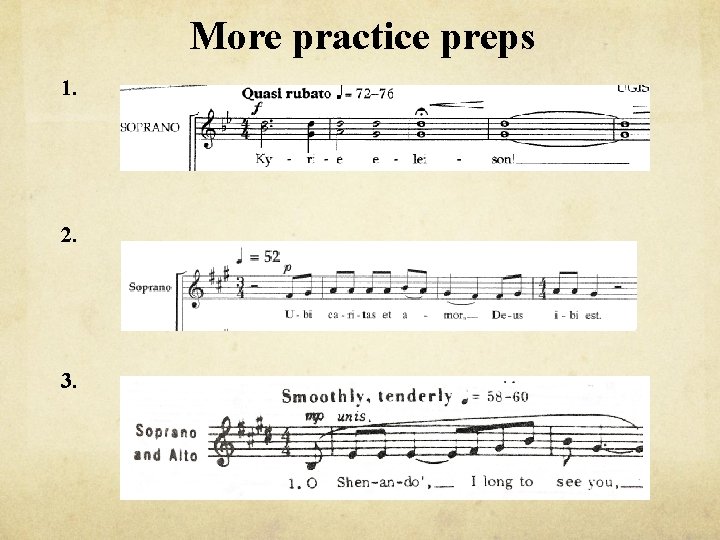
Practice preps 1. 2. 3.
More practice preps 1. 2. 3.
A few video clips of preps • https: //youtu. be/gxx. Hr 4 Bz 5 No • https: //youtu. be/unkrkte. JN-0? t=23 s • https: //youtu. be/ry. ZTs 18 y. UAo? t=22 s
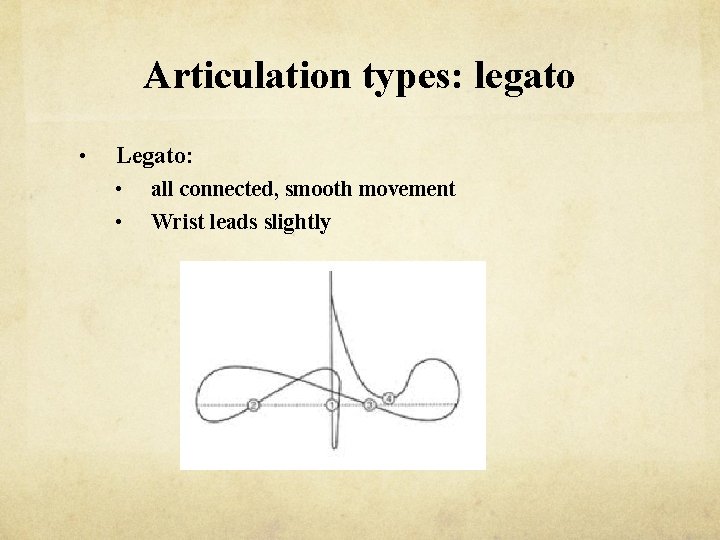
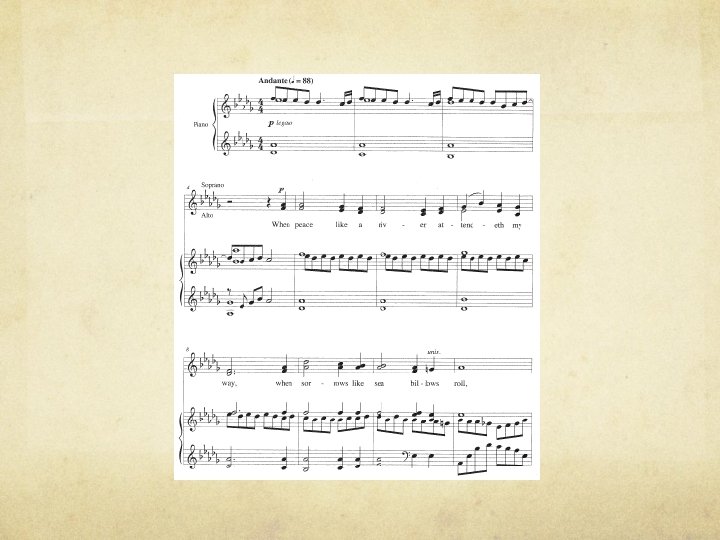
Articulation types: legato • Legato: • • all connected, smooth movement Wrist leads slightly
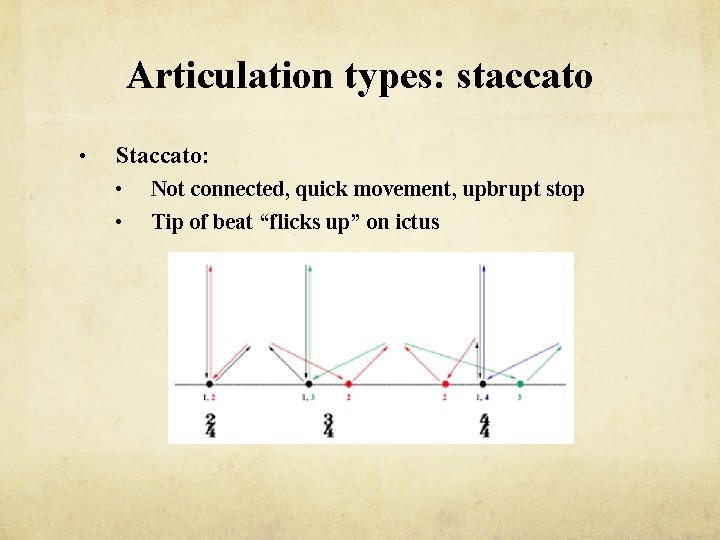
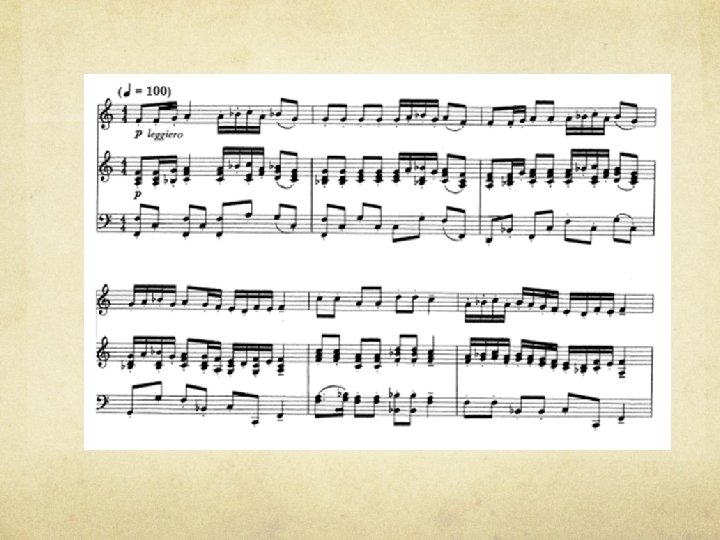
Articulation types: staccato • Staccato: • • Not connected, quick movement, upbrupt stop Tip of beat “flicks up” on ictus
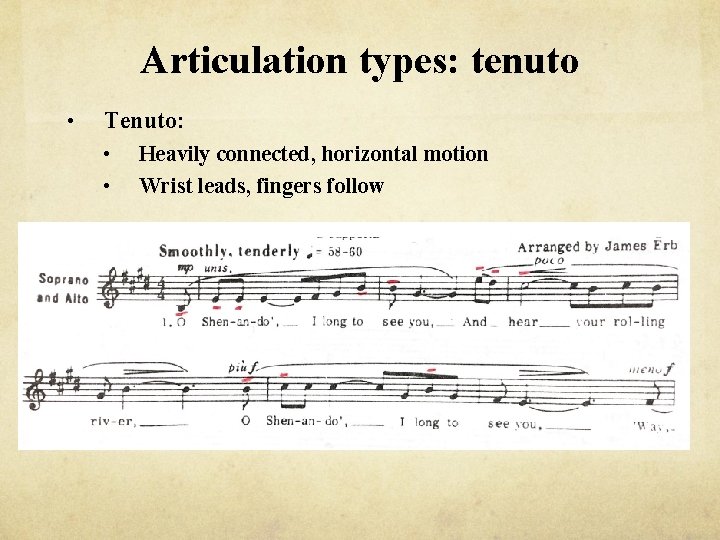
Articulation types: tenuto • Tenuto: • • Heavily connected, horizontal motion Wrist leads, fingers follow
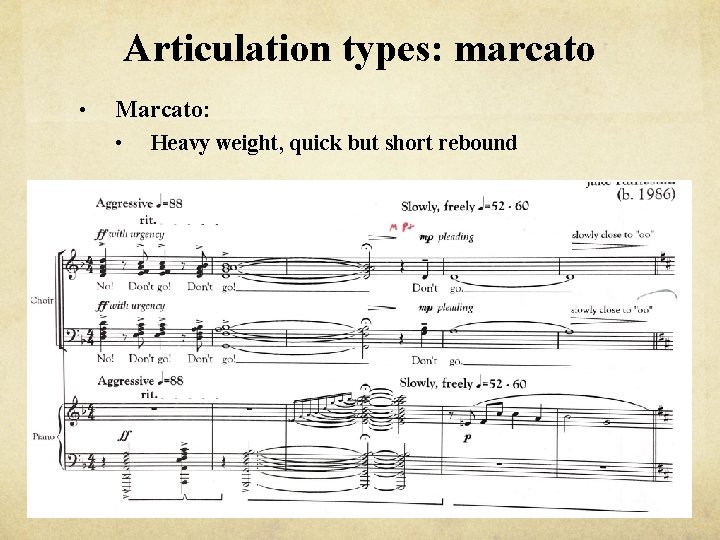
Articulation types: marcato • Marcato: • Heavy weight, quick but short rebound
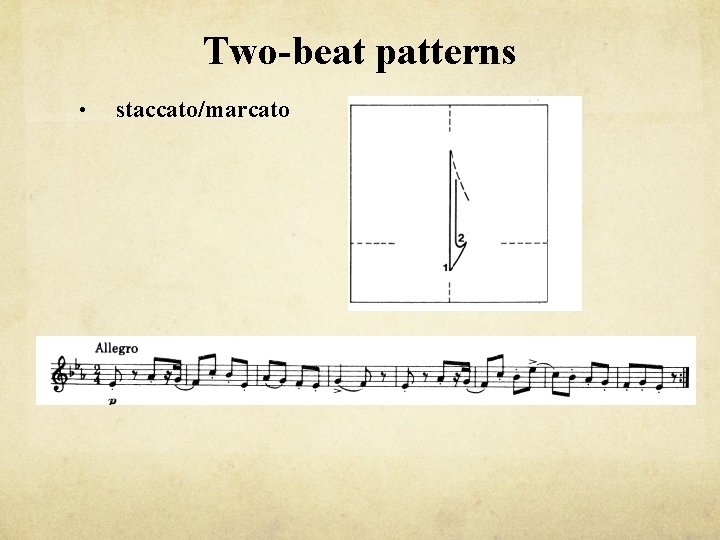
Two-beat patterns • staccato/marcato
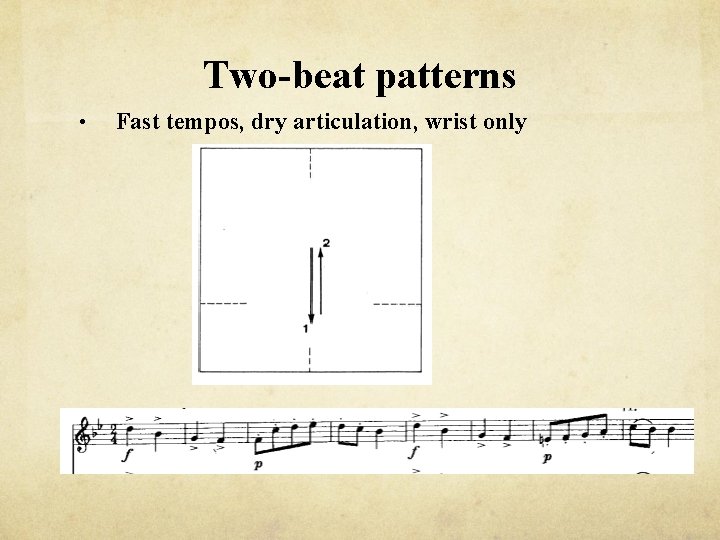
Two-beat patterns • Fast tempos, dry articulation, wrist only
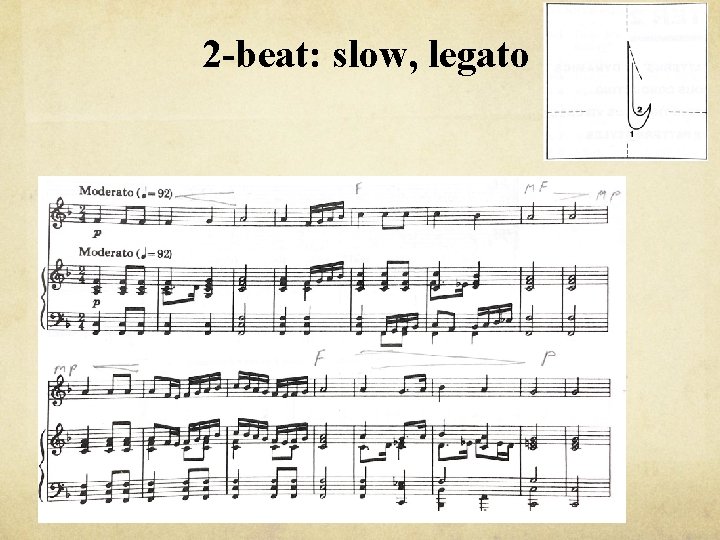
2 -beat: slow, legato
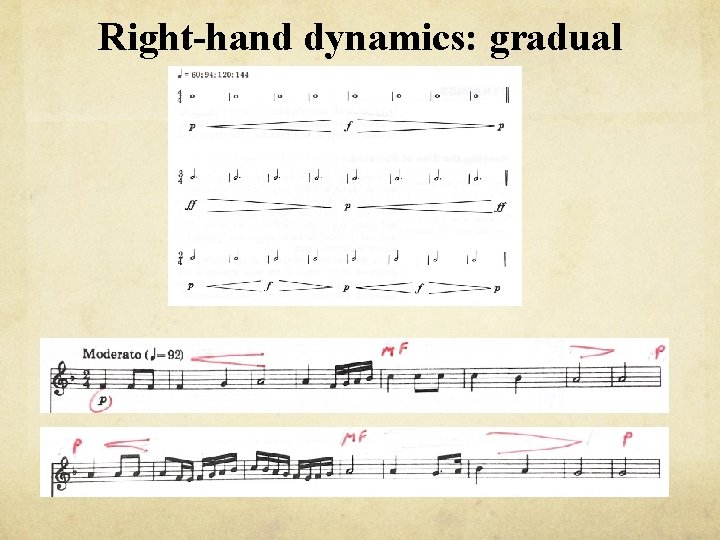
Right-hand dynamics: gradual
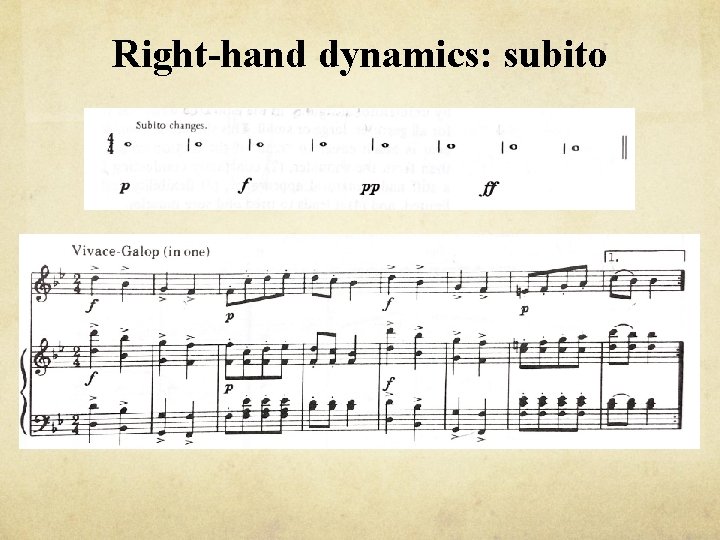
Right-hand dynamics: subito
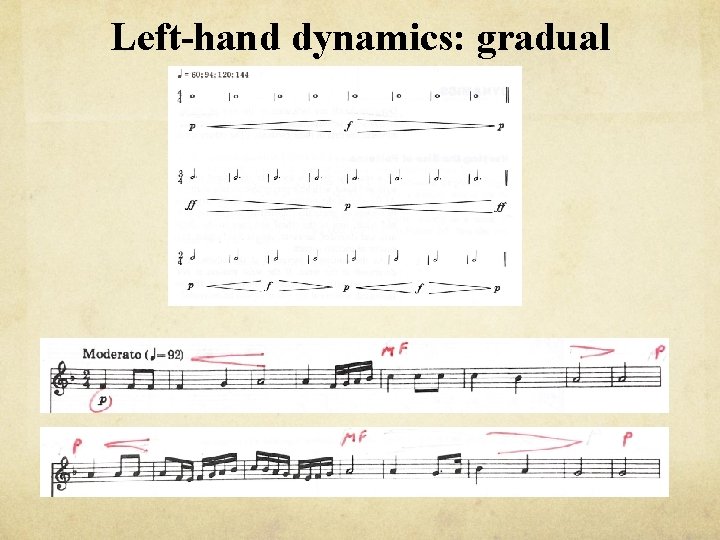
Left-hand dynamics: gradual
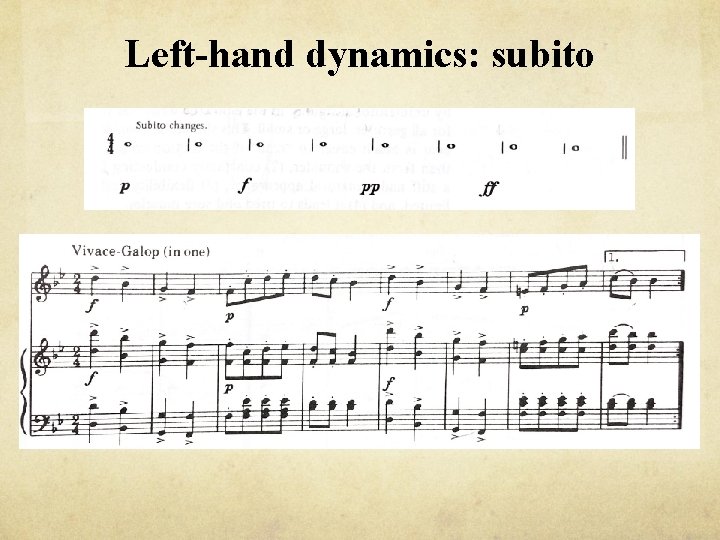
Left-hand dynamics: subito
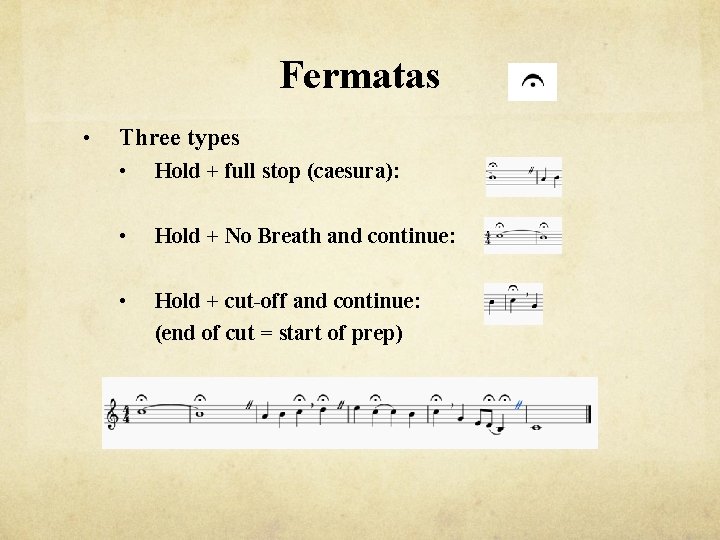
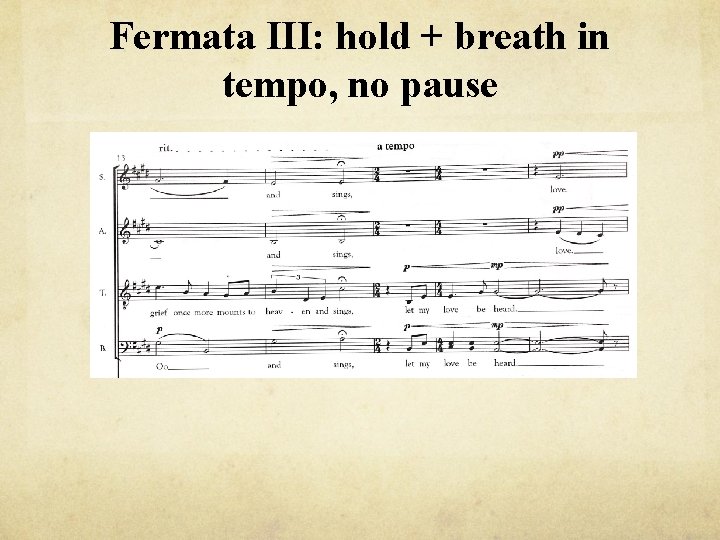
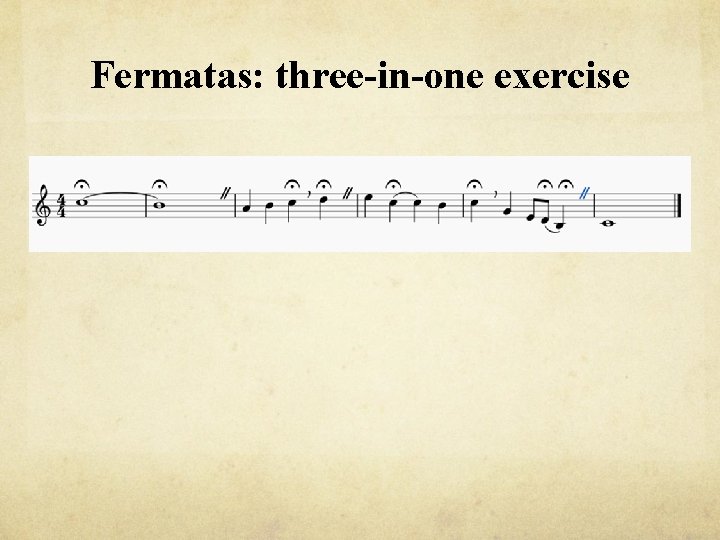
Fermatas • Three types • Hold + full stop (caesura): • Hold + No Breath and continue: • Hold + cut-off and continue: (end of cut = start of prep)
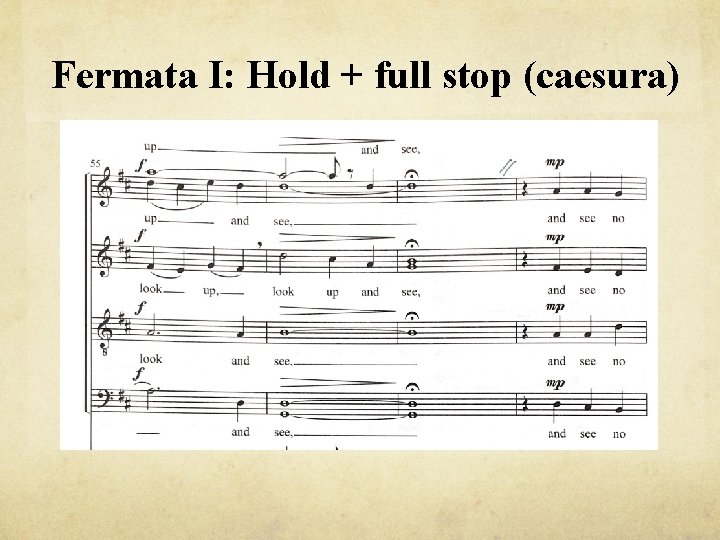
Fermata I: Hold + full stop (caesura)
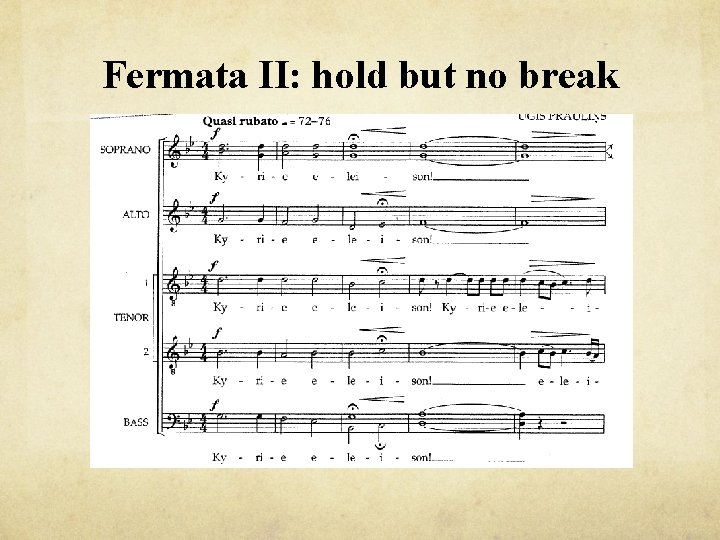
Fermata II: hold but no break
Fermata III: hold + breath in tempo, no pause
Fermatas: three-in-one exercise
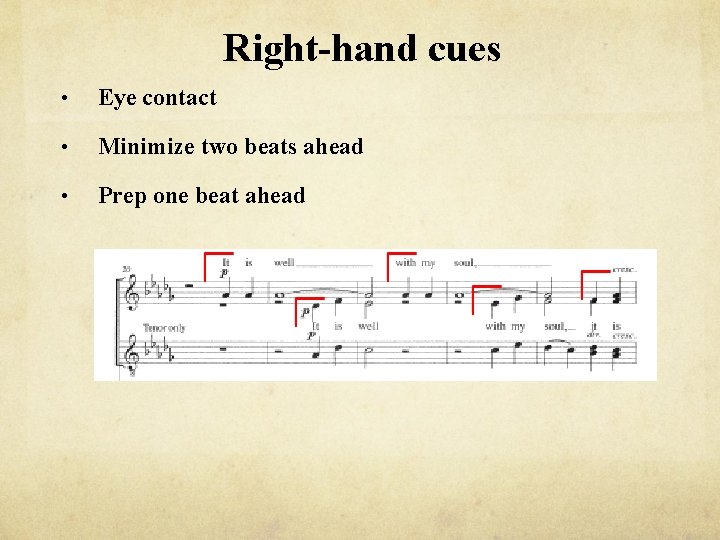
Right-hand cues • Eye contact • Minimize two beats ahead • Prep one beat ahead
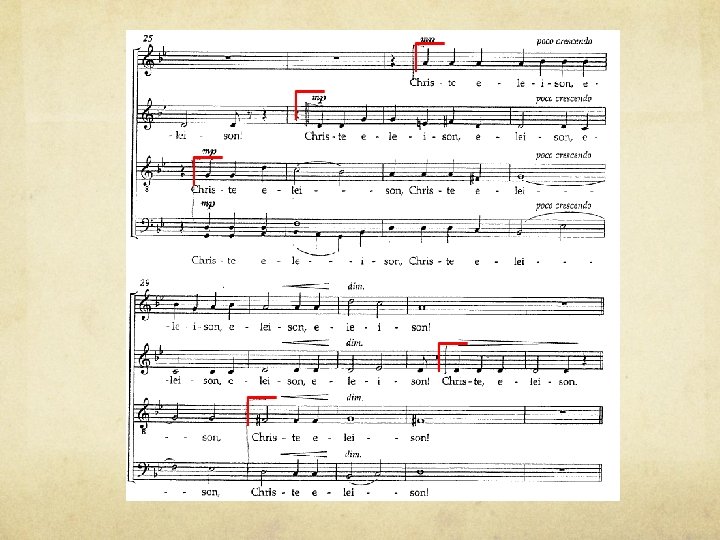
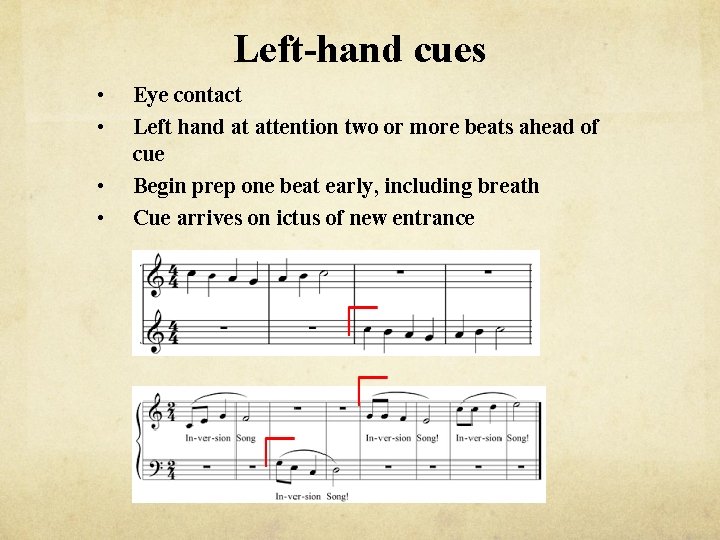
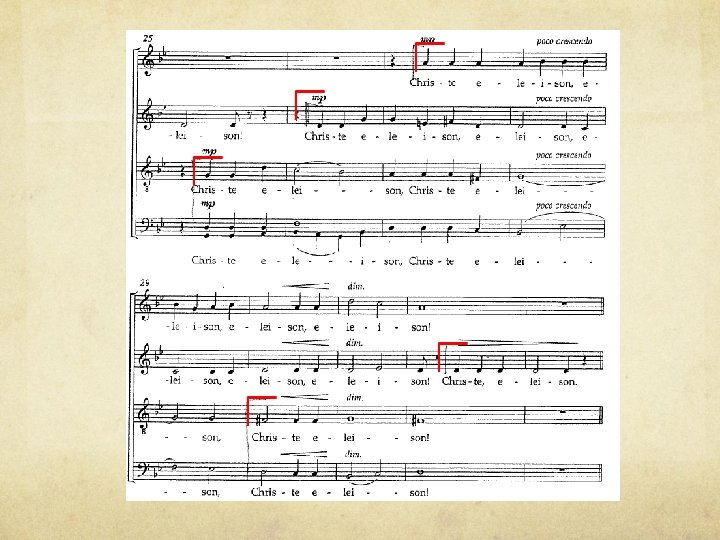
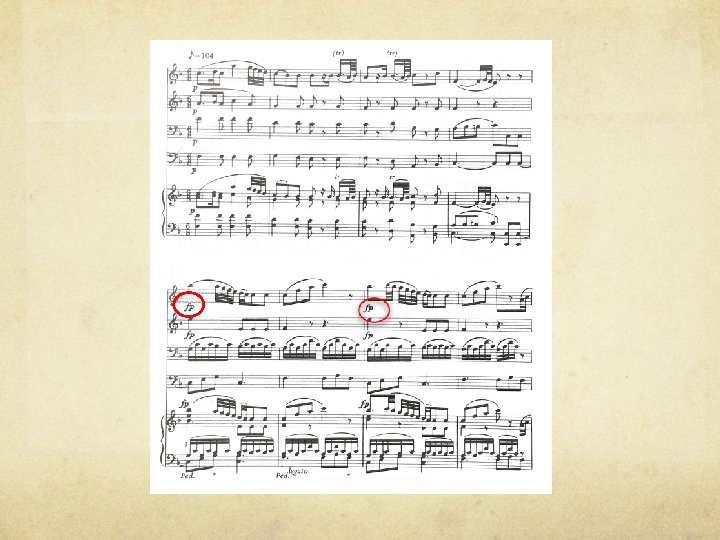
Left-hand cues • • Eye contact Left hand at attention two or more beats ahead of cue Begin prep one beat early, including breath Cue arrives on ictus of new entrance
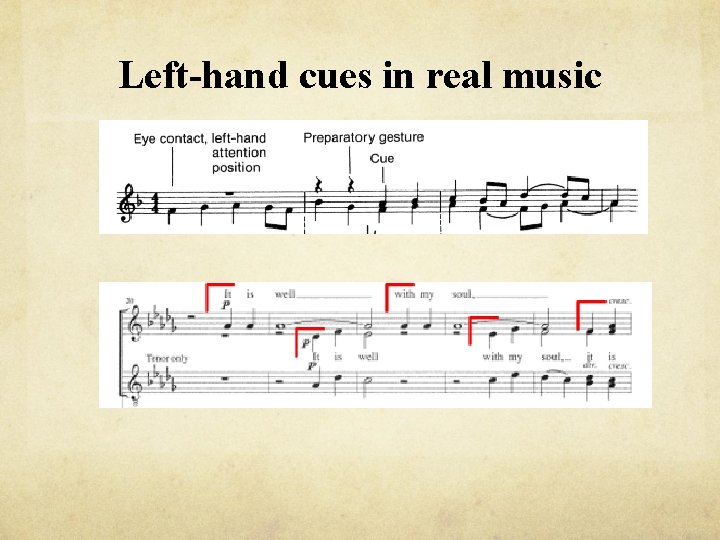
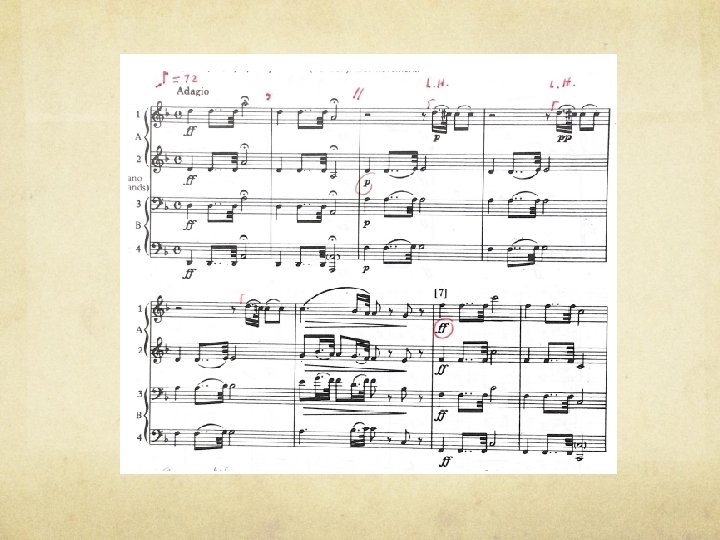
Left-hand cues in real music
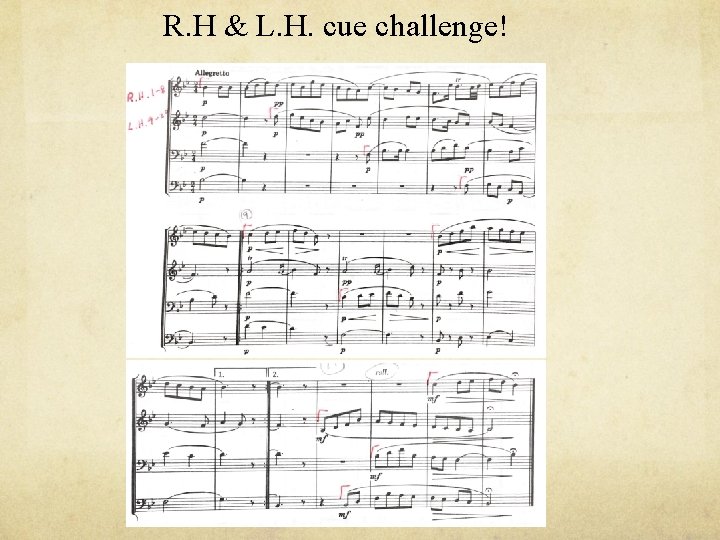
R. H & L. H. cue challenge!
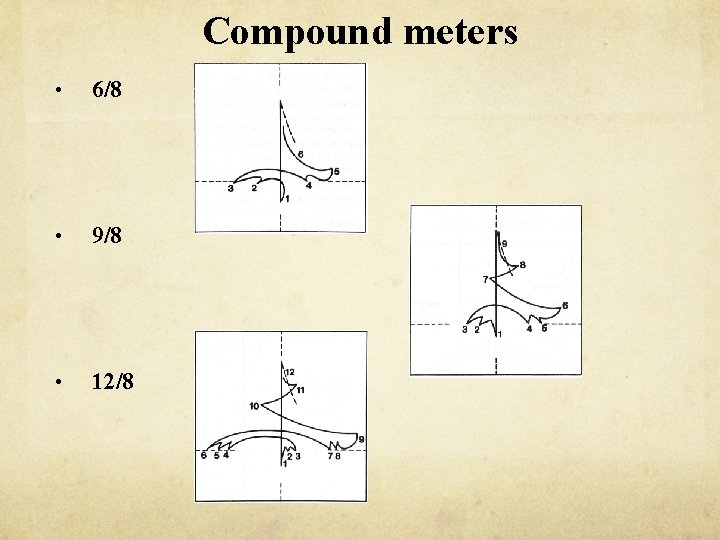
Compound meters • 6/8 • 9/8 • 12/8
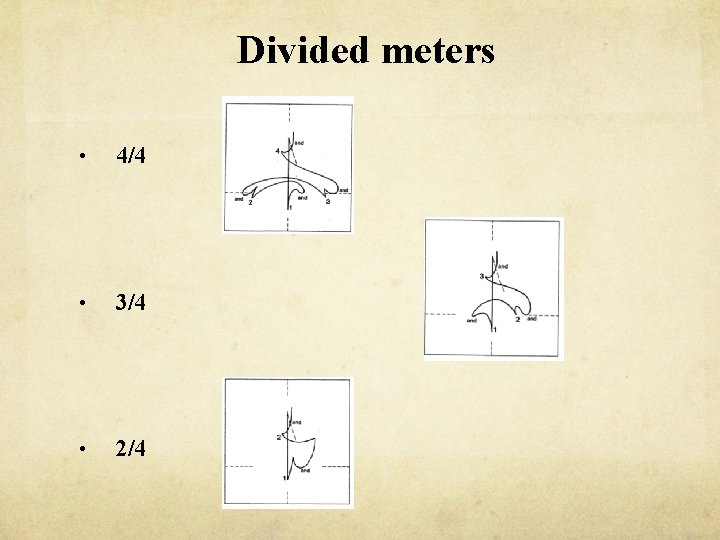
Divided meters • 4/4 • 3/4 • 2/4
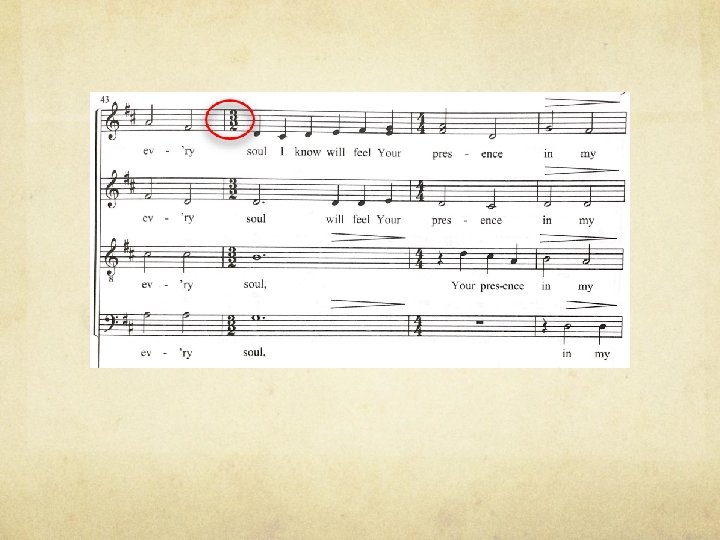
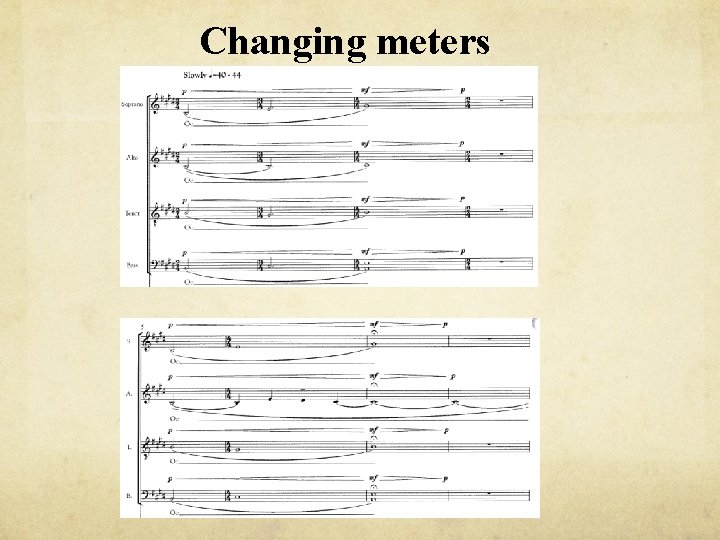
Changing meters
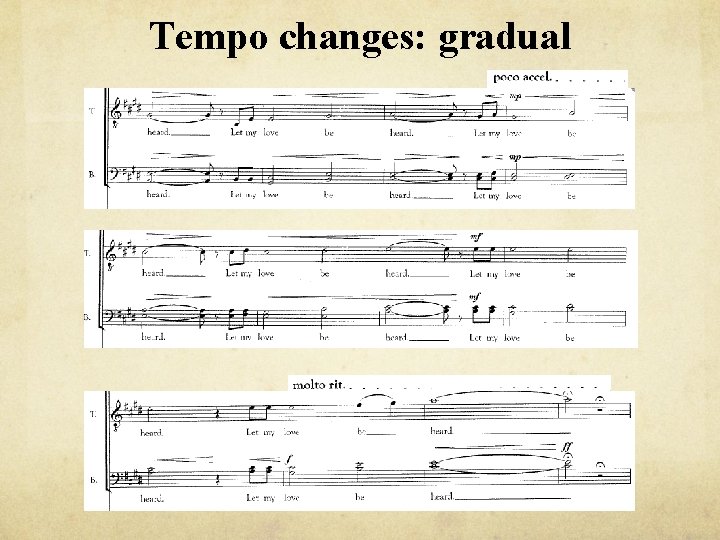
Tempo changes: gradual
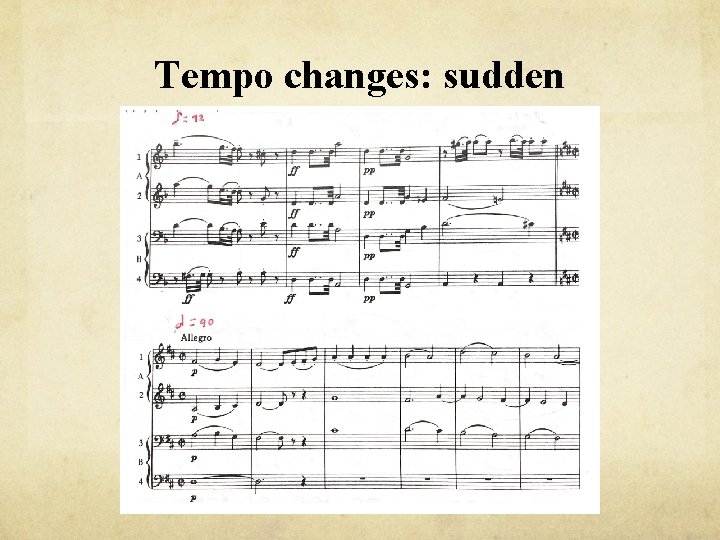
Tempo changes: sudden
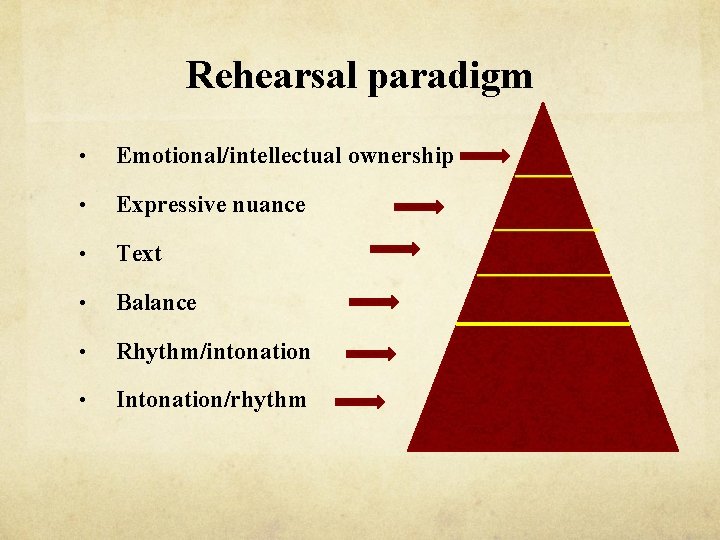
Rehearsal paradigm • Emotional/intellectual ownership • Expressive nuance • Text • Balance • Rhythm/intonation • Intonation/rhythm
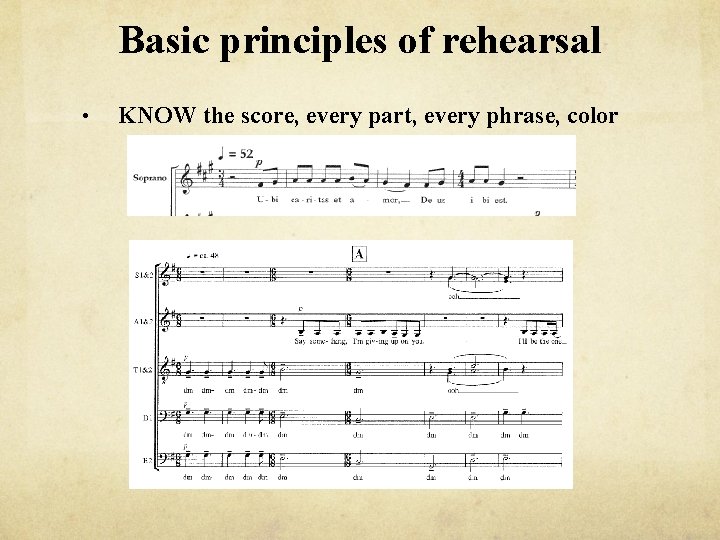
Basic principles of rehearsal • KNOW the score, every part, every phrase, color
Optional topics if time/interest • Score analysis: foreground, middle ground, background • Choral tuning • • • Vowels Overtone series and “just” vs “equal” tuning Voice-building exercises • • Resonance Dynamics Passaggio Color