
Your Health Matters Nutritious Eating 5 The Basic
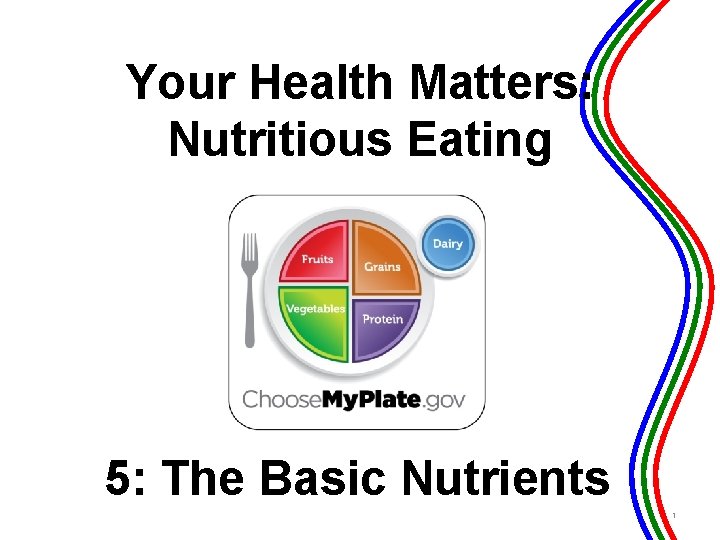
Your Health Matters: Nutritious Eating 5: The Basic Nutrients 1
Calories In 2

The Six Basic Nutrients Macronutrients Water Carbohydrates Proteins Fats Micronutrients Vitamins Minerals 3
Water § Makes up 60 -75% total body weight § Vital to keep your “engines” running § Intake met with food and beverages § 8 to 10 cups/day 4 Nutritional Sciences, Thompson Learning Inc. 2007
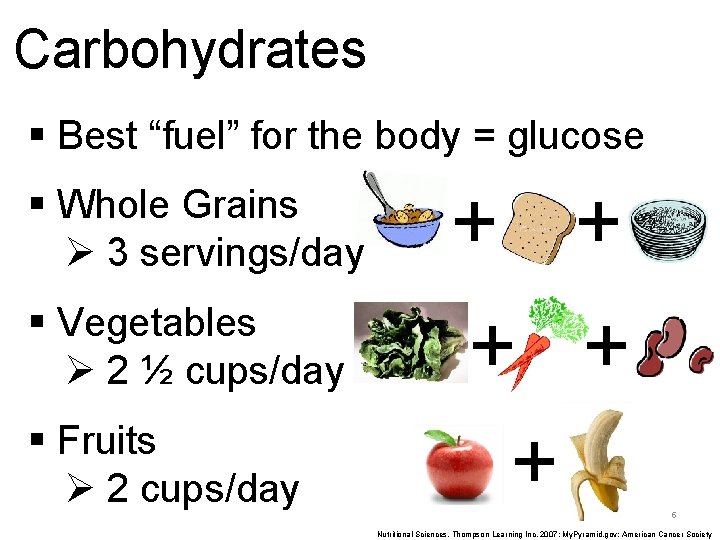
Carbohydrates § Best “fuel” for the body = glucose § Whole Grains Ø 3 servings/day § Vegetables Ø 2 ½ cups/day § Fruits Ø 2 cups/day + + + 5 Nutritional Sciences, Thompson Learning Inc. 2007; My. Pyramid. gov; American Cancer Society
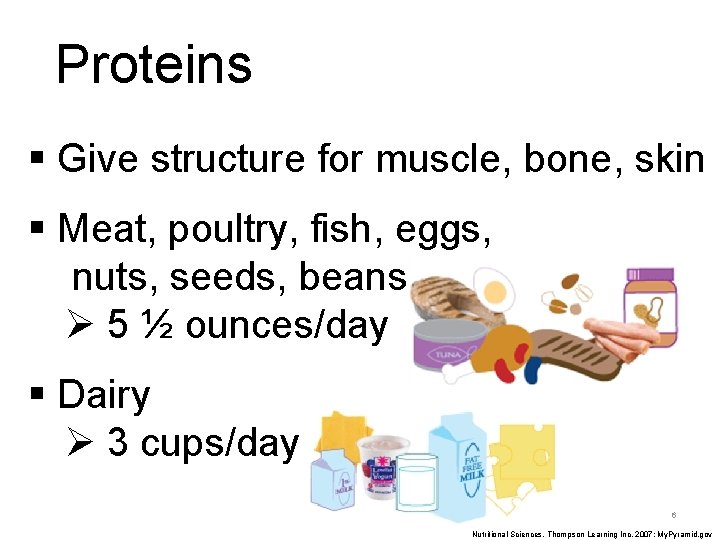
Proteins § Give structure for muscle, bone, skin § Meat, poultry, fish, eggs, nuts, seeds, beans Ø 5 ½ ounces/day § Dairy Ø 3 cups/day 6 Nutritional Sciences, Thompson Learning Inc. 2007; My. Pyramid. gov
Fats (Lipids) § Provide structure and store energy § Make most of your fat sources from fish, nuts, vegetable oils § Limit butter, margarine, lard, shortening 7 Nutritional Sciences, Thompson Learning Inc. 2007; My. Pyramid. gov
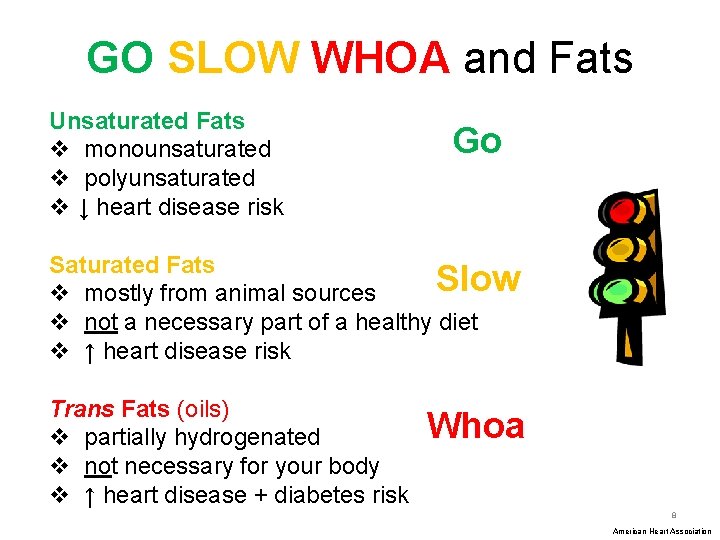
GO SLOW WHOA and Fats Unsaturated Fats v monounsaturated v polyunsaturated v ↓ heart disease risk Go Saturated Fats Slow v mostly from animal sources v not a necessary part of a healthy diet v ↑ heart disease risk Trans Fats (oils) v partially hydrogenated v not necessary for your body v ↑ heart disease + diabetes risk Whoa 8 American Heart Association
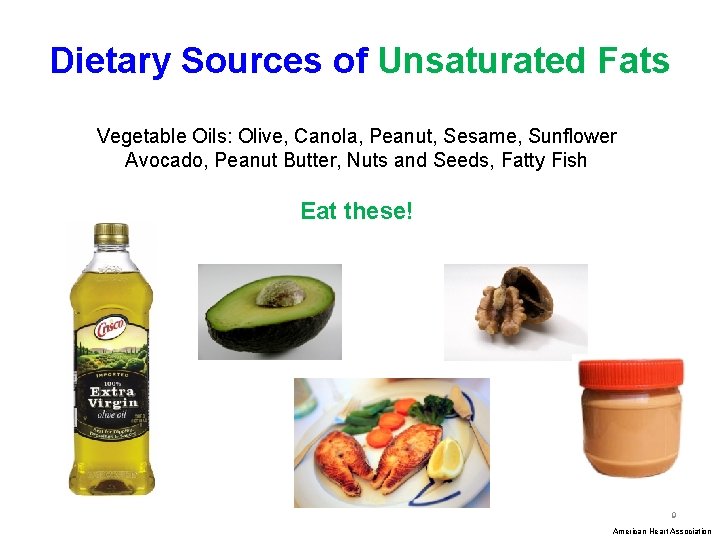
Dietary Sources of Unsaturated Fats Vegetable Oils: Olive, Canola, Peanut, Sesame, Sunflower Avocado, Peanut Butter, Nuts and Seeds, Fatty Fish Eat these! 9 American Heart Association
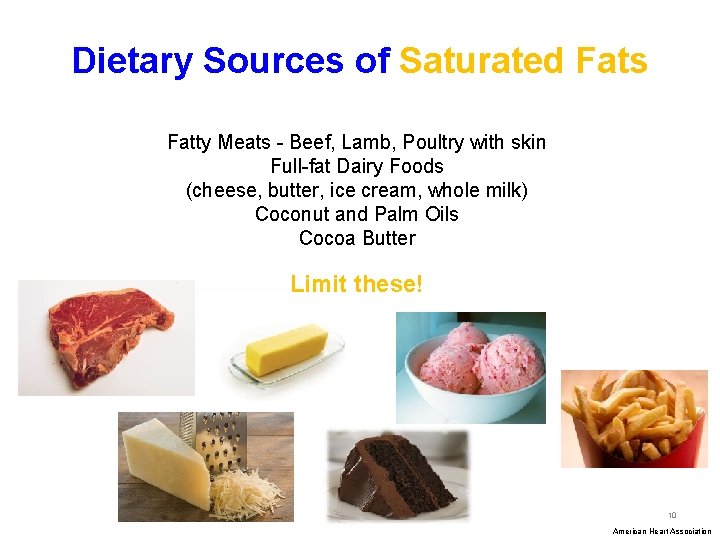
Dietary Sources of Saturated Fats Fatty Meats - Beef, Lamb, Poultry with skin Full-fat Dairy Foods (cheese, butter, ice cream, whole milk) Coconut and Palm Oils Cocoa Butter Limit these! 10 American Heart Association
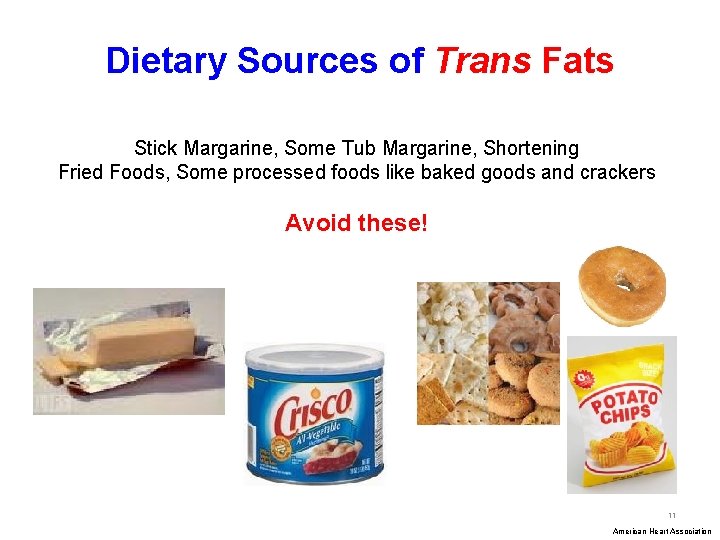
Dietary Sources of Trans Fats Stick Margarine, Some Tub Margarine, Shortening Fried Foods, Some processed foods like baked goods and crackers Avoid these! 11 American Heart Association
Vitamins § Vital for using energy from carbohydrates, protein, and fat § A, B 6, B 12, C, D, E, K, Folate, Thiamin, Riboflavin, Niacin, Biotin, Pantothenic Acid § Best to get through a whole foods diet… variety! 12 Nutritional Sciences, Thompson Learning Inc. 2007
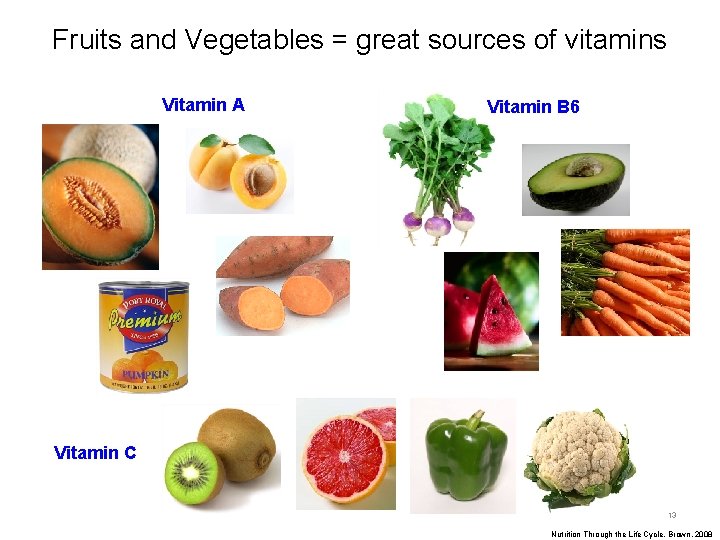
Fruits and Vegetables = great sources of vitamins Vitamin A Vitamin B 6 Vitamin C 13 Nutrition Through the Life Cycle, Brown, 2008
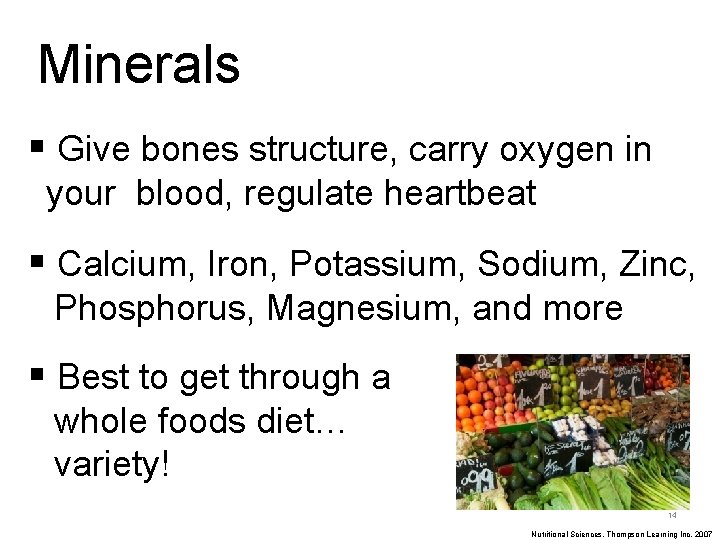
Minerals § Give bones structure, carry oxygen in your blood, regulate heartbeat § Calcium, Iron, Potassium, Sodium, Zinc, Phosphorus, Magnesium, and more § Best to get through a whole foods diet… variety! 14 Nutritional Sciences, Thompson Learning Inc. 2007
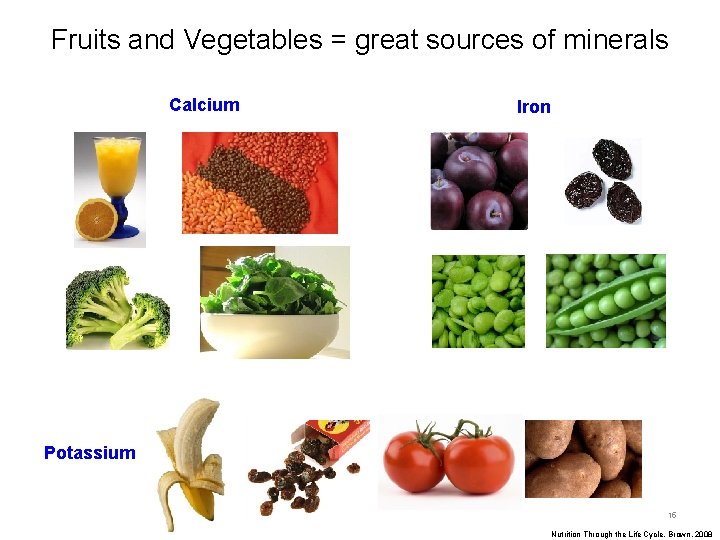
Fruits and Vegetables = great sources of minerals Calcium Iron Potassium 15 Nutrition Through the Life Cycle, Brown, 2008
Alcohol… Not a nutrient! § Ethyl alcohol (ethanol) § Intoxicating ingredient produced by fermentation of yeast, sugars, starches § Central nervous system depressant 16 Centers for Disease Control and Prevention; Dietary Guidelines for Americans
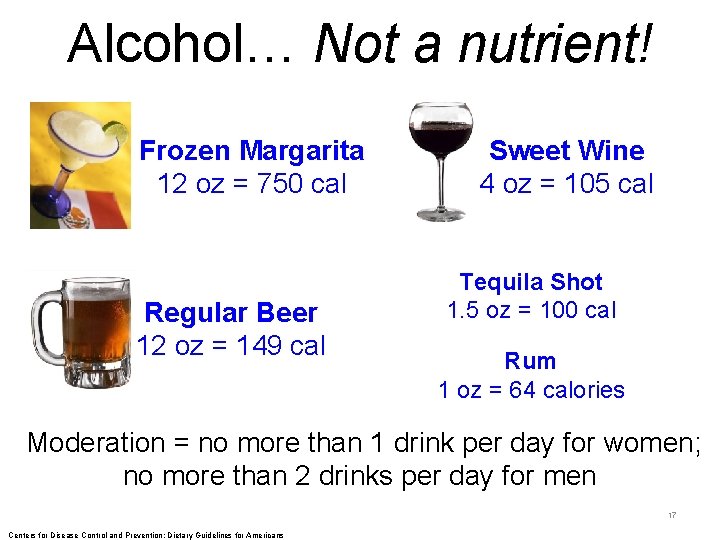
Alcohol… Not a nutrient! Frozen Margarita 12 oz = 750 cal Regular Beer 12 oz = 149 cal Sweet Wine 4 oz = 105 cal Tequila Shot 1. 5 oz = 100 cal Rum 1 oz = 64 calories Moderation = no more than 1 drink per day for women; no more than 2 drinks per day for men 17 Centers for Disease Control and Prevention; Dietary Guidelines for Americans
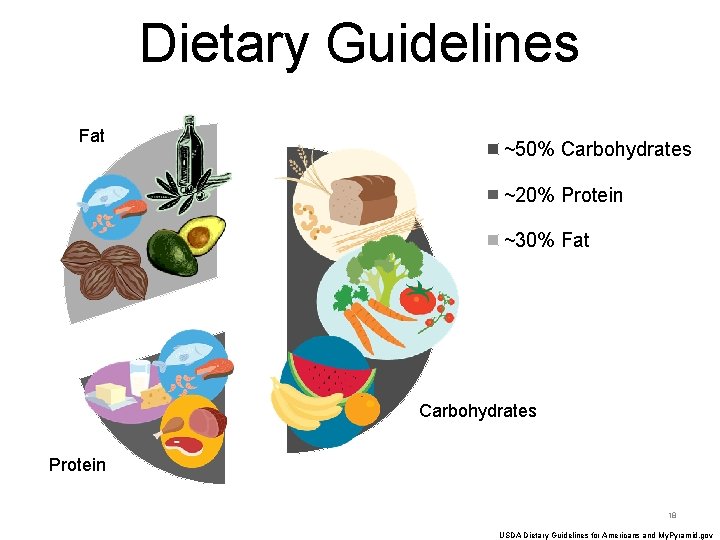
Dietary Guidelines Fat ~50% Carbohydrates ~20% Protein ~30% Fat Carbohydrates Protein 18 USDA Dietary Guidelines for Americans and My. Pyramid. gov
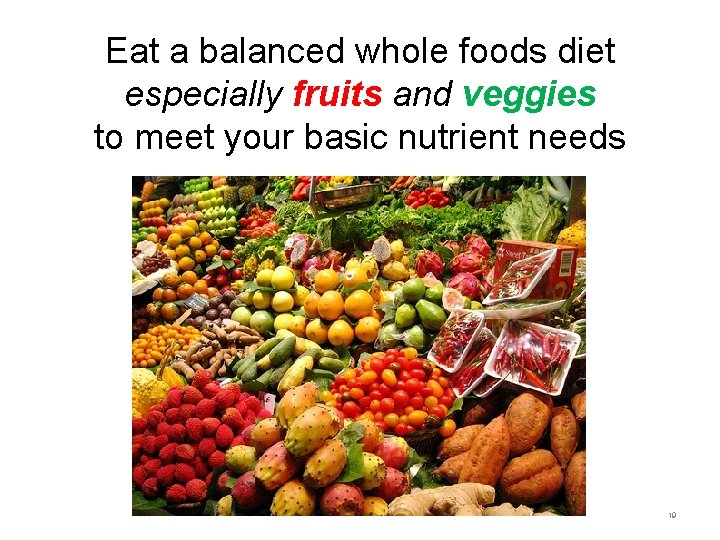
Eat a balanced whole foods diet especially fruits and veggies to meet your basic nutrient needs 19
Challenge! For the next week, drink 8 glasses of water per day and try one new fruit. 20
© 2009, General Mills, Inc. What is a grain?
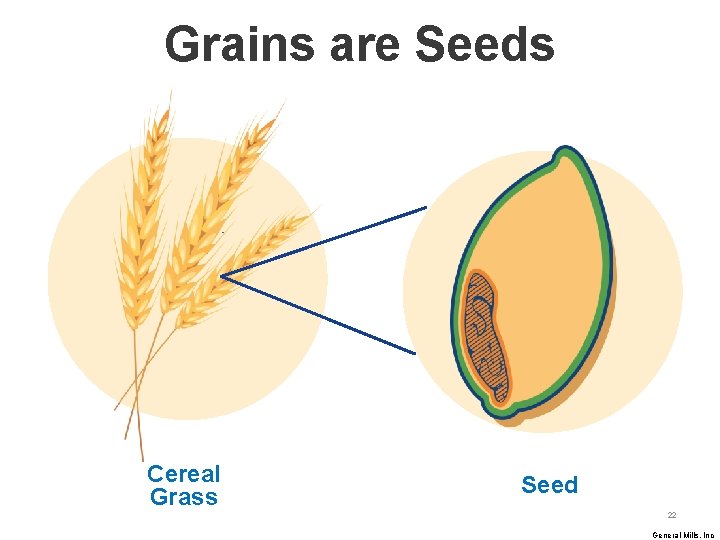
Grains are Seeds Cereal Grass Seed 22 General Mills, Inc
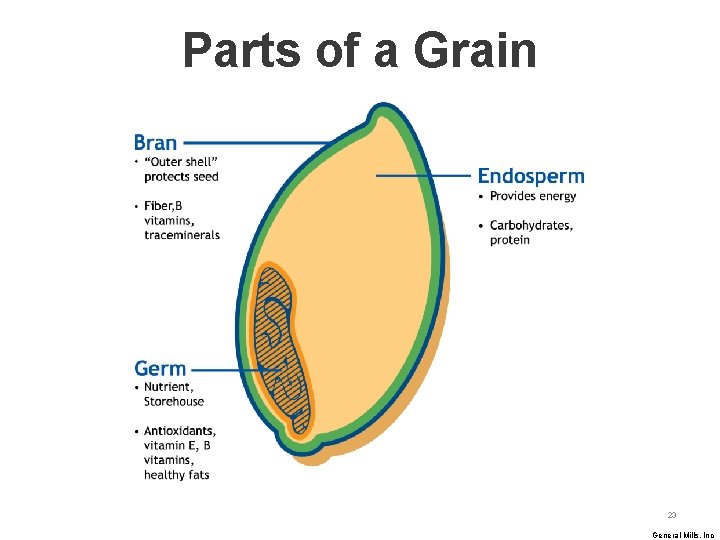
Parts of a Grain 23 General Mills, Inc
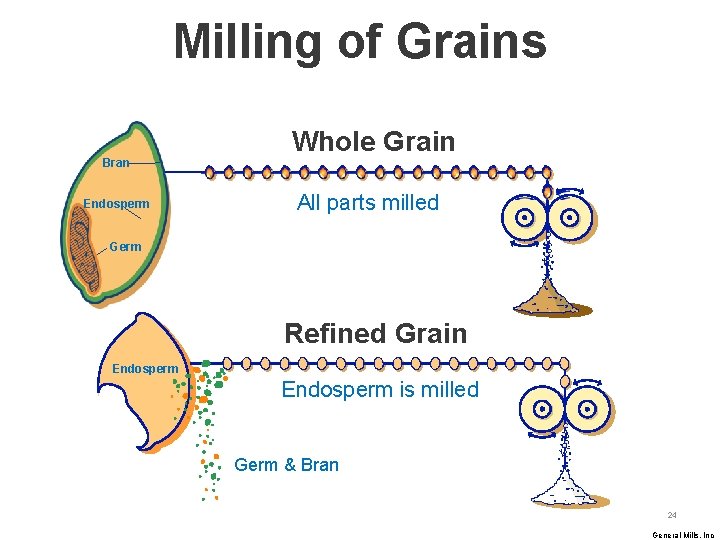
Milling of Grains Bran Endosperm Whole Grain All parts milled Germ Refined Grain Endosperm is milled Germ & Bran 24 General Mills, Inc
© 2009, General Mills, Inc. What’s so great about whole grains? 25
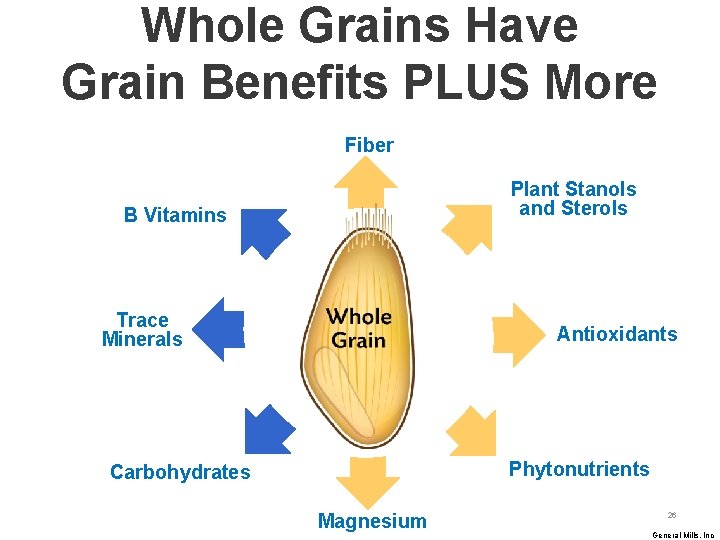
Whole Grains Have Grain Benefits PLUS More Fiber Plant Stanols and Sterols B Vitamins Trace Minerals Antioxidants Phytonutrients Carbohydrates Magnesium 26 General Mills, Inc
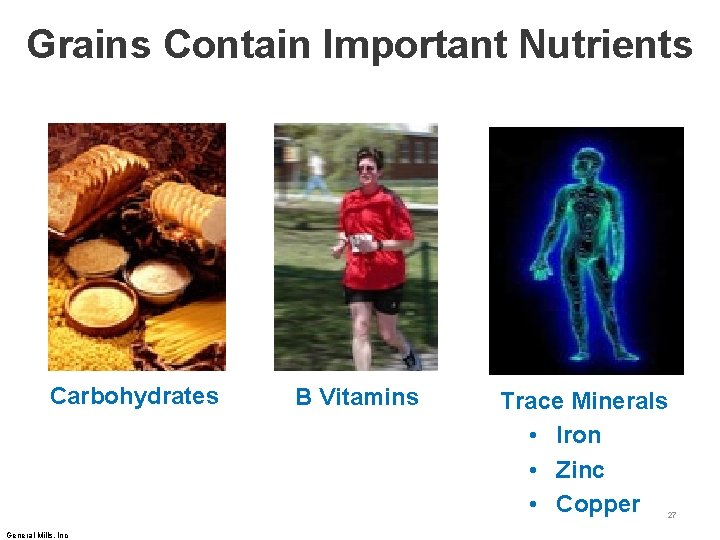
Grains Contain Important Nutrients Carbohydrates B Vitamins Trace Minerals • Iron • Zinc • Copper 27 General Mills, Inc
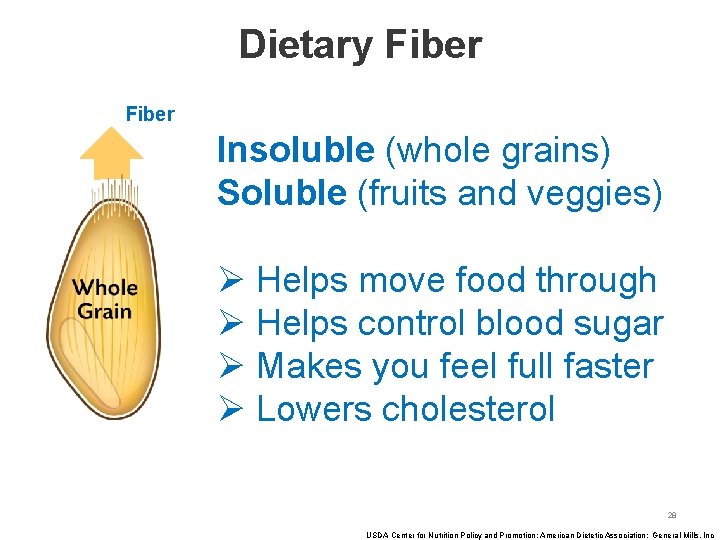
Dietary Fiber Insoluble (whole grains) Soluble (fruits and veggies) Ø Helps move food through Ø Helps control blood sugar Ø Makes you feel full faster Ø Lowers cholesterol 28 USDA Center for Nutrition Policy and Promotion; American Dietetic Association; General Mills, Inc
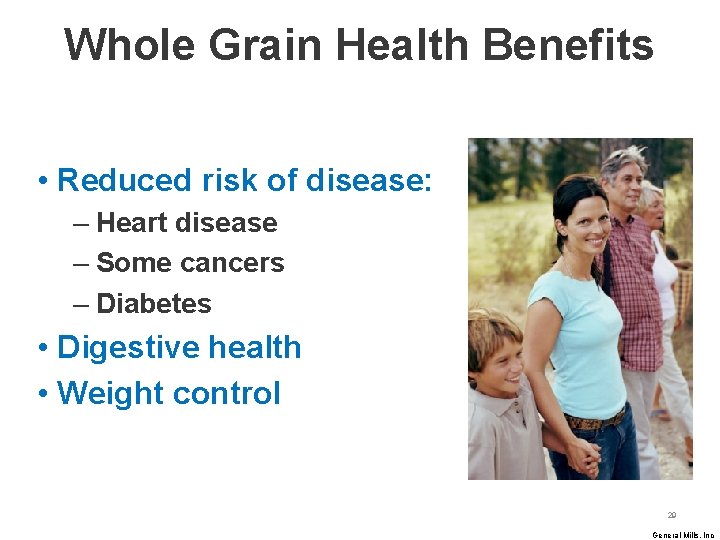
Whole Grain Health Benefits • Reduced risk of disease: – Heart disease – Some cancers – Diabetes • Digestive health • Weight control 29 General Mills, Inc
Whole Grain Fiber Facts Whole Grain = Fiber Whole Grain Doesn’t Mean High Fiber • Whole grain foods provide 14 grams of fiber per serving • Contain the whole grain package High Fiber Doesn’t Mean Whole Grain • Some high-fiber grain foods are not whole grain 30 General Mills, Inc
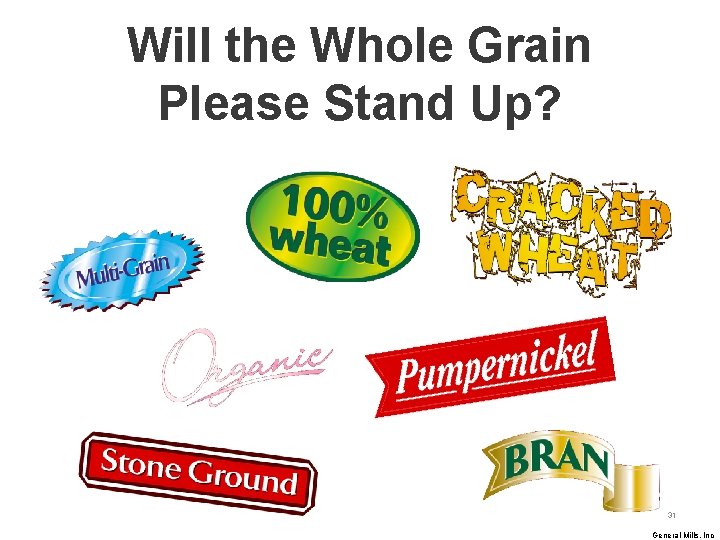
Will the Whole Grain Please Stand Up? 31 General Mills, Inc
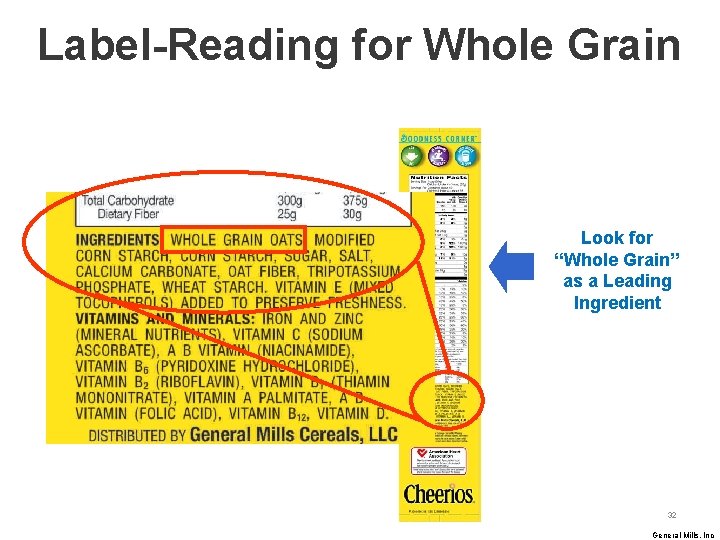
Label-Reading for Whole Grain Look for “Whole Grain” as a Leading Ingredient 32 General Mills, Inc
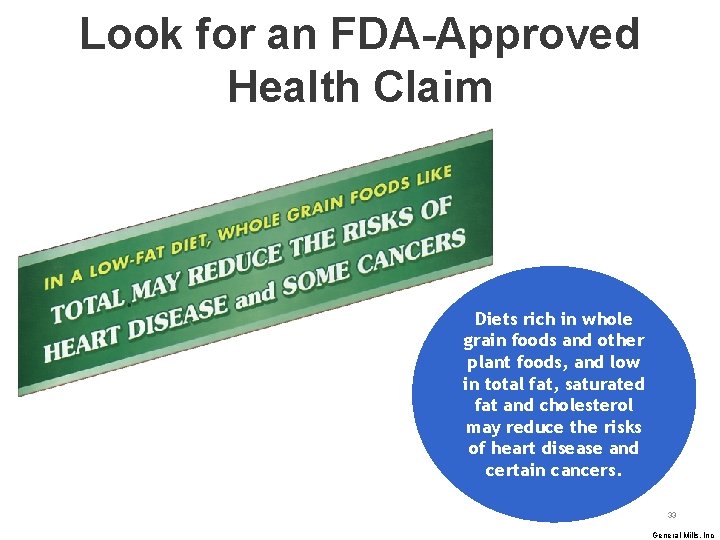
Look for an FDA-Approved Health Claim Diets rich in whole grain foods and other plant foods, and low in total fat, saturated fat and cholesterol may reduce the risks of heart disease and certain cancers. 33 General Mills, Inc
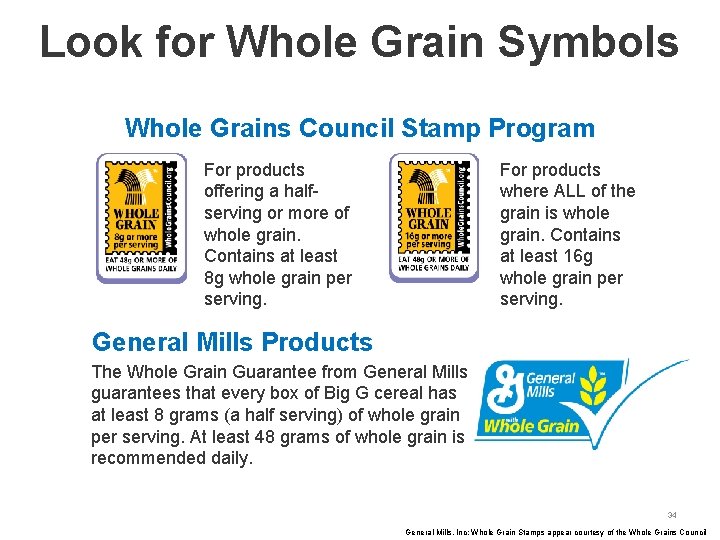
Look for Whole Grain Symbols Whole Grains Council Stamp Program For products offering a halfserving or more of whole grain. Contains at least 8 g whole grain per serving. For products where ALL of the grain is whole grain. Contains at least 16 g whole grain per serving. General Mills Products The Whole Grain Guarantee from General Mills guarantees that every box of Big G cereal has at least 8 grams (a half serving) of whole grain per serving. At least 48 grams of whole grain is recommended daily. 34 General Mills, Inc; Whole Grain Stamps appear courtesy of the Whole Grains Council
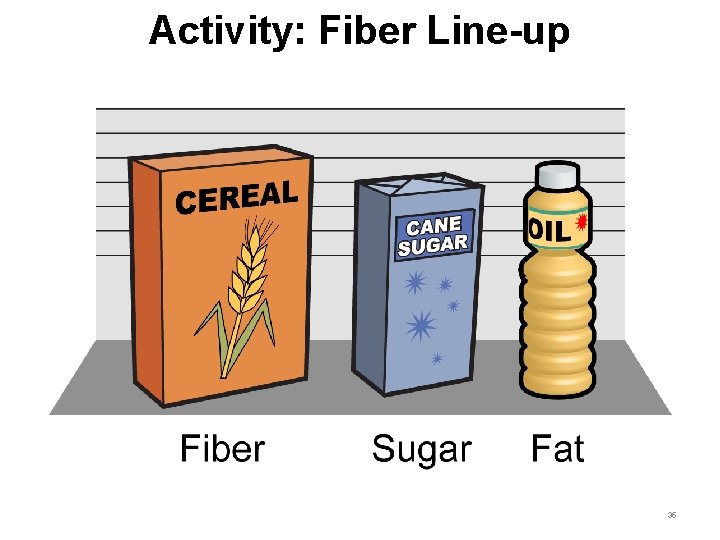
Activity: Fiber Line-up 35
Challenge! Each week, for the next four weeks, try a new whole grain food. 36
The Basic Nutrients Key Point Recap Ø IN: A healthy diet has a balance of carbohydrates, protein and fat Ø IN: “Vary your veggies” and “Focus on fruits” Ø IN: “Make half your grains whole” Ø IN: Get enough fiber Ø Watch out for packaging health claims 37
Switch to Understanding the Nutrition Facts Label Power. Point 38
- Slides: 38