
Your Bodys EspressoBlood General Characteristics Liquid connective tissue
Your Body’s Espresso…Blood
General Characteristics • Liquid connective tissue: composed of – Formed elements – RBC, WBC, platelets – Plasma (yellowish), mainly H 2 O, also contains; proteins, electrolytes, etc. • Blood volume: – Avg. male = 5 -6 liters – Avg. female = 4 -5 liters • p. H range is 7. 35 – 7. 45 (slightly alkaline) • Viscosity due to RBC
Functions (3) 1. Acts as transport medium -Delivers nutrients, O 2, & hormones to cells 2. Part of body’s defense mechanism -Leukocytes & antibodies protect 3. Helps to regulate body (homeostasis) -Aids in temp regulation & acts as p. H buffer
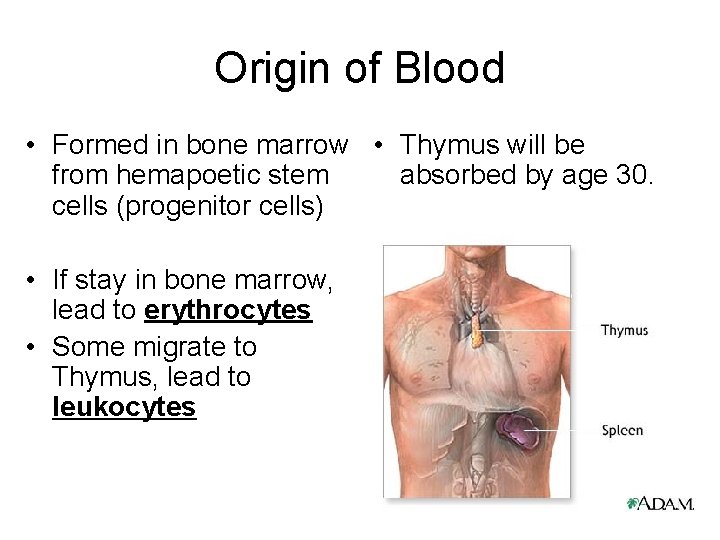
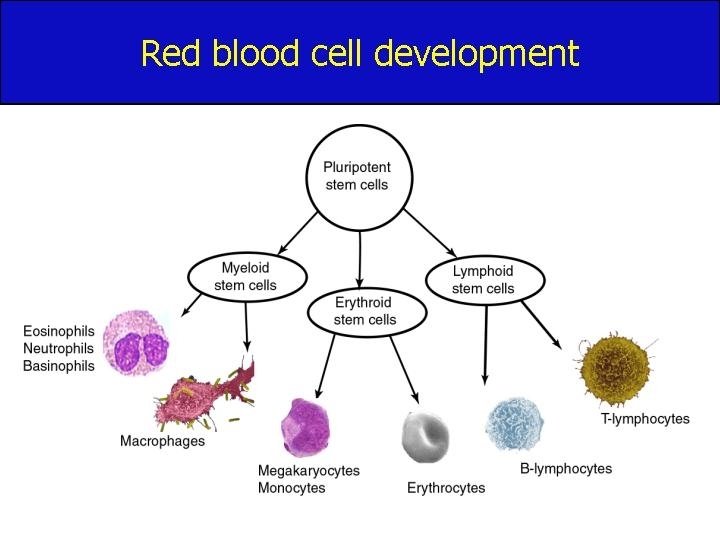
Origin of Blood • Formed in bone marrow • Thymus will be from hemapoetic stem absorbed by age 30. cells (progenitor cells) • If stay in bone marrow, lead to erythrocytes • Some migrate to Thymus, lead to leukocytes

Absence of Thymus • Creates an inability to produce T-cells (these are the main defense mechanism against viruses and some bacteria) – CD-8 T-cell (fights virus) – CD-4 T-cell (aids macropages and antibodies in battling bacteria) • Severly Combined Immuno-Defiecency (SCID) • “Boy in the Bubble”
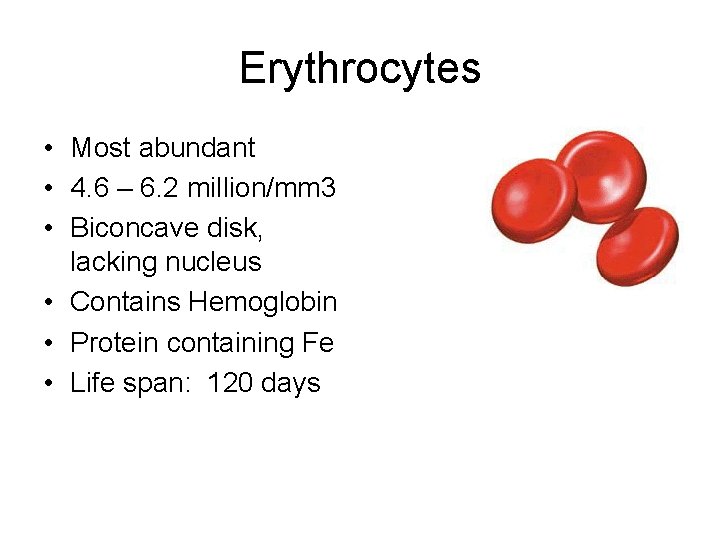
Erythrocytes • Most abundant • 4. 6 – 6. 2 million/mm 3 • Biconcave disk, lacking nucleus • Contains Hemoglobin • Protein containing Fe • Life span: 120 days
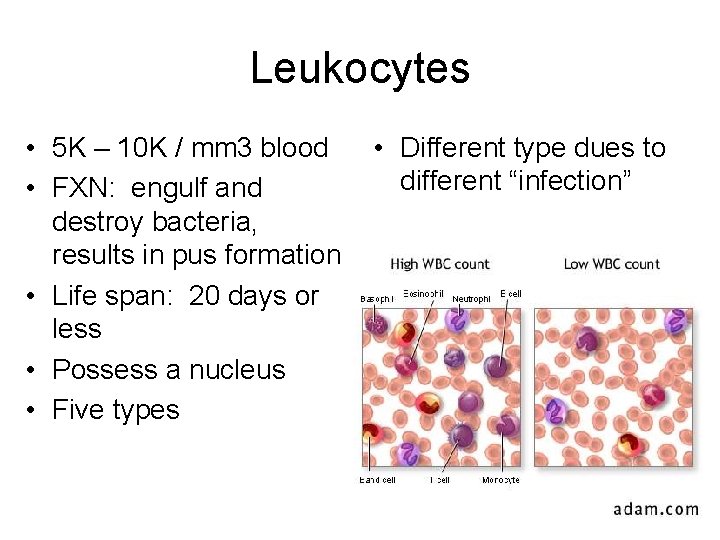
Leukocytes • 5 K – 10 K / mm 3 blood • FXN: engulf and destroy bacteria, results in pus formation • Life span: 20 days or less • Possess a nucleus • Five types • Different type dues to different “infection”
Platelets (thrombocytes) • • Tiny fragment of cell (1/10 th size of RBC) 150 K – 360 K/mm 3 blood Formed from stem cells Function: Formation of blood clots
Neutrophil (60%) • Function as…
Basophils (1%) • Function: Release…
Eosinophils (1%) • Function against? • Relation to
Lymphocytes (25 -33%) • Function • Diseases related
Monocytes (3 -8%) • Function • Diseases related
- Slides: 14