
YOUR BODY EXERCISE PAF 30 FA Mrs Price

YOUR BODY & EXERCISE PAF 30 FA Mrs. Price

Principles of Fitness, Health and Wellness Concepts Define Physical Fitness: - the improved physiological state that leads to improved health and longevity What do you suppose the 3 primary categories of fitness are? ?
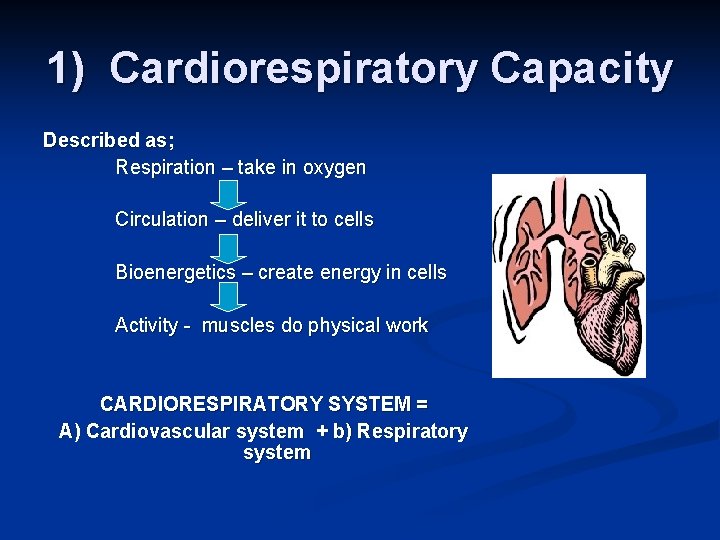
1) Cardiorespiratory Capacity Described as; Respiration – take in oxygen Circulation – deliver it to cells Bioenergetics – create energy in cells Activity - muscles do physical work CARDIORESPIRATORY SYSTEM = A) Cardiovascular system + b) Respiratory system
A) Cardiovascular System is composed of: - Heart - Arteries - Veins Function: transport oxygenated blood to the body for energy production
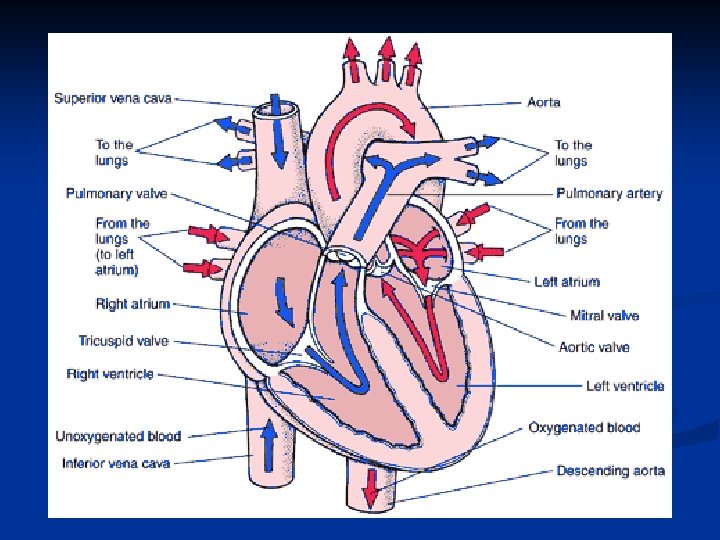

What reaction does your cv system have when you start to exercise? ? ?
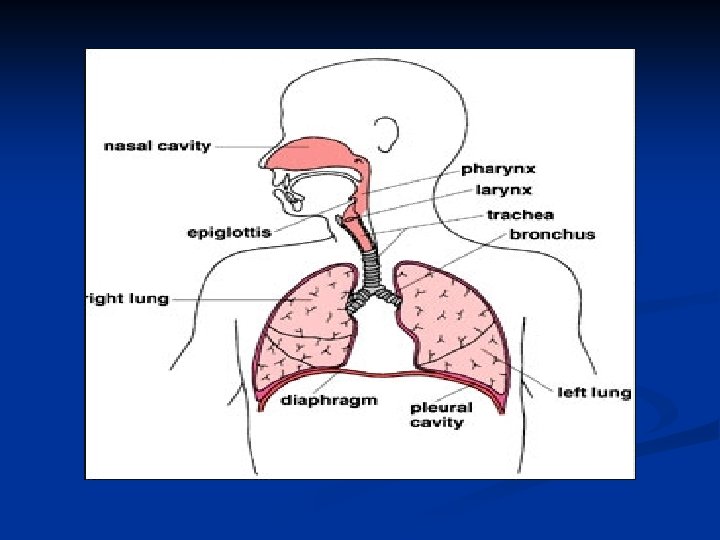
B) Respiratory System is composed: - Lungs - Mouth - Airways Function: draw oxygen into the lung and rid carbon dioxide
What reactions does your respiratory system have at the onset of exercise?
Long term benefits of cardiorespiratory training include; - decreased resting heart rate - decreased risk of cardiovascular disease - improved endurance - improved cardiac efficiency What cardiovascular training do you expect to participate in this semester?
n Guidelines for Cardiorespiratory Training; F(requency): 4 – 7 days a week I(ntensity): 60 – 80% MHR T(ime): 30 – 60 minutes T(ype): running, swimming, biking, dancing, etc…
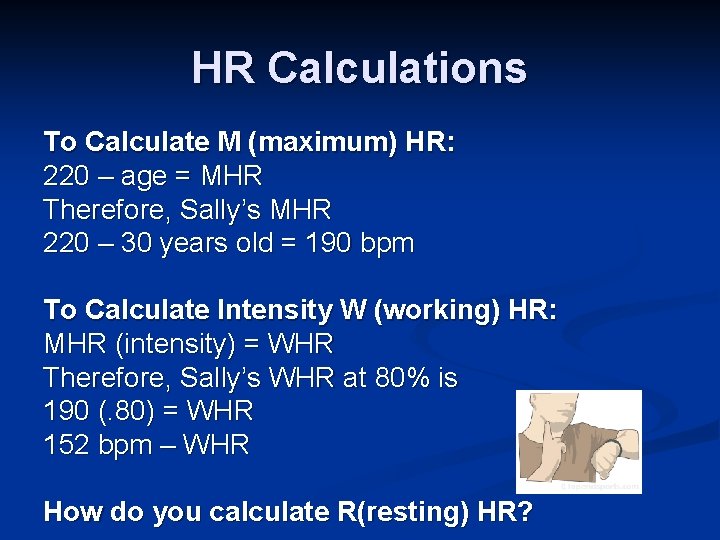
HR Calculations To Calculate M (maximum) HR: 220 – age = MHR Therefore, Sally’s MHR 220 – 30 years old = 190 bpm To Calculate Intensity W (working) HR: MHR (intensity) = WHR Therefore, Sally’s WHR at 80% is 190 (. 80) = WHR 152 bpm – WHR How do you calculate R(resting) HR?
2) Muscular Capacity Described as; The ability to exert force by converting chemical energy into mechanical energy - Humans have over 600 muscles Muscles communicate with the spinal cord and brain via nerves Messages are sent from the brain to tiny protein fibers in muscles in order to produce motion
Adaptation to Training - 1. 2. Muscles are very adaptive Can increase in strength and endurance Muscular Strength: The maximum amount of force that a muscles can generate Muscular Endurance: The ability of a muscle to repeatedly exert force over a period of time.
Training Muscular Capacity increases when you resistance train because; - Muscle fiber size increases - Muscle contractile strength increase - Muscles have improved coordination - Tendon, ligament, and tendon strength improves
Some benefits of training muscular capacity include; - Helps prevent osteoporosis - Improves strength for cardiorespiratory exercise - Improves sport performance - Reduces loss of muscle mass due to aging and inactivity - Makes every day activities easier - Improves core strength and posture
n Guidelines for Muscular Capacity Training; F(requency): 2 – 4 days a week I(ntensity): Strength: Few reps & high load Endurance: High reps & low load T(ime): 15 – 60 minutes (depends on goals) T(ype): free-weights, push ups, weight machines, crunches, etc…
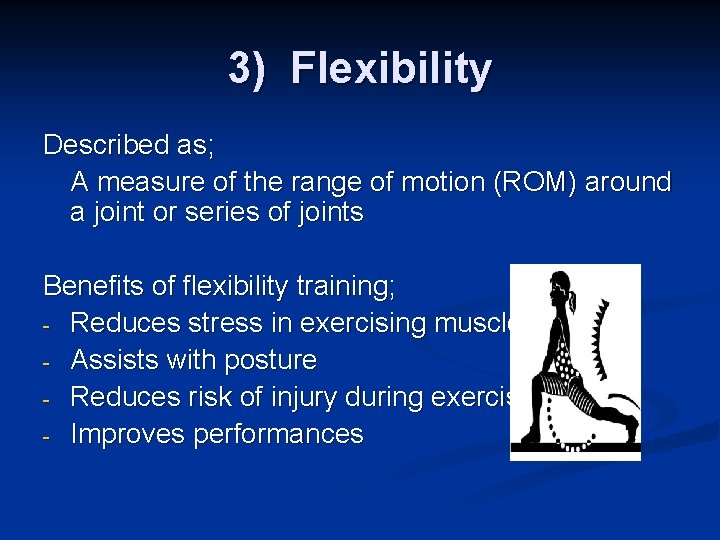
3) Flexibility Described as; A measure of the range of motion (ROM) around a joint or series of joints Benefits of flexibility training; - Reduces stress in exercising muscles - Assists with posture - Reduces risk of injury during exercise - Improves performances
Flexibility Techniques Static Stretching - Taking a joint through a particular range of motion (stationary) - Hold 20 seconds / repeat 3 times with 20 seconds rest Dynamic Stretching - Taking a joint through a full range of motion (in motion) - Excellent pre-cardio
n Guidelines for Flexibility; F(requency): 7 days a week I(ntensity): slight tension T(ime): 5 – 10 minutes T(ype): Static & Dynamic
- Slides: 20