
You will now learn the imperfect which describes

You will now learn the imperfect, which describes past activities in a different way. u Copyright © 2008 Vista Higher Learning. All rights reserved. 1
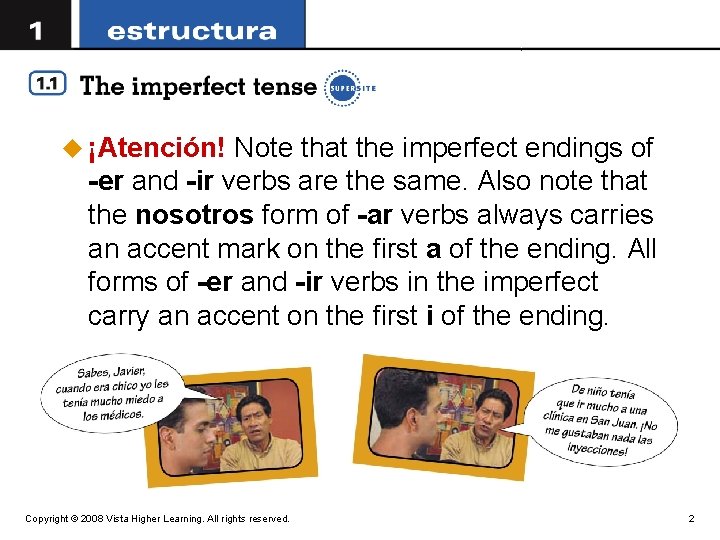
u ¡Atención! Note that the imperfect endings of -er and -ir verbs are the same. Also note that the nosotros form of -ar verbs always carries an accent mark on the first a of the ending. All forms of -er and -ir verbs in the imperfect carry an accent on the first i of the ending. Copyright © 2008 Vista Higher Learning. All rights reserved. 2
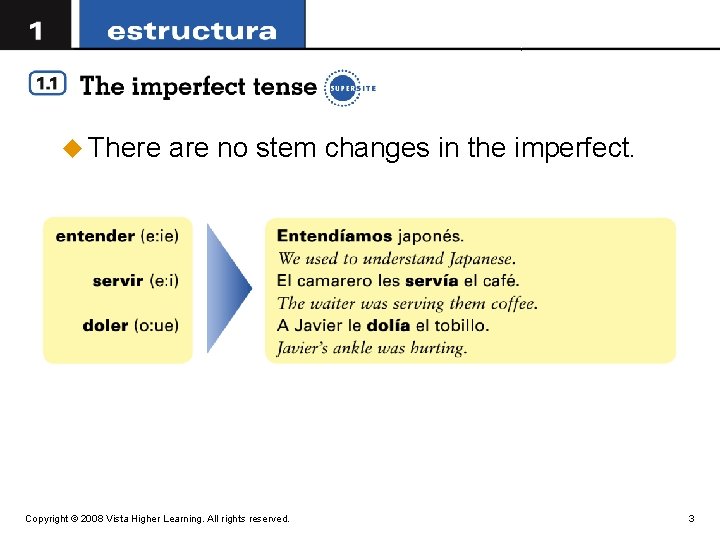
u There are no stem changes in the imperfect. Copyright © 2008 Vista Higher Learning. All rights reserved. 3
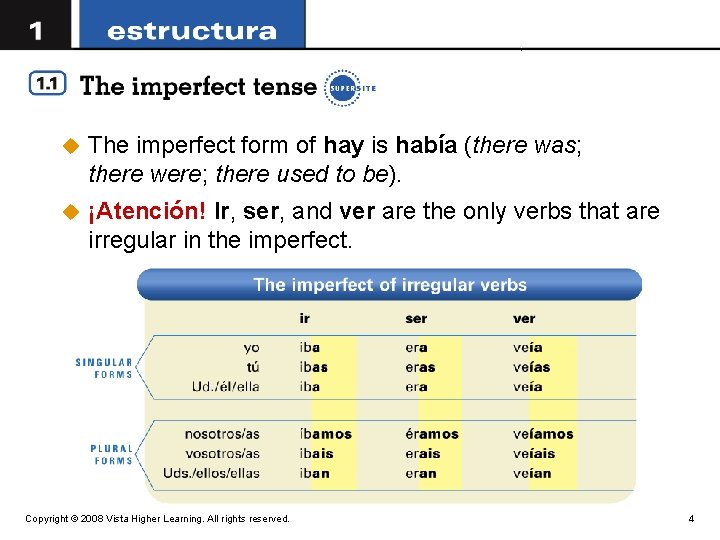
u The imperfect form of hay is había (there was; there were; there used to be). u ¡Atención! Ir, ser, and ver are the only verbs that are irregular in the imperfect. Copyright © 2008 Vista Higher Learning. All rights reserved. 4
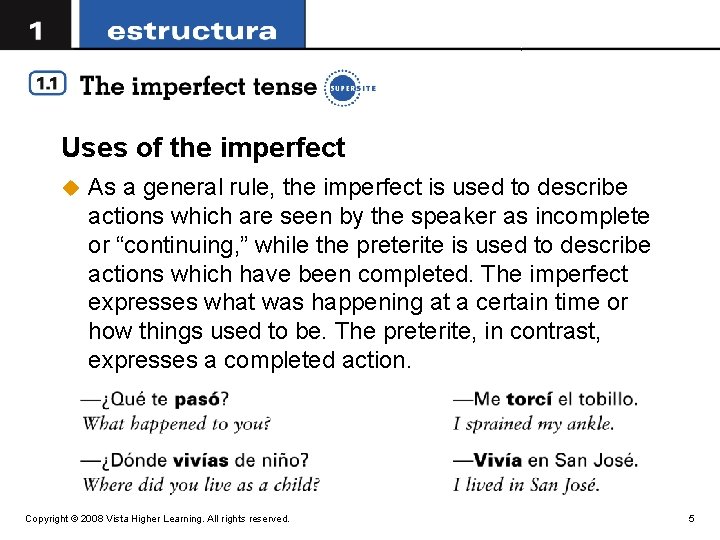
Uses of the imperfect u As a general rule, the imperfect is used to describe actions which are seen by the speaker as incomplete or “continuing, ” while the preterite is used to describe actions which have been completed. The imperfect expresses what was happening at a certain time or how things used to be. The preterite, in contrast, expresses a completed action. Copyright © 2008 Vista Higher Learning. All rights reserved. 5
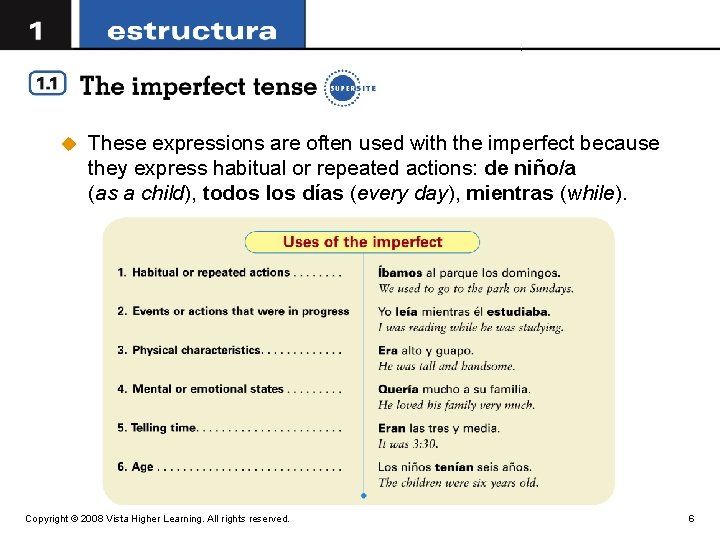
u These expressions are often used with the imperfect because they express habitual or repeated actions: de niño/a (as a child), todos los días (every day), mientras (while). Copyright © 2008 Vista Higher Learning. All rights reserved. 6
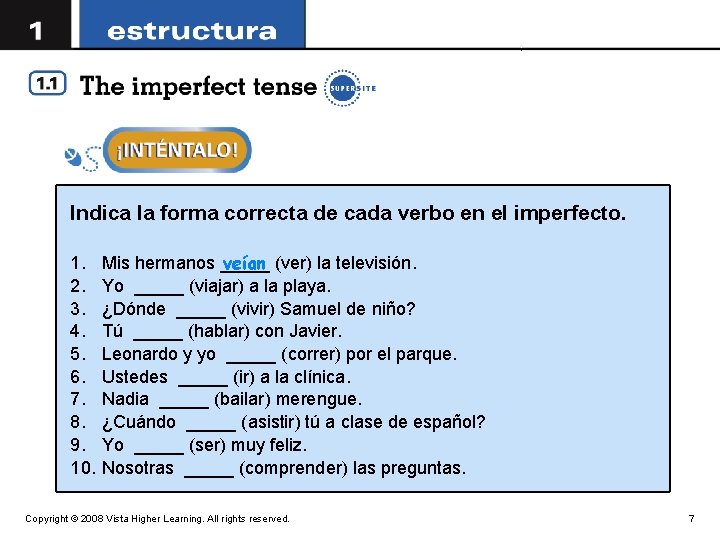
Indica la forma correcta de cada verbo en el imperfecto. 1. 2. 3. 4. 5. 6. 7. 8. 9. 10. veían (ver) la televisión. Mis hermanos _____ Yo _____ (viajar) a la playa. ¿Dónde _____ (vivir) Samuel de niño? Tú _____ (hablar) con Javier. Leonardo y yo _____ (correr) por el parque. Ustedes _____ (ir) a la clínica. Nadia _____ (bailar) merengue. ¿Cuándo _____ (asistir) tú a clase de español? Yo _____ (ser) muy feliz. Nosotras _____ (comprender) las preguntas. Copyright © 2008 Vista Higher Learning. All rights reserved. 7
- Slides: 7