
You surely know that But maybe you dont
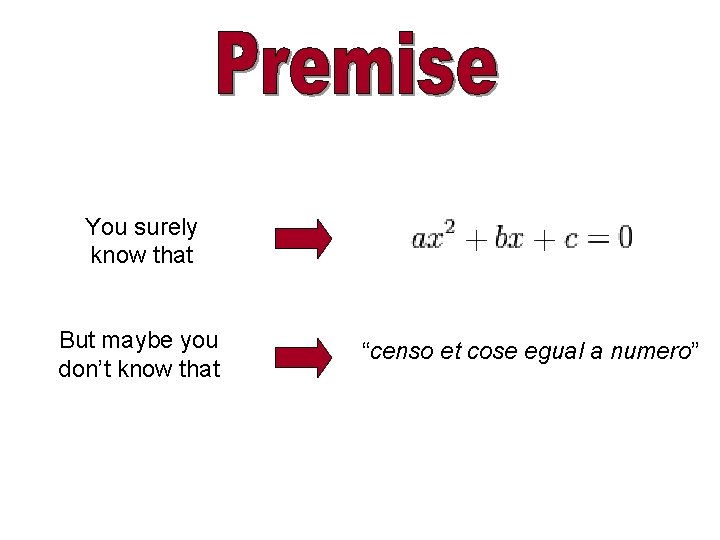
You surely know that But maybe you don’t know that “censo et cose egual a numero”
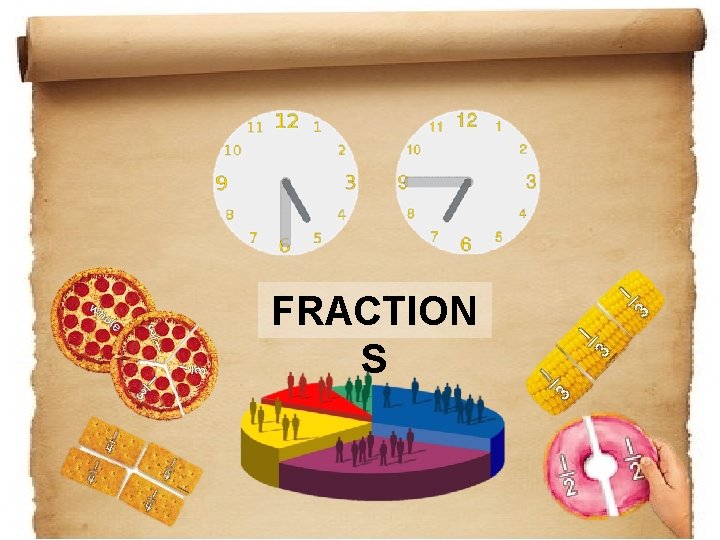
FRACTION S
We have got used to thinking and to reading Maths like it’s written today. But Maths was used by humans from the Paleolithic Age, and it has been written in really different ways (engraved on caverns, on tablets, written by strange symbols named “runes” on papyrus, explained with poems and so on) from that Era to today. They started to write Maths as we do today only about 1600/1700. We are going to show you how Maths was written “YESTERDAY” and how it is “TODAY”
us 1 i en 201 m t Co jec o Pr First of all, Algebra can be divided into: - RHETORICAL = expressed by words and lines generally in latin or in the current language (from the start of Maths* to 1550 ca) - SYNCOPATED = composed by abbrevations to express unknowns and mathematical operations (from 1550 to 1650 ca) - SYMBOLIC = uses letters and symbols to express unknowns and mathematical operations (from 1650 to today) * We can define “intuitive algebra” as the one used by pre-egyptian people to describe Nature.
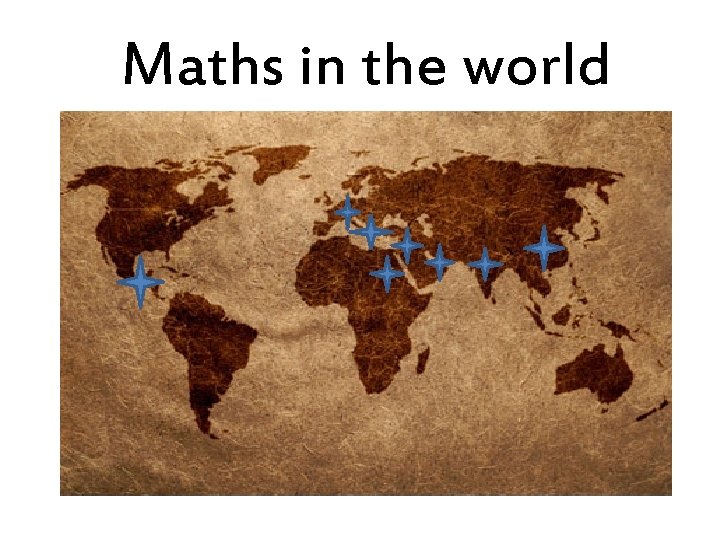
Maths in the world
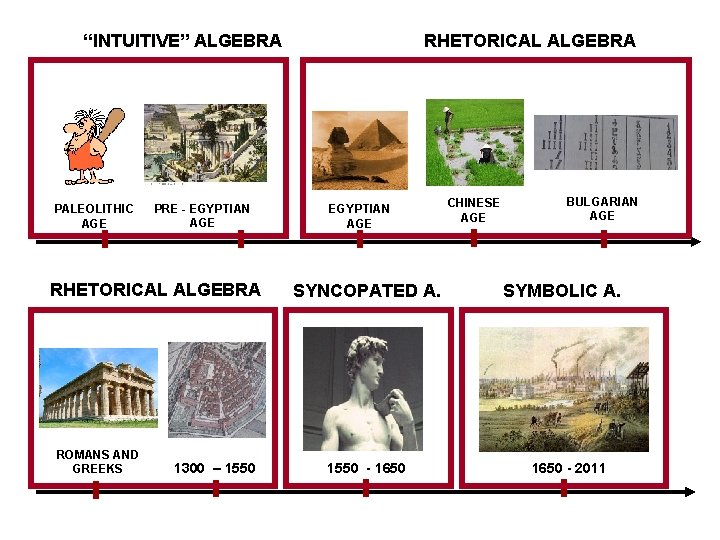
“INTUITIVE” ALGEBRA PALEOLITHIC AGE PRE - EGYPTIAN AGE RHETORICAL ALGEBRA ROMANS AND GREEKS 1300 – 1550 RHETORICAL ALGEBRA EGYPTIAN AGE SYNCOPATED A. 1550 - 1650 CHINESE AGE BULGARIAN AGE SYMBOLIC A. 1650 - 2011
Babylonian maths See Babylon numbers on the twinspace by Giulia Celano and Valentina Benedictis
The ancıent Egyptıan Math WHAT ? WHERE ? FRACTION S PAPYRU S WHO? WHEN? PYRAMID S
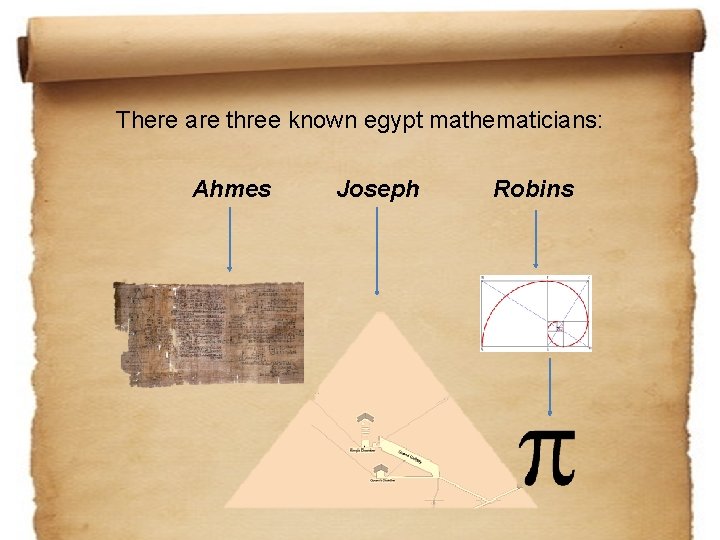
There are three known egypt mathematicians: Ahmes Joseph Robins
MAYAS: THE ANCIENT PROPHETS ONE CULTURE, ONE HISTORY
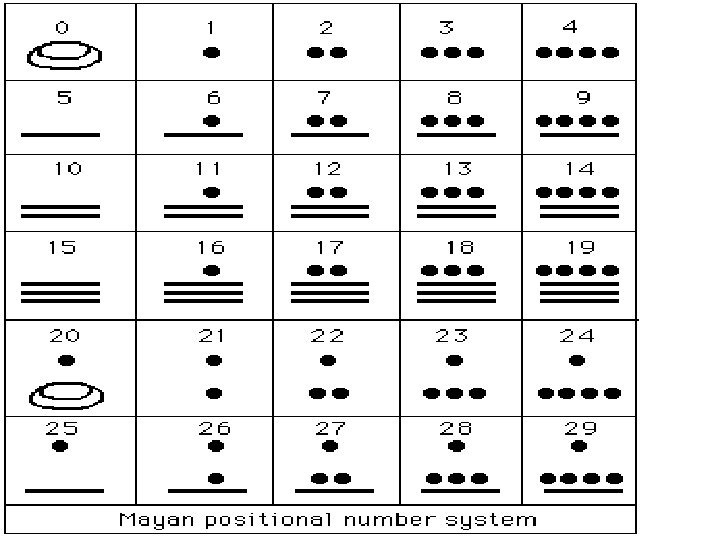
2 nd session: THE TWENTY SYSTEM ü The dot and the dash were the only symbols. ü The dot represented the number 1 and the dash the number 5. Therefore, the “. _” meant 6 for the tribe of Mayas. ü The number 0 is another symbol of the Mayan calendar. ü The Mayas were the first tribe to use zero.
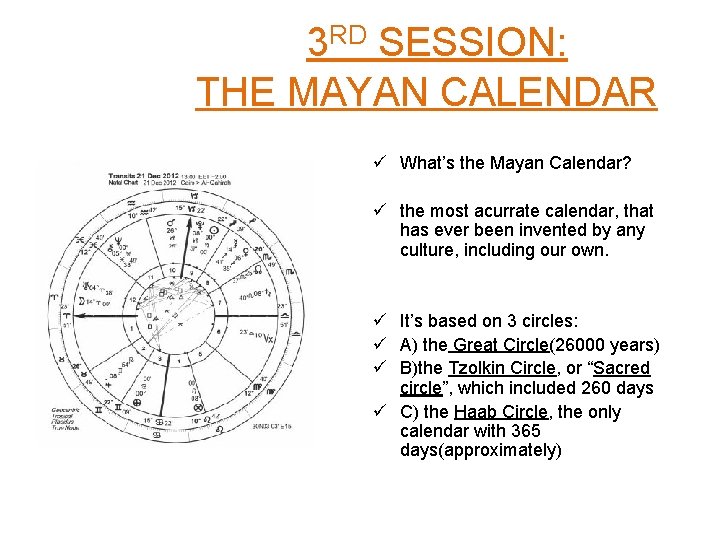
3 RD SESSION: THE MAYAN CALENDAR ü What’s the Mayan Calendar? ü the most acurrate calendar, that has ever been invented by any culture, including our own. ü It’s based on 3 circles: ü A) the Great Circle(26000 years) ü B)the Tzolkin Circle, or “Sacred circle”, which included 260 days ü C) the Haab Circle, the only calendar with 365 days(approximately)
A) THE HAAB CIRCLE: ü part of the Mayan calendar ü determines the solar year ü consists of 18 months, and each of them of 20 days, plus an additional period of 5 days at the end of the year ü foundation of the rural calendar
B) the Tzolkin circle OR the "SACRED CIRCLE» : ü corresponds to the cycle of human gestation (biologically) and the time between planting and harvesting corn at a certain elevation in mountainous regions (agriculturally). ü (astronomically) is used to follow the phases of the moon. ü Two circles are equal to 260 days and 3 eclipses. ü the Mayas predicted eclipses using the Tzolkin. ü A complete circle Tzolkin-Haab is completed once every 52 years.
c)the great circle: ü The Mayas also created a Large Circle (26, 000 years), consisting of 5 cycles of 5, 125 years. ü Each of these circles is cosindered to be a world creation. ü This long circle (3113 BC-2012 AD) is called the "age of the 5 th Sun. ü Every great circle( according to the Mayas) closes with a major disaster.
Chinese math
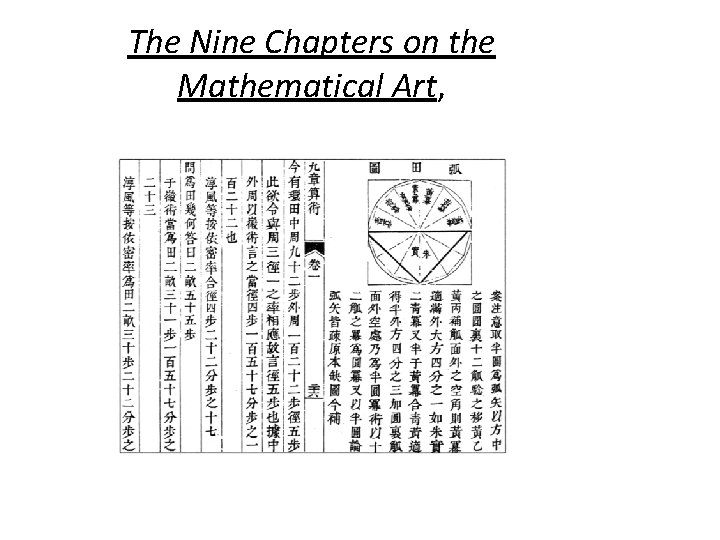
The Nine Chapters on the Mathematical Art,
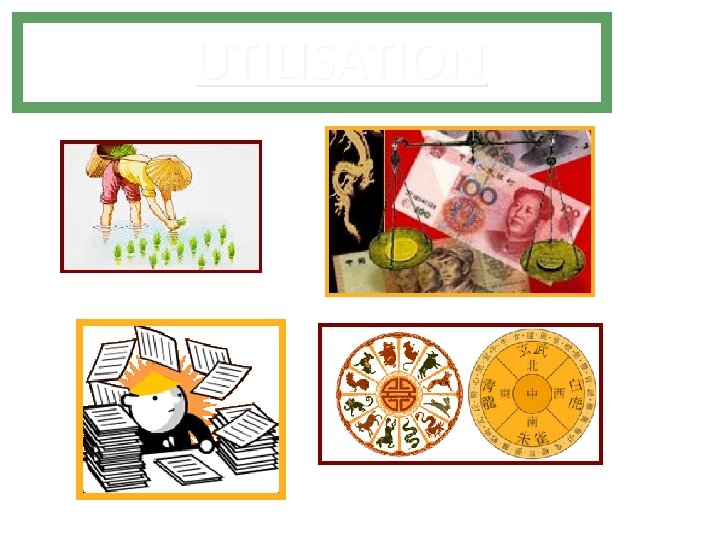
UTILISATION
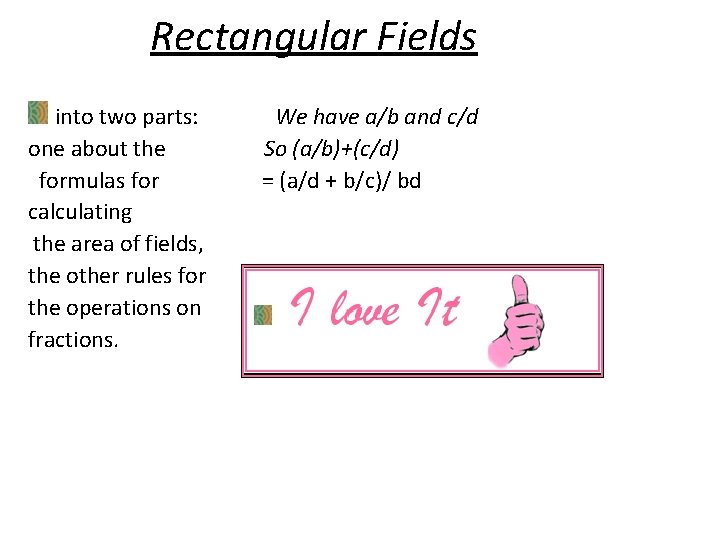
Rectangular Fields into two parts: one about the formulas for calculating the area of fields, the other rules for the operations on fractions. We have a/b and c/d So (a/b)+(c/d) = (a/d + b/c)/ bd
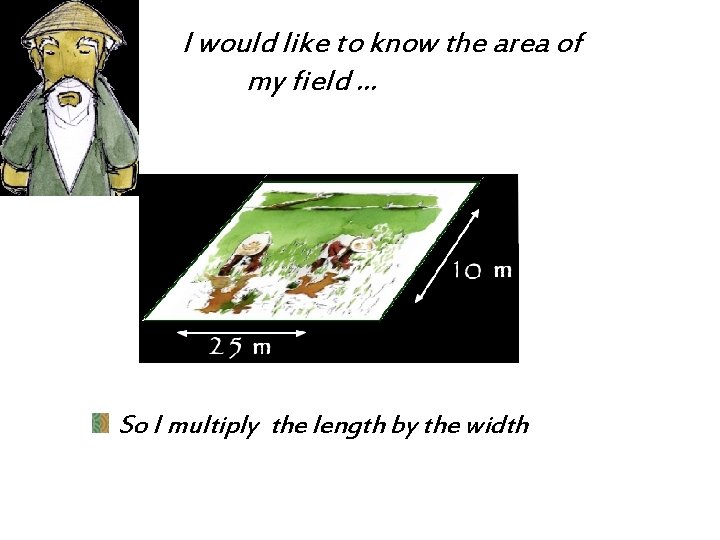
I would like to know the area of my field … So I multiply the length by the width
Indian Mathematicians
Introduction • Indians’ texts with clear mathematical content that were written during the pre-Christian times, have not been found so far. • Works with clear mathematical content appeared after 500 A. C. • The most remarkable Indian mathematicians are Aryabhata, Brahmagupta and Bhaskara.
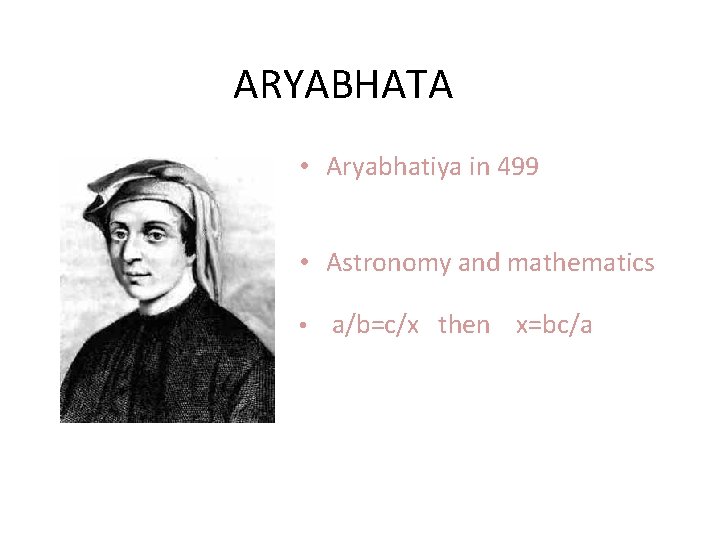
ARYABHATA • Aryabhatiya in 499 • Astronomy and mathematics • a/b=c/x then x=bc/a
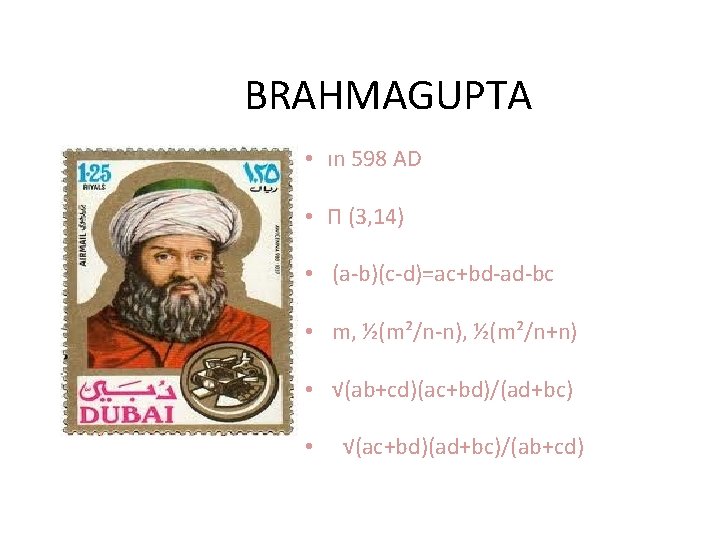
BRAHMAGUPTA • ın 598 AD • Π (3, 14) • (a-b)(c-d)=ac+bd-ad-bc • m, ½(m²/n-n), ½(m²/n+n) • √(ab+cd)(ac+bd)/(ad+bc) • √(ac+bd)(ad+bc)/(ab+cd)
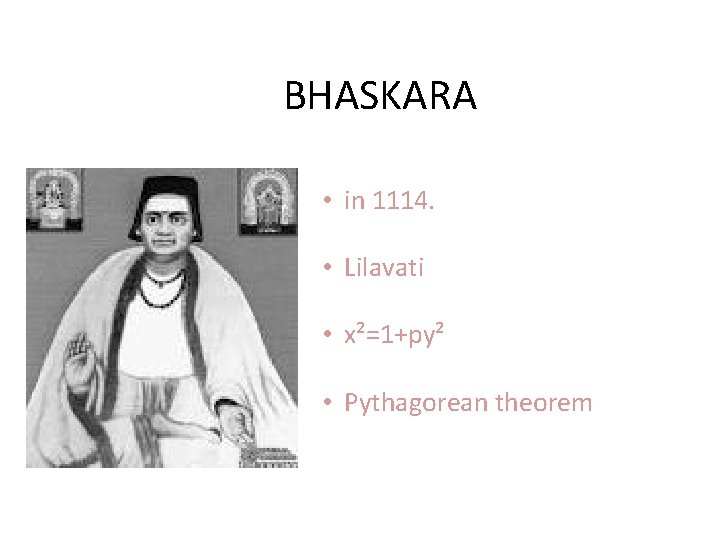
BHASKARA • in 1114. • Lilavati • x²=1+py² • Pythagorean theorem
Arabian math
Project Comenius Numbers and Symbols Arabian Mathematicians A little bit of History… V d. C. VIII d. C. IX d. C. XIII d. C. XIV d. C. XV d. C.
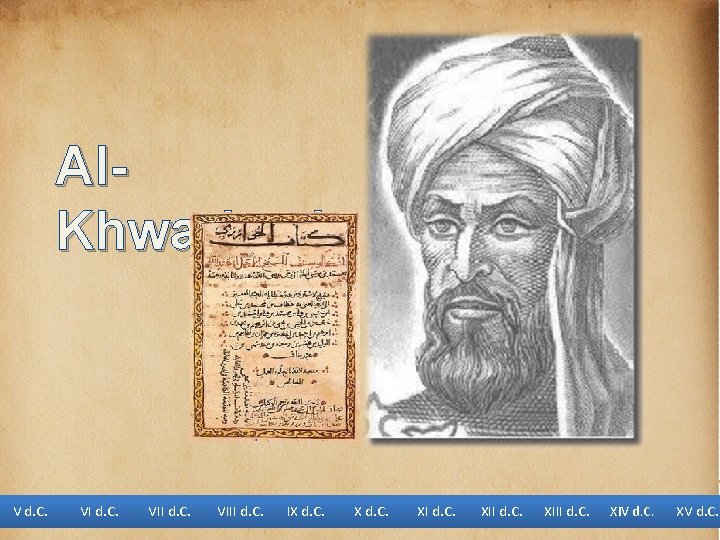
Al. Khwarizmi V d. C. VIII d. C. IX d. C. XIII d. C. XIV d. C. XV d. C.
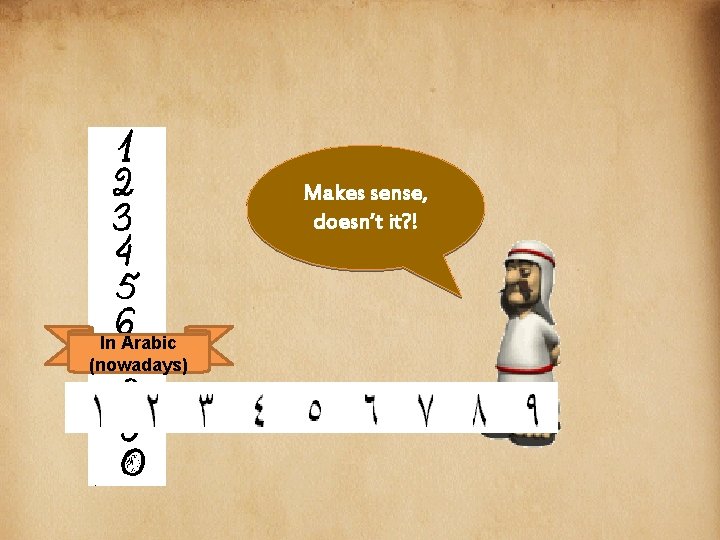
Arabic Numbers In Indian 1 8 2 9 In Arabic (nowadays) 3 4 5 Makes sense, doesn’t it? ! 6 7
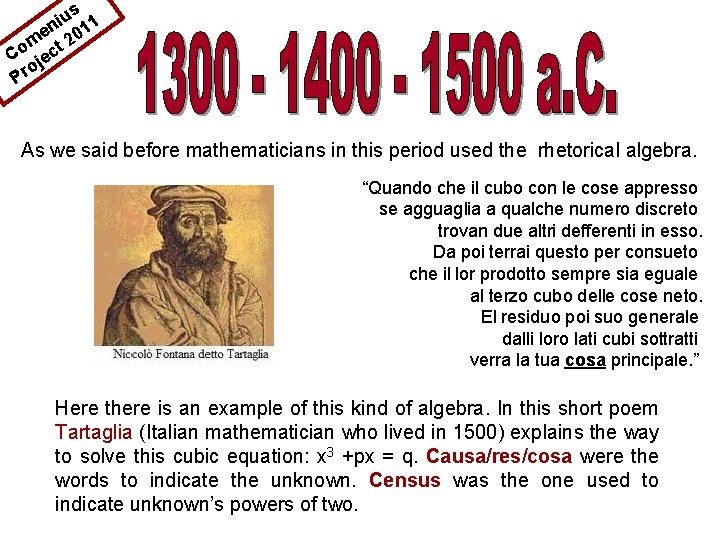
us 1 i en 201 m t Co jec o Pr As we said before mathematicians in this period used the rhetorical algebra. “Quando che il cubo con le cose appresso se agguaglia a qualche numero discreto trovan due altri defferenti in esso. Da poi terrai questo per consueto che il lor prodotto sempre sia eguale al terzo cubo delle cose neto. El residuo poi suo generale dalli loro lati cubi sottratti verra la tua cosa principale. ” Here there is an example of this kind of algebra. In this short poem Tartaglia (Italian mathematician who lived in 1500) explains the way to solve this cubic equation: x 3 +px = q. Causa/res/cosa were the words to indicate the unknown. Census was the one used to indicate unknown’s powers of two.
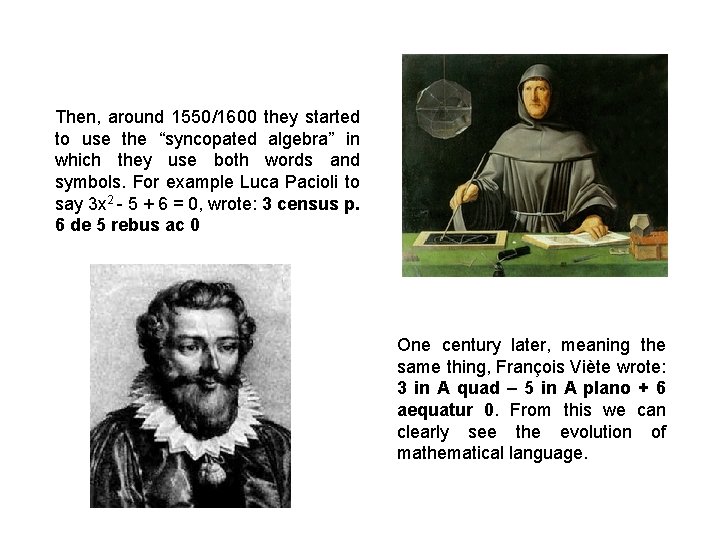
Then, around 1550/1600 they started to use the “syncopated algebra” in which they use both words and symbols. For example Luca Pacioli to say 3 x 2 - 5 + 6 = 0, wrote: 3 census p. 6 de 5 rebus ac 0 One century later, meaning the same thing, François Viète wrote: 3 in A quad – 5 in A plano + 6 aequatur 0. From this we can clearly see the evolution of mathematical language.
us 1 i en 201 m t Co jec o Pr The passage from “intuitive” Maths and “rethoric” Maths to “symbolic” Maths is surely an advantage. Mathematics becomes easier to write and to understand. But, above all, it becomes INTERNATIONAL. That is why we can be here today and understand each other: because Maths changes through History.
THE END Presentation done by : • Nikolaou Eirini, Bakogianni Christina, Koumaditi Kleopatra, Belet Auriane : Indian Mathematicians • Maria-Christina Fouka, Foteini-Maria Karkaletsou : Mayas • Pauline Blanc : Chinese Maths • Sofia Rodrigues, Mariana Santiago, Berivan Yavuz : Egyptian Numbers • Maria Joao Santos, Joana Bigodinho : Arabian mathematicians All the complete files are on the twinspace, in Math History Presentations, Numbers History section.
- Slides: 35