
You need to use your mouse to see




- Slides: 8
You need to use your mouse to see this presentation © Heidi Behrens
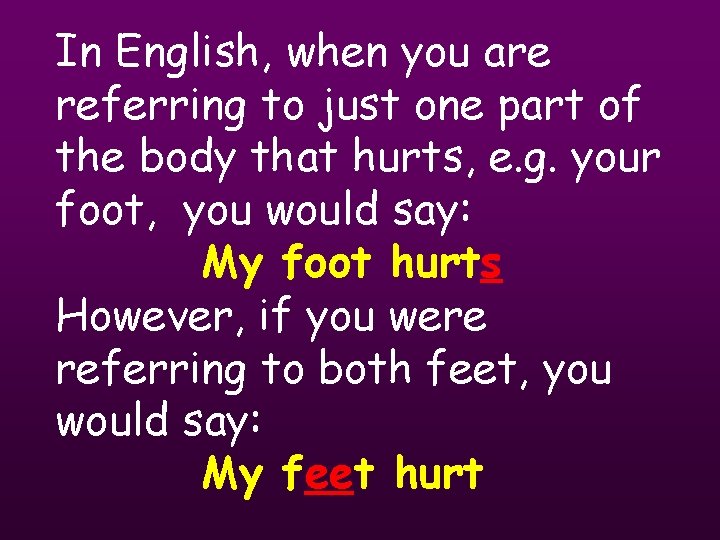
In English, when you are referring to just one part of the body that hurts, e. g. your foot, you would say: My foot hurts However, if you were referring to both feet, you would say: My feet hurt
Exactly the same thing happens in German. Have a look at this: Sing Mein Fuß tut weh Plural Meine Füße tun weh
Here are some more examples: Sing Plural Mein Ohr tut weh Meine Ohren tun weh Mein Zahn tut weh Meine Zähne tun weh
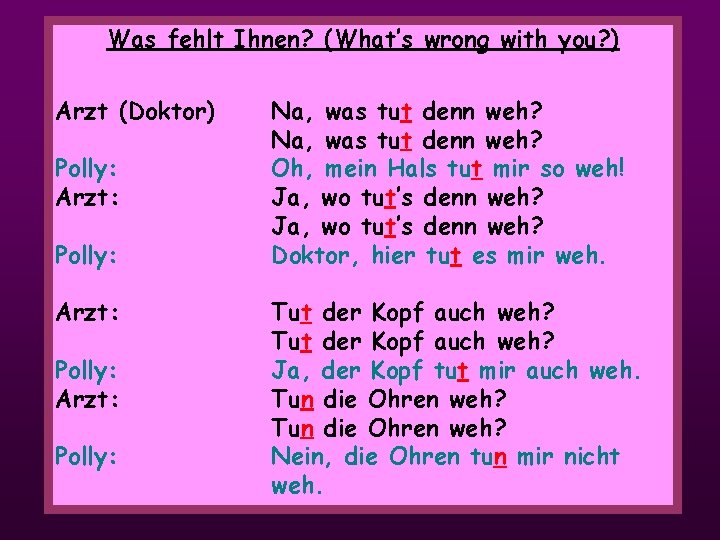
Was fehlt Ihnen? (What’s wrong with you? ) Arzt (Doktor) Polly: Arzt: Polly: Na, was tut denn weh? Oh, mein Hals tut mir so weh! Ja, wo tut’s denn weh? Doktor, hier tut es mir weh. Tut der Kopf auch weh? Ja, der Kopf tut mir auch weh. Tun die Ohren weh? Nein, die Ohren tun mir nicht weh.
Now copy the sentences and decide whether to put ‘tut’ or ‘tun’ 1. Mein Auge ………. . . . weh 2. Mein Knie ………………. weh 3. Meine Hände ………. . . weh 4. Mein Kopf………………. weh 5. Meine Zähne…………. . weh
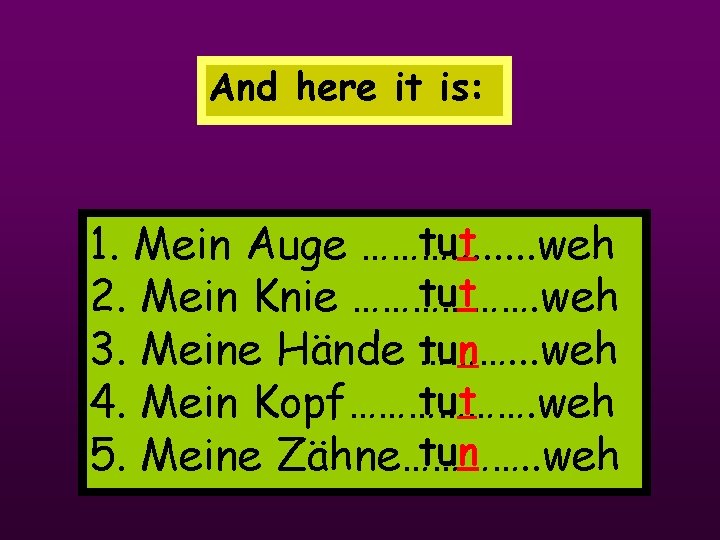
And here it is: tut 1. Mein Auge ………. . . . weh tut 2. Mein Knie ………………. weh 3. Meine Hände tun ………. . . weh tut 4. Mein Kopf………………. weh tun 5. Meine Zähne…………. . weh