
You may use this study guide to review

- Slides: 38
You may use this study guide to review for your test; practice your new skills or review old concepts. Each topic has several questions relating to it, this should help with giving you plenty of practice. Chemistry Unit 7 Study Guide
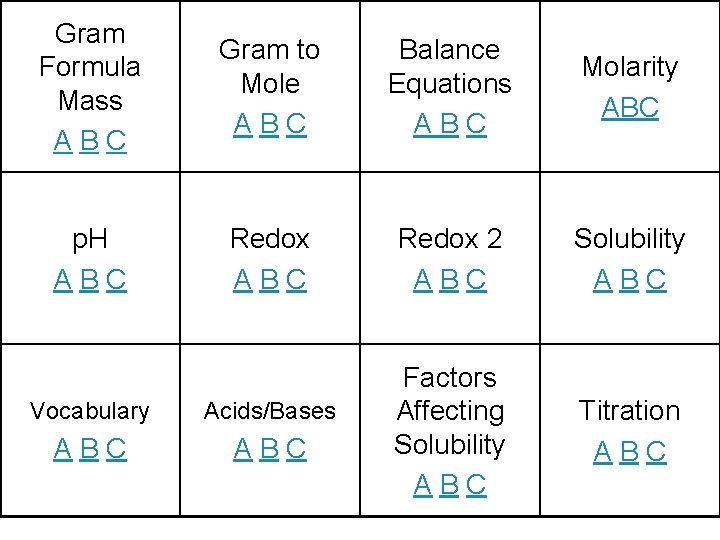
Gram Formula Mass ABC Gram to Mole ABC Balance Equations ABC Molarity ABC p. H ABC Redox 2 ABC Solubility ABC Factors Affecting Solubility ABC Titration ABC Vocabulary Acids/Bases ABC
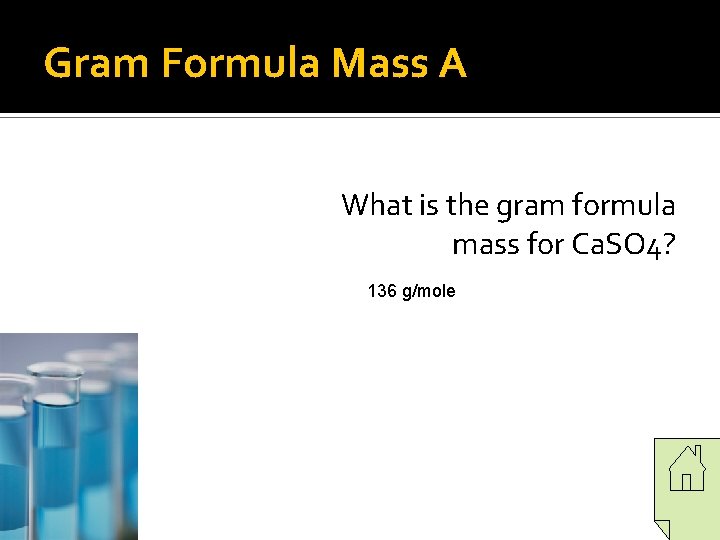
Gram Formula Mass A What is the gram formula mass for Ca. SO 4? 136 g/mole
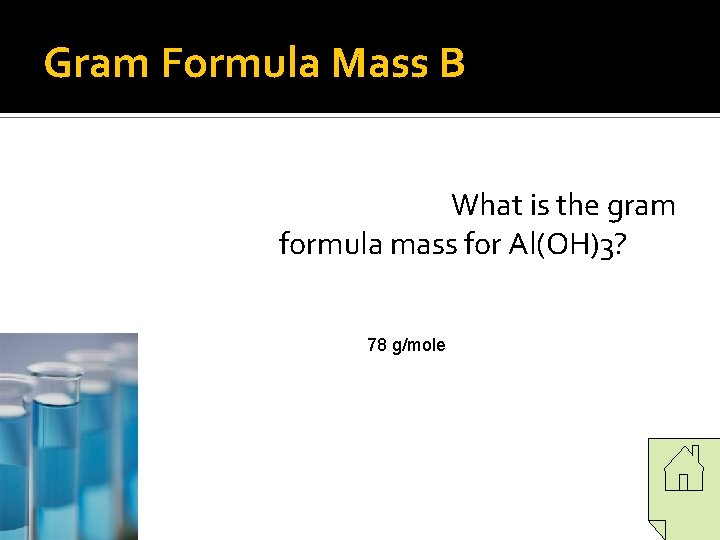
Gram Formula Mass B What is the gram formula mass for Al(OH)3? 78 g/mole
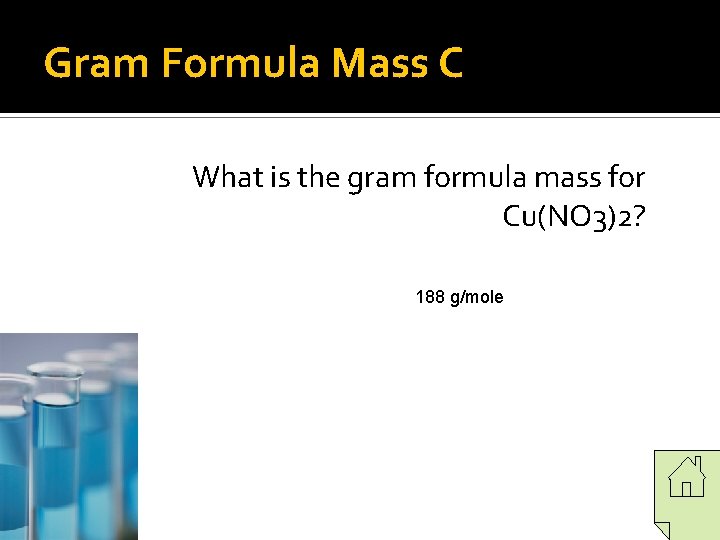
Gram Formula Mass C What is the gram formula mass for Cu(NO 3)2? 188 g/mole
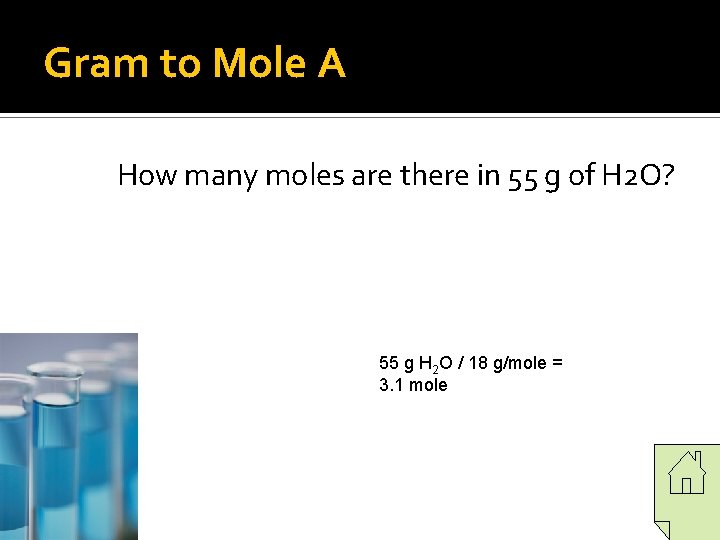
Gram to Mole A How many moles are there in 55 g of H 2 O? 55 g H 2 O / 18 g/mole = 3. 1 mole
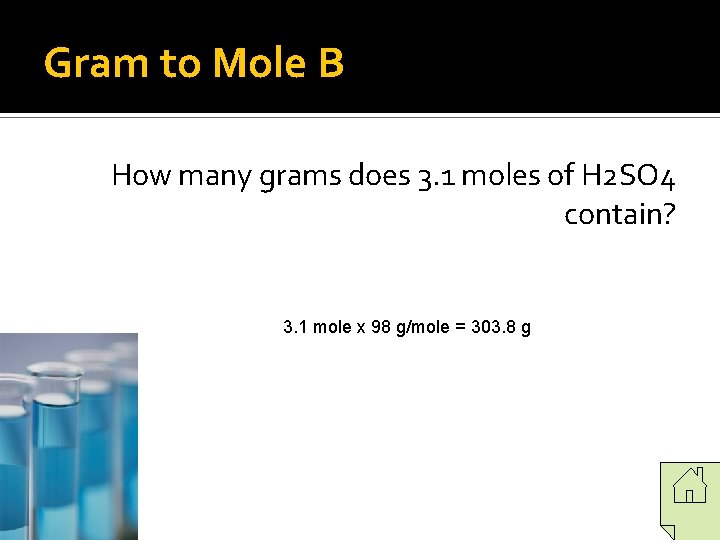
Gram to Mole B How many grams does 3. 1 moles of H 2 SO 4 contain? 3. 1 mole x 98 g/mole = 303. 8 g
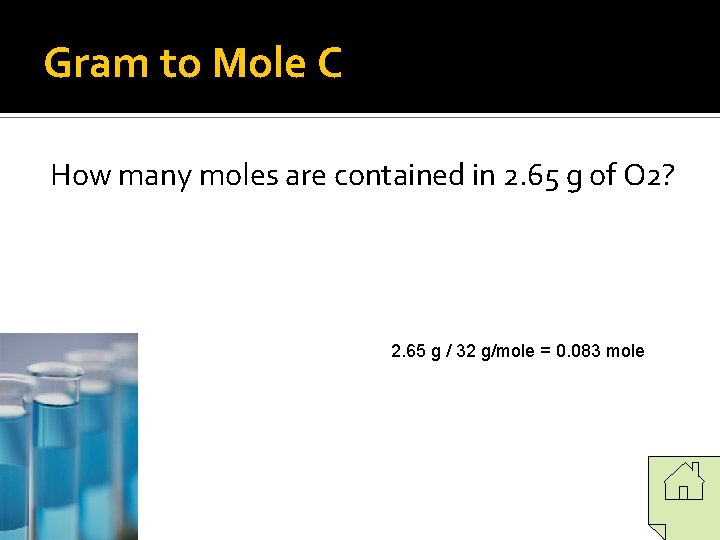
Gram to Mole C How many moles are contained in 2. 65 g of O 2? 2. 65 g / 32 g/mole = 0. 083 mole
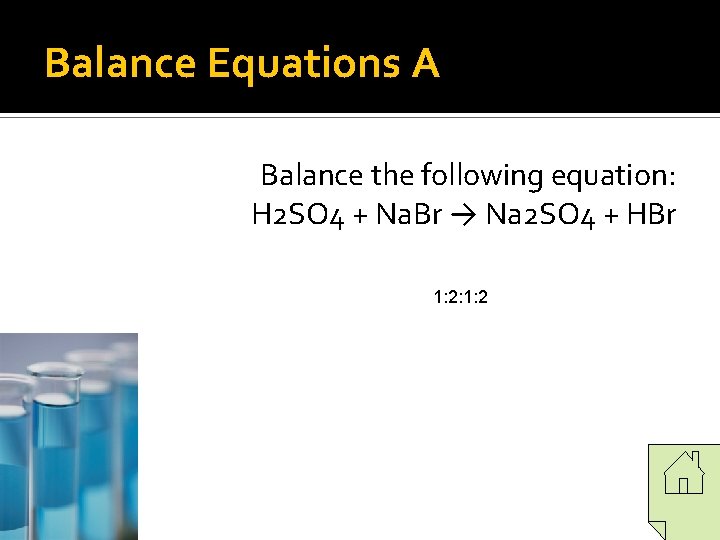
Balance Equations A Balance the following equation: H 2 SO 4 + Na. Br → Na 2 SO 4 + HBr 1: 2: 1: 2
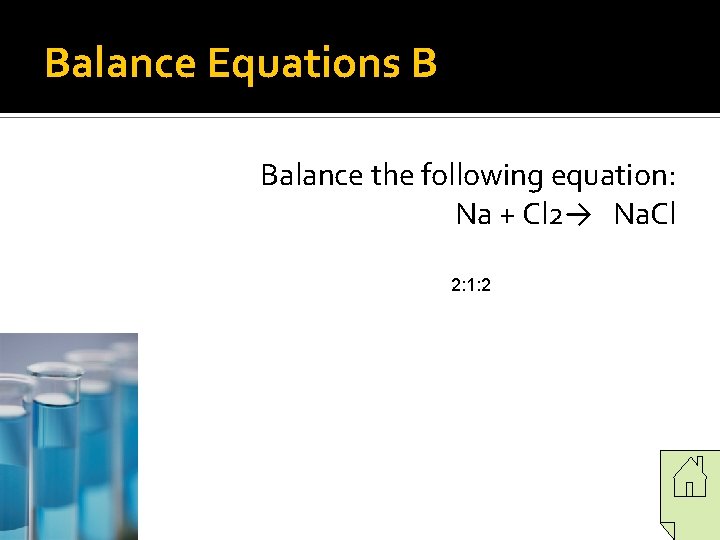
Balance Equations B Balance the following equation: Na + Cl 2→ Na. Cl 2: 1: 2
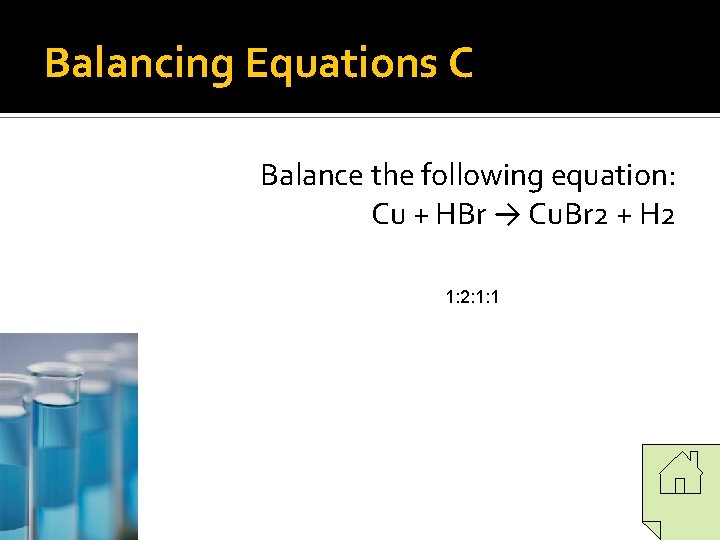
Balancing Equations C Balance the following equation: Cu + HBr → Cu. Br 2 + H 2 1: 2: 1: 1
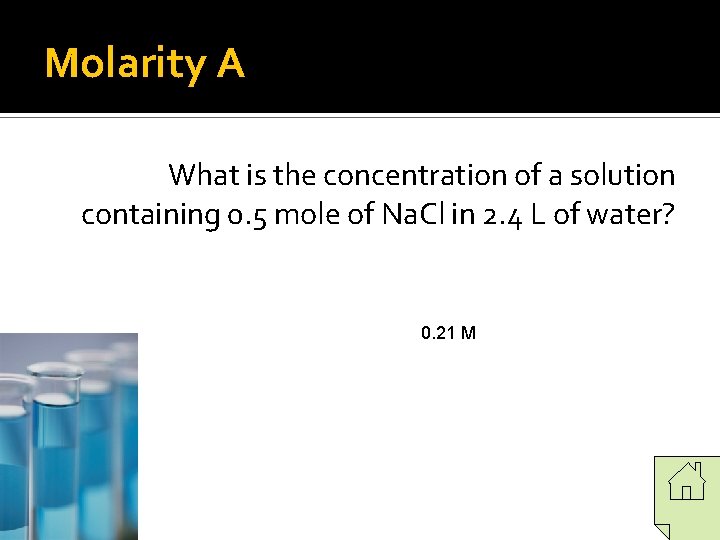
Molarity A What is the concentration of a solution containing 0. 5 mole of Na. Cl in 2. 4 L of water? 0. 21 M
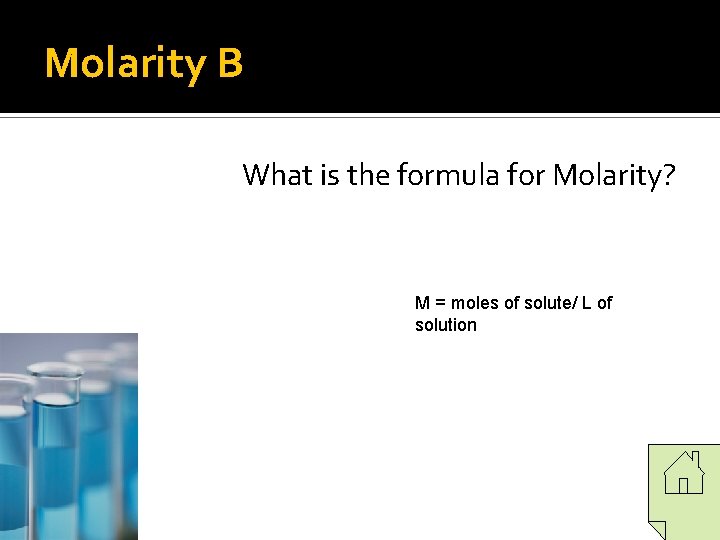
Molarity B What is the formula for Molarity? M = moles of solute/ L of solution
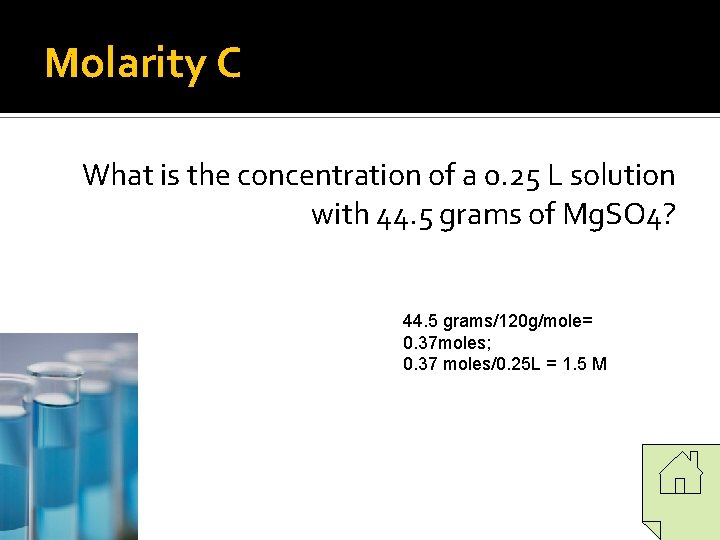
Molarity C What is the concentration of a 0. 25 L solution with 44. 5 grams of Mg. SO 4? 44. 5 grams/120 g/mole= 0. 37 moles; 0. 37 moles/0. 25 L = 1. 5 M
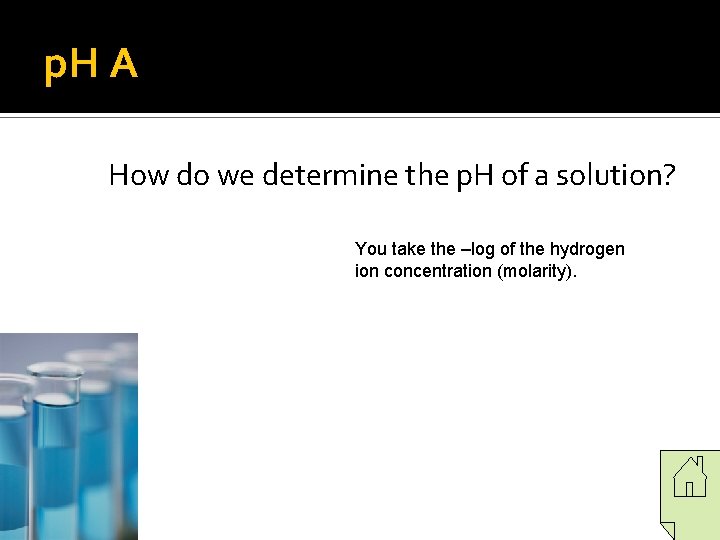
p. H A How do we determine the p. H of a solution? You take the –log of the hydrogen ion concentration (molarity).
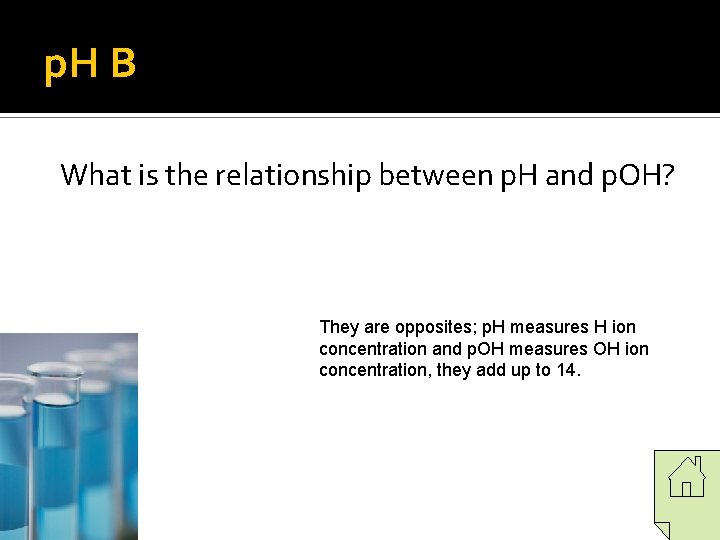
p. H B What is the relationship between p. H and p. OH? They are opposites; p. H measures H ion concentration and p. OH measures OH ion concentration, they add up to 14.
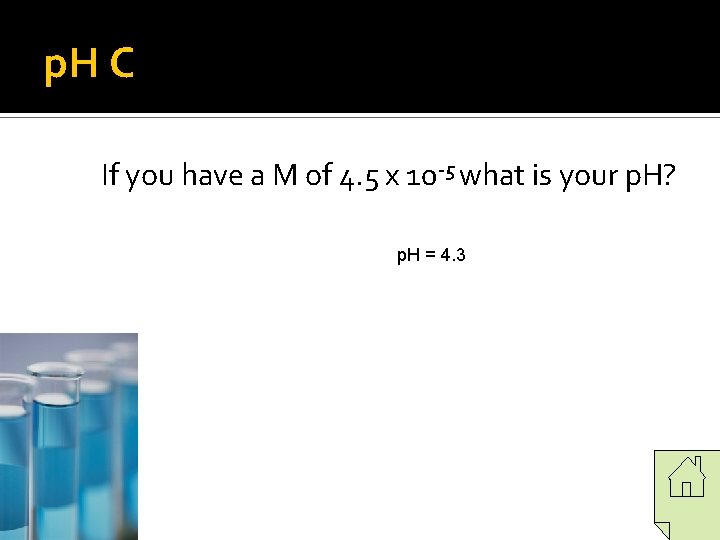
p. H C If you have a M of 4. 5 x 10 -5 what is your p. H? p. H = 4. 3
Redox A If an element is being reduced what is happening to it’s charge and to the electrons? Reduced elements are gaining electrons and therefore their charge is becoming more negative.
Redox B If an element is being oxidized what is happening to the electrons and the charge? Oxidized elements are losing electrons and therefore their charge is becoming more positive.
Redox C What is the relationship between an element being reduced and a reducing agent? They are opposites, if an element is being reduced it is gaining electrons and a reducing agent is losing electrons (it is the oxidized element)
Redox 2 A Given the following reaction identify the element that has been reduced. Ca. I 2 + Cl 2→ Ca. Cl 2 + I 2 Cl was the reduced element because it gained 1 electron.
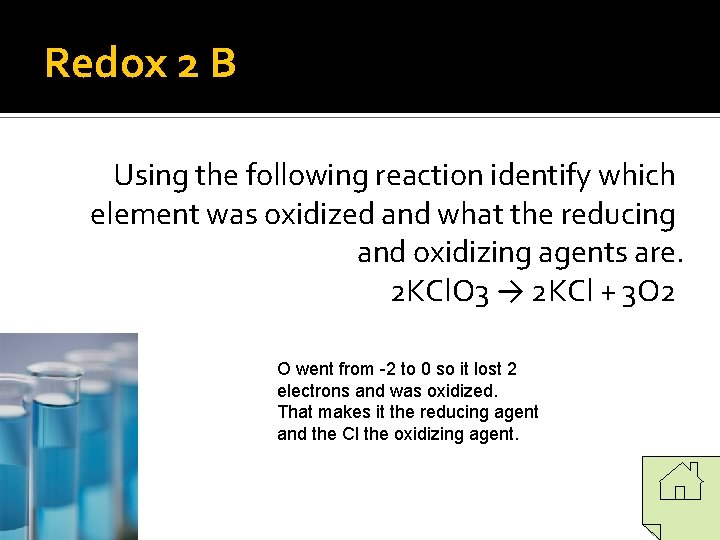
Redox 2 B Using the following reaction identify which element was oxidized and what the reducing and oxidizing agents are. 2 KCl. O 3 → 2 KCl + 3 O 2 O went from -2 to 0 so it lost 2 electrons and was oxidized. That makes it the reducing agent and the Cl the oxidizing agent.
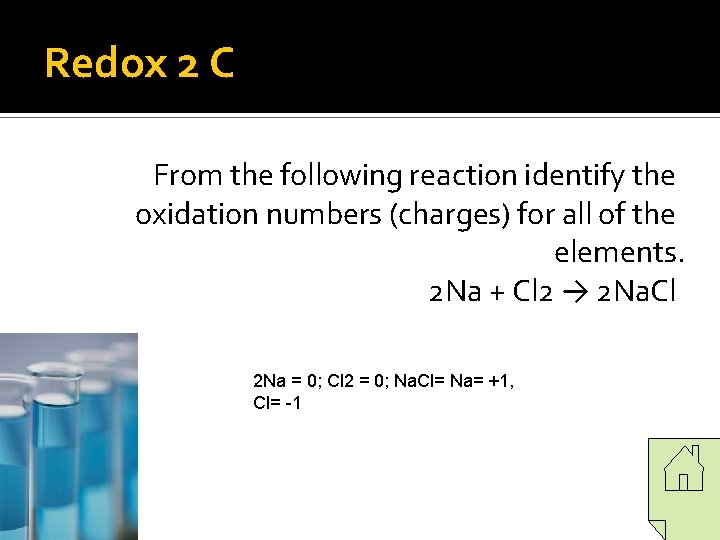
Redox 2 C From the following reaction identify the oxidation numbers (charges) for all of the elements. 2 Na + Cl 2 → 2 Na. Cl 2 Na = 0; Cl 2 = 0; Na. Cl= Na= +1, Cl= -1
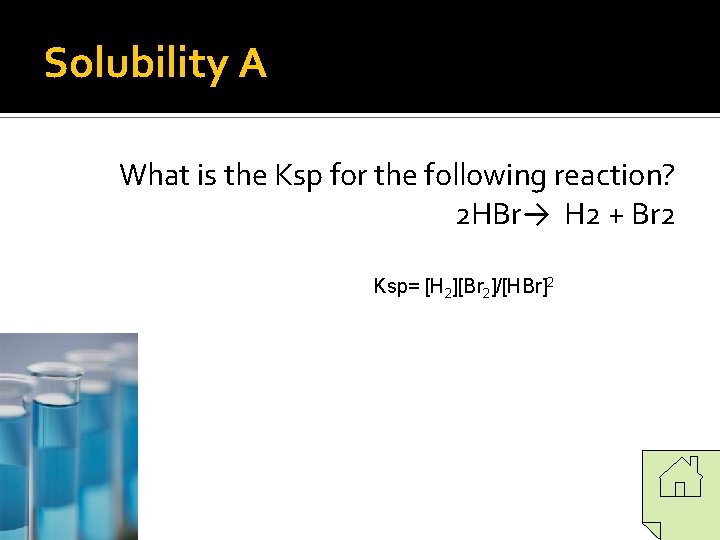
Solubility A What is the Ksp for the following reaction? 2 HBr→ H 2 + Br 2 Ksp= [H 2][Br 2]/[HBr]2
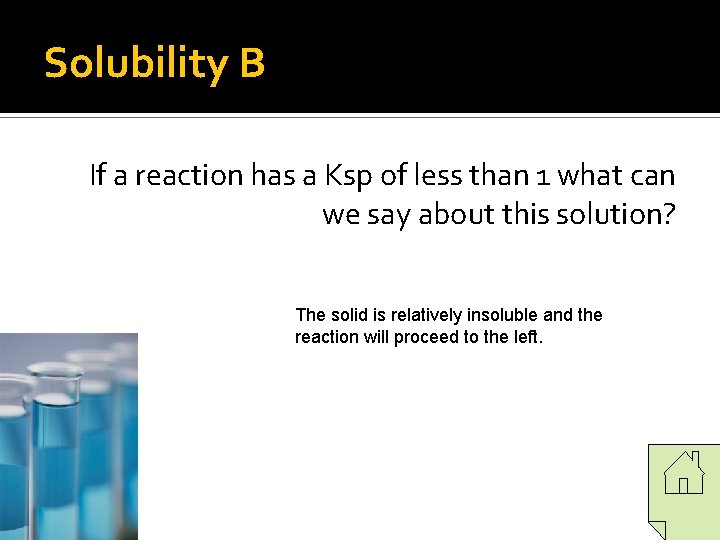
Solubility B If a reaction has a Ksp of less than 1 what can we say about this solution? The solid is relatively insoluble and the reaction will proceed to the left.
Solubility C Complete the following generalization: The higher the Ksp of a solution the _____soluble the solute is. more
Vocabulary A What does an oxidizing agent do? An oxidizing agent pulls the electrons from a different element from within a chemical reaction.
Vocabulary B Explain the difference between a solute and a solvent. The solute is the substance that you are dissolving and the solvent is what you are dissolving in and usually is the higher quantity.
Vocabulary C What is an oxidation number? It is the charge that an ion has.
Acids/Bases A What ions do acids and bases typically produce and do they always have to produce those ions? Acids produce H ions and bases produce OH ions however you can also classify acids and bases by proton donor or acceptor. An acid is a proton donor and a base is a proton acceptor.
Acids/Bases B What result should we get from an acid on the litmus test? An acid should turn blue litmus red.
Acids/Bases C If we have the same molarity of HCl and H 2 SO 4 which acid will titrate a base to the endpoint faster and why? H 2 SO 4 because it donates 2 H+ for every molecule.
Factors Affecting Solubility A What are two factors that affect solubility of a solute in a solvent? Ionic character of the solute, Concentration, Electrical nature
Factors Affecting Solubility B Explain how concentration affects a solute’s solubility? The more ions you have in a solution the more solvent is being used to dissolve the solute until you reach saturation.
Factors Affecting Solubility C How does the electrical nature affect solubility? A polar compound is likely to conduct an electrical charge while a nonpolar compound is not. And because of our “like dissolved like” rule you must have a conductor dissolved in a conductor or vice versa.
Titration A What is titration? The process of neutralizing an acid or base by using a solution with known concentration until an endpoint is reached. Usually indicated by an acid/base indicator.
Titration B If we are neutralizing Na. OH by using HBr what is the ratio of the ions to each other? 1: 1; for every one OH there is one H produced by HBr.
Titration C If we are neutralizing Al(OH)3 what will the ratio of HBr be and why? 1: 3 because the base is producing 3 OH and our acid is only producing 1 H so we will need 3 times as much.