
You Can Prevent Contamination Objectives Biological chemical and

You Can Prevent Contamination • Objectives: – Biological, chemical, and physical contaminants and how to prevent them – How to prevent the deliberate contamination of food – How to respond to a foodborne-illness outbreak – Common food allergens and how to prevent reactions to them 2 -2

How Contamination Happens • Contaminants come from a variety of places: – Animals we use for food – Air, contaminated water, and dirt – People • Deliberately • Accidentally 2 -3

How Contamination Happens • People can contaminate food when: – They don’t wash their hands after using the restroom – They are in contact with a person who is sick – They sneeze or vomit onto food or food-contact surfaces – They touch dirty food-contact surfaces and equipment and then touch food 2 -4
Biological Contamination Microorganism: l Small, living organism that can be seen only with a microscope Pathogen: l Harmful microorganism l Makes people sick when eaten or produces toxins that cause illness Toxin: l 2 -5 Poison
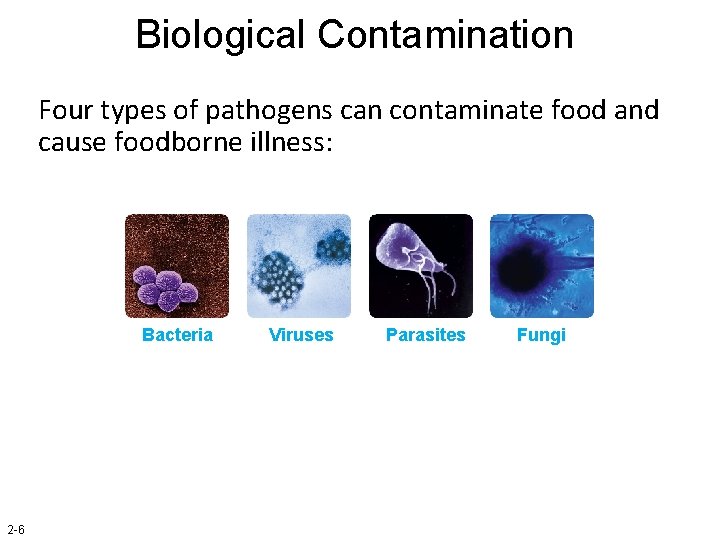
Biological Contamination Four types of pathogens can contaminate food and cause foodborne illness: Bacteria 2 -6 Viruses Parasites Fungi
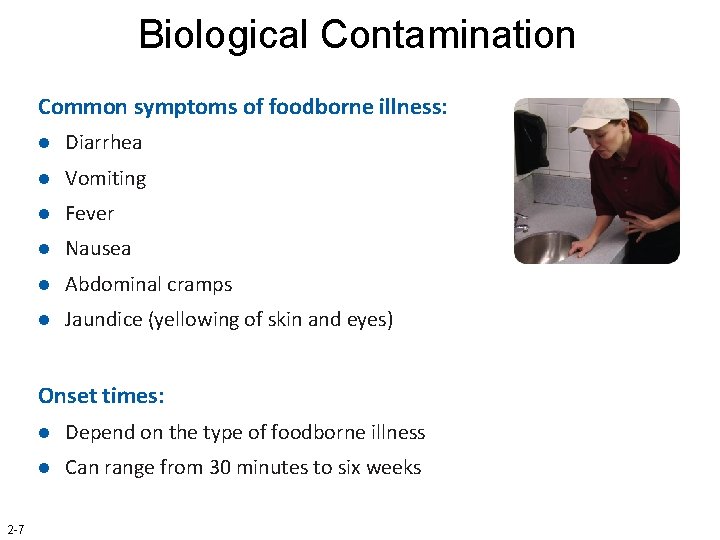
Biological Contamination Common symptoms of foodborne illness: l Diarrhea l Vomiting l Fever l Nausea l Abdominal cramps l Jaundice (yellowing of skin and eyes) Onset times: 2 -7 l Depend on the type of foodborne illness l Can range from 30 minutes to six weeks
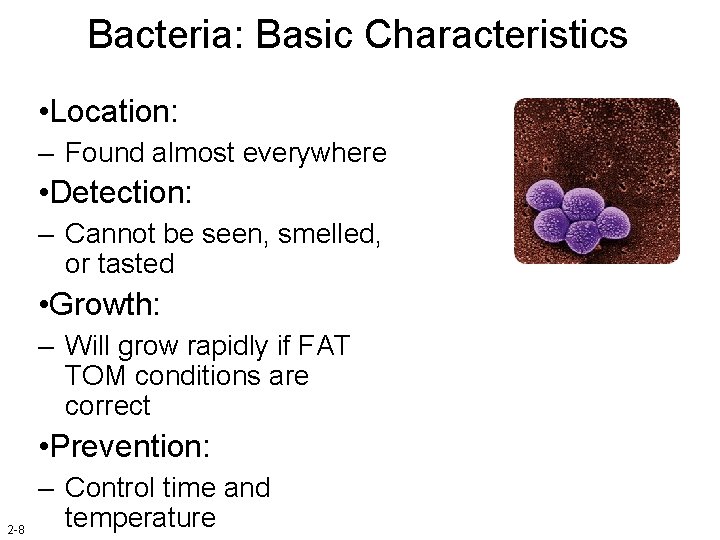
Bacteria: Basic Characteristics • Location: – Found almost everywhere • Detection: – Cannot be seen, smelled, or tasted • Growth: – Will grow rapidly if FAT TOM conditions are correct • Prevention: 2 -8 – Control time and temperature
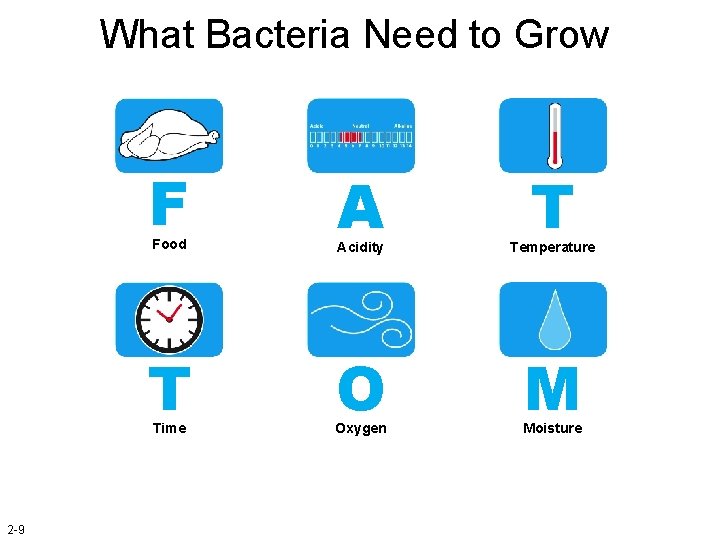
What Bacteria Need to Grow F T Food Acidity Temperature T O M Time 2 -9 A Oxygen Moisture
What Bacteria Need to Grow • Food: – Most bacteria need nutrients to survive – TCS food supports the growth of bacteria better than other types of food 2 -10 F Food
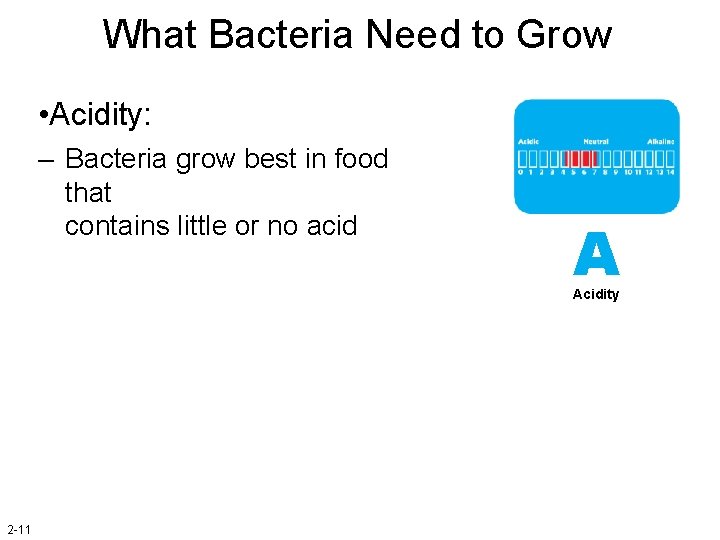
What Bacteria Need to Grow • Acidity: – Bacteria grow best in food that contains little or no acid A Acidity 2 -11
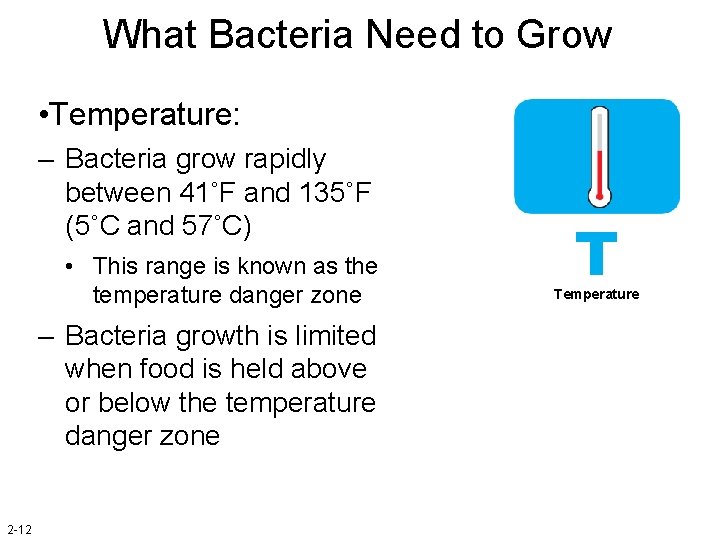
What Bacteria Need to Grow • Temperature: – Bacteria grow rapidly between 41˚F and 135˚F (5˚C and 57˚C) • This range is known as the temperature danger zone – Bacteria growth is limited when food is held above or below the temperature danger zone 2 -12 T Temperature
What Bacteria Need to Grow Time: l Bacteria need time to grow l The more time bacteria spend in the temperature danger zone, the greater chance they have to grow to unsafe levels T Time 2 -13
What Bacteria Need to Grow • Oxygen: – Some bacteria need oxygen to grow, while others grow when oxygen isn’t there O Oxygen 2 -14
What Bacteria Need to Grow • Moisture: – Bacteria grow well in food with high levels of moisture – aw = water activity; the amount of moisture available in food for bacterial growth – aw scale ranges from 0. 0 to 1. 0 – Water has a water activity of 1. 0 2 -15 M Moisture

Control FAT TOM • The conditions you can control: – Temperature • Keep TCS food out of the temperature danger zone – Time • Limit how long TCS food is in the temperature danger zone 2 -16
Major Bacteria That Cause Foodborne Illness • The FDA has identified three types of bacteria that cause severe illness and are highly contagious: – Salmonella Typhi – Shigella spp. – Enterohemorrhagic and shiga toxin-producing Escherichia coli 2 -17
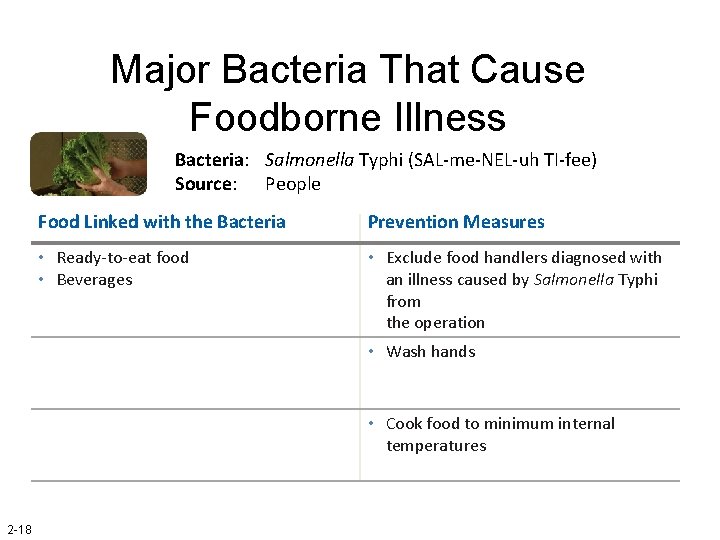
Major Bacteria That Cause Foodborne Illness Bacteria: Salmonella Typhi (SAL-me-NEL-uh TI-fee) Source: People Food Linked with the Bacteria Prevention Measures • Ready-to-eat food • Beverages • Exclude food handlers diagnosed with an illness caused by Salmonella Typhi from the operation • Wash hands • Cook food to minimum internal temperatures 2 -18
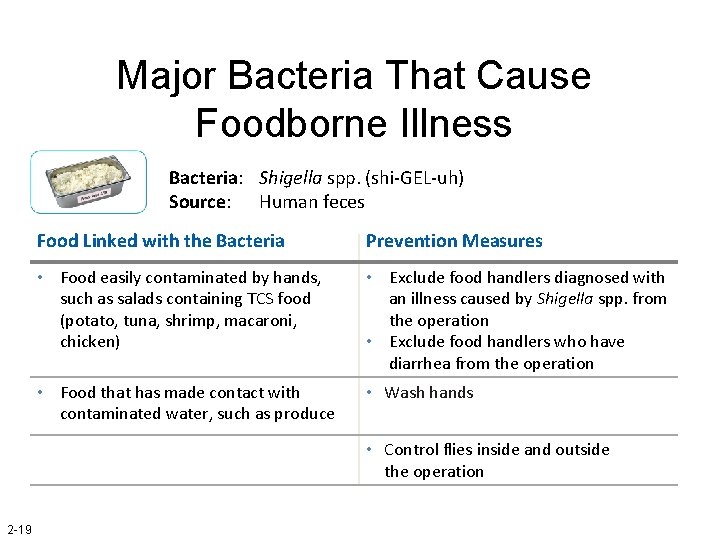
Major Bacteria That Cause Foodborne Illness Bacteria: Shigella spp. (shi-GEL-uh) Source: Human feces Food Linked with the Bacteria Prevention Measures • Food easily contaminated by hands, such as salads containing TCS food (potato, tuna, shrimp, macaroni, chicken) • Exclude food handlers diagnosed with an illness caused by Shigella spp. from the operation • Exclude food handlers who have diarrhea from the operation • Food that has made contact with contaminated water, such as produce • Wash hands • Control flies inside and outside the operation 2 -19
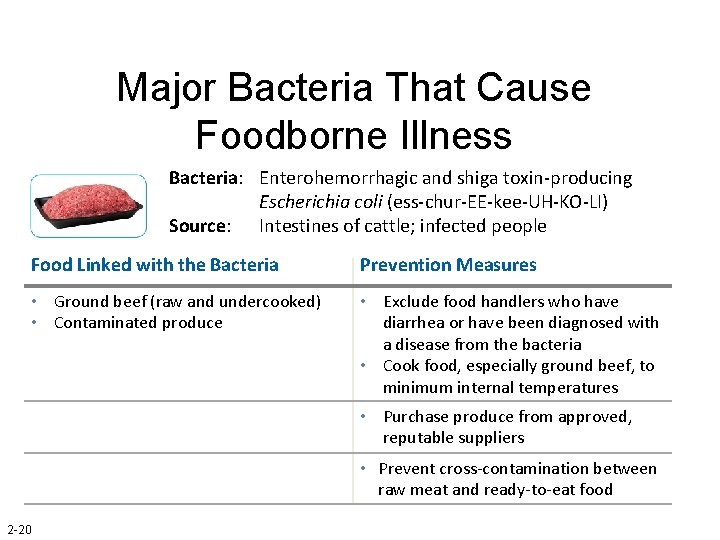
Major Bacteria That Cause Foodborne Illness Bacteria: Enterohemorrhagic and shiga toxin-producing Escherichia coli (ess-chur-EE-kee-UH-KO-LI) Source: Intestines of cattle; infected people Food Linked with the Bacteria Prevention Measures • Ground beef (raw and undercooked) • Contaminated produce • Exclude food handlers who have diarrhea or have been diagnosed with a disease from the bacteria • Cook food, especially ground beef, to minimum internal temperatures • Purchase produce from approved, reputable suppliers • Prevent cross-contamination between raw meat and ready-to-eat food 2 -20
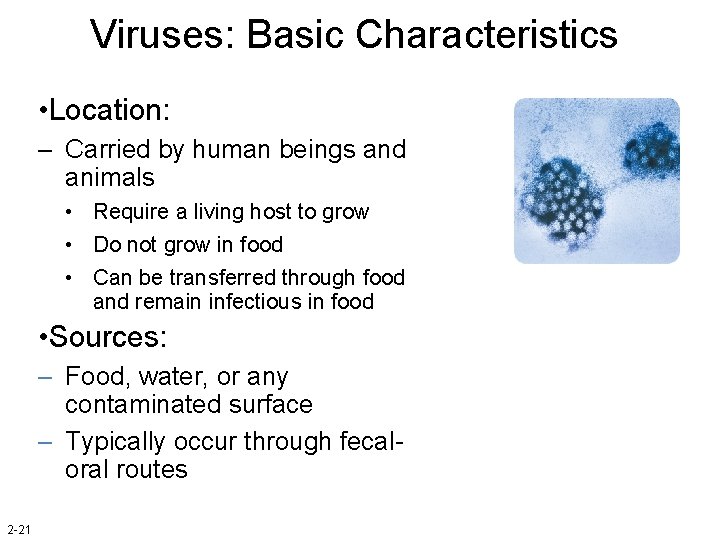
Viruses: Basic Characteristics • Location: – Carried by human beings and animals • Require a living host to grow • Do not grow in food • Can be transferred through food and remain infectious in food • Sources: – Food, water, or any contaminated surface – Typically occur through fecaloral routes 2 -21
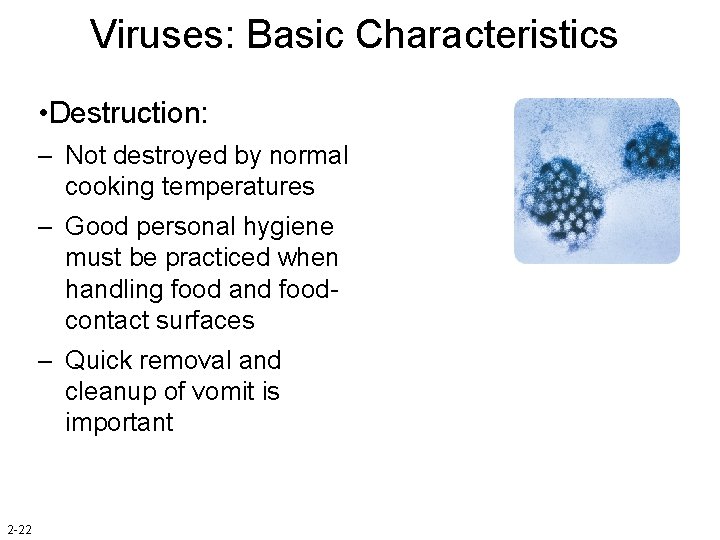
Viruses: Basic Characteristics • Destruction: – Not destroyed by normal cooking temperatures – Good personal hygiene must be practiced when handling food and foodcontact surfaces – Quick removal and cleanup of vomit is important 2 -22
Major Viruses that Cause Foodborne Illnesses The FDA has identified two viruses that are highly contagious and can cause severe illness: l Hepatitis A l Norovirus Food handlers diagnosed with an illness from hepatitis A or Norovirus must not work in an operation while they are sick. 2 -23
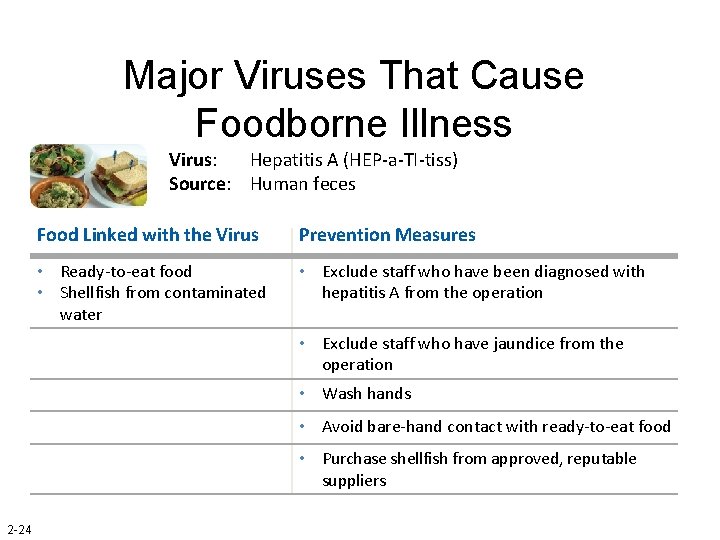
Major Viruses That Cause Foodborne Illness Virus: Hepatitis A (HEP-a-TI-tiss) Source: Human feces Food Linked with the Virus Prevention Measures • Ready-to-eat food • Shellfish from contaminated water • Exclude staff who have been diagnosed with hepatitis A from the operation • Exclude staff who have jaundice from the operation • Wash hands • Avoid bare-hand contact with ready-to-eat food • Purchase shellfish from approved, reputable suppliers 2 -24
Major Viruses That Cause Foodborne Illness Virus: Norovirus (NOR-o-VI-rus) Source: Human feces Food Linked with the Virus Prevention Measures • Ready-to-eat food • Shellfish from contaminated water • Exclude staff who have been diagnosed with Norovirus from the operation • Exclude staff who have diarrhea and vomiting from the operation • Wash hands • Avoid bare-hand contact with ready-to-eat food • Purchase shellfish from approved, reputable suppliers 2 -25
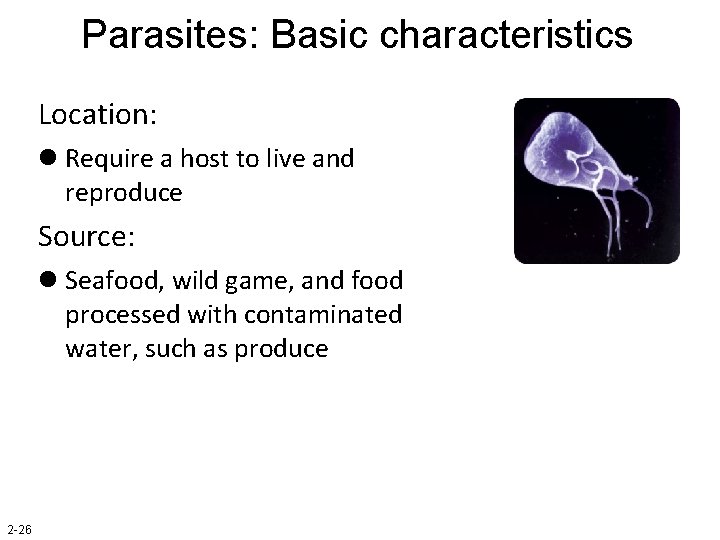
Parasites: Basic characteristics Location: l Require a host to live and reproduce Source: l Seafood, wild game, and food processed with contaminated water, such as produce 2 -26
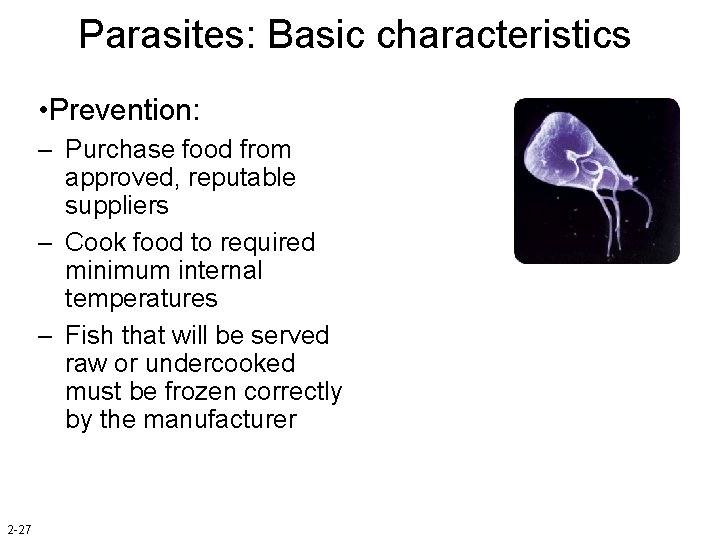
Parasites: Basic characteristics • Prevention: – Purchase food from approved, reputable suppliers – Cook food to required minimum internal temperatures – Fish that will be served raw or undercooked must be frozen correctly by the manufacturer 2 -27
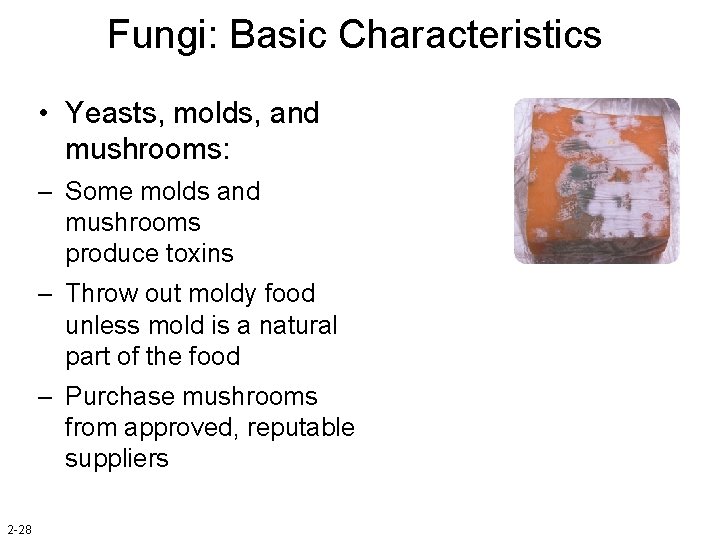
Fungi: Basic Characteristics • Yeasts, molds, and mushrooms: – Some molds and mushrooms produce toxins – Throw out moldy food unless mold is a natural part of the food – Purchase mushrooms from approved, reputable suppliers 2 -28
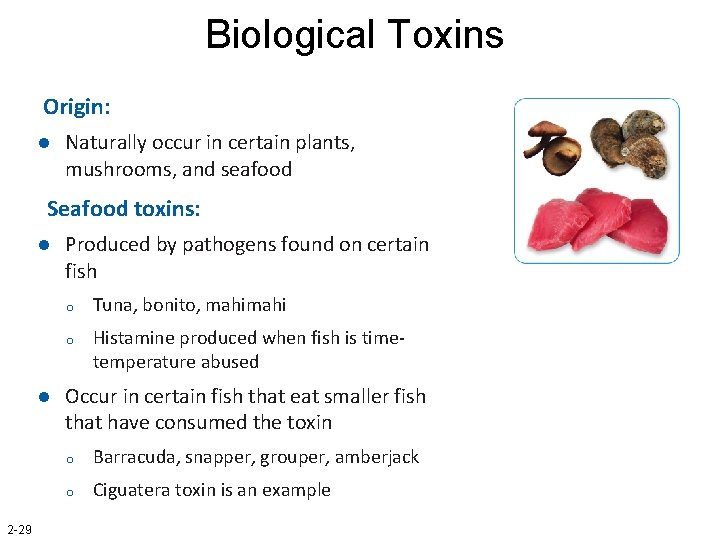
Biological Toxins Origin: l Naturally occur in certain plants, mushrooms, and seafood Seafood toxins: l l 2 -29 Produced by pathogens found on certain fish o Tuna, bonito, mahi o Histamine produced when fish is timetemperature abused Occur in certain fish that eat smaller fish that have consumed the toxin o Barracuda, snapper, grouper, amberjack o Ciguatera toxin is an example
Biological Toxins Illness: l Symptoms and onset times vary with illness l People will experience illness within minutes General symptoms: 2 -30 l Diarrhea or vomiting l Neurological symptoms o Tingling in extremities o Reversal of hot and cold sensations l Flushing of the face and/or hives l Difficulty breathing l Heart palpitations
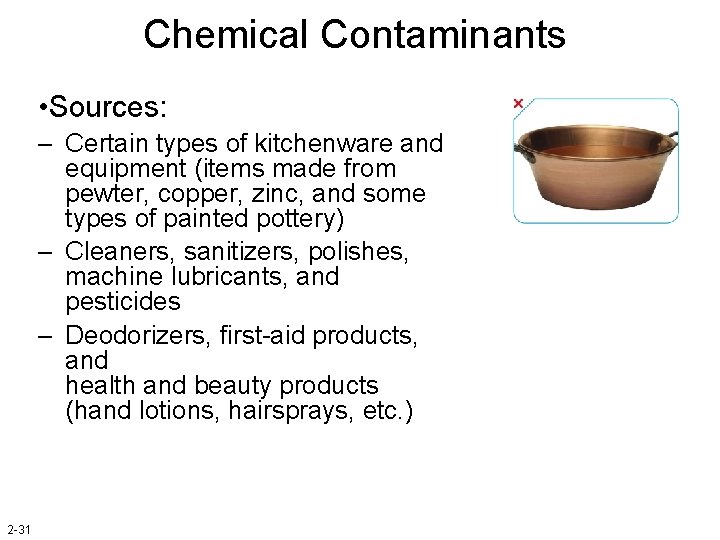
Chemical Contaminants • Sources: – Certain types of kitchenware and equipment (items made from pewter, copper, zinc, and some types of painted pottery) – Cleaners, sanitizers, polishes, machine lubricants, and pesticides – Deodorizers, first-aid products, and health and beauty products (hand lotions, hairsprays, etc. ) 2 -31
Chemical Contaminants • Symptoms: – Vary depending on chemical consumed – Most illnesses occur within minutes – Vomiting and diarrhea are typical 2 -32
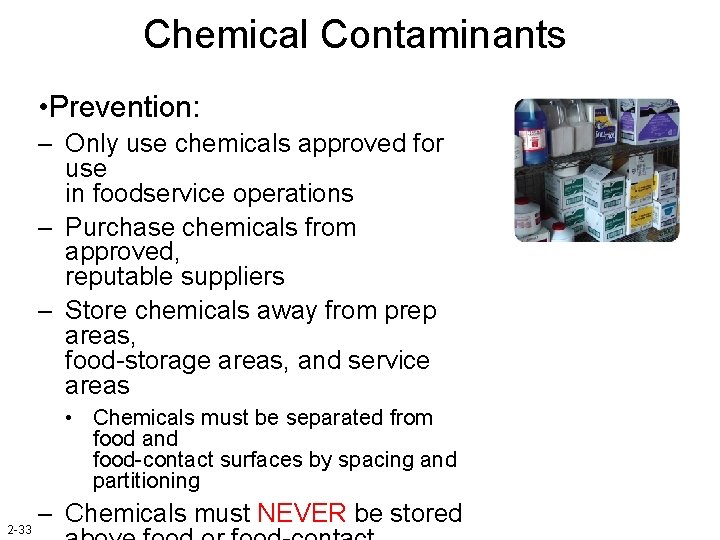
Chemical Contaminants • Prevention: – Only use chemicals approved for use in foodservice operations – Purchase chemicals from approved, reputable suppliers – Store chemicals away from prep areas, food-storage areas, and service areas • Chemicals must be separated from food and food-contact surfaces by spacing and partitioning 2 -33 – Chemicals must NEVER be stored
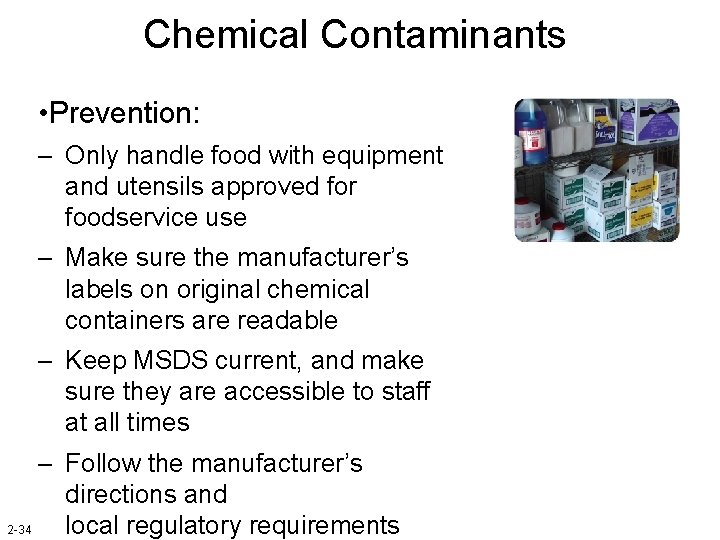
Chemical Contaminants • Prevention: – Only handle food with equipment and utensils approved for foodservice use – Make sure the manufacturer’s labels on original chemical containers are readable – Keep MSDS current, and make sure they are accessible to staff at all times – Follow the manufacturer’s directions and 2 -34 local regulatory requirements
Physical Contaminants • Sources: – Common objects that get into food • • Metal shavings from cans Wood Fingernails Staples Bandages Glass Jewelry Dirt – Naturally occurring objects such as fruit pits and bones 2 -35
Physical Contaminants • Symptoms: – Mild to fatal injuries are possible – Cuts, dental damage, and choking – Bleeding and pain • Prevention: – Purchase food from approved, reputable suppliers – Closely inspect food received – Take steps to prevent physical contamination, including practicing good personal hygiene 2 -36
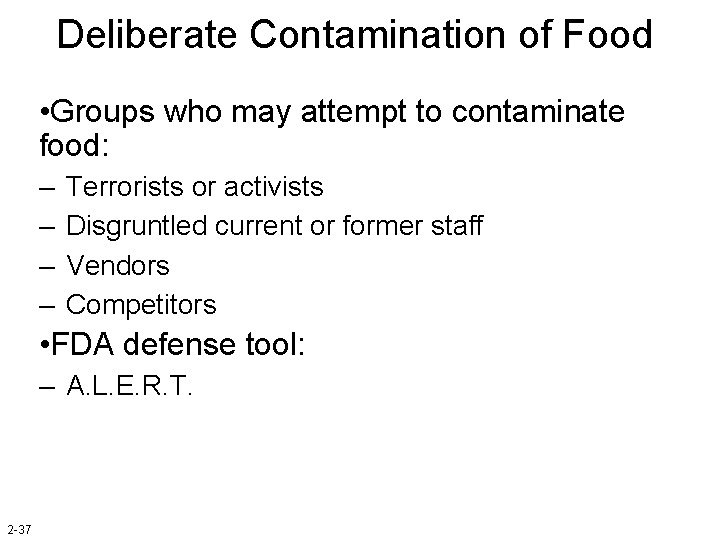
Deliberate Contamination of Food • Groups who may attempt to contaminate food: – – Terrorists or activists Disgruntled current or former staff Vendors Competitors • FDA defense tool: – A. L. E. R. T. 2 -37
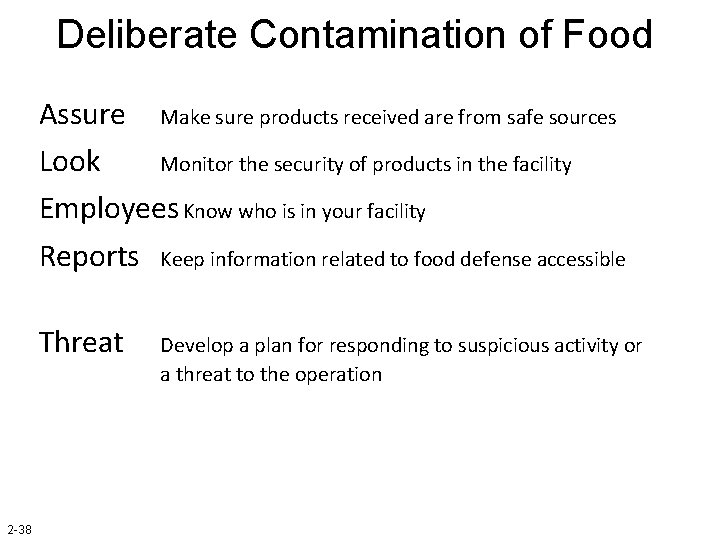
Deliberate Contamination of Food Assure Make sure products received are from safe sources Look Monitor the security of products in the facility Employees Know who is in your facility Reports Keep information related to food defense accessible Threat 2 -38 Develop a plan for responding to suspicious activity or a threat to the operation
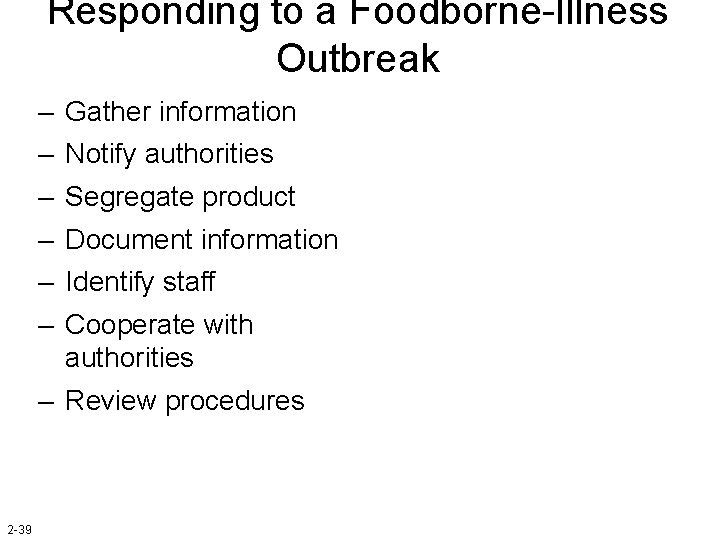
Responding to a Foodborne-Illness Outbreak – – – Gather information Notify authorities Segregate product Document information Identify staff Cooperate with authorities – Review procedures 2 -39
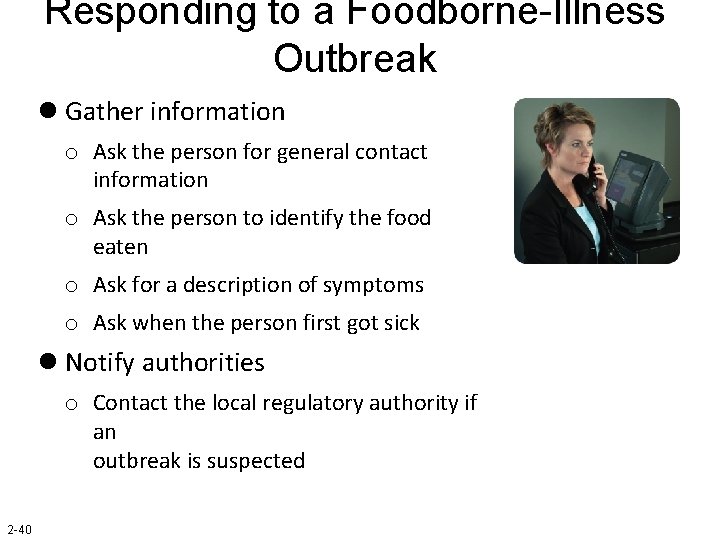
Responding to a Foodborne-Illness Outbreak l Gather information o Ask the person for general contact information o Ask the person to identify the food eaten o Ask for a description of symptoms o Ask when the person first got sick l Notify authorities o Contact the local regulatory authority if an outbreak is suspected 2 -40
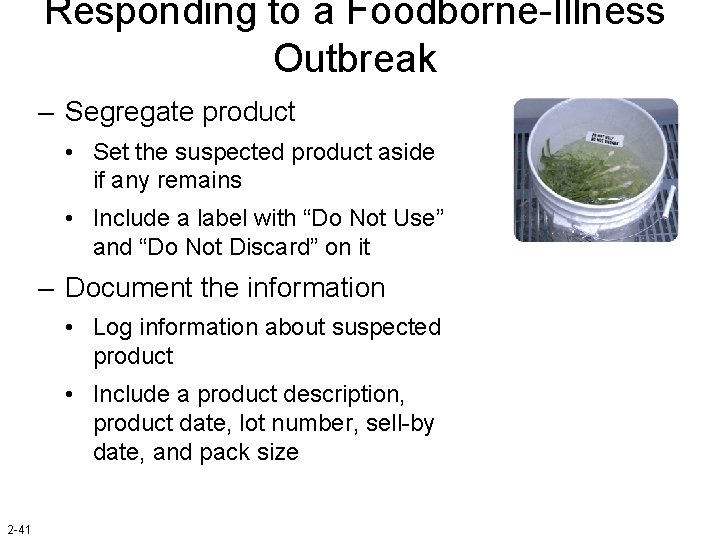
Responding to a Foodborne-Illness Outbreak – Segregate product • Set the suspected product aside if any remains • Include a label with “Do Not Use” and “Do Not Discard” on it – Document the information • Log information about suspected product • Include a product description, product date, lot number, sell-by date, and pack size 2 -41
Responding to a Foodborne-Illness Outbreak l Identify staff o Keep a list of food handlers scheduled at time of incident o Interview staff immediately l Cooperate with authorities o Provide appropriate documentation l Review procedures o Determine if standards are being met o Identify if standards are not working 2 -42
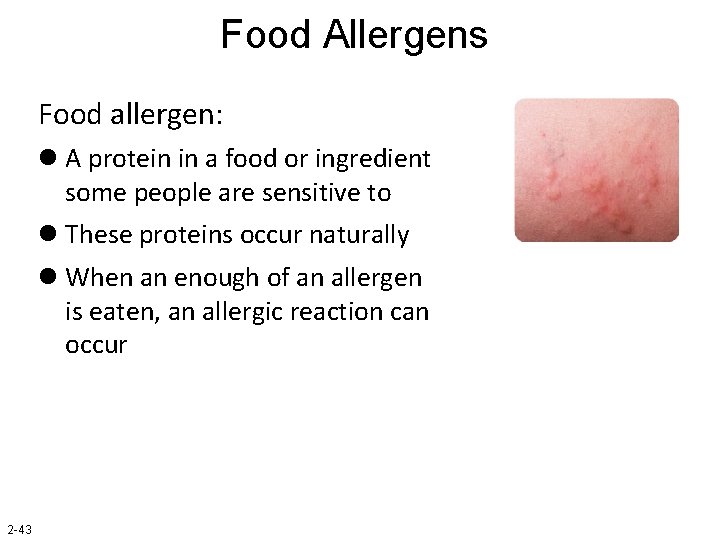
Food Allergens Food allergen: l A protein in a food or ingredient some people are sensitive to l These proteins occur naturally l When an enough of an allergen is eaten, an allergic reaction can occur 2 -43
Food Allergens Allergy symptoms: l l l Nausea Wheezing or shortness of breath Hives or itchy rashes Swelling of the body, including the face, eyes, hands, or feet Vomiting and/or diarrhea Abdominal pain Allergic reactions: l Symptoms can become serious quickly l A severe reaction, called anaphylaxis, can lead to death 2 -44
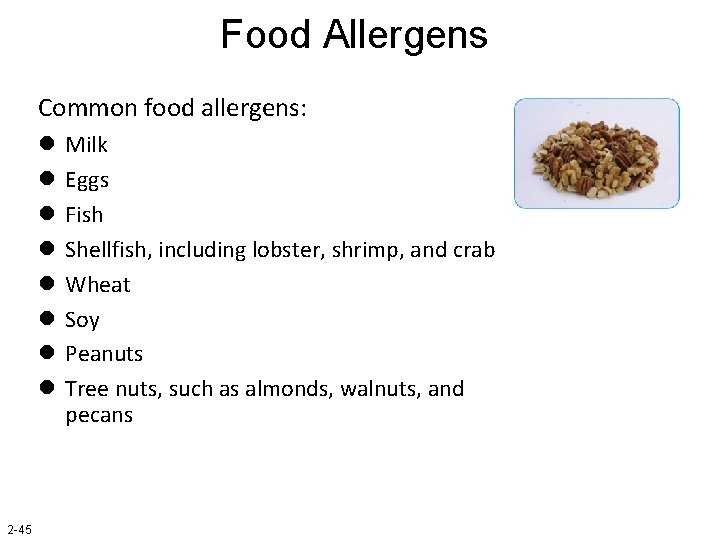
Food Allergens Common food allergens: l l l l 2 -45 Milk Eggs Fish Shellfish, including lobster, shrimp, and crab Wheat Soy Peanuts Tree nuts, such as almonds, walnuts, and pecans
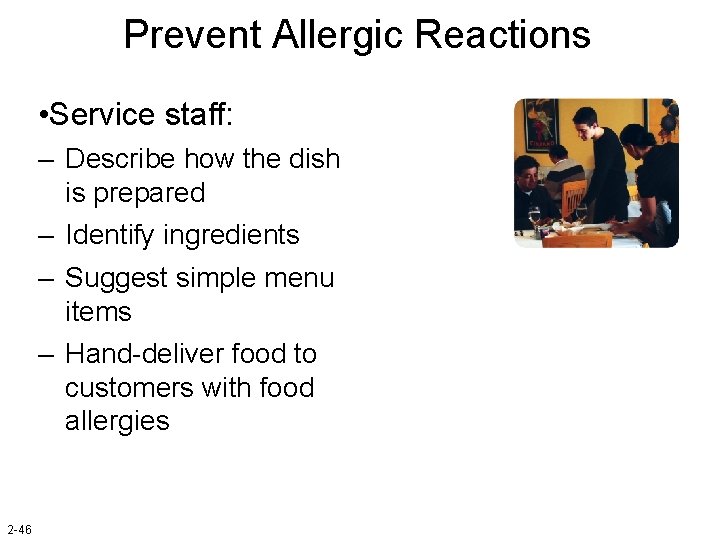
Prevent Allergic Reactions • Service staff: – Describe how the dish is prepared – Identify ingredients – Suggest simple menu items – Hand-deliver food to customers with food allergies 2 -46
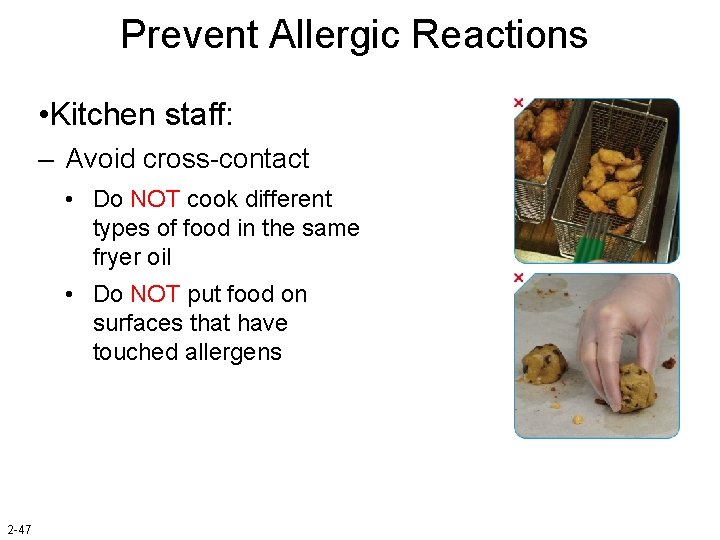
Prevent Allergic Reactions • Kitchen staff: – Avoid cross-contact • Do NOT cook different types of food in the same fryer oil • Do NOT put food on surfaces that have touched allergens 2 -47
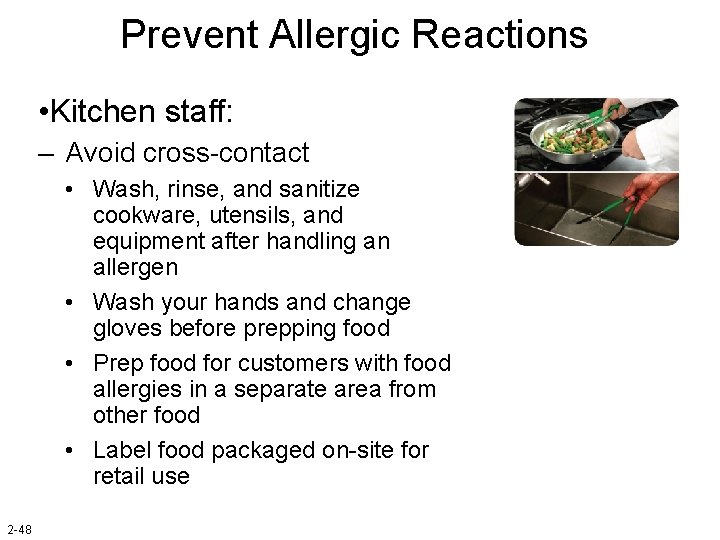
Prevent Allergic Reactions • Kitchen staff: – Avoid cross-contact • Wash, rinse, and sanitize cookware, utensils, and equipment after handling an allergen • Wash your hands and change gloves before prepping food • Prep food for customers with food allergies in a separate area from other food • Label food packaged on-site for retail use 2 -48
- Slides: 48