
YODA ASG DIGITALLY ACCELERATED ARITHMETIC SEQUENCE GENERATOR PRESENTED
![TEST RESULTS 8. 6 e-6[s] Activate 20 arithmetic units a 1 = 255 d](https://slidetodoc.com/presentation_image_h2/5ba9536489bd88a11a4a004fb01b44b3/image-12.jpg "TEST RESULTS 8. 6 e-6[s] Activate 20 arithmetic units a 1 = 255 d")
![TEST RESULTS Golden measure runtime [s] Prototype runtime [s] 1 ≈0 142 e-9 0.](https://slidetodoc.com/presentation_image_h2/5ba9536489bd88a11a4a004fb01b44b3/image-13.jpg "TEST RESULTS Golden measure runtime [s] Prototype runtime [s] 1 ≈0 142 e-9 0.")

- Slides: 16
YODA - ASG DIGITALLY ACCELERATED ARITHMETIC SEQUENCE GENERATOR PRESENTED BY: PHILIPPUS SCHOLTZ & ASIF PARKER MAY 2016
OVERVIEW INTRODUCTION CONCEPTUAL DESIGN PROTOTYPE IMPLEMENTATION TEST RESULTS CONCLUSION
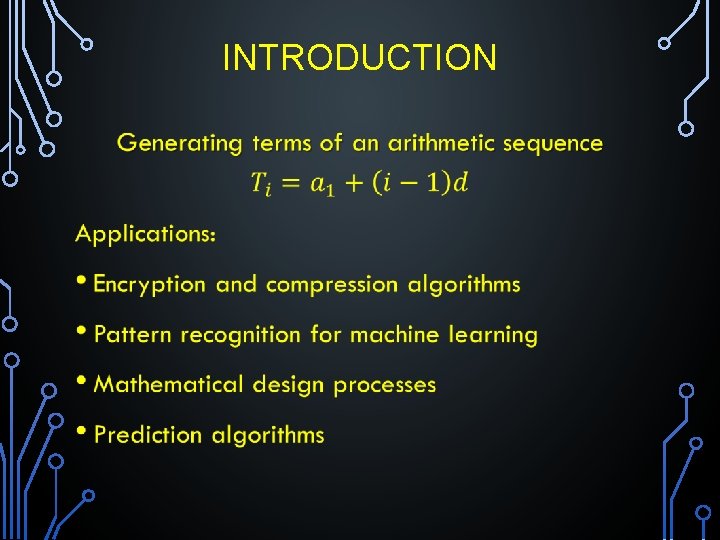
INTRODUCTION •
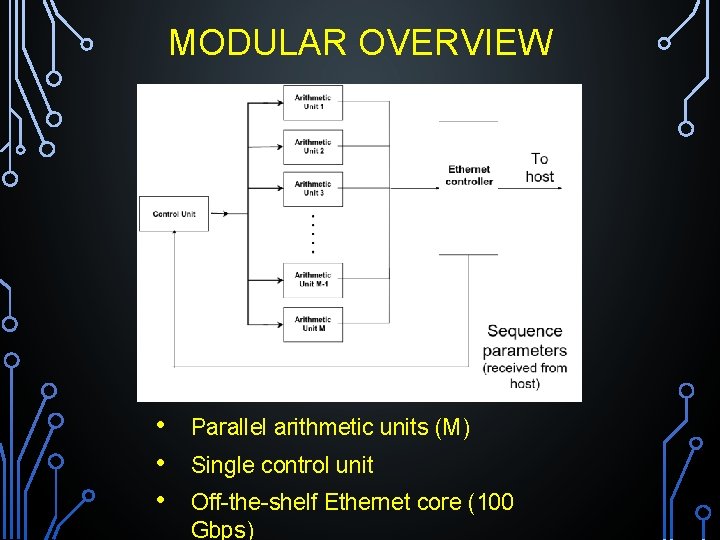
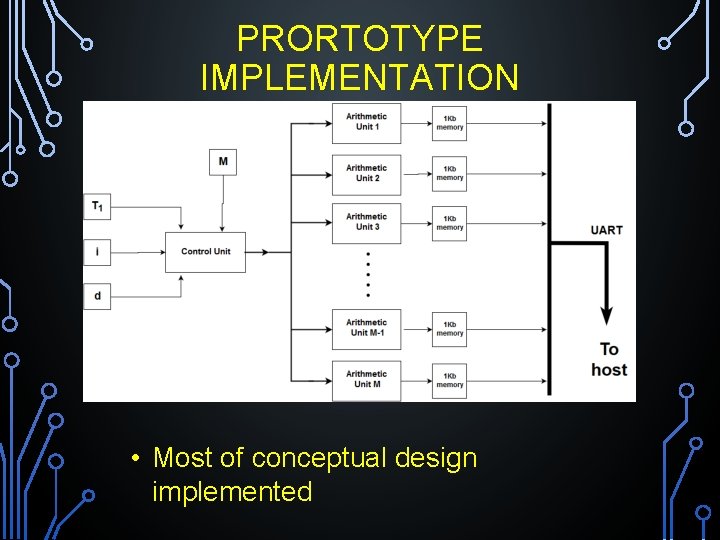
MODULAR OVERVIEW • • • Parallel arithmetic units (M) Single control unit Off-the-shelf Ethernet core (100 Gbps)
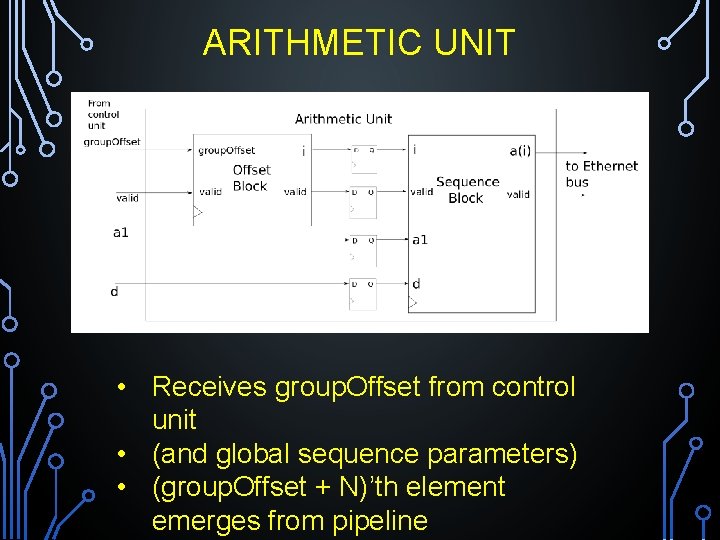
ARITHMETIC UNIT • Receives group. Offset from control unit • (and global sequence parameters) • (group. Offset + N)’th element emerges from pipeline
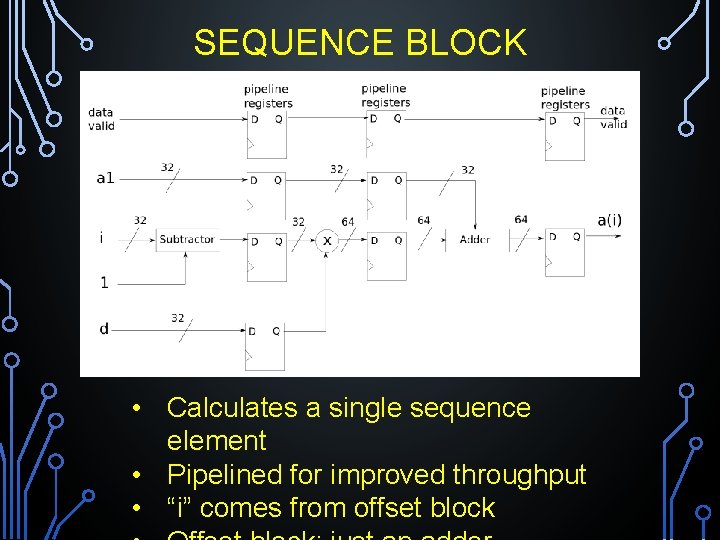
SEQUENCE BLOCK • Calculates a single sequence element • Pipelined for improved throughput • “i” comes from offset block
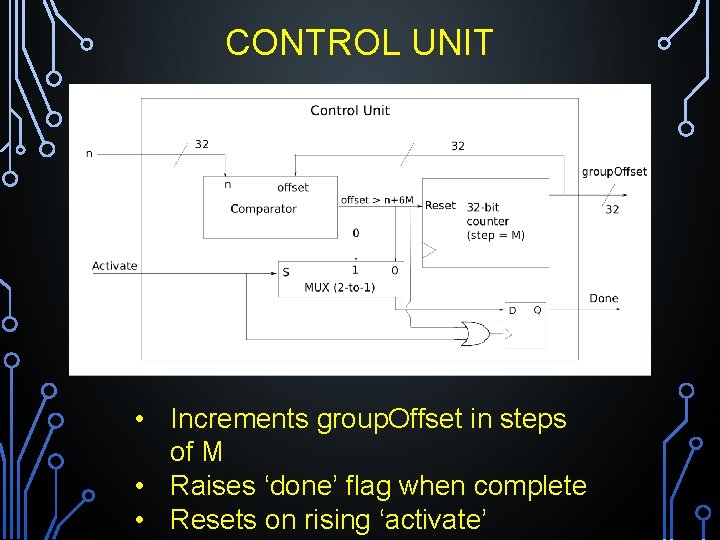
CONTROL UNIT • Increments group. Offset in steps of M • Raises ‘done’ flag when complete • Resets on rising ‘activate’
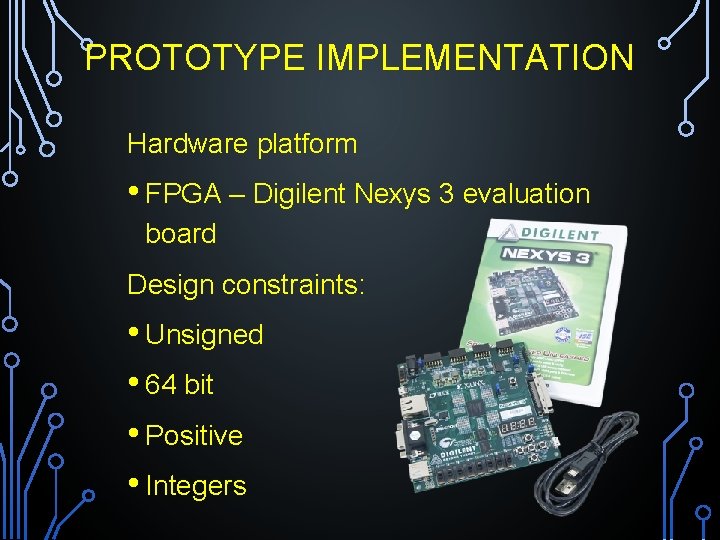
PROTOTYPE IMPLEMENTATION Hardware platform • FPGA – Digilent Nexys 3 evaluation board Design constraints: • Unsigned • 64 bit • Positive • Integers
PRORTOTYPE IMPLEMENTATION • Most of conceptual design implemented
TESTING THE PROTOTYPE Golden measure: • Program written in C • Sequential execution • Measure processing runtime of program
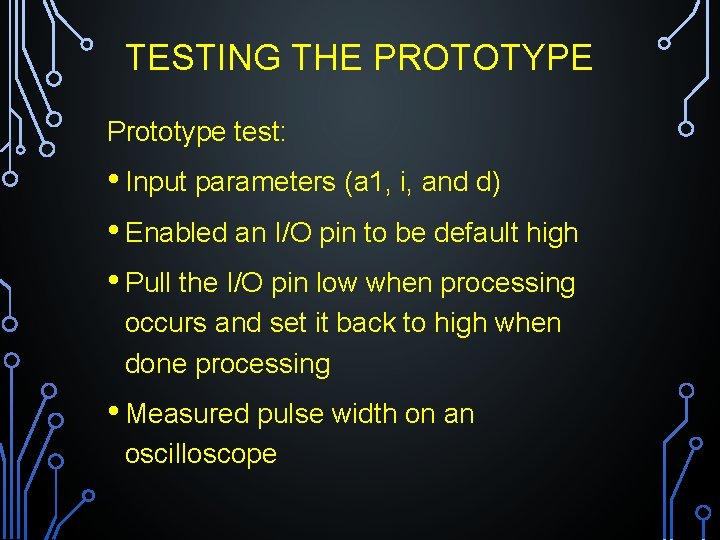
TESTING THE PROTOTYPE Prototype test: • Input parameters (a 1, i, and d) • Enabled an I/O pin to be default high • Pull the I/O pin low when processing occurs and set it back to high when done processing • Measured pulse width on an oscilloscope
TEST RESULTS 8. 6 e-6[s] Activate 20 arithmetic units a 1 = 255 d = 10 i = 1 000
TEST RESULTS Golden measure runtime [s] Prototype runtime [s] 1 ≈0 142 e-9 0. 00 10 2. 7 e-7 142 e-9 1. 90 100 6. 5 e-7 191 e-9 3. 40 1 000 2. 8 e-6 640 e-9 4. 38 10 000 3. 5 e-5 5. 14 e-6 6. 81 100 000 2. 84 e-4 17. 3 e-6 167. 06 1 000 5. 39 e-3 8. 6 e-6 295. 34 10 000 27. 27 e-3 19. 4 e-6 1405. 67 100 000 275. 5 e-3 28. 9 e-6 9532. 87 Number of terms Speedup
CONCLUSION ü Valid algorithm ü Successful prototype results ü Speedup obtained for prototype
FUTURE ENHANCEMENTS • Use a larger FPGA to accommodate more arithmetic modules and memory blocks • Implement high speed parallel output data transfer to host computer using 100 Gb Ethernet • Extend design to accommodate floating point numbers and negative numbers
QUESTIONS?