
ykcolc C ekycle The Th Reo Cc R
- Slides: 52
ykcolc. C ekycle The. Th. Reo. Cc. R The let’s review some basic information … Adapted from a Powerpoint by Michigan Department of Environmental Quality Geological Survey Division - http: //www. deq. state. mi. us/gsd
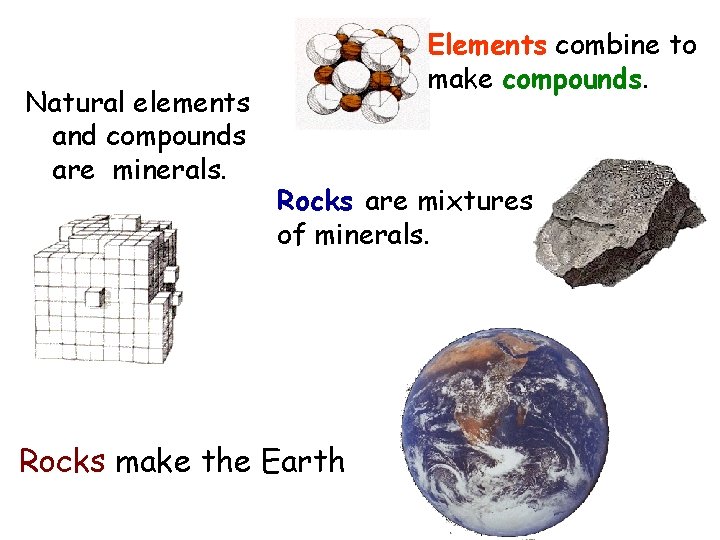
Natural elements and compounds are minerals. Elements combine to make compounds. Rocks are mixtures of minerals. Rocks make the Earth
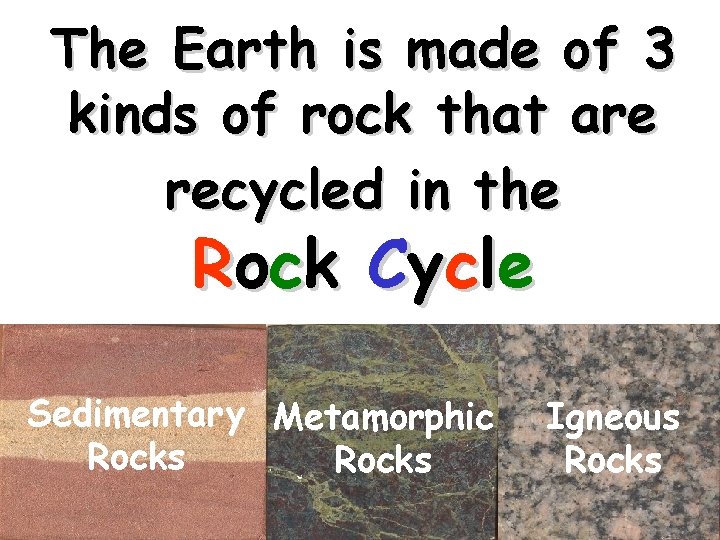
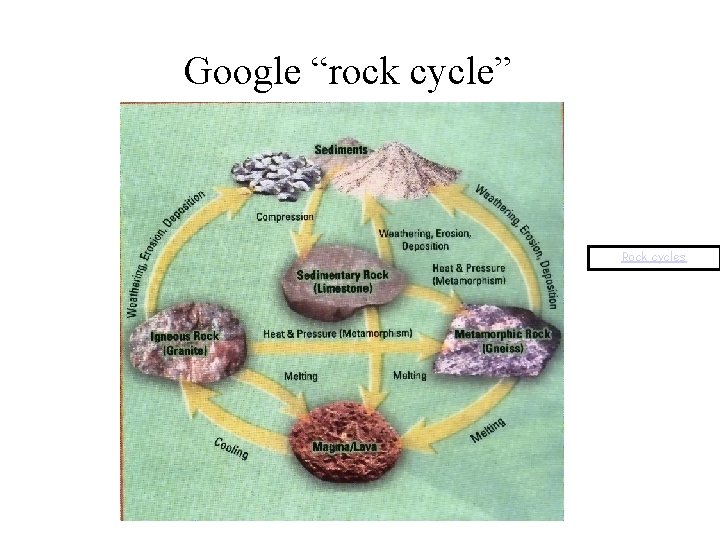
The Earth is made of 3 kinds of rock that are recycled in the Ro c k C y c l e Sedimentary Metamorphic Rocks Igneous Rocks
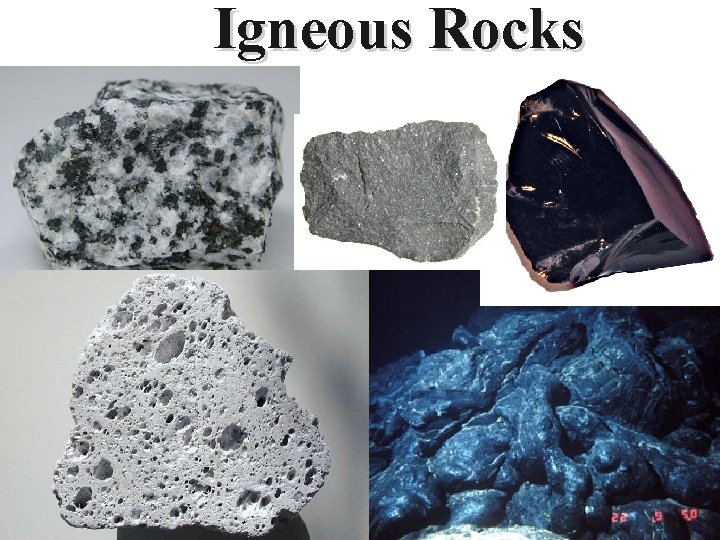
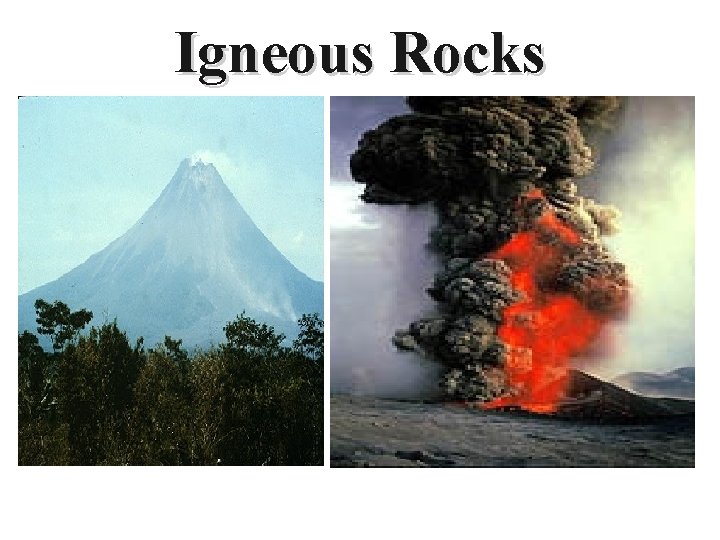
Igneous Rocks
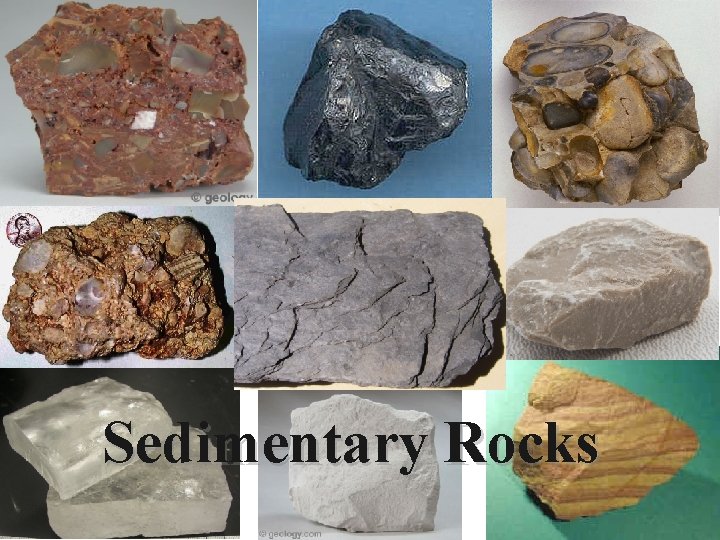
Sedimentary Rocks
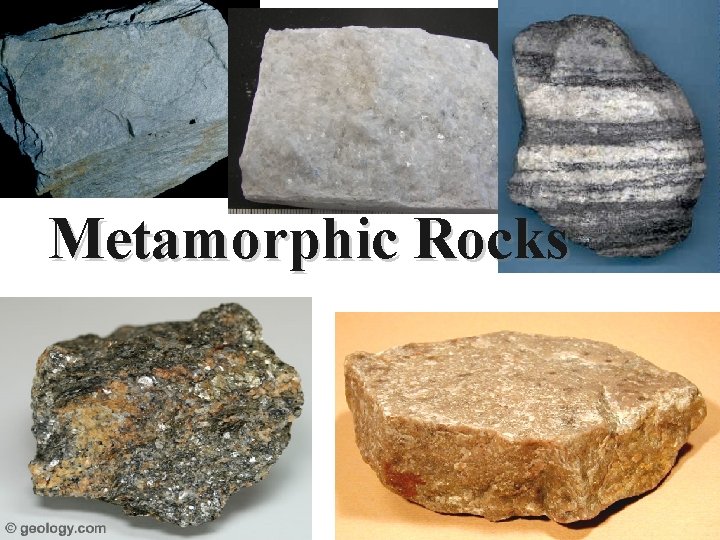
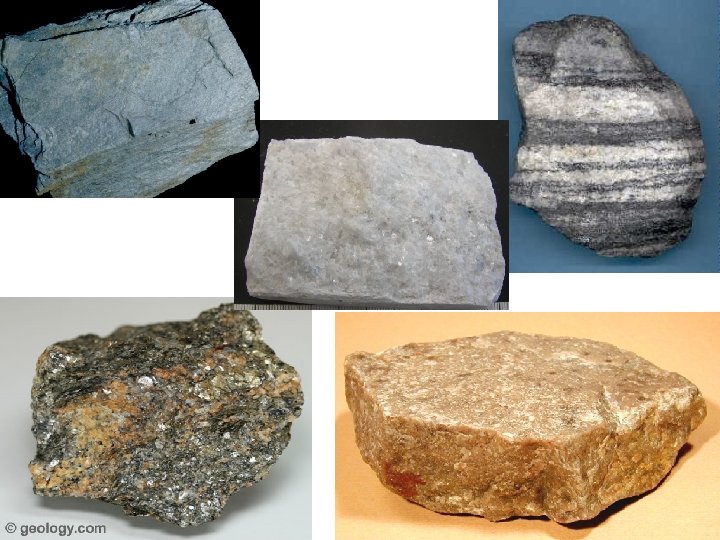
Metamorphic Rocks
Enough about rocks, on to the cycle …
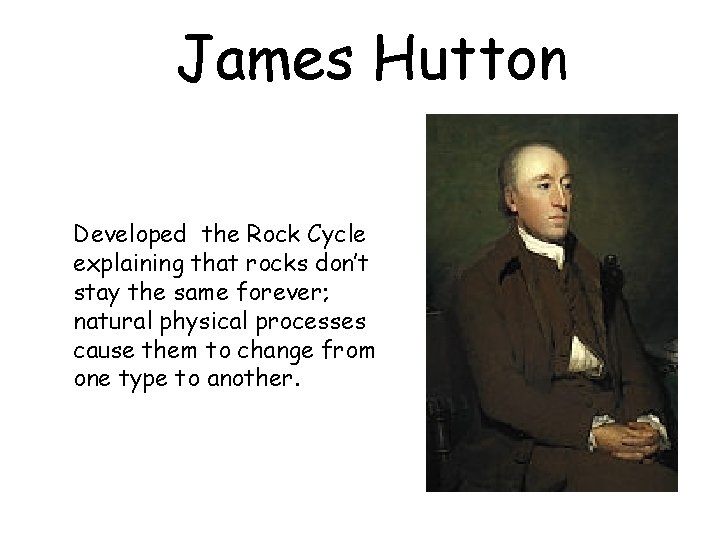
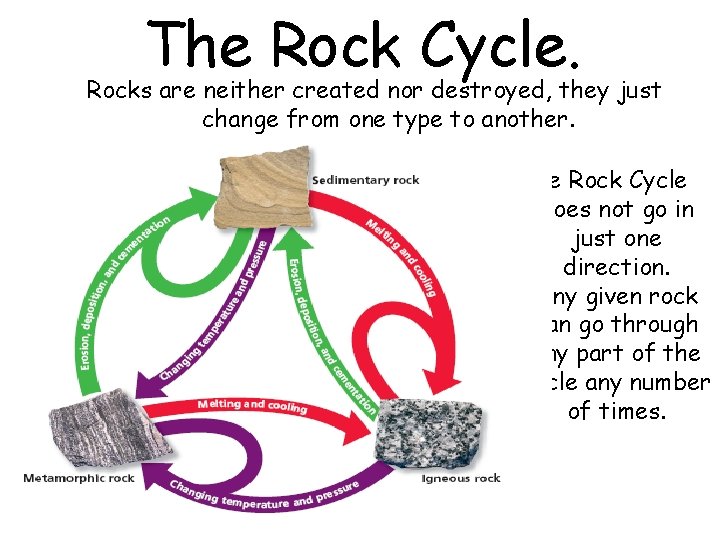
James Hutton Developed the Rock Cycle explaining that rocks don’t stay the same forever; natural physical processes cause them to change from one type to another.
The Rock Cycle. Rocks are neither created nor destroyed, they just change from one type to another. pr es ng su lti me re , h ea t Sedimentary weathering The Rock Cycle does not go in Metamorphic just one direction. Any given rock can go through any part of the cycle any number of times. Igneous
The Earth can be thought of as a giant recycling machine http: //www. science. ubc. ca/~geol 202/rock_cycle/rockcycle. html March 2000
Google “rock cycle” Rock cycles
Igneous Rocks
Igneous Rocks
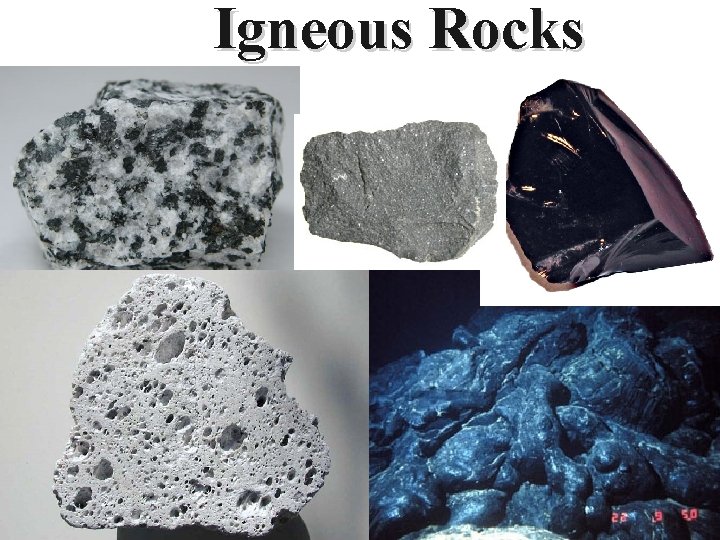
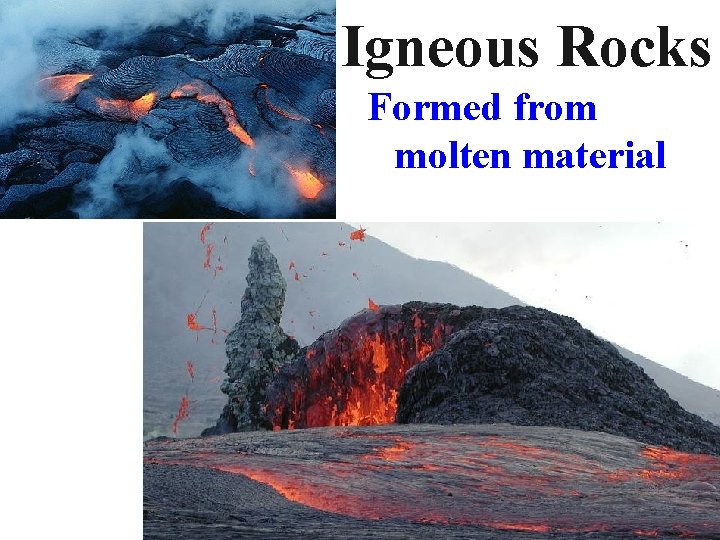
Igneous Rocks Formed from molten material
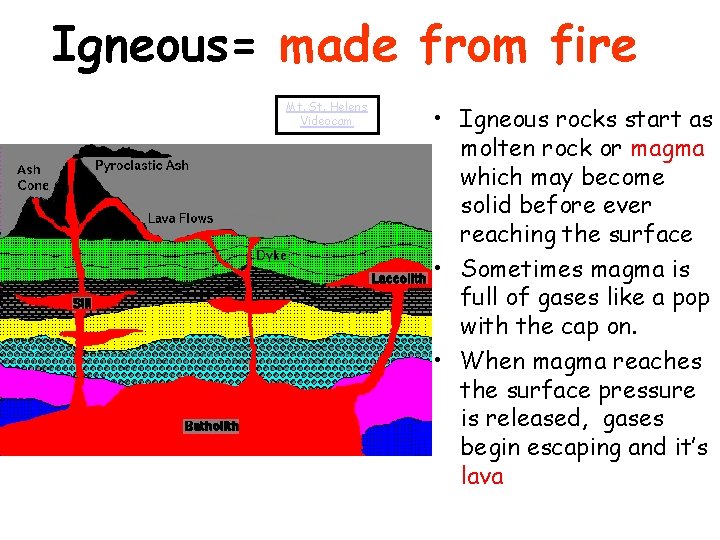
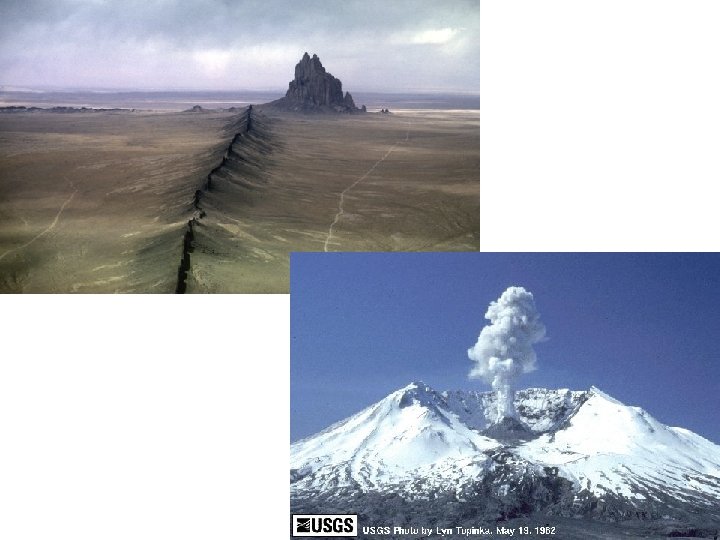
Igneous= made from fire Mt. St. Helens Videocam • Igneous rocks start as molten rock or magma which may become solid before ever reaching the surface • Sometimes magma is full of gases like a pop with the cap on. • When magma reaches the surface pressure is released, gases begin escaping and it’s lava
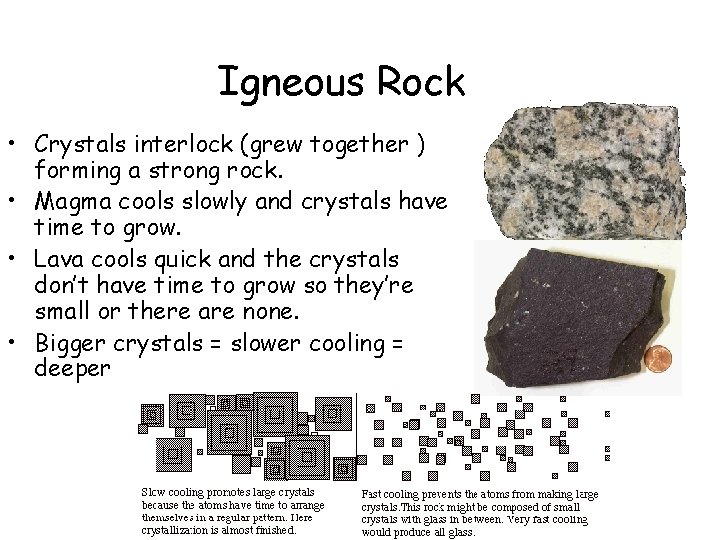
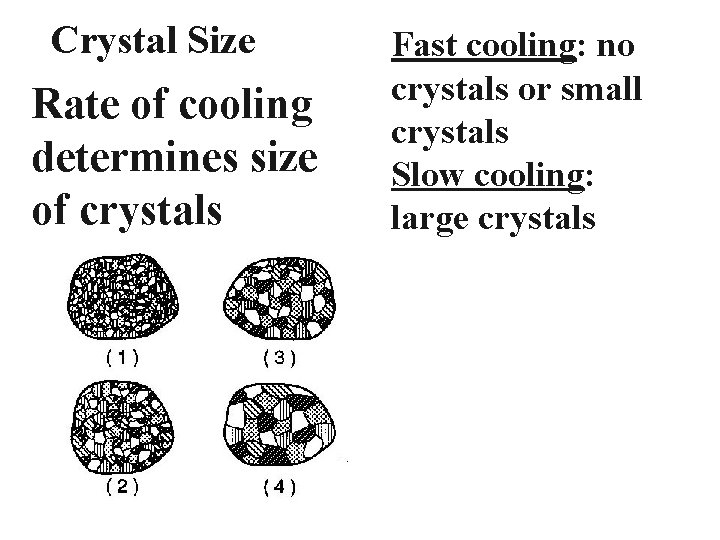
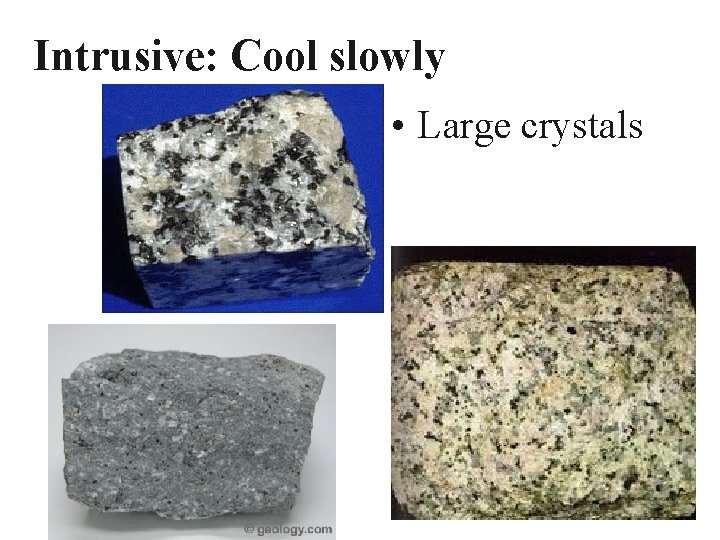
Igneous Rock • Crystals interlock (grew together ) forming a strong rock. • Magma cools slowly and crystals have time to grow. • Lava cools quick and the crystals don’t have time to grow so they’re small or there are none. • Bigger crystals = slower cooling = deeper
Crystal Size Rate of cooling determines size of crystals Fast cooling: no crystals or small crystals Slow cooling: large crystals
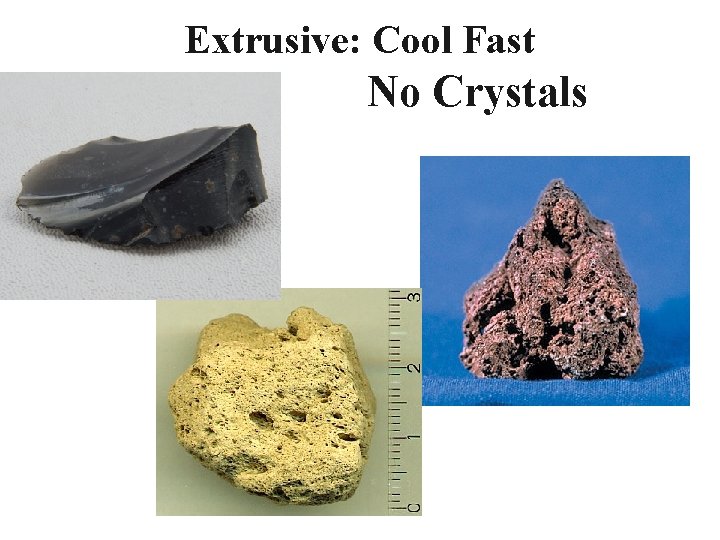
Extrusive: Cool Fast No Crystals.
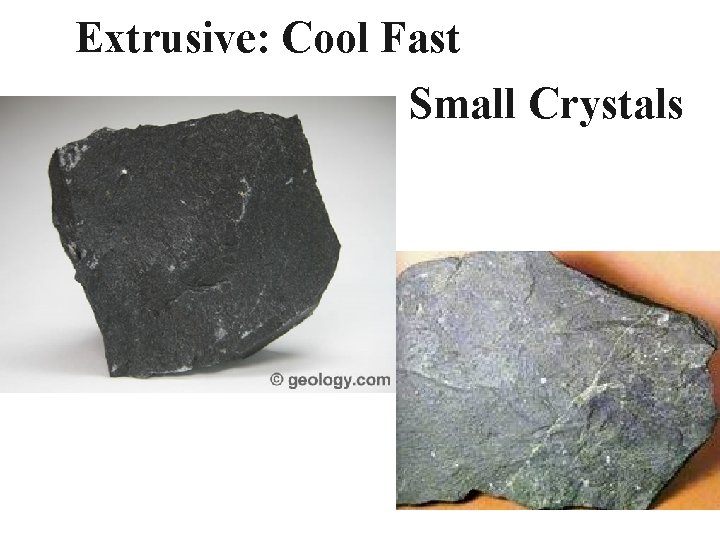
Extrusive: Cool Fast Small Crystals
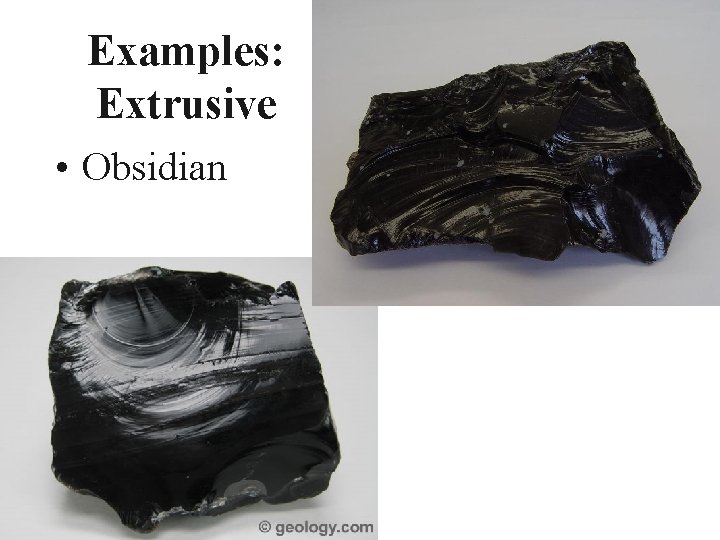
Examples: Extrusive • Obsidian
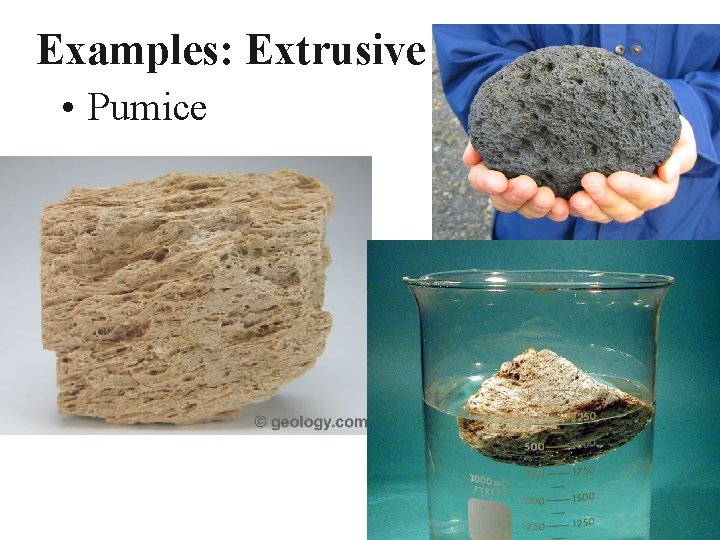
Examples: Extrusive • Pumice
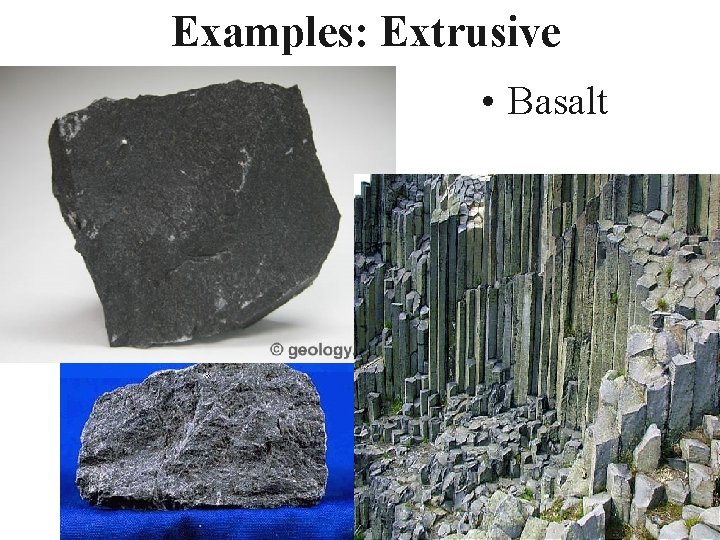
Examples: Extrusive • Basalt
Intrusive: Cool slowly • Large crystals
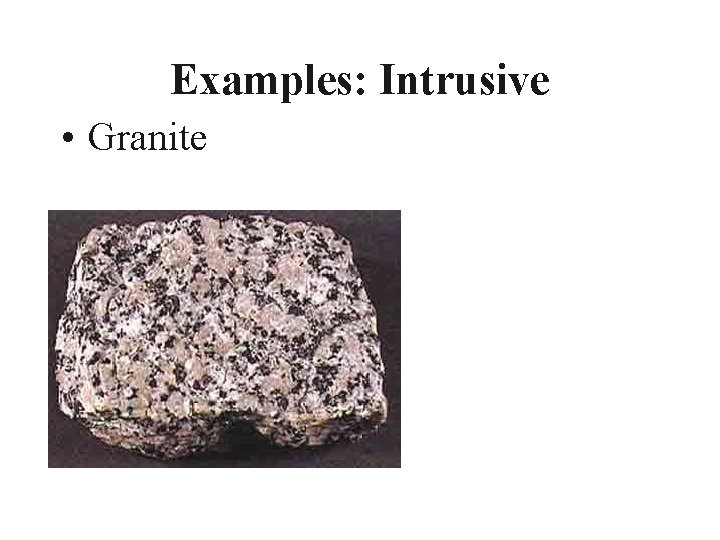
Examples: Intrusive • Granite
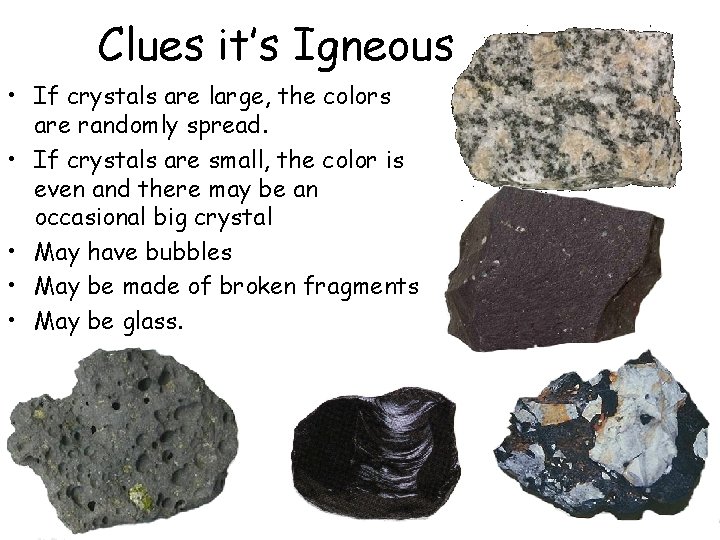
Clues it’s Igneous • If crystals are large, the colors are randomly spread. • If crystals are small, the color is even and there may be an occasional big crystal • May have bubbles • May be made of broken fragments • May be glass.
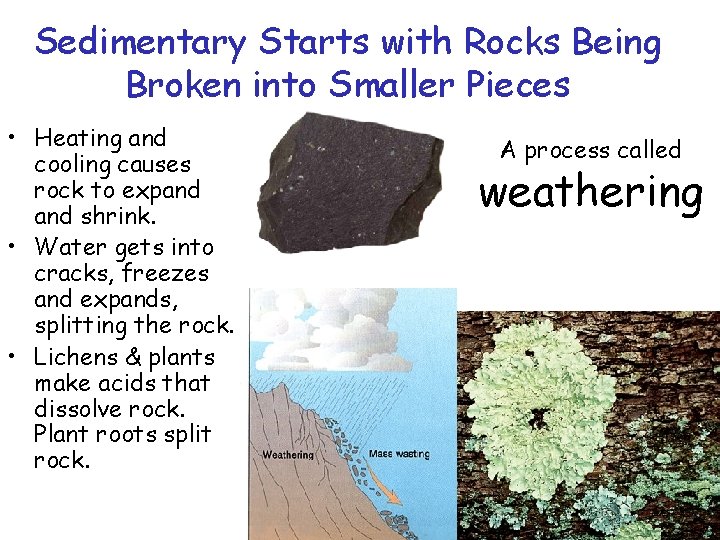
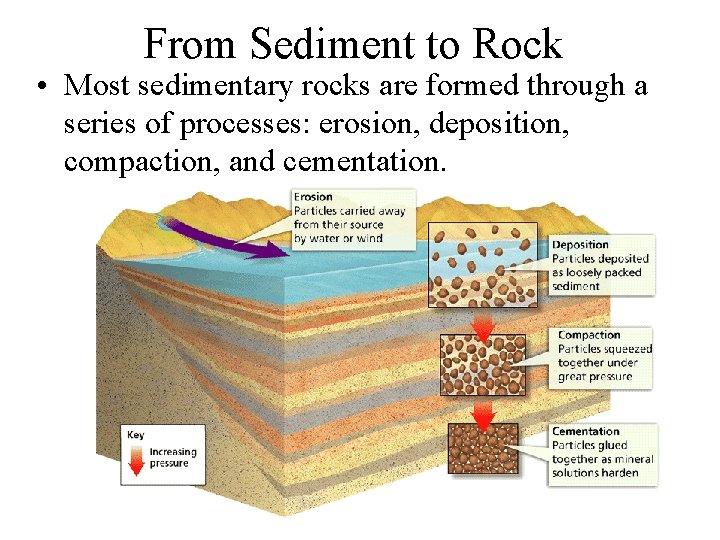
Sedimentary Starts with Rocks Being Broken into Smaller Pieces • Heating and cooling causes rock to expand shrink. • Water gets into cracks, freezes and expands, splitting the rock. • Lichens & plants make acids that dissolve rock. Plant roots split rock. A process called weathering
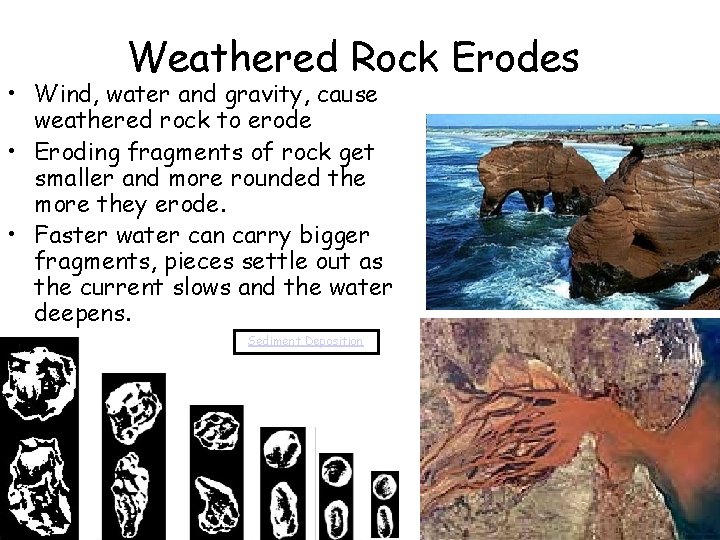
Weathered Rock Erodes • Wind, water and gravity, cause weathered rock to erode • Eroding fragments of rock get smaller and more rounded the more they erode. • Faster water can carry bigger fragments, pieces settle out as the current slows and the water deepens. Sediment Deposition
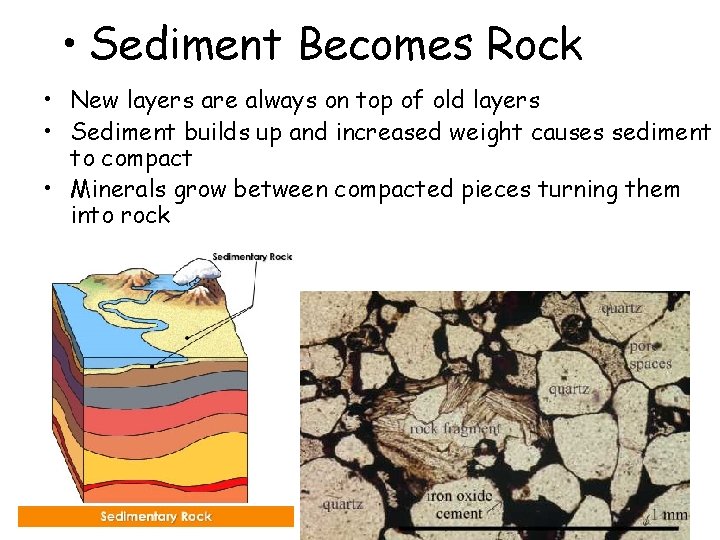
• Sediment Becomes Rock • New layers are always on top of old layers • Sediment builds up and increased weight causes sediment to compact • Minerals grow between compacted pieces turning them into rock
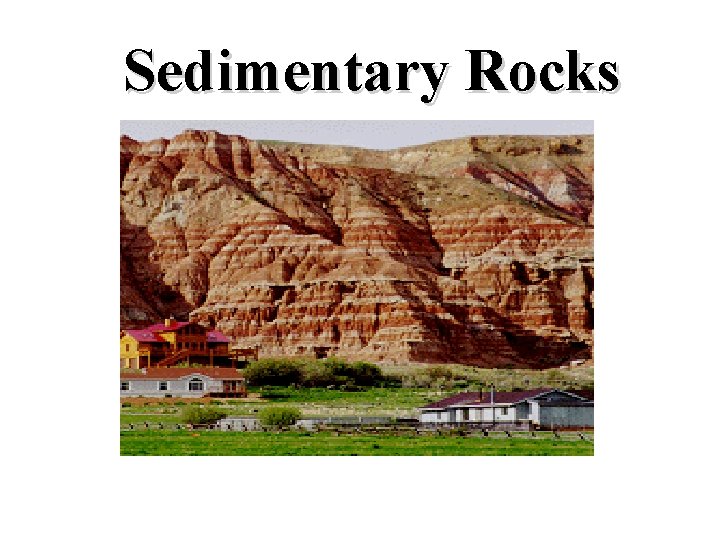
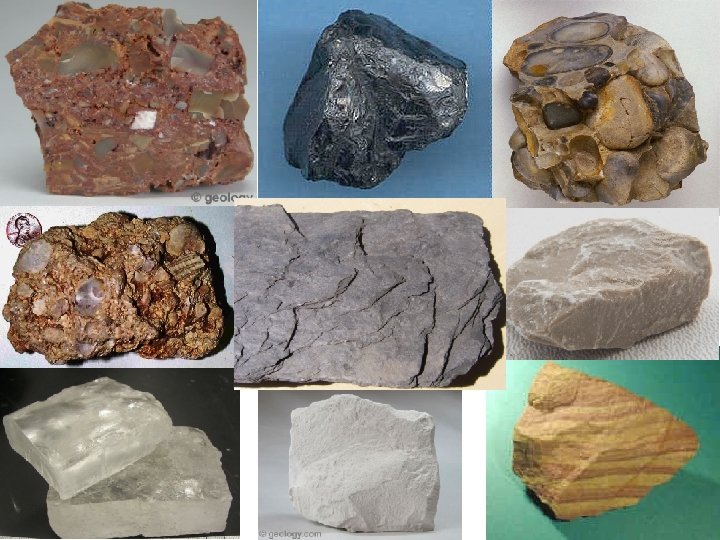
Sedimentary Rocks
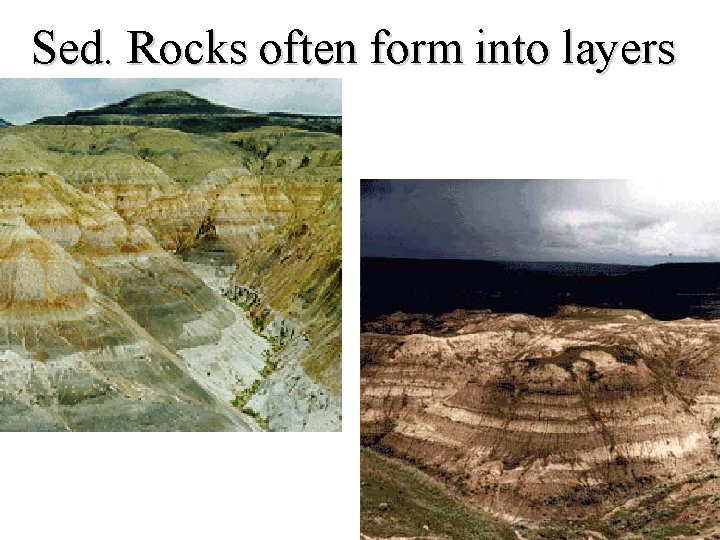
Sed. Rocks often form into layers
From Sediment to Rock • Most sedimentary rocks are formed through a series of processes: erosion, deposition, compaction, and cementation.
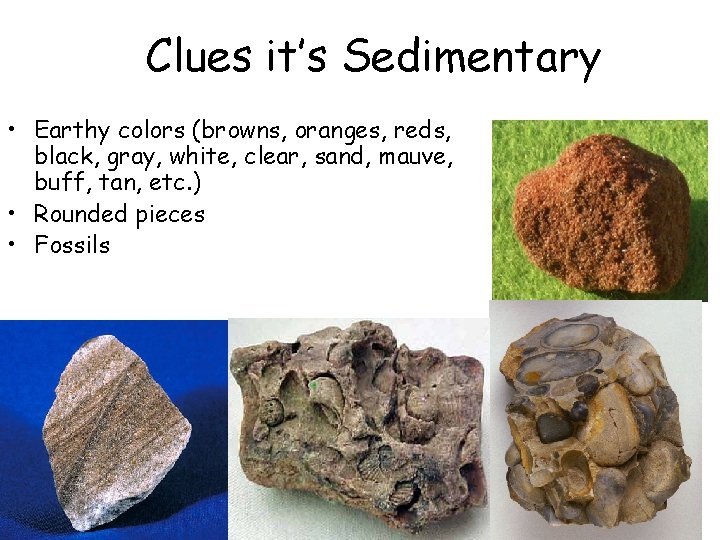
Clues it’s Sedimentary • Earthy colors (browns, oranges, reds, black, gray, white, clear, sand, mauve, buff, tan, etc. ) • Rounded pieces • Fossils
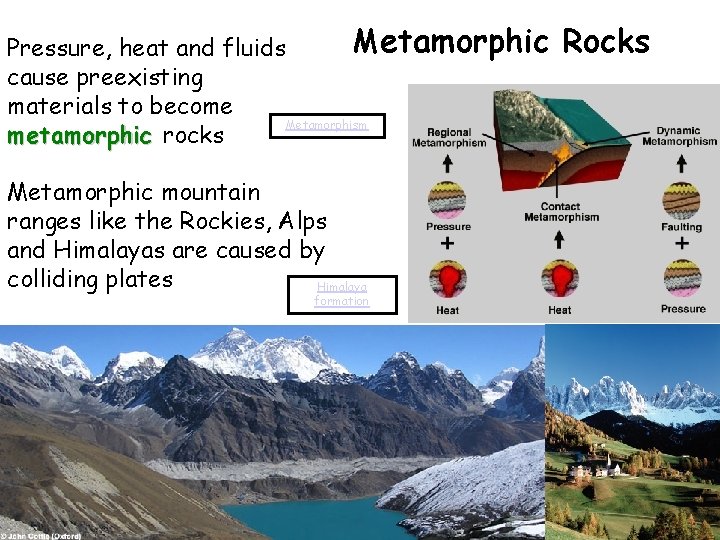
Metamorphic Pressure, heat and fluids cause preexisting materials to become Metamorphism metamorphic rocks Metamorphic mountain ranges like the Rockies, Alps and Himalayas are caused by colliding plates Himalaya formation Rocks
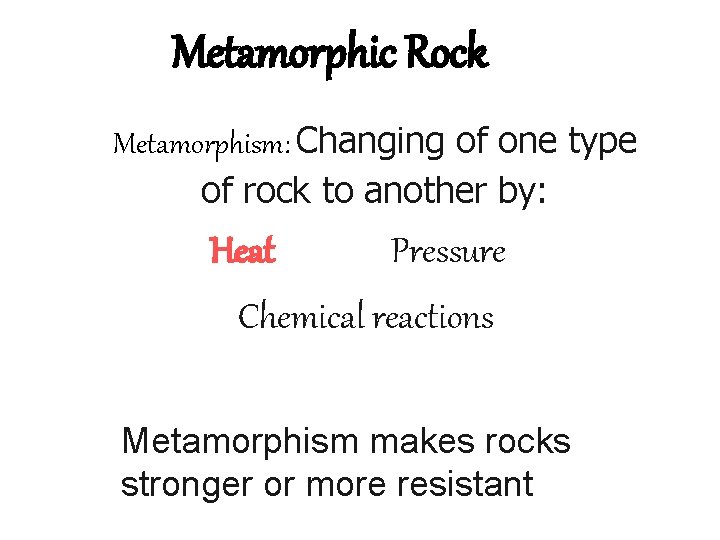
Metamorphic Rock Metamorphism: Changing of one type of rock to another by: Heat Pressure Chemical reactions Metamorphism makes rocks stronger or more resistant
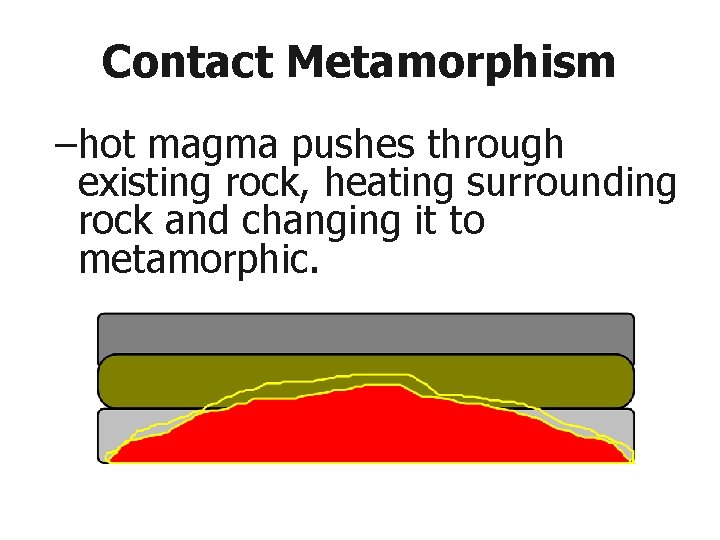
Contact Metamorphism –hot magma pushes through existing rock, heating surrounding rock and changing it to metamorphic.
Classification of Metamorphic rock Foliated & Non-foliated
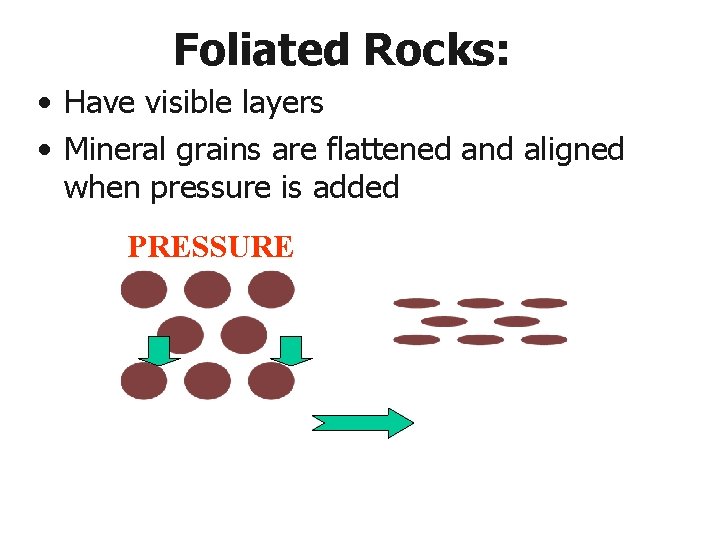
Foliated Rocks: • Have visible layers • Mineral grains are flattened and aligned when pressure is added PRESSURE
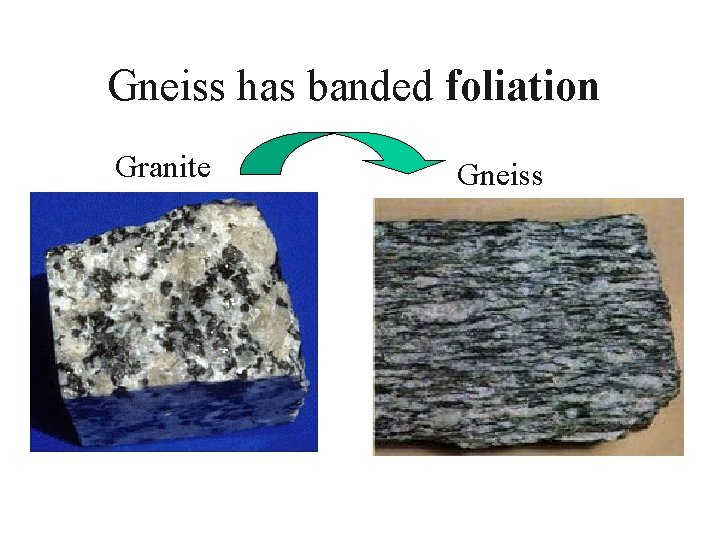
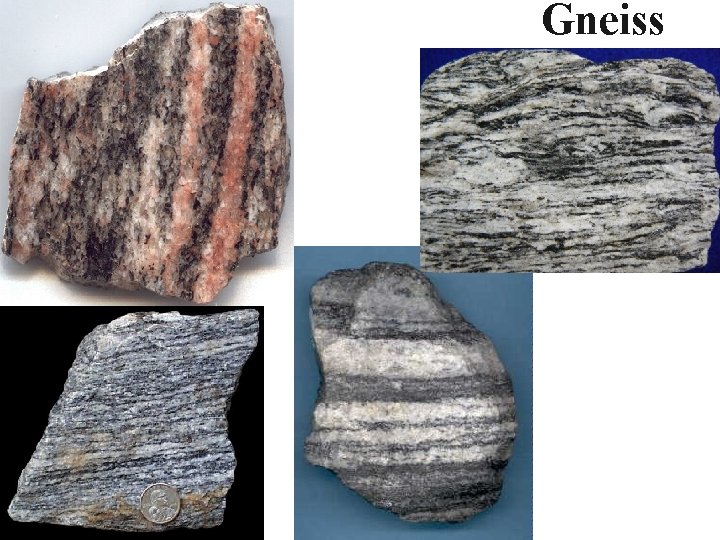
Gneiss has banded foliation Granite Gneiss
Gneiss
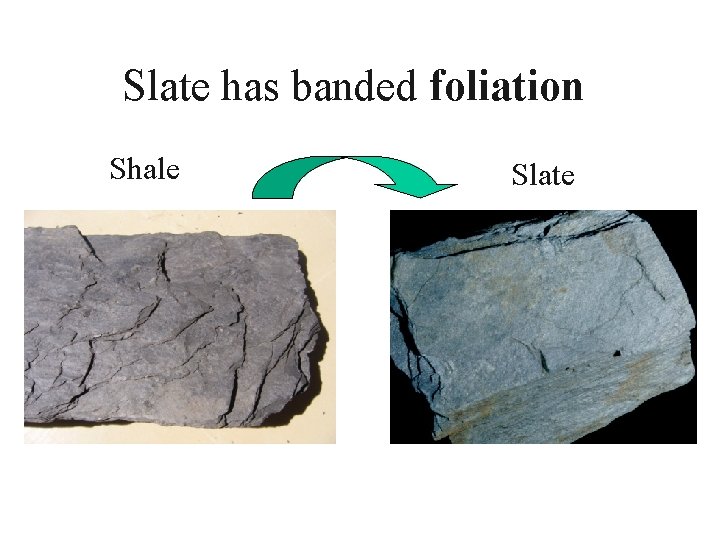
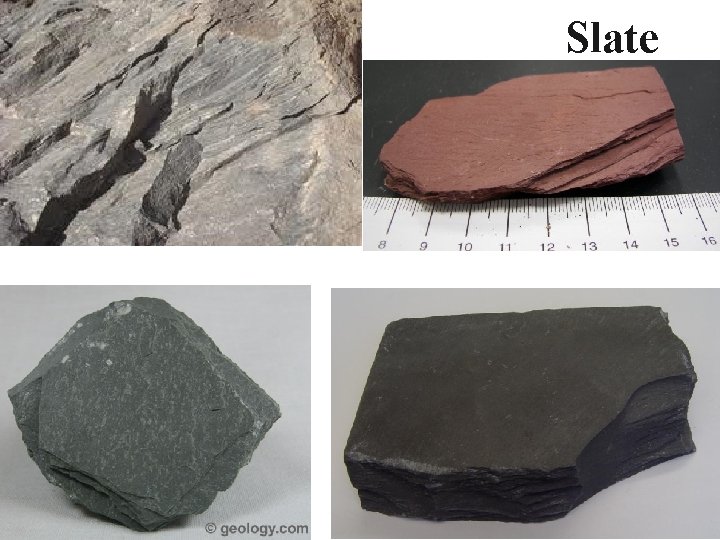
Slate has banded foliation Shale Slate
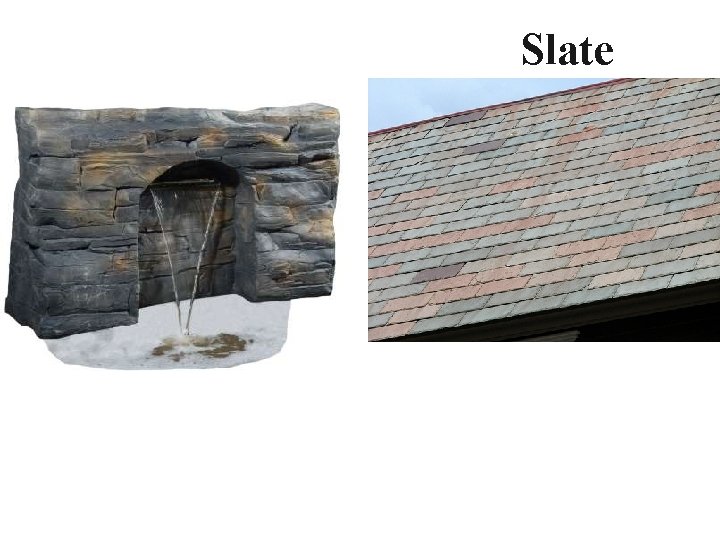
Slate
Slate
Non-foliated Rocks: • These DO NOT have layers of crystals.
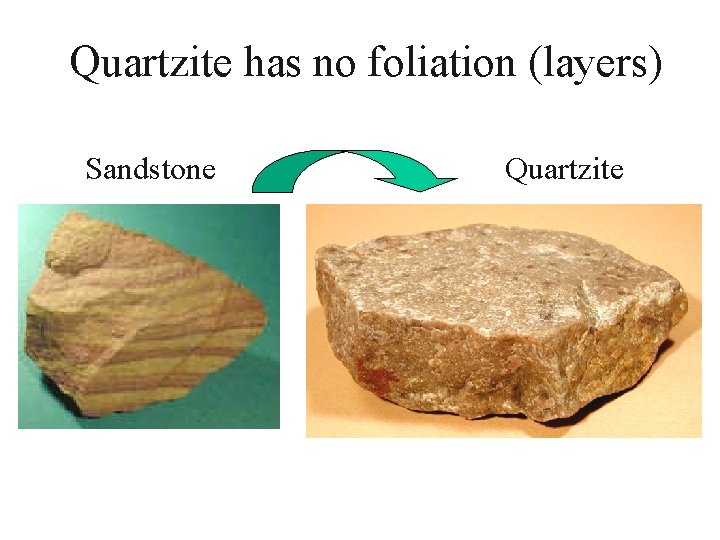
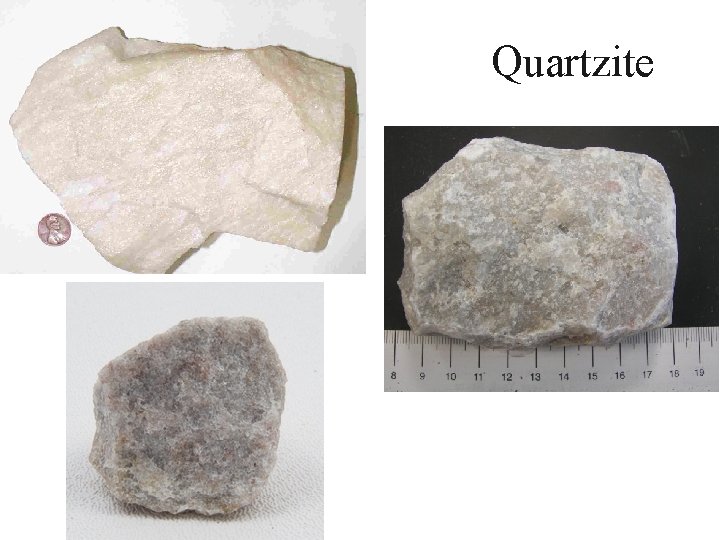
Quartzite has no foliation (layers) Sandstone Quartzite
Quartzite
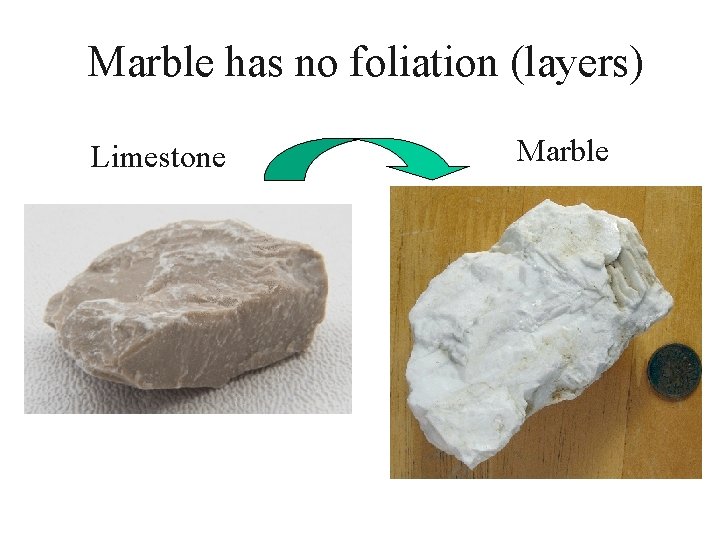
Marble has no foliation (layers) Limestone Marble
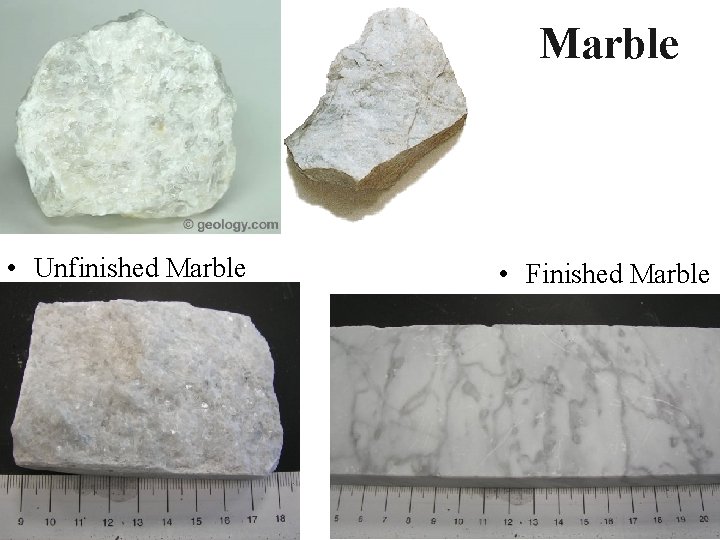
Marble • Unfinished Marble • Finished Marble
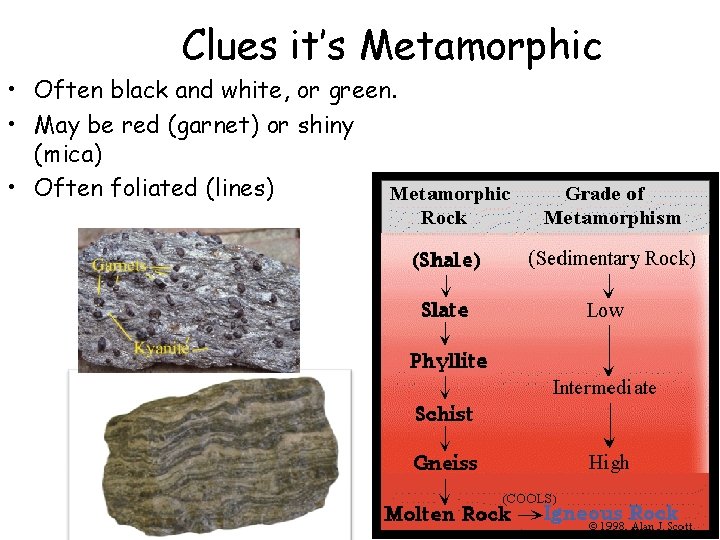
Clues it’s Metamorphic • Often black and white, or green. • May be red (garnet) or shiny (mica) • Often foliated (lines)