
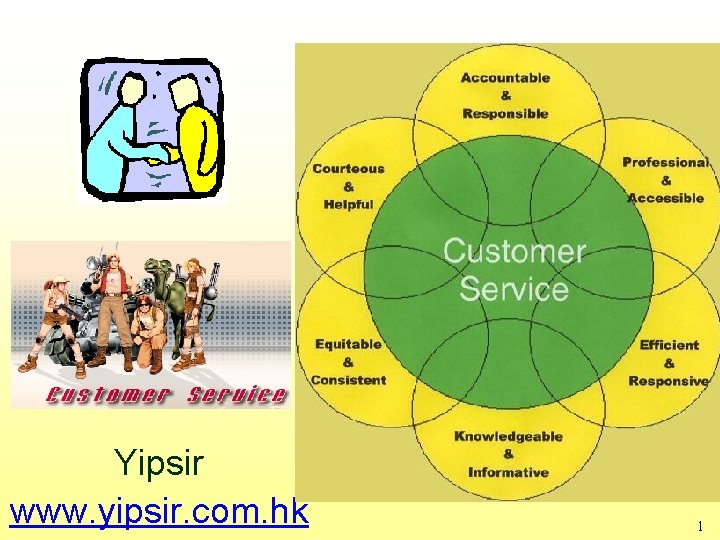
Yipsir www yipsir com hk 1 Session schedule








- Slides: 25
Yipsir www. yipsir. com. hk 1
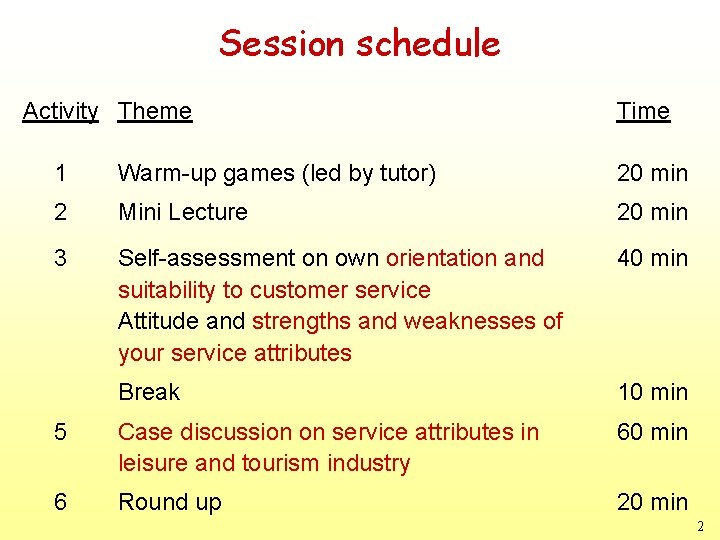
Session schedule Activity Theme Time 1 Warm-up games (led by tutor) 20 min 2 Mini Lecture 20 min 3 Self-assessment on own orientation and suitability to customer service Attitude and strengths and weaknesses of your service attributes 40 min Break 10 min 5 Case discussion on service attributes in leisure and tourism industry 60 min 6 Round up 20 min 2
Warm up activities Saying and doing the opposite (口是心非) Shake hands (握手看心理) 3
Mini-lecture Strategies for promoting a professional service culture 4
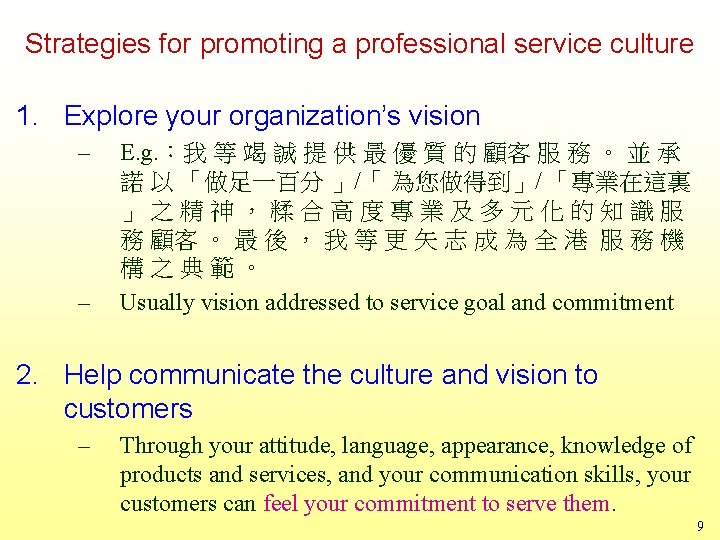
Strategies for promoting a professional service culture 1. Explore your organization’s vision – – E. g. :我 等 竭 誠 提 供 最 優 質 的 顧客 服 務 。 並 承 諾 以 「做足一百分 」/「 為您做得到」/ 「專業在這裏 」之精神,糅合高度專業及多元化的知識服 務 顧客 。 最 後 , 我 等 更 矢 志 成 為 全 港 服 務 機 構之典範。 Usually vision addressed to service goal and commitment 2. Help communicate the culture and vision to customers – Through your attitude, language, appearance, knowledge of products and services, and your communication skills, your customers can feel your commitment to serve them. 9
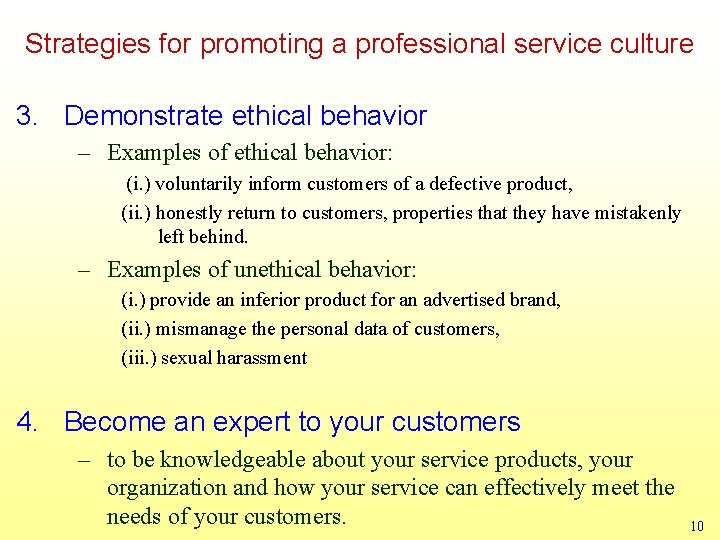
Strategies for promoting a professional service culture 3. Demonstrate ethical behavior – Examples of ethical behavior: (i. ) voluntarily inform customers of a defective product, (ii. ) honestly return to customers, properties that they have mistakenly left behind. – Examples of unethical behavior: (i. ) provide an inferior product for an advertised brand, (ii. ) mismanage the personal data of customers, (iii. ) sexual harassment 4. Become an expert to your customers – to be knowledgeable about your service products, your organization and how your service can effectively meet the needs of your customers. 10
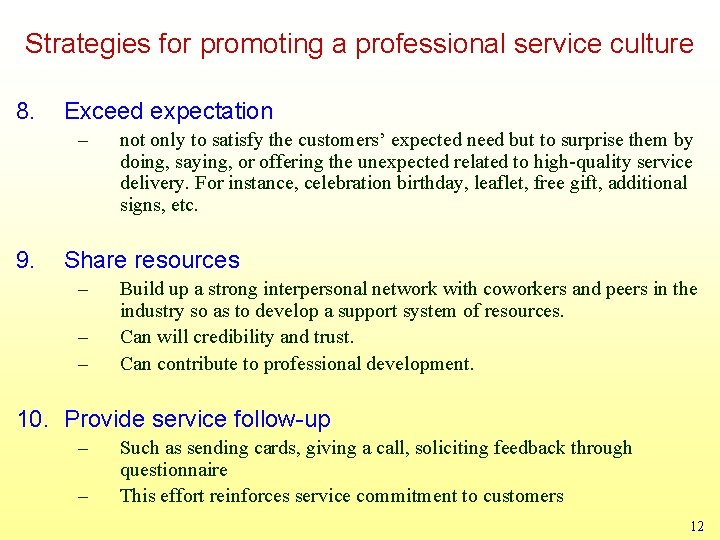
Strategies for promoting a professional service culture 5. Demonstrate commitment – In face of request, complains or other difficult situations, tell your customers what you can do and DO NOT mention what you cannot do - “plus”, “minus” strategy 6. Partners with customers – – Promote a healthy customer-provider relationship. Why and how? 7. Work with customers’ interest in mind – Think to yourself, “If I were the customer, what type of service would I expect? ’ Then you set out to provide that service. 11
Strategies for promoting a professional service culture 8. Exceed expectation – 9. not only to satisfy the customers’ expected need but to surprise them by doing, saying, or offering the unexpected related to high-quality service delivery. For instance, celebration birthday, leaflet, free gift, additional signs, etc. Share resources – – – Build up a strong interpersonal network with coworkers and peers in the industry so as to develop a support system of resources. Can will credibility and trust. Can contribute to professional development. 10. Provide service follow-up – – Such as sending cards, giving a call, soliciting feedback through questionnaire This effort reinforces service commitment to customers 12
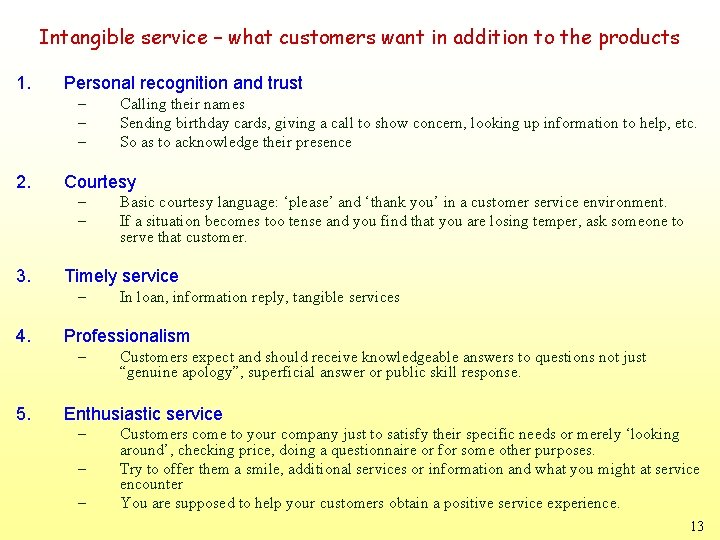
Intangible service – what customers want in addition to the products 1. Personal recognition and trust – – – 2. Courtesy – – 3. In loan, information reply, tangible services Professionalism – 5. Basic courtesy language: ‘please’ and ‘thank you’ in a customer service environment. If a situation becomes too tense and you find that you are losing temper, ask someone to serve that customer. Timely service – 4. Calling their names Sending birthday cards, giving a call to show concern, looking up information to help, etc. So as to acknowledge their presence Customers expect and should receive knowledgeable answers to questions not just “genuine apology”, superficial answer or public skill response. Enthusiastic service – – – Customers come to your company just to satisfy their specific needs or merely ‘looking around’, checking price, doing a questionnaire or for some other purposes. Try to offer them a smile, additional services or information and what you might at service encounter You are supposed to help your customers obtain a positive service experience. 13
Intangible service – what customers want in addition to the products 6. Empathy – E. g. If customers have particular handicaps such as difficulties in mobility and use of language, your care have to be special. 7. Genuineness and Responsibility – – The is to recover from limitation and errors is to admit them, to make apology to accept responsibility, and then quickly and appropriately to solve the problem. A matter of accountability and work efficiency. 8. Patience – – Never allow your customers to face your frustrations and tension. Even if you find that your customers are the one causing the problem, you have to remain in control, to serve with courtesy and to transfer the service appropriately. 14
Self-assessment on own orientation and suitability to customer service 15
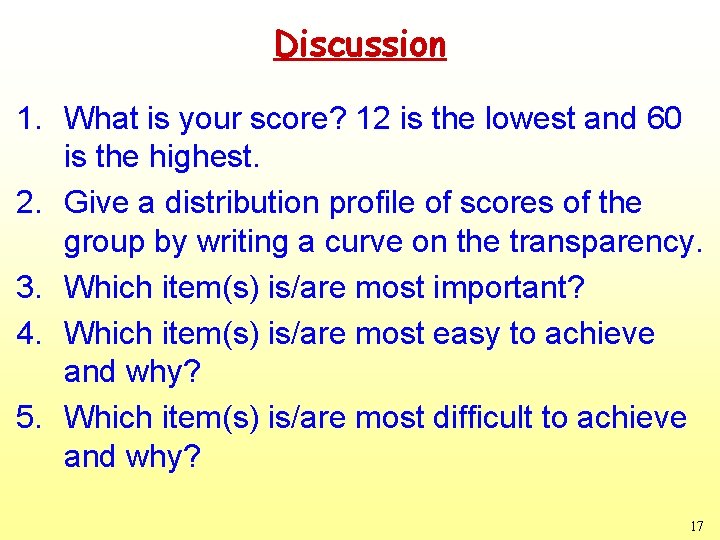
Discussion 1. What is your score? 12 is the lowest and 60 is the highest. 2. Give a distribution profile of scores of the group by writing a curve on the transparency. 3. Which item(s) is/are most important? 4. Which item(s) is/are most easy to achieve and why? 5. Which item(s) is/are most difficult to achieve and why? 17
Activity 3. 2 Self-Assessment on Service Attributes 18
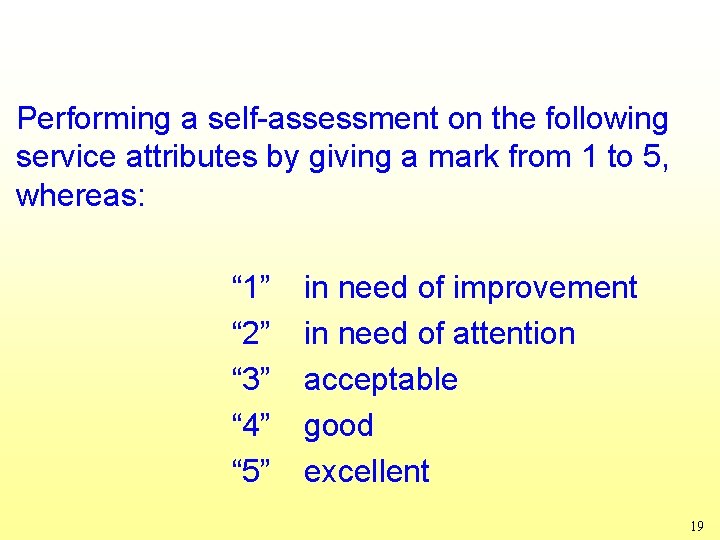
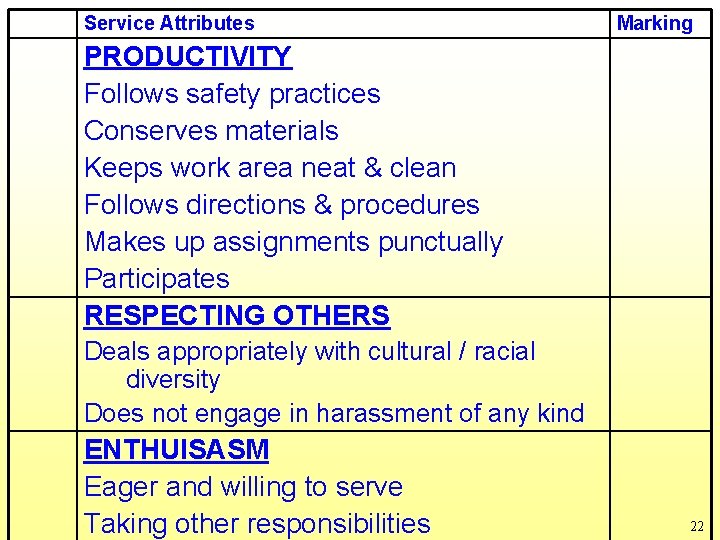
Performing a self-assessment on the following service attributes by giving a mark from 1 to 5, whereas: “ 1” “ 2” “ 3” “ 4” “ 5” in need of improvement in need of attention acceptable good excellent 19
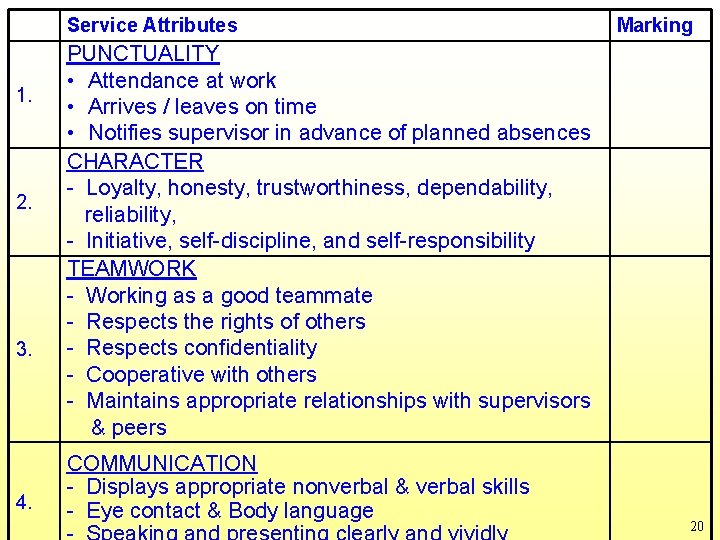
Service Attributes 1. 2. 3. 4. Marking PUNCTUALITY • Attendance at work • Arrives / leaves on time • Notifies supervisor in advance of planned absences CHARACTER - Loyalty, honesty, trustworthiness, dependability, reliability, - Initiative, self-discipline, and self-responsibility TEAMWORK - Working as a good teammate - Respects the rights of others - Respects confidentiality - Cooperative with others - Maintains appropriate relationships with supervisors & peers COMMUNICATION - Displays appropriate nonverbal & verbal skills - Eye contact & Body language 20
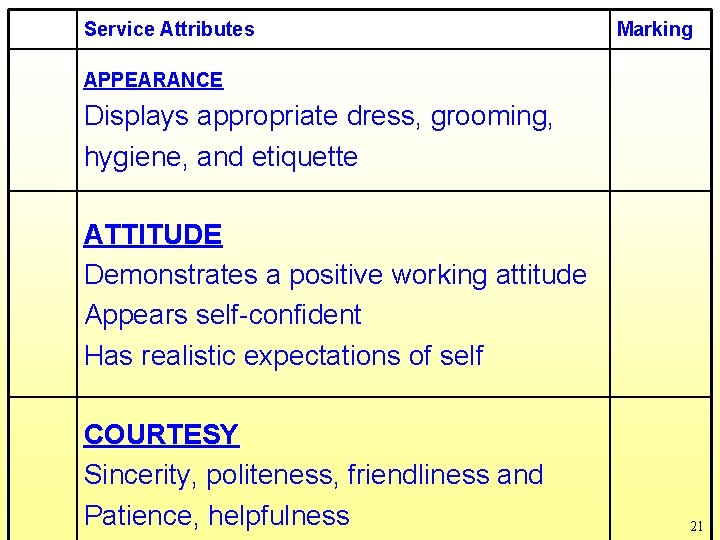
Service Attributes Marking APPEARANCE Displays appropriate dress, grooming, hygiene, and etiquette ATTITUDE Demonstrates a positive working attitude Appears self-confident Has realistic expectations of self COURTESY Sincerity, politeness, friendliness and Patience, helpfulness 21
Service Attributes Marking PRODUCTIVITY Follows safety practices Conserves materials Keeps work area neat & clean Follows directions & procedures Makes up assignments punctually Participates RESPECTING OTHERS Deals appropriately with cultural / racial diversity Does not engage in harassment of any kind ENTHUISASM Eager and willing to serve Taking other responsibilities 22
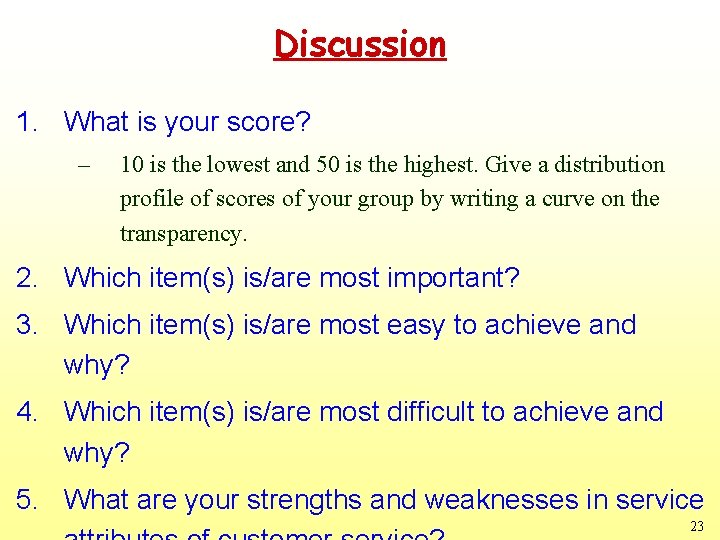
Discussion 1. What is your score? – 10 is the lowest and 50 is the highest. Give a distribution profile of scores of your group by writing a curve on the transparency. 2. Which item(s) is/are most important? 3. Which item(s) is/are most easy to achieve and why? 4. Which item(s) is/are most difficult to achieve and why? 5. What are your strengths and weaknesses in service 23
The End 25