
Yeshwantrao Chavan Mahavidyalaya Tuljapur Dist Osmanabad413 601 MH
Yeshwantrao Chavan Mahavidyalaya, Tuljapur, Dist. -Osmanabad-413 601 (MH), INDIA Department of Fishery Science Dr S L Bhalkare Head and Assistant prof.
B. Sc. Second Year Semester IV Paper –Fish Culture II Topic: Paddy Fish Culture
What is a rice-fish system? A rice-fish system is an integrated rice field or rice field/pond complex, where fish are grown concurrently or alternately with rice. 3
History of Rice-Fish culture is quite old. First started in ancient China about 2000 years ago. 4
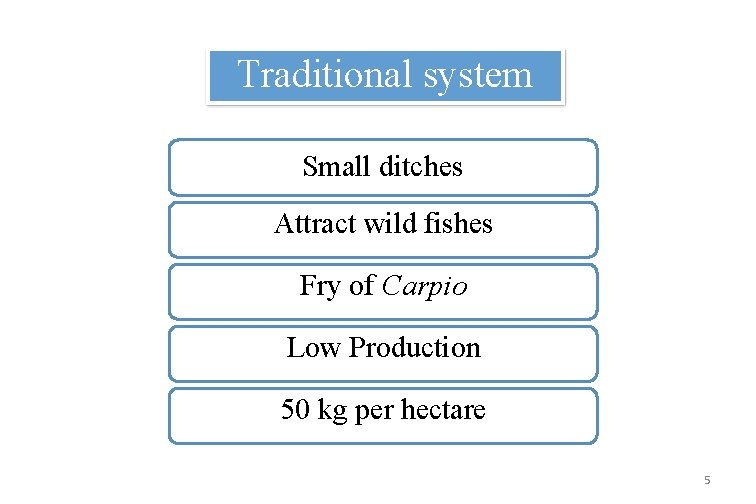
Traditional system Small ditches Attract wild fishes Fry of Carpio Low Production 50 kg per hectare 5
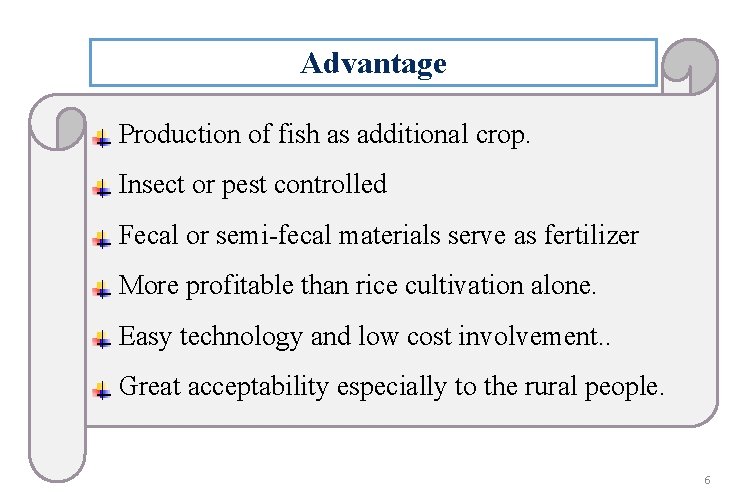
Advantage Production of fish as additional crop. Insect or pest controlled Fecal or semi-fecal materials serve as fertilizer More profitable than rice cultivation alone. Easy technology and low cost involvement. . Great acceptability especially to the rural people. 6
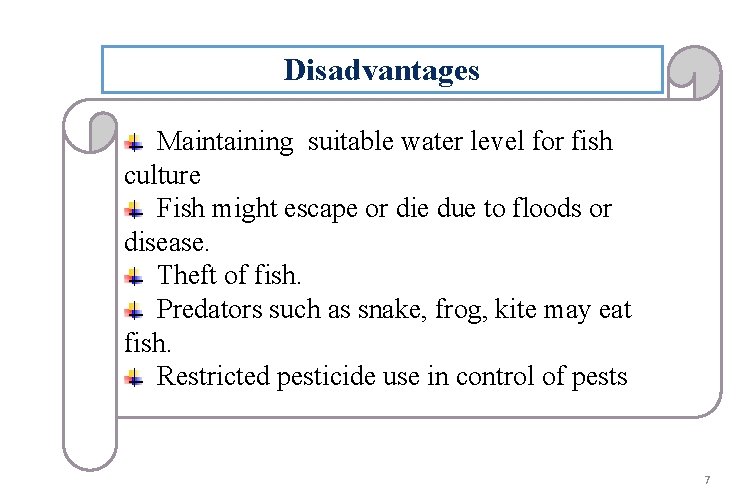
Disadvantages Maintaining suitable water level for fish culture Fish might escape or die due to floods or disease. Theft of fish. Predators such as snake, frog, kite may eat fish. Restricted pesticide use in control of pests 7
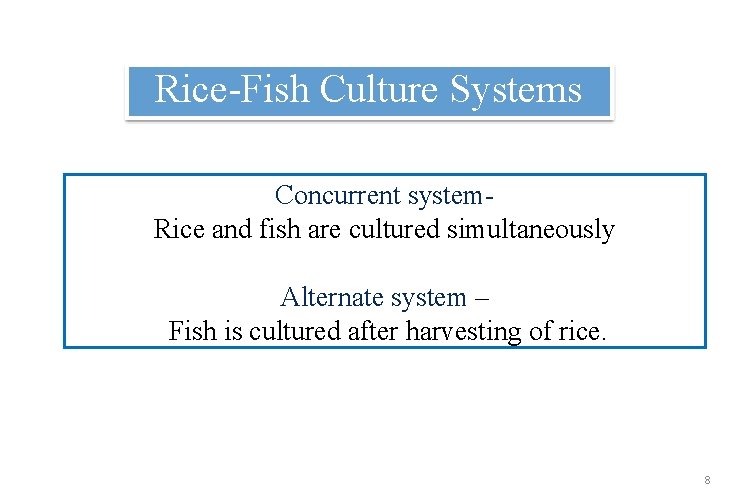
Rice-Fish Culture Systems Concurrent system. Rice and fish are cultured simultaneously Alternate system – Fish is cultured after harvesting of rice. 8
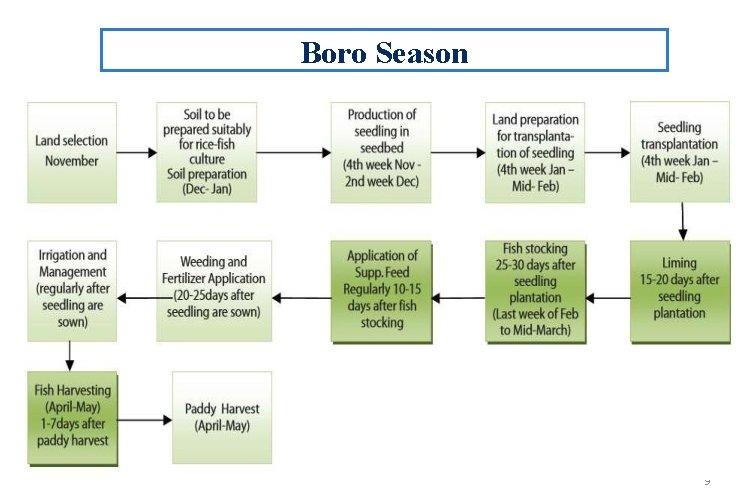
Boro Season 9
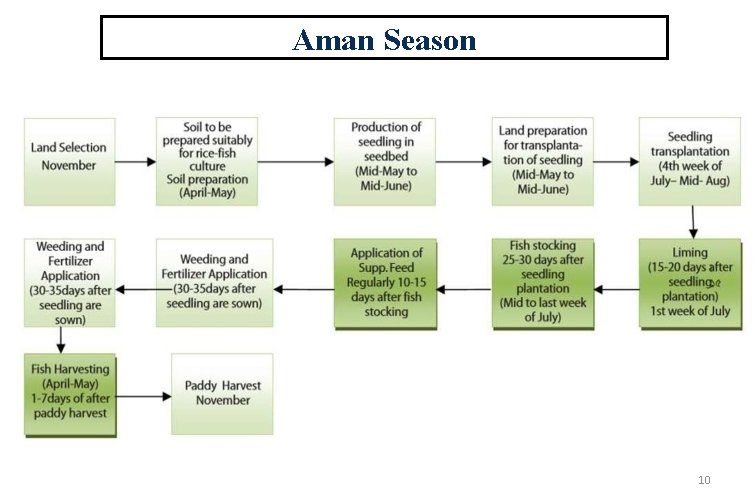
Aman Season 10
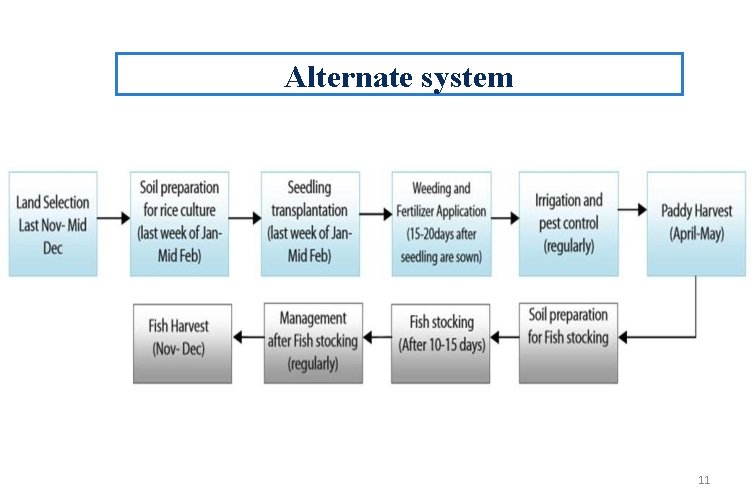
Alternate system 11
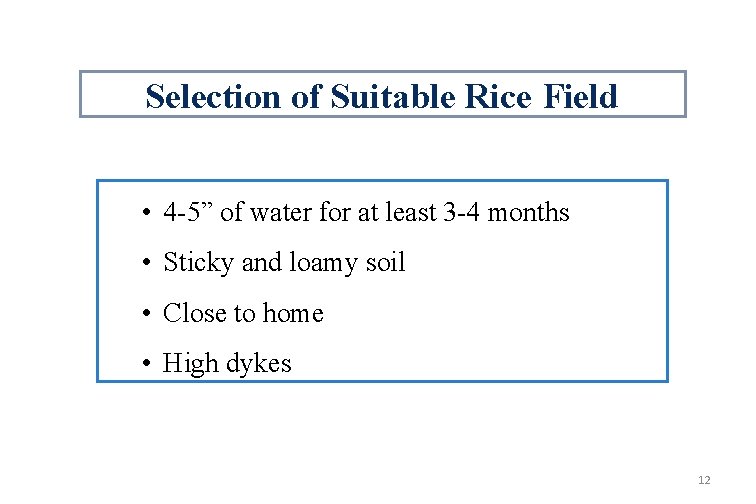
Selection of Suitable Rice Field • 4 -5” of water for at least 3 -4 months • Sticky and loamy soil • Close to home • High dykes 12
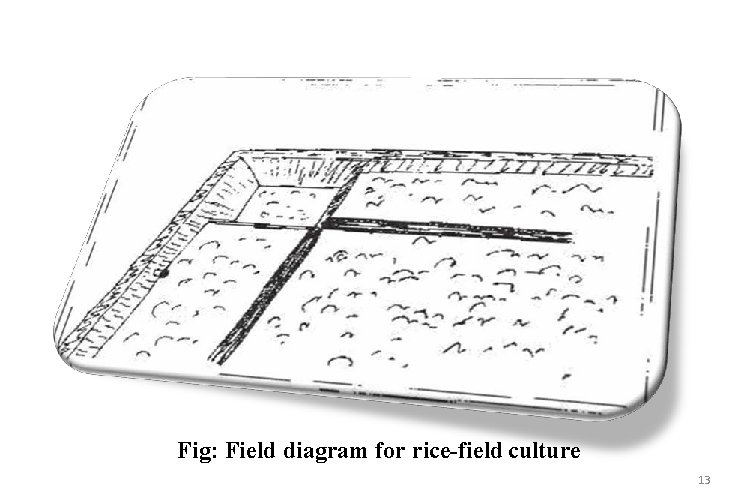
Fig: Field diagram for rice-field culture 13
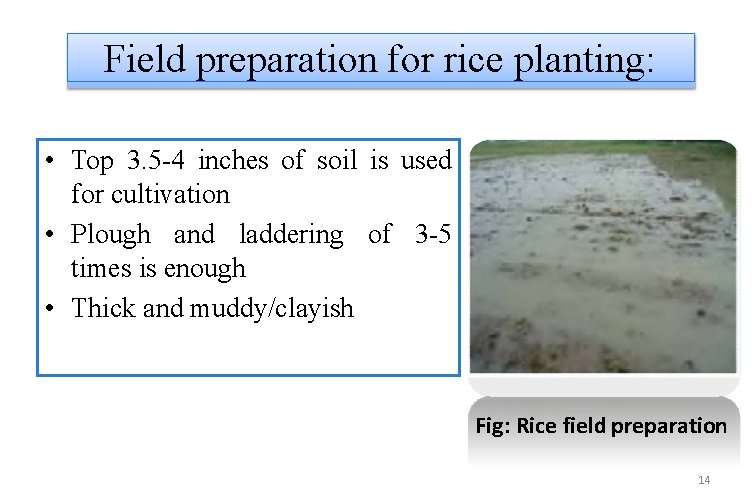
Field preparation for rice planting: • Top 3. 5 -4 inches of soil is used for cultivation • Plough and laddering of 3 -5 times is enough • Thick and muddy/clayish Fig: Rice field preparation 14
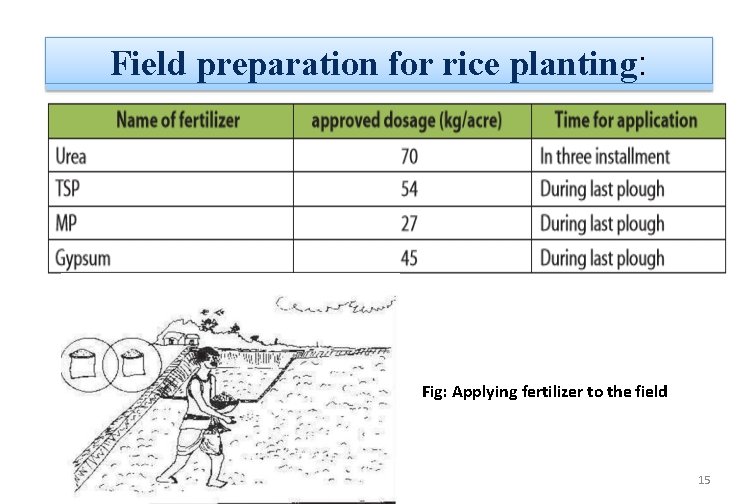
Field preparation for rice planting: Fig: Applying fertilizer to the field 15
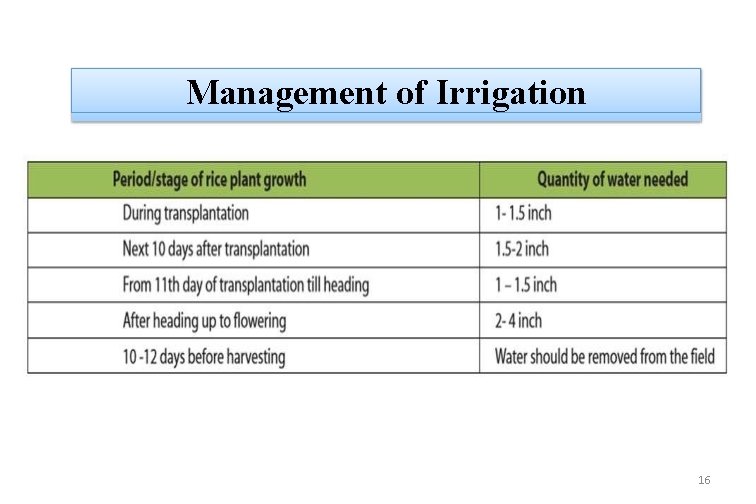
Management of Irrigation 16
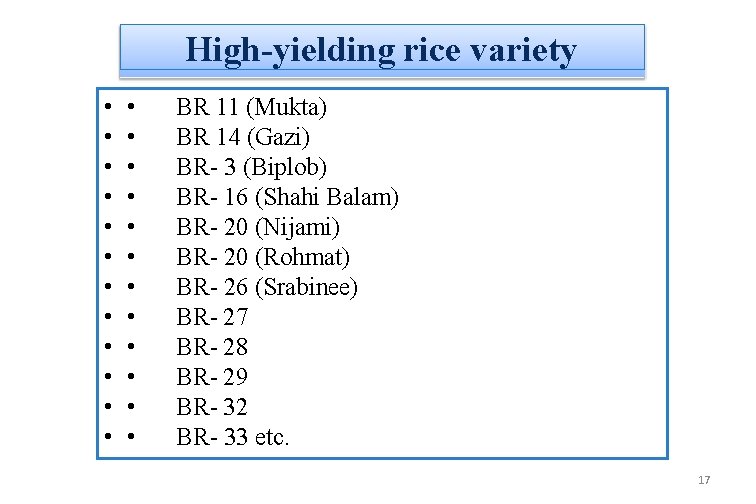
High-yielding rice variety • • • • • • BR 11 (Mukta) BR 14 (Gazi) BR- 3 (Biplob) BR- 16 (Shahi Balam) BR- 20 (Nijami) BR- 20 (Rohmat) BR- 26 (Srabinee) BR- 27 BR- 28 BR- 29 BR- 32 BR- 33 etc. 17
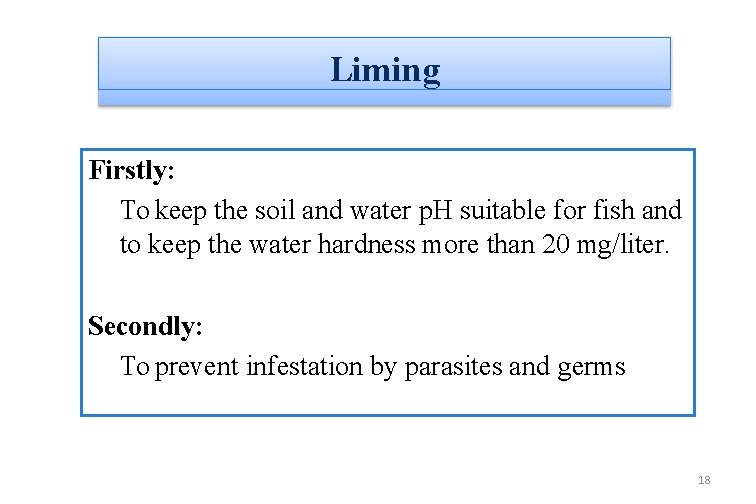
Liming Firstly: To keep the soil and water p. H suitable for fish and to keep the water hardness more than 20 mg/liter. Secondly: To prevent infestation by parasites and germs 18
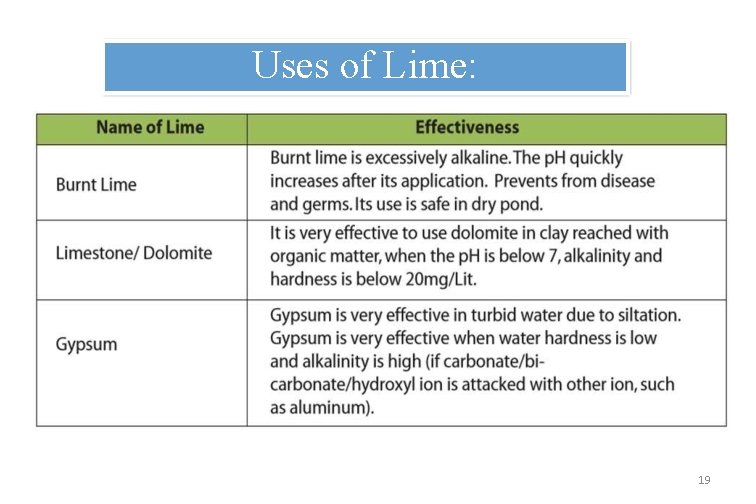
Uses of Lime: 19
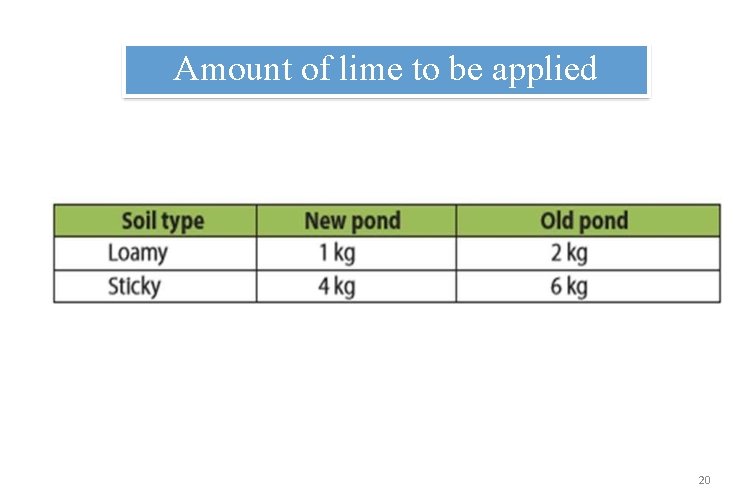
Amount of lime to be applied 20
Suitable Fish Species • Fast growing species • Can survive in shallow water • Can withstand temperature and environmental fluctuation • Can be managed easily, such as, Tilapia, Common Carp, Ruhi, Mrigel, Thai Sorpunti and Bata fish. • It can be mono or poly culture in rice field. 21
Species selection • White fish (small plant or plankton eating species) such as Danios, Barbs (Puntius), • Black fish (often carnivorous air breathers that can survive low or no oxygen levels) such as Snakehead (Channa), Catfish (Clarias), Climbing Perch (Anabas), Spiny eels (Mastacembelus), and Sheatfish (Ompok). • Introduced exotic fish species such as Common Carp (Cyprinus), Tilapia (Oreochromis), and Silver carp (Hypophthalmichthys). 22
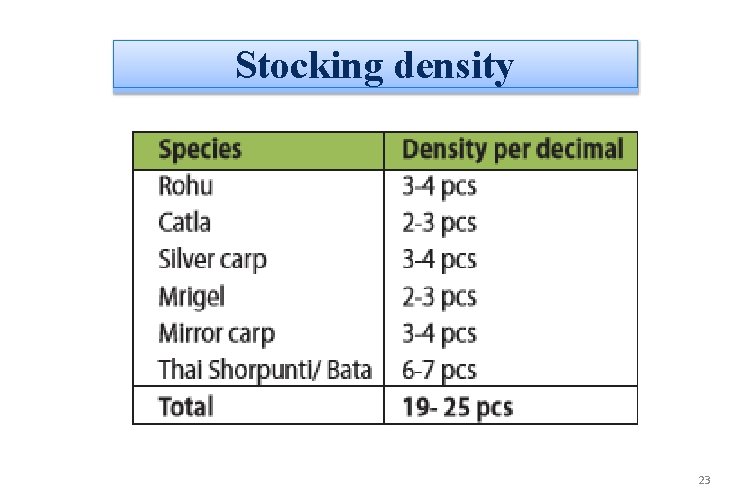
Stocking density 23
Stocking time • Right after transplant of rice seedling • Minimum of 4 -5 inches of water 24
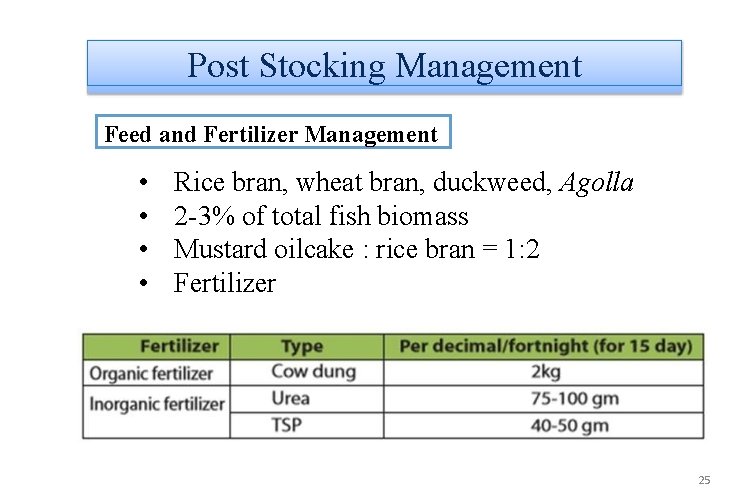
Post Stocking Management Feed and Fertilizer Management • • Rice bran, wheat bran, duckweed, Agolla 2 -3% of total fish biomass Mustard oilcake : rice bran = 1: 2 Fertilizer 25
Fish Harvesting And Marketing 26
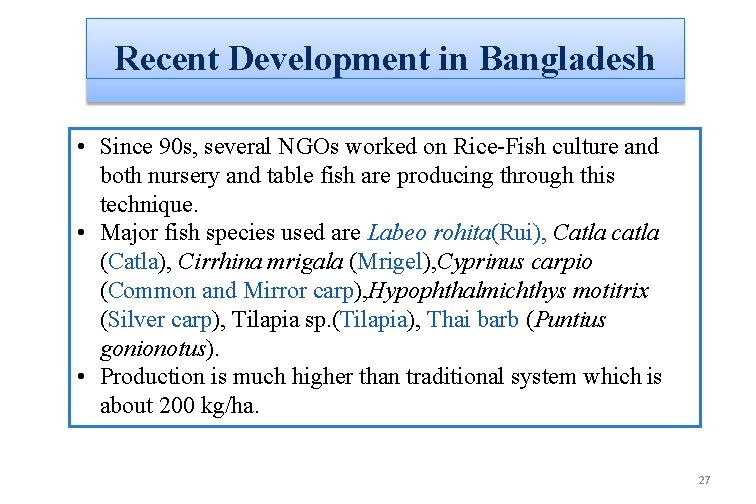
Recent Development in Bangladesh • Since 90 s, several NGOs worked on Rice-Fish culture and both nursery and table fish are producing through this technique. • Major fish species used are Labeo rohita(Rui), Catla catla (Catla), Cirrhina mrigala (Mrigel), Cyprinus carpio (Common and Mirror carp), Hypophthalmichthys motitrix (Silver carp), Tilapia sp. (Tilapia), Thai barb (Puntius gonionotus). • Production is much higher than traditional system which is about 200 kg/ha. 27
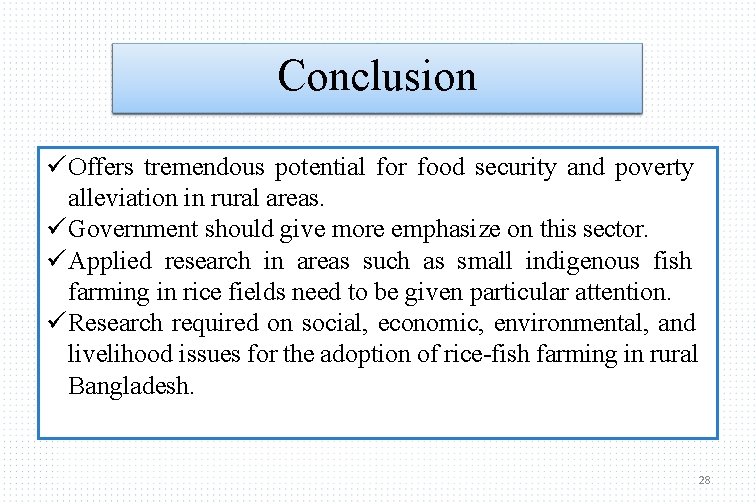
Conclusion Offers tremendous potential for food security and poverty alleviation in rural areas. Government should give more emphasize on this sector. Applied research in areas such as small indigenous fish farming in rice fields need to be given particular attention. Research required on social, economic, environmental, and livelihood issues for the adoption of rice-fish farming in rural Bangladesh. 28

Thank You Very Much 29
- Slides: 29