
Yes we can Transforming patient and staff experiences
- Slides: 62
Yes we can! Transforming patient and staff experiences: A view from the frontline Anthony M. Di. Gioia III, M. D. November 9, 2011 (Tony@pfcusa. org)
Why change? Just ask our patients and families • We are not delivering the basics in a very complex system • We must focus on providing a full cycle of care • Real value? Transitions of care and communications
Word of warning on the current state… • No industry has survived without focusing on the needs, wants and desires of their end users. . . in health care? Lost along the way… • We must begin to listen to our patients and families (and Care Givers) as our end users…and actually engage all in the design of new approaches
If you ran this hospital…where would you start and what would you do?
Would you be interested if… You could develop the system to deliver better outcomes, safety, quality, reduce waste and develop high performance teams while delivering great care experiences for patients and their families…
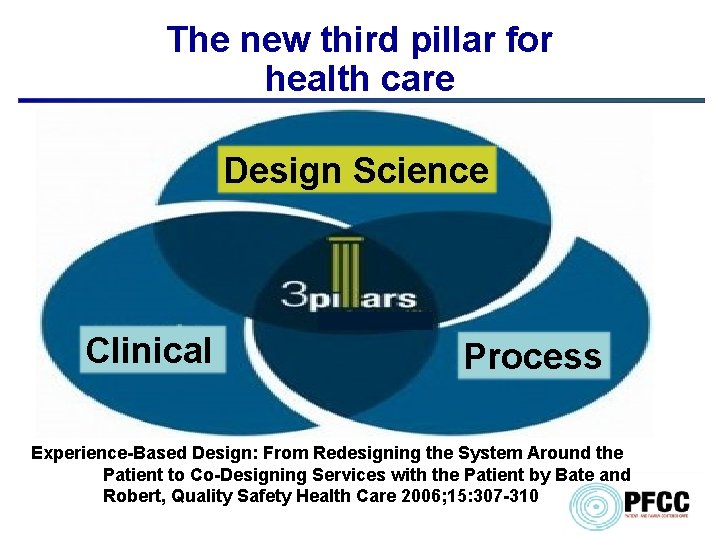
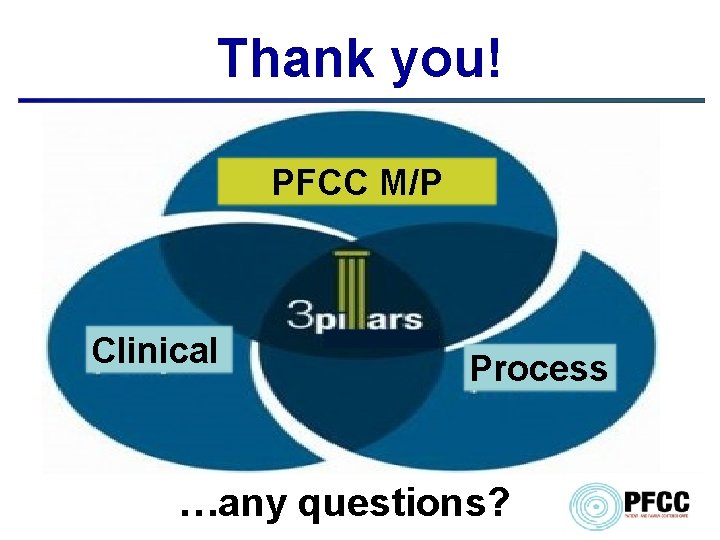
The new third pillar for health care Design Science Clinical Process Experience-Based Design: From Redesigning the System Around the Patient to Co-Designing Services with the Patient by Bate and Robert, Quality Safety Health Care 2006; 15: 307 -310
The first two sciences Clinical and Process • Evidence-based medicine • Clinical pathways • Re-engineering, process improvement, Lean, TPS, CMI • Quality and safety efforts
What are the Design Sciences and Experience-Based Design? • Designing services, interactions, processes and environments for the complete experience • Making it better for the end user • Expanding on but not replacing the concept of clinical sciences and process • Provides tools for first understanding and then acting • Strength: Implementation
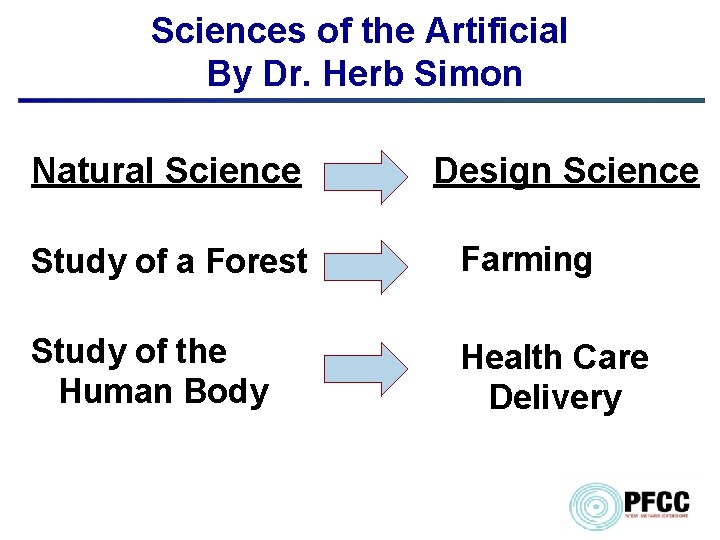
Sciences of the Artificial By Dr. Herb Simon Natural Science Design Science Study of a Forest Farming Study of the Human Body Health Care Delivery
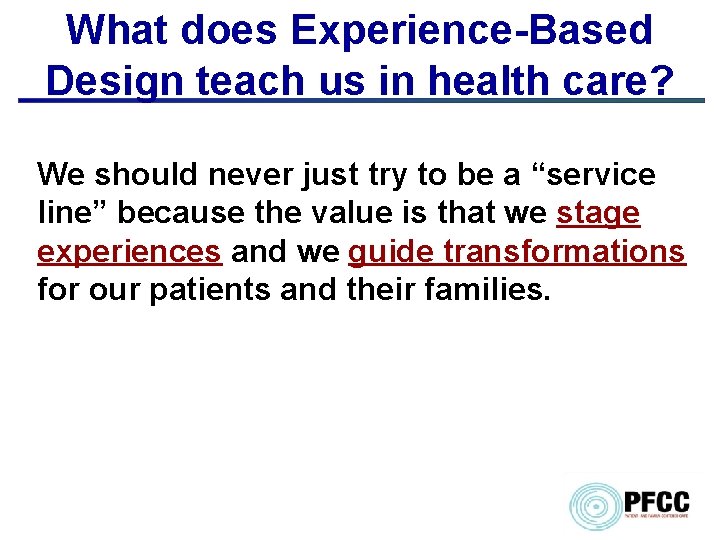
What does Experience-Based Design teach us in health care? We should never just try to be a “service line” because the value is that we stage experiences and we guide transformations for our patients and their families.
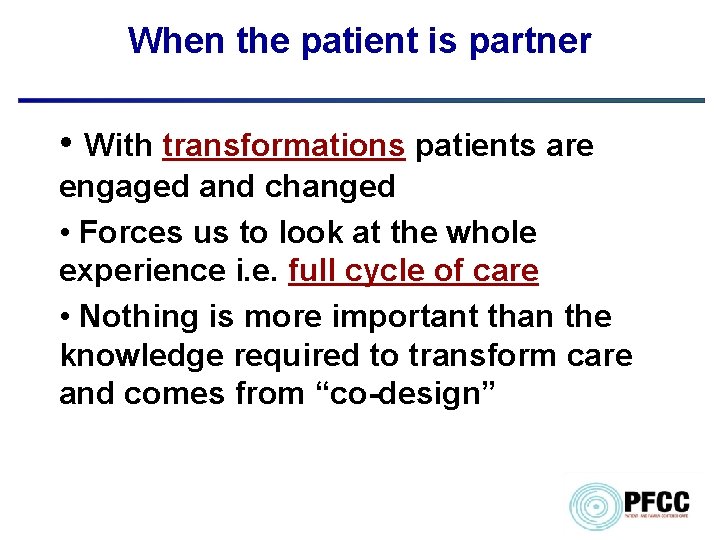
When the patient is partner • With transformations patients are engaged and changed • Forces us to look at the whole experience i. e. full cycle of care • Nothing is more important than the knowledge required to transform care and comes from “co-design”
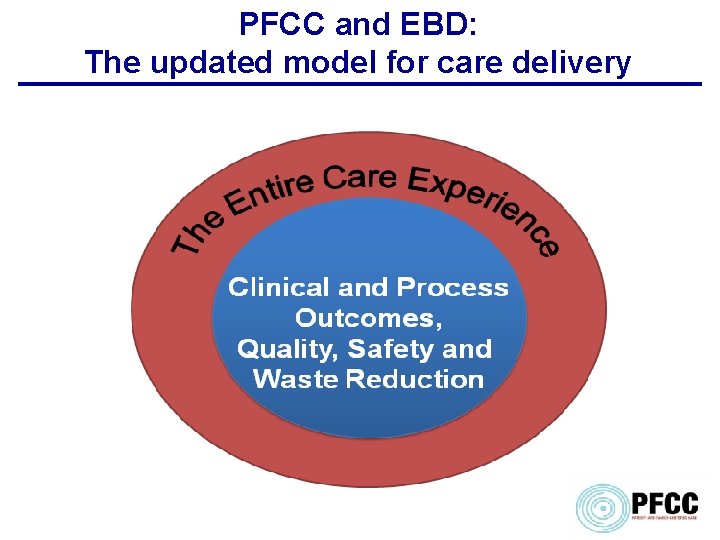
PFCC and EBD: The updated model for care delivery
The three keys to success
Key #1 View all care as an experience and through the eyes of patients and their families
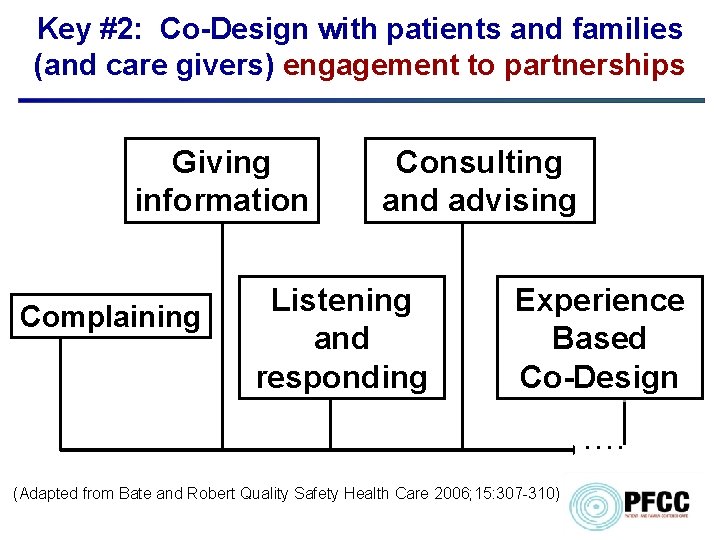
Key #2: Co-Design with patients and families (and care givers) engagement to partnerships Giving information Complaining Consulting and advising Listening and responding Experience Based Co-Design. . (Adapted from Bate and Robert Quality Safety Health Care 2006; 15: 307 -310)
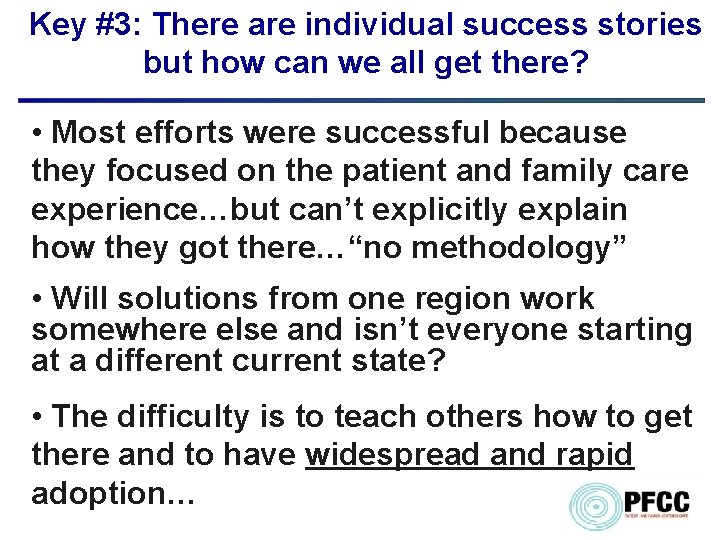
Key #3: There are individual success stories but how can we all get there? • Most efforts were successful because they focused on the patient and family care experience…but can’t explicitly explain how they got there…“no methodology” • Will solutions from one region work somewhere else and isn’t everyone starting at a different current state? • The difficulty is to teach others how to get there and to have widespread and rapid adoption…
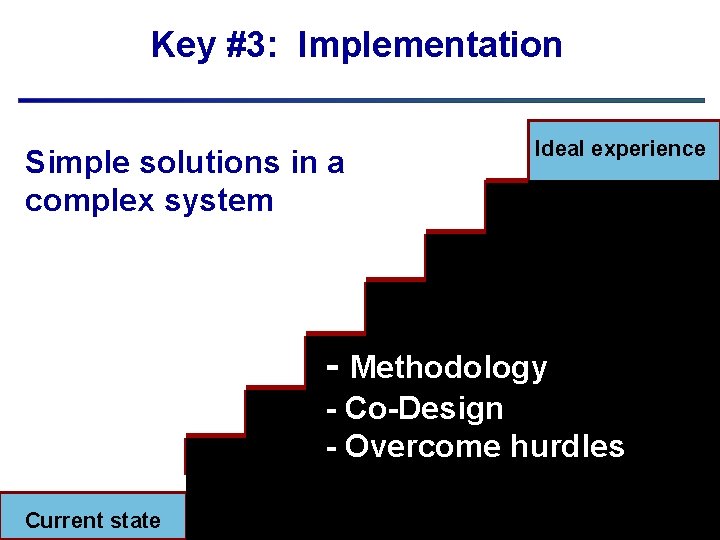
Key #3: Implementation Simple solutions in a complex system Ideal experience - Methodology - Co-Design - Overcome hurdles Current state
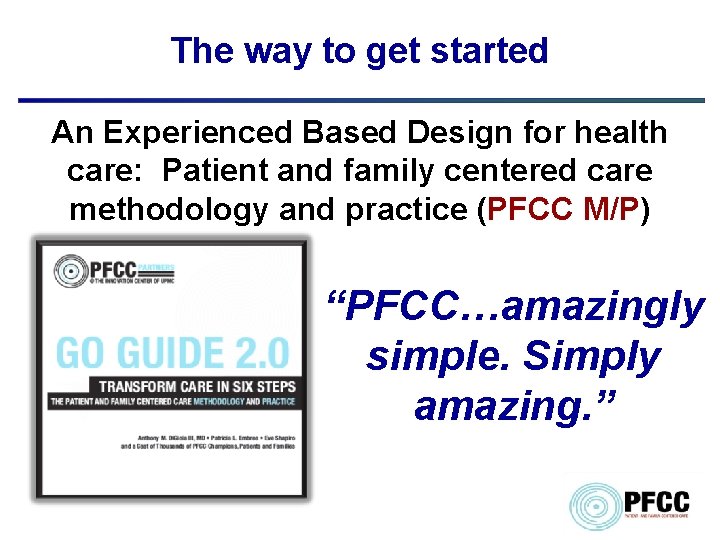
The way to get started An Experienced Based Design for health care: Patient and family centered care methodology and practice (PFCC M/P) “PFCC…amazingly simple. Simply amazing. ”
The PFCC methodology and practice is our new system for health care • Singular goal to provide exceptional care experiences for patients and their families • Which also delivers better outcomes and quality, safety and reduces waste • Re-focus existing resources…not new ones • You will identify, solve and implement the solutions with the help of patients and families
PFCC M/P is all about performance • Process improvement = manage objects or things • Performance improvement = people AND processes • Performance is the engine to Change the Culture
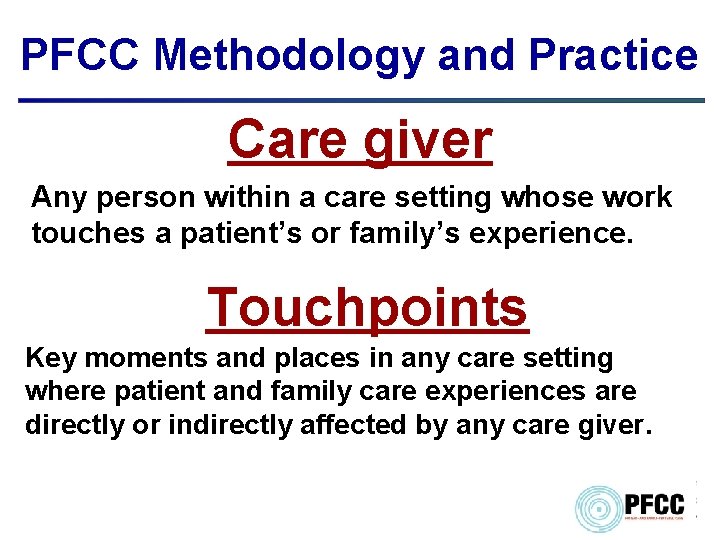
PFCC Methodology and Practice Care giver Any person within a care setting whose work touches a patient’s or family’s experience. Touchpoints Key moments and places in any care setting where patient and family care experiences are directly or indirectly affected by any care giver.
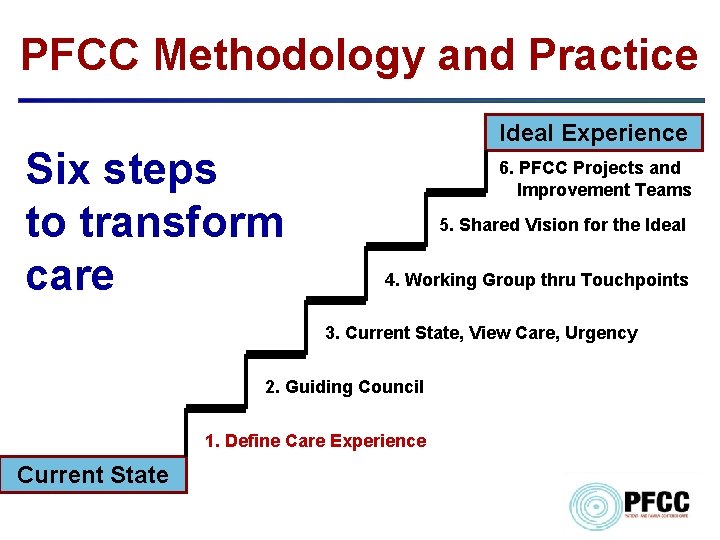
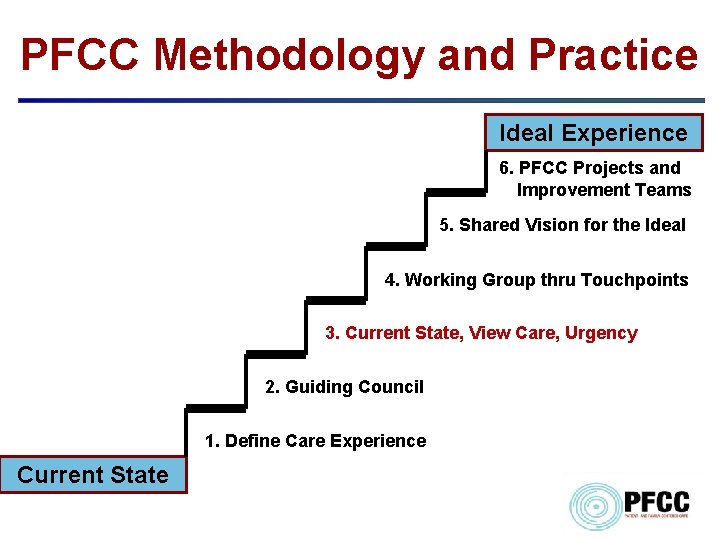
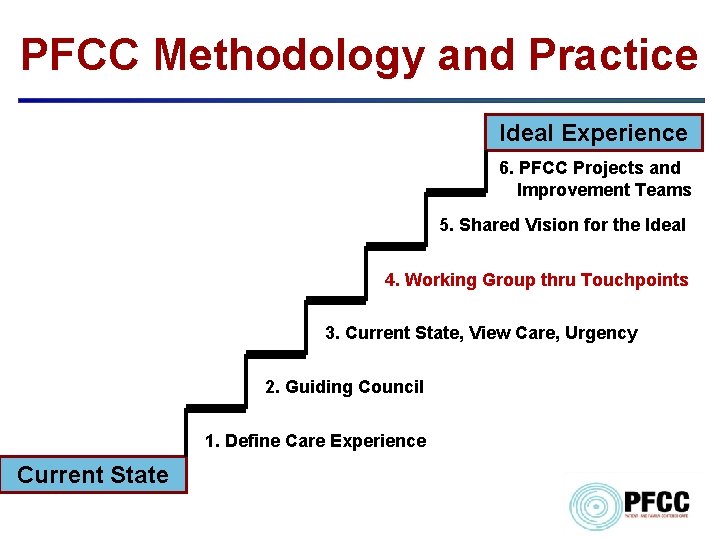
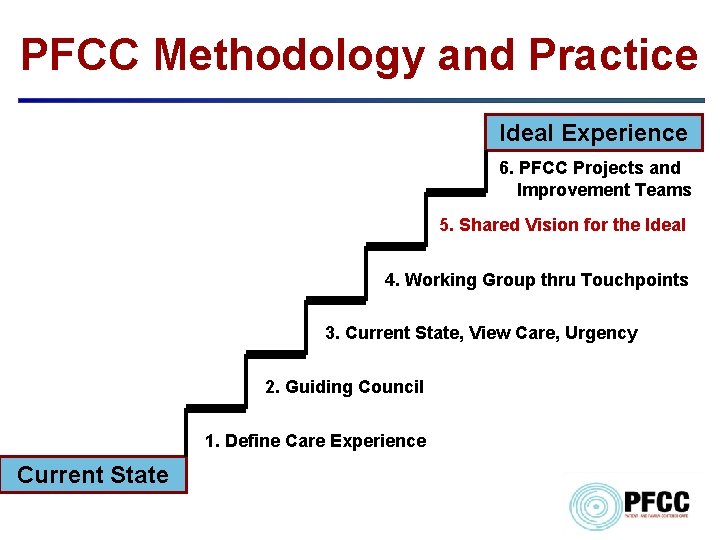
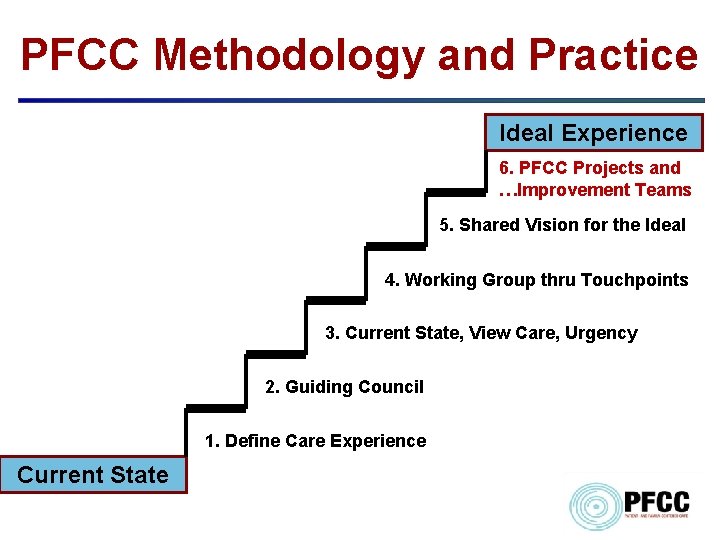
PFCC Methodology and Practice Six steps to transform care Ideal Experience 6. PFCC Projects and …Improvement Teams 5. Shared Vision for the Ideal 4. Working Group thru Touchpoints 3. Current State, View Care, Urgency 2. Guiding Council 1. Define Care Experience Current State
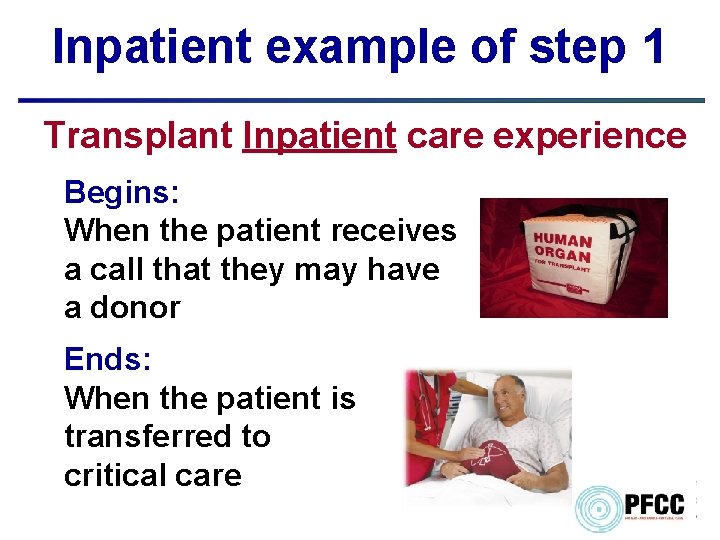
Inpatient example of step 1 Transplant Inpatient care experience Begins: When the patient receives a call that they may have a donor Ends: When the patient is transferred to critical care
PFCC Methodology and Practice Ideal Experience 6. PFCC Projects and …Improvement Teams 5. Shared Vision for the Ideal 4. Working Group thru Touchpoints 3. Current State, View Care, Urgency 2. Guiding Council 1. Define Care Experience Current State
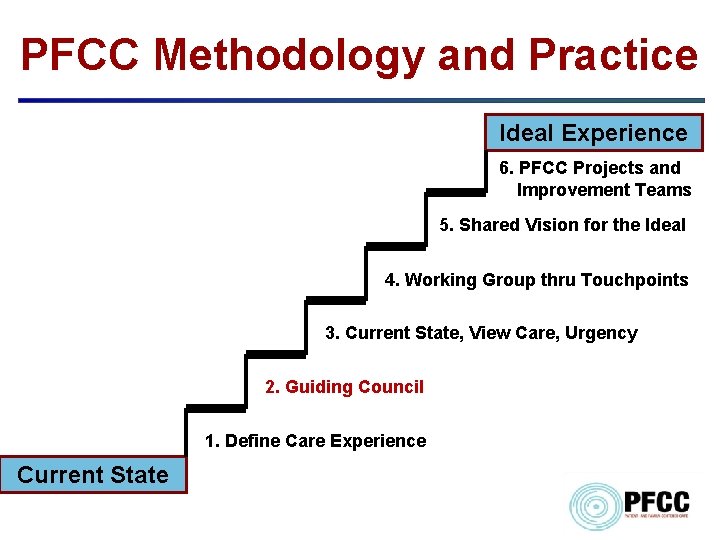
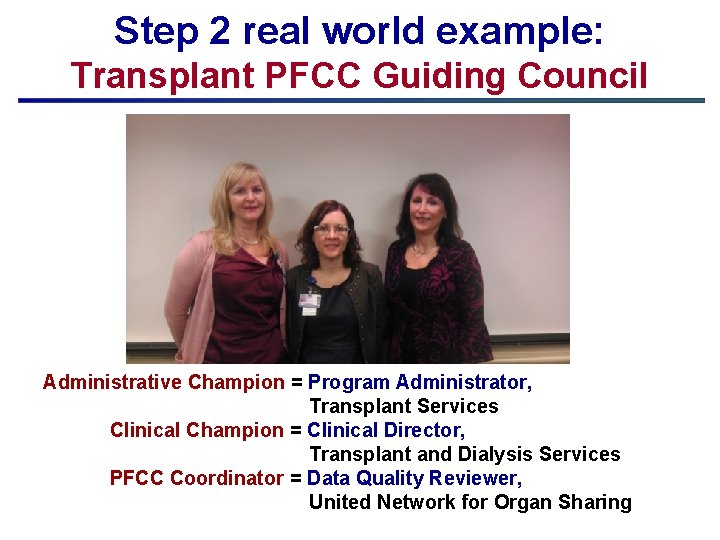
Step 2 real world example: Transplant PFCC Guiding Council Administrative Champion = Program Administrator, Transplant Services Clinical Champion = Clinical Director, Transplant and Dialysis Services PFCC Coordinator = Data Quality Reviewer, United Network for Organ Sharing
PFCC Methodology and Practice Ideal Experience 6. PFCC Projects and …Improvement Teams 5. Shared Vision for the Ideal 4. Working Group thru Touchpoints 3. Current State, View Care, Urgency 2. Guiding Council 1. Define Care Experience Current State
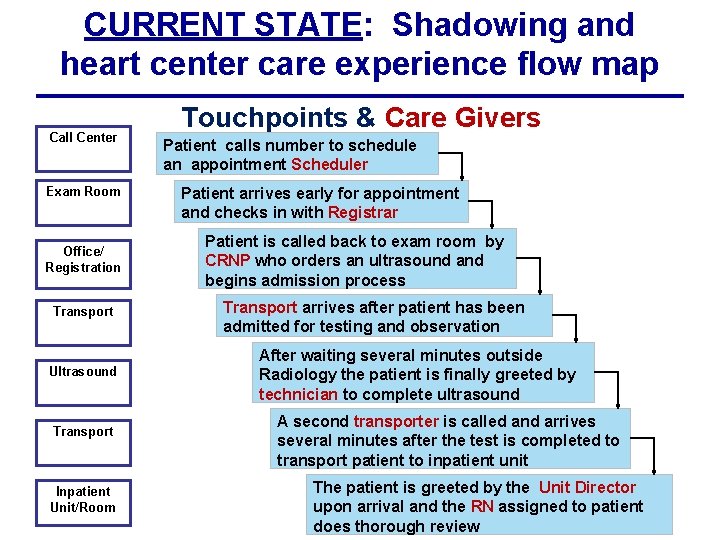
CURRENT STATE: Shadowing and heart center care experience flow map Call Center Exam Room Office/ Registration Transport Ultrasound Transport Inpatient Unit/Room 27 Touchpoints & Care Givers Patient calls number to schedule an appointment Scheduler Patient arrives early for appointment and checks in with Registrar Patient is called back to exam room by CRNP who orders an ultrasound and begins admission process Transport arrives after patient has been admitted for testing and observation After waiting several minutes outside Radiology the patient is finally greeted by technician to complete ultrasound A second transporter is called and arrives several minutes after the test is completed to transport patient to inpatient unit The patient is greeted by the Unit Director upon arrival and the RN assigned to patient does thorough review
PFCC Methodology and Practice Ideal Experience 6. PFCC Projects and …Improvement Teams 5. Shared Vision for the Ideal 4. Working Group thru Touchpoints 3. Current State, View Care, Urgency 2. Guiding Council 1. Define Care Experience Current State
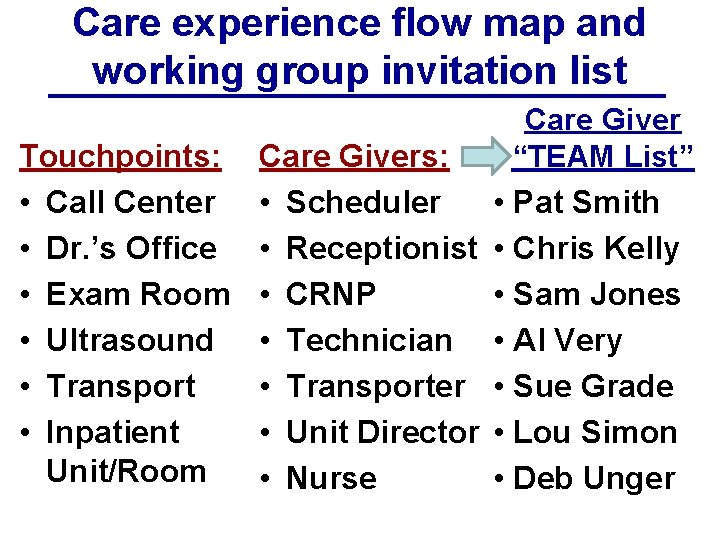
Care experience flow map and working group invitation list Care Giver Touchpoints: Care Givers: “TEAM List” • Pat Smith • Call Center • Scheduler • Dr. ’s Office • Receptionist • Chris Kelly • Exam Room • CRNP • Sam Jones • Ultrasound • Technician • Al Very • Transporter • Sue Grade • Inpatient • Unit Director • Lou Simon Unit/Room • Deb Unger • Nurse
PFCC Methodology and Practice Ideal Experience 6. PFCC Projects and …Improvement Teams 5. Shared Vision for the Ideal 4. Working Group thru Touchpoints 3. Current State, View Care, Urgency 2. Guiding Council 1. Define Care Experience Current State
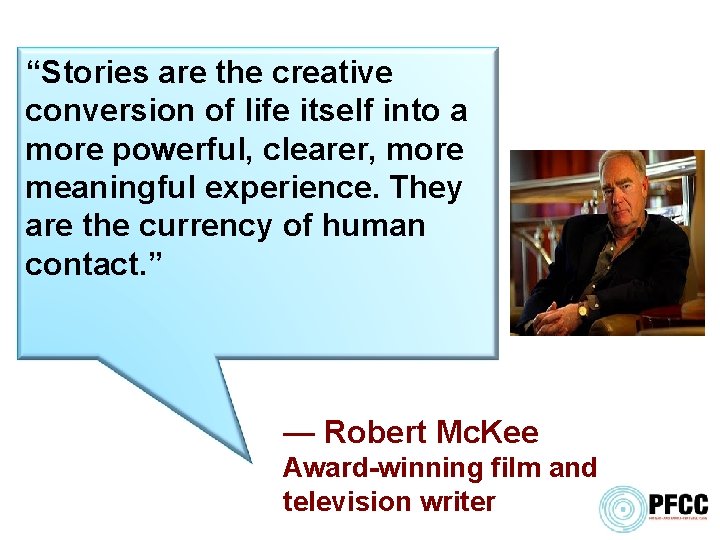
“Stories are the creative conversion of life itself into a more powerful, clearer, more meaningful experience. They are the currency of human contact. ” — Robert Mc. Kee Award-winning film and television writer
PFCC Methodology and Practice Ideal Experience 6. PFCC Projects and …Improvement Teams 5. Shared Vision for the Ideal 4. Working Group thru Touchpoints 3. Current State, View Care, Urgency 2. Guiding Council 1. Define Care Experience Current State
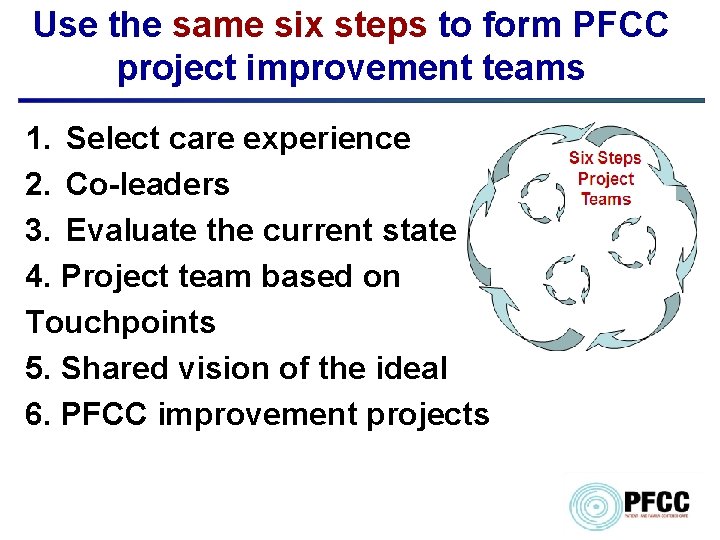
Use the same six steps to form PFCC project improvement teams 1. Select care experience 2. Co-leaders 3. Evaluate the current state 4. Project team based on Touchpoints 5. Shared vision of the ideal 6. PFCC improvement projects
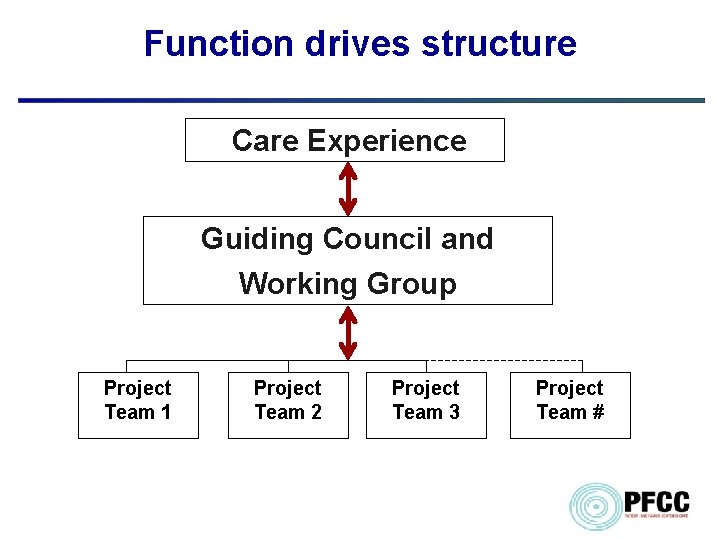
Function drives structure Care Experience Guiding Council and Working Group Project Team 1 Project Team 2 Project Team 3 Project Team #
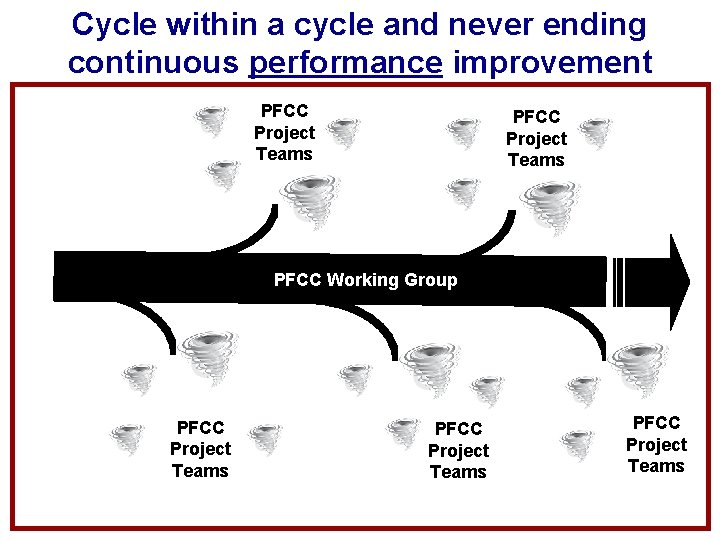
Cycle within a cycle and never ending continuous performance improvement PFCC Project Teams PFCC Working Group PFCC Project Teams
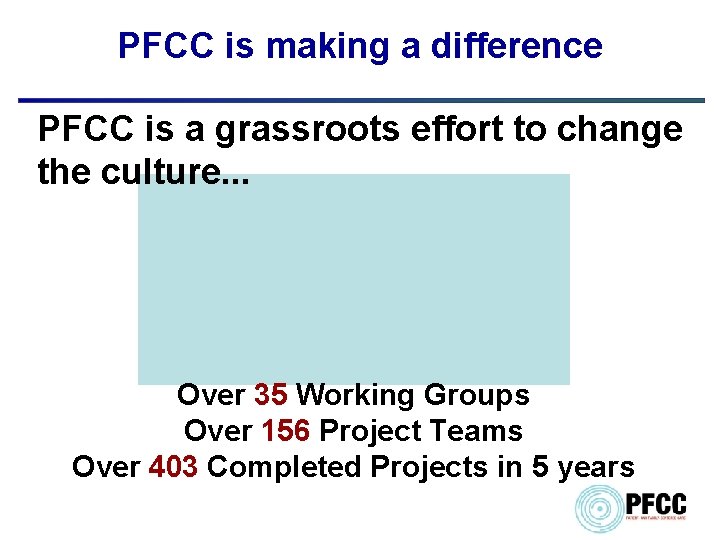
PFCC is making a difference PFCC is a grassroots effort to change the culture. . . Over 35 Working Groups Over 156 Project Teams Over 403 Completed Projects in 5 years
PFCC Tool Kit and Co-Design: Partnerships (…and there is no one right answer for everywhere) • Shadowing and care experience mapping • Patient and family advisory councils • Patients and families on working groups and project teams • Patient, family and care giver stories • Informal surveys • HCAHPS and “satisfaction” surveys • Voice of Experience and Adopt a Patient Programs
Point of Care (Po. C): Experienced Based Co-Design • In-depth face-to-face interviews • Discovery interviews carried out by clinical staff • Focus groups • Web-based free text comments • Comment cards or suggestion boxes (on-site) • Video boxes (on-site) • Complaints and compliments • Patient diaries • Mystery shopping and observation • Customer journey mapping
A PFCC must: shadowing and care experience flow mapping • Walk the walk of patients and families… • Shadow patients and families throughout the selected care experience, as well as for recording observations and insights • High impact for the $’s and effort
Viewing care experiences and flow Shadowing “We watch what people do (and do not do) and listen to what they say (and do not say). The easiest thing about the search for insight – in contrast to the search for hard data – is that it’s everywhere and it’s free. ” - Tim Brown Change by Design
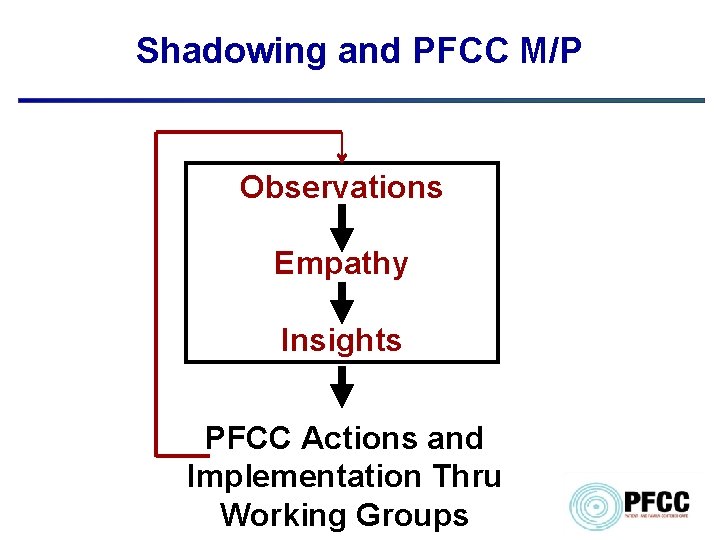
Shadowing and PFCC M/P Observations Empathy Insights PFCC Actions and Implementation Thru Working Groups
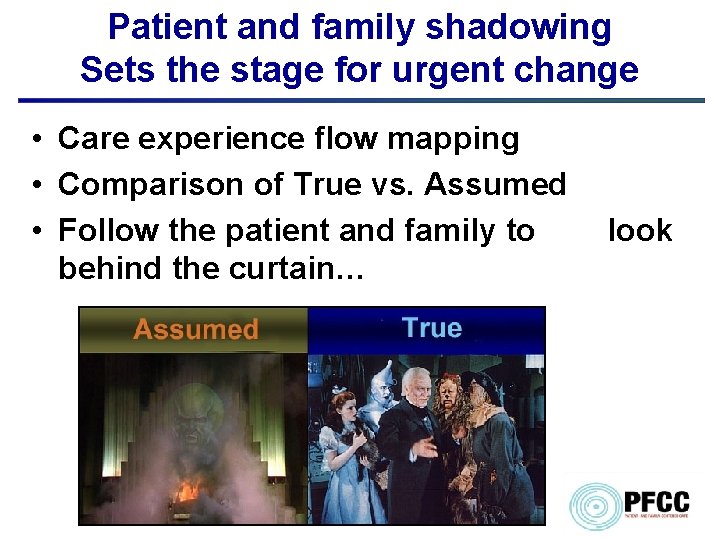
Patient and family shadowing Sets the stage for urgent change • Care experience flow mapping • Comparison of True vs. Assumed • Follow the patient and family to behind the curtain… look
The first steps towards Co-Design… • Shadowing continuously engages and partners with patients, families and care givers • Creates real-time patient and Family Advisory Councils • Shadowing is one of the best ways to assess your current state and the way to get started
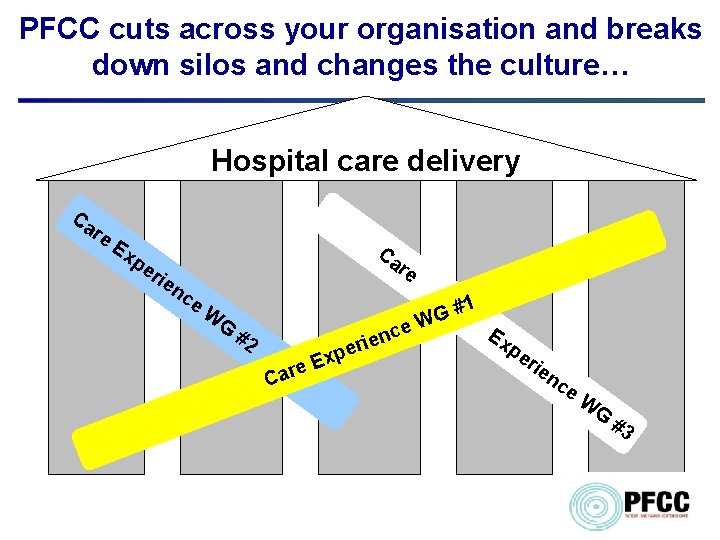
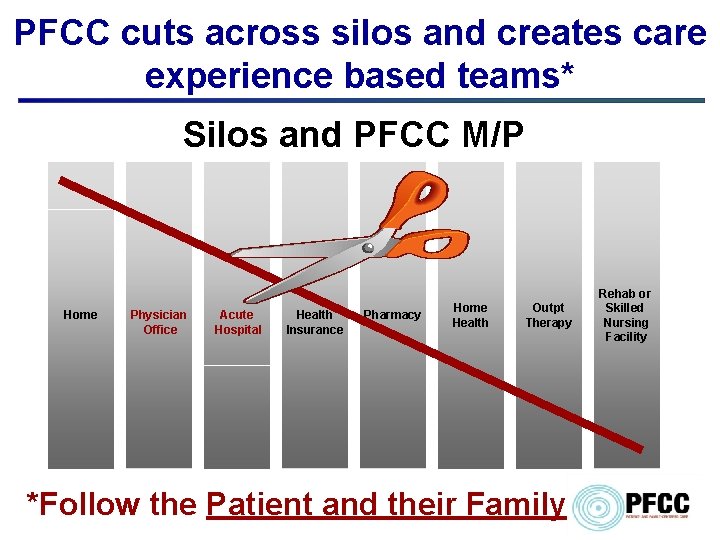
There will be hurdles and a BIG one: Our organisations and…artificial silos • Delivering exceptional care experiences is simple… the complexity is largely a reflection of the environment in which we find ourselves • Focusing on the patient and family is a transformational approach for your organisation…which means there are “special” challenges
PFCC cuts across your organisation and breaks down silos and changes the culture… Hospital care delivery C ar e E xp er i en Ca re ce W #1 G G e W Ex c #2 n e i pe er p x ri e E e r nc Ca e W G #3
PFCC cuts across silos and creates care experience based teams* Silos and PFCC M/P Home Physician Office Acute Hospital Health Insurance Pharmacy Home Health Outpt Therapy *Follow the Patient and their Family Rehab or Skilled Nursing Facility
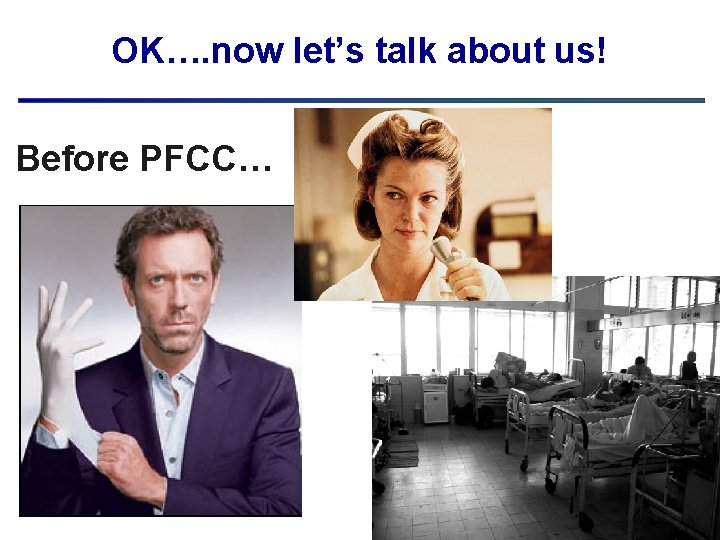
OK…. now let’s talk about us! Before PFCC… 47
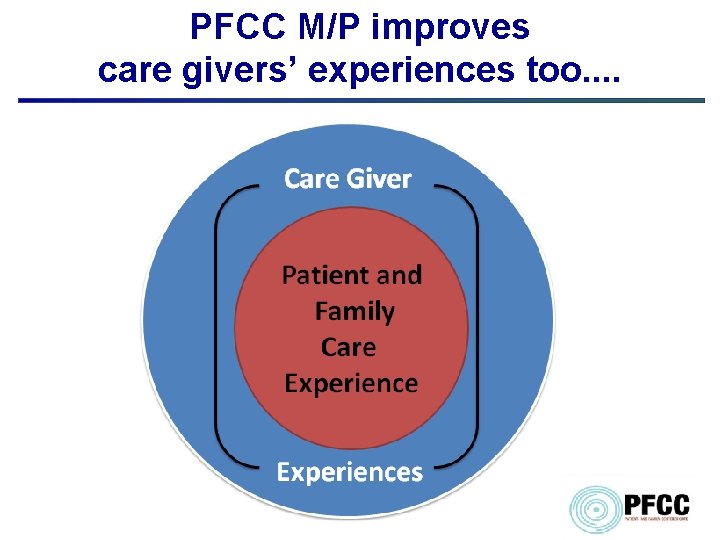
PFCC M/P improves care givers’ experiences too. .
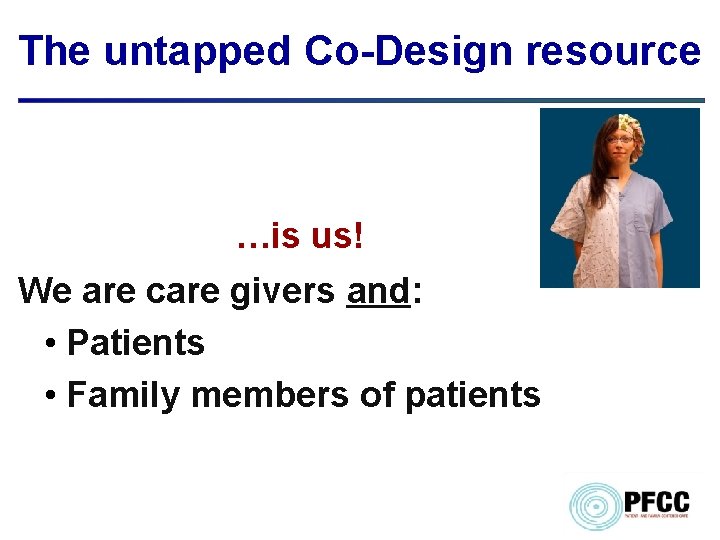
The untapped Co-Design resource …is us! We are care givers and: • Patients • Family members of patients
PFCC M/P on the practical side: Doing more with less • Customised for health care and why we are in health care, i. e. care of patients and their families • Simple to learn and builds care teams • Generates a sense of urgency • Breaks down silos • Drives transformational change • Sets the stage for focused care centers
The PFCC methodology and practice as EBD/Design Science You, along with patients and families will determine the opportunities for improvement, propose and test solutions and then implement changes that will transform care
Sample PFCC success Stories • Hip and knee total joint replacement experience • Level I trauma experience
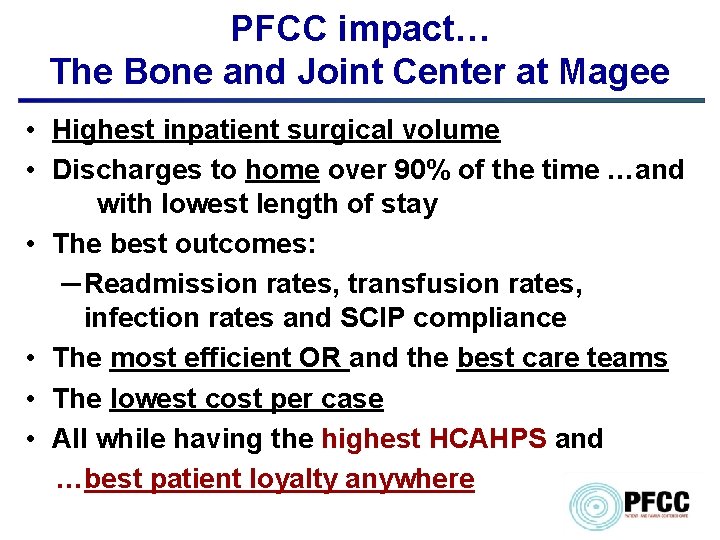
PFCC impact… The Bone and Joint Center at Magee • Highest inpatient surgical volume • Discharges to home over 90% of the time …and with lowest length of stay • The best outcomes: ─ Readmission rates, transfusion rates, infection rates and SCIP compliance • The most efficient OR and the best care teams • The lowest cost per case • All while having the highest HCAHPS and …best patient loyalty anywhere
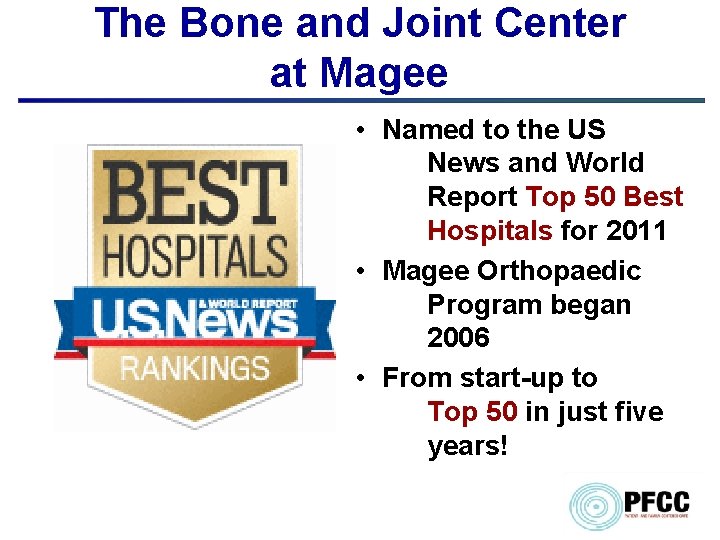
The Bone and Joint Center at Magee • Named to the US News and World Report Top 50 Best Hospitals for 2011 • Magee Orthopaedic Program began 2006 • From start-up to Top 50 in just five years!
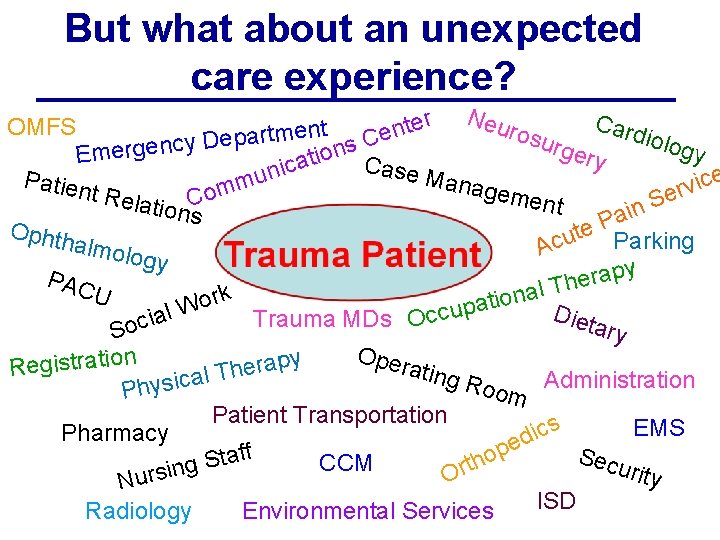
But what about an unexpected care experience? Neu r Card e t OMFS t n n r e o m t e r iolog surg epa C D y c s n e g r n e y ery o C Em i t a c a se Ma e uni Patien c i m n v a r geme t Rela om e C S n t tions ain P Ophth te Parking u c almol A ogy py a r PAC e h T l a U k n r o i o t a p W u Diet l c ia Trauma MDs Oc c ary o S Ope n o y i t a p r t s a i g r ratin e e R h T l a g Ro Physic om Administration Patient Transportation EMS cs i Pharmacy d e p f f Sec o a t S h CCM t g urity r n i s r O u N ISD Radiology Environmental Services
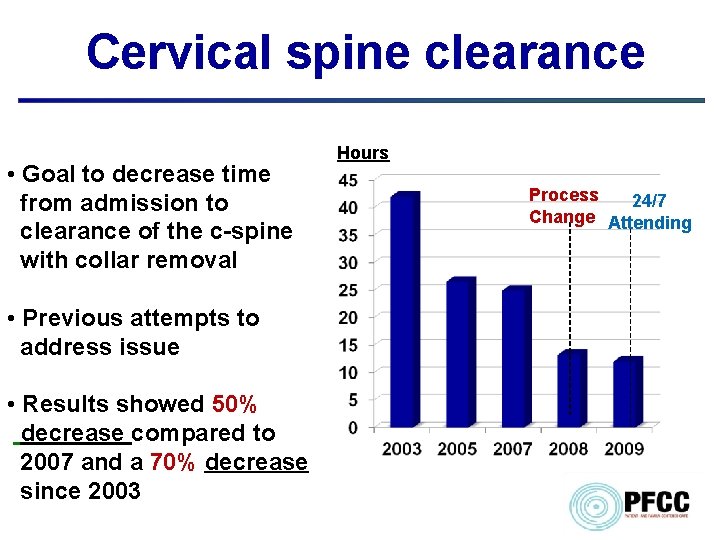
Cervical spine clearance • Goal to decrease time from admission to clearance of the c-spine with collar removal • Previous attempts to address issue • Results showed 50% decrease compared to 2007 and a 70% decrease since 2003 Hours Process 24/7 Change Attending
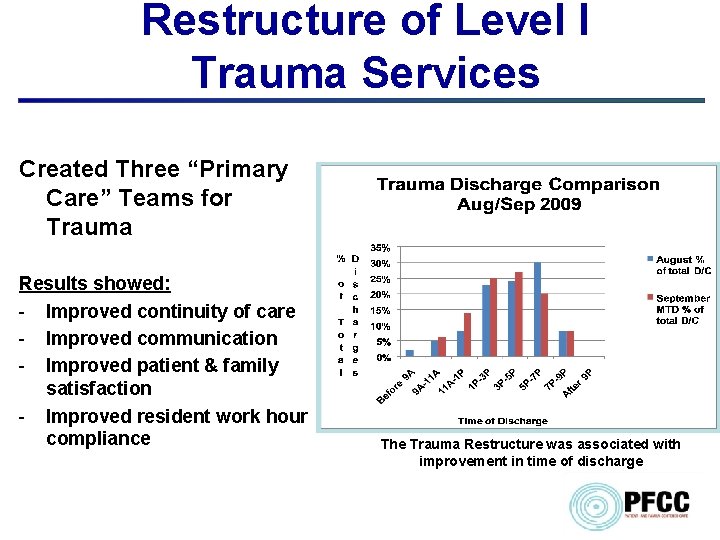
Restructure of Level I Trauma Services Created Three “Primary Care” Teams for Trauma Results showed: - Improved continuity of care - Improved communication - Improved patient & family satisfaction - Improved resident work hour compliance The Trauma Restructure was associated with improvement in time of discharge
Many different care experiences and types of hospital - big and small, tertiary to community • Bariatric surgery • Total Hip and Knee Joint Replacement • Women’s Cancer Services • Home Health Care • Pediatric and Adult Emergency Room • Pediatric Outpatient Surgery • Rehabilitation • Rheumatology • Day of Surgery • Transplant • Level I Trauma • Urgent Care Centers
So updated care delivery: The Design Sciences and PFCC M/P • Place the care experiences of patients and families at the center and on the same footing as process and clinical goals and we can transform the system by DESIGN… • We may not know the final answers but approaches like the PFCC M/P can get us heading in the right direction and adapt to our changing environment.
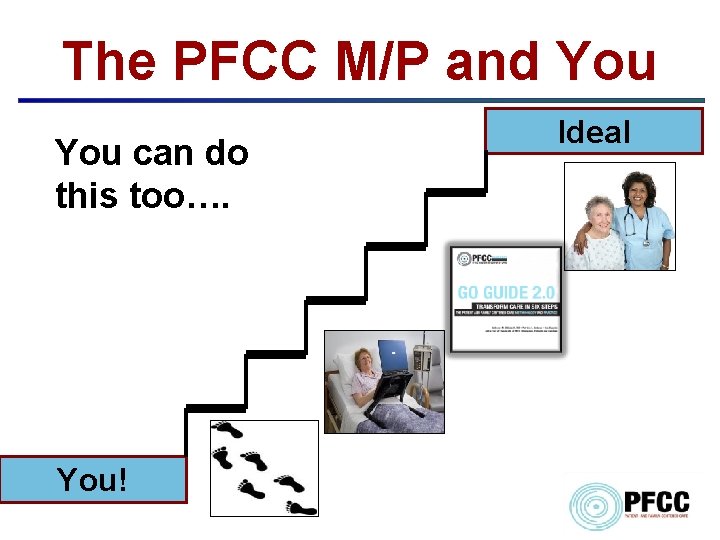
The PFCC M/P and You can do this too…. You! Ideal
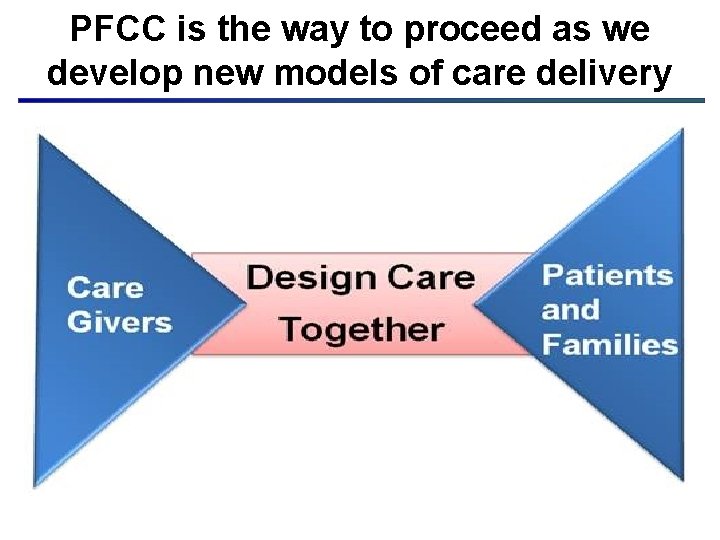
PFCC is the way to proceed as we develop new models of care delivery
Thank you! PFCC M/P Clinical Process …any questions?