
Yearbook Basics A Yearbook Serves Many Different Functions
Yearbook Basics
A Yearbook Serves Many Different Functions l l Picture Book: Pictures of readers and their friends Historical Document: Presents a documentation of the school year Reference Book: Confirms students enrolled at the school, spelling of names or scores of athletic events. Longest Kept Memento: Statistics show that the yearbook is the one item that is most kept 10, 20 or even 30 years.
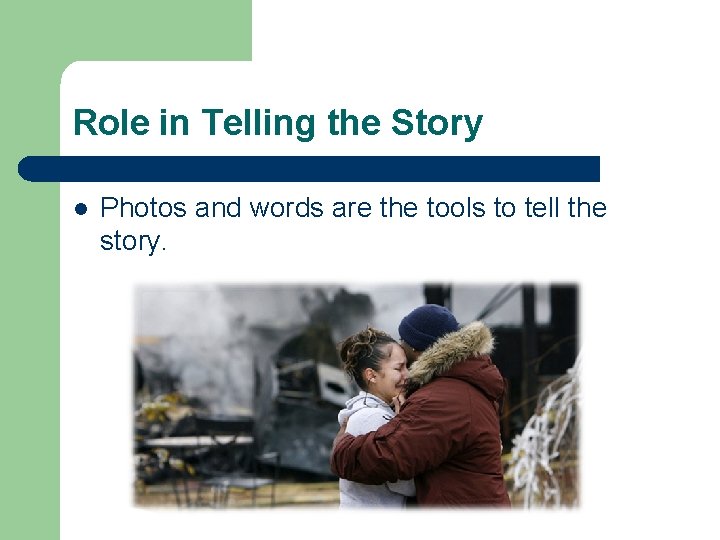
Role in Telling the Story l Photos and words are the tools to tell the story.
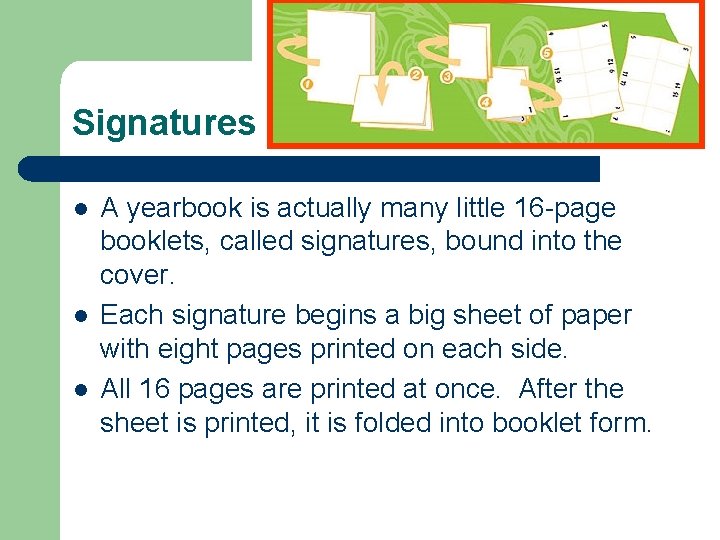
Signatures l l l A yearbook is actually many little 16 -page booklets, called signatures, bound into the cover. Each signature begins a big sheet of paper with eight pages printed on each side. All 16 pages are printed at once. After the sheet is printed, it is folded into booklet form.

Yearbook Sizes l Yearbooks come in three sizes – 7 ¾” X 10 ½” often called Size 7 8 ½” X 11” often called Size 8 9” X 12” often called Size 9 – Our Yearbook is 8 ½” X 11” – –

Parts of the Yearbook l l l Cover: Should make a positive first impression and set the stage for the story. Endsheets: The heavy paper between the cover and the first and last pages is used to hold the signatures in the yearbook. Title Page: The first page of the book makes a positive first impression and provides critical reference information.
Parts Con’d l l l Opening Section: Introduces the story of the year and explains the book concept. Dividers: Indicate new sections and provide continuity throughout the book. Sections: The departments or coverage areas of the book include student life, academics, sports, organizations, people, advertising/community and index.
Parts Con’d l Closing: Finishes the story of the year and brings the book to closure.

Who are Our Readers? l l Primary Audience: THE STUDENTS Secondary Audience: Includes Parents and Staff
Learn What Students Want l Survey them
What Do They Want? l l They expect content that interests them. Want to see photos of them selves and their friends. Like more photos than words. Like text represented in a creative way, free of unnecessary words and focusing on students & their experiences.
l Do judge a yearbook by it’s cover, so it must make a good first impression.
- Slides: 12