
Year 9 Science Food Type Use Carbohydrate Long
Year 9 Science
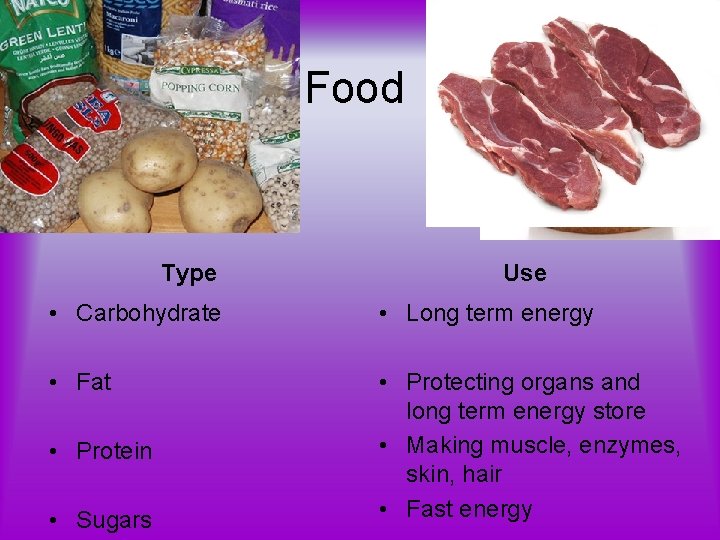
Food Type Use • Carbohydrate • Long term energy • Fat • Protecting organs and long term energy store • Making muscle, enzymes, skin, hair • Fast energy • Protein • Sugars
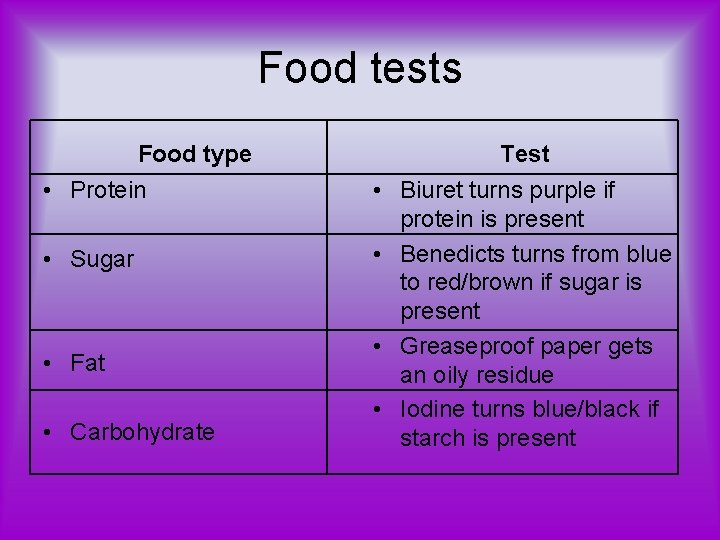
Food tests Food type • Protein • Sugar • Fat • Carbohydrate Test • Biuret turns purple if protein is present • Benedicts turns from blue to red/brown if sugar is present • Greaseproof paper gets an oily residue • Iodine turns blue/black if starch is present
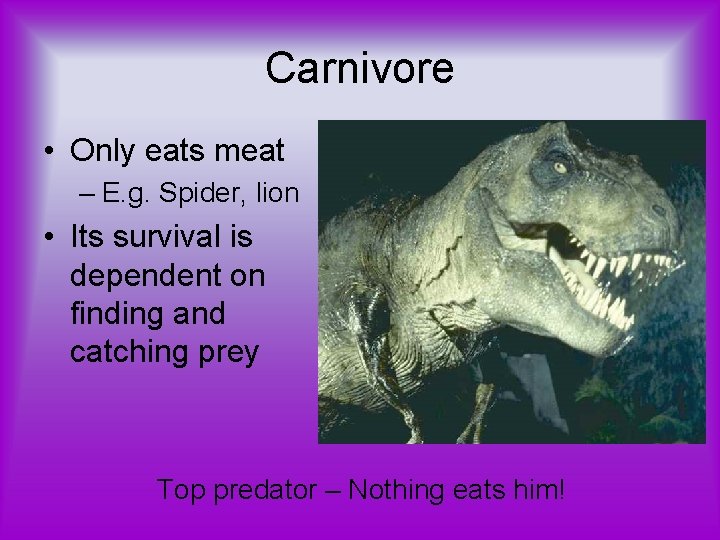
Carnivore • Only eats meat – E. g. Spider, lion • Its survival is dependent on finding and catching prey Top predator – Nothing eats him!
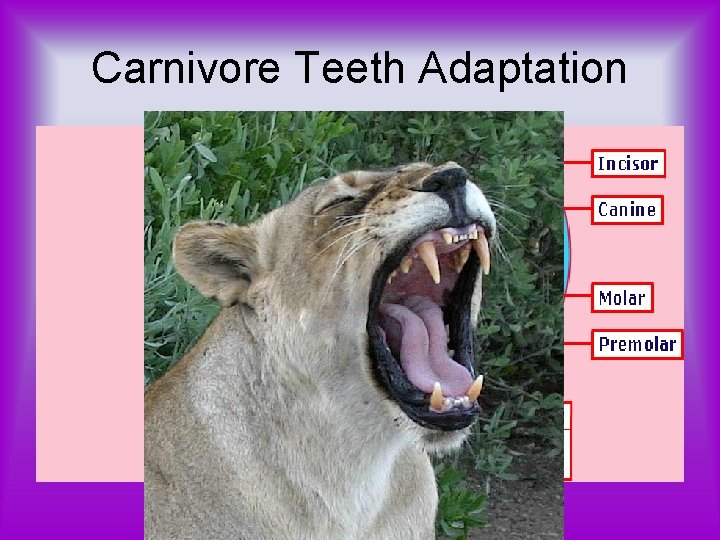
Carnivore Teeth Adaptation
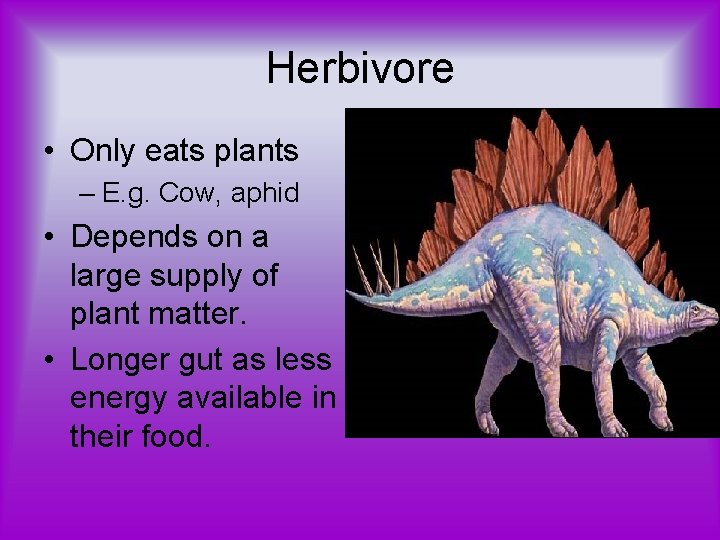
Herbivore • Only eats plants – E. g. Cow, aphid • Depends on a large supply of plant matter. • Longer gut as less energy available in their food.
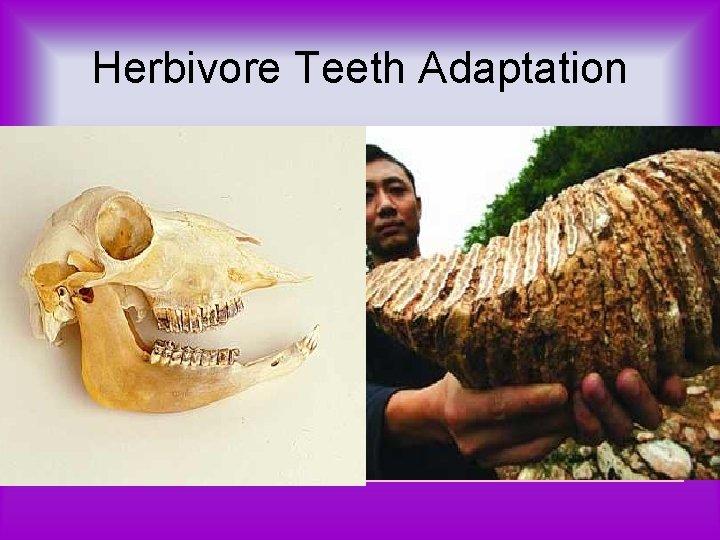
Herbivore Teeth Adaptation
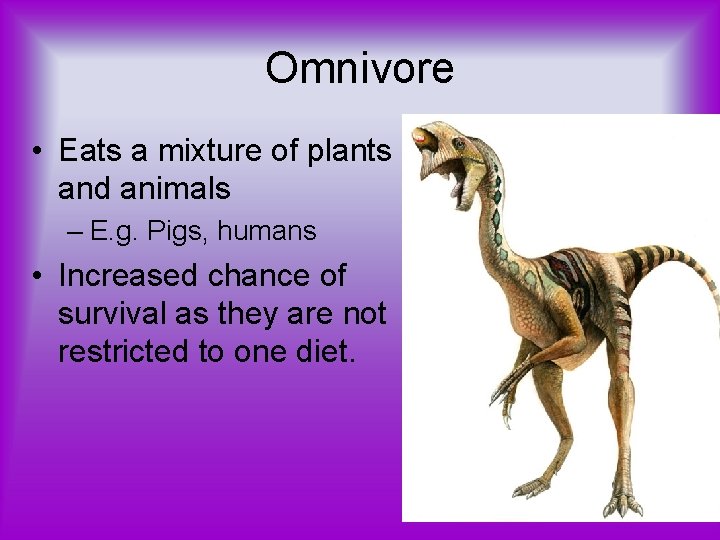
Omnivore • Eats a mixture of plants and animals – E. g. Pigs, humans • Increased chance of survival as they are not restricted to one diet.
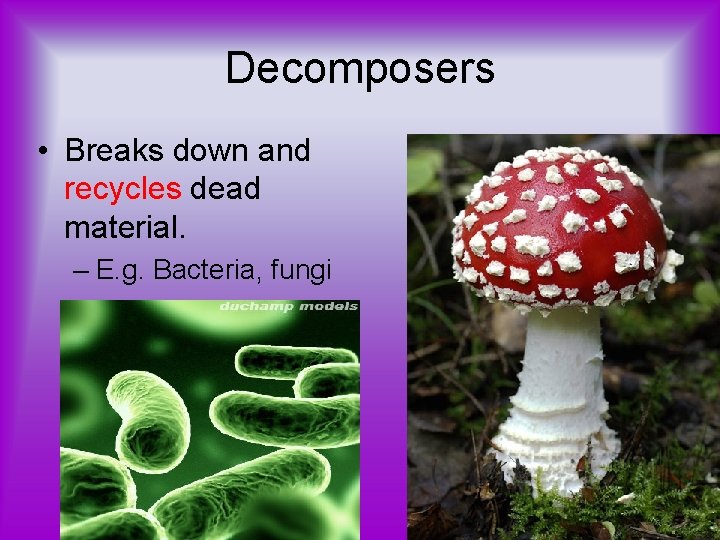
Decomposers • Breaks down and recycles dead material. – E. g. Bacteria, fungi
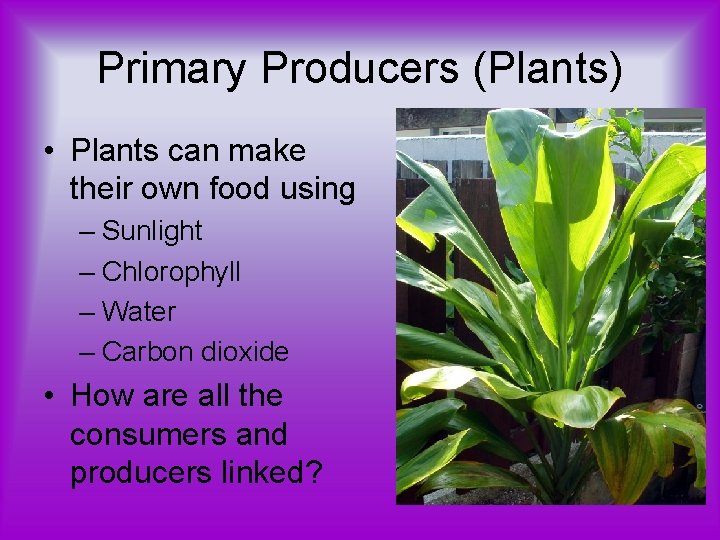
Primary Producers (Plants) • Plants can make their own food using – Sunlight – Chlorophyll – Water – Carbon dioxide • How are all the consumers and producers linked?
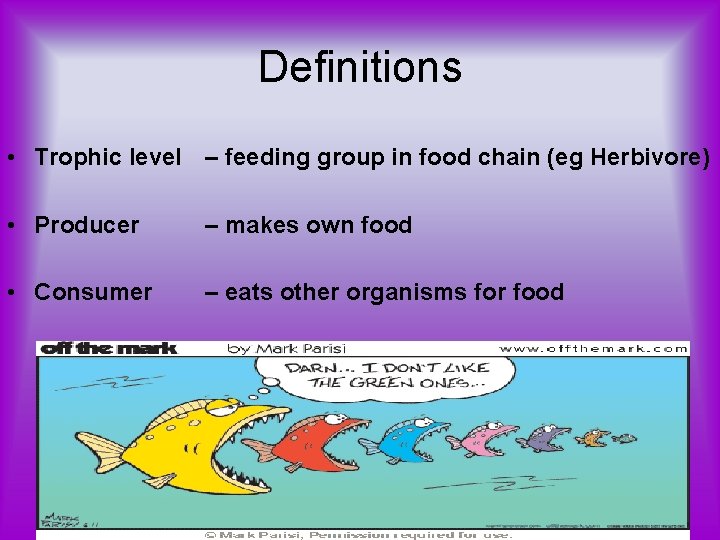
Definitions • Trophic level – feeding group in food chain (eg Herbivore) • Producer – makes own food • Consumer – eats other organisms for food
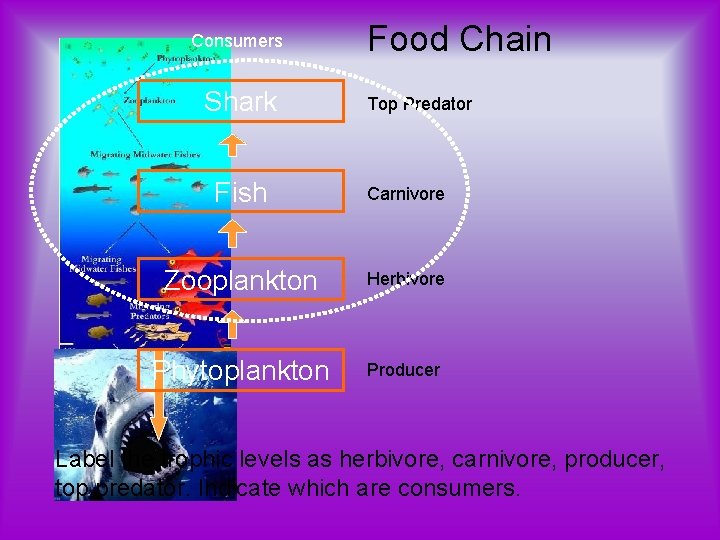
Consumers Shark Food Chain Top Predator Fish Carnivore Zooplankton Herbivore Phytoplankton Producer Label the trophic levels as herbivore, carnivore, producer, top predator. Indicate which are consumers.
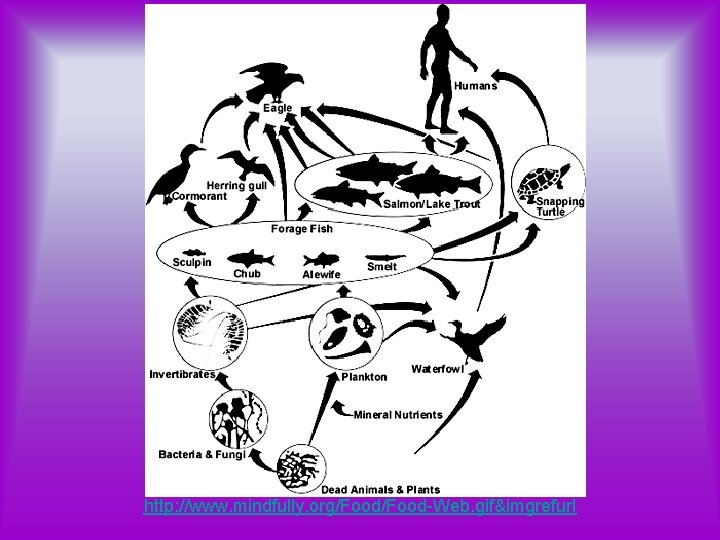
http: //www. mindfully. org/Food-Web. gif&imgrefurl
Food Chains • Food chains describe how organisms Food gain______ from eating each other in a community. Producers because they • Plants are called _______ make glucose using energy from the Sun ______ Consumers • _____ must eat other organisms for Energy their _______ and nutrients.
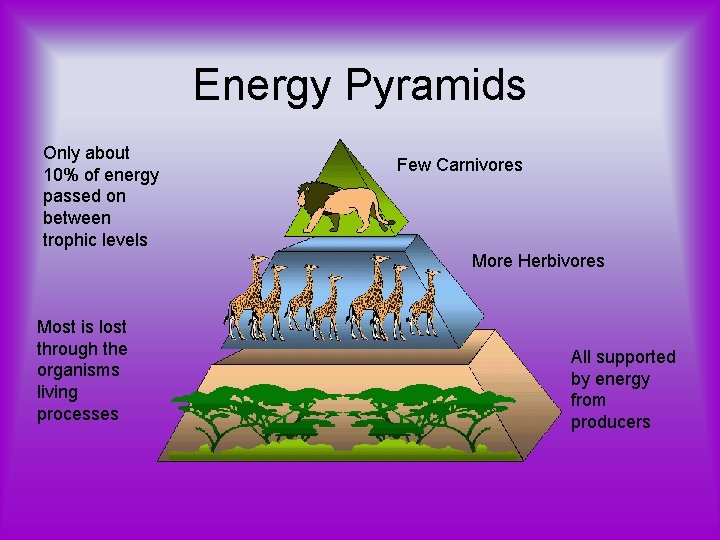
Energy Pyramids Only about 10% of energy passed on between trophic levels Few Carnivores More Herbivores Most is lost through the organisms living processes All supported by energy from producers
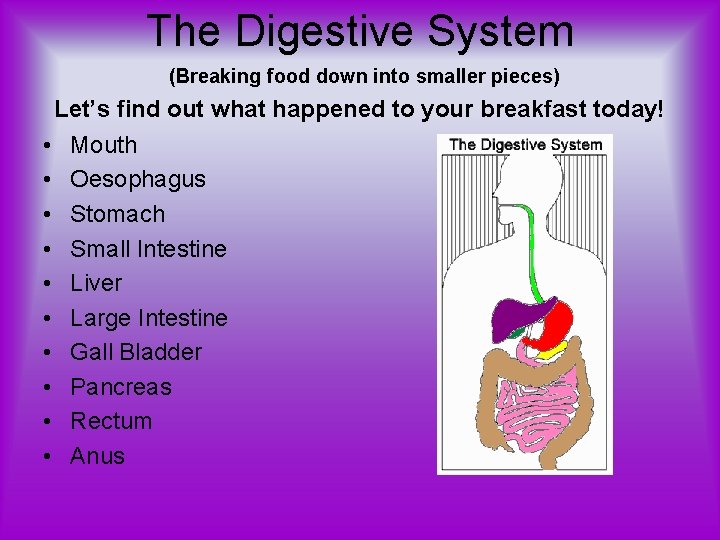
The Digestive System (Breaking food down into smaller pieces) Let’s find out what happened to your breakfast today! • Mouth • Oesophagus • Stomach • Small Intestine • Liver • Large Intestine • Gall Bladder • Pancreas • Rectum • Anus
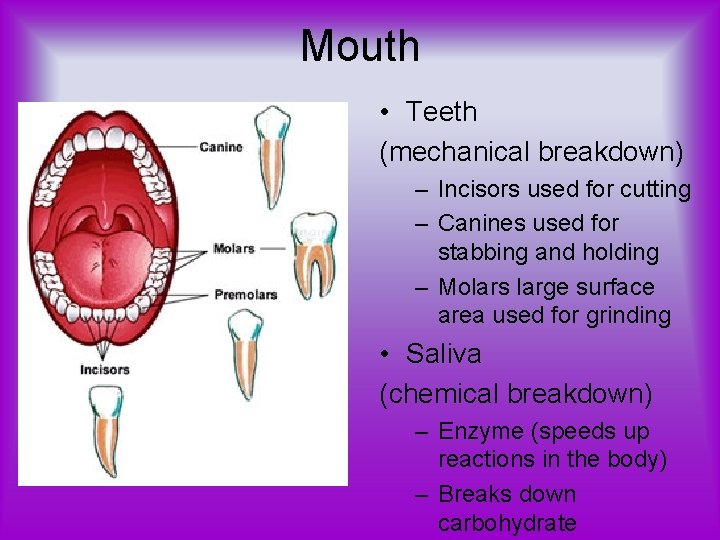
Mouth • Teeth (mechanical breakdown) – Incisors used for cutting – Canines used for stabbing and holding – Molars large surface area used for grinding • Saliva (chemical breakdown) – Enzyme (speeds up reactions in the body) – Breaks down carbohydrate
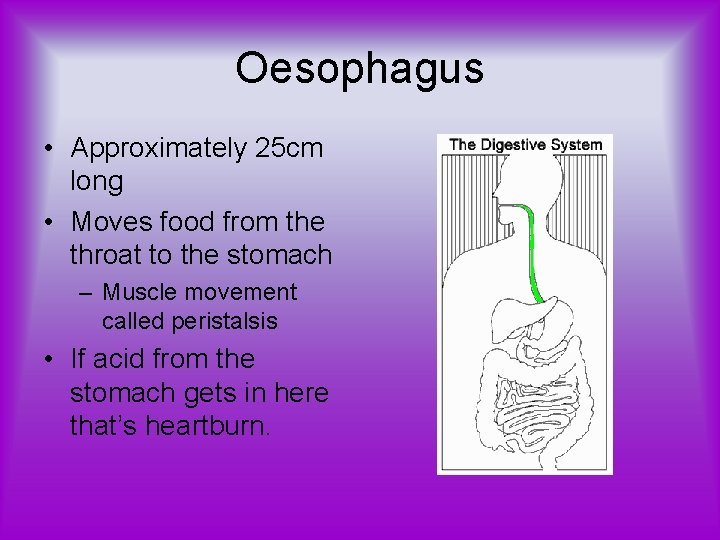
Oesophagus • Approximately 25 cm long • Moves food from the throat to the stomach – Muscle movement called peristalsis • If acid from the stomach gets in here that’s heartburn.
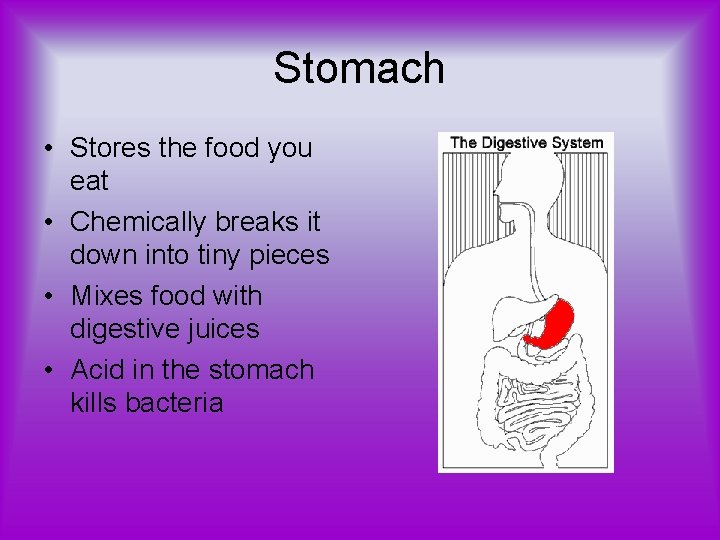
Stomach • Stores the food you eat • Chemically breaks it down into tiny pieces • Mixes food with digestive juices • Acid in the stomach kills bacteria
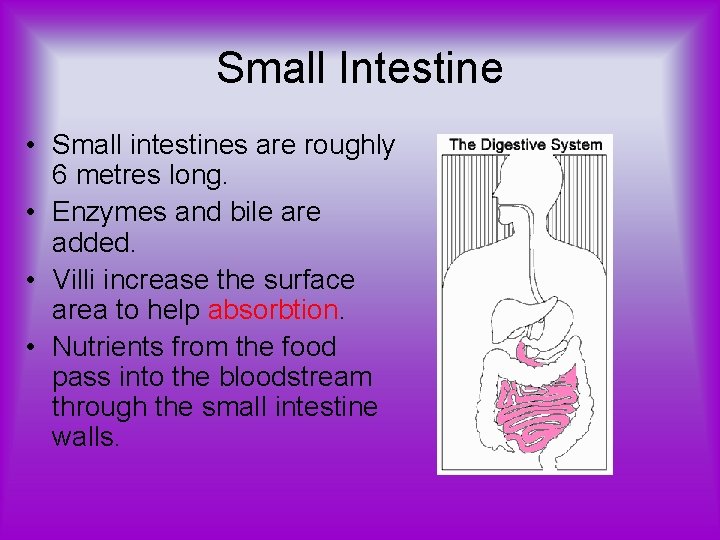
Small Intestine • Small intestines are roughly 6 metres long. • Enzymes and bile are added. • Villi increase the surface area to help absorbtion. • Nutrients from the food pass into the bloodstream through the small intestine walls.
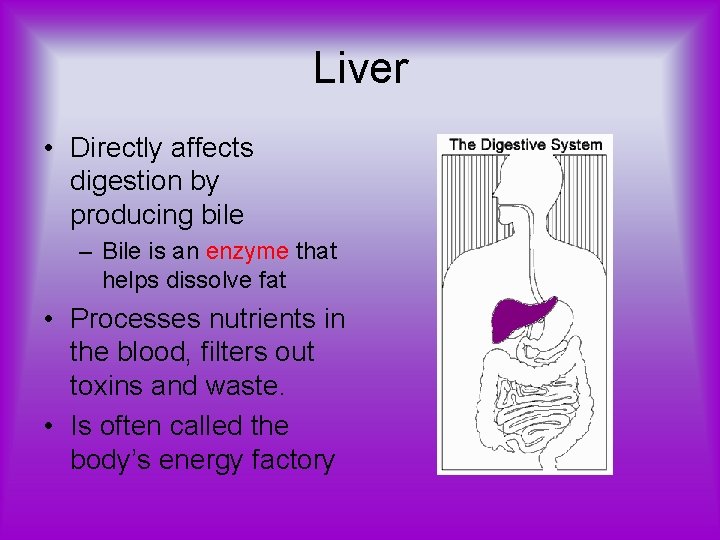
Liver • Directly affects digestion by producing bile – Bile is an enzyme that helps dissolve fat • Processes nutrients in the blood, filters out toxins and waste. • Is often called the body’s energy factory
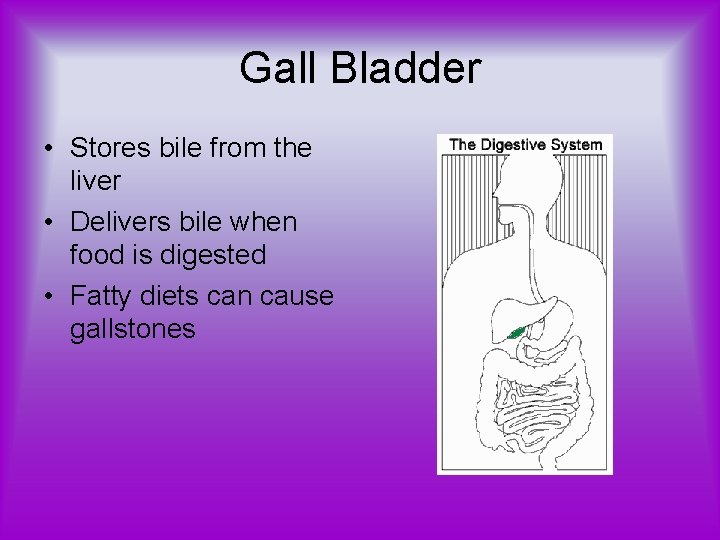
Gall Bladder • Stores bile from the liver • Delivers bile when food is digested • Fatty diets can cause gallstones
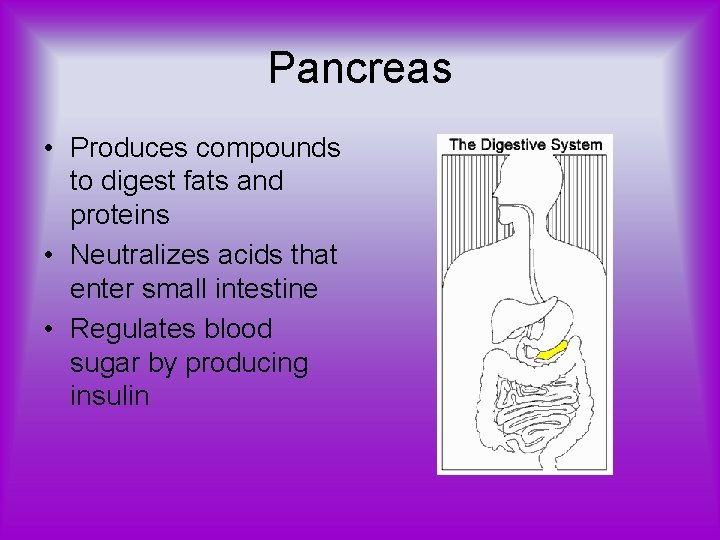
Pancreas • Produces compounds to digest fats and proteins • Neutralizes acids that enter small intestine • Regulates blood sugar by producing insulin
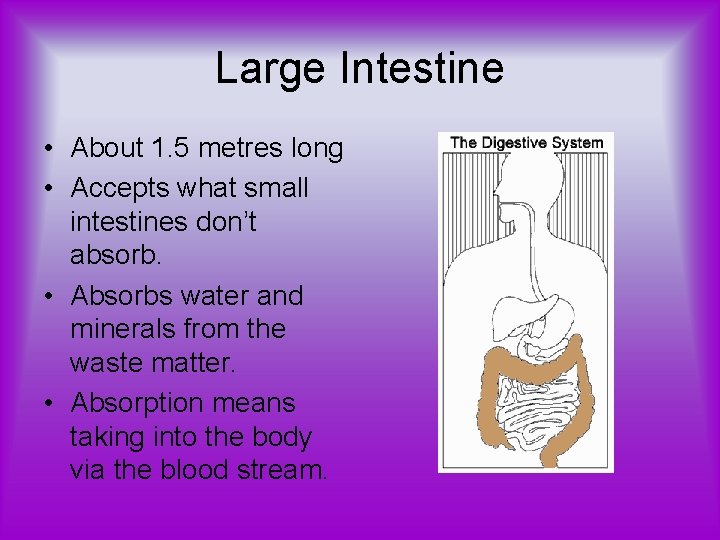
Large Intestine • About 1. 5 metres long • Accepts what small intestines don’t absorb. • Absorbs water and minerals from the waste matter. • Absorption means taking into the body via the blood stream.
Rectum and Anus • Rectum – About 15 cm long – Stores waste before egestion. • Anus – Muscular ring that controls egestion.
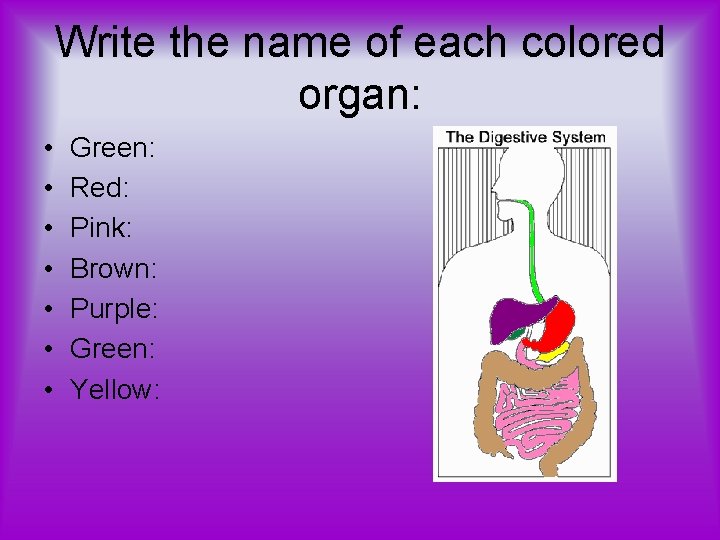
Write the name of each colored organ: • • Green: Red: Pink: Brown: Purple: Green: Yellow:
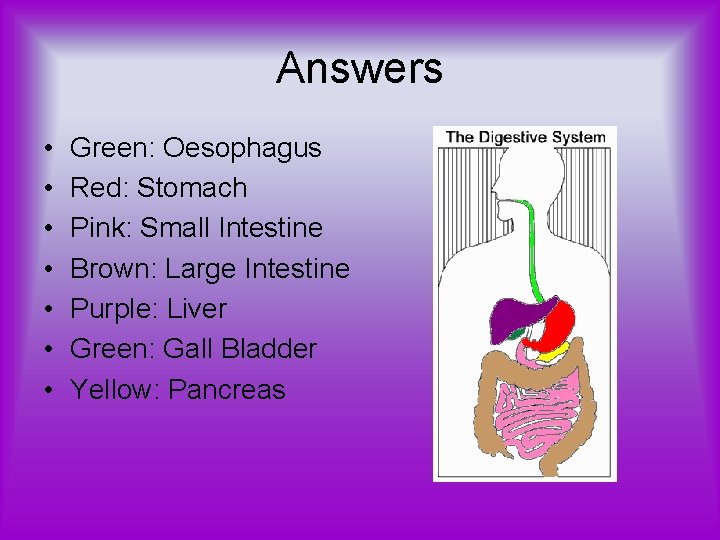
Answers • • Green: Oesophagus Red: Stomach Pink: Small Intestine Brown: Large Intestine Purple: Liver Green: Gall Bladder Yellow: Pancreas
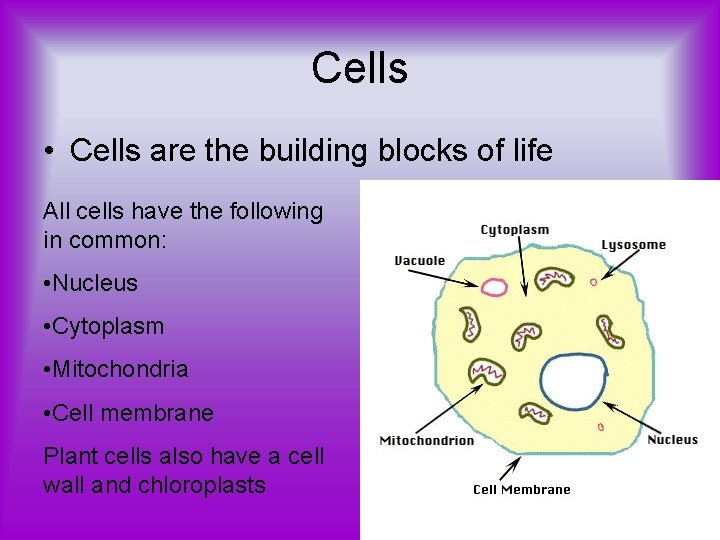
Cells • Cells are the building blocks of life All cells have the following in common: • Nucleus • Cytoplasm • Mitochondria • Cell membrane Plant cells also have a cell wall and chloroplasts
Function of cell organelles • Nucleus – largest organelle – control centre – Instructions for the whole body • Cell membrane – Controls the entry and exit of material • Cytoplasm – Liquid containing cell parts and nutrients • Mitochondria – Powerhouse (burns energy from food)
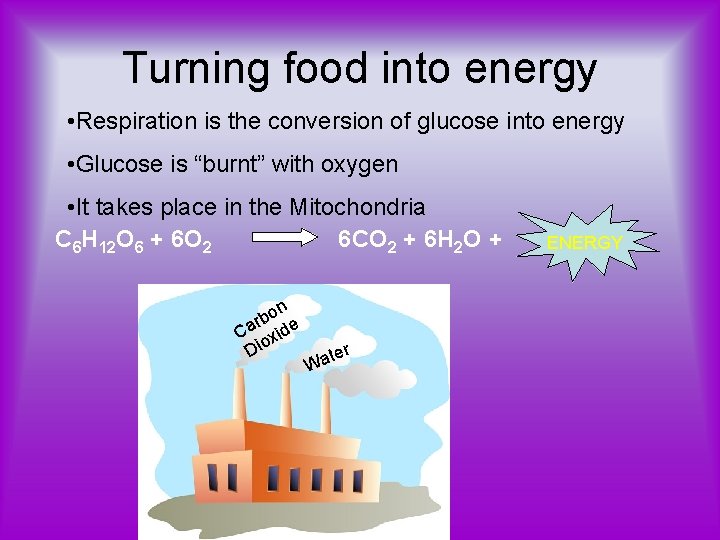
Turning food into energy • Respiration is the conversion of glucose into energy • Glucose is “burnt” with oxygen • It takes place in the Mitochondria C 6 H 12 O 6 + 6 O 2 6 CO 2 + 6 H 2 O + on b r Ca xide Dio ter Wa ENERGY
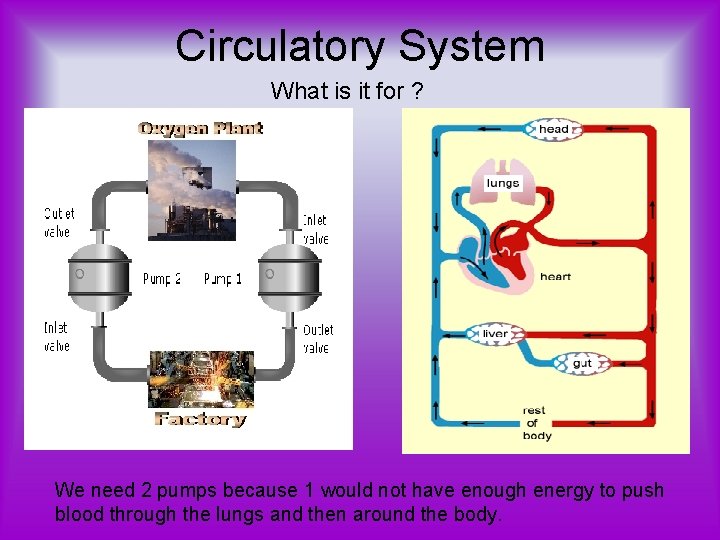
Circulatory System What is it for ? We need 2 pumps because 1 would not have enough energy to push blood through the lungs and then around the body.
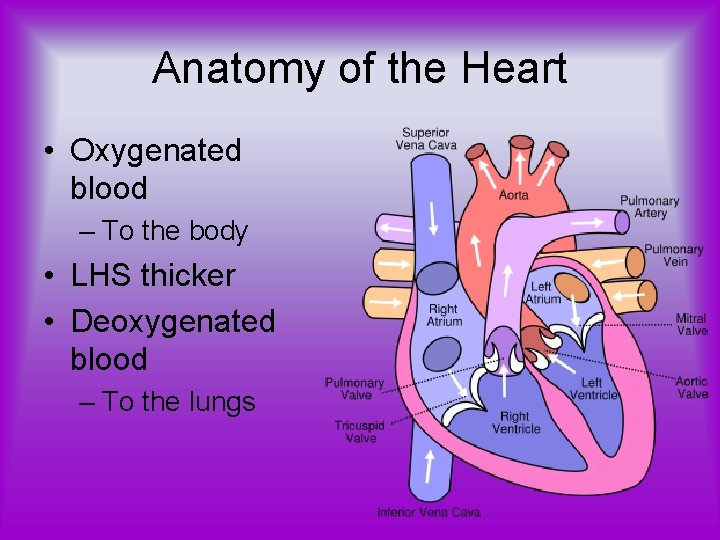
Anatomy of the Heart • Oxygenated blood – To the body • LHS thicker • Deoxygenated blood – To the lungs
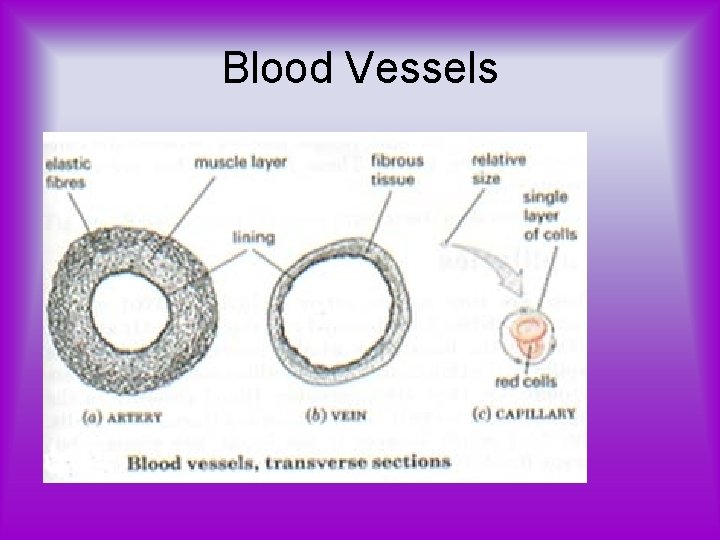
Blood Vessels
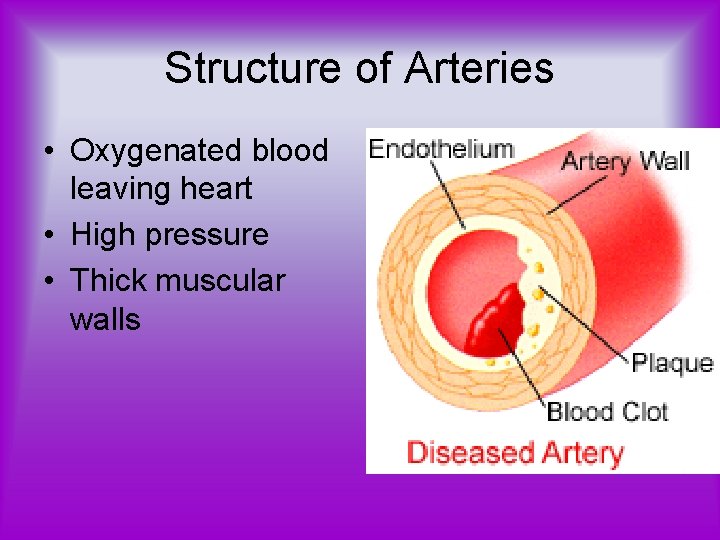
Structure of Arteries • Oxygenated blood leaving heart • High pressure • Thick muscular walls
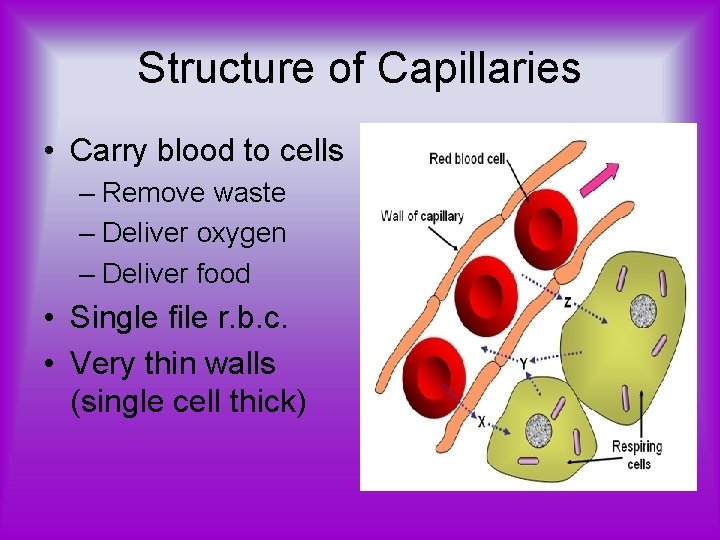
Structure of Capillaries • Carry blood to cells – Remove waste – Deliver oxygen – Deliver food • Single file r. b. c. • Very thin walls (single cell thick)
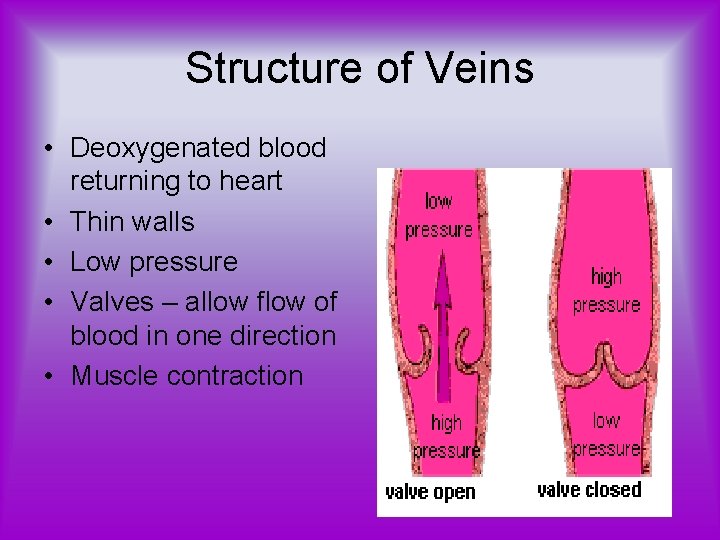
Structure of Veins • Deoxygenated blood returning to heart • Thin walls • Low pressure • Valves – allow flow of blood in one direction • Muscle contraction
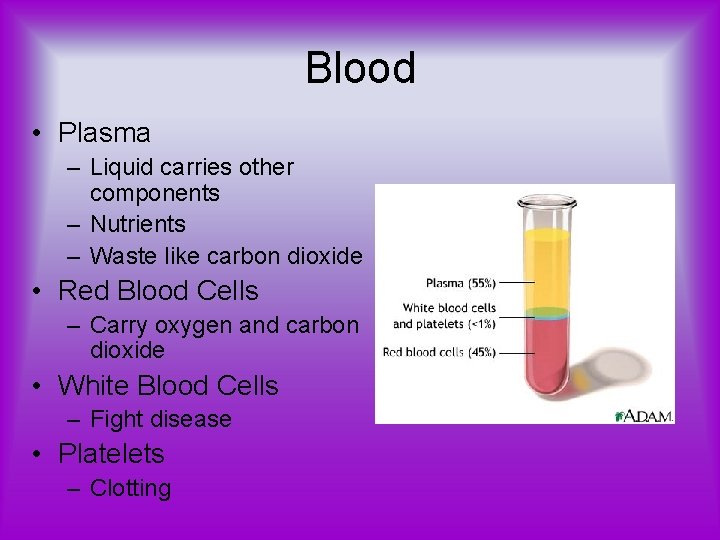
Blood • Plasma – Liquid carries other components – Nutrients – Waste like carbon dioxide • Red Blood Cells – Carry oxygen and carbon dioxide • White Blood Cells – Fight disease • Platelets – Clotting
- Slides: 37