
Year 9 Science BODY SYSTEMS THE RESPIRATORY CIRCULATORY
Year 9 Science BODY SYSTEMS: THE RESPIRATORY & CIRCULATORY SYSTEM CHAPTER 3. 1 -3. 2
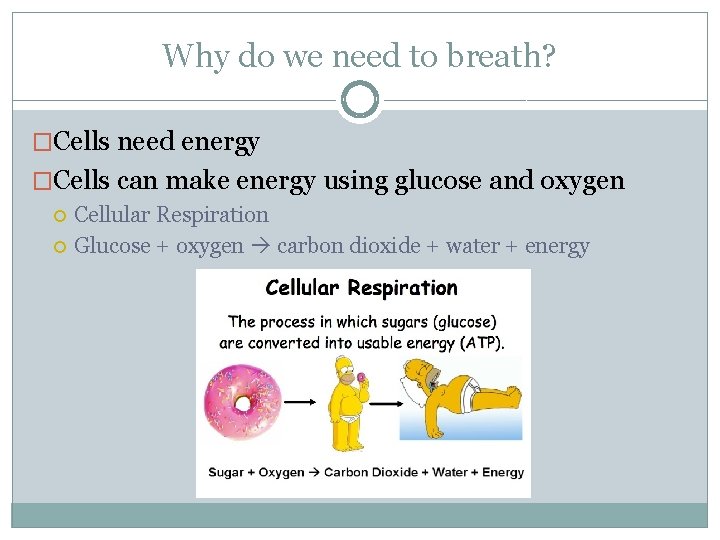
Why do we need to breath? �Cells need energy �Cells can make energy using glucose and oxygen Cellular Respiration Glucose + oxygen carbon dioxide + water + energy
Where is oxygen found? �About 20% of the air we breath in in oxygen �We need to get this oxygen to cells �Respiratory system is the system that delivers oxygen and eliminates carbon dioxide from the body
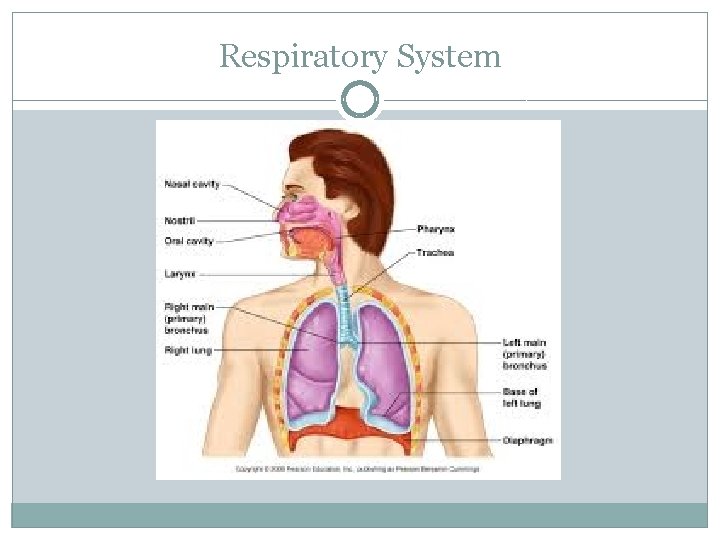
Respiratory System
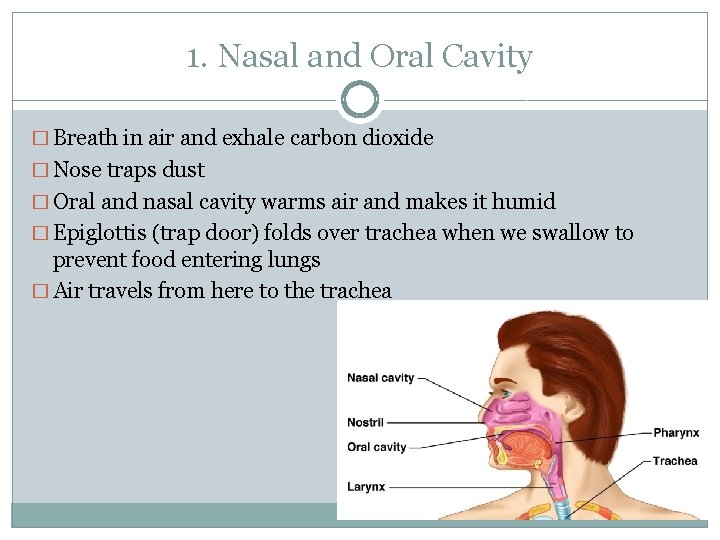
1. Nasal and Oral Cavity � Breath in air and exhale carbon dioxide � Nose traps dust � Oral and nasal cavity warms air and makes it humid � Epiglottis (trap door) folds over trachea when we swallow to prevent food entering lungs � Air travels from here to the trachea

2. Trachea and Bronchi �The trachea has rings of cartilage – why? �It transports air from oral cavity to lungs �The trachea branches into 2 bronchi �Each bronchi enters a lung �In the lung the bronchi branch even further into bronchioles
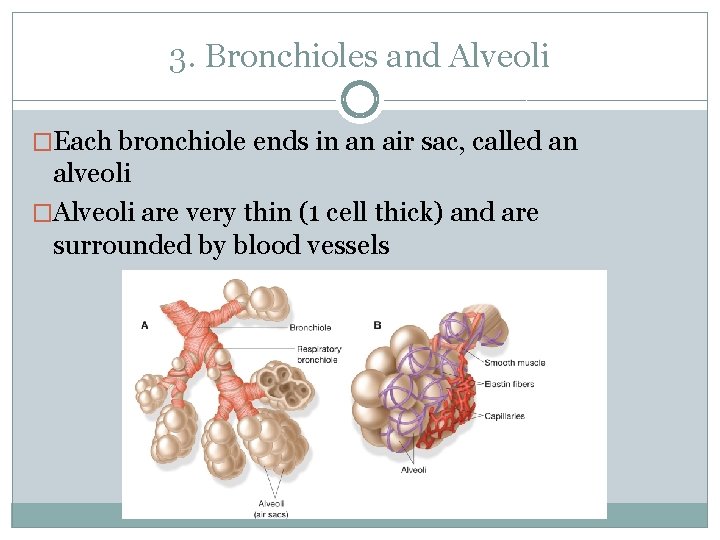
3. Bronchioles and Alveoli �Each bronchiole ends in an air sac, called an alveoli �Alveoli are very thin (1 cell thick) and are surrounded by blood vessels
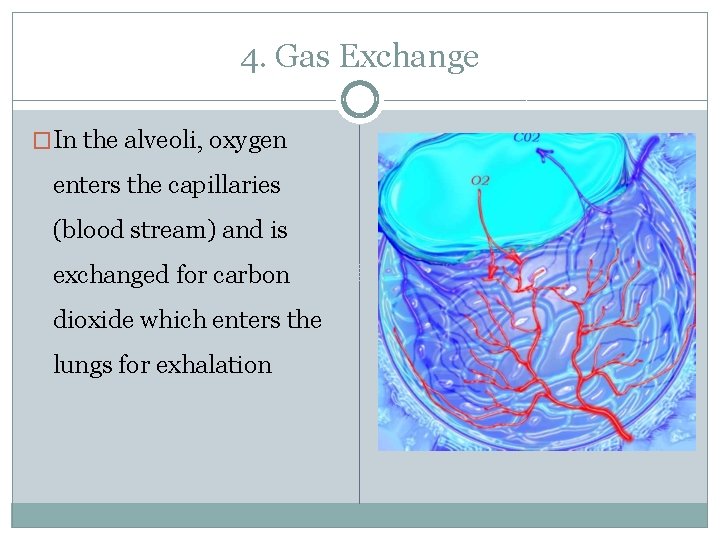
4. Gas Exchange �In the alveoli, oxygen enters the capillaries (blood stream) and is exchanged for carbon dioxide which enters the lungs for exhalation
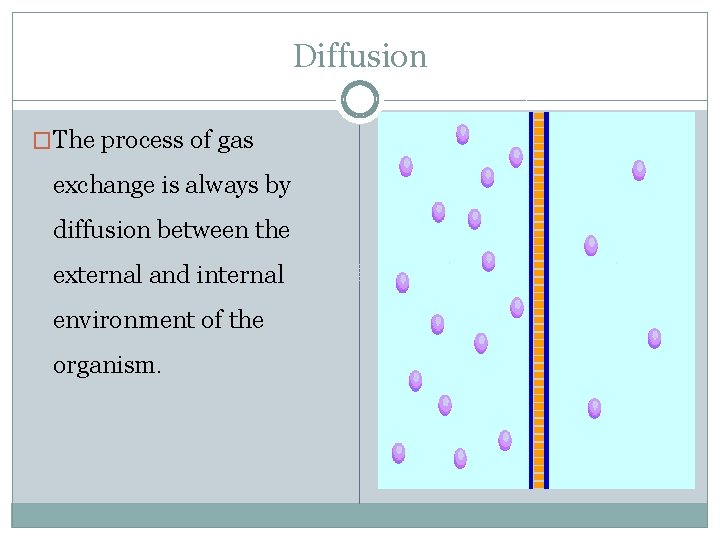
Diffusion �The process of gas exchange is always by diffusion between the external and internal environment of the organism.
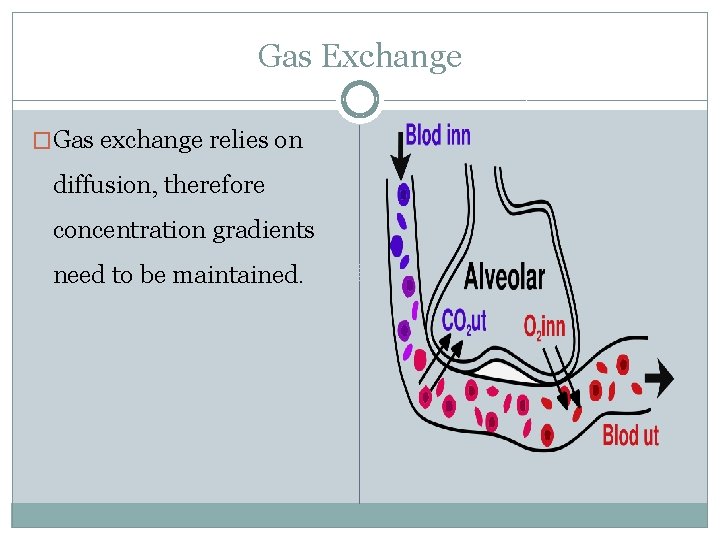
Gas Exchange �Gas exchange relies on diffusion, therefore concentration gradients need to be maintained.
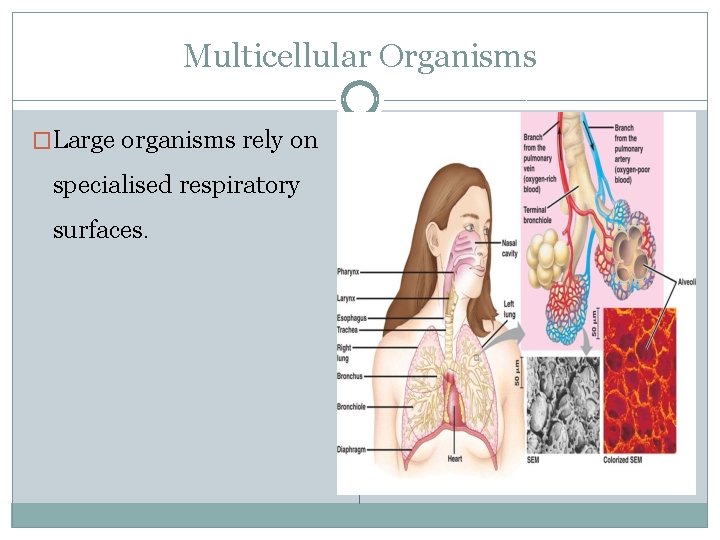
Multicellular Organisms �Large organisms rely on specialised respiratory surfaces.
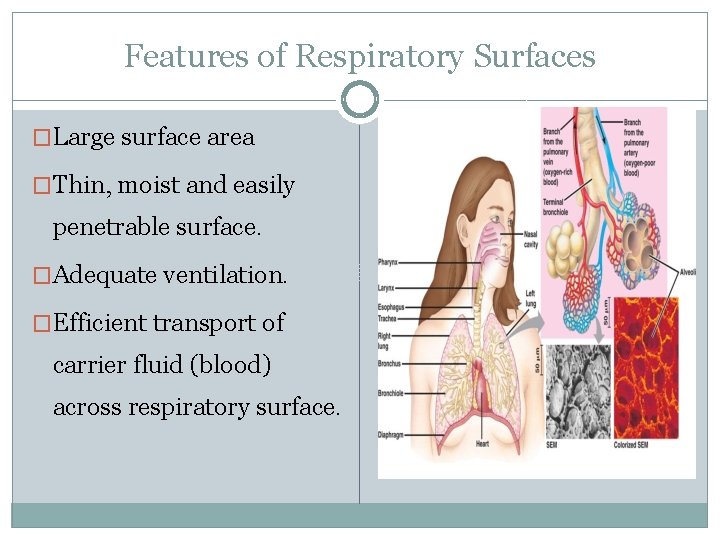
Features of Respiratory Surfaces �Large surface area �Thin, moist and easily penetrable surface. �Adequate ventilation. �Efficient transport of carrier fluid (blood) across respiratory surface.
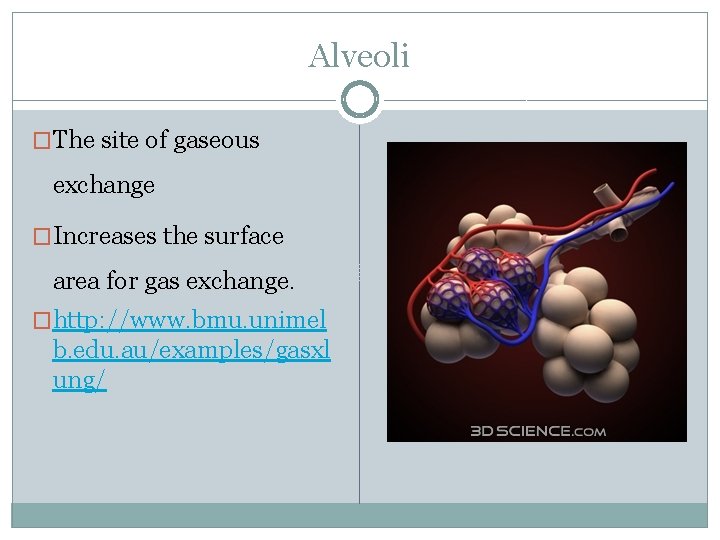
Alveoli �The site of gaseous exchange �Increases the surface area for gas exchange. �http: //www. bmu. unimel b. edu. au/examples/gasxl ung/
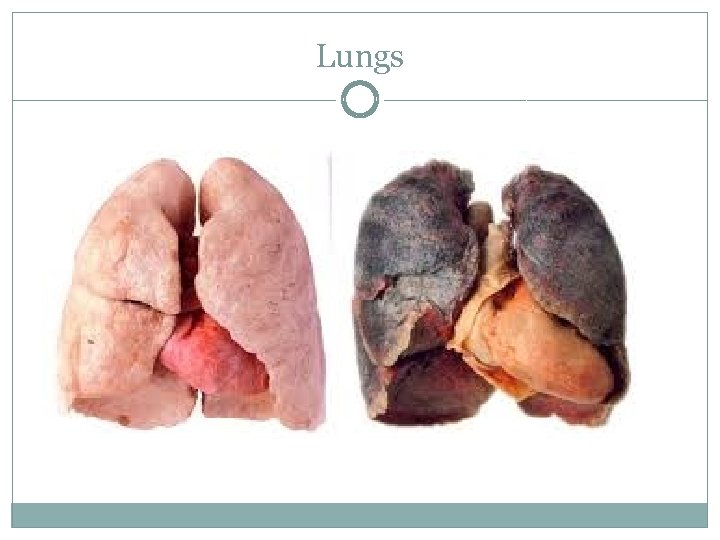
Lungs
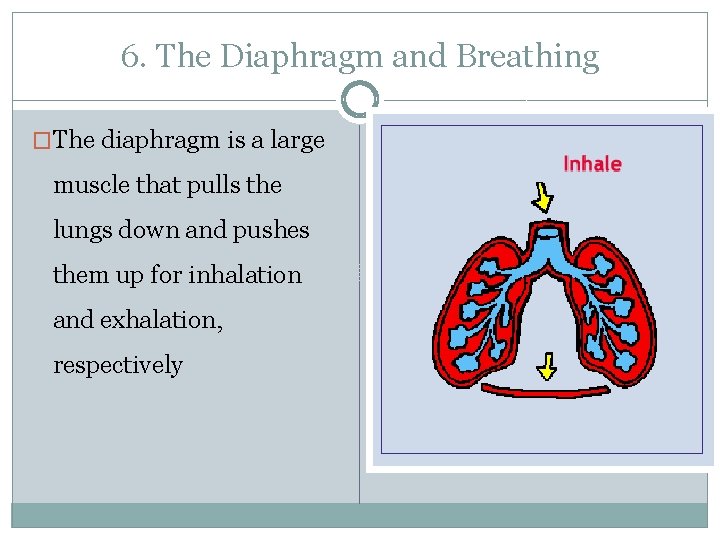
6. The Diaphragm and Breathing �The diaphragm is a large muscle that pulls the lungs down and pushes them up for inhalation and exhalation, respectively
Circulatory System
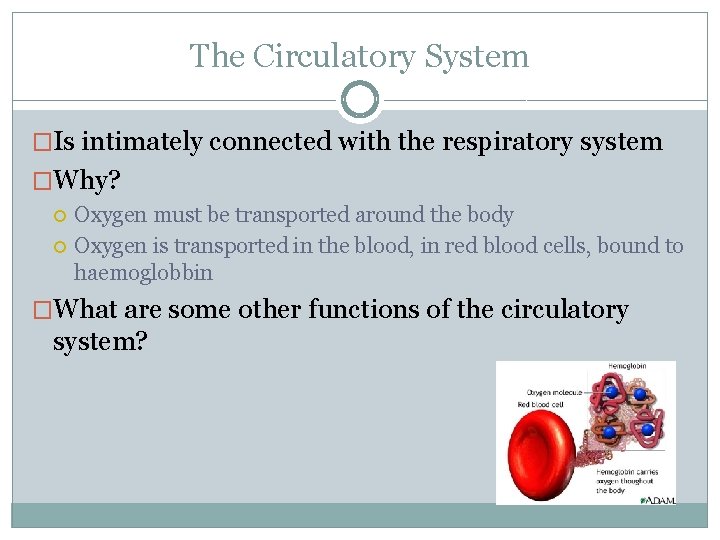
The Circulatory System �Is intimately connected with the respiratory system �Why? Oxygen must be transported around the body Oxygen is transported in the blood, in red blood cells, bound to haemoglobbin �What are some other functions of the circulatory system?
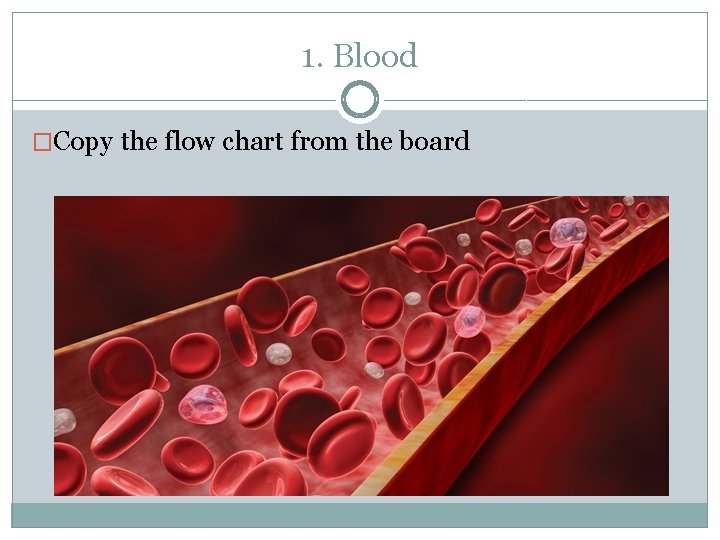
1. Blood �Copy the flow chart from the board
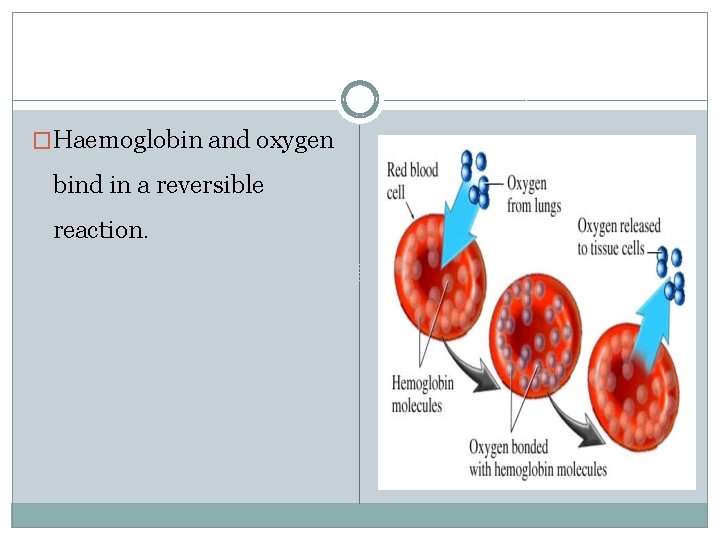
�Haemoglobin and oxygen bind in a reversible reaction.
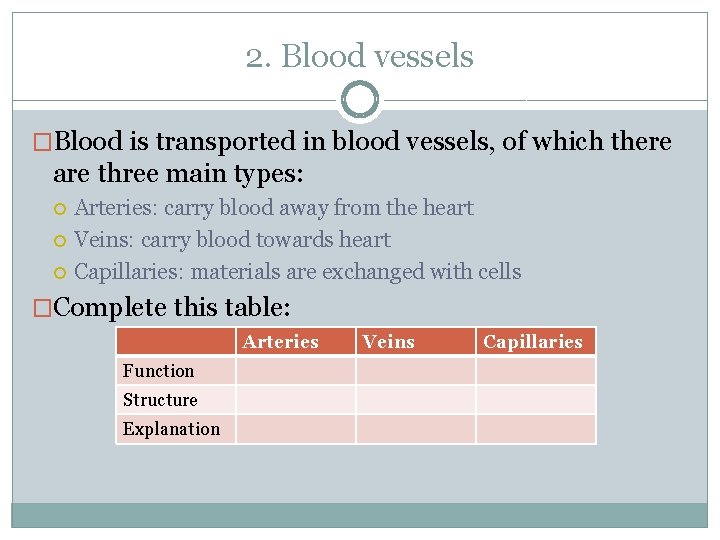
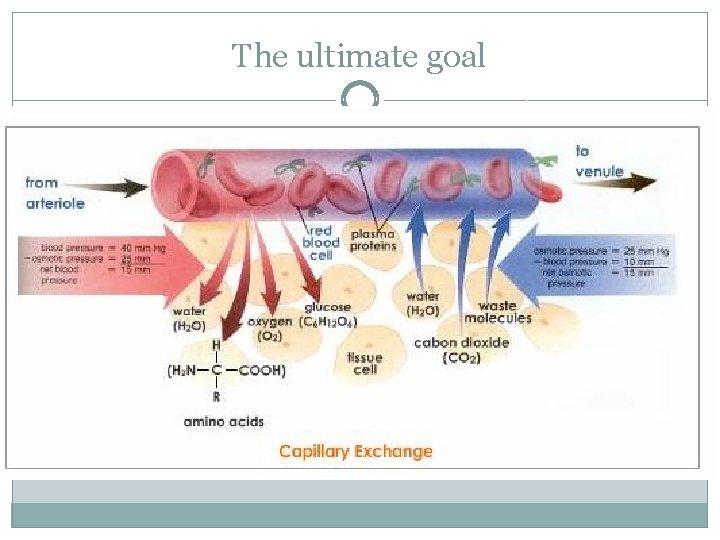
2. Blood vessels �Blood is transported in blood vessels, of which there are three main types: Arteries: carry blood away from the heart Veins: carry blood towards heart Capillaries: materials are exchanged with cells �Complete this table: Arteries Function Structure Explanation Veins Capillaries
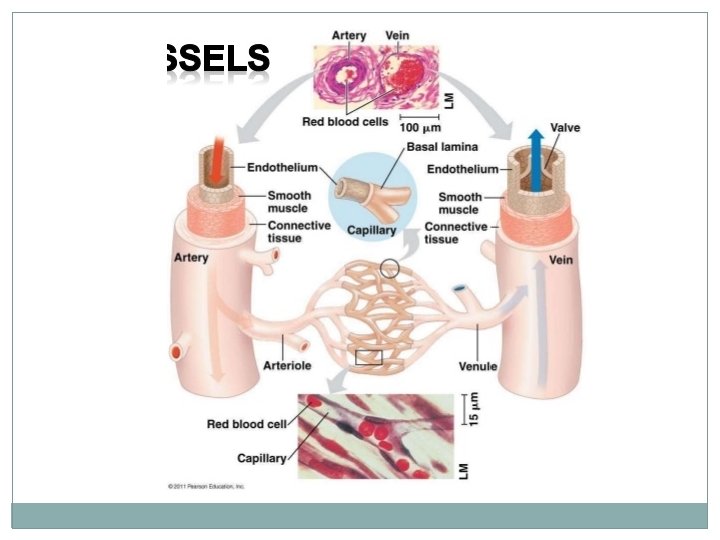
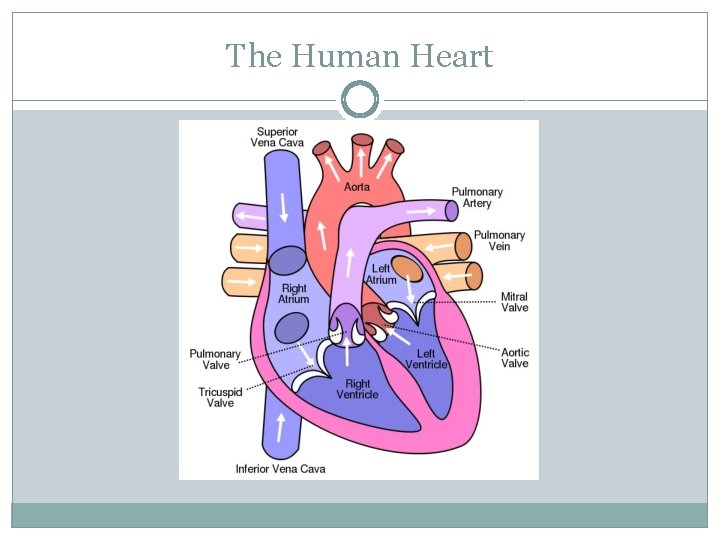
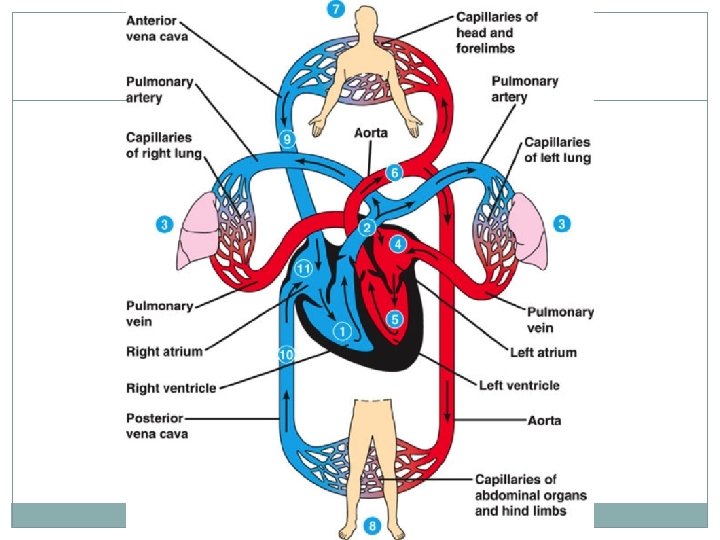
3. The Human Heart �The heart is a large muscular pump that forces blood around the body. �It has 4 chambers, 2 atriums and 2 ventricles �There are two phases: Deoxygenated blood enters the heart via the vena carva The heart then pumps this blood to the lung � What happens here? ? Oxygenated blood then returns from the lungs to the heart. The heart now pumps this blood around the body �https: //www. youtube. com/watch? v=H 04 d 3 r. JCLCE �Label your diagram of the human heart
The Human Heart
The ultimate goal
Putting it all together
Practice! �Online interactive �http: //sciencelearn. org. nz/Contexts/See-through- Body/Sci-Media/Animation/Label-the-heart
- Slides: 26