
Year 9 Food preparation and nutrition Lesson 1
- Slides: 17
Year 9 Food preparation and nutrition • • • Lesson 1 To demonstrate knowledge and understanding of The eatwell plate guidelines and proportions. To identify the main nutrients required for a healthy balanced diet. To identify the nutritional needs of a teenager. To identify the main factors that affect dietary needs throughout different life stages. To select a suitable starter or savoury light lunch dish to make that meets guidelines of The eatwell plate, nutritionally balanced and appealing to a teenager.
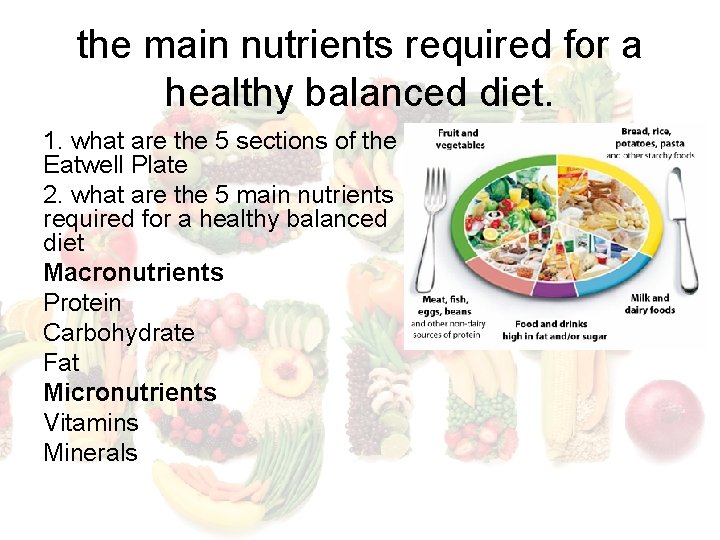
Task – what are the main nutrients required for a healthy balanced diet. In pairs discuss 1. what are the 5 sections of the Eatwell Plate 2. what are the 5 main nutrients required for a healthy balanced diet
the main nutrients required for a healthy balanced diet. 1. what are the 5 sections of the Eatwell Plate 2. what are the 5 main nutrients required for a healthy balanced diet Macronutrients Protein Carbohydrate Fat Micronutrients Vitamins Minerals
To identify the nutritional needs of a teenager. • Growth and development are rapid. • Onset of puberty - characterised by a spurt in physical growth (height and weight). • Considerable gain in muscle and bone mass. • Changes in body composition, e. g. increased deposition of fat in girls. • Energy and nutrient requirements at their highest.
A healthy diet is important for teenagers Eating a healthy, balanced diet can: • promote wellbeing by improving mood, energy and self-esteem to help reduce anxiety and stress; • boost concentration and performance; • reduce the risk of ill-health now and in the future, e. g. obesity, heart disease, cancer, and type 2 diabetes; • increase productivity/attainment and reduce days off sick.
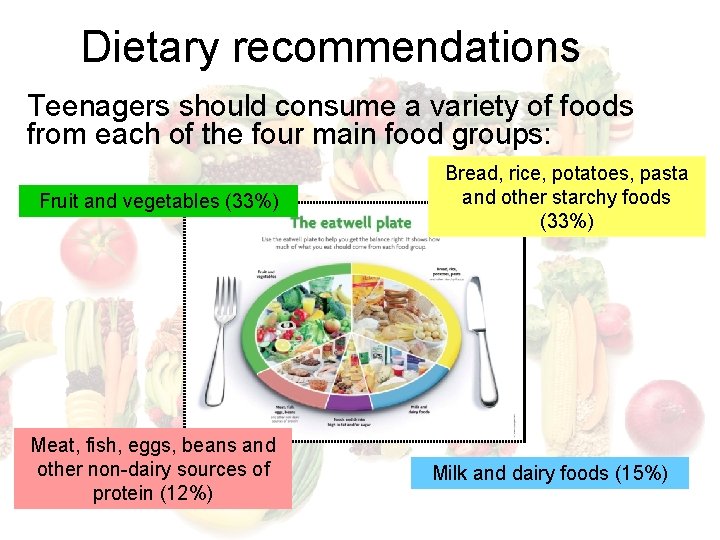
Dietary recommendations Teenagers should consume a variety of foods from each of the four main food groups: Fruit and vegetables (33%) Meat, fish, eggs, beans and other non-dairy sources of protein (12%) Bread, rice, potatoes, pasta and other starchy foods (33%) Milk and dairy foods (15%)
Teenagers and iron • Teenagers have increased iron requirements. • Girls need more iron than boys to replace menstrual losses (RNI: boys 11. 3 g/day, girls 14. 8 g/day). • Lack of iron leads to an increased risk of iron deficiency anaemia and associated health consequences. • Teenagers who follow a vegetarian diet or restrict food intake (e. g. to lose weight) particularly at risk.
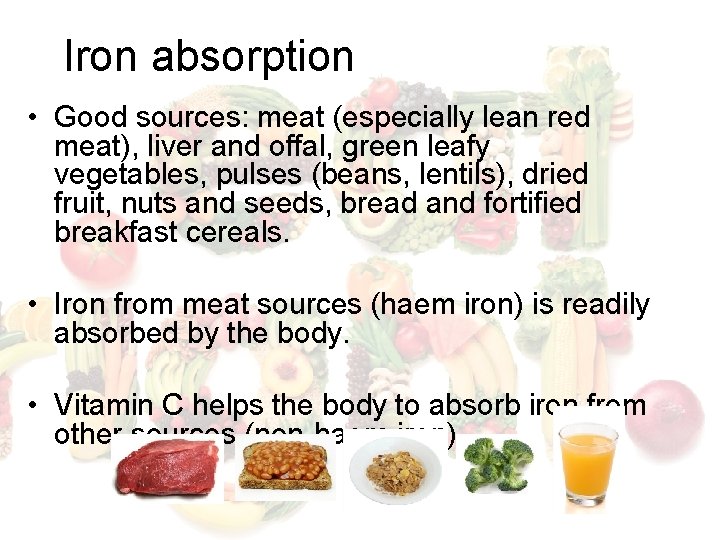
Iron absorption • Good sources: meat (especially lean red meat), liver and offal, green leafy vegetables, pulses (beans, lentils), dried fruit, nuts and seeds, bread and fortified breakfast cereals. • Iron from meat sources (haem iron) is readily absorbed by the body. • Vitamin C helps the body to absorb iron from other sources (non-haem iron).
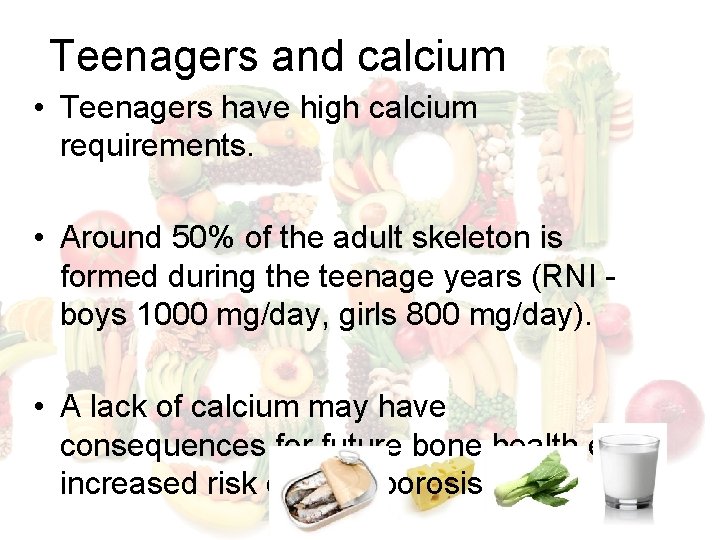
Teenagers and calcium • Teenagers have high calcium requirements. • Around 50% of the adult skeleton is formed during the teenage years (RNI boys 1000 mg/day, girls 800 mg/day). • A lack of calcium may have consequences for future bone health e. g. increased risk of osteoporosis.
Teenagers and energy balance • Levels of overweight and obesity are increasing • Teenagers, especially girls, often try to control their weight by adopting very low energy diets or smoking. • Restricted diets may lead to nutrient deficiencies and other health consequences. • Teenagers of unhealthy weight may need guidance on lifestyle changes to help them achieve a healthy weight.
Teenagers – physical activity • Physical activity through life is important for maintaining energy balance and overall health. • At least 60 mins of moderate-intensity physical activity each day is recommended. • Include activities that improve bone health, muscle strength and flexibility at least twice per week.
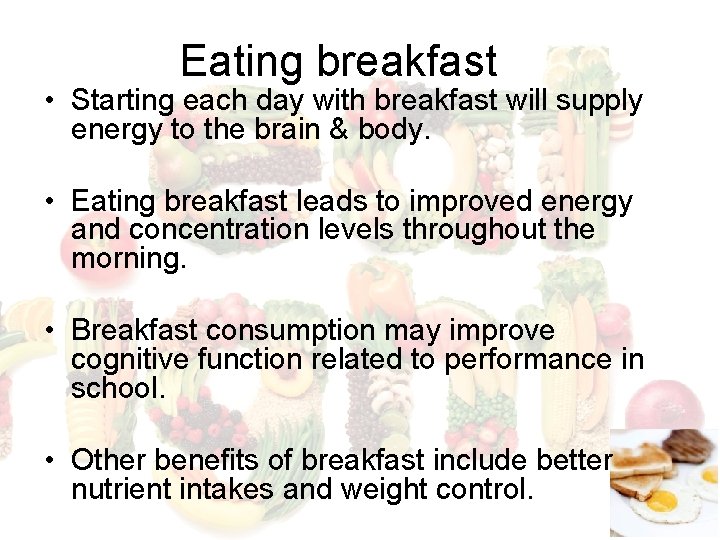
Eating breakfast • Starting each day with breakfast will supply energy to the brain & body. • Eating breakfast leads to improved energy and concentration levels throughout the morning. • Breakfast consumption may improve cognitive function related to performance in school. • Other benefits of breakfast include better nutrient intakes and weight control.
Fluids and hydration • Even mild dehydration (1 -2%) can lead to headaches, irritability and loss of concentration. This level is not enough to cause feelings of thirst. • The recommendation is to drink 6 -8 glasses/day (1. 2 litres) to prevent dehydration. People need to drink more when the weather is hot or when they have been active. • All drinks count in terms of fluid intake but those without sugar are best between meals.
Diet and IQ • Brain health depends on optimal intakes of nutrients from the diet. • Much speculation about the importance of long chain omega-3 fatty acids to behavioural and cognitive development, including IQ. • Supplementation studies show the best outcome observed in children with learning disabilities. Willatts P. (2002) Long chain polyunsaturated fatty acids improve cognitive development J Fam Health Care 12(6 suppl): 5. • Current recommendation is one portion of
Diet and mood/behaviour • There a number of foods that have a pharmacological effect in the body which affects mood: * caffeine; * vaso-active amines, such as histamine; * tryptophan and serotonin. • There is evidence to suggest that poor vitamin and mineral status may be associated with poor educational attainment and antisocial behaviour.
Food additives and hyperactivity • The Southampton study suggested that consumption of mixes of certain artificial food colours and the preservative sodium benzoate could be linked to increased hyperactivity in some children. The colours are: sunset yellow FCF (E 110) quinoline yellow (E 104) carmoisine (E 122) allura red (E 129) tartrazine (E 102) ponceau 4 R (E 124) Bateman B et al. 2007 • An EU-wide mandatory warning must be put on any food and drink (except drinks with more than 1. 2% alcohol) that contains any of
Teenagers - dietary improvements needed • More fruit and vegetables, pulses, wholegrain foods. • More milk and diary foods. • More iron-rich foods. • More oily fish. • Less foods high in saturated fat and added sugars. • Less salt.