
Year 9 Biology Sensitivity Year 9 Biology The
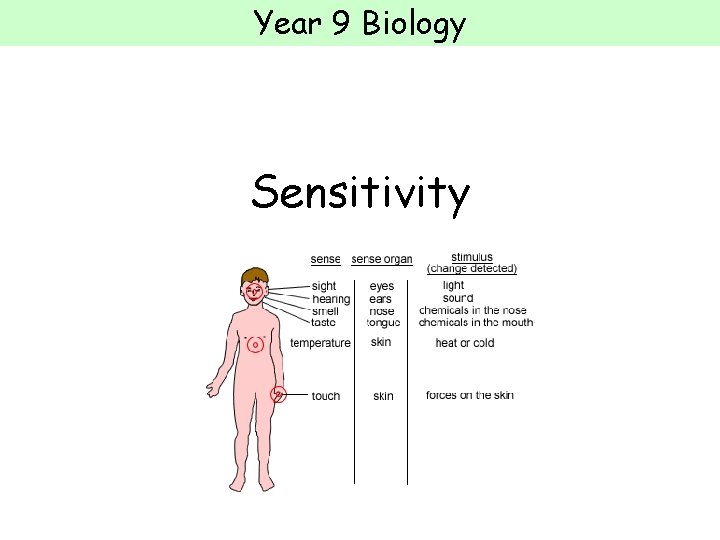
Year 9 Biology Sensitivity
Year 9 Biology The nervous system Main Function: This communication system controls and coordinates functions throughout the body and responds to internal and external stimuli. Our nervous system allows us to feel pain.
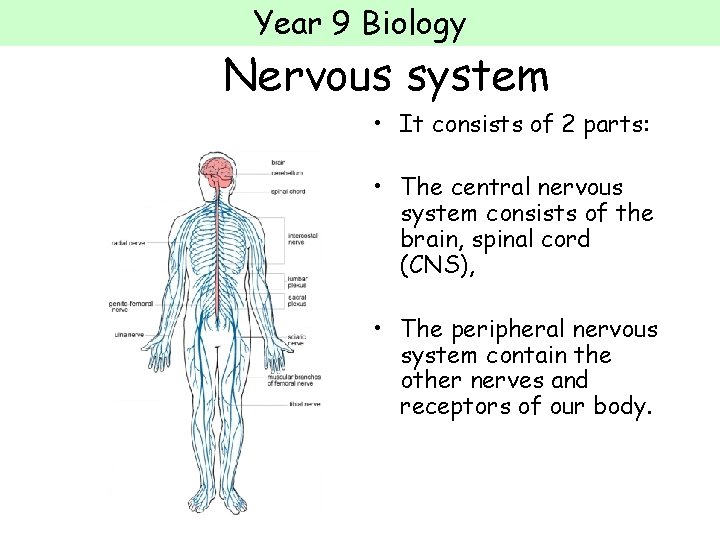
Year 9 Biology Nervous system • It consists of 2 parts: • The central nervous system consists of the brain, spinal cord (CNS), • The peripheral nervous system contain the other nerves and receptors of our body.
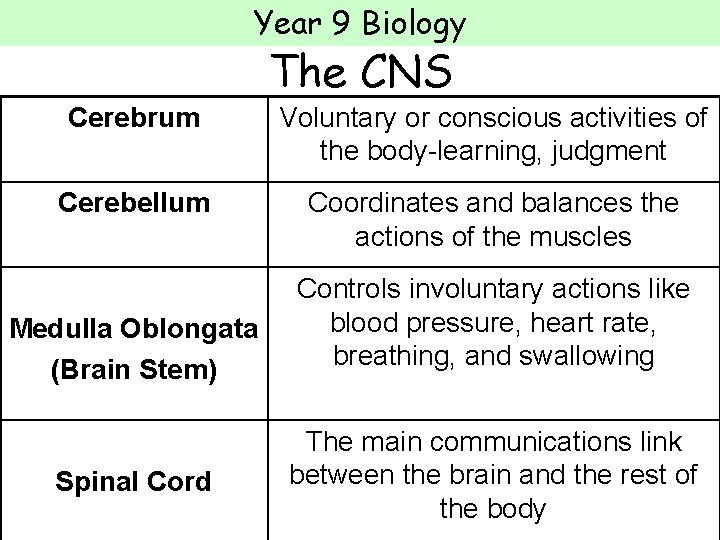
Year 9 Biology The CNS Cerebrum Voluntary or conscious activities of the body-learning, judgment Cerebellum Coordinates and balances the actions of the muscles Medulla Oblongata (Brain Stem) Spinal Cord Controls involuntary actions like blood pressure, heart rate, breathing, and swallowing The main communications link between the brain and the rest of the body
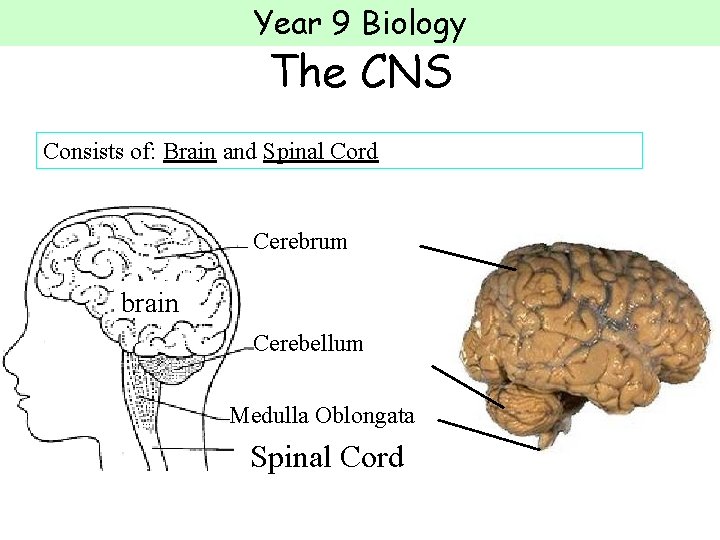
Year 9 Biology The CNS Consists of: Brain and Spinal Cord Cerebrum brain Cerebellum Medulla Oblongata Spinal Cord
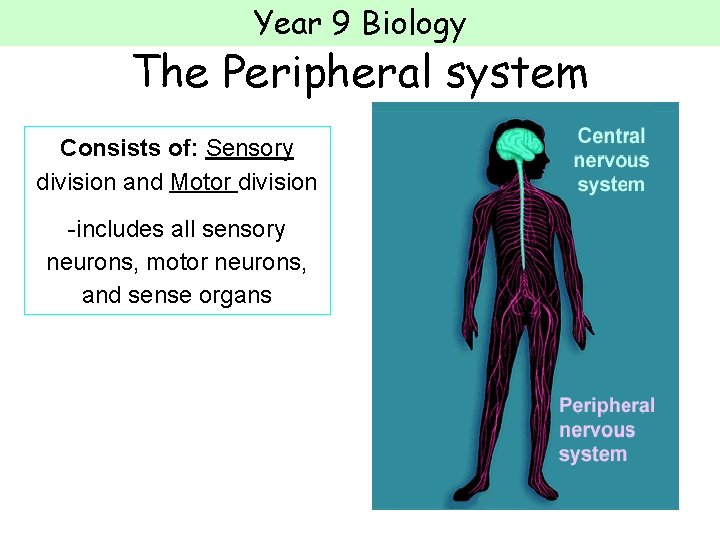
Year 9 Biology The Peripheral system Consists of: Sensory division and Motor division -includes all sensory neurons, motor neurons, and sense organs
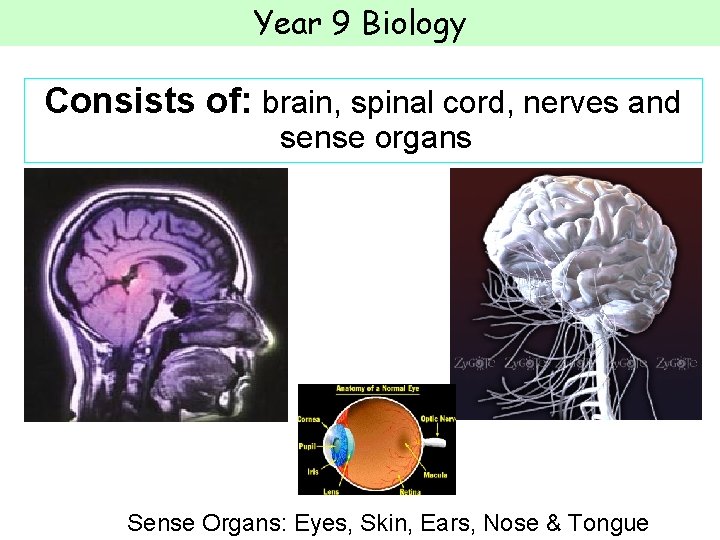
Year 9 Biology Consists of: brain, spinal cord, nerves and sense organs Sense Organs: Eyes, Skin, Ears, Nose & Tongue
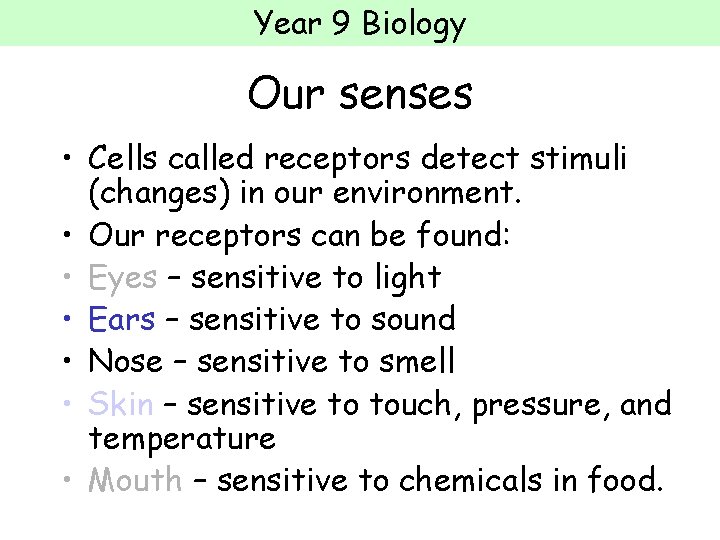
Year 9 Biology Our senses • Cells called receptors detect stimuli (changes) in our environment. • Our receptors can be found: • Eyes – sensitive to light • Ears – sensitive to sound • Nose – sensitive to smell • Skin – sensitive to touch, pressure, and temperature • Mouth – sensitive to chemicals in food.
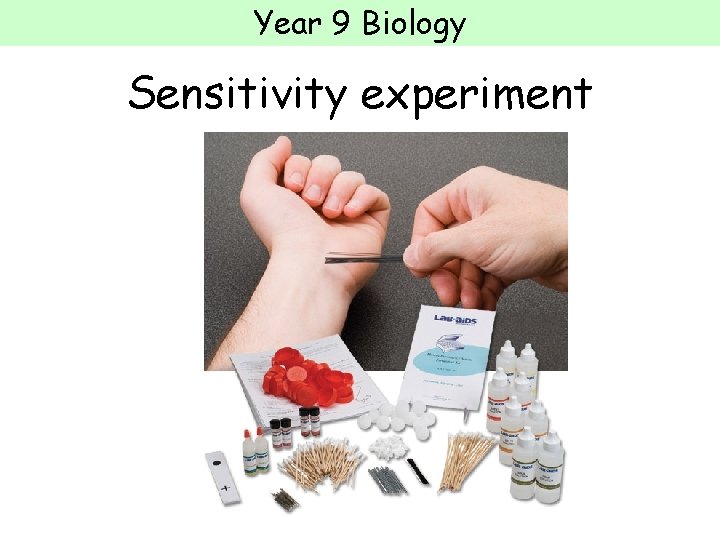
Year 9 Biology Sensitivity experiment
- Slides: 9