
Year 7 White Adaptations What does adaptation mean

- Slides: 19
Year 7 White Adaptations.
What does adaptation mean? A change in structure, function, or behaviour by which a species or individual improves its chance of survival in a specific environment. http: //www. youtube. com/watch? v=s. JH-01 WLEg 0
How does adaptation help organisms? • Well adapted organisms are better at coping with extremes of weather • They are better at competing for food • They are better at escaping from predators • They are more likely to survive in their habitat and produce offspring
It is always a struggle for plants and animals to survive ANIMALS STRUGGLE : • • • For food For water For protection against weather Against being eaten by predators Against disease Against accidents PLANTS STRUGGLE: • • • For water For light For minerals in the soil Against weather Against disease Against being eaten
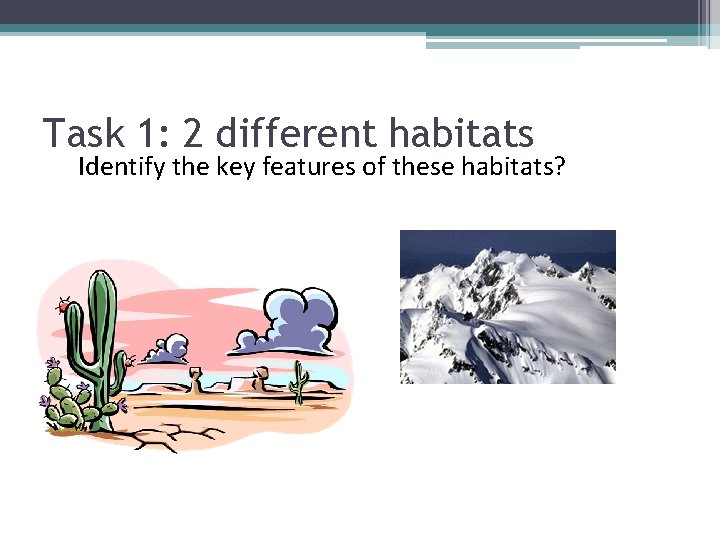
Task 1: 2 different habitats Identify the key features of these habitats?
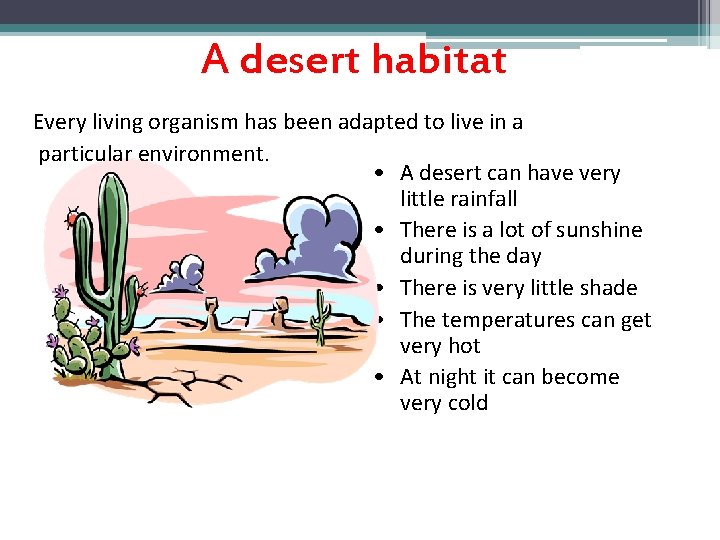
A desert habitat Every living organism has been adapted to live in a particular environment. • A desert can have very little rainfall • There is a lot of sunshine during the day • There is very little shade • The temperatures can get very hot • At night it can become very cold
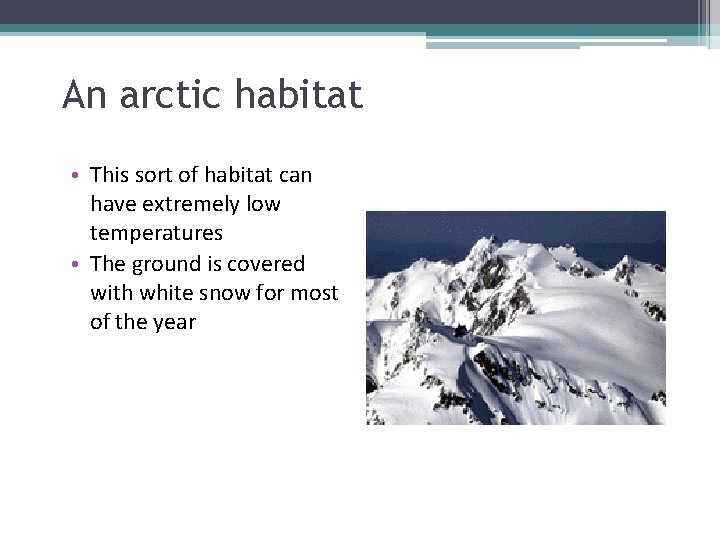
An arctic habitat • This sort of habitat can have extremely low temperatures • The ground is covered with white snow for most of the year
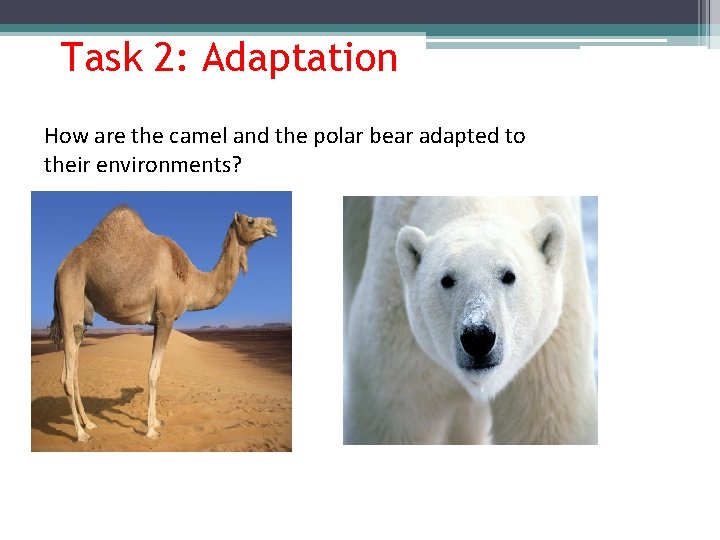
Task 2: Adaptation How are the camel and the polar bear adapted to their environments?
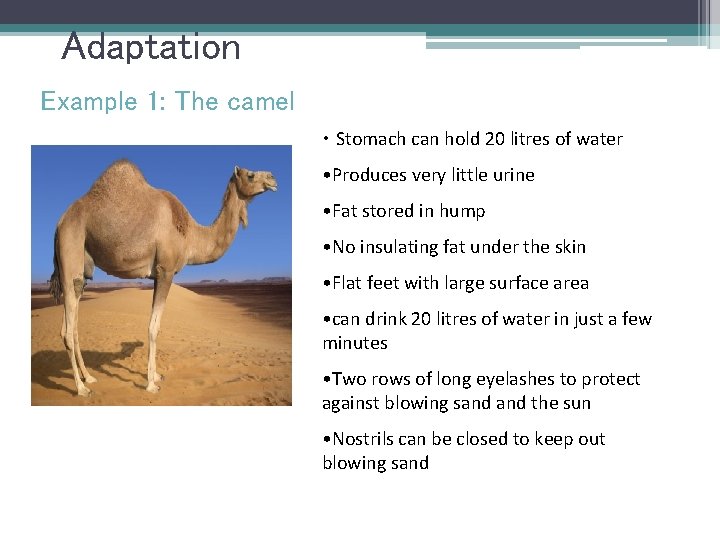
Adaptation Example 1: The camel • Stomach can hold 20 litres of water • Produces very little urine • Fat stored in hump • No insulating fat under the skin • Flat feet with large surface area GCSE Science Chapter 1 • can drink 20 litres of water in just a few minutes • Two rows of long eyelashes to protect against blowing sand the sun • Nostrils can be closed to keep out blowing sand
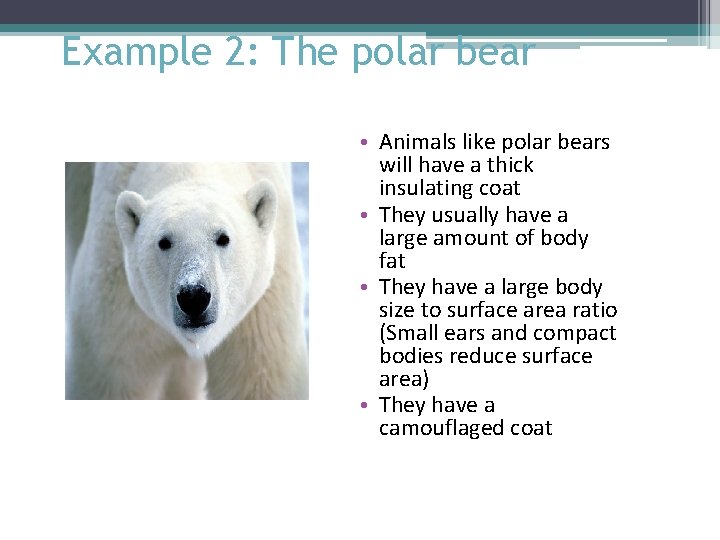
Example 2: The polar bear • Animals like polar bears will have a thick insulating coat • They usually have a large amount of body fat • They have a large body size to surface area ratio (Small ears and compact bodies reduce surface area) • They have a camouflaged coat
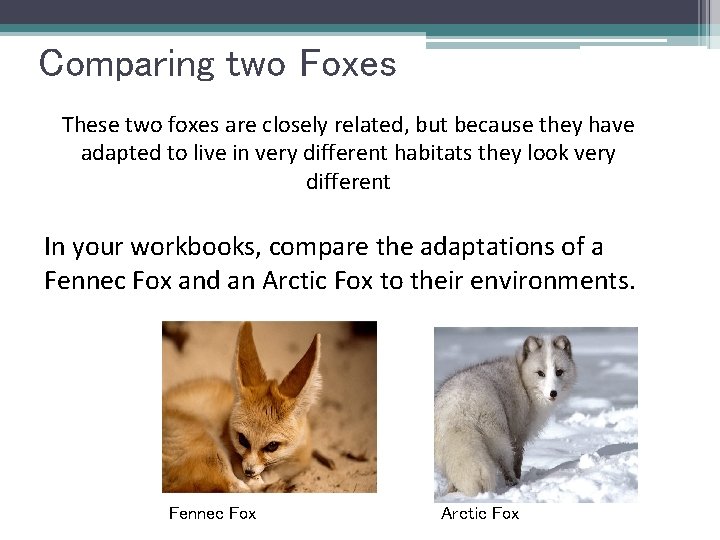
Comparing two Foxes These two foxes are closely related, but because they have adapted to live in very different habitats they look very different GCSE Science In your workbooks, compare the adaptations of a Fennec Fox and an Arctic Fox to their environments. Fennec Fox Arctic Fox
Answer The Fennec Fox is smaller than the arctic fox, giving it a larger surface area to volume ratio which increases rate of heat loss Its longer ears also increase surface area to volume ratio; it has less fat beneath its skin so heat can be lost more easily.
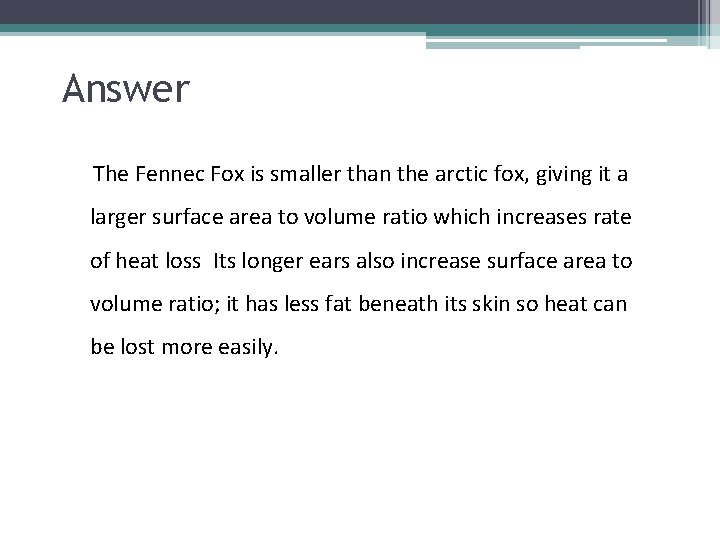
Booklets. • What adaptations does an Elephant have?
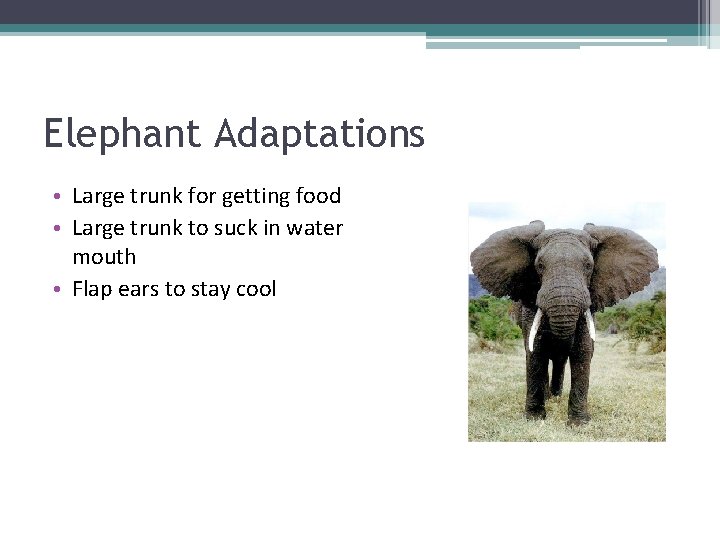
Elephant Adaptations • Large trunk for getting food • Large trunk to suck in water mouth • Flap ears to stay cool and squirt into
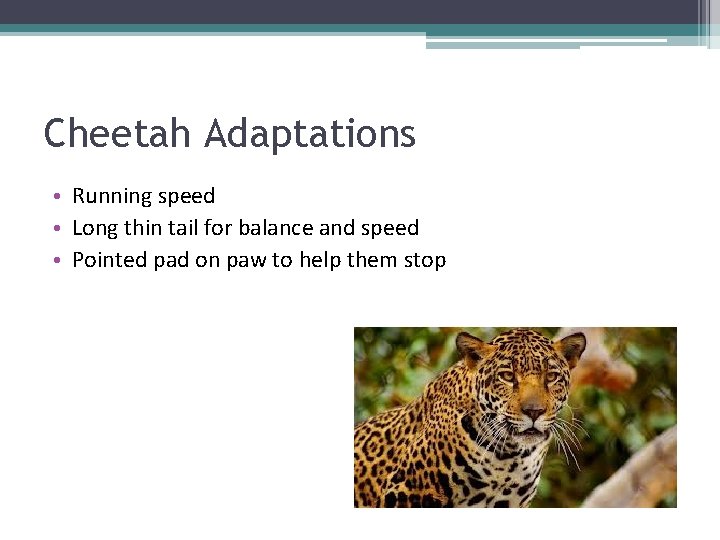
Cheetah Adaptations • Running speed • Long thin tail for balance and speed • Pointed pad on paw to help them stop
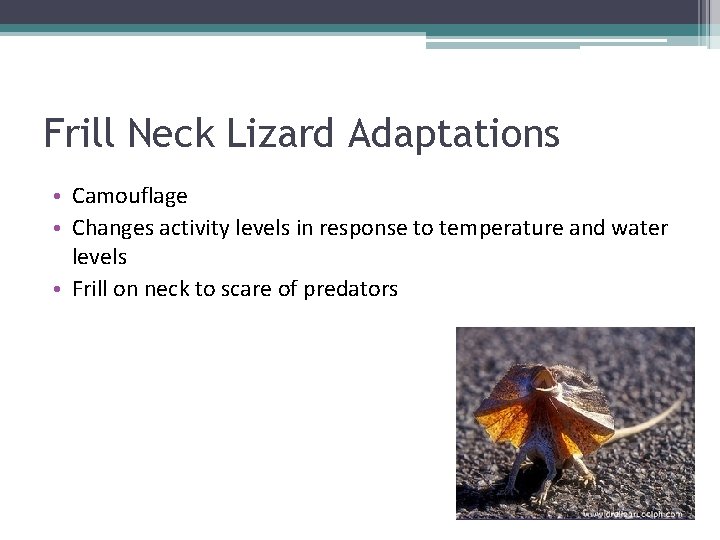
Frill Neck Lizard Adaptations • Camouflage • Changes activity levels in response to temperature and water levels • Frill on neck to scare of predators
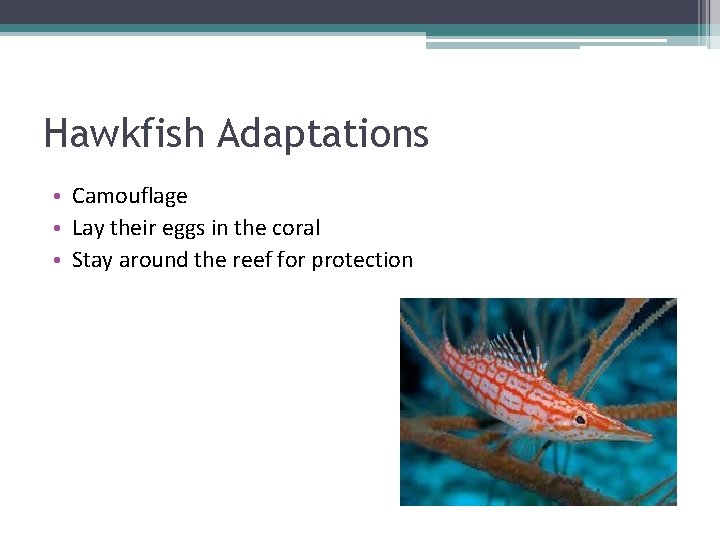
Hawkfish Adaptations • Camouflage • Lay their eggs in the coral • Stay around the reef for protection
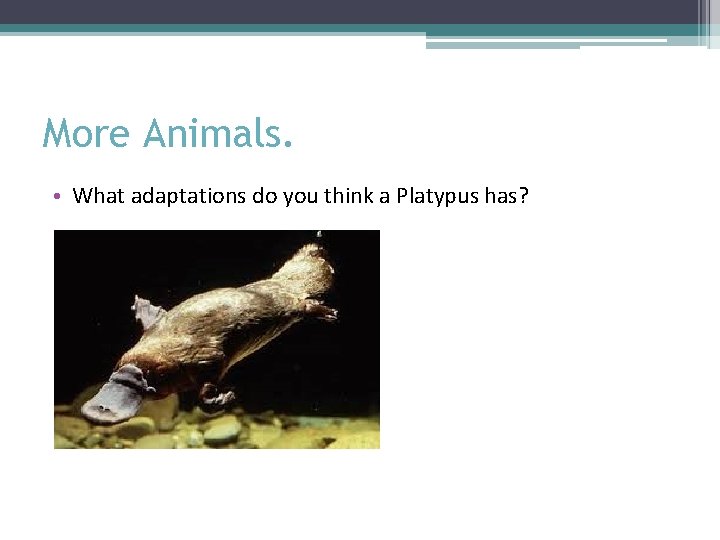
More Animals. • What adaptations do you think a Platypus has?
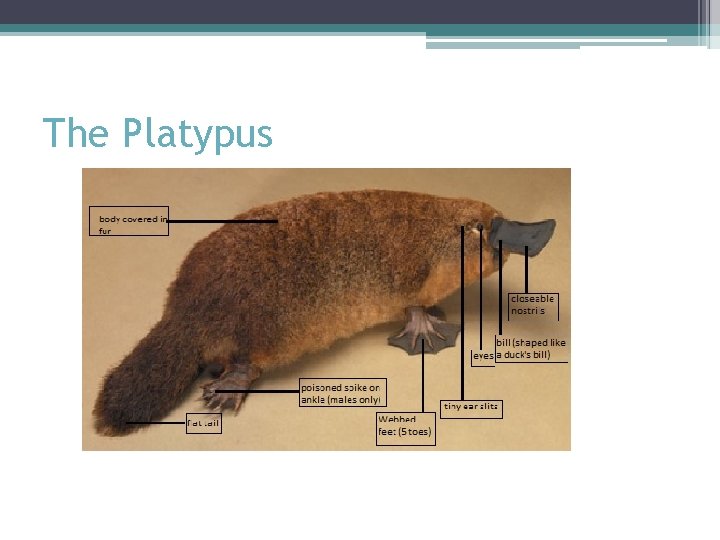
The Platypus