
Year 7 Product Design GCSE Design Technology W
- Slides: 12
Year 7 Product Design GCSE Design & Technology W hat o Learn about Thermosetting & thermoforming plastics (Polymers) W hy o You will be tested on this topic W here o It is important to be aware of what plastics are and how/ where they are used Believe Achieve Approach the task positively Try to exceed my target! Succeed Enjoy Use the Have fun, knowledge you have learnt in enjoy learning previous lessons Support Work independently and support each other
Year 7 Product Design GCSE Design & Technology Key words Plastics, Thermo forming, Thermo setting, Polypropylene, Polymers
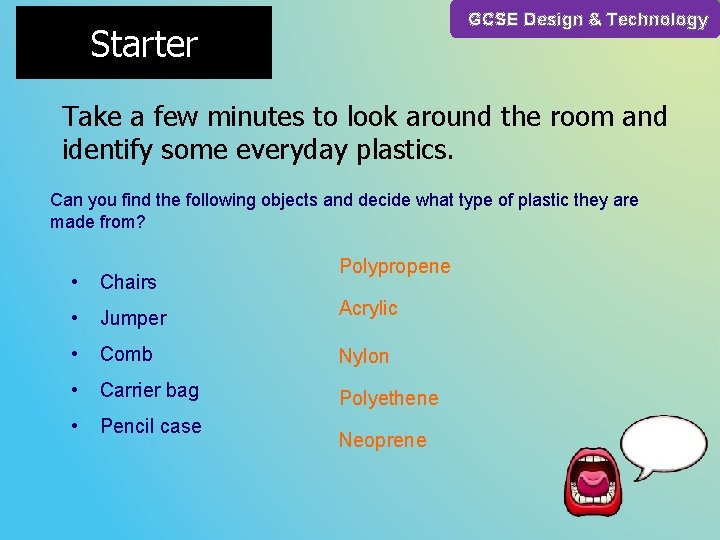
Year 7 Product Design GCSE Design & Technology Starter Take a few minutes to look around the room and identify some everyday plastics. Can you find the following objects and decide what type of plastic they are made from? Polypropene • Chairs • Jumper • Comb Nylon • Carrier bag Polyethene • Pencil case Acrylic Neoprene
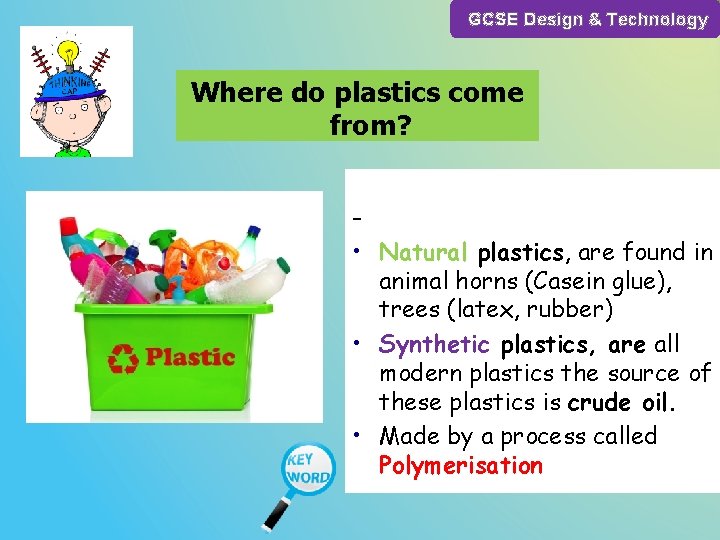
Year 7 Product Design GCSE Design & Technology Where do plastics come from? • Natural plastics, are found in animal horns (Casein glue), trees (latex, rubber) • Synthetic plastics, are all modern plastics the source of these plastics is crude oil. • Made by a process called Polymerisation
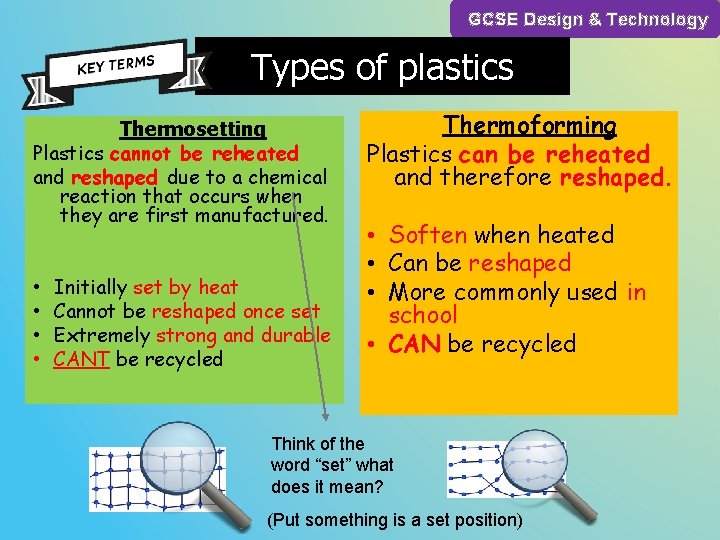
Year 7 Product Design GCSE Design & Technology Types of plastics Thermosetting Plastics cannot be reheated and reshaped due to a chemical reaction that occurs when they are first manufactured. • • Initially set by heat Cannot be reshaped once set Extremely strong and durable CANT be recycled Thermoforming Plastics can be reheated and therefore reshaped. • Soften when heated • Can be reshaped • More commonly used in school • CAN be recycled Think of the word “set” what does it mean? (Put something is a set position)
Year 7 Product Design GCSE Design & Technology Thermosetting and thermoforming Click here
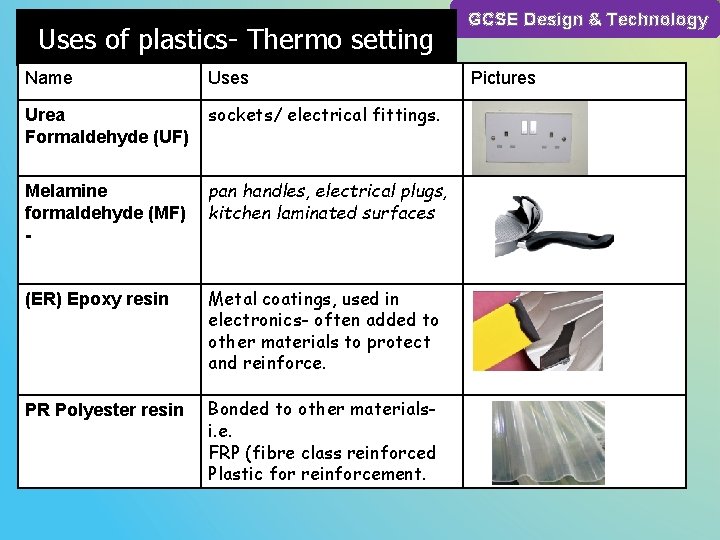
Uses of plastics- Thermo setting Name Uses Urea Formaldehyde (UF) sockets/ electrical fittings. Melamine formaldehyde (MF) - pan handles, electrical plugs, kitchen laminated surfaces (ER) Epoxy resin Metal coatings, used in electronics- often added to other materials to protect and reinforce. PR Polyester resin Bonded to other materialsi. e. FRP (fibre class reinforced Plastic for reinforcement. Year 7 Product Design GCSE Design & Technology Pictures
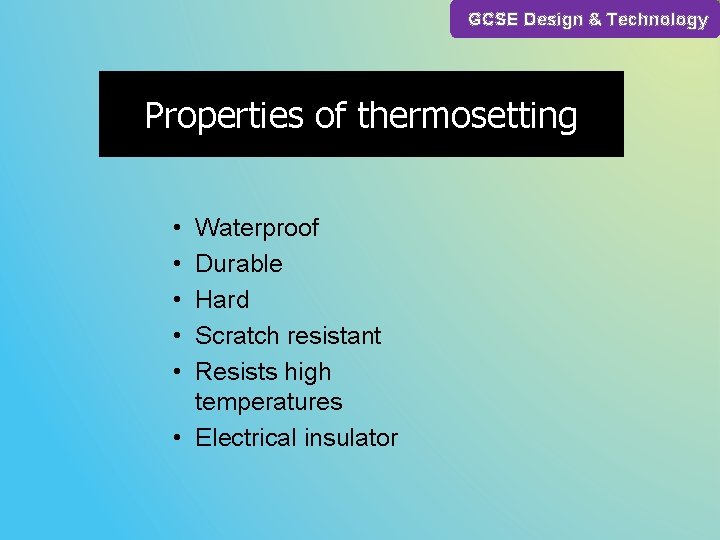
Year 7 Product Design GCSE Design & Technology Properties of thermosetting • • • Waterproof Durable Hard Scratch resistant Resists high temperatures • Electrical insulator
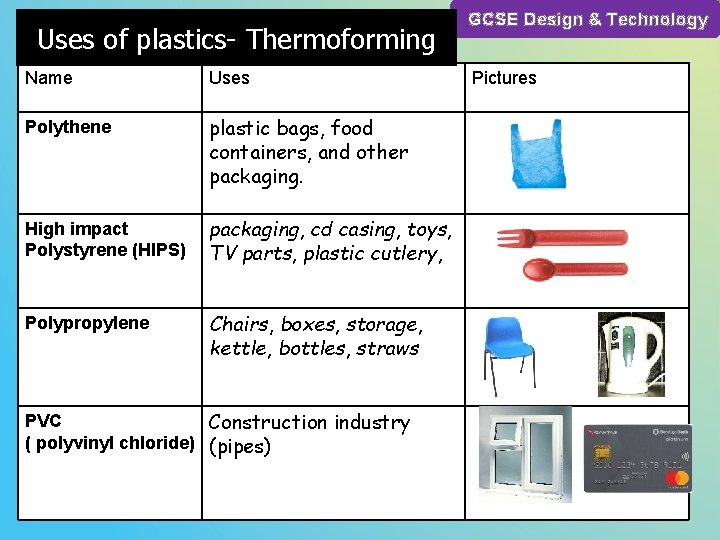
Uses of plastics- Thermoforming Name Uses Polythene plastic bags, food containers, and other packaging. High impact Polystyrene (HIPS) packaging, cd casing, toys, TV parts, plastic cutlery, Polypropylene Chairs, boxes, storage, kettle, bottles, straws PVC Construction industry ( polyvinyl chloride) (pipes) Year 7 Product Design GCSE Design & Technology Pictures
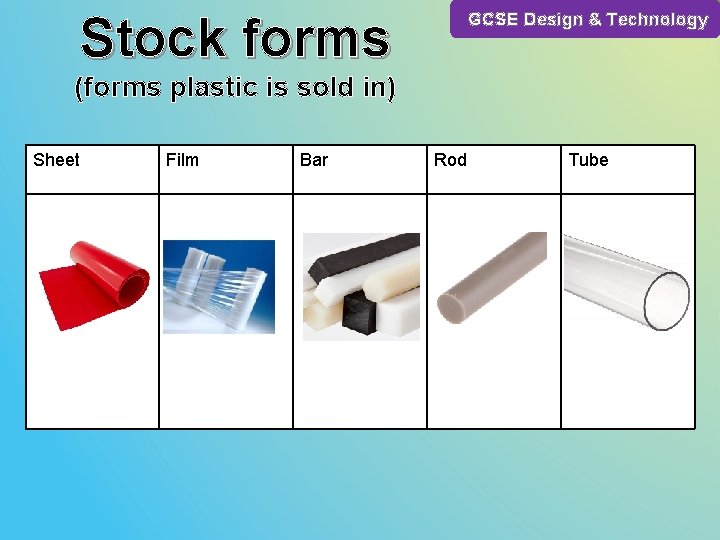
Year 7 Product Design GCSE Design & Technology Stock forms (forms plastic is sold in) Sheet Film Bar Rod Tube
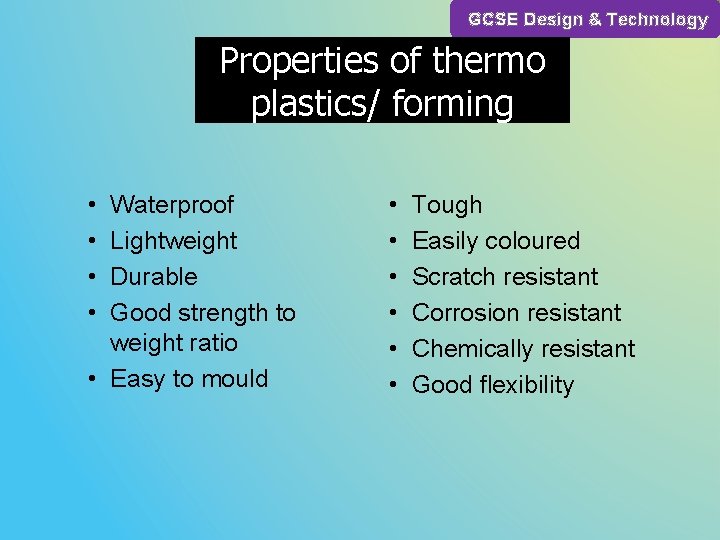
Year 7 Product Design GCSE Design & Technology Properties of thermo plastics/ forming • • Waterproof Lightweight Durable Good strength to weight ratio • Easy to mould • • • Tough Easily coloured Scratch resistant Corrosion resistant Chemically resistant Good flexibility
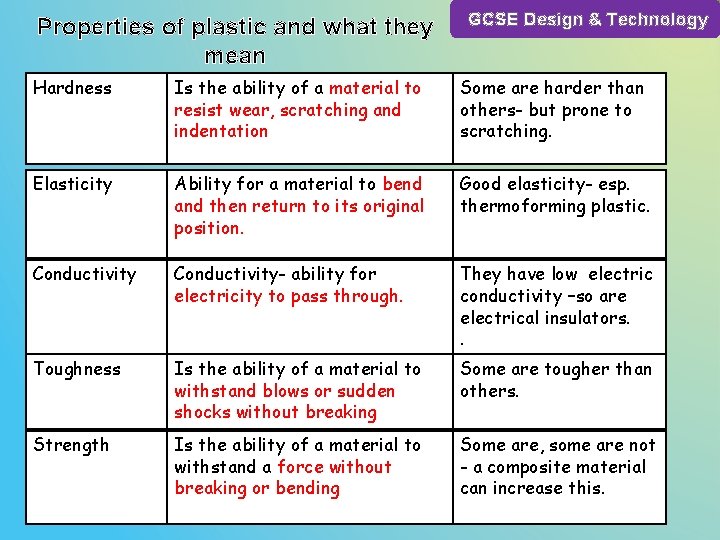
Properties of plastic and what they mean Year 7 Product Design GCSE Design & Technology Hardness Is the ability of a material to resist wear, scratching and indentation Some are harder than others- but prone to scratching. Elasticity Ability for a material to bend and then return to its original position. Good elasticity- esp. thermoforming plastic. Conductivity- ability for electricity to pass through. They have low electric conductivity –so are electrical insulators. . Toughness Is the ability of a material to withstand blows or sudden shocks without breaking Some are tougher than others. Strength Is the ability of a material to withstand a force without breaking or bending Some are, some are not - a composite material can increase this.