
Year 7 Induction Diagram Name Measuring Cylinder Test
- Slides: 1
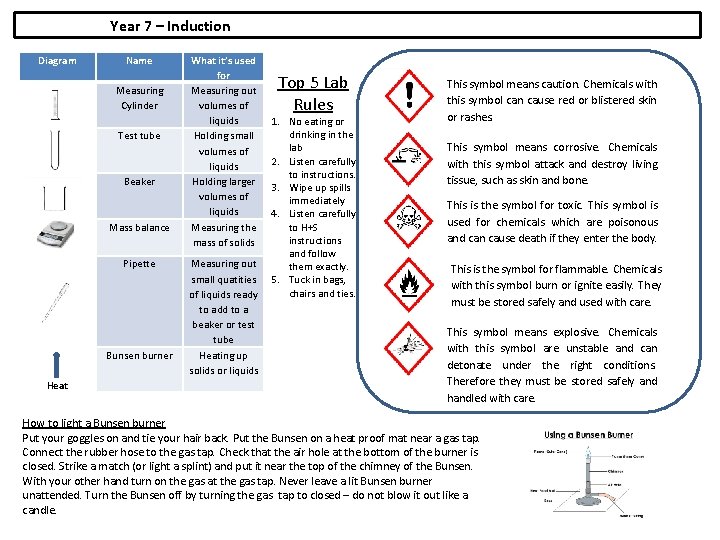
Year 7 – Induction Diagram Name Measuring Cylinder Test tube Beaker Mass balance Pipette Bunsen burner Heat What it’s used for Measuring out volumes of liquids Holding small volumes of liquids Holding larger volumes of liquids Measuring the mass of solids Measuring out small quatities of liquids ready to add to a beaker or test tube Heating up solids or liquids Top 5 Lab Rules 1. No eating or drinking in the lab 2. Listen carefully to instructions. 3. Wipe up spills immediately 4. Listen carefully to H+S instructions and follow them exactly. 5. Tuck in bags, chairs and ties. This symbol means caution. Chemicals with this symbol can cause red or blistered skin or rashes. This symbol means corrosive. Chemicals with this symbol attack and destroy living tissue, such as skin and bone. This is the symbol for toxic. This symbol is used for chemicals which are poisonous and can cause death if they enter the body. This is the symbol for flammable. Chemicals with this symbol burn or ignite easily. They must be stored safely and used with care. This symbol means explosive. Chemicals with this symbol are unstable and can detonate under the right conditions. Therefore they must be stored safely and handled with care. How to light a Bunsen burner Put your goggles on and tie your hair back. Put the Bunsen on a heat proof mat near a gas tap. Connect the rubber hose to the gas tap. Check that the air hole at the bottom of the burner is closed. Strike a match (or light a splint) and put it near the top of the chimney of the Bunsen. With your other hand turn on the gas at the gas tap. Never leave a lit Bunsen burner unattended. Turn the Bunsen off by turning the gas tap to closed – do not blow it out like a candle.