
Year 7 Food Knowledge Organiser Principals of Nutrition
- Slides: 1
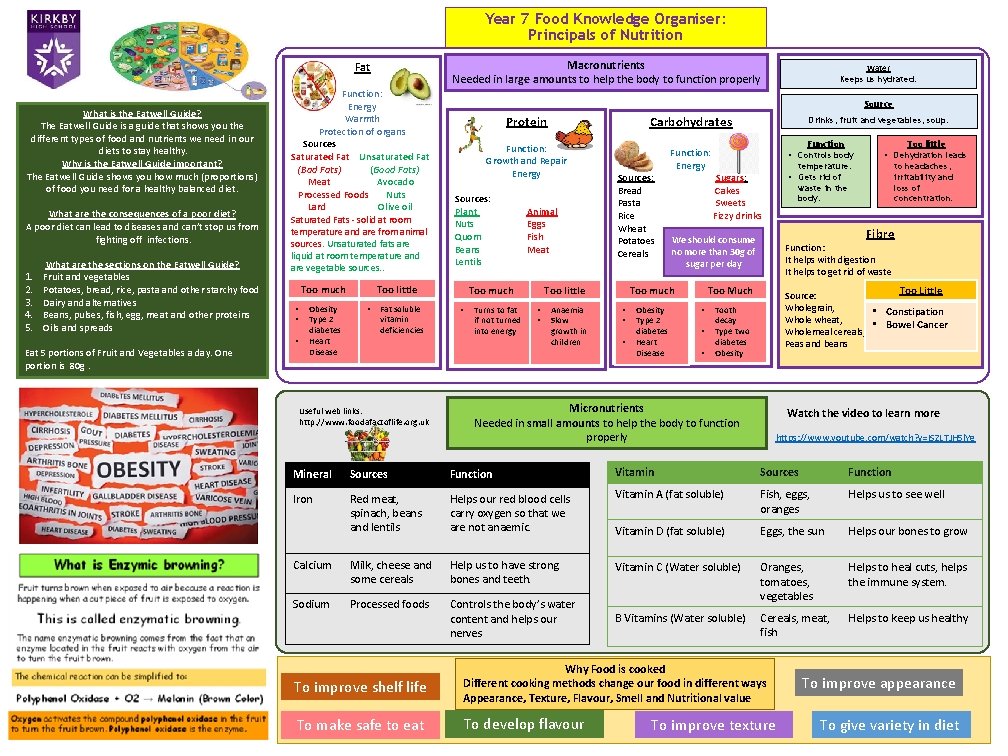
Year 7 Food Knowledge Organiser: Principals of Nutrition Macronutrients Needed in large amounts to help the body to function properly Fat What is the Eatwell Guide? The Eatwell Guide is a guide that shows you the different types of food and nutrients we need in our diets to stay healthy. Why is the Eatwell Guide important? The Eatwell Guide shows you how much (proportions) of food you need for a healthy balanced diet. What are the consequences of a poor diet? A poor diet can lead to diseases and can’t stop us from fighting off infections. 1. 2. 3. 4. 5. What are the sections on the Eatwell Guide? Fruit and vegetables Potatoes, bread, rice, pasta and other starchy food Dairy and alternatives Beans, pulses, fish, egg, meat and other proteins Oils and spreads Function: Energy Warmth Protection of organs Sources Saturated Fat Unsaturated Fat (Bad Fats) (Good Fats) Meat Avocado Processed Foods Nuts Lard Olive oil Saturated Fats - solid at room temperature and are from animal sources. Unsaturated fats are liquid at room temperature and are vegetable sources. . Too much • • • Eat 5 portions of Fruit and Vegetables a day. One portion is 80 g. Obesity Type 2 diabetes Heart Disease Source Fat soluble vitamin deficiencies Useful web links: http: //www. foodafactoflife. org. uk Protein Carbohydrates Function: Growth and Repair Energy Function: Energy Sources: Plant Nuts Quorn Beans Lentils Too little • Water Keeps us hydrated. Animal Eggs Fish Meat Too much • Turns to fat if not turned into energy Sources: Bread Pasta Rice Wheat Potatoes Cereals Too little • • Anaemia Slow growth in children • Obesity Type 2 diabetes Heart Disease Function • • • Dehydration leads temperature. Sugars: Cakes Sweets Fizzy drinks to headaches, irritability and loss of concentration. • Gets rid of waste in the body. Fibre Function: It helps with digestion It helps to get rid of waste Too Much • Too little • Controls body We should consume no more than 30 g of sugar per day Too much • • Drinks, fruit and vegetables, soup. Too Little Source: Wholegrain, • Constipation Whole wheat, • Bowel Cancer Wholemeal cereals, Peas and beans Tooth decay Type two diabetes Obesity Micronutrients Needed in small amounts to help the body to function properly Watch the video to learn more https: //www. youtube. com/watch? v=ISZLTJH 5 l. Yg Mineral Sources Function Vitamin Sources Function Iron Red meat, spinach, beans and lentils Helps our red blood cells carry oxygen so that we are not anaemic. Vitamin A (fat soluble) Fish, eggs, oranges Helps us to see well Vitamin D (fat soluble) Eggs, the sun Helps our bones to grow Calcium Milk, cheese and some cereals Help us to have strong bones and teeth. Vitamin C (Water soluble) Helps to heal cuts, helps the immune system. Sodium Processed foods Controls the body’s water content and helps our nerves Oranges, tomatoes, vegetables B Vitamins (Water soluble) Cereals, meat, fish Helps to keep us healthy To improve shelf life Why Food is cooked Different cooking methods change our food in different ways Appearance, Texture, Flavour, Smell and Nutritional value To make safe to eat To develop flavour To improve texture To improve appearance To give variety in diet