
Year 6 WALT Can construct and interpret line


- Slides: 23
Year 6 WALT: Can construct and interpret line graphs 23/04/2020 Commissioned by The Pi. XL Club Ltd. September 2018 This resource is strictly for the use of member schools for as long as they remain members of The Pi. XL Club. It may not be copied, sold nor transferred to a third party or used by the school after membership ceases. Until such time it may be freely used within the member school. All opinions and contributions are those of the authors. The contents of this resource are not connected with nor endorsed by any other company, organisation or institution. Pi. XL Club Ltd endeavour to trace and contact copyright owners. If there any inadvertent omissions or errors in the acknowledgements or usage, this is unintended and Pi. XL will remedy these on written notification. © Copyright The Pi. XL Club Limited, 2018
Vocabulary: Line graphs axes vertical horizontal data
Can construct and interpret line graphs What is a line graph? When we organise data into line graphs it allows us to analyse the data more effectively and answer questions about the data. A line graph is a graph that uses points connected by lines to show something changes in value (for example, what happens as time goes by). In this way, you could say that line graphs tell ‘stories’. https: //www. mathsisfun. com/data/line-graphs. html
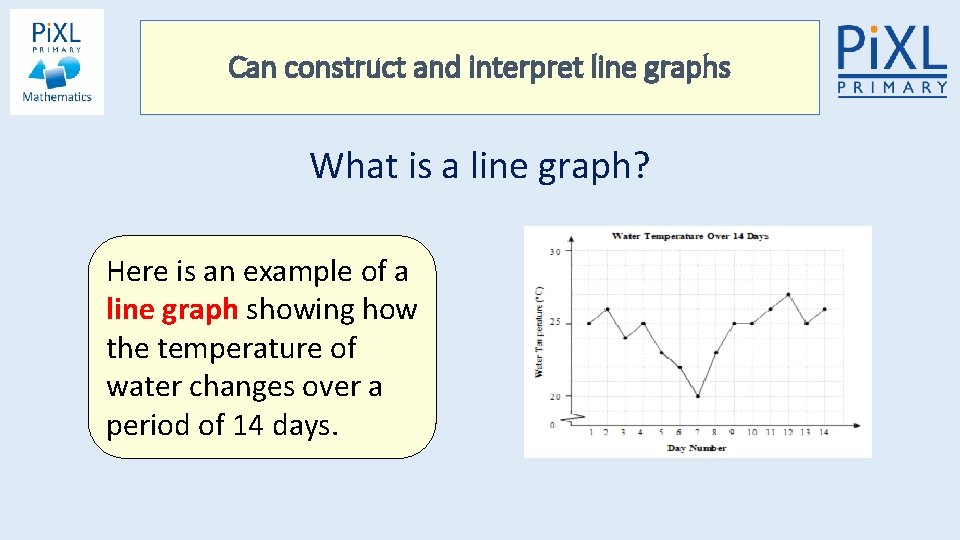
Can construct and interpret line graphs What is a line graph? Here is an example of a line graph showing how the temperature of water changes over a period of 14 days.
Can construct and interpret line graphs It is important to understand how to construct a line graph. Let’s look at an example…
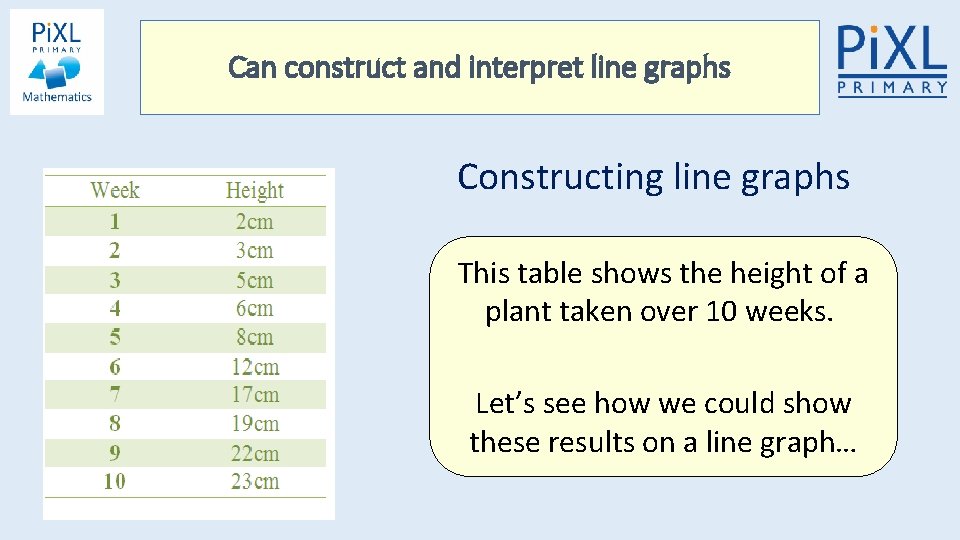
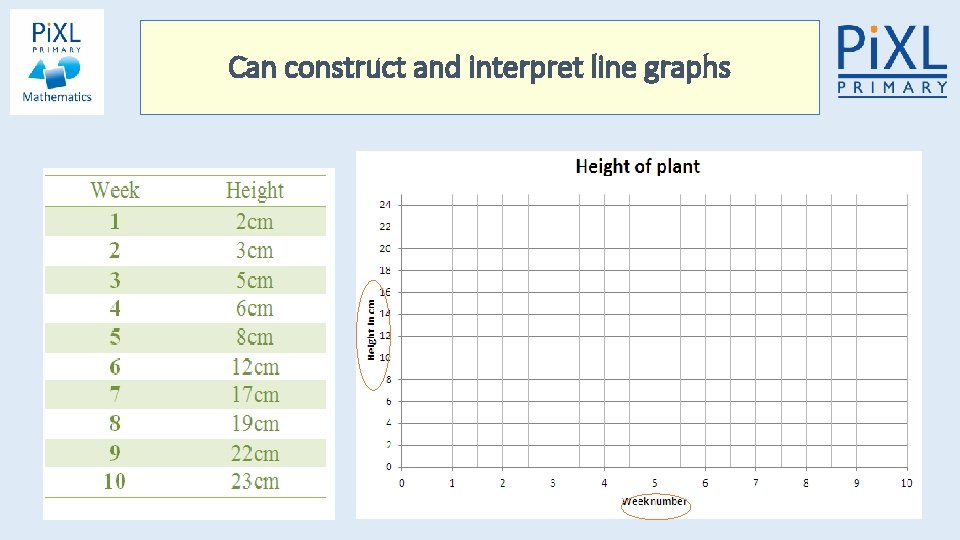
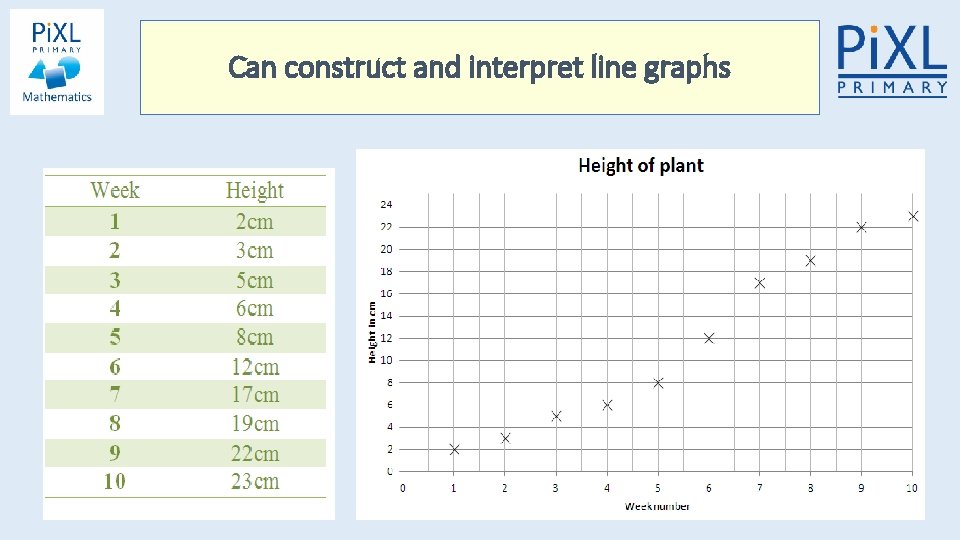
Can construct and interpret line graphs Constructing line graphs This table shows the height of a plant taken over 10 weeks. Let’s see how we could show these results on a line graph…
Can construct and interpret line graphs
Can construct and interpret line graphs
Can construct and interpret line graphs
Can construct and interpret line graphs It is also important to be able to interpret line graphs and answer questions about the data the graphs show. Let’s look at some examples…
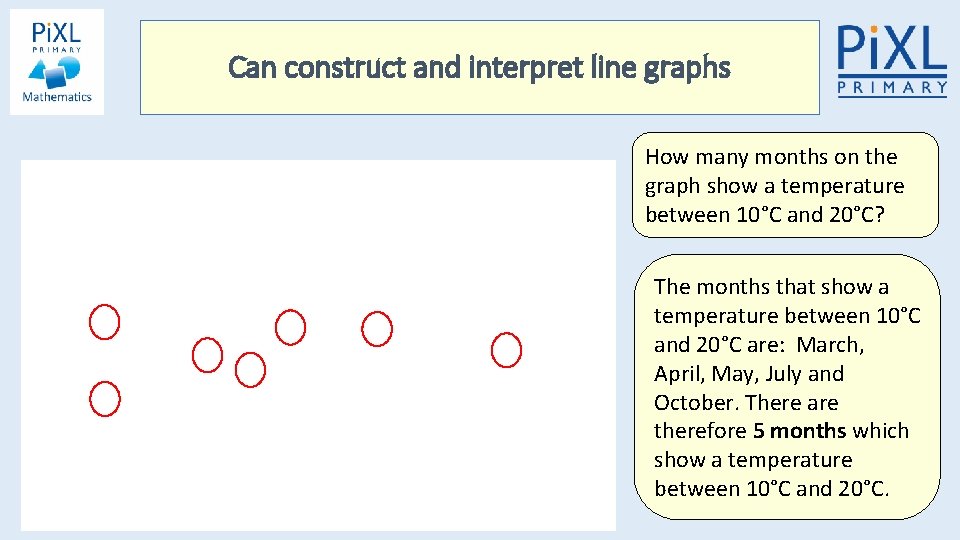
Can construct and interpret line graphs How many months on the graph show a temperature between 10°C and 20°C? The months that show a temperature between 10°C and 20°C are: March, April, May, July and October. There are therefore 5 months which show a temperature between 10°C and 20°C.
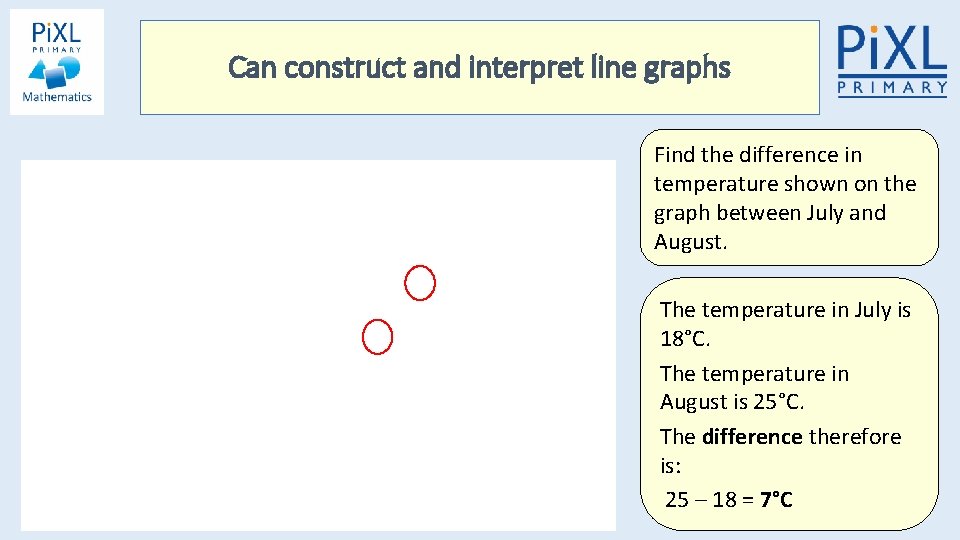
Can construct and interpret line graphs Find the difference in temperature shown on the graph between July and August. The temperature in July is 18°C. The temperature in August is 25°C. The difference therefore is: 25 – 18 = 7°C
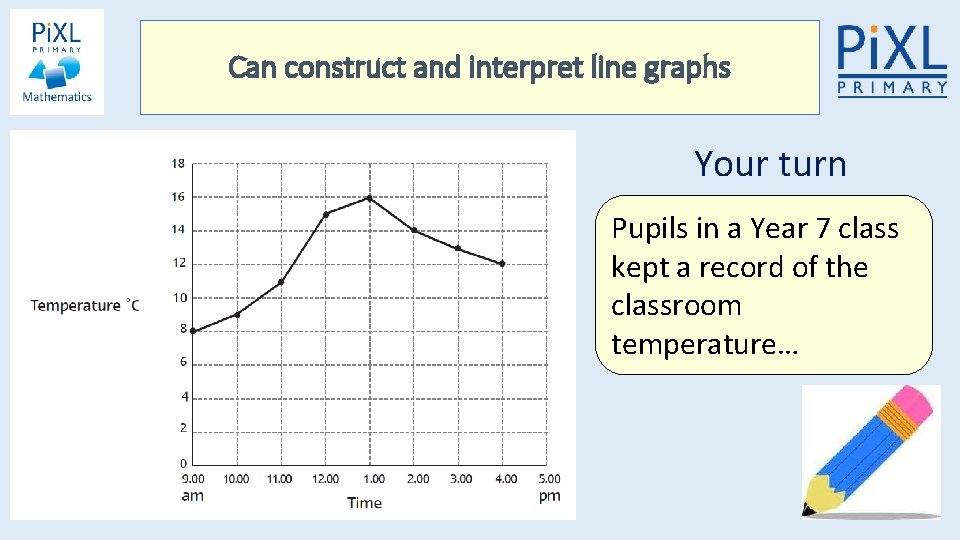
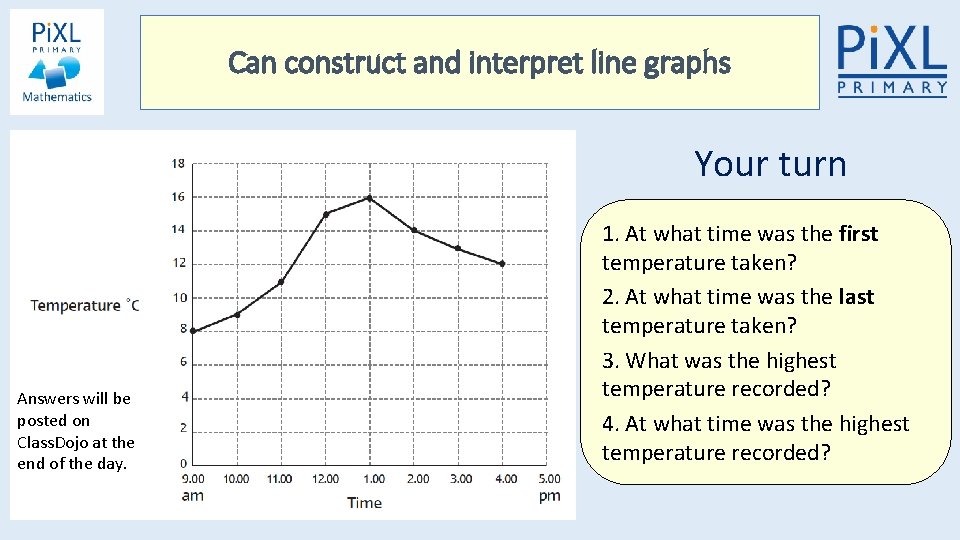
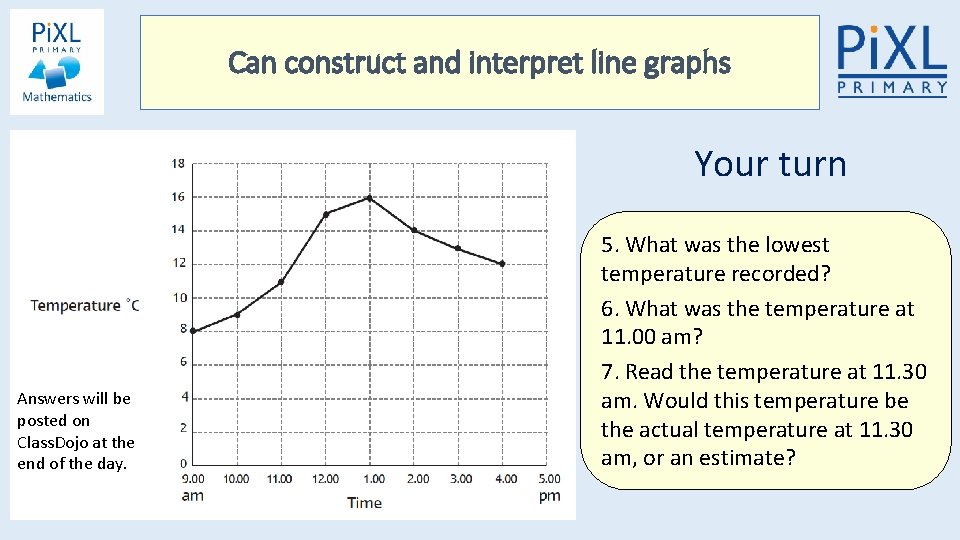
Can construct and interpret line graphs Your turn Pupils in a Year 7 class kept a record of the classroom temperature…
Can construct and interpret line graphs Your turn Answers will be posted on Class. Dojo at the end of the day. 1. At what time was the first temperature taken? 2. At what time was the last temperature taken? 3. What was the highest temperature recorded? 4. At what time was the highest temperature recorded?
Can construct and interpret line graphs Your turn Answers will be posted on Class. Dojo at the end of the day. 5. What was the lowest temperature recorded? 6. What was the temperature at 11. 00 am? 7. Read the temperature at 11. 30 am. Would this temperature be the actual temperature at 11. 30 am, or an estimate?
Can construct and interpret line graphs Let’s look at another line graph – this one is slightly more complex!
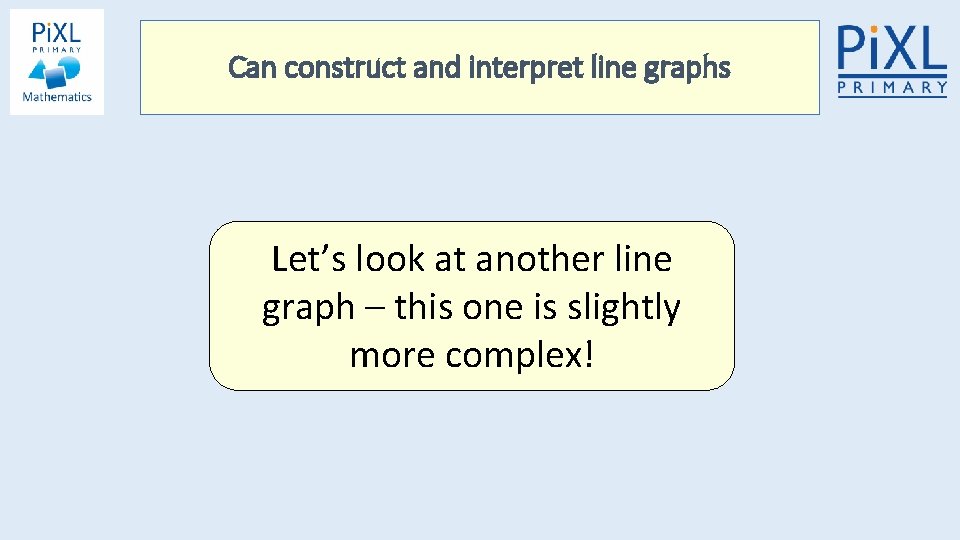
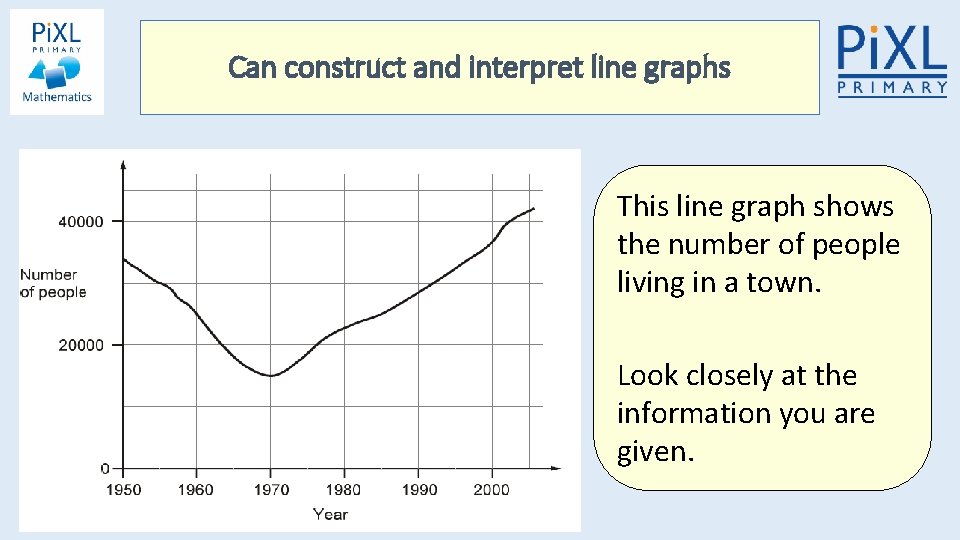
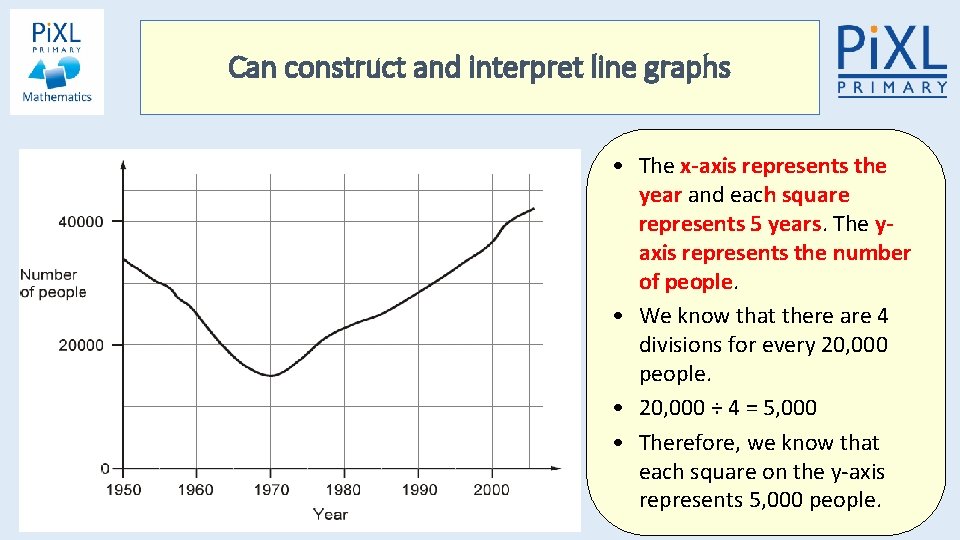
Can construct and interpret line graphs This line graph shows the number of people living in a town. Look closely at the information you are given.
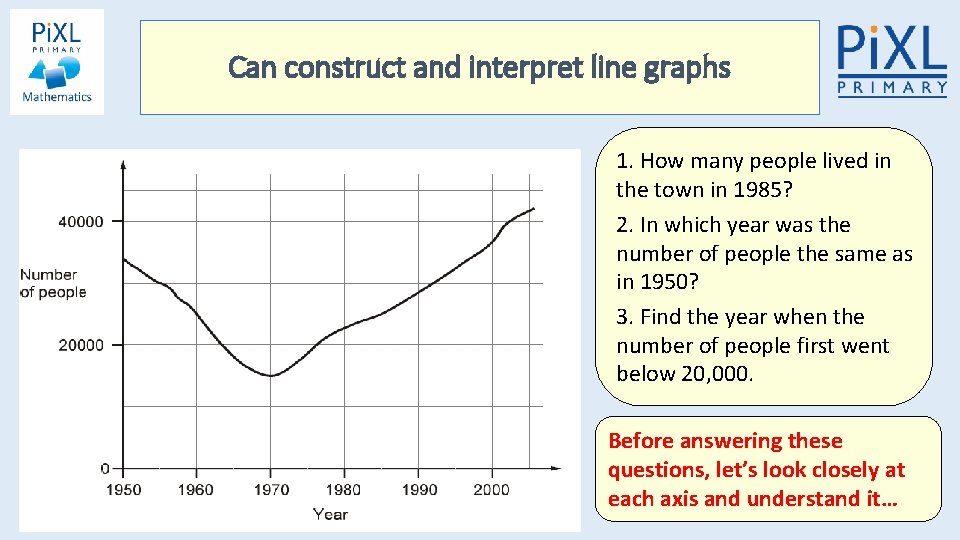
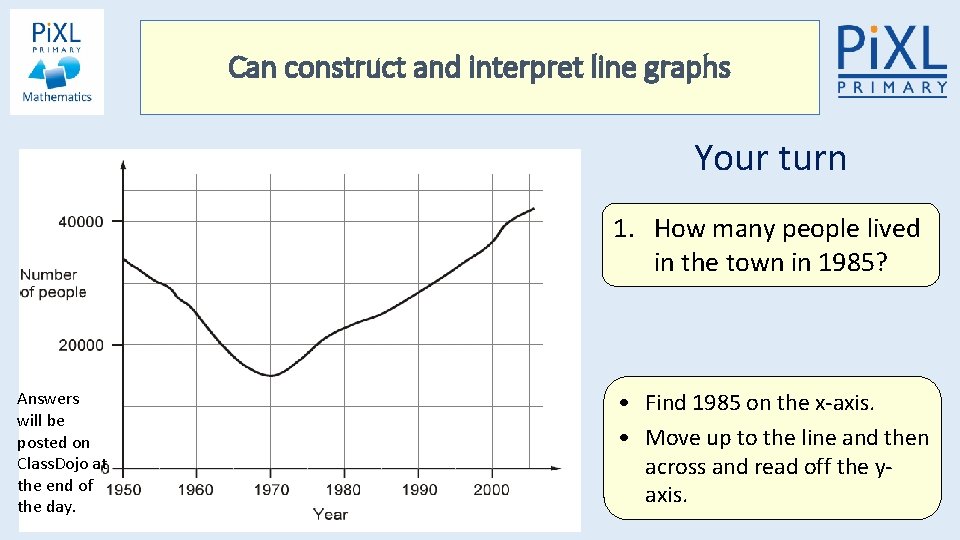
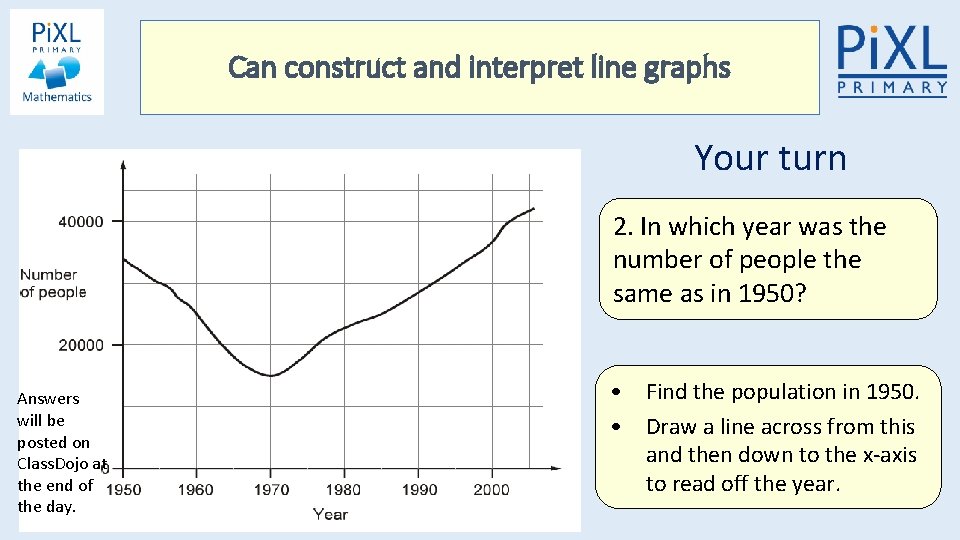
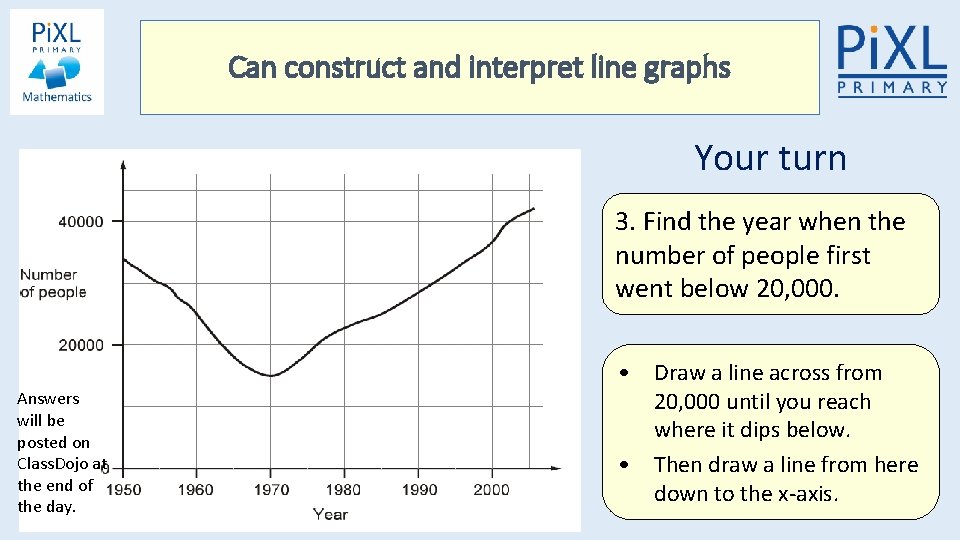
Can construct and interpret line graphs 1. How many people lived in the town in 1985? 2. In which year was the number of people the same as in 1950? 3. Find the year when the number of people first went below 20, 000. Before answering these questions, let’s look closely at each axis and understand it…
Can construct and interpret line graphs • The x-axis represents the year and each square represents 5 years. The yaxis represents the number of people. • We know that there are 4 divisions for every 20, 000 people. • 20, 000 ÷ 4 = 5, 000 • Therefore, we know that each square on the y-axis represents 5, 000 people.
Can construct and interpret line graphs Your turn 1. How many people lived in the town in 1985? Answers will be posted on Class. Dojo at the end of the day. • Find 1985 on the x-axis. • Move up to the line and then across and read off the yaxis.
Can construct and interpret line graphs Your turn 2. In which year was the number of people the same as in 1950? Answers will be posted on Class. Dojo at the end of the day. • Find the population in 1950. • Draw a line across from this and then down to the x-axis to read off the year.
Can construct and interpret line graphs Your turn 3. Find the year when the number of people first went below 20, 000. Answers will be posted on Class. Dojo at the end of the day. • Draw a line across from 20, 000 until you reach where it dips below. • Then draw a line from here down to the x-axis.
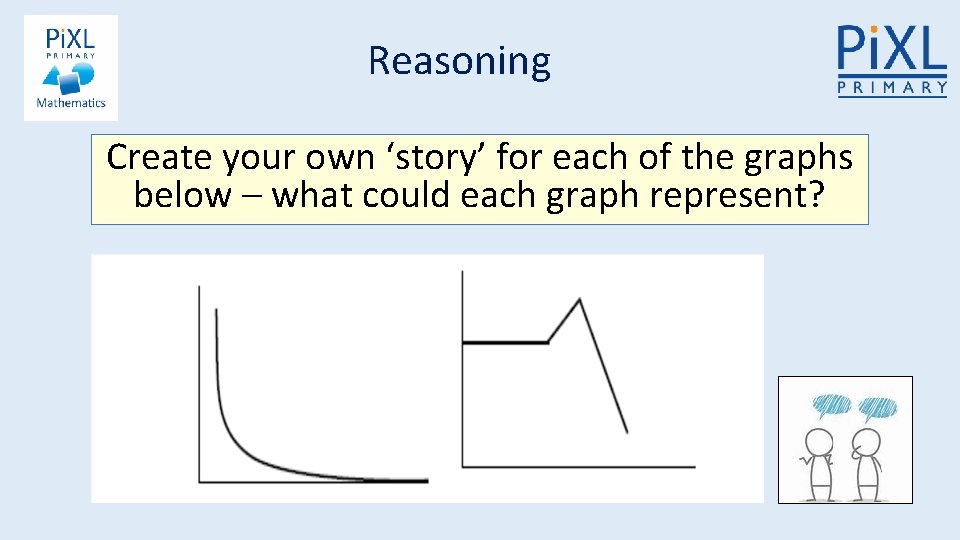
Reasoning Create your own ‘story’ for each of the graphs below – what could each graph represent?