
Year 6 SPAG formal and informal language and
- Slides: 9
Year 6 SPAG formal and informal language and subjunctive form NCLO: Recognising vocabulary and structures that are appropriate formal speech and writing including subjunctive form
Formal and informal language • In different text types or genres you may be able to spot the difference between formal and informal language being used by the author. • Formal writing uses more complicated words (as well as the Subjunctive Form) • Informal writing sometimes uses question tags as well as contractions such as ‘didn’t and won’t’
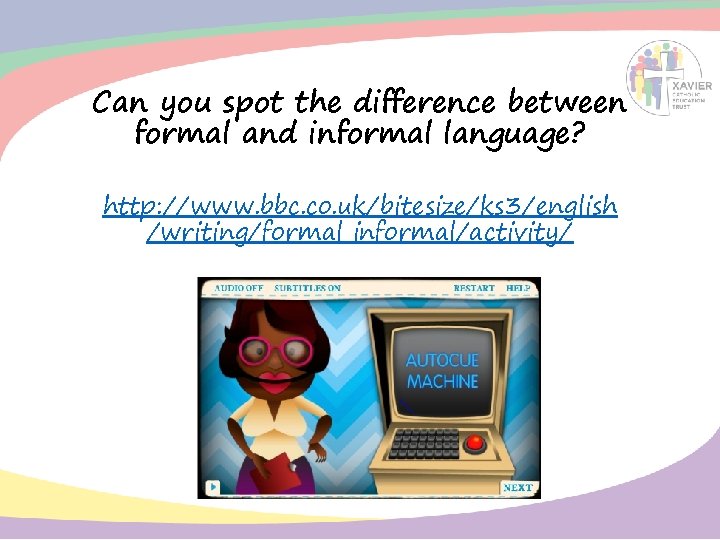
Can you spot the difference between formal and informal language? http: //www. bbc. co. uk/bitesize/ks 3/english /writing/formal_informal/activity/
Tips to make your writing more formal • Make your writing clear and to the point. • Try linking ideas with: in addition, nevertheless, on the other hand, by contrast, although, alternatively. • Include some complex sentences in your writing. Try using semi-colons if you feel confident about using them correctly. • It's good to use figurative language if you think it fits in with the purpose and audience of the task. Metaphors and similes work well in speeches.
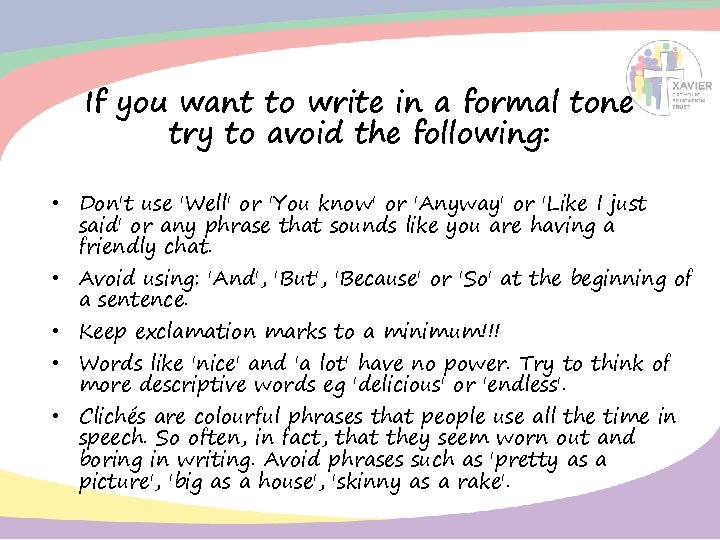
If you want to write in a formal tone try to avoid the following: • Don't use 'Well' or 'You know' or 'Anyway' or 'Like I just said' or any phrase that sounds like you are having a friendly chat. • Avoid using: 'And', 'But', 'Because' or 'So' at the beginning of a sentence. • Keep exclamation marks to a minimum!!! • Words like 'nice' and 'a lot' have no power. Try to think of more descriptive words eg 'delicious' or 'endless'. • Clichés are colourful phrases that people use all the time in speech. So often, in fact, that they seem worn out and boring in writing. Avoid phrases such as 'pretty as a picture', 'big as a house', 'skinny as a rake'.
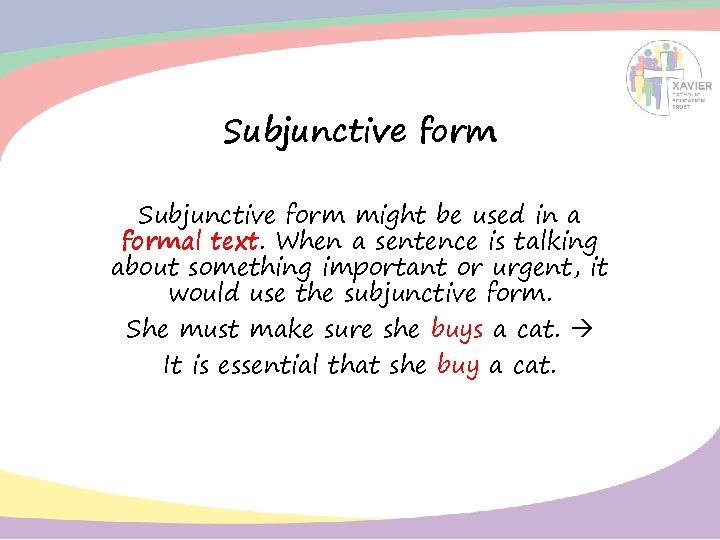
Subjunctive form might be used in a formal text. When a sentence is talking about something important or urgent, it would use the subjunctive form. She must make sure she buys a cat. It is essential that she buy a cat.
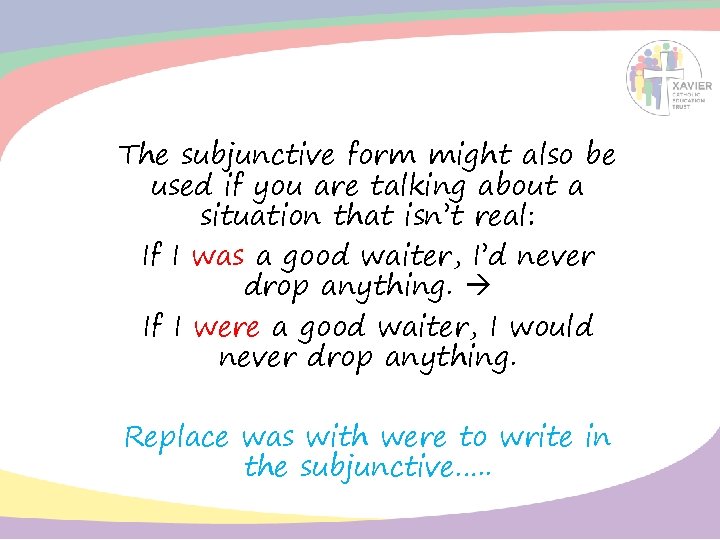
The subjunctive form might also be used if you are talking about a situation that isn’t real: If I was a good waiter, I’d never drop anything. If I were a good waiter, I would never drop anything. Replace was with were to write in the subjunctive…. .
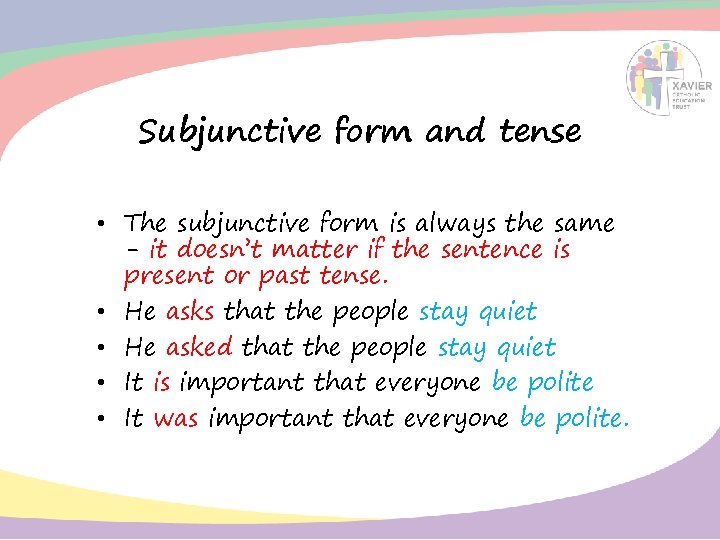
Subjunctive form and tense • The subjunctive form is always the same - it doesn’t matter if the sentence is present or past tense. • He asks that the people stay quiet • He asked that the people stay quiet • It is important that everyone be polite • It was important that everyone be polite.
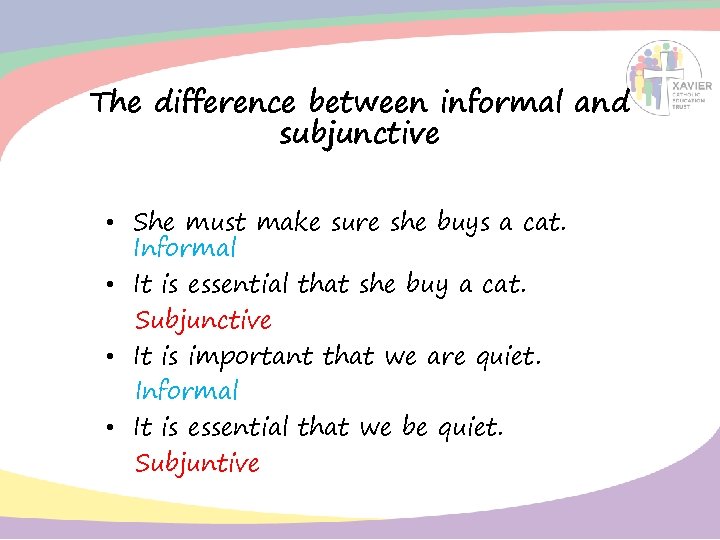
The difference between informal and subjunctive • She must make sure she buys a cat. Informal • It is essential that she buy a cat. Subjunctive • It is important that we are quiet. Informal • It is essential that we be quiet. Subjuntive