
Year 5 National Curriculum Non Core Subjects Explanation
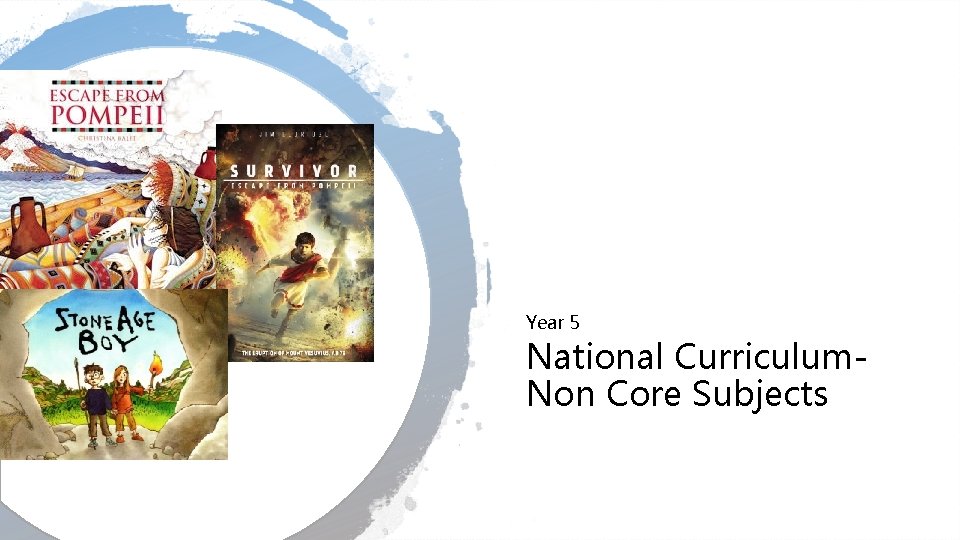
Year 5 National Curriculum. Non Core Subjects
Explanation During this unit History and Geography will be taught.
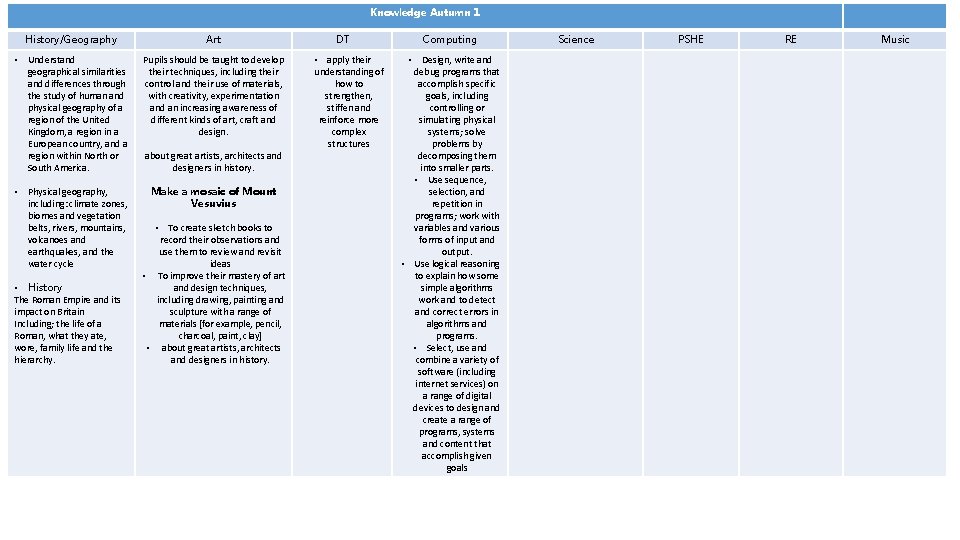
Knowledge Autumn 1 History/Geography Art • Understand geographical similarities and differences through the study of human and physical geography of a region of the United Kingdom, a region in a European country, and a region within North or South America. Pupils should be taught to develop their techniques, including their control and their use of materials, with creativity, experimentation and an increasing awareness of different kinds of art, craft and design. • Physical geography, including: climate zones, biomes and vegetation belts, rivers, mountains, volcanoes and earthquakes, and the water cycle Make a mosaic of Mount Vesuvius • History The Roman Empire and its impact on Britain Including; the life of a Roman, what they ate, wore, family life and the hierarchy. about great artists, architects and designers in history. • To create sketch books to record their observations and use them to review and revisit ideas • To improve their mastery of art and design techniques, including drawing, painting and sculpture with a range of materials [for example, pencil, charcoal, paint, clay] • about great artists, architects and designers in history. DT • apply their understanding of how to strengthen, stiffen and reinforce more complex structures Computing • Design, write and debug programs that accomplish specific goals, including controlling or simulating physical systems; solve problems by decomposing them into smaller parts. • Use sequence, selection, and repetition in programs; work with variables and various forms of input and output. • Use logical reasoning to explain how some simple algorithms work and to detect and correct errors in algorithms and programs. • Select, use and combine a variety of software (including internet services) on a range of digital devices to design and create a range of programs, systems and content that accomplish given goals Science PSHE RE Music
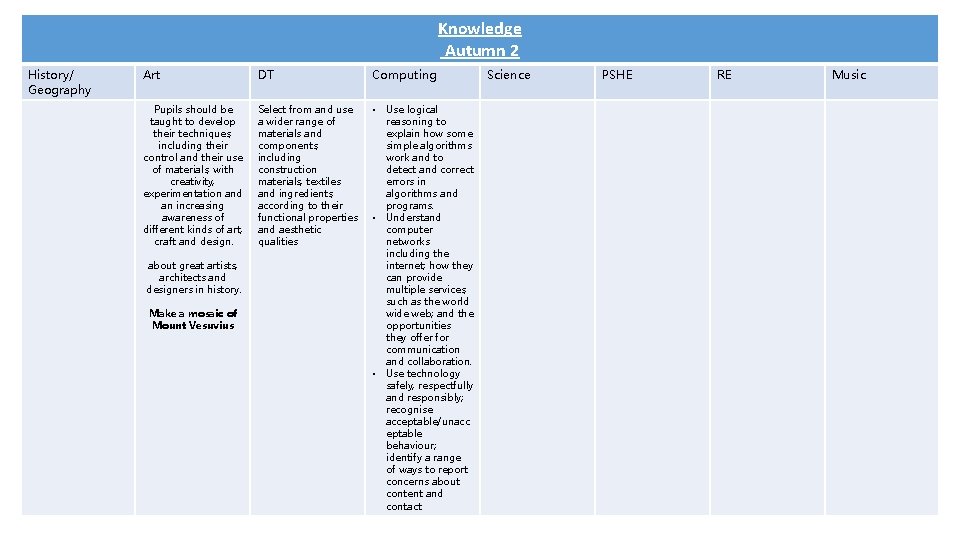
Knowledge Autumn 2 History/ Geography Art DT Computing Pupils should be taught to develop their techniques, including their control and their use of materials, with creativity, experimentation and an increasing awareness of different kinds of art, craft and design. Select from and use a wider range of materials and components, including construction materials, textiles and ingredients, according to their functional properties and aesthetic qualities • Use logical reasoning to explain how some simple algorithms work and to detect and correct errors in algorithms and programs. • Understand computer networks including the internet; how they can provide multiple services, such as the world wide web; and the opportunities they offer for communication and collaboration. • Use technology safely, respectfully and responsibly; recognise acceptable/unacc eptable behaviour; identify a range of ways to report concerns about content and contact. about great artists, architects and designers in history. Make a mosaic of Mount Vesuvius Science PSHE RE Music
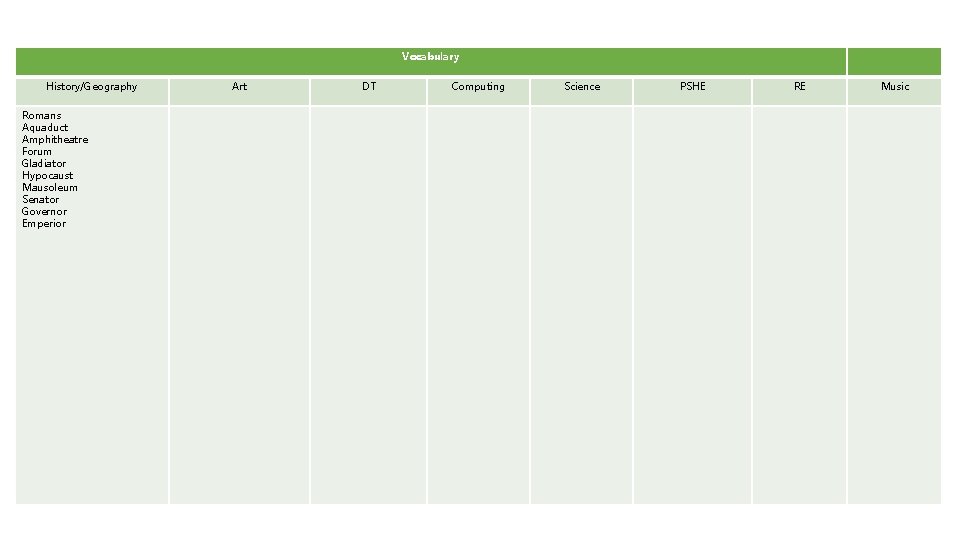
Vocabulary History/Geography Romans Aquaduct Amphitheatre Forum Gladiator Hypocaust Mausoleum Senator Governor Emperior Art DT Computing Science PSHE RE Music
Skills History/Geography N/A Art DT Computing Science PSHE RE Music
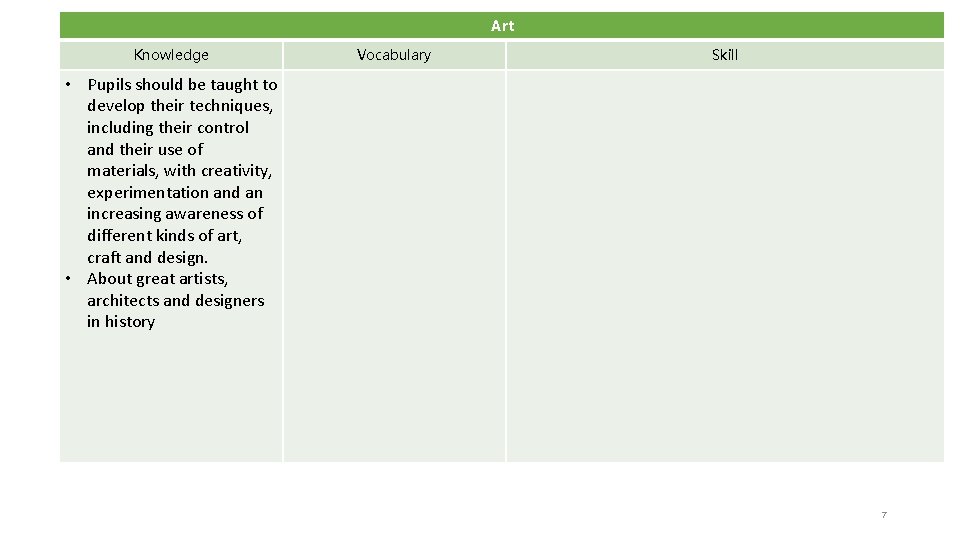
Art Knowledge Vocabulary Skill • Pupils should be taught to develop their techniques, including their control and their use of materials, with creativity, experimentation and an increasing awareness of different kinds of art, craft and design. • About great artists, architects and designers in history 7
Design and technology Knowledge Vocabulary Skills 8
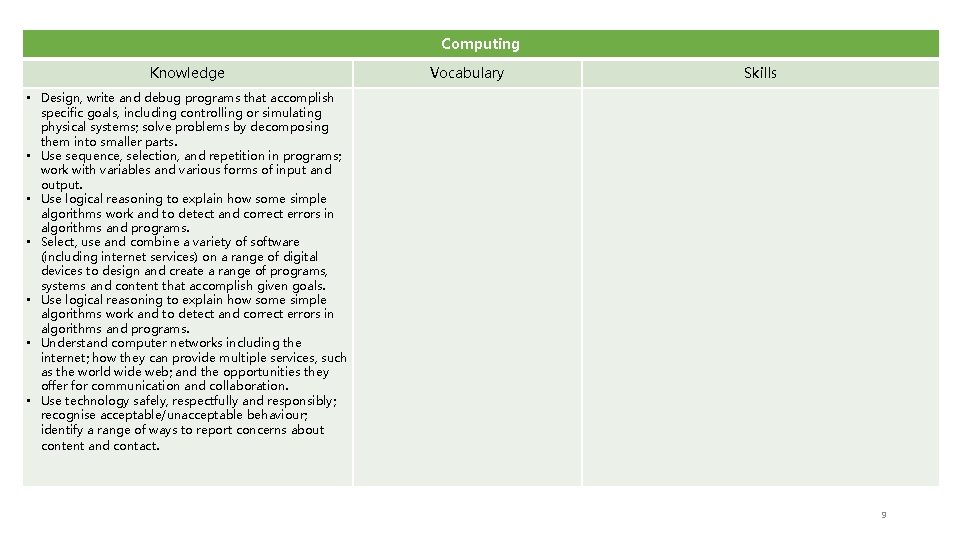
Computing Knowledge Vocabulary Skills • Design, write and debug programs that accomplish specific goals, including controlling or simulating physical systems; solve problems by decomposing them into smaller parts. • Use sequence, selection, and repetition in programs; work with variables and various forms of input and output. • Use logical reasoning to explain how some simple algorithms work and to detect and correct errors in algorithms and programs. • Select, use and combine a variety of software (including internet services) on a range of digital devices to design and create a range of programs, systems and content that accomplish given goals. • Use logical reasoning to explain how some simple algorithms work and to detect and correct errors in algorithms and programs. • Understand computer networks including the internet; how they can provide multiple services, such as the world wide web; and the opportunities they offer for communication and collaboration. • Use technology safely, respectfully and responsibly; recognise acceptable/unacceptable behaviour; identify a range of ways to report concerns about content and contact. 9
History Knowledge Vocabulary National Curriculum The Roman Empire and its impact on Britain Including; the life of a Roman, what they ate, wore, family life and the hierarchy. 10
Geography Knowledge Vocabulary National Curriculum • Understand geographical similarities and differences through the study of human and physical geography of a region of the United Kingdom, a region in a European country, and a region within North or South America. • Physical geography, including: climate zones, biomes and vegetation belts, rivers, mountains, volcanoes and earthquakes, and the water cycle © Focus Education (UK) Ltd 11
RE Knowledge Vocabulary National Curriculum 12
PSHE Knowledge Vocabulary National Curriculum 13
Music Knowledge Vocabulary National Curriculum 14
English Knowledge Vocabulary National Curriculum • Music • Knowledge • Vocabulary • National Curriculum © Focus Education (UK) Ltd 15
Assessment for learning • The assessments should take place at the end of each taught unit or and the end of the topic • Assessments need to be linked to the knowledge objectives that have been taught. 16
- Slides: 16