
Year 4 Topic 4 Switched on Science Teeth
- Slides: 30
Year 4, Topic 4, Switched on Science Teeth and Eating
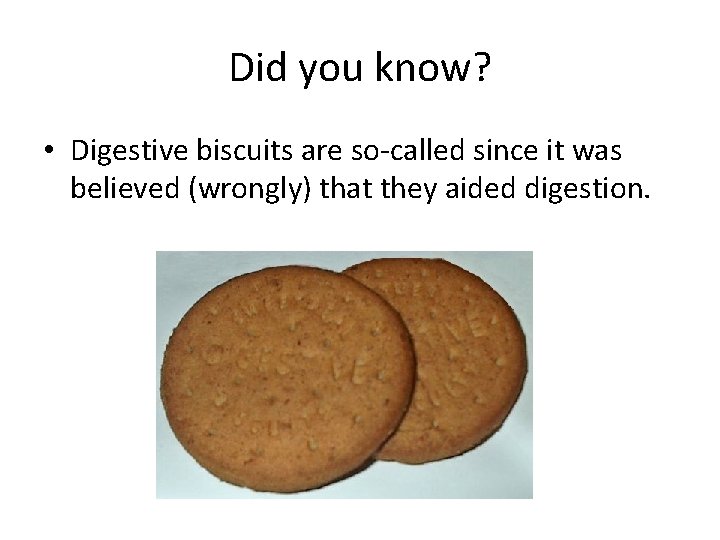
Did you know? • Digestive biscuits are so-called since it was believed (wrongly) that they aided digestion.
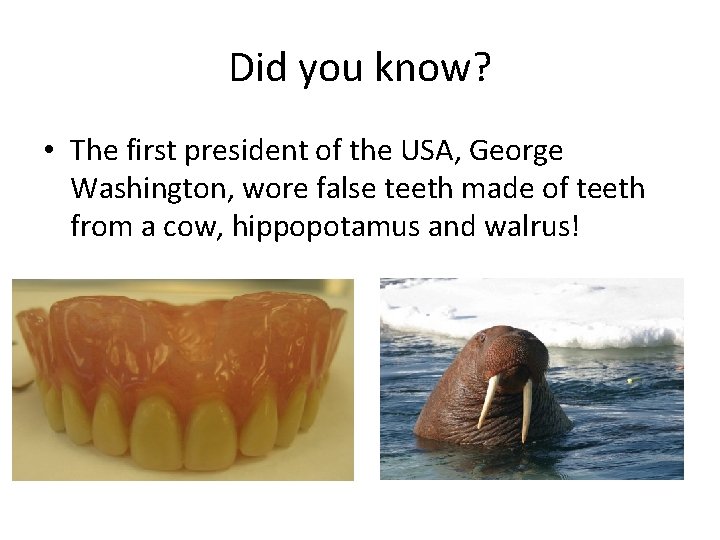
Did you know? • The first president of the USA, George Washington, wore false teeth made of teeth from a cow, hippopotamus and walrus!
Let’s think like scientists! • Why are teeth so hard and what would happen if they were made of something softer? • What would happen if we didn’t have saliva?
In this topic, you will: • learn about why we have teeth • learn about the different types of teeth • describe the different parts of the digestive system • learn about food chains.
Key vocabulary • • • Molar Incisor Canine Carnivore Herbivore Omnivore • Enamel • Decay
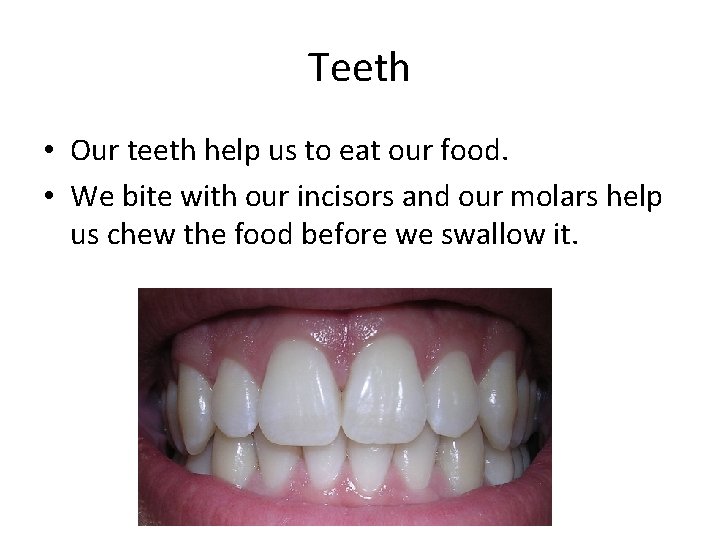
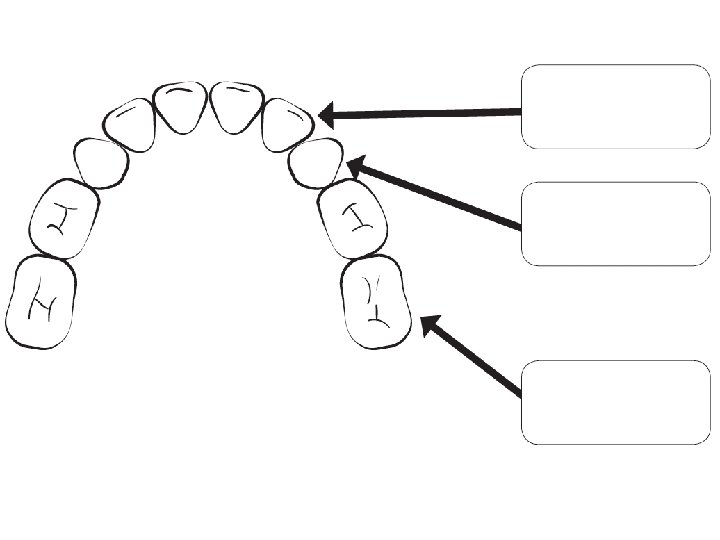
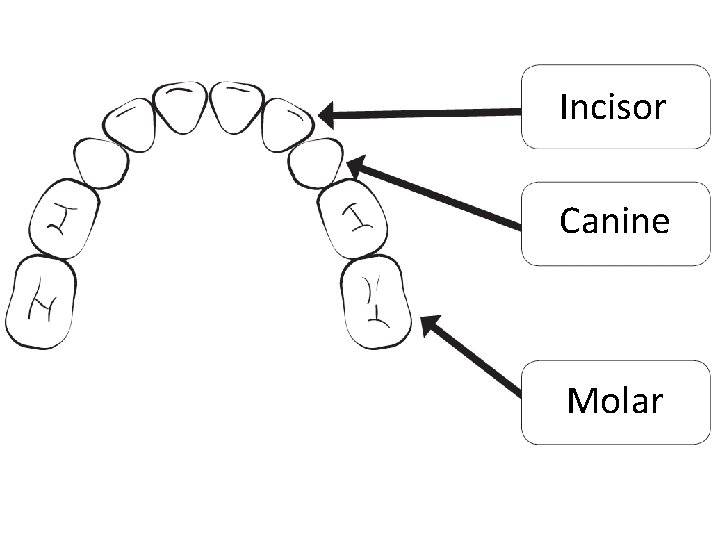
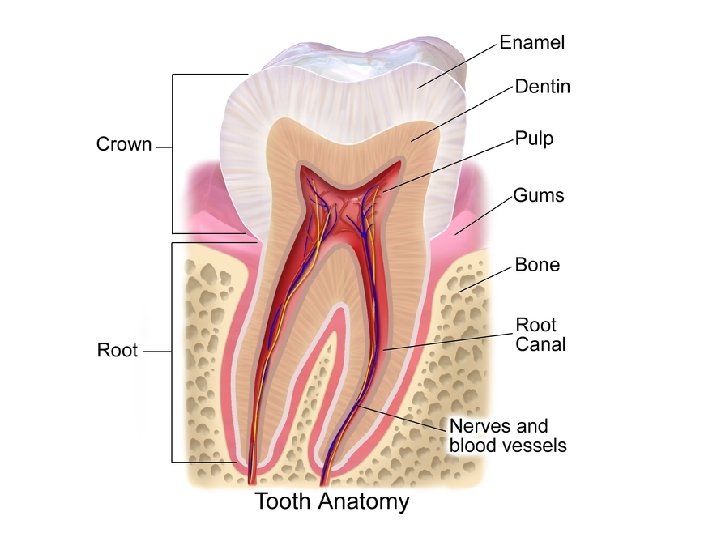
Teeth • Our teeth help us to eat our food. • We bite with our incisors and our molars help us chew the food before we swallow it.
Milk Teeth • The first set of teeth we have are called milk teeth. • Children have 20 milk teeth. • As we get older we lose them, and our adult teeth grow. • Adults have 32 teeth. • Why do you think we lose teeth as we grow up.
Incisor Canine Molar
Caring for your teeth • Why do you need to brush your teeth? • What would happen if you didn’t? • Which types of food are the worst for your teeth?
Tooth Care • As well as brushing our teeth, some people also use mouthwash and dental floss to keep their teeth healthy. • These help to remove any bits of food and bacteria from our teeth. Bacteria produce acid which can damage our teeth and cause decay. • Toothpaste also contains a chemical called fluoride that helps keep our teeth strong.
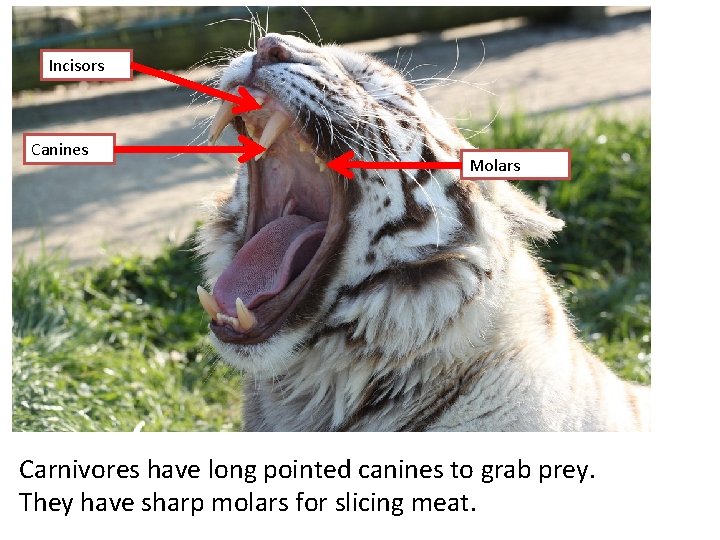
Incisors Canines Molars Carnivores have long pointed canines to grab prey. They have sharp molars for slicing meat.
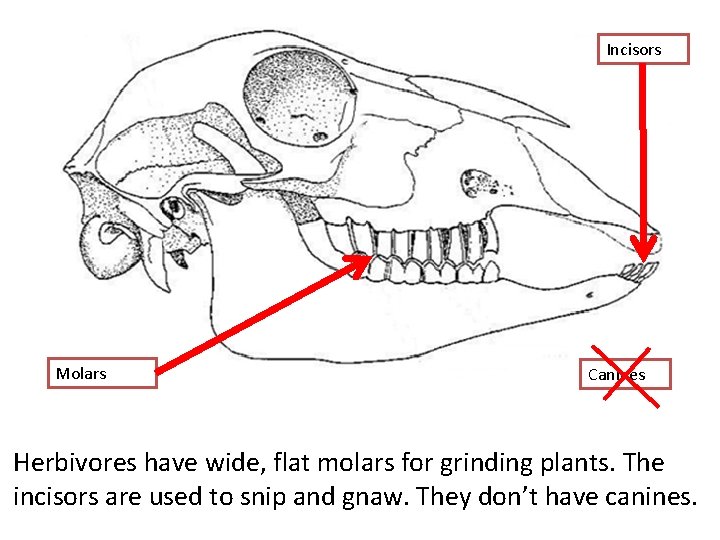
Incisors Molars Canines Herbivores have wide, flat molars for grinding plants. The incisors are used to snip and gnaw. They don’t have canines.
Food for thought • Why do we need to eat? • Can you remember what the different food groups are? • What parts of the body are involved in eating? • What happens to your lunch once you have swallowed it? Where does it go?
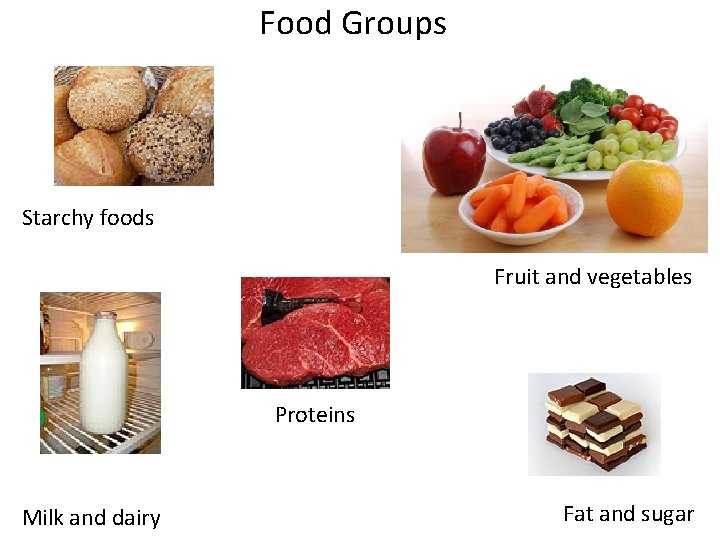
Food Groups Starchy foods Fruit and vegetables Proteins Milk and dairy Fat and sugar
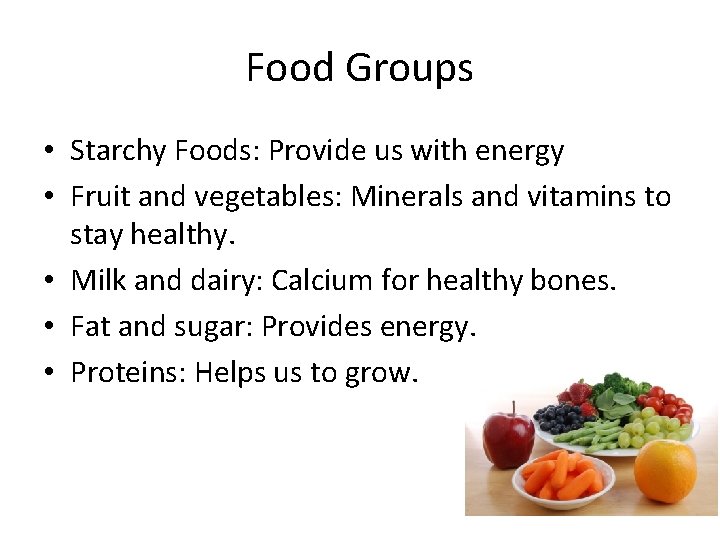
Food Groups • Starchy Foods: Provide us with energy • Fruit and vegetables: Minerals and vitamins to stay healthy. • Milk and dairy: Calcium for healthy bones. • Fat and sugar: Provides energy. • Proteins: Helps us to grow.
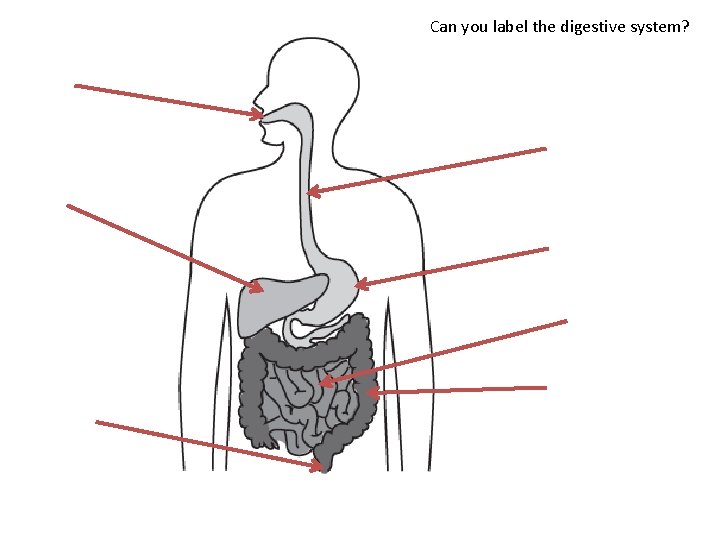
Can you label the digestive system?
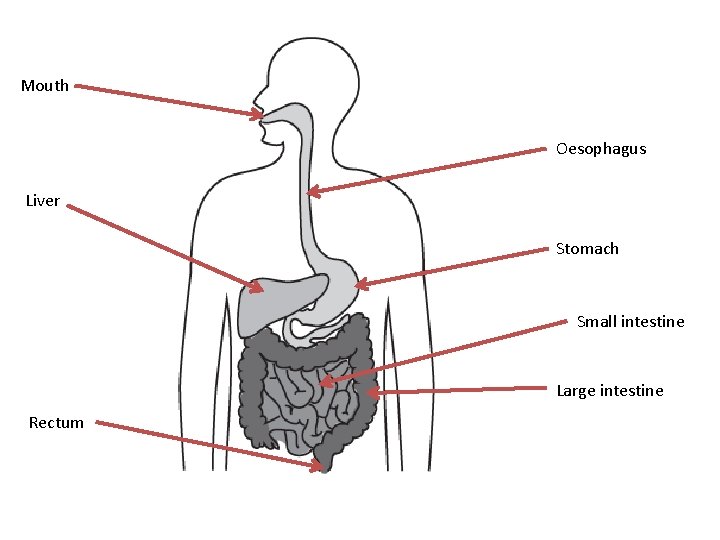
Mouth Oesophagus Liver Stomach Small intestine Large intestine Rectum
Digestive system Mouth – Food is chewed and mixed with saliva. It starts to digest. Stomach – Food is mixed with digestive juices containing acid and enzymes which start to break the big chemicals down into smaller ones. Small intestine – Nutrients and useful chemicals and water are absorbed here. Waste products pass through. Large intestine – water is absorbed and waste products pass through. These leave the body when we go to the toilet.
Did you know • • There are two pipes in your throat. The oesophagus takes food to your stomach. The trachea takes air to your lungs. You automatically close the trachea when you swallow so food goes down the oesophagus, but sometimes food literally goes “down the wrong hole”, gets into the trachea and makes you choke.
Food Chains • Make a list of different animals. • Which of these animals eat meat? Which eat plants?
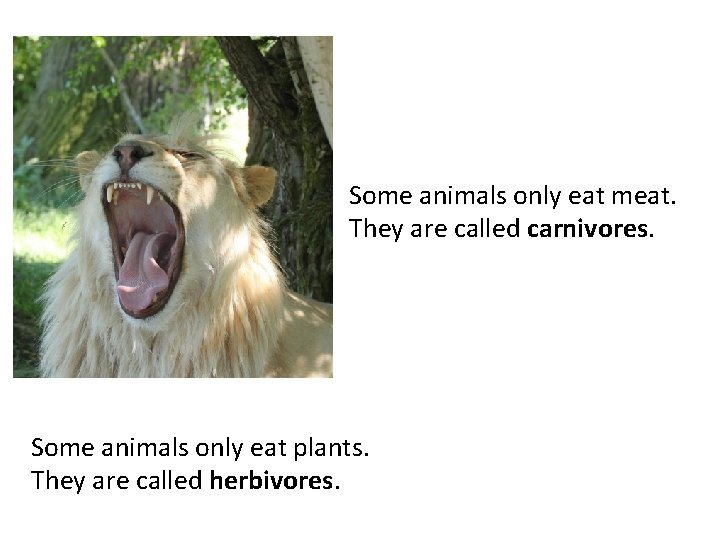
Some animals only eat meat. They are called carnivores. Some animals only eat plants. They are called herbivores.
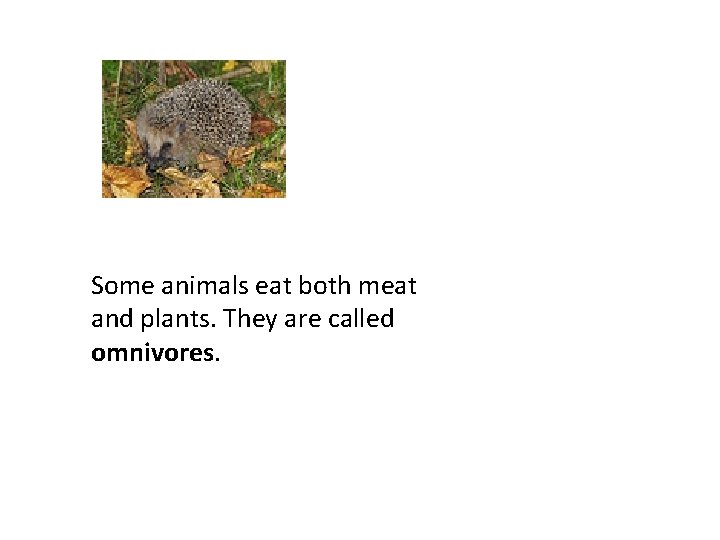
Some animals eat both meat and plants. They are called omnivores.
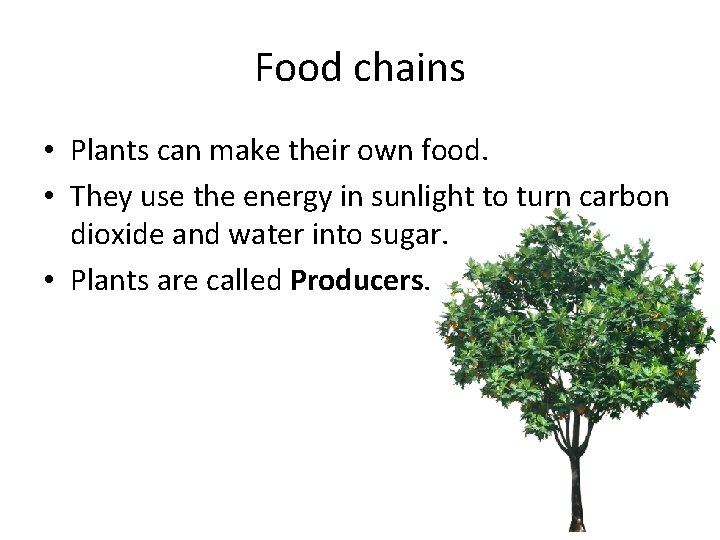
Food chains • Plants can make their own food. • They use the energy in sunlight to turn carbon dioxide and water into sugar. • Plants are called Producers.
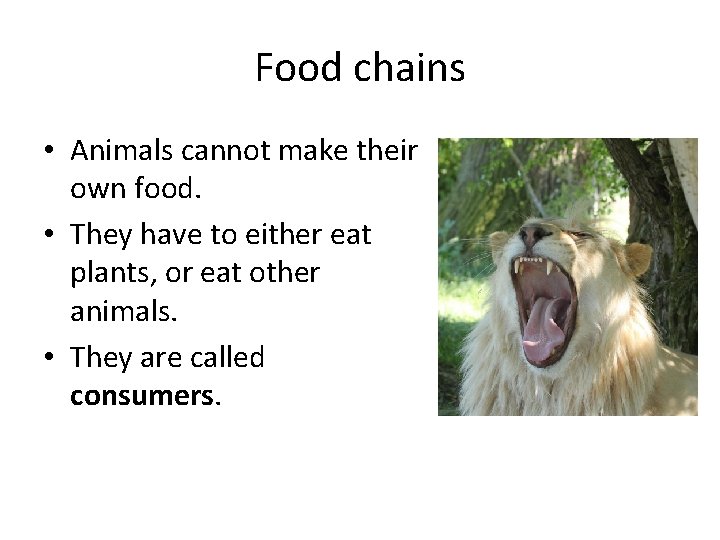
Food chains • Animals cannot make their own food. • They have to either eat plants, or eat other animals. • They are called consumers.
Predators and Prey • Animals that eat other animals are called predators. • Animals that are eaten by other animals are called prey. • Can you think of some dangerous predators?
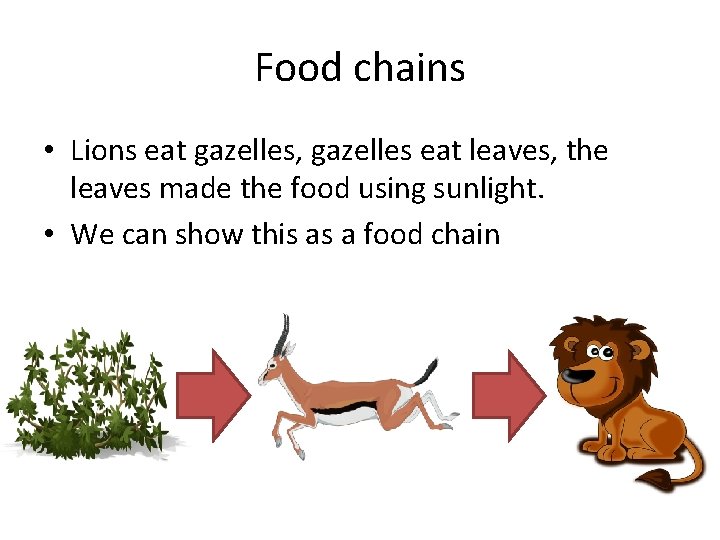
Food chains • Lions eat gazelles, gazelles eat leaves, the leaves made the food using sunlight. • We can show this as a food chain
Make as many food chains as you can from: • • • Grass Leaves Caterpillar Hedgehog Chicken Fox Sparrow Mouse Snail Starling Slug • • • Rabbit Beetle Shrew Kestrel Owl Earthworm Song thrush Vole Seeds Greenfly Ladybirds