
Year 3 Term 3 Block 1 Decimals Lesson
Year 3 Term 3 - Block 1 - Decimals - Lesson 1 To be able to identify tenths and hundredths using a hundred square Term: 3 Unit: Block 1 – Decimals Lesson: 1
To be able to identify tenths and hundredths using a hundred square Success criteria: ü I can use a hundred square to identify tenths and hundredths ü I can explain my reasoning when using a hundred square to identify tenths and hundredths Year 3 - Term 3 - Block 1 - Decimals - Lesson 1 - To be able to identify tenths and hundredths using a hundred square
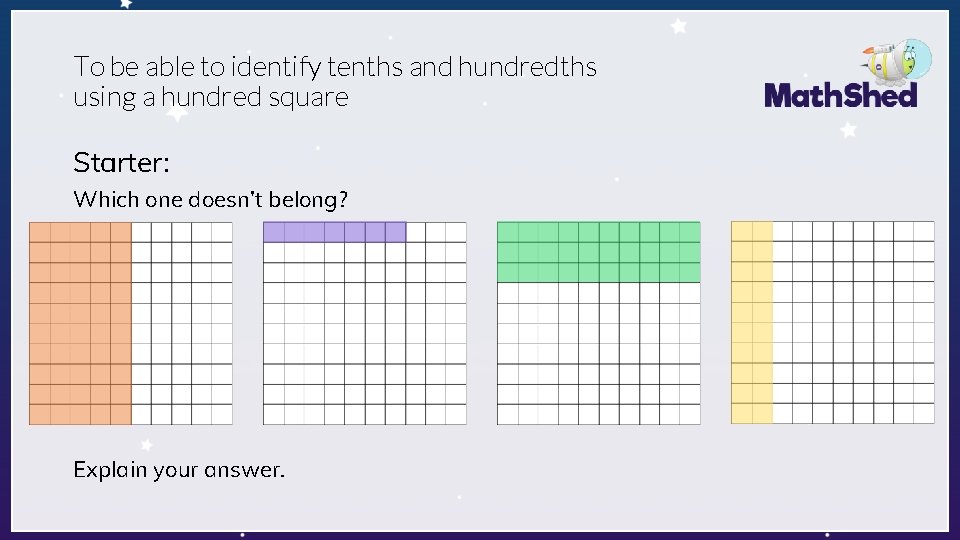
To be able to identify tenths and hundredths using a hundred square Starter: Which one doesn’t belong? Explain your answer.
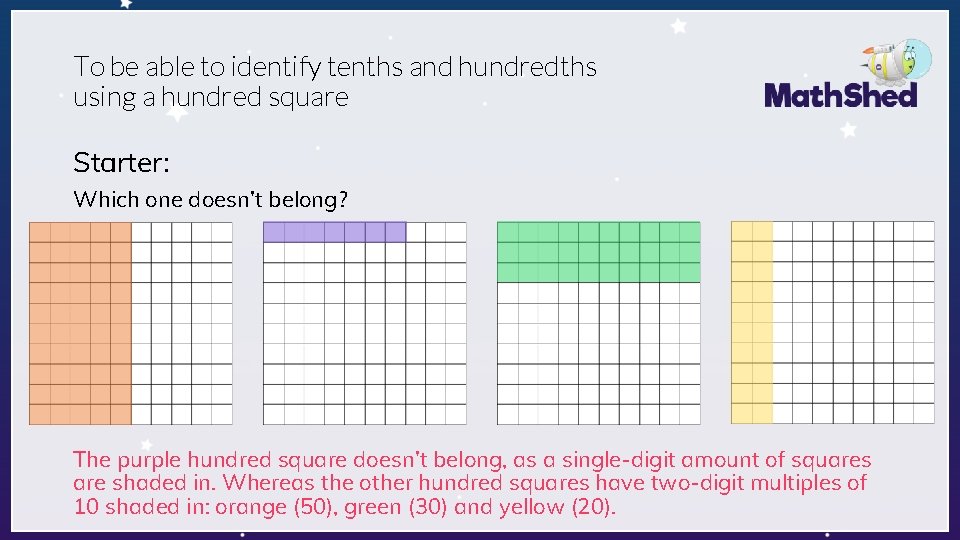
To be able to identify tenths and hundredths using a hundred square Starter: Which one doesn’t belong? The purple hundred square doesn’t belong, as a single-digit amount of squares are shaded in. Whereas the other hundred squares have two-digit multiples of 10 shaded in: orange (50), green (30) and yellow (20).
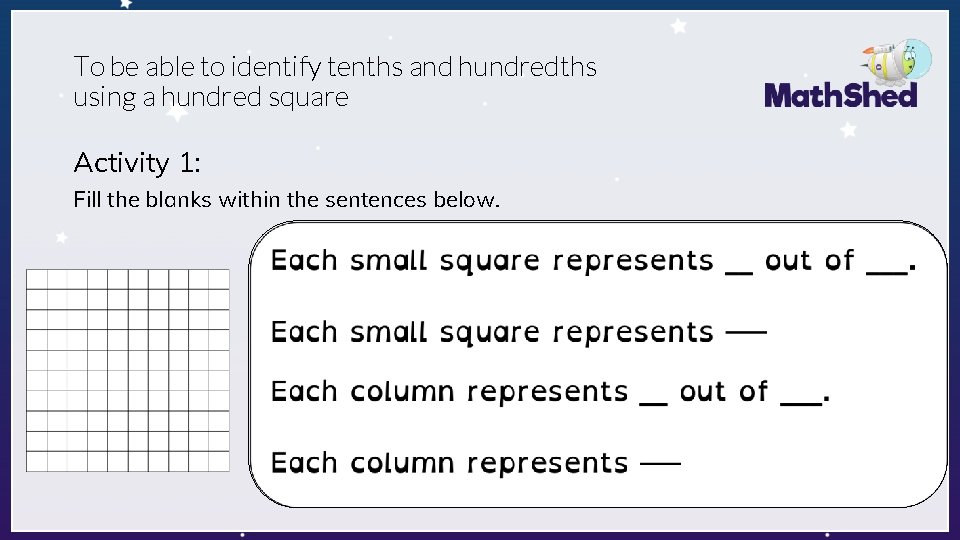
To be able to identify tenths and hundredths using a hundred square Activity 1: Fill the blanks within the sentences below.
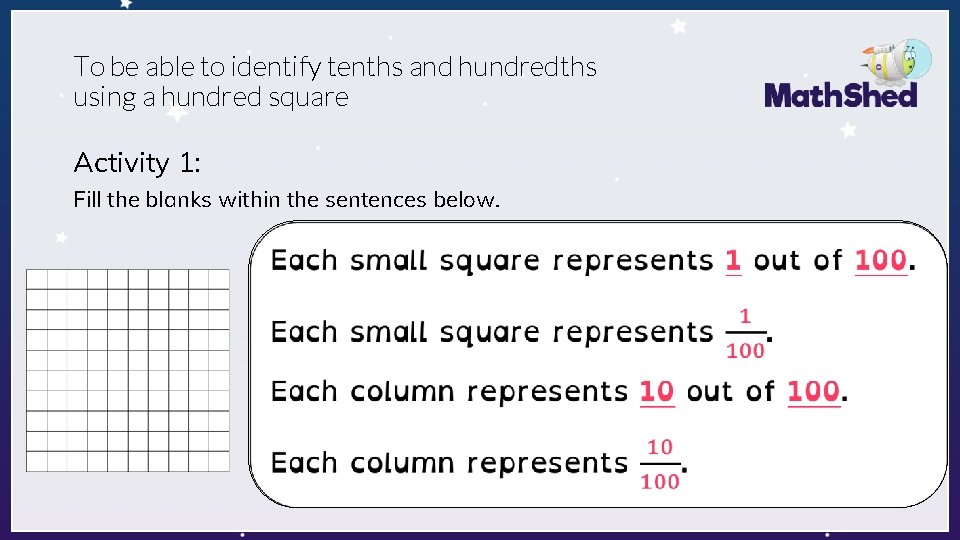
To be able to identify tenths and hundredths using a hundred square Activity 1: Fill the blanks within the sentences below.
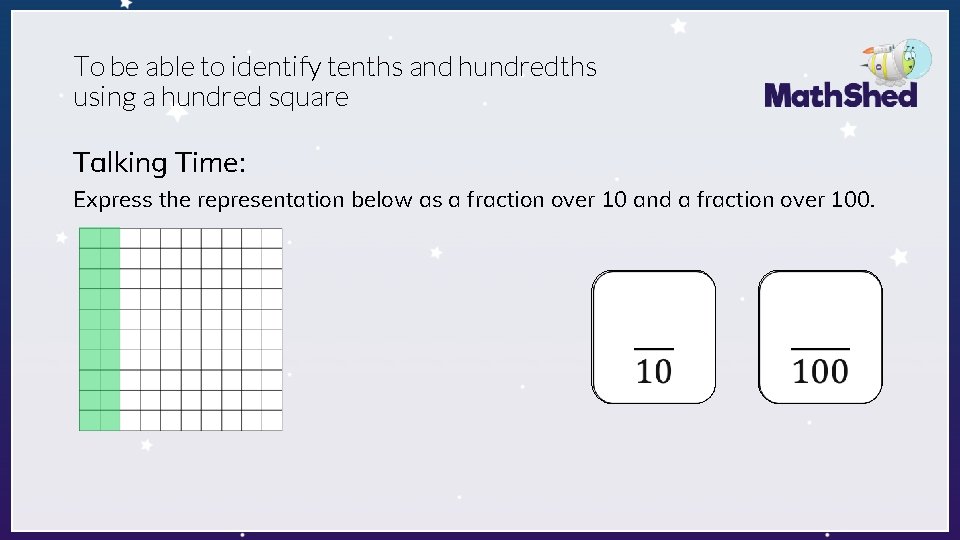
To be able to identify tenths and hundredths using a hundred square Talking Time: Express the representation below as a fraction over 10 and a fraction over 100.
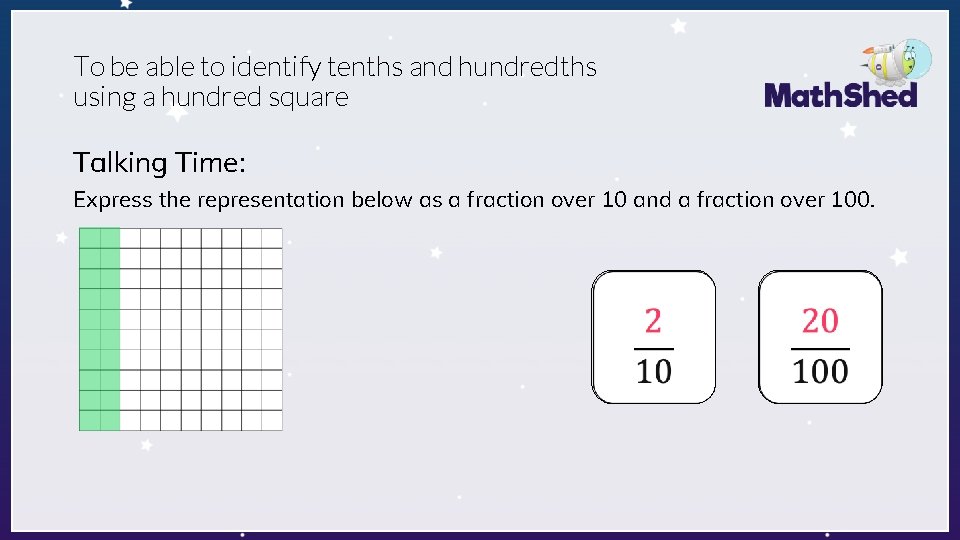
To be able to identify tenths and hundredths using a hundred square Talking Time: Express the representation below as a fraction over 10 and a fraction over 100.
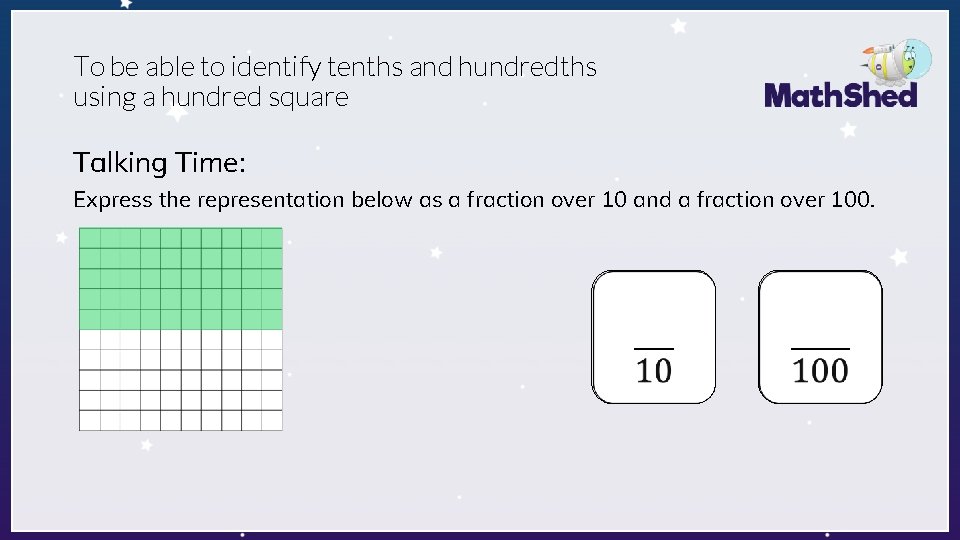
To be able to identify tenths and hundredths using a hundred square Talking Time: Express the representation below as a fraction over 10 and a fraction over 100.
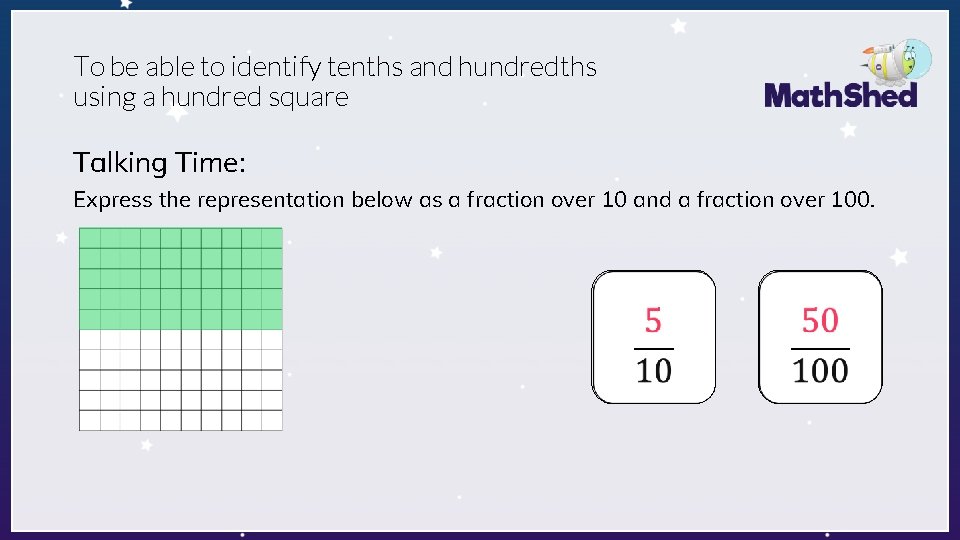
To be able to identify tenths and hundredths using a hundred square Talking Time: Express the representation below as a fraction over 10 and a fraction over 100.
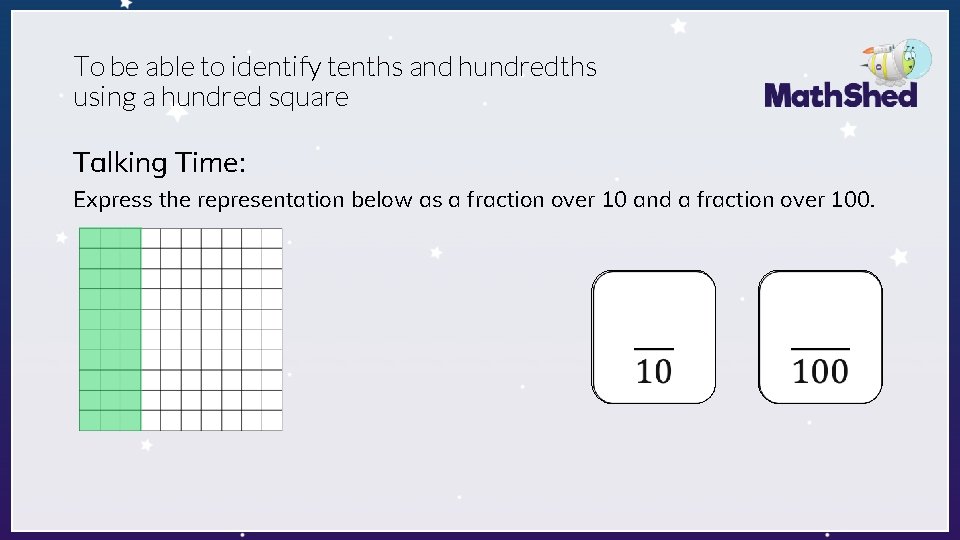
To be able to identify tenths and hundredths using a hundred square Talking Time: Express the representation below as a fraction over 10 and a fraction over 100.
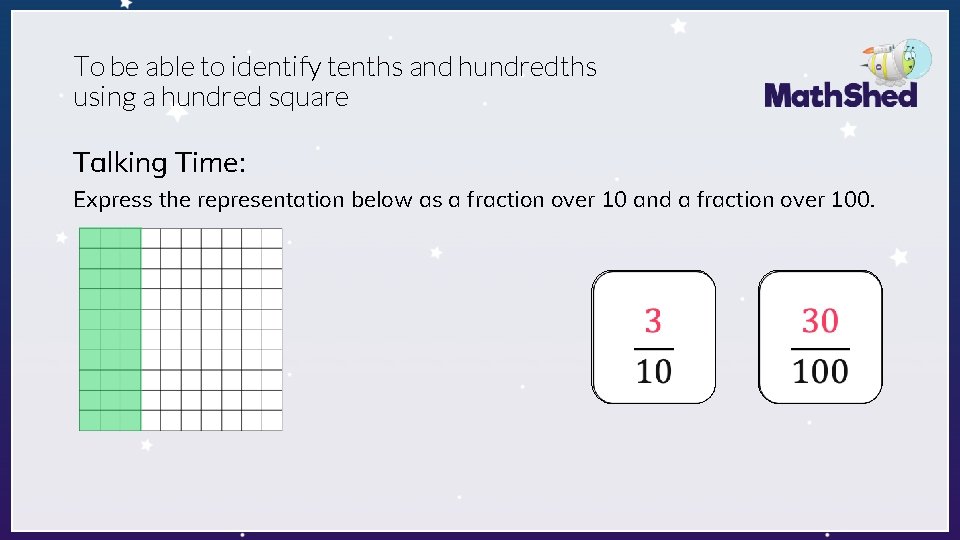
To be able to identify tenths and hundredths using a hundred square Talking Time: Express the representation below as a fraction over 10 and a fraction over 100.
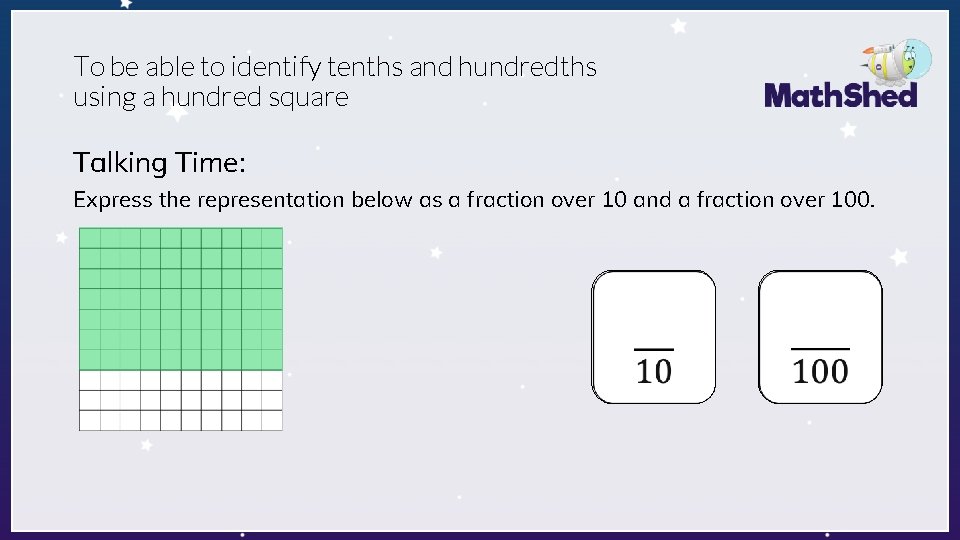
To be able to identify tenths and hundredths using a hundred square Talking Time: Express the representation below as a fraction over 10 and a fraction over 100.
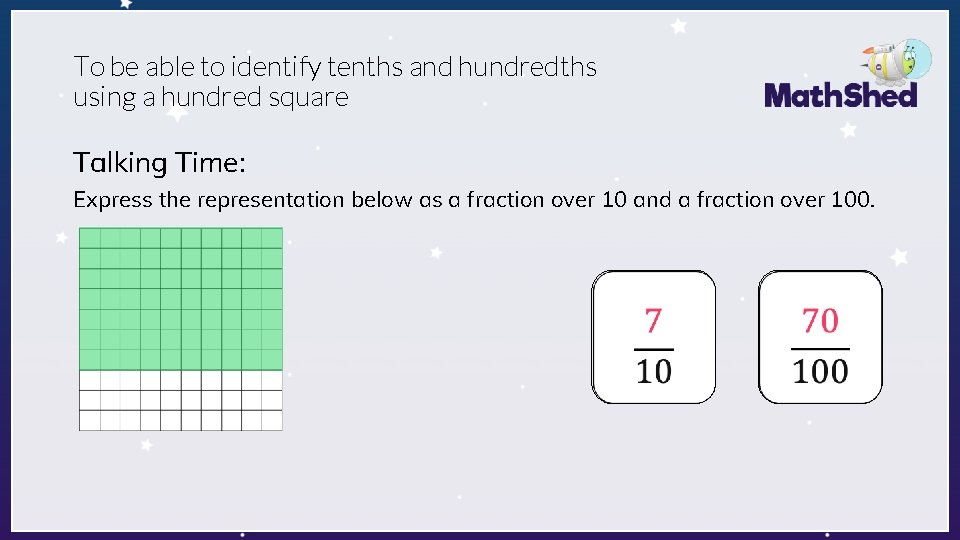
To be able to identify tenths and hundredths using a hundred square Talking Time: Express the representation below as a fraction over 10 and a fraction over 100.
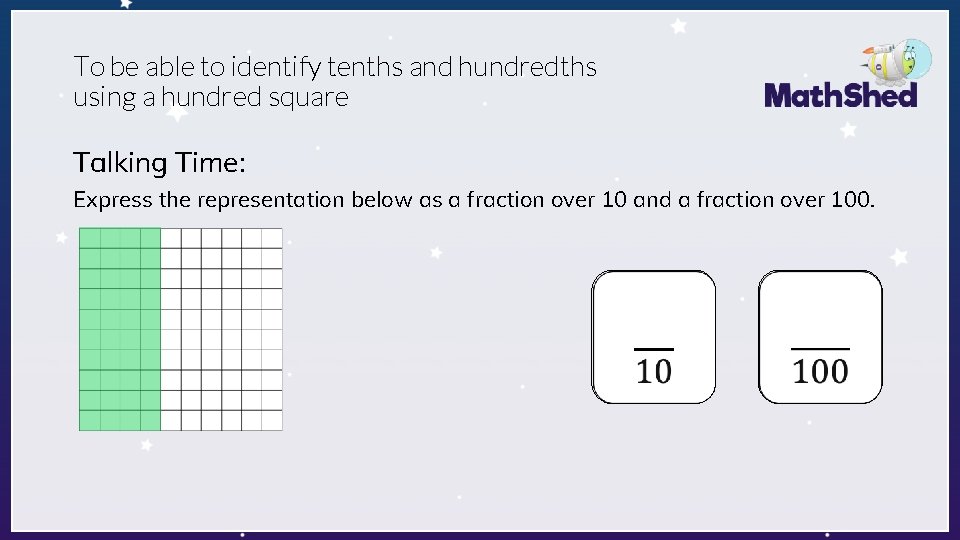
To be able to identify tenths and hundredths using a hundred square Talking Time: Express the representation below as a fraction over 10 and a fraction over 100.
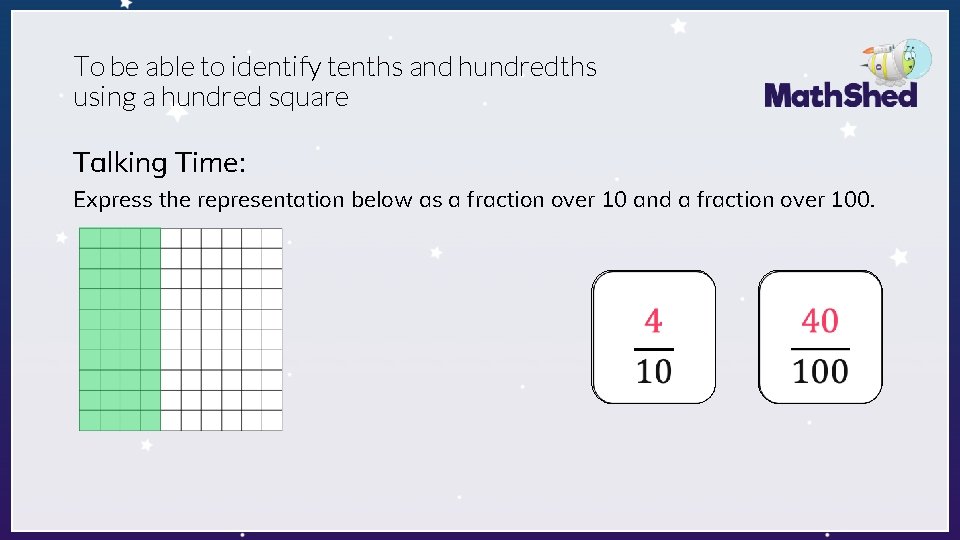
To be able to identify tenths and hundredths using a hundred square Talking Time: Express the representation below as a fraction over 10 and a fraction over 100.
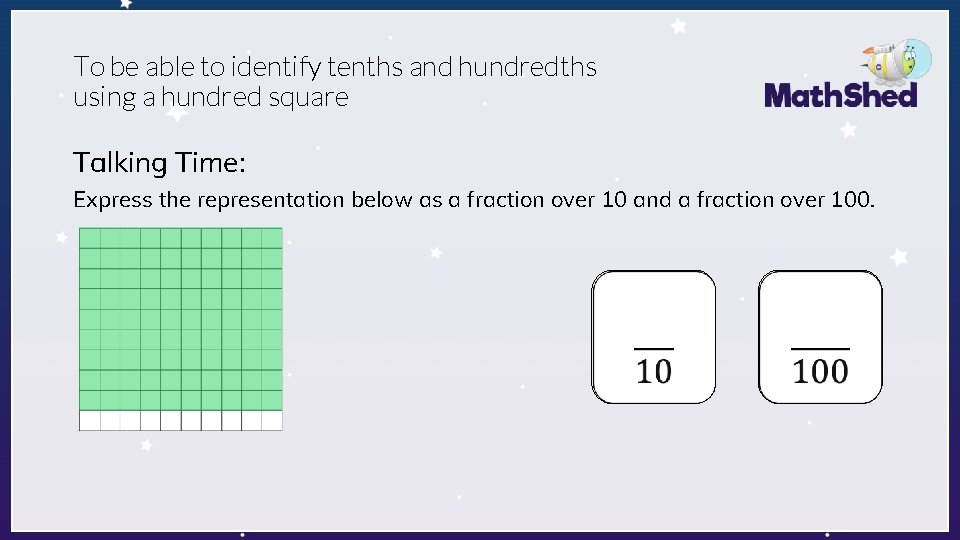
To be able to identify tenths and hundredths using a hundred square Talking Time: Express the representation below as a fraction over 10 and a fraction over 100.
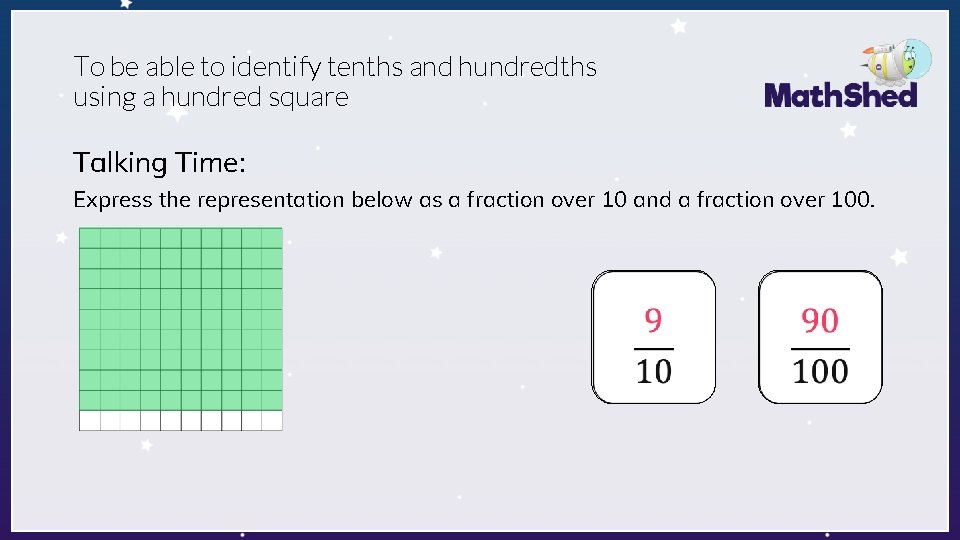
To be able to identify tenths and hundredths using a hundred square Talking Time: Express the representation below as a fraction over 10 and a fraction over 100.
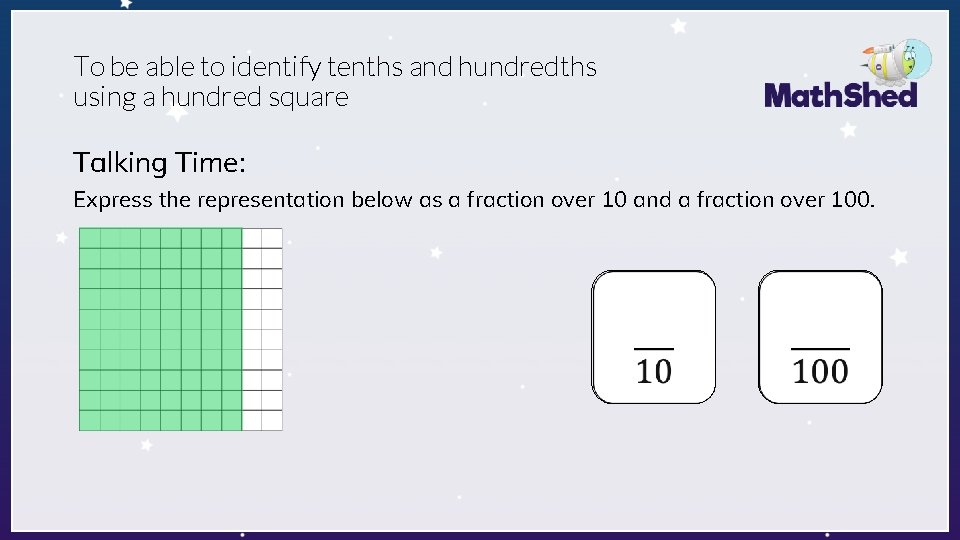
To be able to identify tenths and hundredths using a hundred square Talking Time: Express the representation below as a fraction over 10 and a fraction over 100.
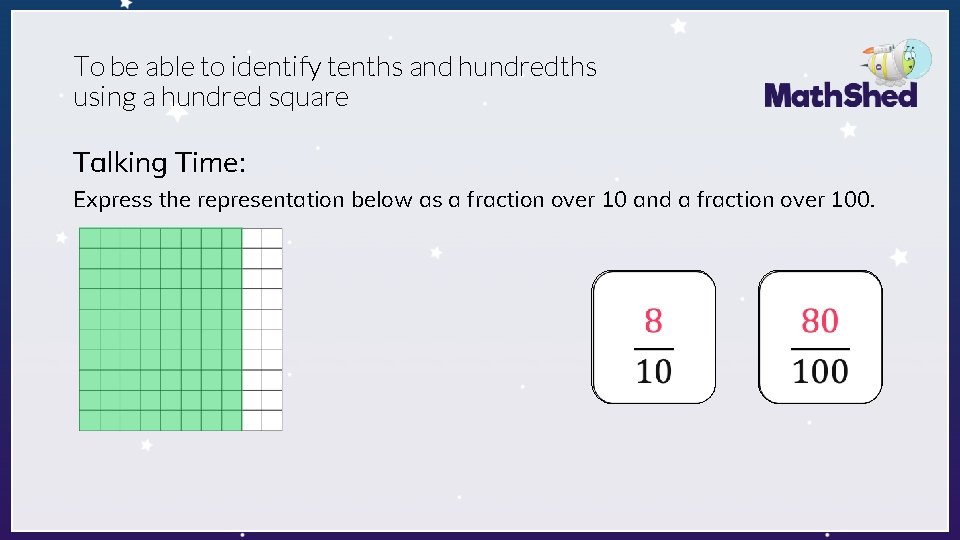
To be able to identify tenths and hundredths using a hundred square Talking Time: Express the representation below as a fraction over 10 and a fraction over 100.
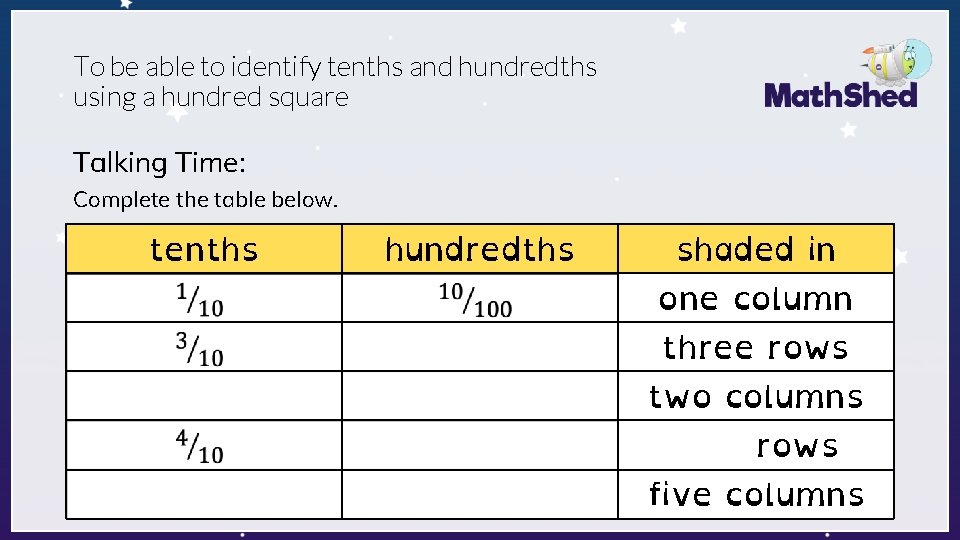
To be able to identify tenths and hundredths using a hundred square Talking Time: Complete the table below. tenths hundredths shaded in one column three rows two columns four rows five columns
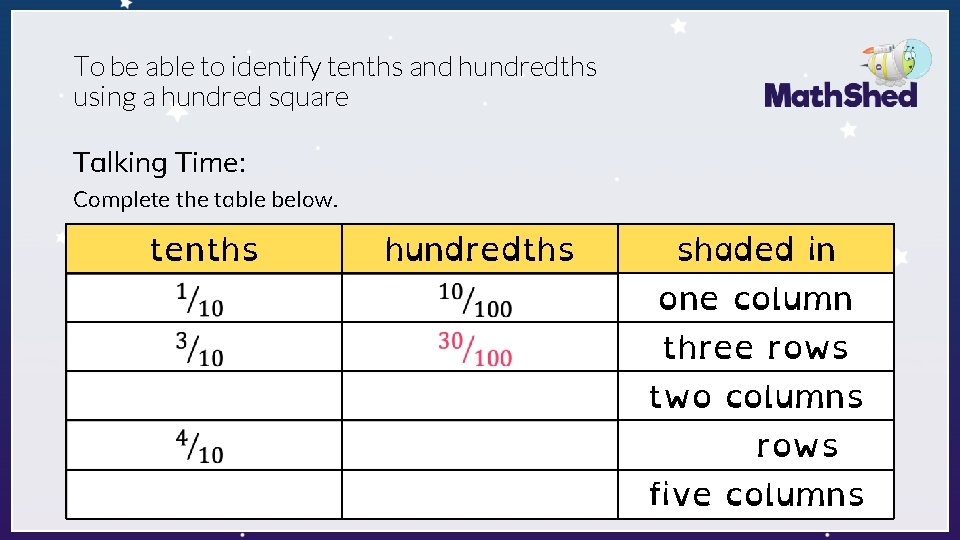
To be able to identify tenths and hundredths using a hundred square Talking Time: Complete the table below. tenths hundredths shaded in one column three rows two columns four rows five columns
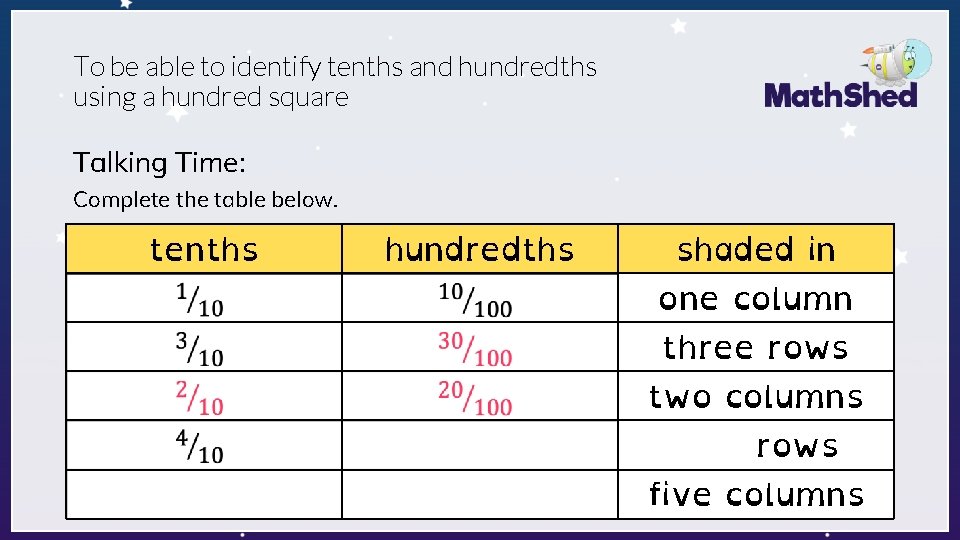
To be able to identify tenths and hundredths using a hundred square Talking Time: Complete the table below. tenths hundredths shaded in one column three rows two columns four rows five columns
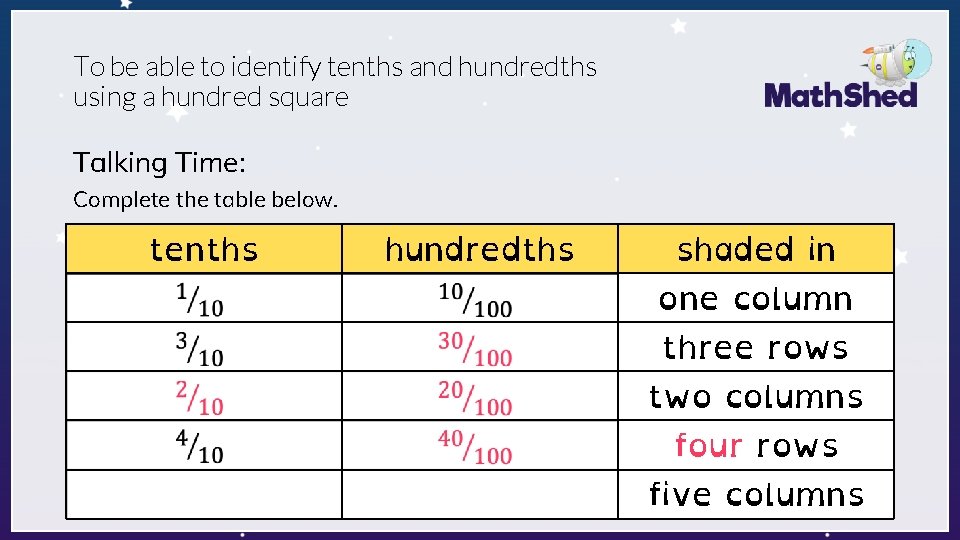
To be able to identify tenths and hundredths using a hundred square Talking Time: Complete the table below. tenths hundredths shaded in one column three rows two columns four rows five columns
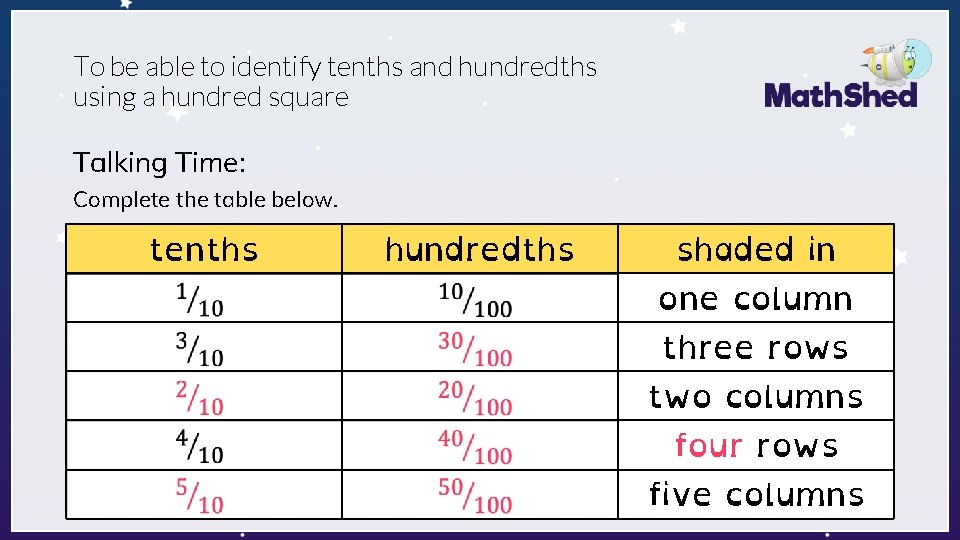
To be able to identify tenths and hundredths using a hundred square Talking Time: Complete the table below. tenths hundredths shaded in one column three rows two columns four rows five columns
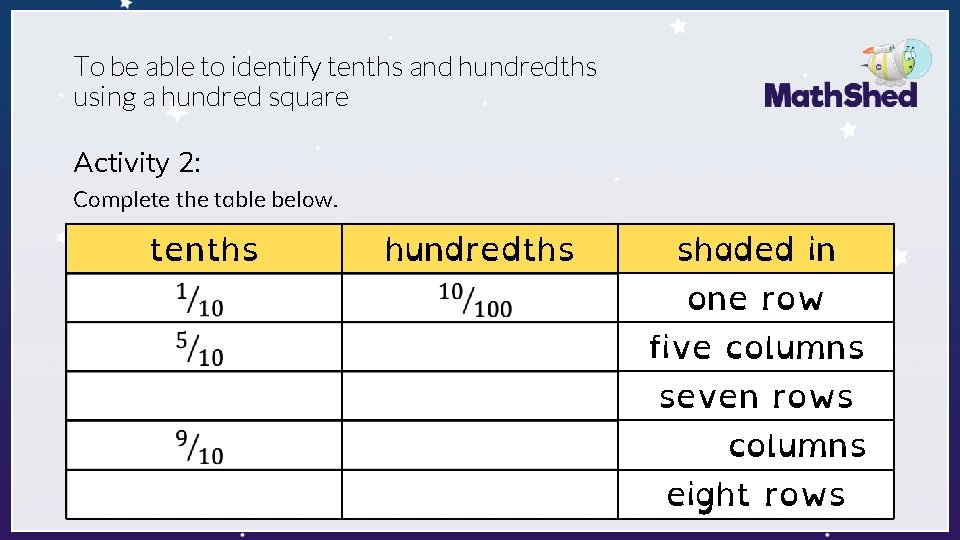
To be able to identify tenths and hundredths using a hundred square Activity 2: Complete the table below. tenths hundredths shaded in one row five columns seven rows nine columns eight rows
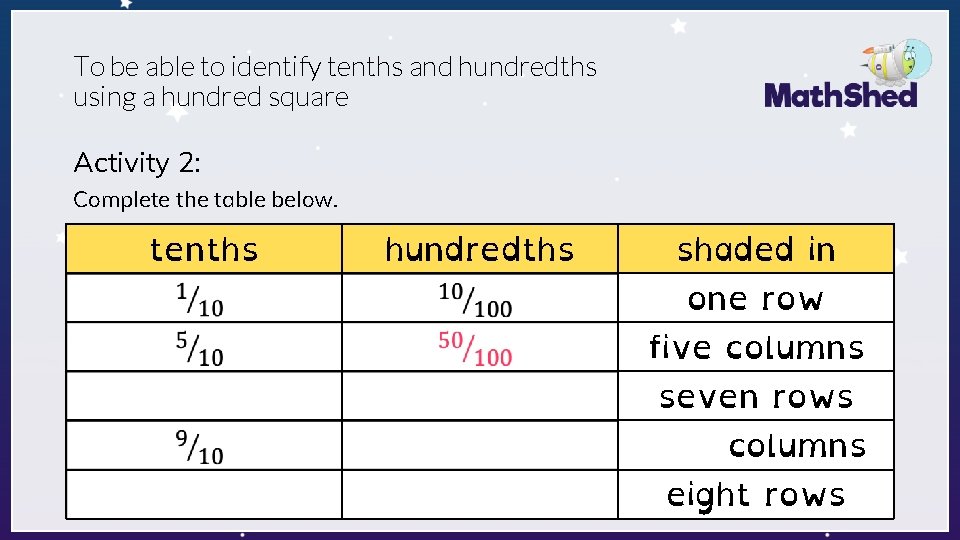
To be able to identify tenths and hundredths using a hundred square Activity 2: Complete the table below. tenths hundredths shaded in one row five columns seven rows nine columns eight rows
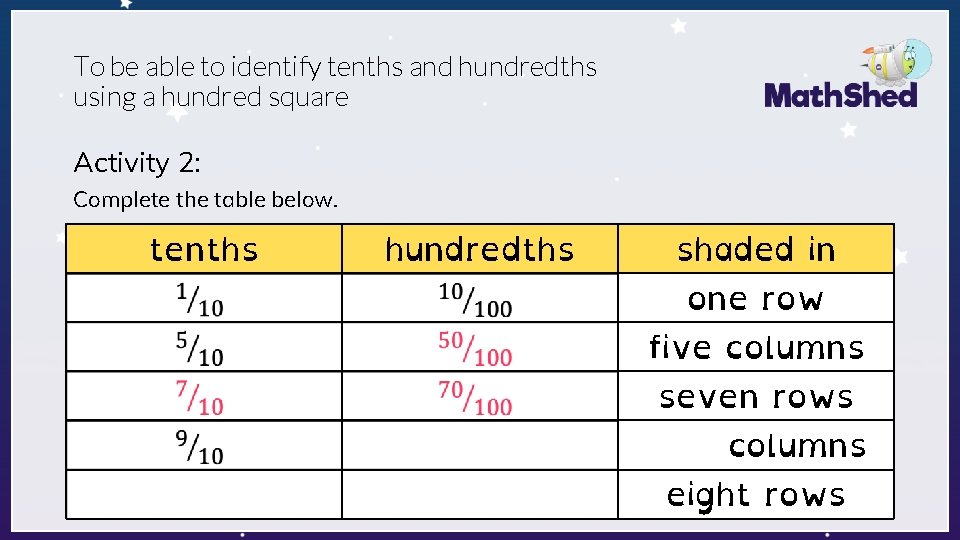
To be able to identify tenths and hundredths using a hundred square Activity 2: Complete the table below. tenths hundredths shaded in one row five columns seven rows nine columns eight rows
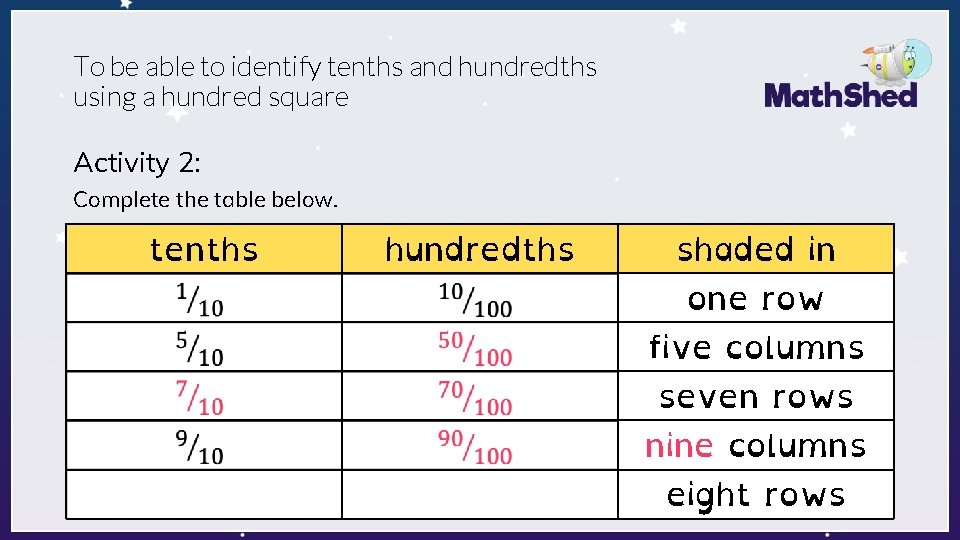
To be able to identify tenths and hundredths using a hundred square Activity 2: Complete the table below. tenths hundredths shaded in one row five columns seven rows nine columns eight rows
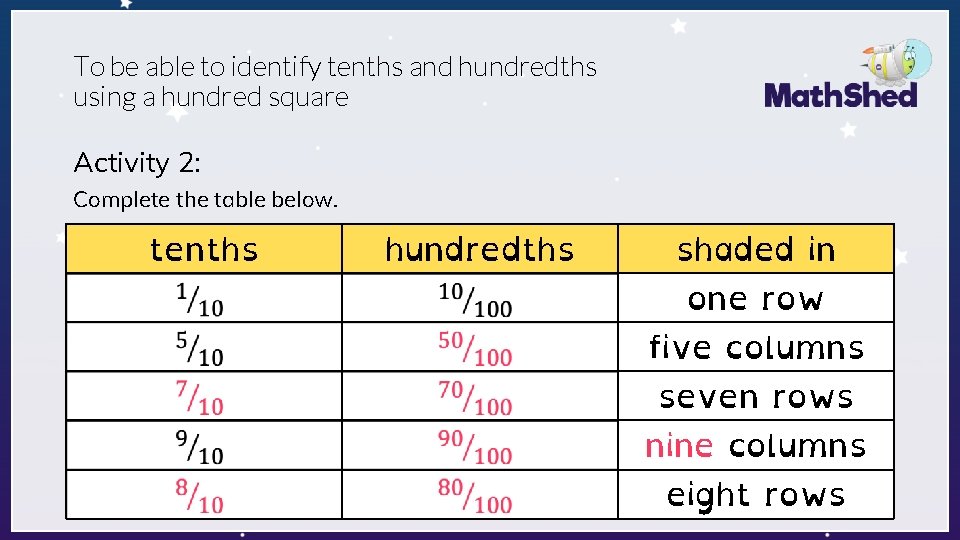
To be able to identify tenths and hundredths using a hundred square Activity 2: Complete the table below. tenths hundredths shaded in one row five columns seven rows nine columns eight rows
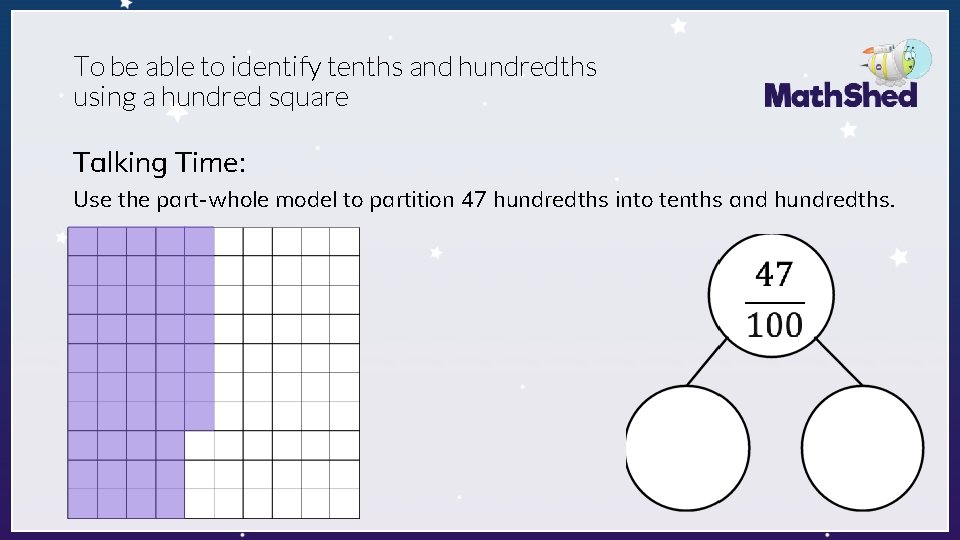
To be able to identify tenths and hundredths using a hundred square Talking Time: Use the part-whole model to partition 47 hundredths into tenths and hundredths.
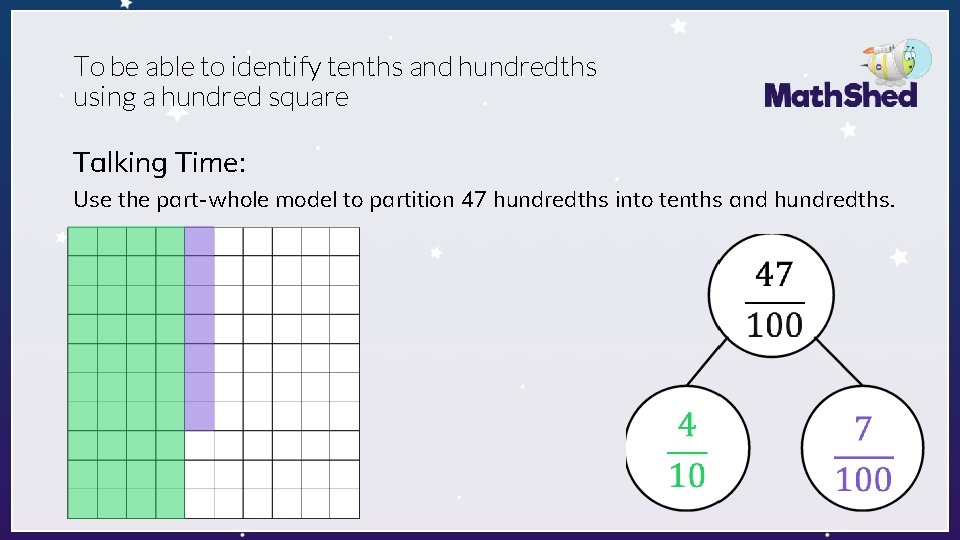
To be able to identify tenths and hundredths using a hundred square Talking Time: Use the part-whole model to partition 47 hundredths into tenths and hundredths.
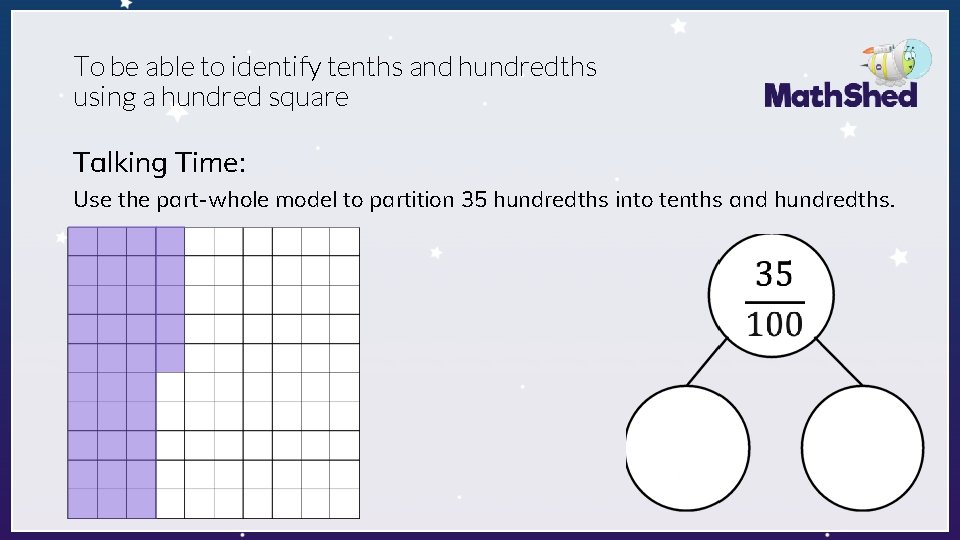
To be able to identify tenths and hundredths using a hundred square Talking Time: Use the part-whole model to partition 35 hundredths into tenths and hundredths.
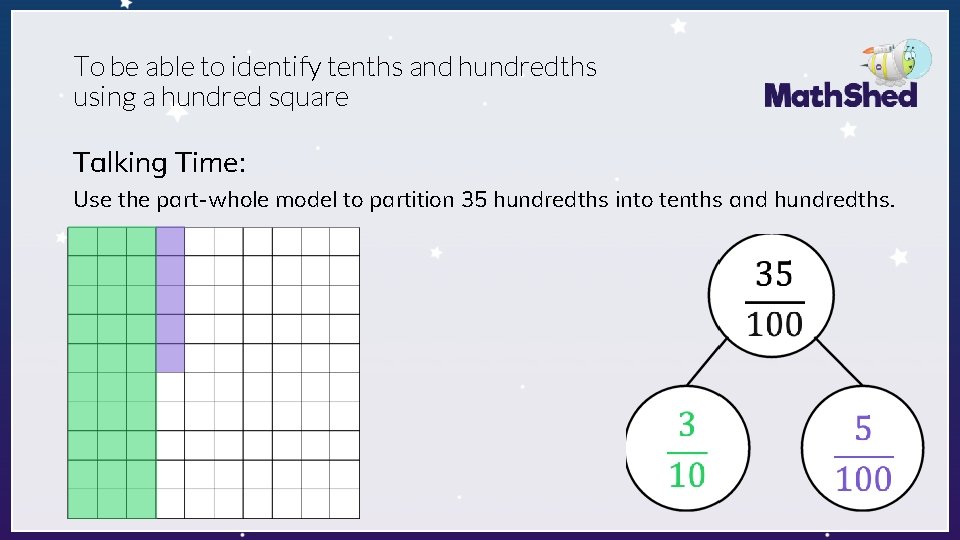
To be able to identify tenths and hundredths using a hundred square Talking Time: Use the part-whole model to partition 35 hundredths into tenths and hundredths.
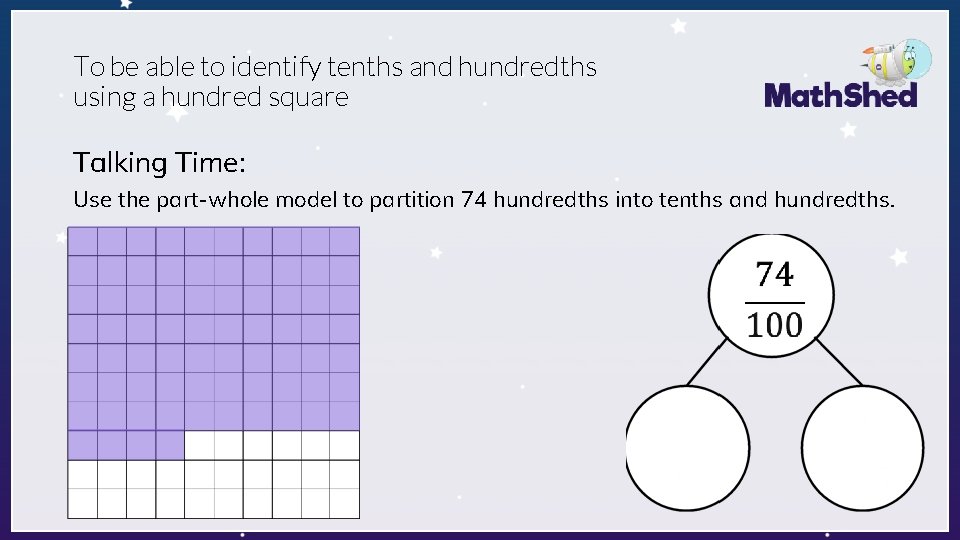
To be able to identify tenths and hundredths using a hundred square Talking Time: Use the part-whole model to partition 74 hundredths into tenths and hundredths.
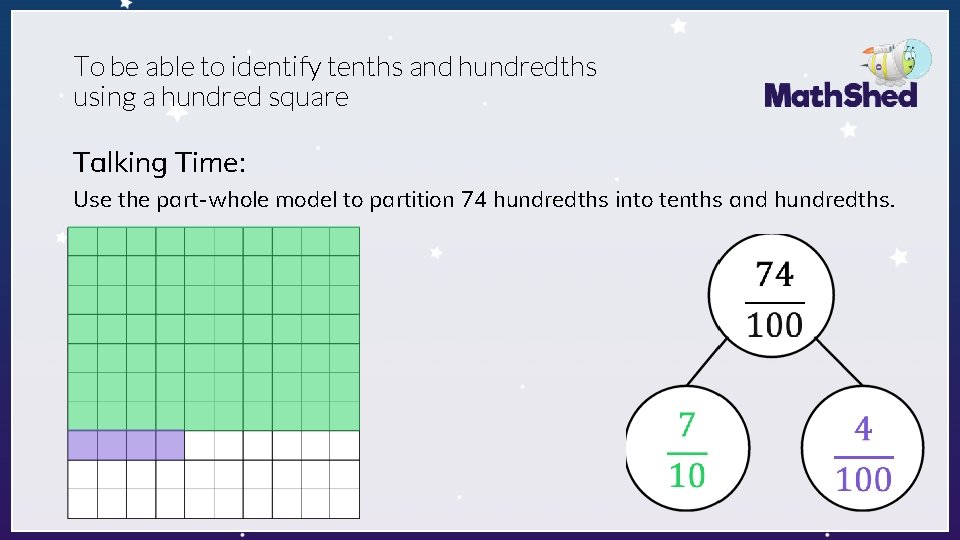
To be able to identify tenths and hundredths using a hundred square Talking Time: Use the part-whole model to partition 74 hundredths into tenths and hundredths.
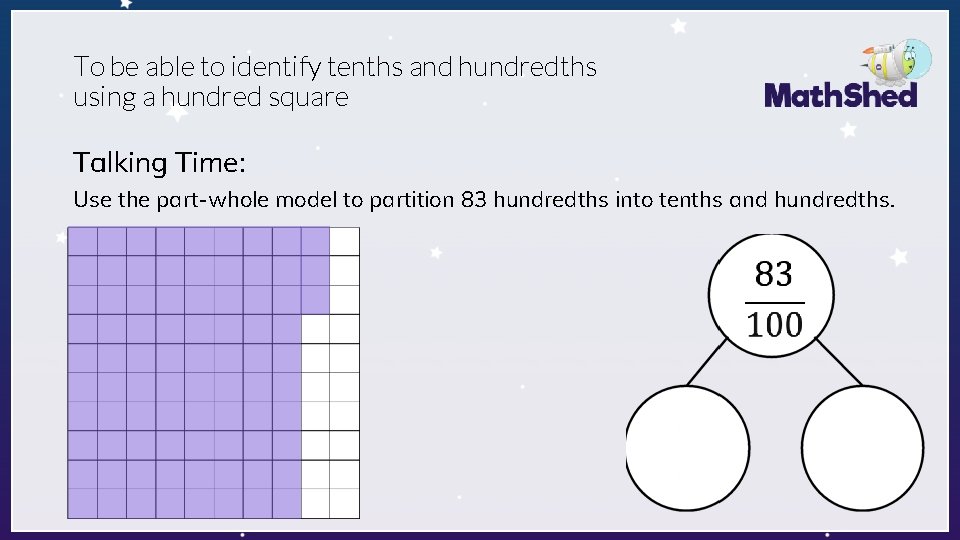
To be able to identify tenths and hundredths using a hundred square Talking Time: Use the part-whole model to partition 83 hundredths into tenths and hundredths.
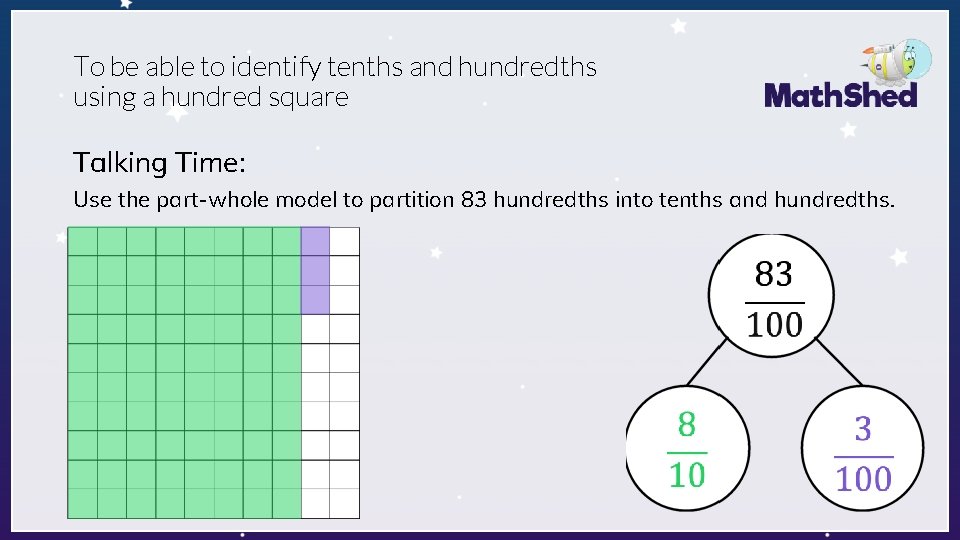
To be able to identify tenths and hundredths using a hundred square Talking Time: Use the part-whole model to partition 83 hundredths into tenths and hundredths.
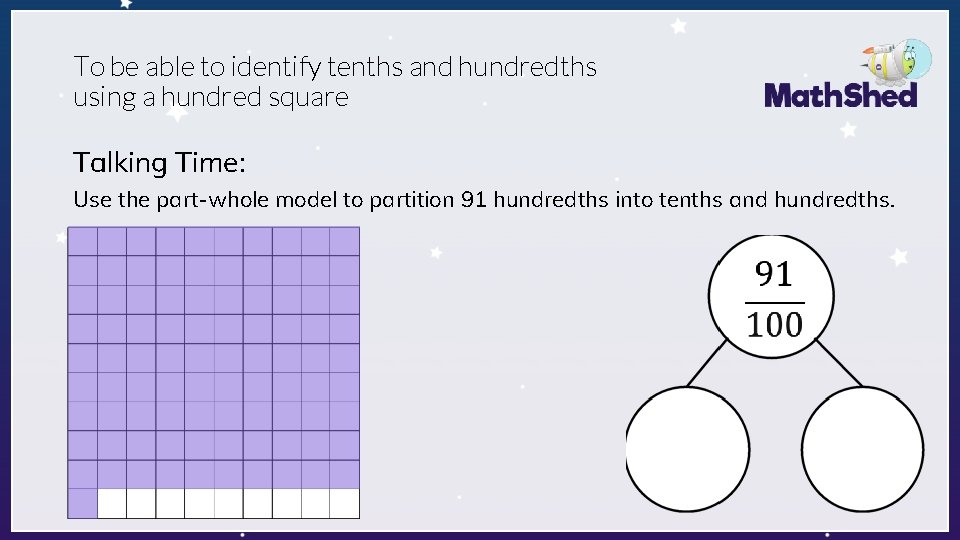
To be able to identify tenths and hundredths using a hundred square Talking Time: Use the part-whole model to partition 91 hundredths into tenths and hundredths.
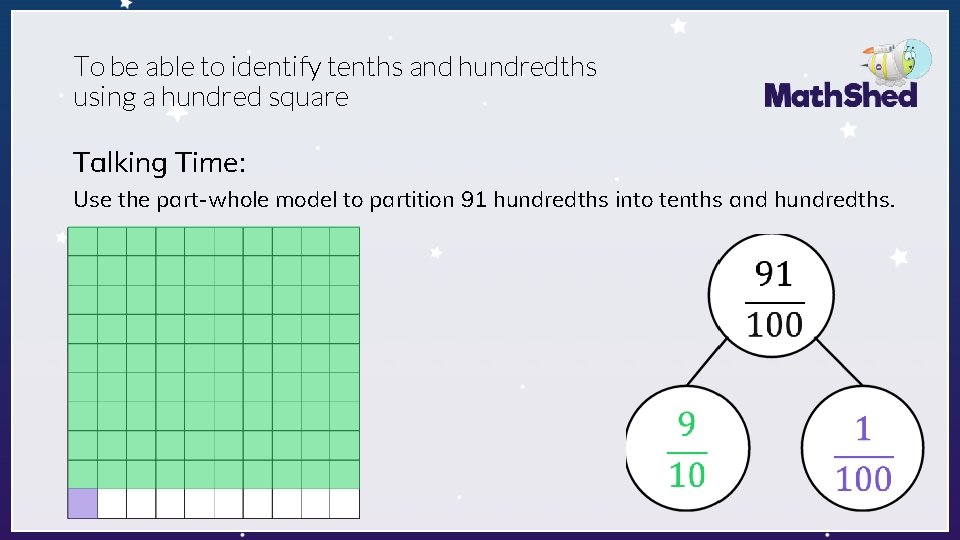
To be able to identify tenths and hundredths using a hundred square Talking Time: Use the part-whole model to partition 91 hundredths into tenths and hundredths.
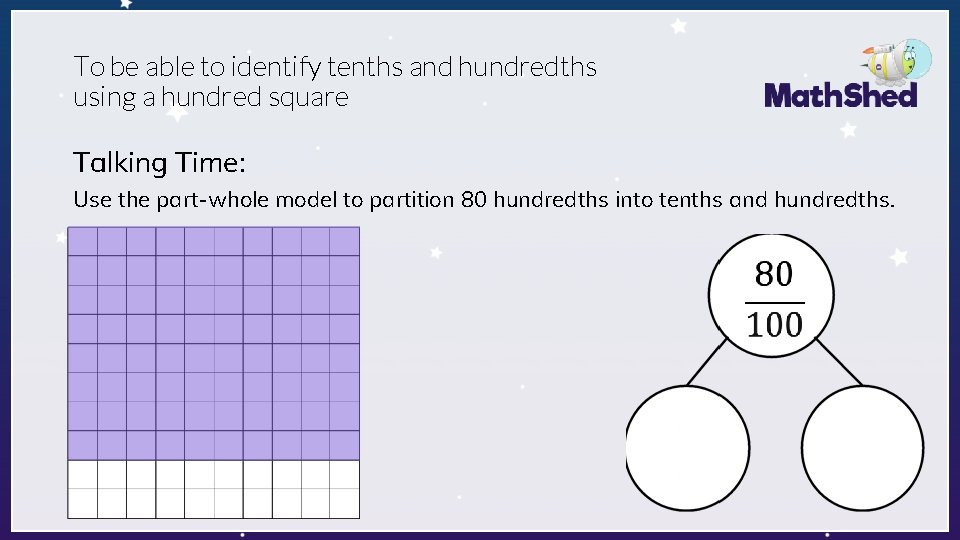
To be able to identify tenths and hundredths using a hundred square Talking Time: Use the part-whole model to partition 80 hundredths into tenths and hundredths.
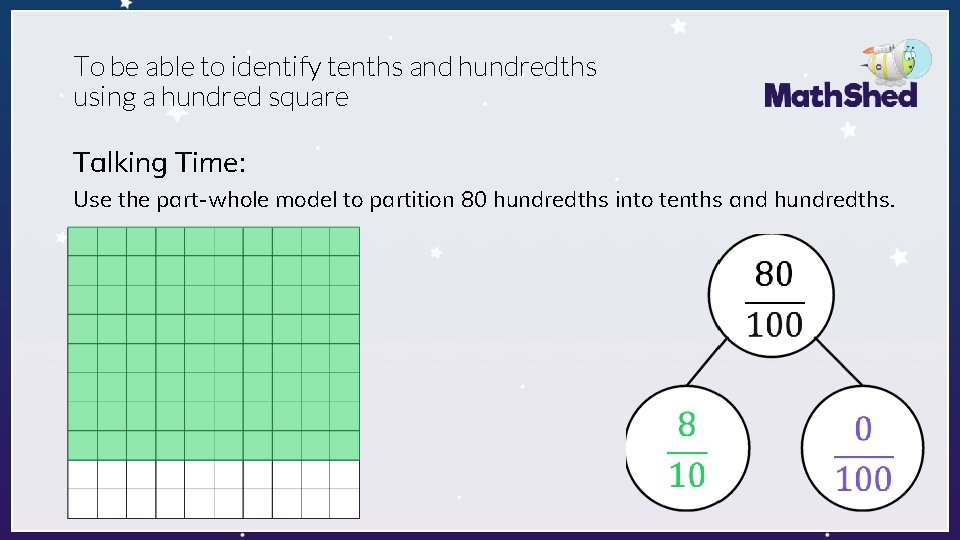
To be able to identify tenths and hundredths using a hundred square Talking Time: Use the part-whole model to partition 80 hundredths into tenths and hundredths.
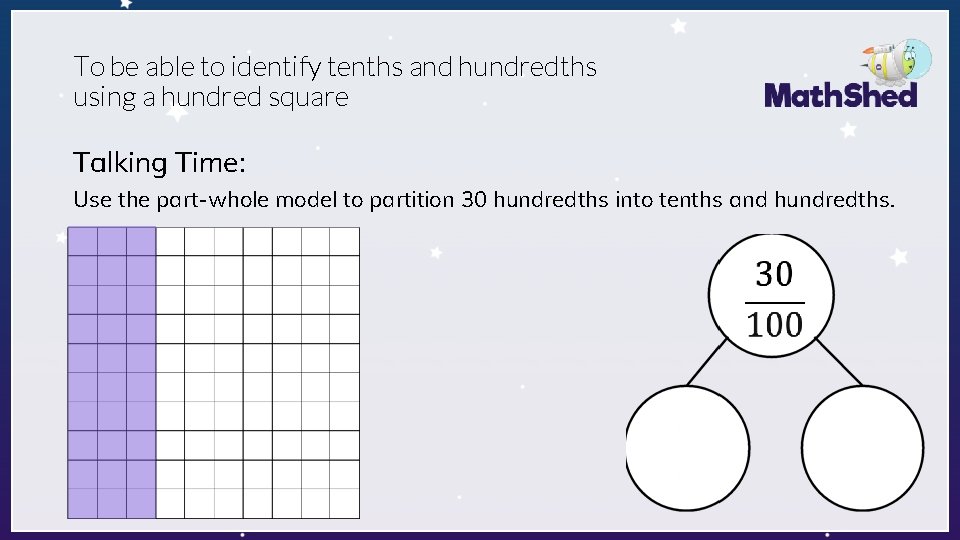
To be able to identify tenths and hundredths using a hundred square Talking Time: Use the part-whole model to partition 30 hundredths into tenths and hundredths.
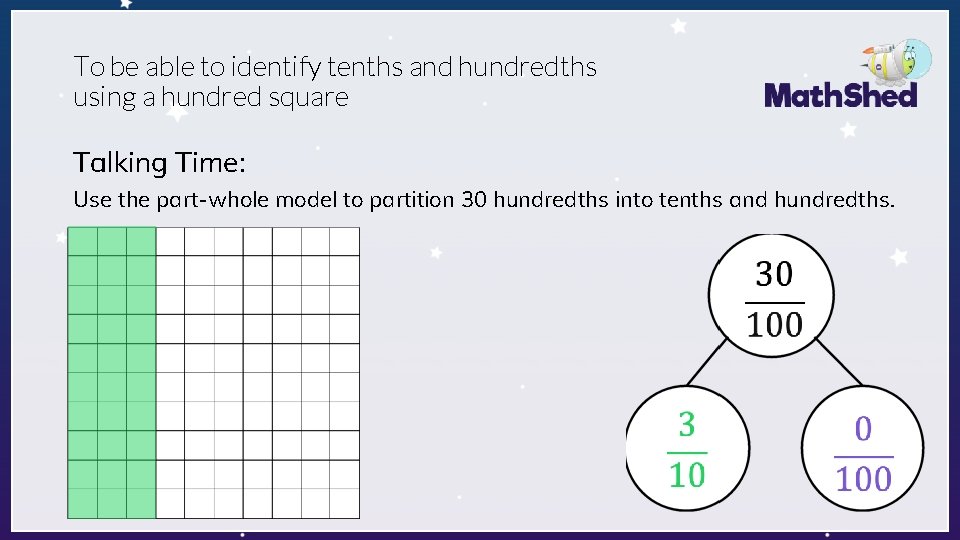
To be able to identify tenths and hundredths using a hundred square Talking Time: Use the part-whole model to partition 30 hundredths into tenths and hundredths.
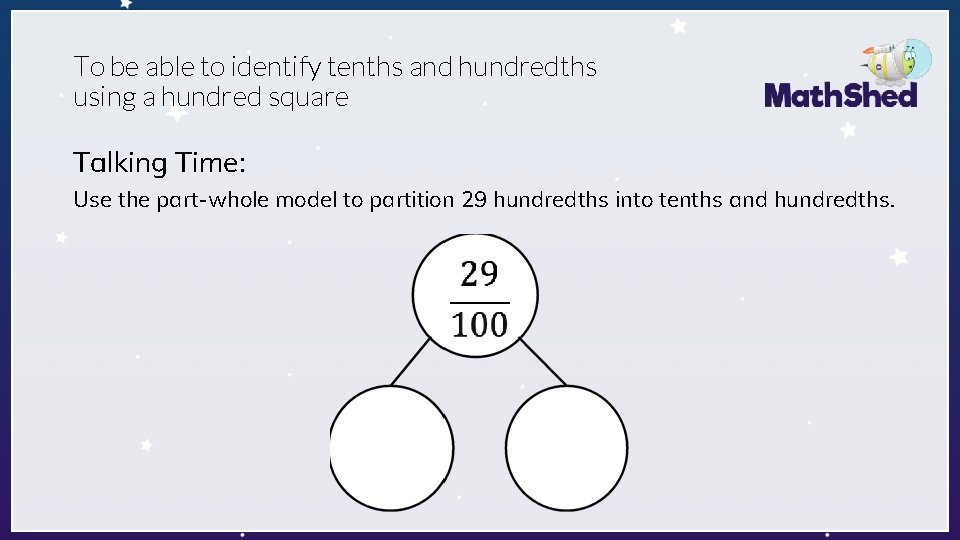
To be able to identify tenths and hundredths using a hundred square Talking Time: Use the part-whole model to partition 29 hundredths into tenths and hundredths.
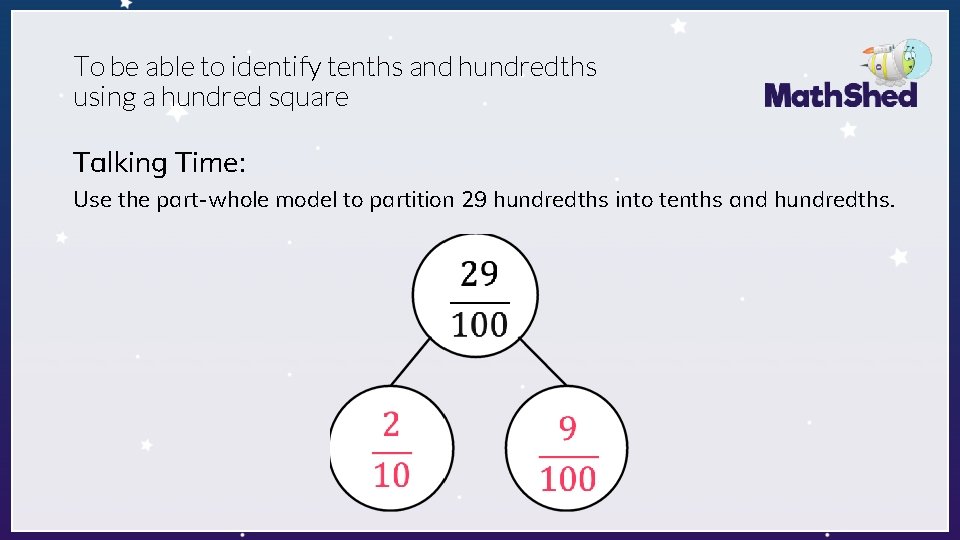
To be able to identify tenths and hundredths using a hundred square Talking Time: Use the part-whole model to partition 29 hundredths into tenths and hundredths.
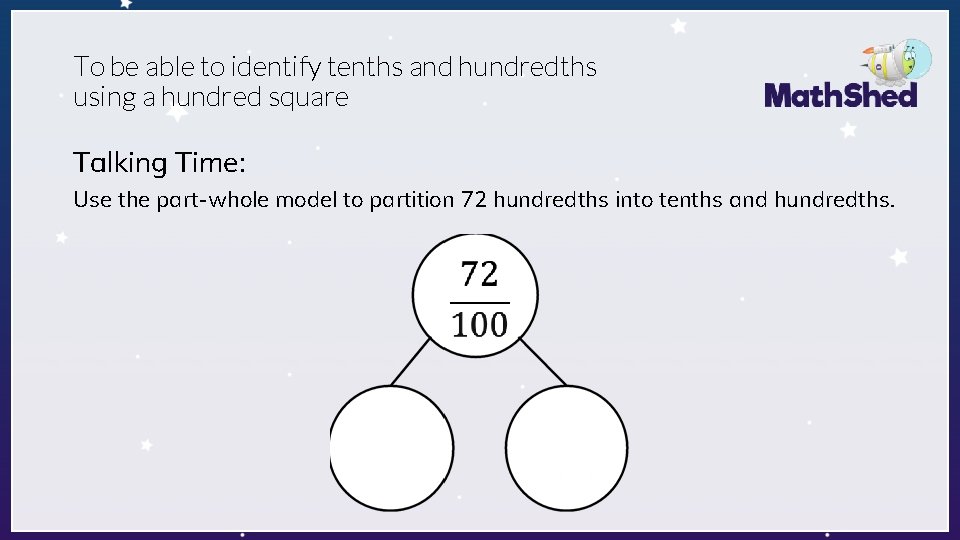
To be able to identify tenths and hundredths using a hundred square Talking Time: Use the part-whole model to partition 72 hundredths into tenths and hundredths.
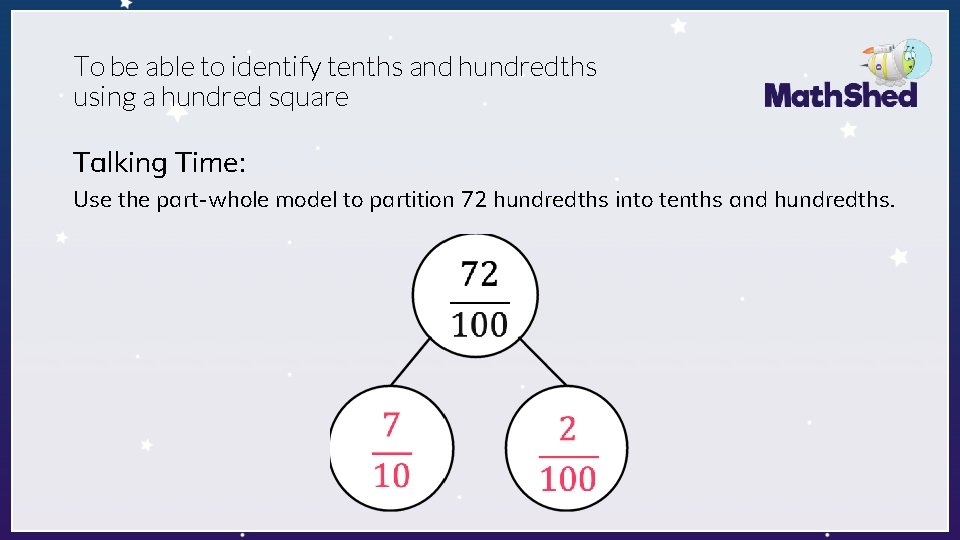
To be able to identify tenths and hundredths using a hundred square Talking Time: Use the part-whole model to partition 72 hundredths into tenths and hundredths.
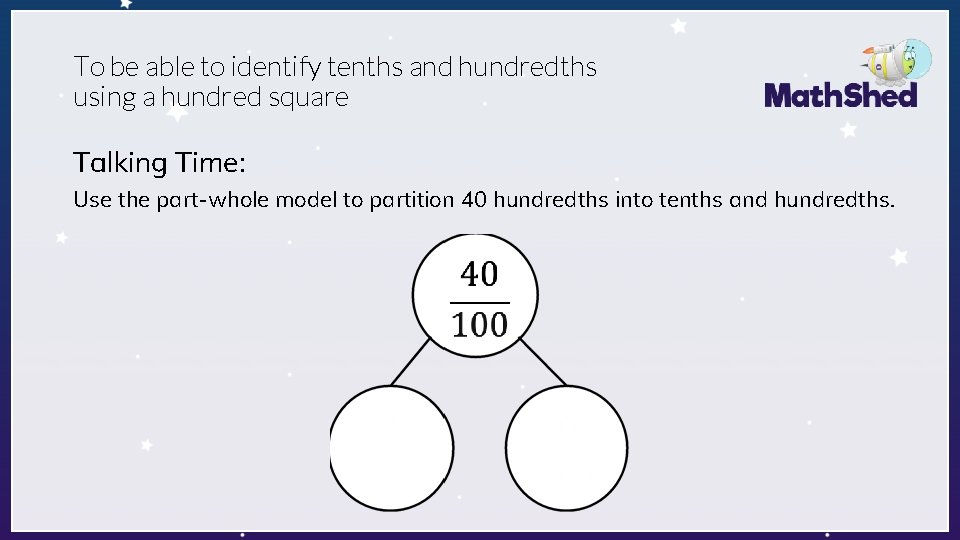
To be able to identify tenths and hundredths using a hundred square Talking Time: Use the part-whole model to partition 40 hundredths into tenths and hundredths.
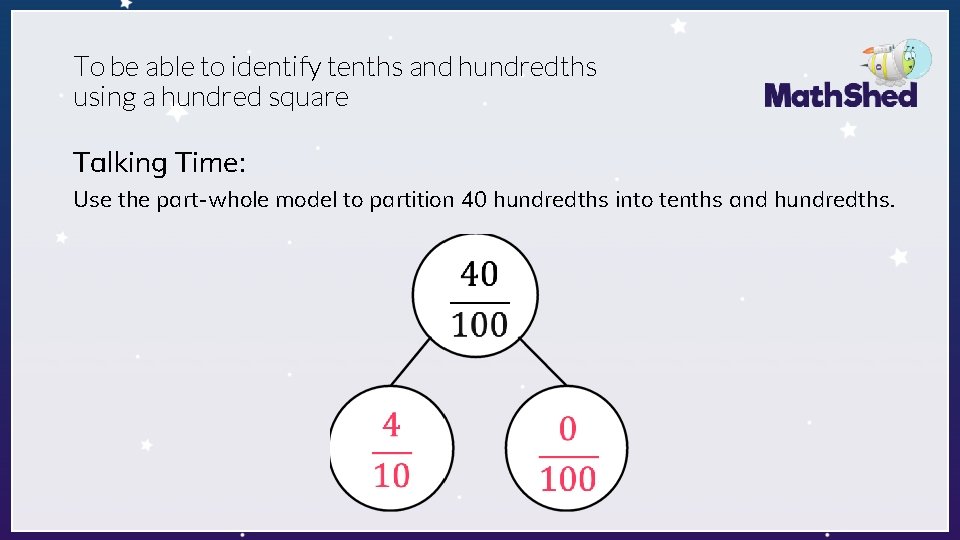
To be able to identify tenths and hundredths using a hundred square Talking Time: Use the part-whole model to partition 40 hundredths into tenths and hundredths.
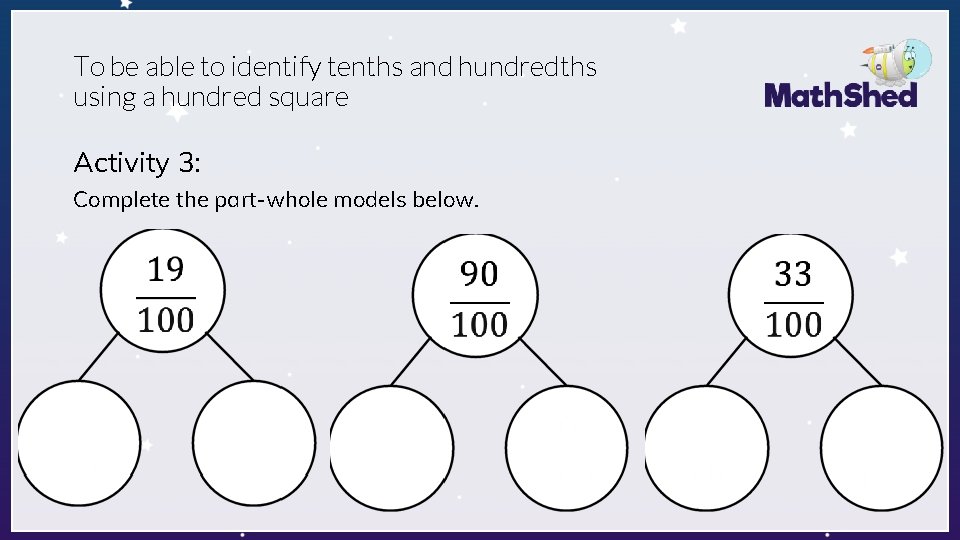
To be able to identify tenths and hundredths using a hundred square Activity 3: Complete the part-whole models below.
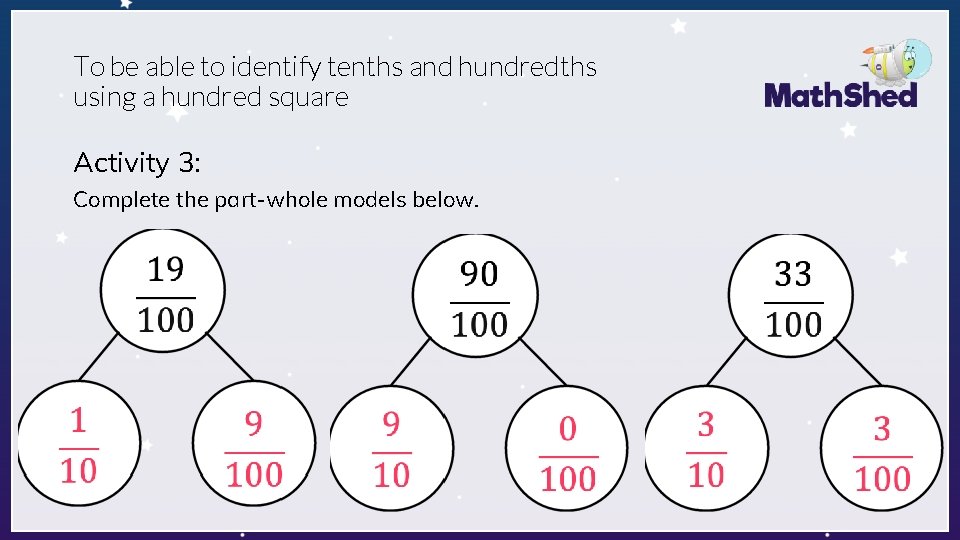
To be able to identify tenths and hundredths using a hundred square Activity 3: Complete the part-whole models below.
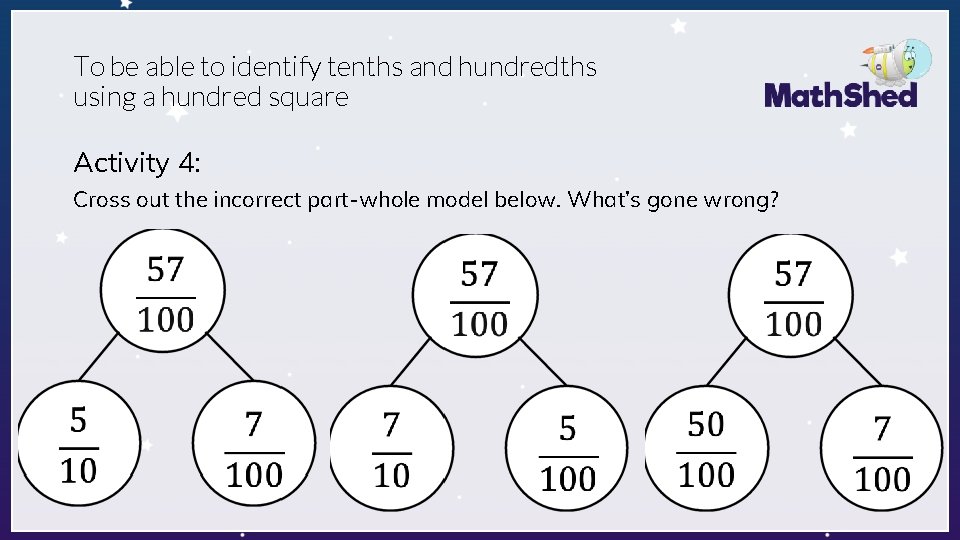
To be able to identify tenths and hundredths using a hundred square Activity 4: Cross out the incorrect part-whole model below. What’s gone wrong?
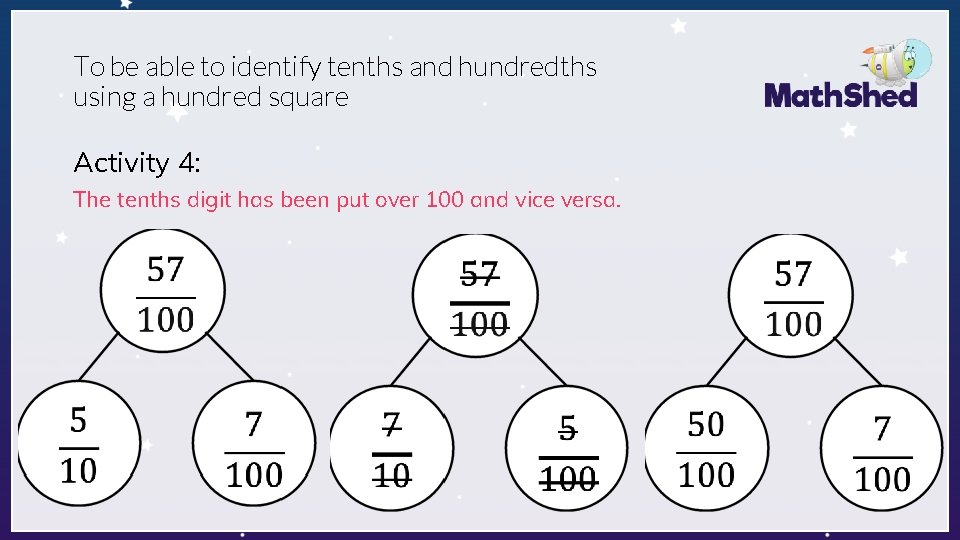
To be able to identify tenths and hundredths using a hundred square Activity 4: The tenths digit has been put over 100 and vice versa.
To be able to identify tenths and hundredths using a hundred square Activity 5: Jamal says, “Three tenths is equivalent to thirty hundredths. ” Ruth says, “Three hundredths is equal to three tenths. ” Who is correct? Who is incorrect? Explain your answer.
To be able to identify tenths and hundredths using a hundred square Activity 5: Jamal says, “Three tenths is equivalent to thirty hundredths. ” Ruth says, “Three hundredths is equal to three tenths. ” Jamal is correct, three tenths is equivalent to thirty hundredths as it would be three columns/rows in a hundred square, with each row/column equal to ten hundredths.
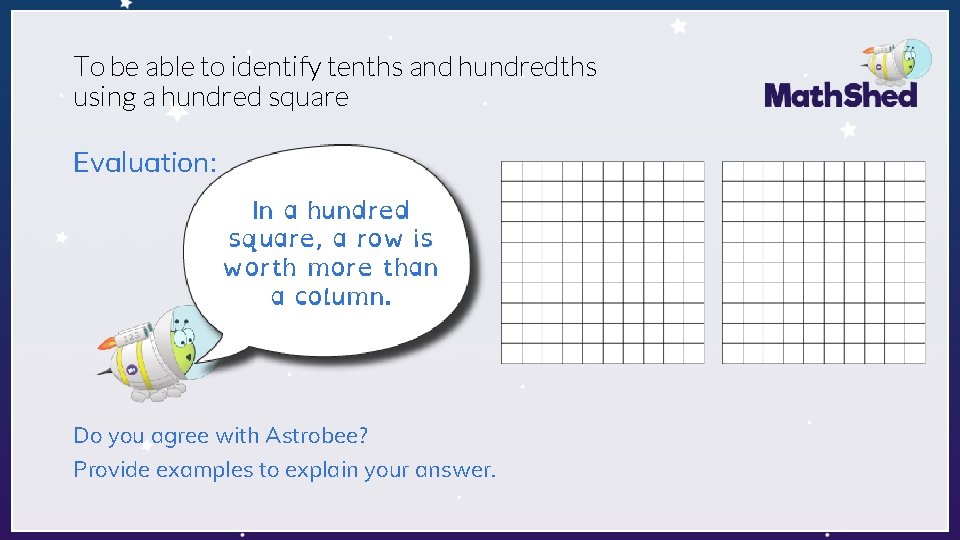
To be able to identify tenths and hundredths using a hundred square Evaluation: In a hundred square, a row is worth more than a column. Do you agree with Astrobee? Provide examples to explain your answer.
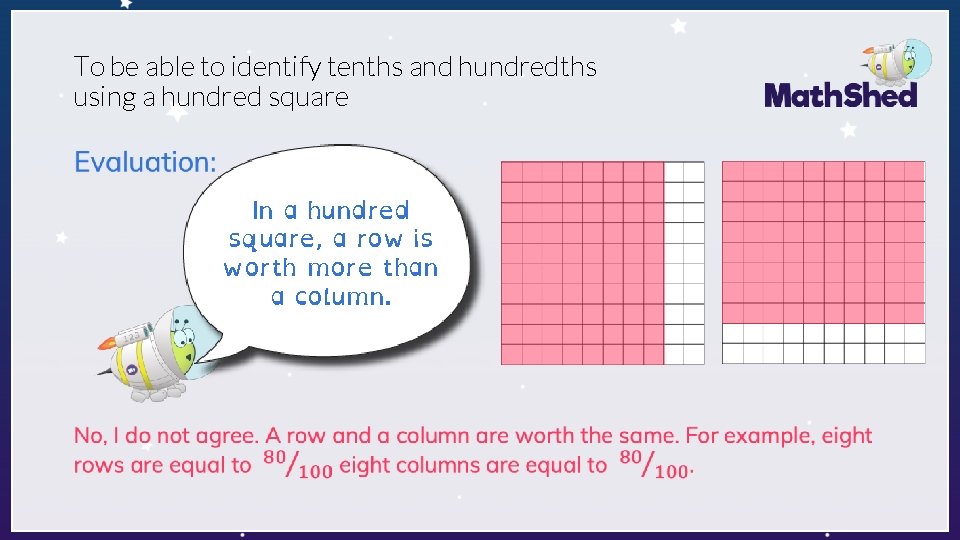
To be able to identify tenths and hundredths using a hundred square • In a hundred square, a row is worth more than a column.
To be able to identify tenths and hundredths using a hundred square Success criteria: ü I can use a hundred square to identify tenths and hundredths ü I can explain my reasoning when using a hundred square to identify tenths and hundredths Year 3 - Term 3 - Block 1 - Decimals - Lesson 1 - To be able to identify tenths and hundredths using a hundred square
- Slides: 59