
Year 2 National Curriculum Non Core Subjects Explanation
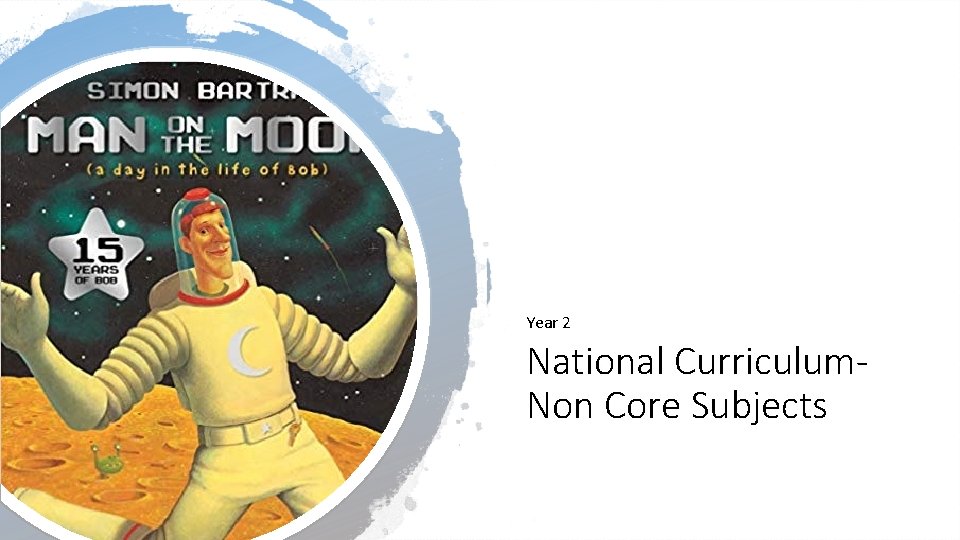
Year 2 National Curriculum. Non Core Subjects
Explanation During this unit, no Geography will be taught The final showcase will be…
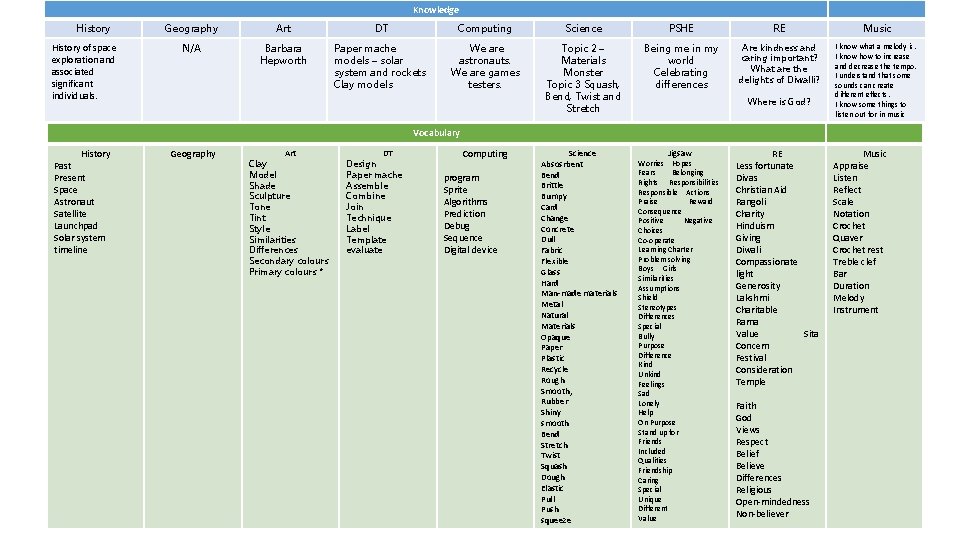
Knowledge History of space exploration and associated significant individuals. Geography Art DT Computing Science PSHE RE Music N/A Barbara Hepworth Paper mache models – solar system and rockets Clay models We are astronauts. We are games testers. Topic 2 – Materials Monster Topic 3 Squash, Bend, Twist and Stretch Being me in my world Celebrating differences Are kindness and caring important? What are the delights of Diwalli? I know what a melody is. I know how to increase and decrease the tempo. I understand that some sounds can create different effects. I know some things to listen out for in music Where is God? Vocabulary History Past Present Space Astronaut Satellite Launchpad Solar system timeline Geography Art Clay Model Shade Sculpture Tone Tint Style Similarities Differences Secondary colours Primary colours * DT Design Paper mache Assemble Combine Join Technique Label Template evaluate Computing program Sprite Algorithms Prediction Debug Sequence Digital device Science Absosrbent Bend Brittle Bumpy Card Change Concrete Dull Fabric Flexible Glass Hard Man-made materials Metal Natural Materials Opaque Paper Plastic Recycle Rough Smooth, Rubber Shiny smooth Bend Stretch Twist Squash Dough Elastic Pull Push squeeze Jigsaw Worries Hopes Fears Belonging Rights Responsibilities Responsible Actions Praise Reward Consequence Positive Negative Choices Co-operate Learning Charter Problem solving Boys Girls Similarities Assumptions Shield Stereotypes Differences Special Bully Purpose Difference Kind Unkind Feelings Sad Lonely Help On Purpose Stand up for Friends Included Qualities Friendship Caring Special Unique Different Value RE Less fortunate Divas Christian Aid Rangoli Charity Hinduism Giving Diwali Compassionate light Generosity Lakshmi Charitable Rama Value Sita Concern Festival Consideration Temple Faith God Views Respect Belief Believe Differences Religious Open-mindedness Non-believer Music Appraise Listen Reflect Scale Notation Crochet Quaver Crochet rest Treble clef Bar Duration Melody Instrument

National Curriculum Skills History Develop an awareness of the past, using common words and phrases relating to the passing of time. Know where the people and events they study fit within a chronological framework and identify similarities and differences between ways of life in different periods. Use a wide vocabulary of everyday historical terms. Ask and answer questions, choosing and using parts of stories and other sources to show that they know and understand key features of events. Understand some of the ways in which we find out about the past and identify different ways in which it is represented. Geography N/A Art To use a range of materials creatively to design and make products To use drawing, painting and sculpture to develop and share their ideas, experiences and imagination To develop a wide range of art and design techniques in using colour, pattern, texture, line, shape, form and space To know about the work of a range of artists, craft makers and designers, describing the differences and similarities between different practices and disciplines, and making links to their own work. DT Select from and use a wide range of materials and components, including construction materials, textiles and ingredients, according to their characteristics Computing 2. 1 we are astronauts Understand what algorithms are; how they are implemented as programs on digital devices; and that programs execute by following precise and unambiguous instructions. Create and debug simple programs. Use logical reasoning to predict the behavior of simple programs. 2. 2 we are games testers Understand what algorithms are; how they are implemented as programs on digital devices; and that programs execute by following precise and unambiguous instructions. Use logical reasoning to predict the behavior of simple programs Recognise common uses of information technology beyond school Use technology safely and respectfully, keeping personal information private. Science NC Working Scientifically + Identify, name and compare the suitability of a variety of everyday materials including wood, plastic, glass, metal, water, and rock for particular uses. Describe the simple physical properties of a variety of everyday materials. Find out how the shapes of solid objects made from some materials can be changed by squashing, bending, twisting and stretching PSHE RE Music Being me in my world I recognise when I feel worried and know who to ask for help I can help to make my class a safe and fair place I can help make my class a safe and fair place I can work cooperatively I am choosing to follow the Learning Charter Identify the importance, for some people, of belonging to a religion and recognise the difference this makes to their lives. Reflect on and consider religious concepts such as concern and thanks. Reflect on spiritual and moral values relate to their own behaviours. I can sing and follow a melody. I can sing or clap increasing and decreasing tempo. I can choose sounds which create an effect. I can listen out for particular things when listening to music. Celebrating differences I can tell you how someone who is bullied feels I can be kind to children who are bullied I know when and how to stand up for myself and others I know how to get help if I am being bullied I know how it feels to be a friend and have a Friend I understand these differences make us all special and unique Ask and respond imaginatively to puzzling questions, communicating their ideas. Reflect on and consider, religious and spiritual feelings, thoughts about God. Identify what matters to them and others – religious viewpoints. Develop and show respect for others views , religions and cultural backgrounds.
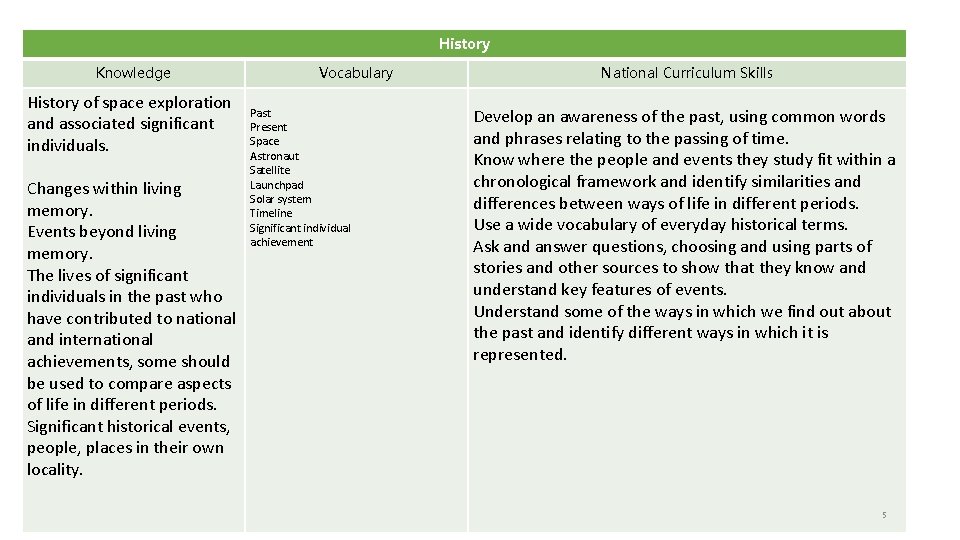
History Knowledge History of space exploration and associated significant individuals. Changes within living memory. Events beyond living memory. The lives of significant individuals in the past who have contributed to national and international achievements, some should be used to compare aspects of life in different periods. Significant historical events, people, places in their own locality. Vocabulary Past Present Space Astronaut Satellite Launchpad Solar system Timeline Significant individual achievement National Curriculum Skills Develop an awareness of the past, using common words and phrases relating to the passing of time. Know where the people and events they study fit within a chronological framework and identify similarities and differences between ways of life in different periods. Use a wide vocabulary of everyday historical terms. Ask and answer questions, choosing and using parts of stories and other sources to show that they know and understand key features of events. Understand some of the ways in which we find out about the past and identify different ways in which it is represented. 5
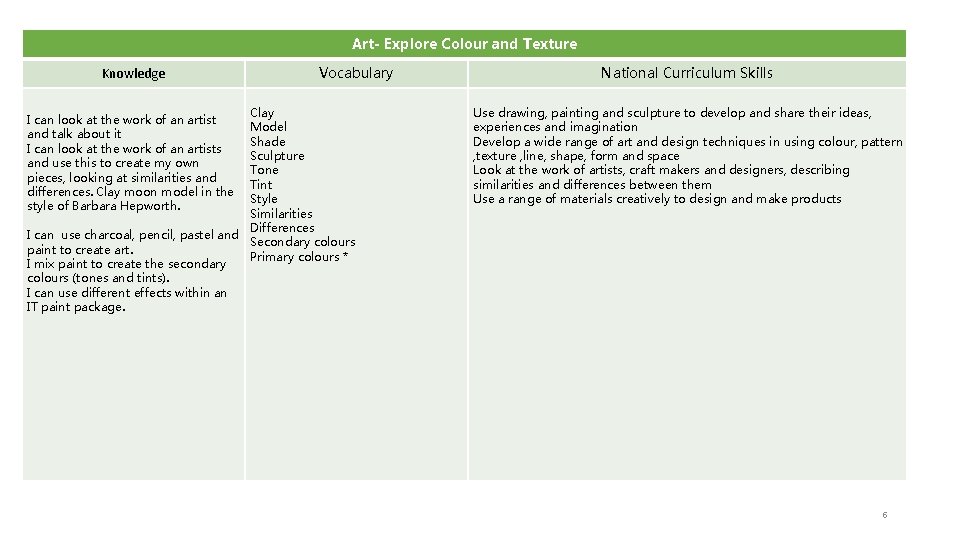
Art- Explore Colour and Texture Knowledge Vocabulary Clay Model Shade Sculpture Tone Tint Style Similarities Differences I can use charcoal, pencil, pastel and Secondary colours paint to create art. Primary colours * I mix paint to create the secondary colours (tones and tints). I can use different effects within an IT paint package. I can look at the work of an artist and talk about it I can look at the work of an artists and use this to create my own pieces, looking at similarities and differences. Clay moon model in the style of Barbara Hepworth. National Curriculum Skills Use drawing, painting and sculpture to develop and share their ideas, experiences and imagination Develop a wide range of art and design techniques in using colour, pattern , texture , line, shape, form and space Look at the work of artists, craft makers and designers, describing similarities and differences between them Use a range of materials creatively to design and make products 6
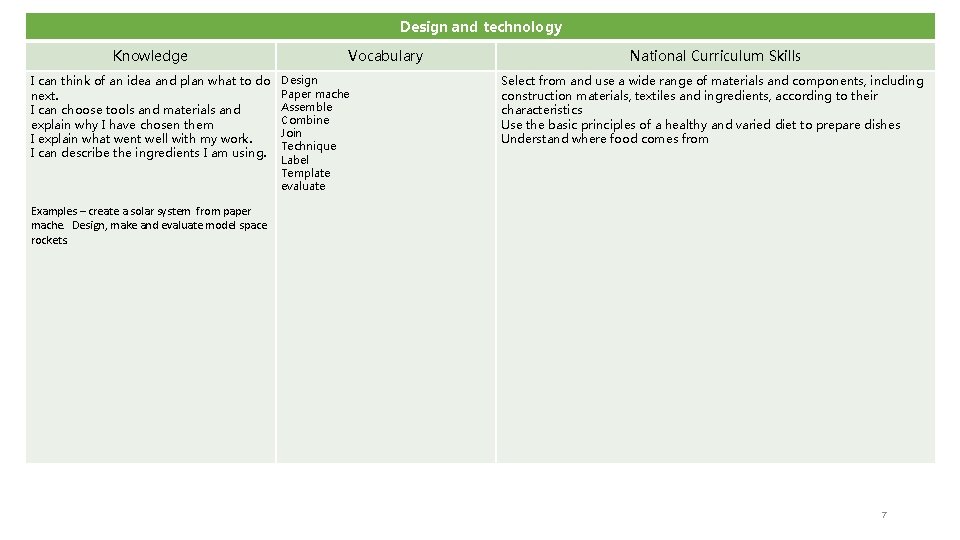
Design and technology Knowledge I can think of an idea and plan what to do next. I can choose tools and materials and explain why I have chosen them I explain what went well with my work. I can describe the ingredients I am using. Vocabulary Design Paper mache Assemble Combine Join Technique Label Template evaluate National Curriculum Skills Select from and use a wide range of materials and components, including construction materials, textiles and ingredients, according to their characteristics Use the basic principles of a healthy and varied diet to prepare dishes Understand where food comes from Examples – create a solar system from paper mache. Design, make and evaluate model space rockets. 7

Computing 2. 1 We are astronauts and 2. 2 we are games testers Knowledge 2. 1 We are astronauts program Sprite Have a clear understanding of algorithms as sequences of instructions. Algorithms Convert simple algorithms to programs Prediction Debug Predict what a simple program will do Sequence Spot and fix (debug) errors in their Digital device programs. Vocabulary National Curriculum Skills 2. 1 we are astronauts Understand what algorithms are; how they are implemented as programs on digital devices; and that programs execute by following precise and unambiguous instructions. Create and debug simple programs. Use logical reasoning to predict the behavior of simple programs. 2. 2 we are games testers Describe carefully what happens in computer games Use logical reasoning to make predictions of what a program will do Test these predictions Think critically about computer games and their uses. Be aware of how to use games safely and in balance with other activities. 2. 2 we are games testers Understand what algorithms are; how they are implemented as programs on digital devices; and that programs execute by following precise and unambiguous instructions. Use logical reasoning to predict the behavior of simple programs Recognise common uses of information technology beyond school Use technology safely and respectfully, keeping personal information private. 8
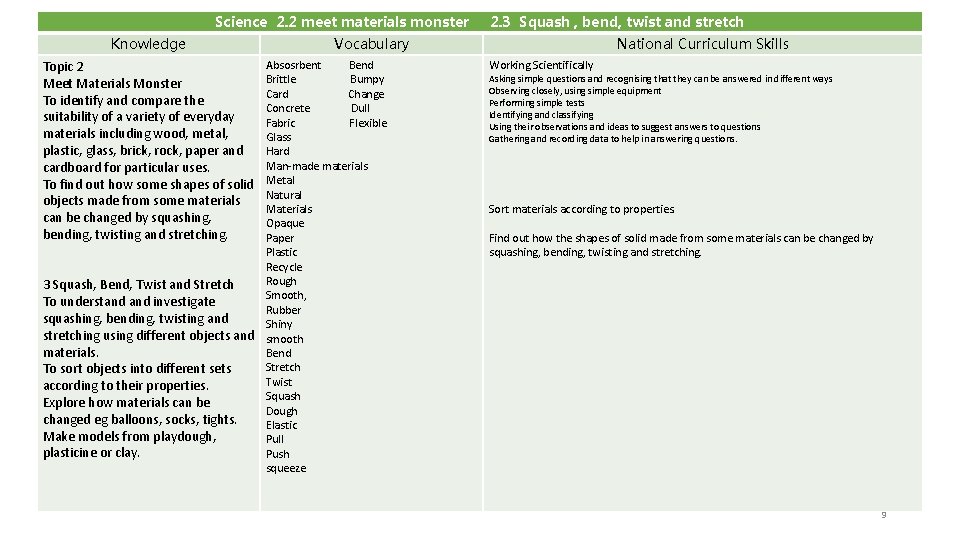
Science 2. 2 meet materials monster Knowledge Topic 2 Meet Materials Monster To identify and compare the suitability of a variety of everyday materials including wood, metal, plastic, glass, brick, rock, paper and cardboard for particular uses. To find out how some shapes of solid objects made from some materials can be changed by squashing, bending, twisting and stretching. 2. 3 Squash , bend, twist and stretch Vocabulary Absosrbent Bend Brittle Bumpy Card Change Concrete Dull Fabric Flexible Glass Hard Man-made materials Metal Natural Materials Opaque Paper Plastic Recycle Rough 3 Squash, Bend, Twist and Stretch Smooth, To understand investigate Rubber squashing, bending, twisting and Shiny stretching using different objects and smooth materials. Bend Stretch To sort objects into different sets Twist according to their properties. Squash Explore how materials can be Dough changed eg balloons, socks, tights. Elastic Make models from playdough, Pull plasticine or clay. Push squeeze National Curriculum Skills Working Scientifically Asking simple questions and recognising that they can be answered in different ways Observing closely, using simple equipment Performing simple tests Identifying and classifying Using their observations and ideas to suggest answers to questions Gathering and recording data to help in answering questions. Sort materials according to properties. Find out how the shapes of solid made from some materials can be changed by squashing, bending, twisting and stretching. 9
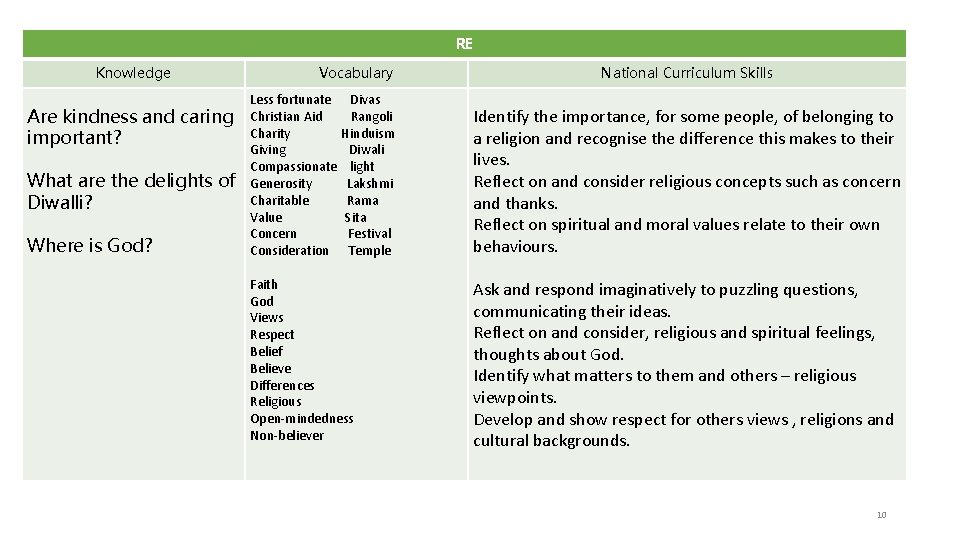
RE Knowledge Are kindness and caring important? What are the delights of Diwalli? Where is God? Vocabulary National Curriculum Skills Less fortunate Divas Christian Aid Rangoli Charity Hinduism Giving Diwali Compassionate light Generosity Lakshmi Charitable Rama Value Sita Concern Festival Consideration Temple Identify the importance, for some people, of belonging to a religion and recognise the difference this makes to their lives. Reflect on and consider religious concepts such as concern and thanks. Reflect on spiritual and moral values relate to their own behaviours. Faith God Views Respect Belief Believe Differences Religious Open-mindedness Non-believer Ask and respond imaginatively to puzzling questions, communicating their ideas. Reflect on and consider, religious and spiritual feelings, thoughts about God. Identify what matters to them and others – religious viewpoints. Develop and show respect for others views , religions and cultural backgrounds. 10
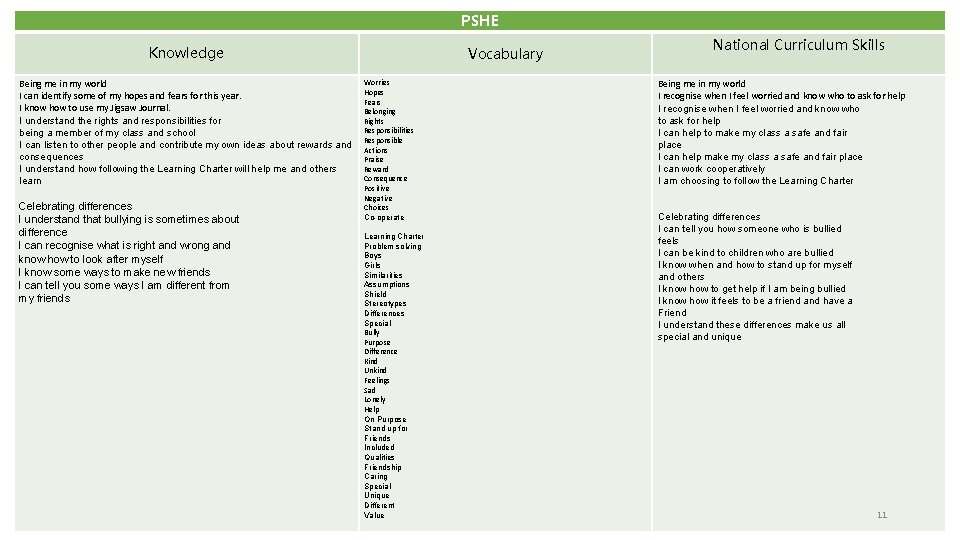
PSHE Knowledge Being me in my world I can identify some of my hopes and fears for this year. I know how to use my Jigsaw Journal. I understand the rights and responsibilities for being a member of my class and school I can listen to other people and contribute my own ideas about rewards and consequences I understand how following the Learning Charter will help me and others learn Celebrating differences I understand that bullying is sometimes about difference I can recognise what is right and wrong and know how to look after myself I know some ways to make new friends I can tell you some ways I am different from my friends Vocabulary Worries Hopes Fears Belonging Rights Responsibilities Responsible Actions Praise Reward Consequence Positive Negative Choices Co-operate Learning Charter Problem solving Boys Girls Similarities Assumptions Shield Stereotypes Differences Special Bully Purpose Difference Kind Unkind Feelings Sad Lonely Help On Purpose Stand up for Friends Included Qualities Friendship Caring Special Unique Different Value National Curriculum Skills Being me in my world I recognise when I feel worried and know who to ask for help I can help to make my class a safe and fair place I can help make my class a safe and fair place I can work cooperatively I am choosing to follow the Learning Charter Celebrating differences I can tell you how someone who is bullied feels I can be kind to children who are bullied I know when and how to stand up for myself and others I know how to get help if I am being bullied I know how it feels to be a friend and have a Friend I understand these differences make us all special and unique 11
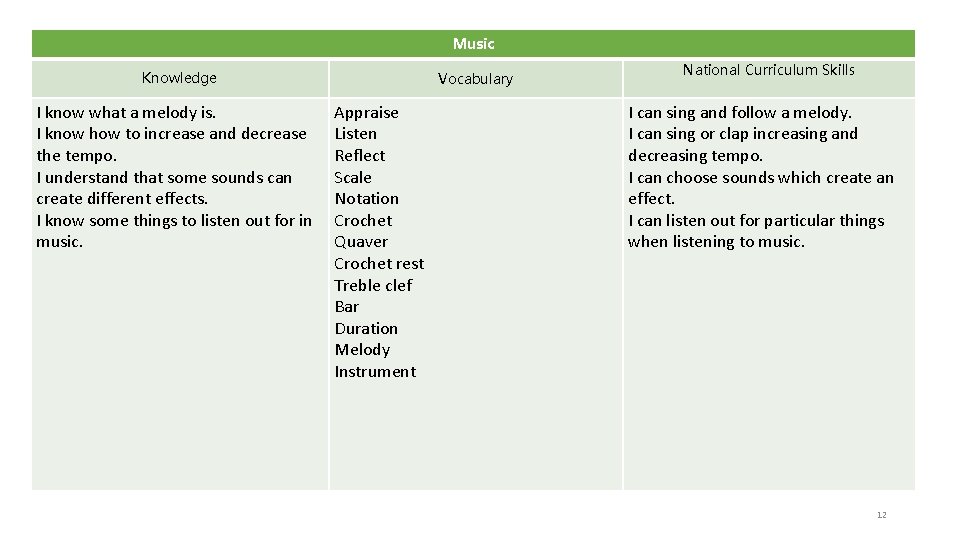
Music Knowledge I know what a melody is. I know how to increase and decrease the tempo. I understand that some sounds can create different effects. I know some things to listen out for in music. Vocabulary Appraise Listen Reflect Scale Notation Crochet Quaver Crochet rest Treble clef Bar Duration Melody Instrument National Curriculum Skills I can sing and follow a melody. I can sing or clap increasing and decreasing tempo. I can choose sounds which create an effect. I can listen out for particular things when listening to music. 12
Assessment for learning • The assessments should take place at the end of each taught unit or and the end of the topic • Assessments need to be linked to the knowledge objectives that have been taught. 13
- Slides: 13