
Year 2 Curriculum presentation What we will talk
- Slides: 19
Year 2 Curriculum presentation
What we will talk about this evening • The purpose of this evening is to go over general information relating to Year 2 and to give you an overview of the curriculum coverage and end of year expectations. • Please do stop me and ask questions at any time!
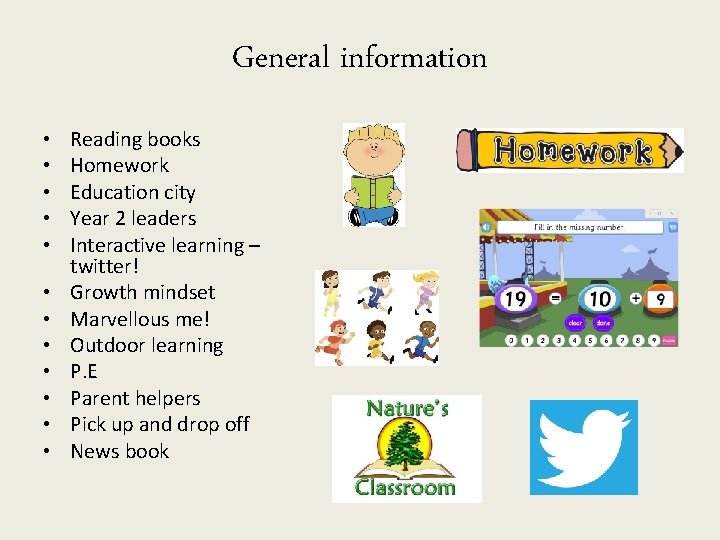
General information • • • Reading books Homework Education city Year 2 leaders Interactive learning – twitter! Growth mindset Marvellous me! Outdoor learning P. E Parent helpers Pick up and drop off News book
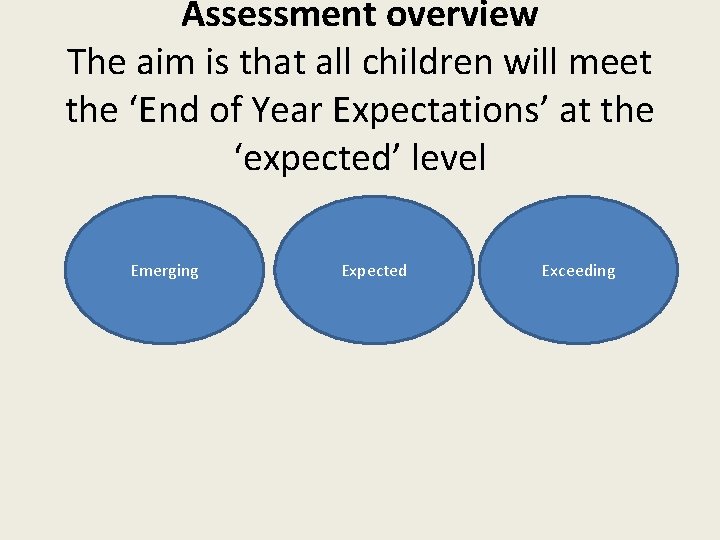
Assessment overview The aim is that all children will meet the ‘End of Year Expectations’ at the ‘expected’ level Emerging Expected Exceeding
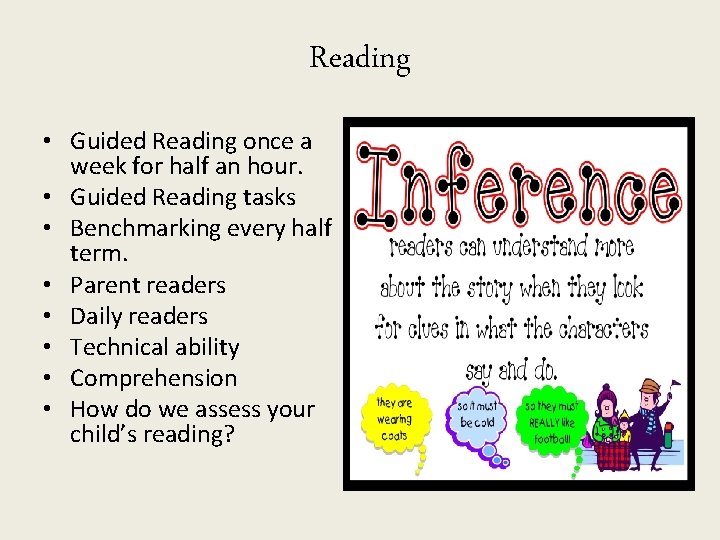
Reading • Guided Reading once a week for half an hour. • Guided Reading tasks • Benchmarking every half term. • Parent readers • Daily readers • Technical ability • Comprehension • How do we assess your child’s reading?
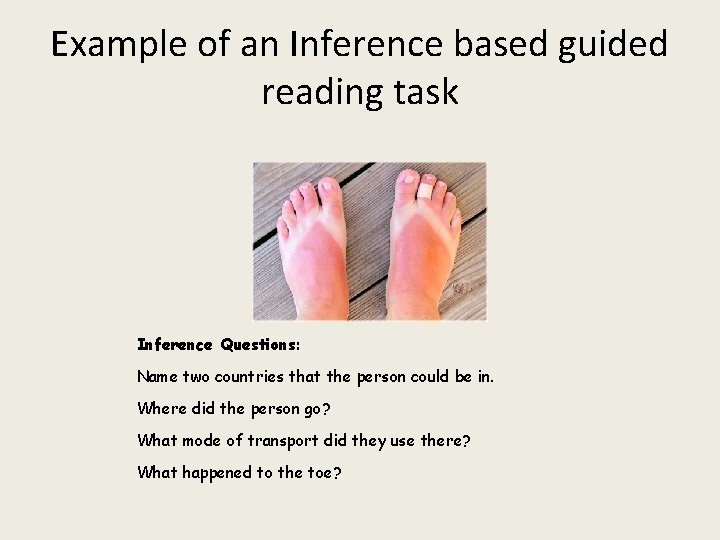
Example of an Inference based guided reading task Inference Questions: Name two countries that the person could be in. Where did the person go? What mode of transport did they use there? What happened to the toe?
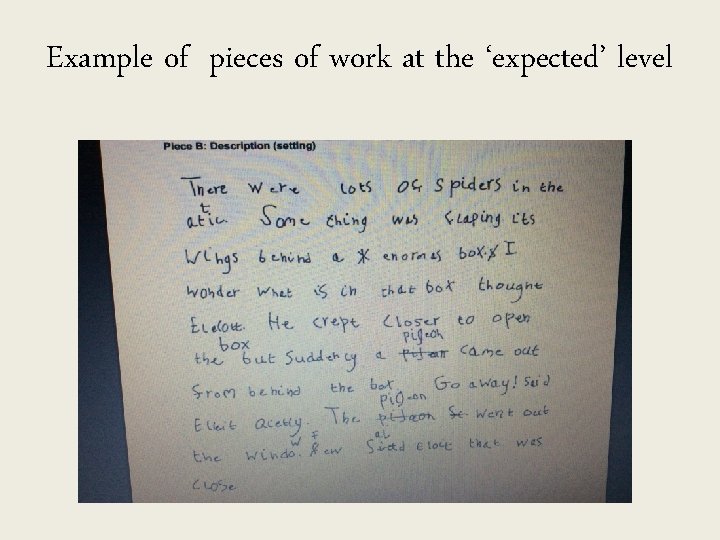
Writing • Writing from across the curriculum is used for assessment • A range of fiction, nonfiction and poetry • Meaningful for the children – topic related • Opportunities for peer and self assessment and editing
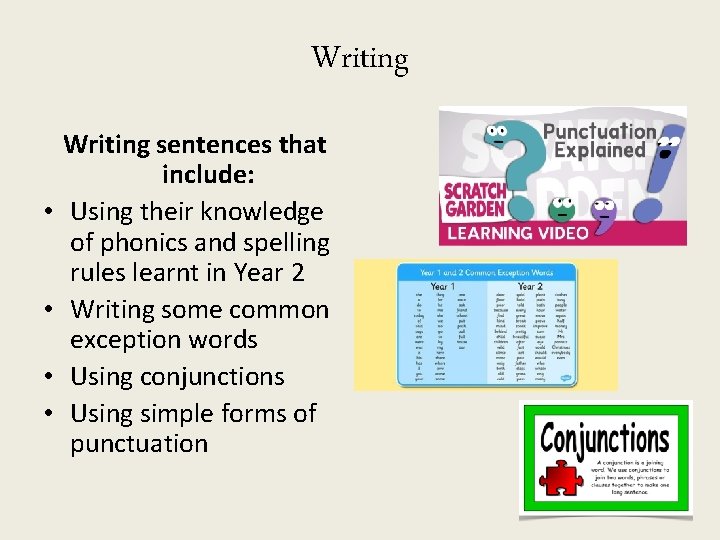
Writing • • Writing sentences that include: Using their knowledge of phonics and spelling rules learnt in Year 2 Writing some common exception words Using conjunctions Using simple forms of punctuation
Grammar • Full range of simple punctuation • Adjectives • Verb • Noun • Proper noun • Adverb • Correct use of tenses • Different types of sentences
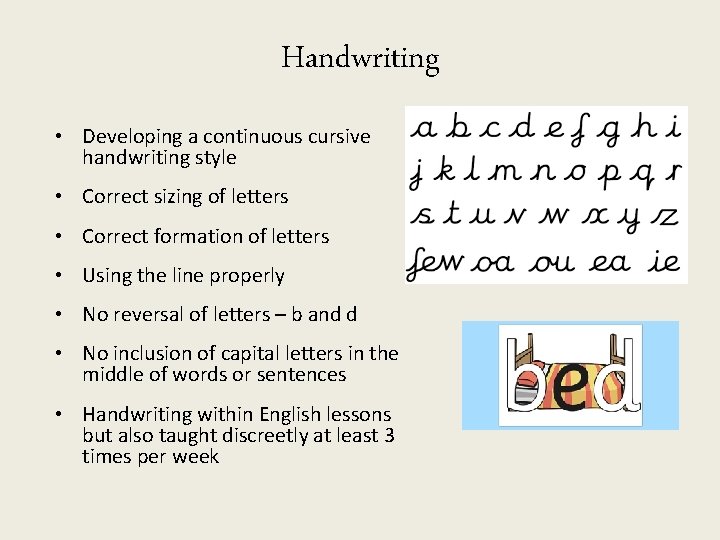
Handwriting • Developing a continuous cursive handwriting style • Correct sizing of letters • Correct formation of letters • Using the line properly • No reversal of letters – b and d • No inclusion of capital letters in the middle of words or sentences • Handwriting within English lessons but also taught discreetly at least 3 times per week
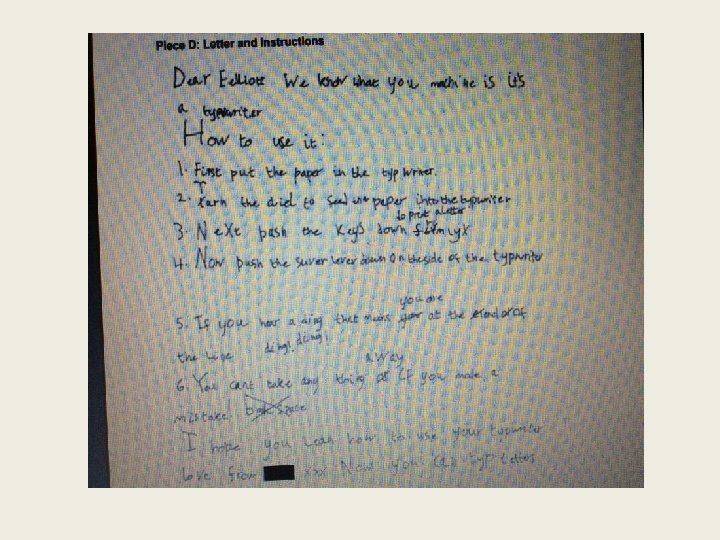
Example of pieces of work at the ‘expected’ level
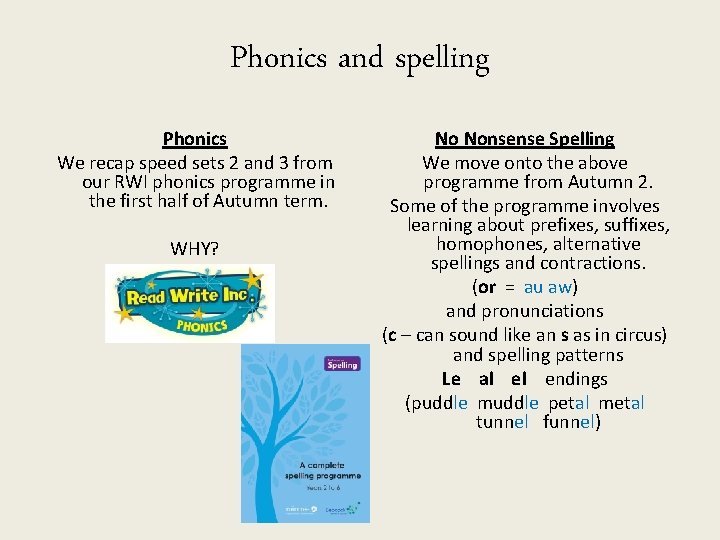
Phonics and spelling Phonics We recap speed sets 2 and 3 from our RWI phonics programme in the first half of Autumn term. WHY? No Nonsense Spelling We move onto the above programme from Autumn 2. Some of the programme involves learning about prefixes, suffixes, homophones, alternative spellings and contractions. (or = au aw) and pronunciations (c – can sound like an s as in circus) and spelling patterns Le al el endings (puddle muddle petal metal tunnel funnel)
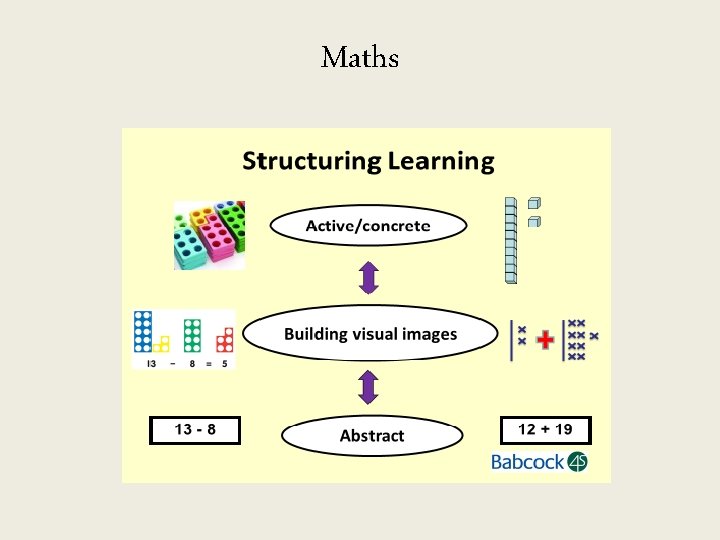
Maths
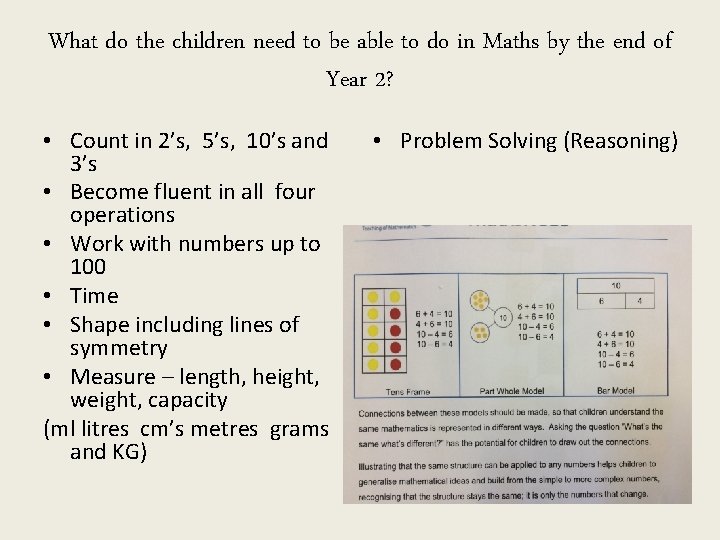
What do the children need to be able to do in Maths by the end of Year 2? • Count in 2’s, 5’s, 10’s and 3’s • Become fluent in all four operations • Work with numbers up to 100 • Time • Shape including lines of symmetry • Measure – length, height, weight, capacity (ml litres cm’s metres grams and KG) • Problem Solving (Reasoning)
All children cover the same content but work at their own fluency and reasoning level • We offer the children ‘self selection’ • Different ‘stars’ (1, 2 or 3) for different levels of challenge and the children choose! • This encourages children to feel confident and in control. • Children are expected to challenge themselves when they can.
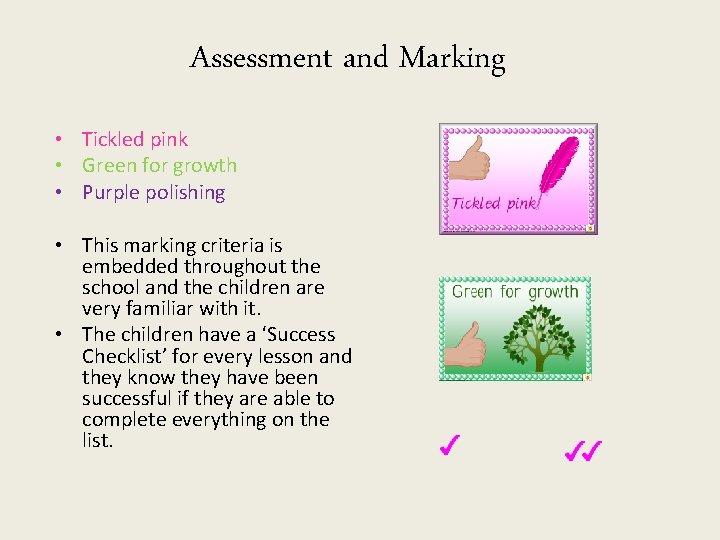
Assessment and Marking • Tickled pink • Green for growth • Purple polishing • This marking criteria is embedded throughout the school and the children are very familiar with it. • The children have a ‘Success Checklist’ for every lesson and they know they have been successful if they are able to complete everything on the list.
Thank you for making the time to come this evening. Questions?