
Year 12 Modern History Topic 1 Source Based

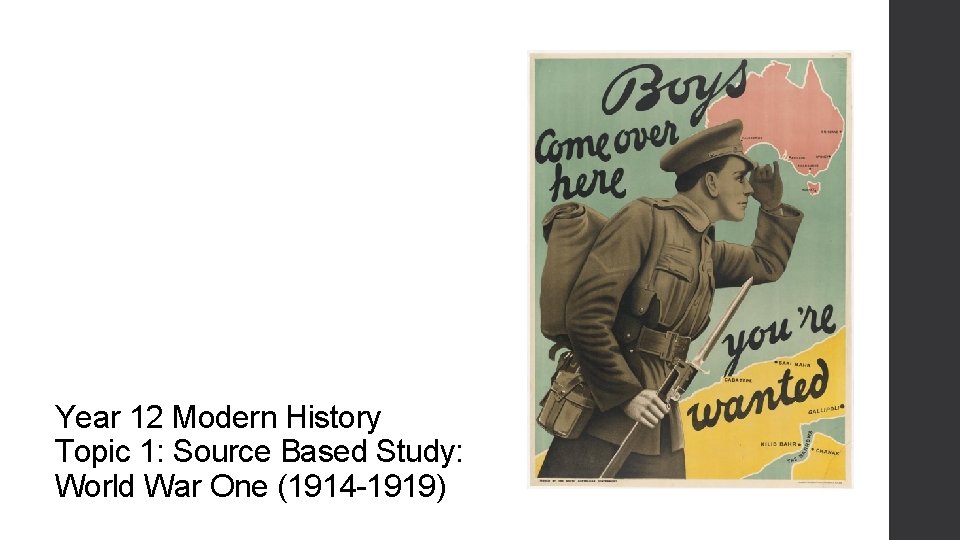
Year 12 Modern History Topic 1: Source Based Study: World War One (1914 -1919)
Source Analysis Lesson Goal: Refresh our knowledge of primary and secondary sources and how to analyse them What I’m looking for: To be able to identify a source and to identify its usefulness and reliability
What are PRIMARY Sources? A primary source is any evidence that is contemporary to the event in question. Therefore, they are created/produced by an individual or a group of people with first hand experience of an event. Primary sources can come in a variety of forms, these include; • Audio—oral histories or memoirs, interviews, music • Images—photographs, videos, film, fine art • Objects—clothing (fashion or uniforms), tools, pottery, gravestones, inventions, weapons, memorabilia • Statistics—census data, population statistics, weather records • Text—letters, diaries, original documents, legal agreements, treaties, maps, laws, advertisements, recipes, genealogical information, sermons/lectures
What are SECONDARY Sources? A secondary source is evidence that is produced after the event in which it is describing. Secondary sources also come in a range of forms; For example: • • • Biographies Histories Literary Criticism Book, Art, and Theatre Reviews Newspaper articles that interpret past events

Usefulness and Reliability Usefulness: The source is helpful when explaining something you are investigating. Reliability: the degree to which a source can be considered accurate.
Our Source Mantra Every source is useful but no source is reliable.
When analysing sources we need to remember to be ADAMANT!
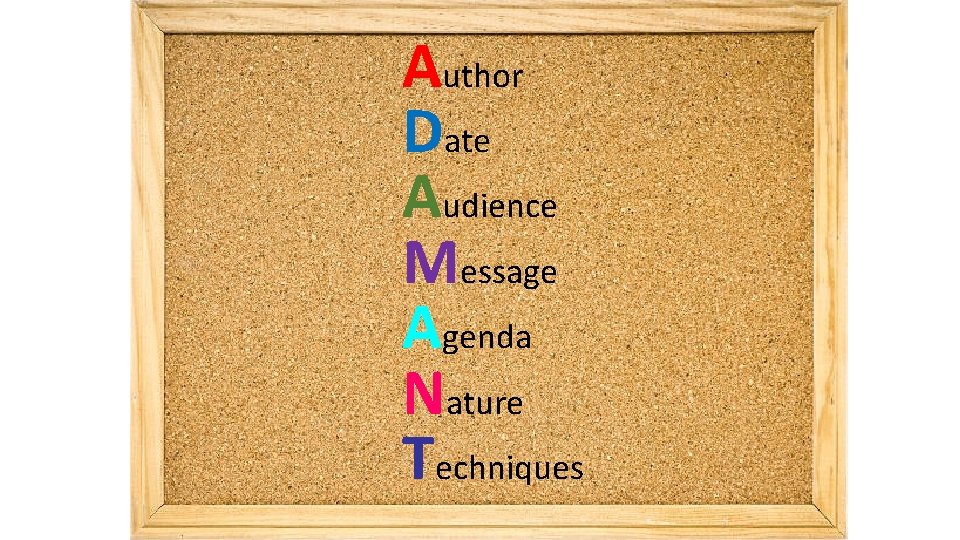
Author Date Audience Message Agenda Nature Techniques
- Slides: 9