
Year 12 Genetics Structure and function of DNA
- Slides: 29
Year 12 Genetics Structure and function of DNA, RNA and proteins
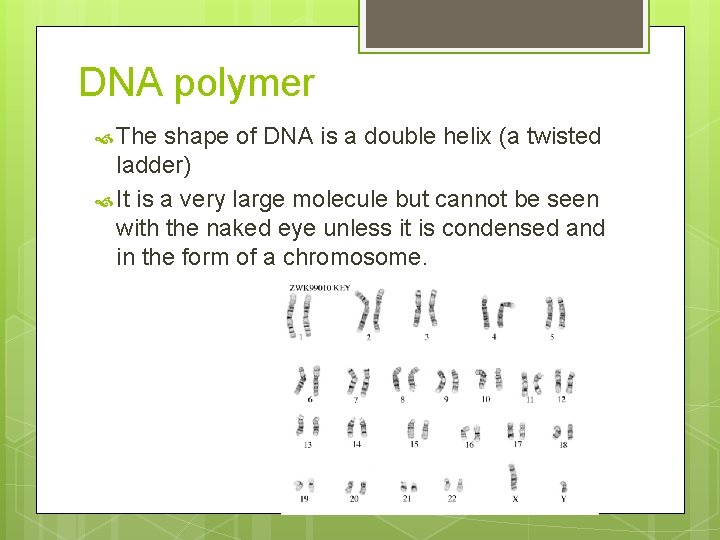
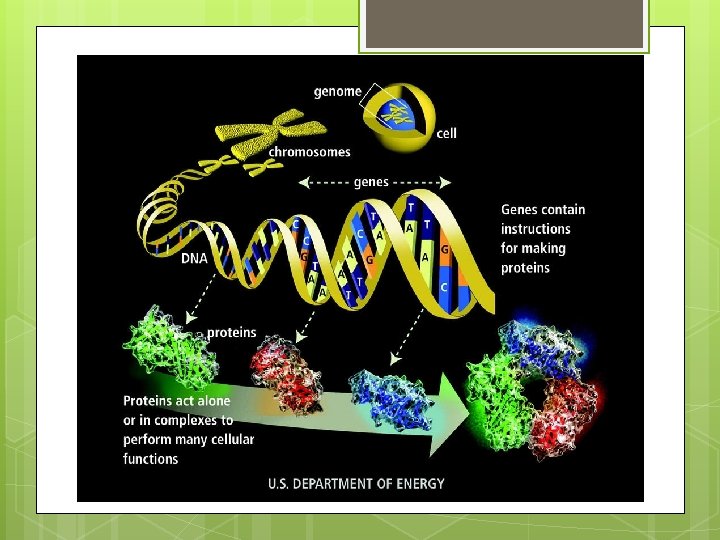
DNA polymer The shape of DNA is a double helix (a twisted ladder) It is a very large molecule but cannot be seen with the naked eye unless it is condensed and in the form of a chromosome.
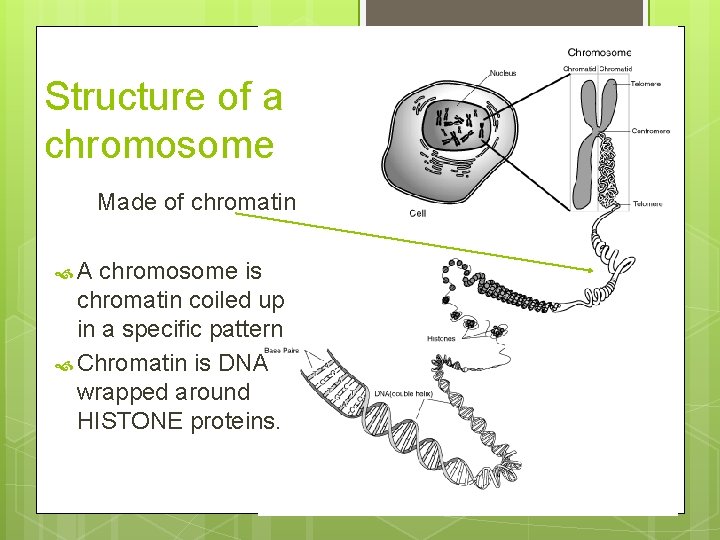
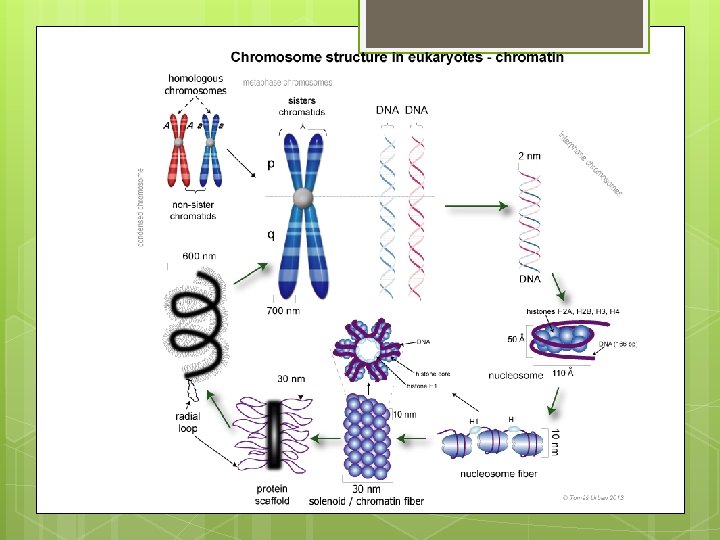
Structure of a chromosome Made of chromatin A chromosome is chromatin coiled up in a specific pattern Chromatin is DNA wrapped around HISTONE proteins.
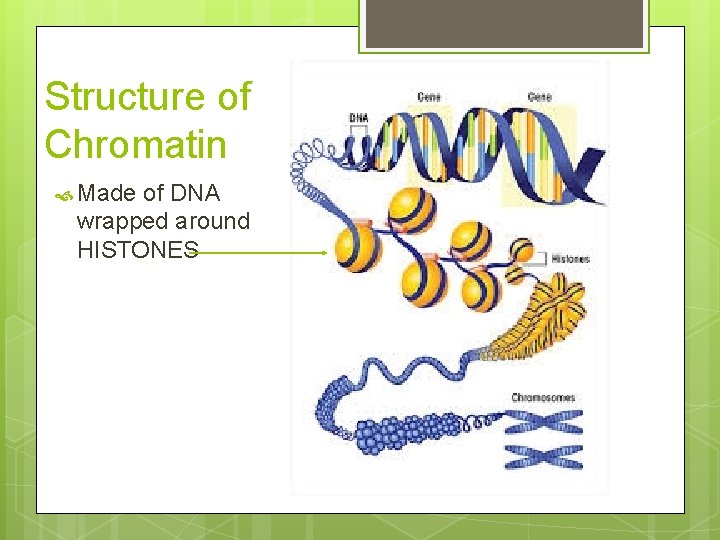
Structure of Chromatin Made of DNA wrapped around HISTONES
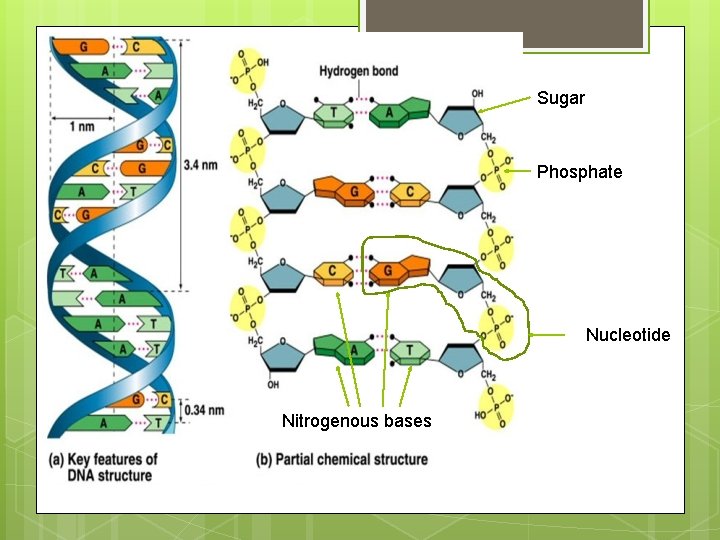
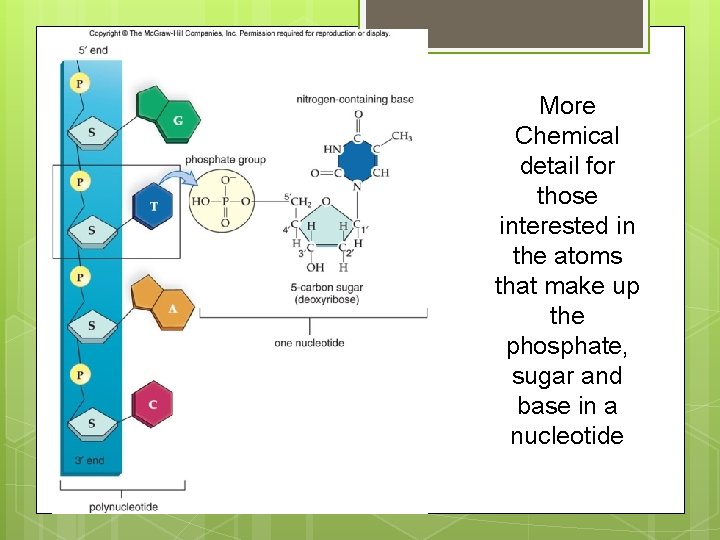
DNA Monomers A long polymer molecule of DNA is made of building blocks (monomers) called Nucleotides. DNA stands for Deoxyribose Nucleic Acid, deoxyribose is in reference to the sugar which is contained in each nucleotide. Sugars and phosphates chemically bonded alternately make up the sides of the DNA ladder, attached from each sugar is a nitrogenous base. A sugar unit, phosphate unit and a base attached together constitute a nucleotide.
Sugar Phosphate Nucleotide Nitrogenous bases
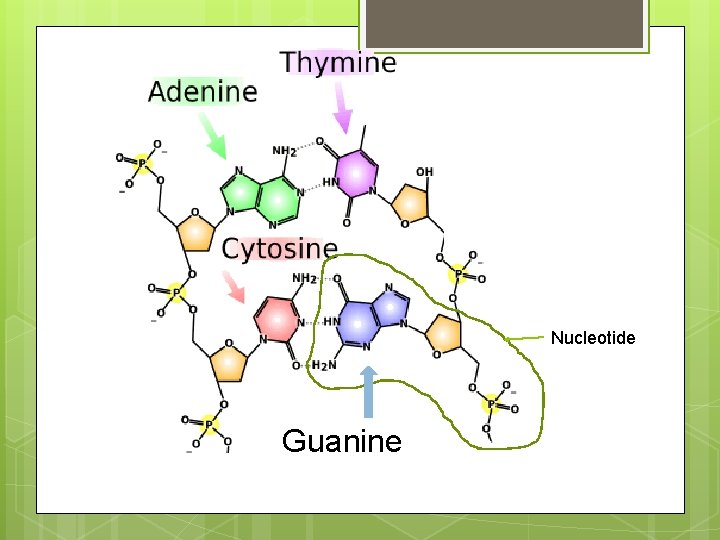
Nucleotide Guanine
More Chemical detail for those interested in the atoms that make up the phosphate, sugar and base in a nucleotide
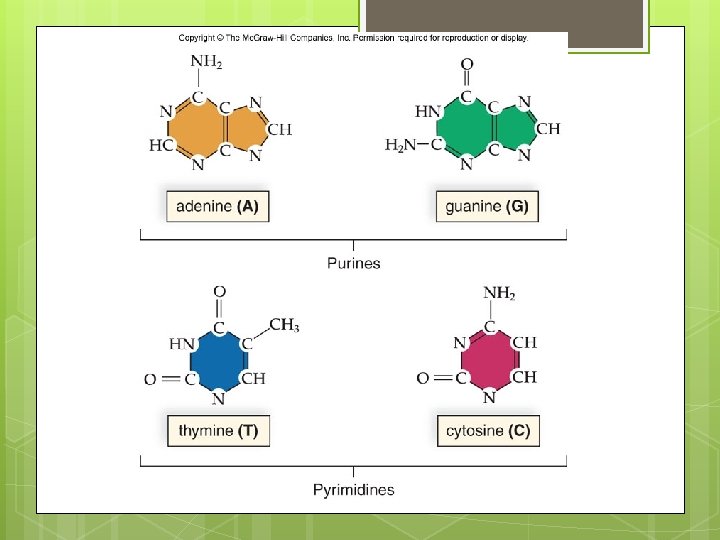
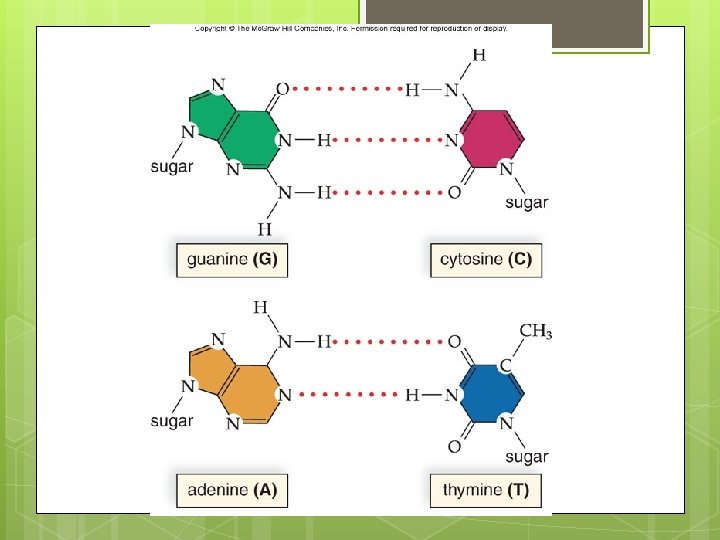
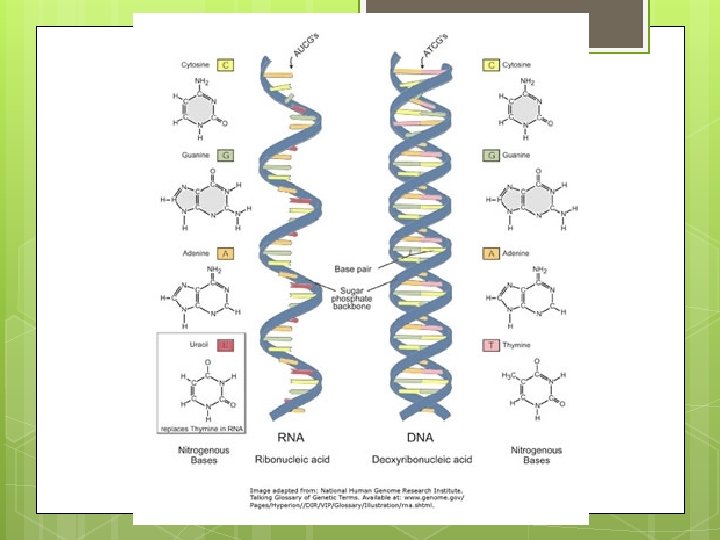
Nitrogenous bases Each of the four bases (Adenine, Thymine, Cytosine and Guanine) in a DNA molecule is different in it’s chemical composition. Adenine and Guanine are larger molecules which are double ringed structures they are called PURINES Thymine and Cytosine are smaller with only one ring to their structure and they are called PYRIMIDINES A always pairs with T C always pairs with G
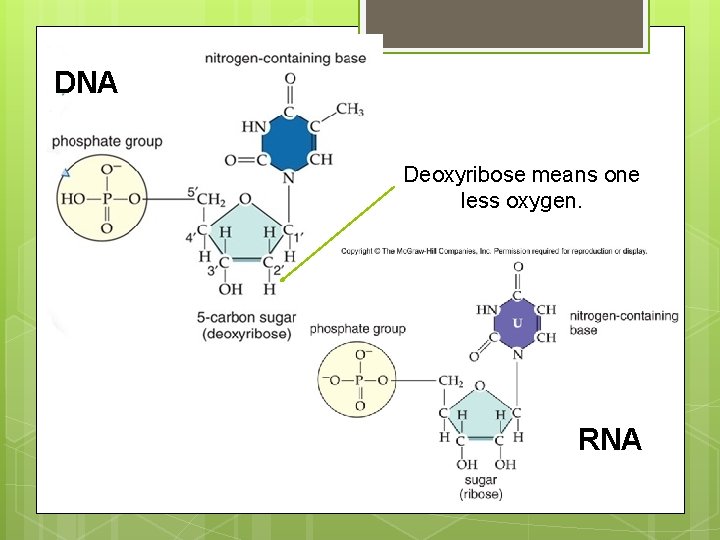
RNA Stands for Ribo. Nucleic Acid Three main differences between DNA and RNA is 1) RNA is always single stranded 2) Has URACIL instead of THYMINE as a nitrogenous base, all others are the same 3) RNA’s sugar in each nucleotide has an extra oxygen molecule.
DNA Deoxyribose means one less oxygen. RNA
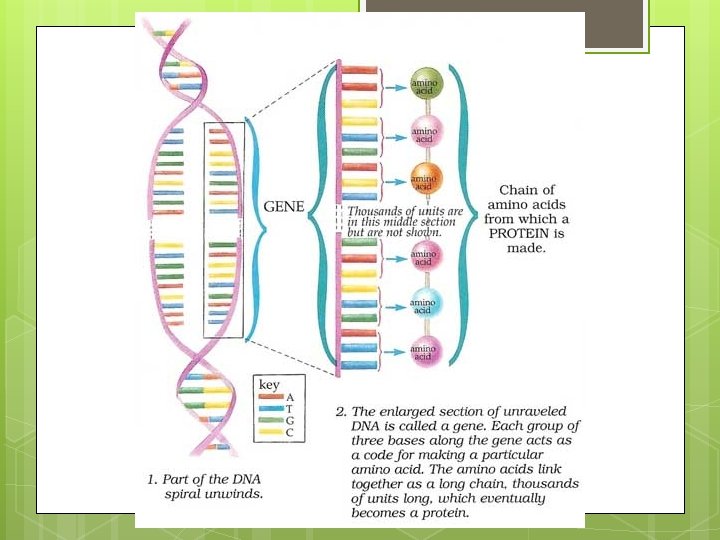
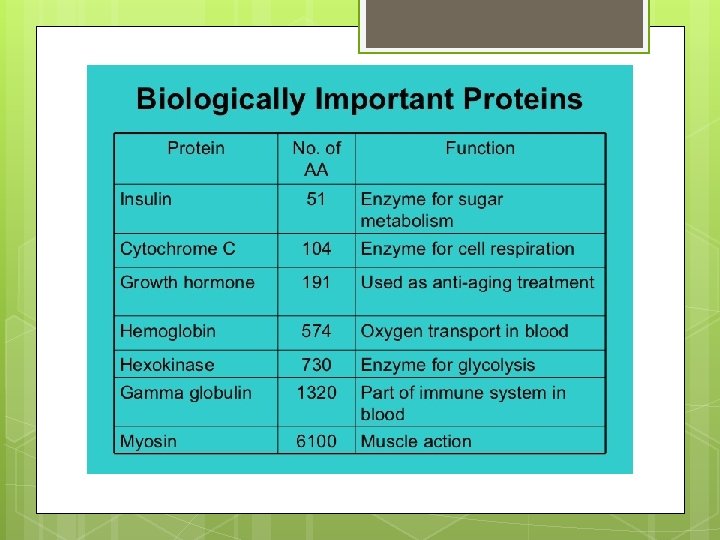
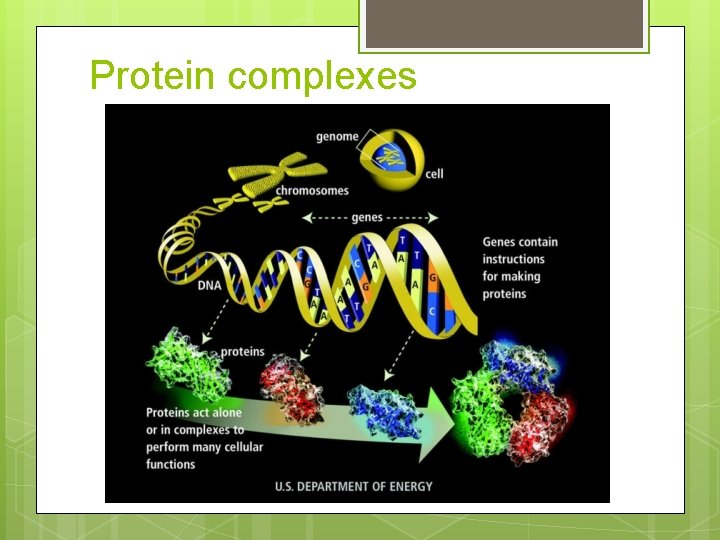
The point of DNA The sequence of bases along the DNA molecule is important as it holds the instructions for how to create proteins, through a process called transcription and translation. Examples of proteins: haemoglobin, receptors on the surface of cells to receive chemicals, hormones, structural proteins in cells, mucus, clotting factors, enzymes, actin and myosin found in muscle cells, and the list goes on.
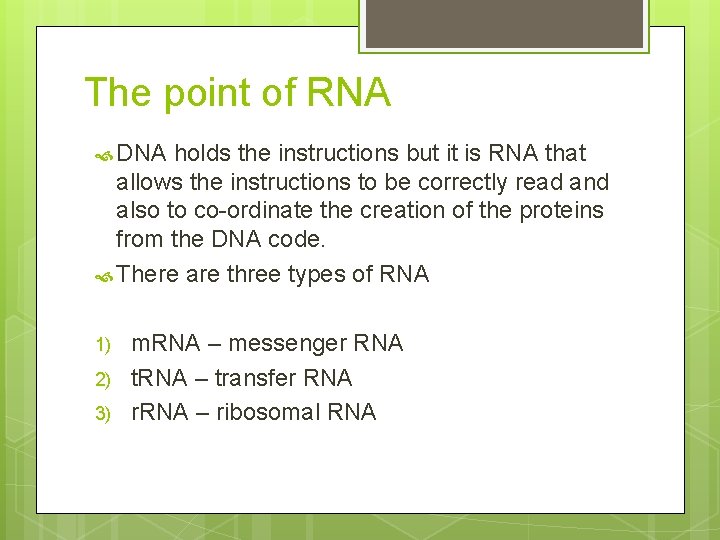
The point of RNA DNA holds the instructions but it is RNA that allows the instructions to be correctly read and also to co-ordinate the creation of the proteins from the DNA code. There are three types of RNA 1) 2) 3) m. RNA – messenger RNA t. RNA – transfer RNA r. RNA – ribosomal RNA
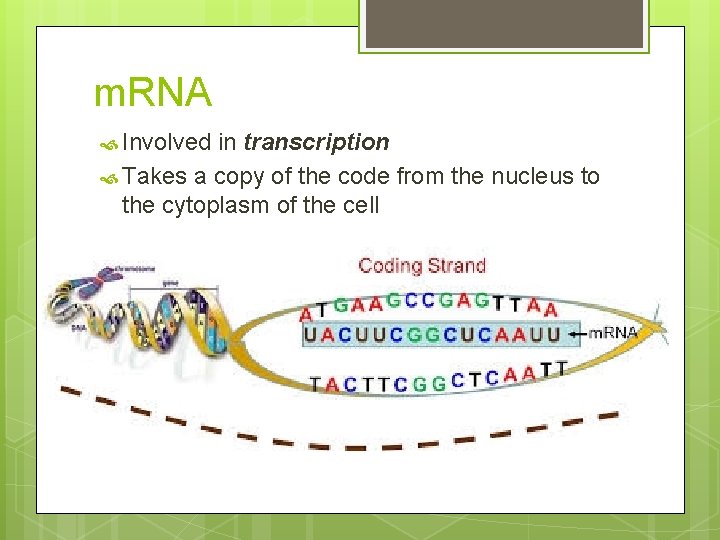
m. RNA Involved in transcription Takes a copy of the code from the nucleus to the cytoplasm of the cell
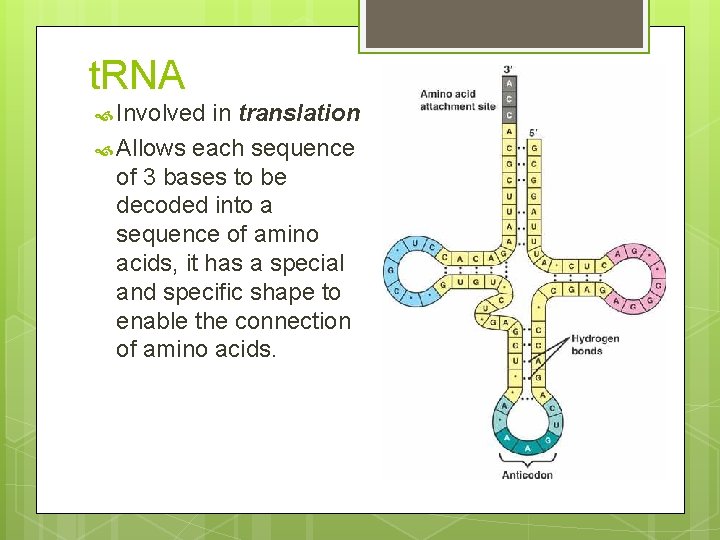
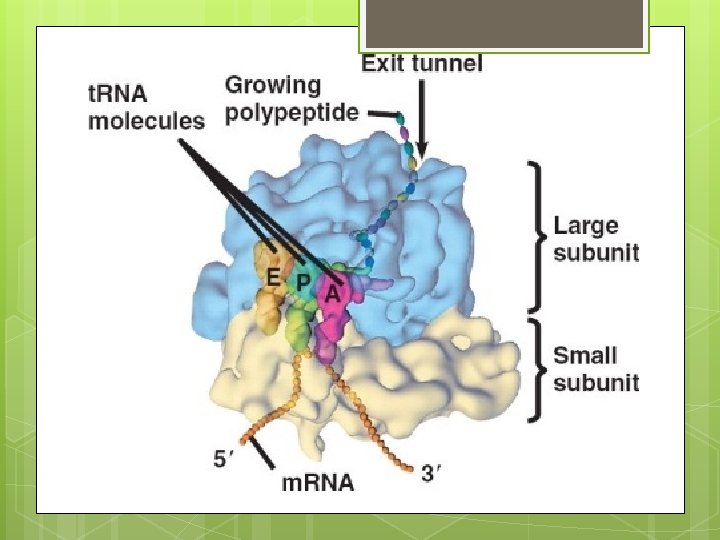
t. RNA Involved in translation Allows each sequence of 3 bases to be decoded into a sequence of amino acids, it has a special and specific shape to enable the connection of amino acids.
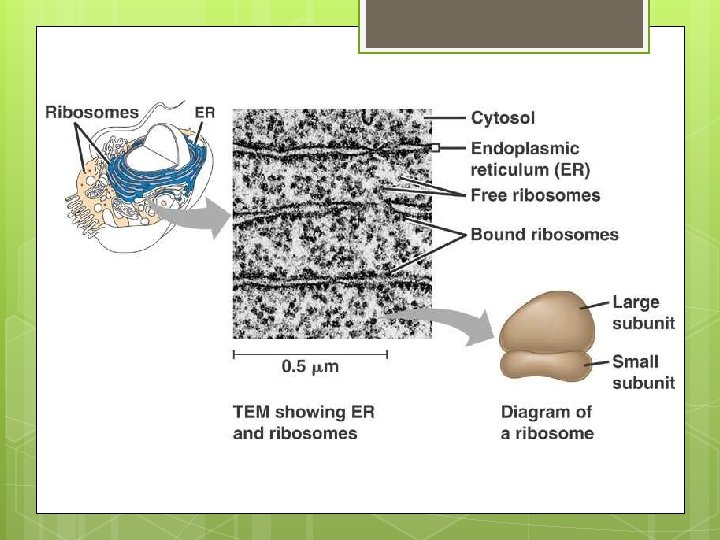
r. RNA Involved in translation Made of two subunits Facilitates the reading of the DNA code along m. RNA and conversion into a series of bonded amino acids using t. RNA.
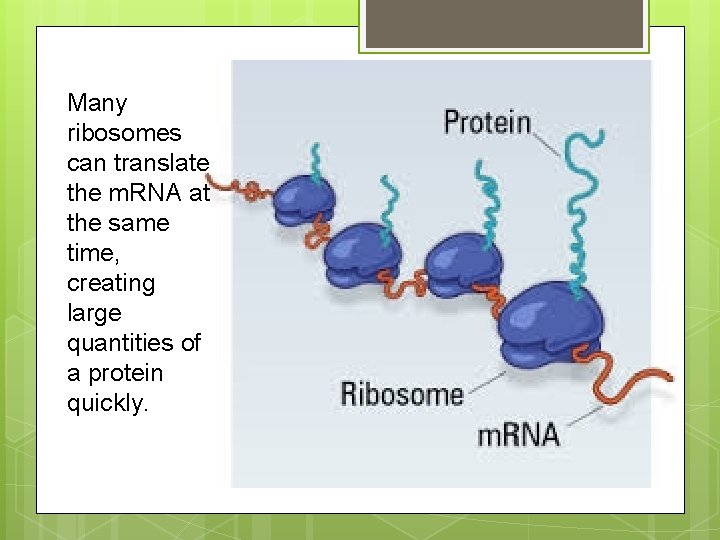
Many ribosomes can translate the m. RNA at the same time, creating large quantities of a protein quickly.
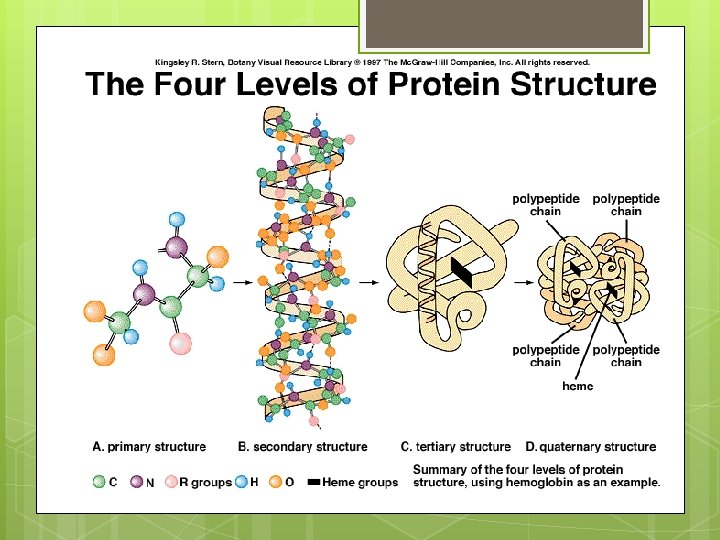
A closer look at proteins A functional unit within a cell, can provide structure, shape, movement, receiving of signals and transmission of signals. Can be all manner of shapes and sizes. The linear order of amino acids in each protein determines its three-dimensional structure and activity.
Protein complexes