
Year 12 French Transition Lesson Ice breaker can
Year 12 French Transition Lesson
Ice breaker – can you speak the starter phrase and add your own information to complete it ? Try to speak for as long as you can. J’ai visité la France………. . Quand j’étais petit j’allais souvent …… Ce matin j’ai mangé du pain grillé………. . Je voudrais apprendre une langue différente comme ……. . parce que… J’adore les films d’horreur…….
French A/S Topics Next year you will study the following topics with your teacher La famille en voie de changement (evolution of the family) La cyber-société (technology) Le rôle du bénévolat (voluntary work) Une culture fière de son patrimoine (heritage) La musique francophone contemporaine (music) Le septième art (cinema) Together with a French film “La Haine”

At A/S level you will still work at the four skills of Listening, Reading, Writing and Speaking. Your speaking exam will consist of 2 photo cards on different topics. You will also have to write an essay in French on the film that we study.
On the next few slides you will see a French lesson to follow about young people and alcohol. Slide 14 will require you to read the article (word document) sent with this presentation. Bonne Chance!
Une fête sans alcool, c’est pas possible ?
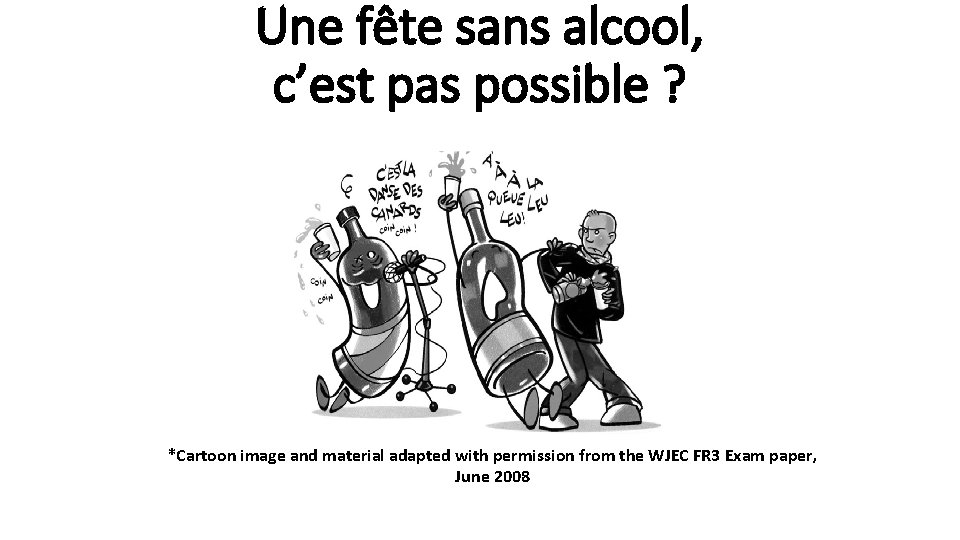
Une fête sans alcool, c’est pas possible ? *Cartoon image and material adapted with permission from the WJEC FR 3 Exam paper, June 2008
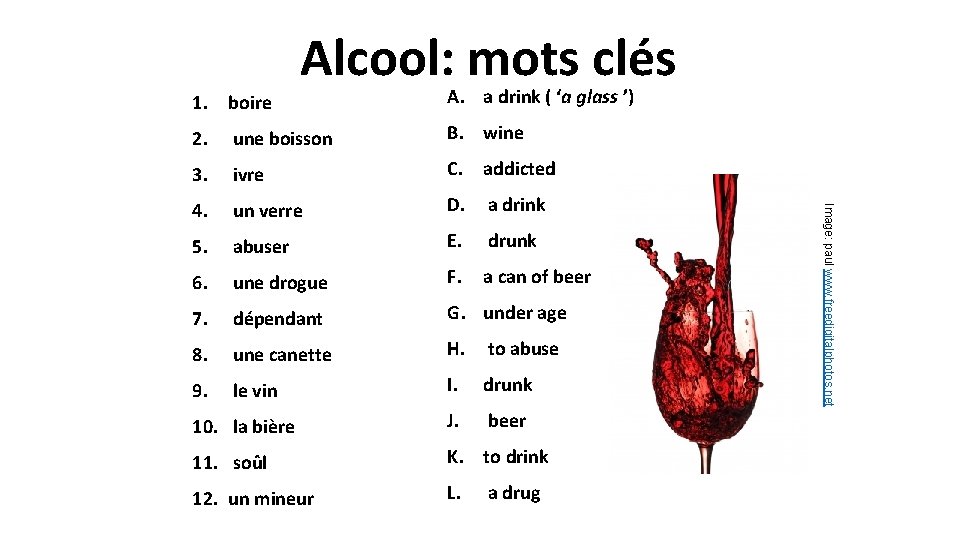
Alcool: mots clés A. a drink ( ‘a glass ’) 2. une boisson B. wine 3. ivre C. addicted 4. un verre D. a drink 5. abuser E. drunk 6. une drogue F. a can of beer 7. dépendant G. under age 8. une canette H. to abuse 9. le vin I. drunk 10. la bière J. beer 11. soûl K. to drink 12. un mineur L. a drug Image: paul www. freedigitalphotos. net 1. boire
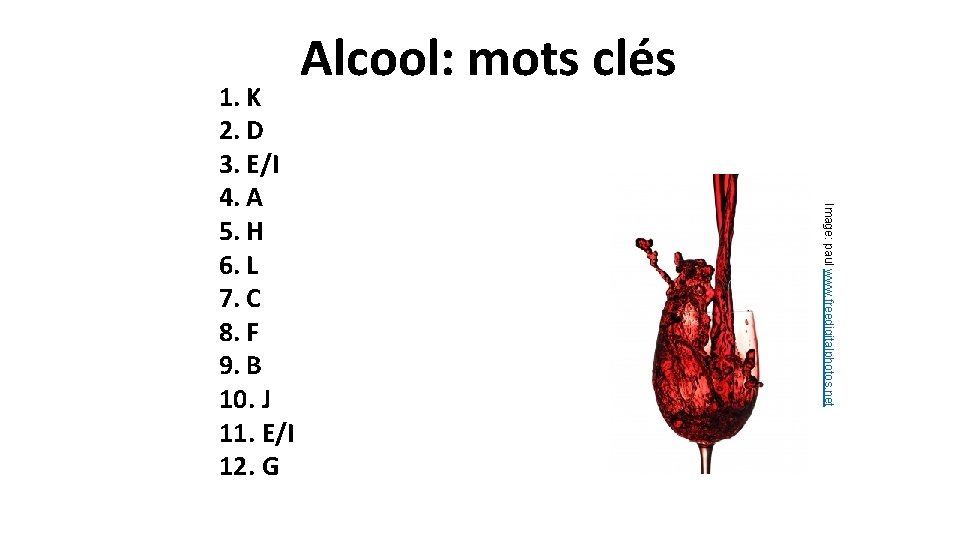
Image: paul www. freedigitalphotos. net 1. K 2. D 3. E/I 4. A 5. H 6. L 7. C 8. F 9. B 10. J 11. E/I 12. G Alcool: mots clés
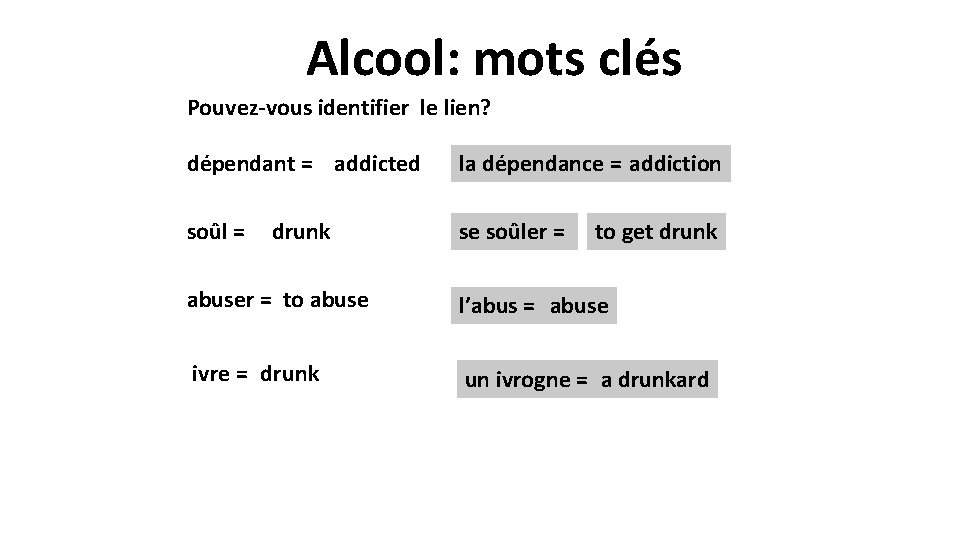
Alcool: mots clés Pouvez-vous identifier le lien? dépendant = addicted la dépendance = addiction soûl = se soûler = drunk to get drunk abuser = to abuse l’abus = abuse ivre = drunk un ivrogne = a drunkard
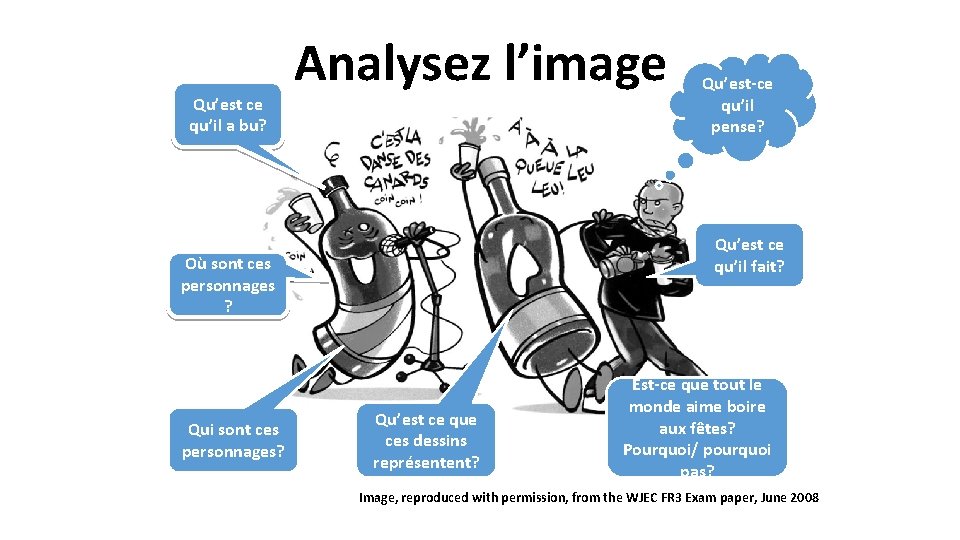
Qu’est ce qu’il a bu? Analysez l’image Qu’est ce qu’il fait? Où sont ces personnages ? Qui sont ces personnages? Qu’est-ce qu’il pense? Qu’est ce que ces dessins représentent? Est-ce que tout le monde aime boire aux fêtes? Pourquoi/ pourquoi pas? Image, reproduced with permission, from the WJEC FR 3 Exam paper, June 2008
Look at the images and questions on the previous slide and write some sentences in French giving your response.
Read the article (word document) “Une fête sans alcool, c’est pas possible” and answer the questions on the following slide.
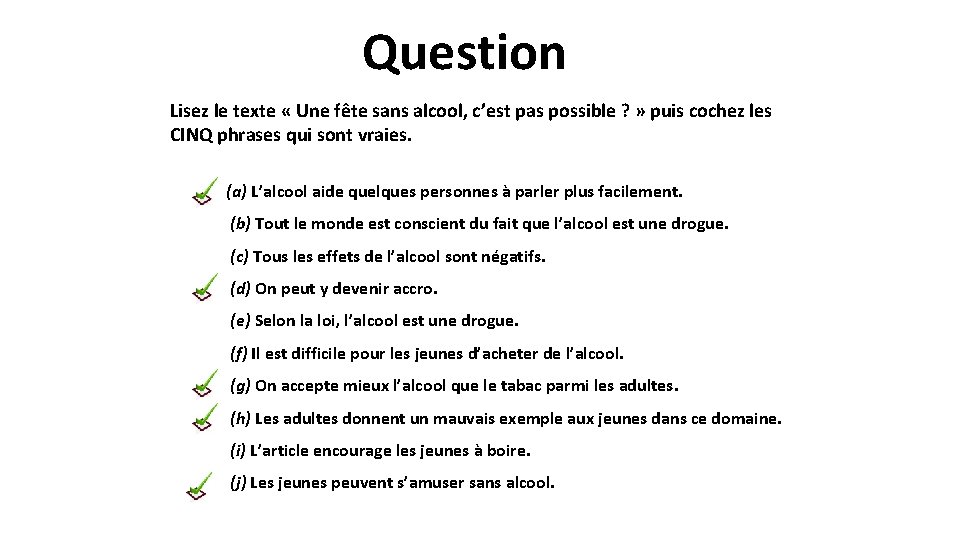
Question Lisez le texte « Une fête sans alcool, c’est pas possible ? » puis cochez les CINQ phrases qui sont vraies. (a) L’alcool aide quelques personnes à parler plus facilement. (b) Tout le monde est conscient du fait que l’alcool est une drogue. (c) Tous les effets de l’alcool sont négatifs. (d) On peut y devenir accro. (e) Selon la loi, l’alcool est une drogue. (f) Il est difficile pour les jeunes d’acheter de l’alcool. (g) On accepte mieux l’alcool que le tabac parmi les adultes. (h) Les adultes donnent un mauvais exemple aux jeunes dans ce domaine. (i) L’article encourage les jeunes à boire. (j) Les jeunes peuvent s’amuser sans alcool.
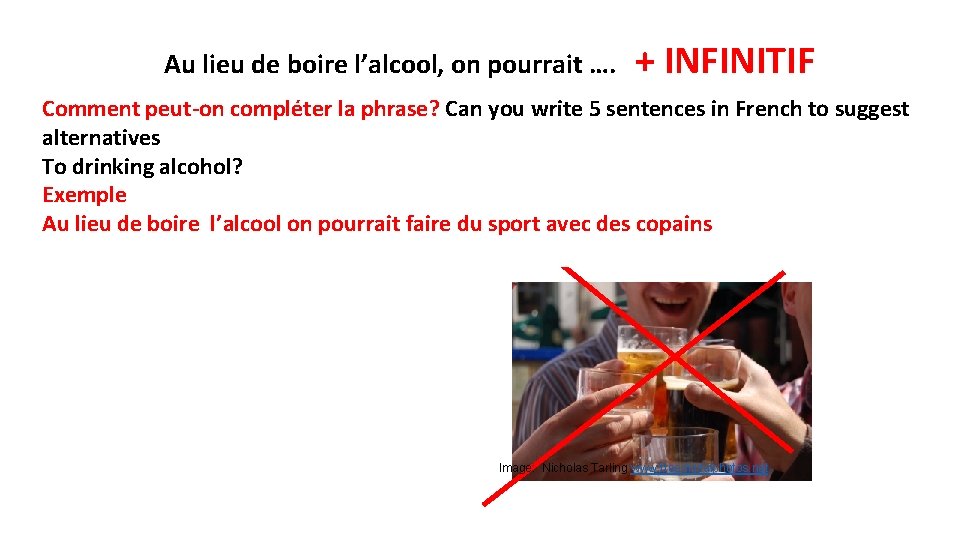
Au lieu de boire l’alcool, on pourrait …. + INFINITIF Comment peut-on compléter la phrase? Can you write 5 sentences in French to suggest alternatives To drinking alcohol? Exemple Au lieu de boire l’alcool on pourrait faire du sport avec des copains Image: Nicholas Tarling www. freedigitalphotos. net
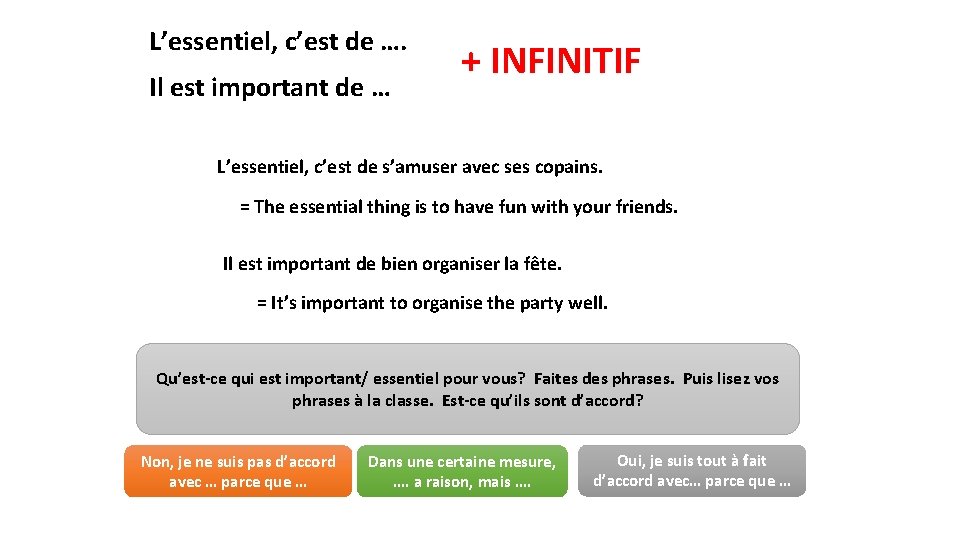
L’essentiel, c’est de …. Il est important de … + INFINITIF L’essentiel, c’est de s’amuser avec ses copains. = The essential thing is to have fun with your friends. Il est important de bien organiser la fête. = It’s important to organise the party well. Qu’est-ce qui est important/ essentiel pour vous? Faites des phrases. Puis lisez vos phrases à la classe. Est-ce qu’ils sont d’accord? Non, je ne suis pas d’accord avec … parce que … Dans une certaine mesure, …. a raison, mais …. Oui, je suis tout à fait d’accord avec… parce que …
At A/S level you will revise some GCSE grammar and also learn some new grammar rules. It is important that you master thoroughly the tenses that you have learnt at GCSE. On the next slide you will find some verb and tense practice. Have a go and see if you need to brush up on these.
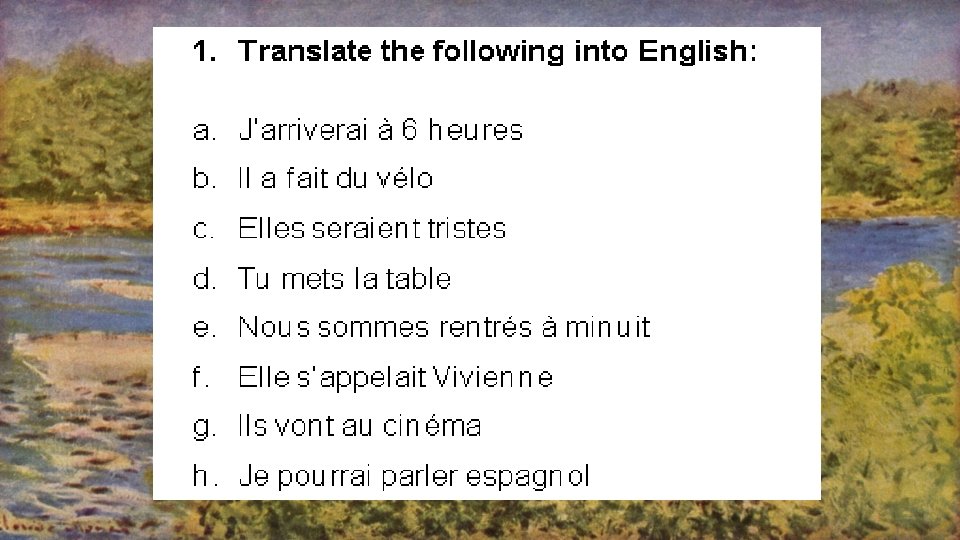
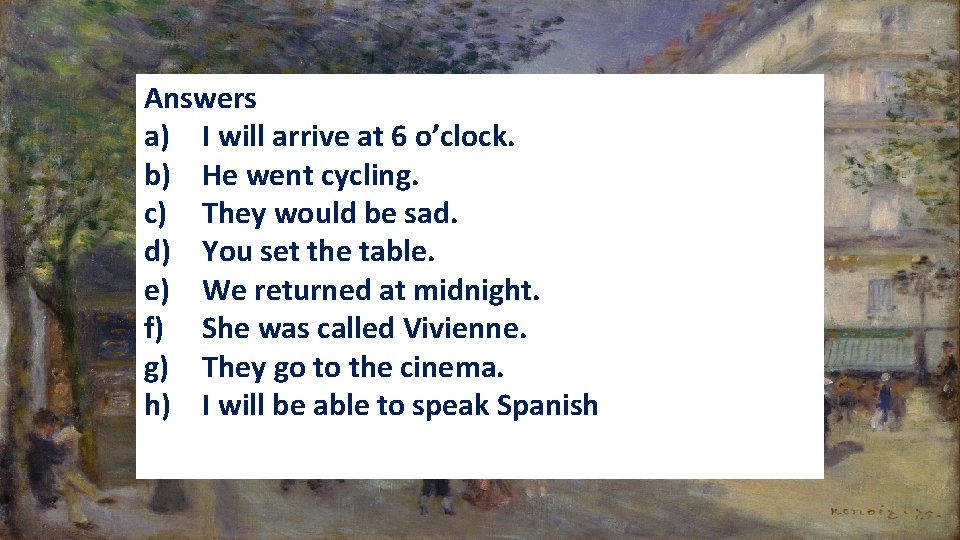
Answers a) I will arrive at 6 o’clock. b) He went cycling. c) They would be sad. d) You set the table. e) We returned at midnight. f) She was called Vivienne. g) They go to the cinema. h) I will be able to speak Spanish
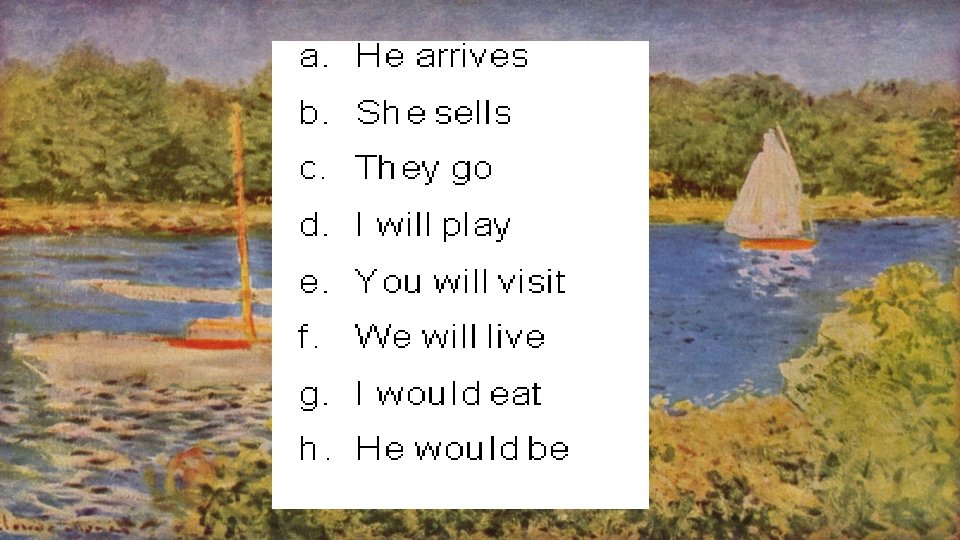
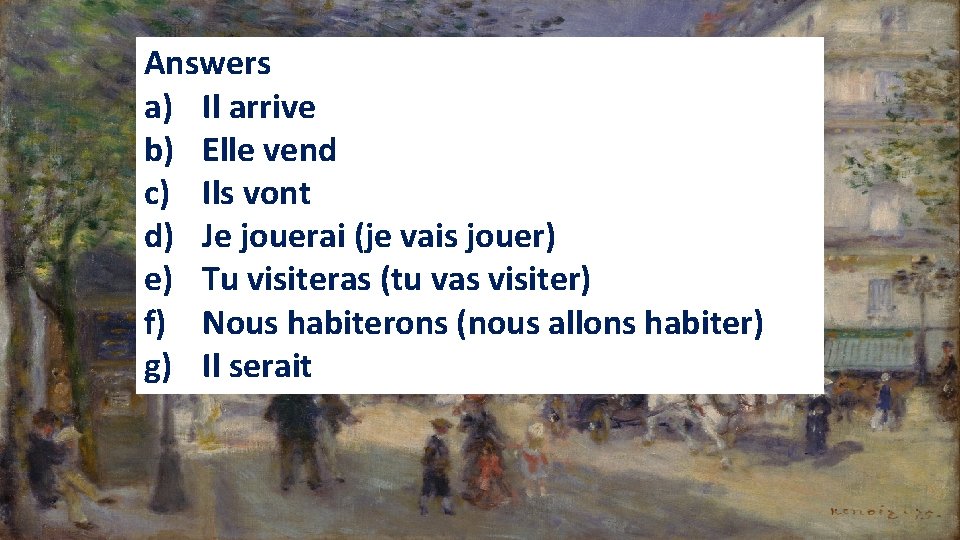
Answers a) Il arrive b) Elle vend c) Ils vont d) Je jouerai (je vais jouer) e) Tu visiteras (tu vas visiter) f) Nous habiterons (nous allons habiter) g) Il serait
I hope these activities have given you some useful information and an opportunity to practise your French. You will find lots more activities to keep up your French over the summer in the Bridging Unit you will be given. If you would like any more information or have any questions please contact me on tradford@nationalce-ac. org. uk
- Slides: 22