
Year 12 AS Business Studies Budgeting Types of
Year 12 AS Business Studies Budgeting
Types of budgets • Income budgets – examples? – Sales, rent, sponsorship • Expenditure budgets – examples? – Raw materials, labour, marketing, admin, rent, insurance, heating/lighting, etc • Profit budgets – income less expenditure
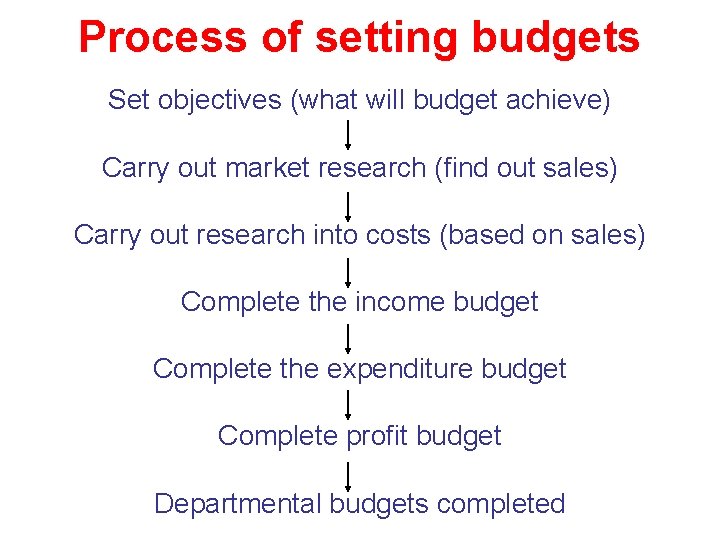
Process of setting budgets Set objectives (what will budget achieve) Carry out market research (find out sales) Carry out research into costs (based on sales) Complete the income budget Complete the expenditure budget Complete profit budget Departmental budgets completed

Question COMPLETE income, expenditure and profit budgets • Income: – Product A – sales of 100 units at £ 32 each – Product B – sales of 80 units at £ 15 each – Product C – sales of 30 units at £ 60 each • Expenditure: – Raw materials – 25% of sales revenue per product – Labour £ 10 per product sold – Marketing £ 150; Admin £ 450; Rent £ 750
Question AMEND income, expenditure and profit budgets • Marketing campaign – cost is trebled • A 50% increase in sales of Products A, B & C is anticipated • Raw material and labour costs are worked out in the same way as before • Admin remains the same • Rent decreases by £ 50
Benefits of budgets • Reduce risk of overspending • Allows for money to be allocated to areas that need it • Budgets can be used as targets which can be motivational to staff • Makes people accountable
Drawback of budgets • Conflicts between departments can occur • Some managers will have the skills to ‘play the game’ • Problems collecting data are very time consuming • Targets for staff can be too high or can over-pressure managers
- Slides: 7