
Year 11 General Physics quiz Motion and Forces
- Slides: 53
Year 11 General Physics quiz • Motion and Forces • Heat and cooling • Electricity
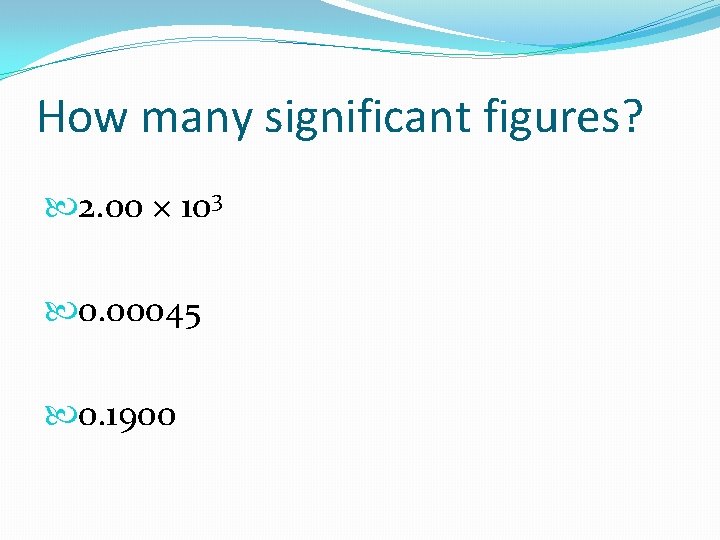
How many significant figures? 2. 00 × 103 0. 00045 0. 1900
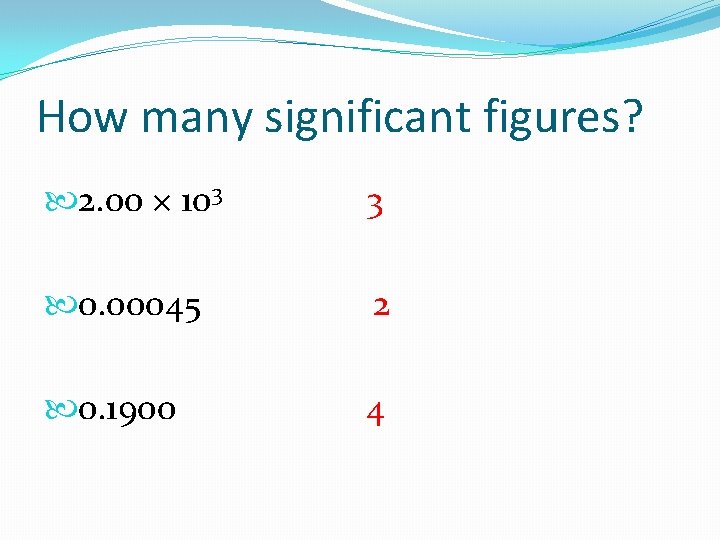
How many significant figures? 2. 00 × 103 3 0. 00045 2 0. 1900 4
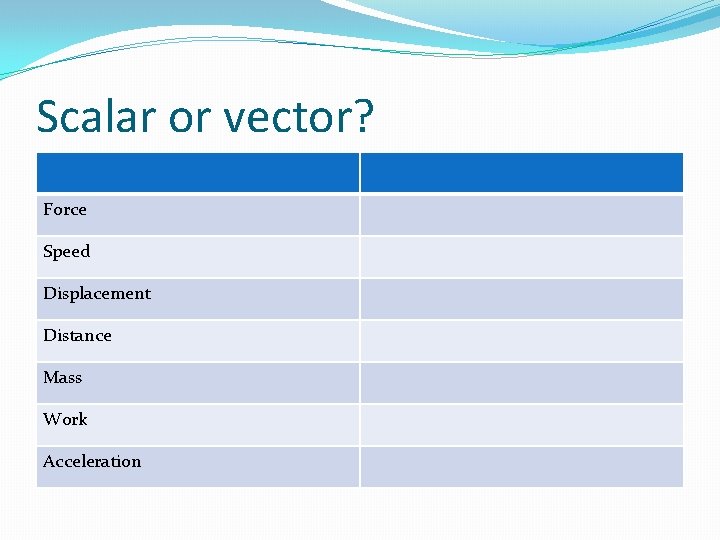
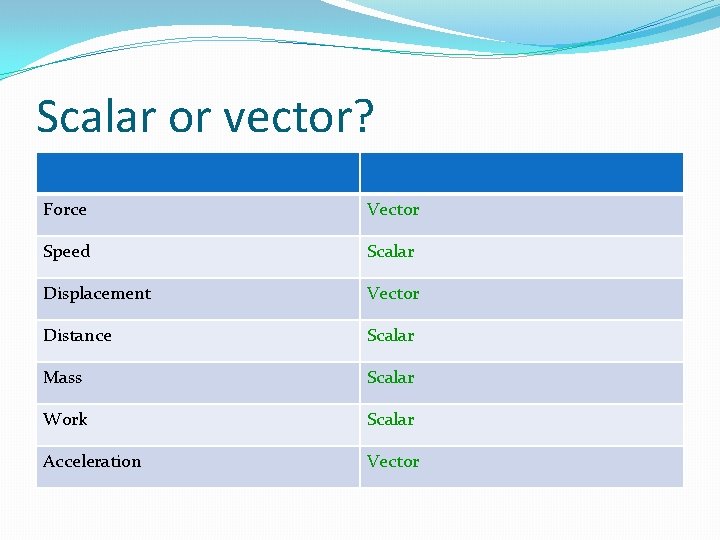
Scalar or vector? Force Speed Displacement Distance Mass Work Acceleration
Scalar or vector? Force Vector Speed Scalar Displacement Vector Distance Scalar Mass Scalar Work Scalar Acceleration Vector
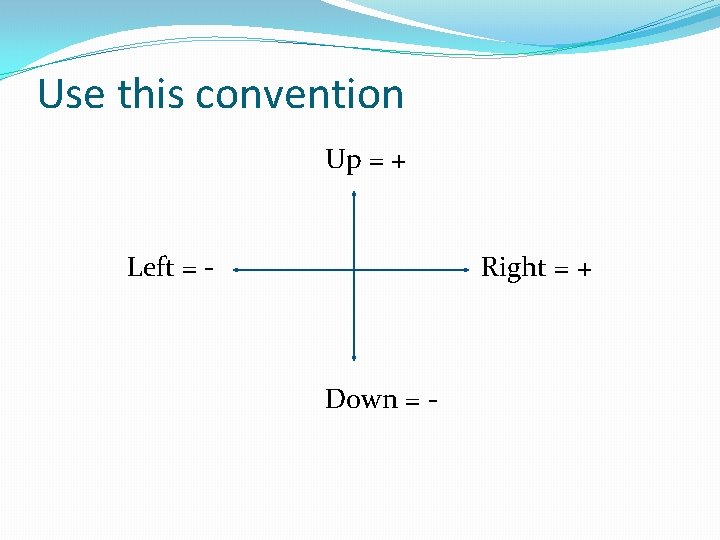
Use this convention Up = + Left = - Right = + Down = -
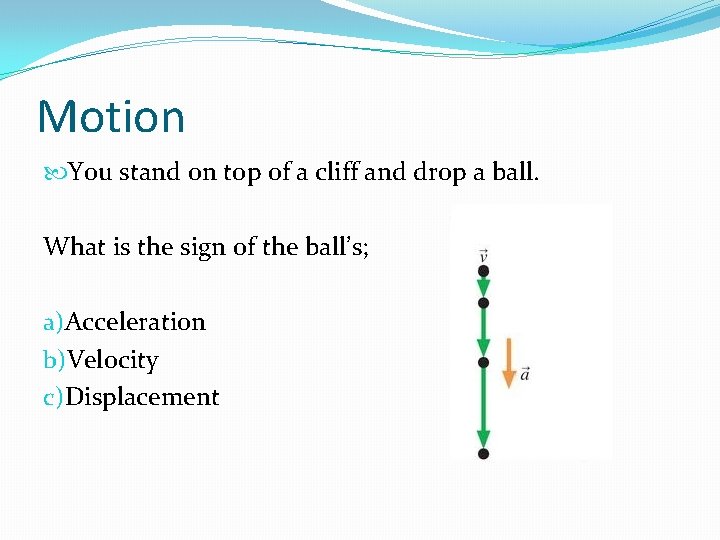
Motion You stand on top of a cliff and drop a ball. What is the sign of the ball’s; a)Acceleration b)Velocity c)Displacement
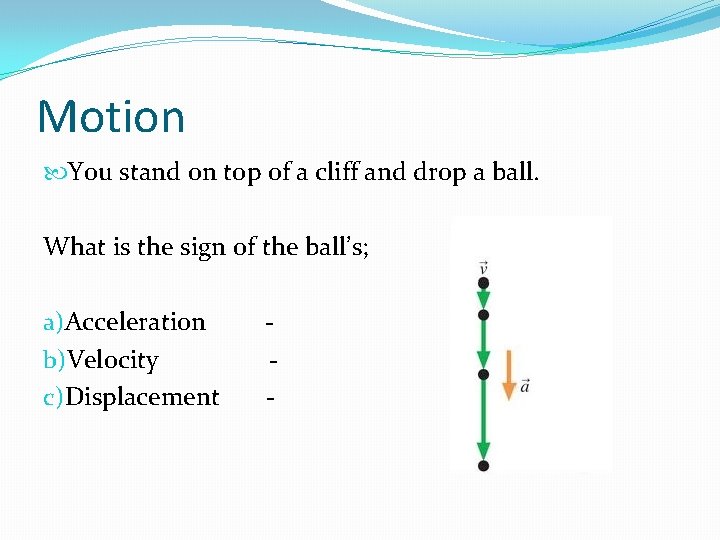
Motion You stand on top of a cliff and drop a ball. What is the sign of the ball’s; a)Acceleration b)Velocity c)Displacement -
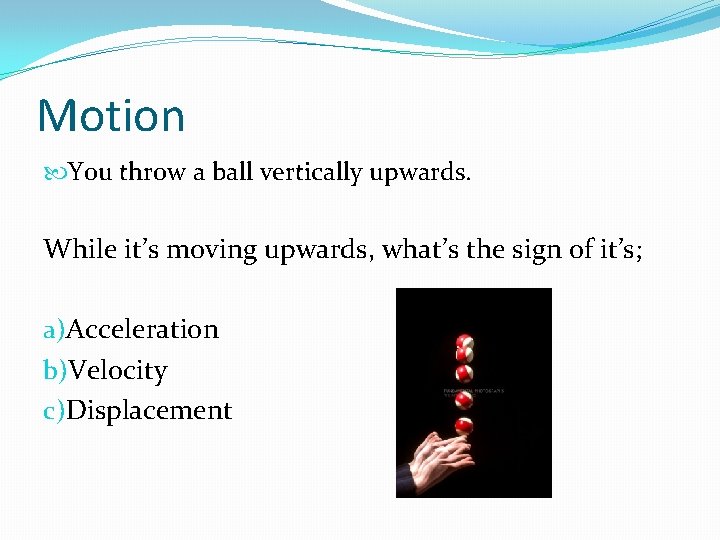
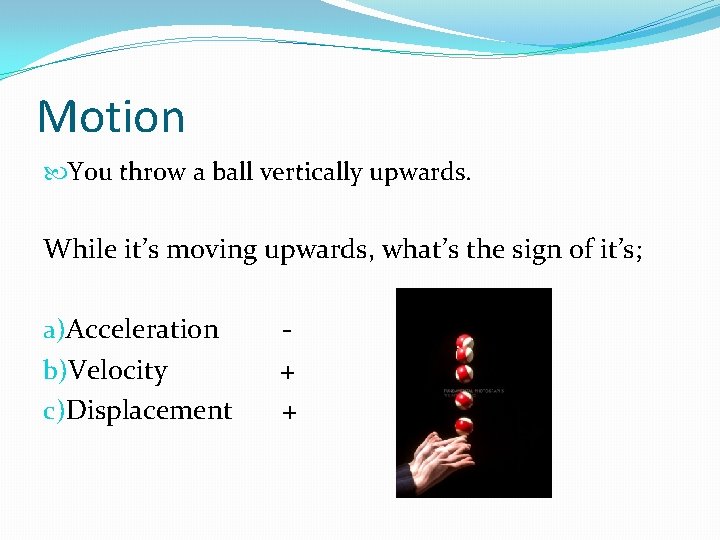
Motion You throw a ball vertically upwards. While it’s moving upwards, what’s the sign of it’s; a)Acceleration b)Velocity c)Displacement
Motion You throw a ball vertically upwards. While it’s moving upwards, what’s the sign of it’s; a)Acceleration b)Velocity c)Displacement + +
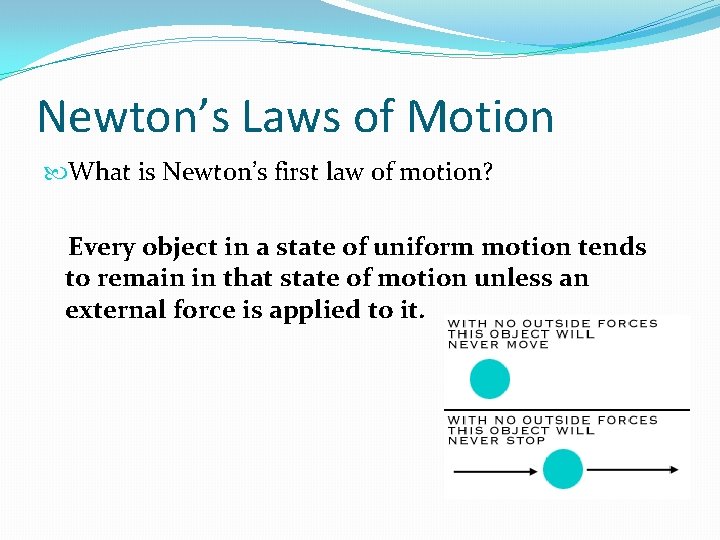
Newton’s Laws of Motion What is Newton’s first law of motion?
Newton’s Laws of Motion What is Newton’s first law of motion? Every object in a state of uniform motion tends to remain in that state of motion unless an external force is applied to it.
Newton’s Laws of Motion What is Newton’s second law of motion?
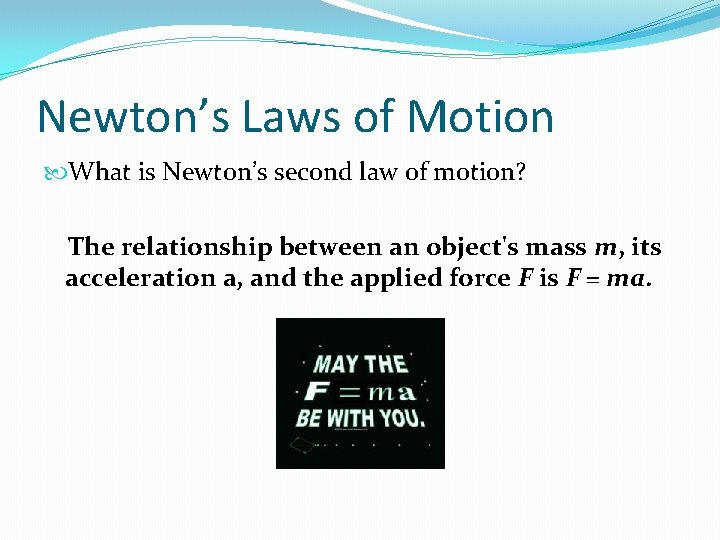
Newton’s Laws of Motion What is Newton’s second law of motion? The relationship between an object's mass m, its acceleration a, and the applied force F is F = ma.
Newton’s Laws of Motion What is Newton’s third law of motion?
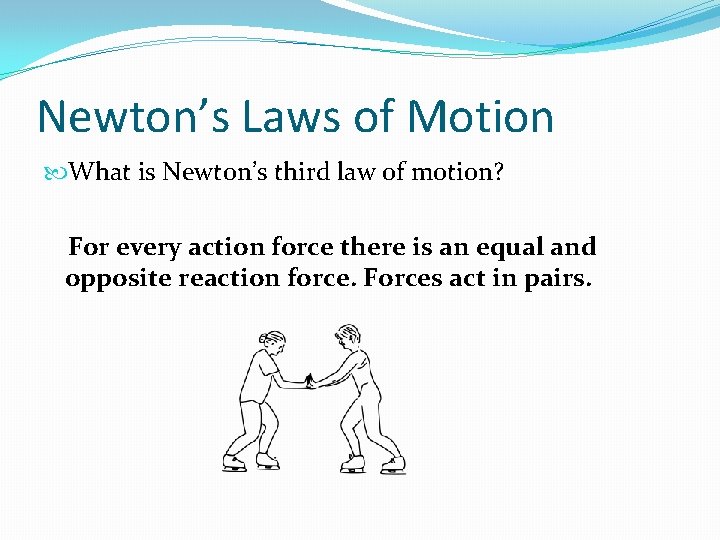
Newton’s Laws of Motion What is Newton’s third law of motion? For every action force there is an equal and opposite reaction force. Forces act in pairs.
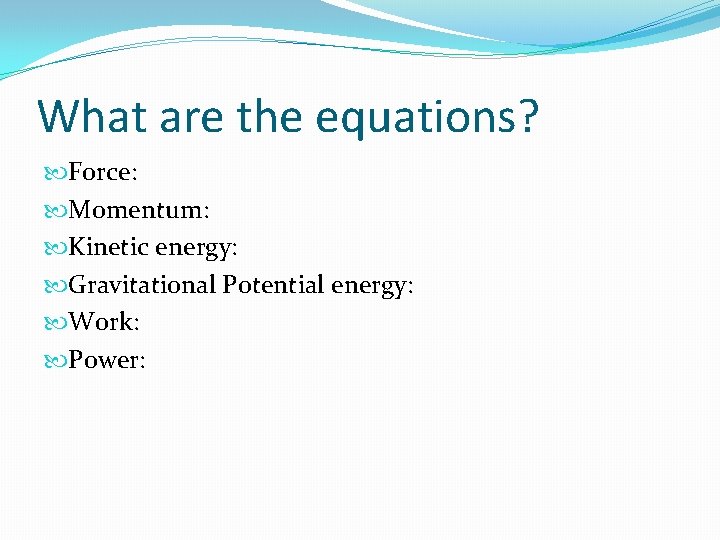
What are the equations? Force: Momentum: Kinetic energy: Gravitational Potential energy: Work: Power:
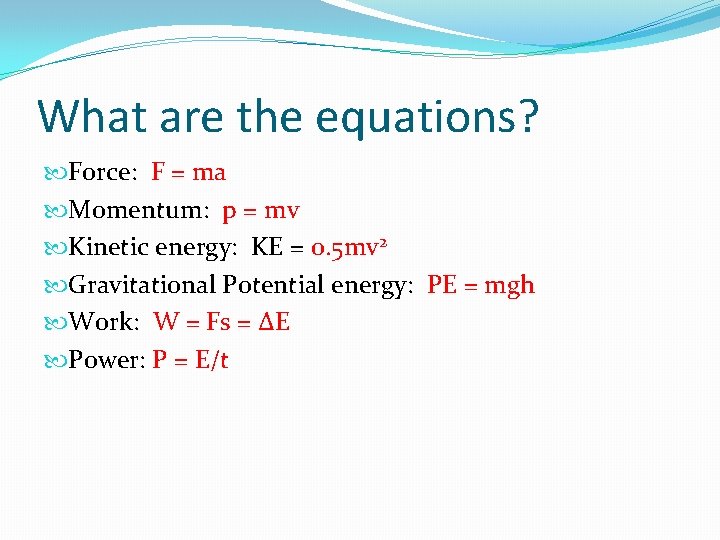
What are the equations? Force: F = ma Momentum: p = mv Kinetic energy: KE = 0. 5 mv 2 Gravitational Potential energy: PE = mgh Work: W = Fs = ∆E Power: P = E/t
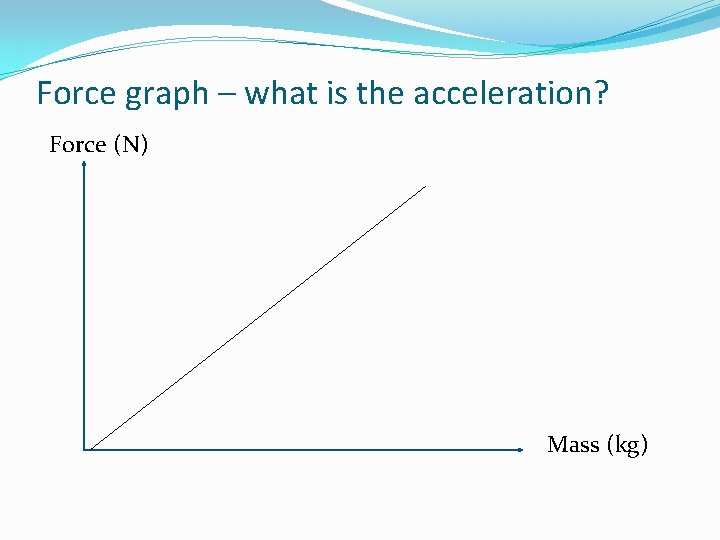
Force graph – what is the acceleration? Force (N) Mass (kg)
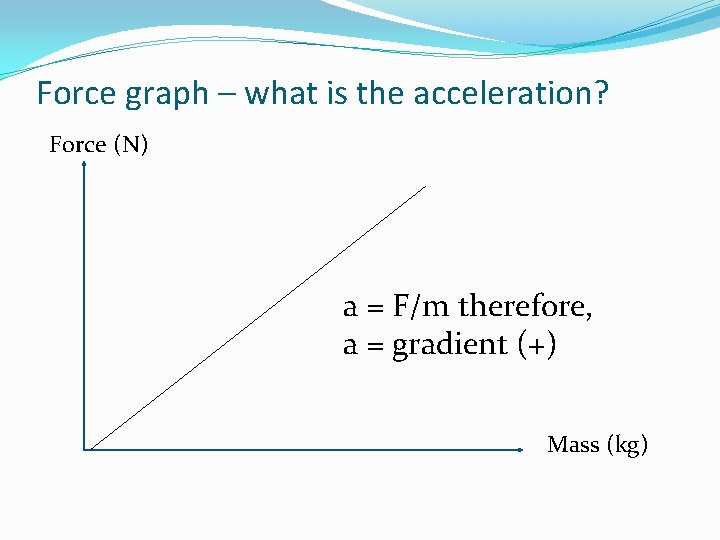
Force graph – what is the acceleration? Force (N) a = F/m therefore, a = gradient (+) Mass (kg)
Heat, Temperature and Internal energy �Define: 1. Heat 2. Temperature 3. Internal energy
Heat, Temperature and Internal energy Heat Defined as the transfer of energy across a boundary due to a temperature difference. It is incorrect to say an object contains “heat energy”, it is correct to say “internal energy”
Heat, Temperature and Internal energy Temperature A measure of how hot or cold something is. Defined from the average kinetic energy of atoms and molecules.
Heat, Temperature and Internal energy Defined as the energy (kinetic and potential) associated with the random, disordered motion of atoms molecules. Also known as ‘invisible’ energy.
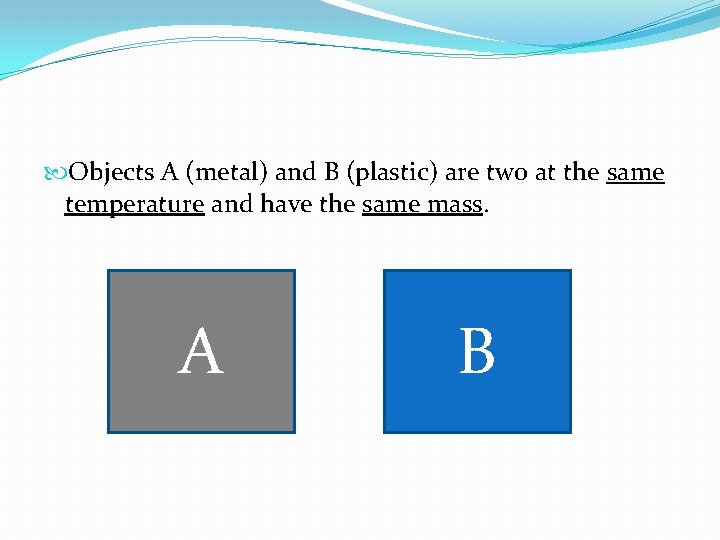
Objects A (metal) and B (plastic) are two at the same temperature and have the same mass. A B
If 100 J of internal energy is removed from each object (A and B), will they be at the same temperature?
If 100 J of internal energy is removed from each object (A and B), will they be at the same temperature? No, because they will have a different specific heat capacities. Metal has a lower specific heat value which makes it more sensitive to heat transfer.
So which object will have the higher temperature?
Plastic B
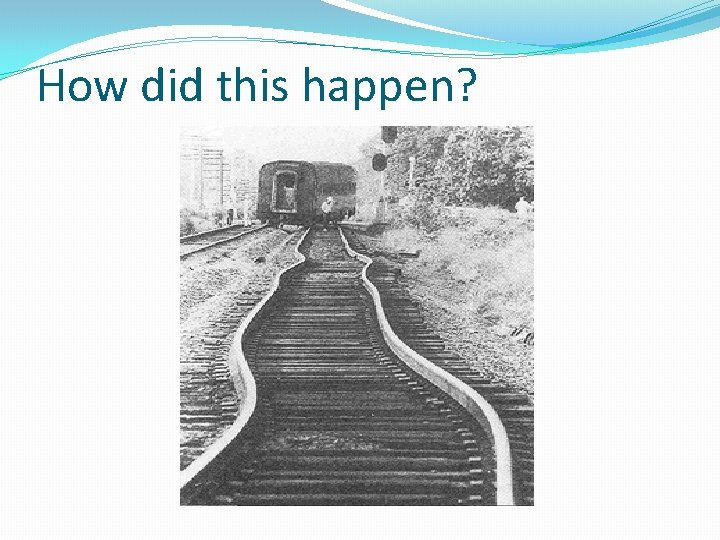
How did this happen?
Thermal expansion As the temperature of a liquid or solid increases, the molecules vibrate faster and occupy more space. This results in a volume increase known as thermal expansion, thus the rails bent.
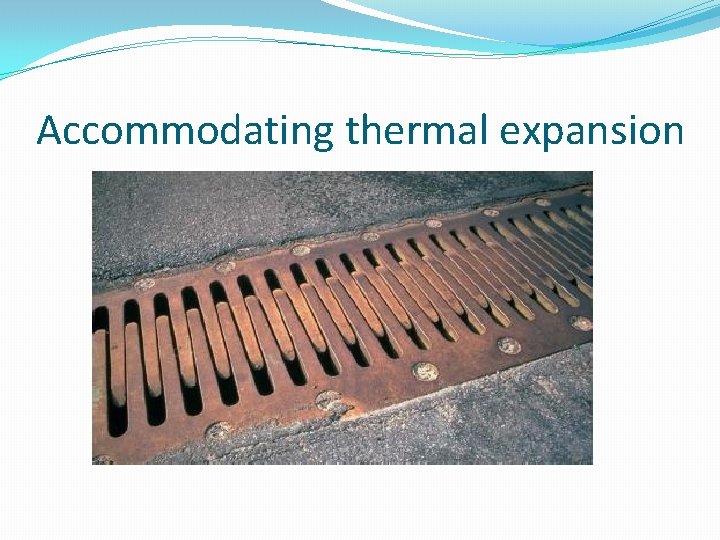
Accommodating thermal expansion
Equations Equation for energy associated with temperature change of an object? Equation for energy associated with phase change?
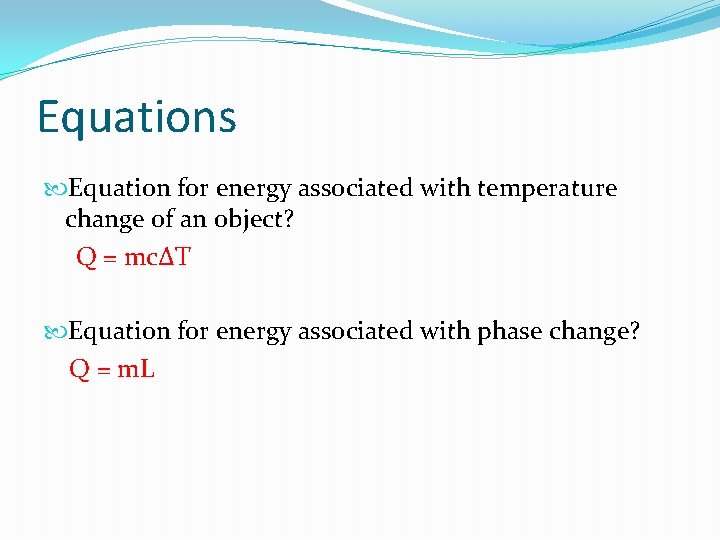
Equations Equation for energy associated with temperature change of an object? Q = mc∆T Equation for energy associated with phase change? Q = m. L
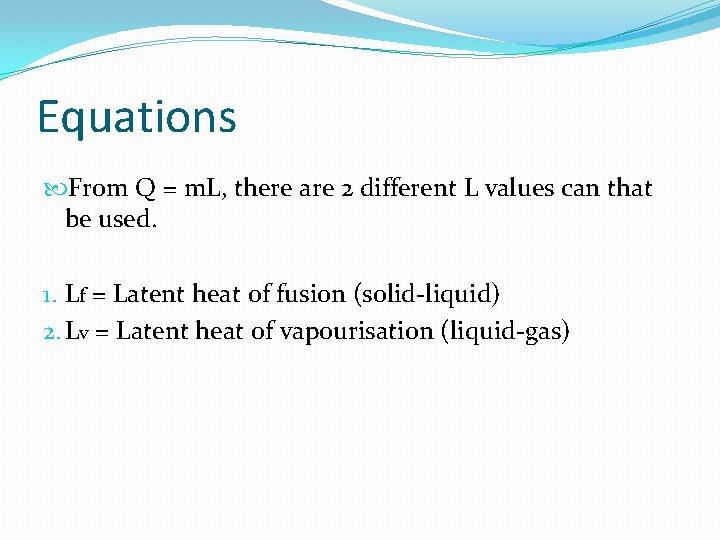
Equations From Q = m. L, there are 2 different L values can that be used. 1. Lf = Latent heat of fusion (solid-liquid) 2. Lv = Latent heat of vapourisation (liquid-gas)
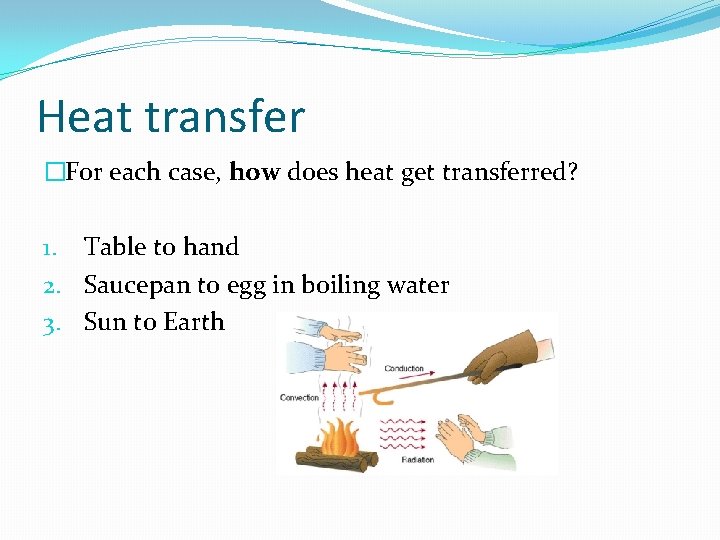
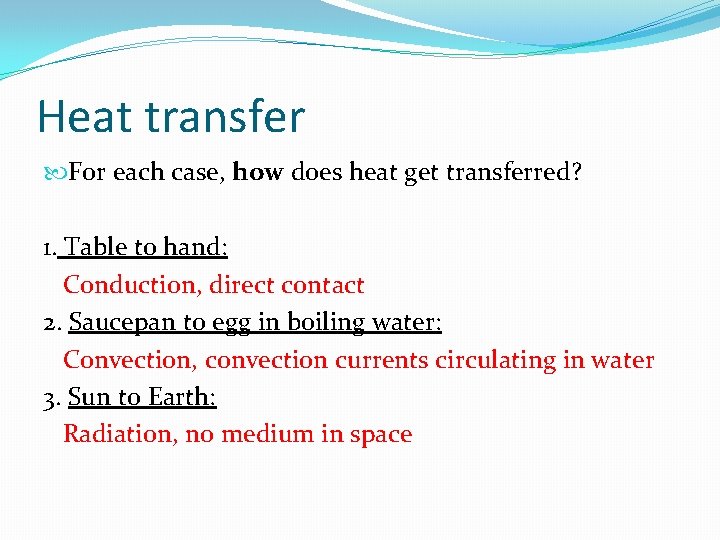
Heat transfer �For each case, how does heat get transferred? 1. Table to hand 2. Saucepan to egg in boiling water 3. Sun to Earth
Heat transfer For each case, how does heat get transferred? 1. Table to hand: Conduction, direct contact 2. Saucepan to egg in boiling water: Convection, convection currents circulating in water 3. Sun to Earth: Radiation, no medium in space
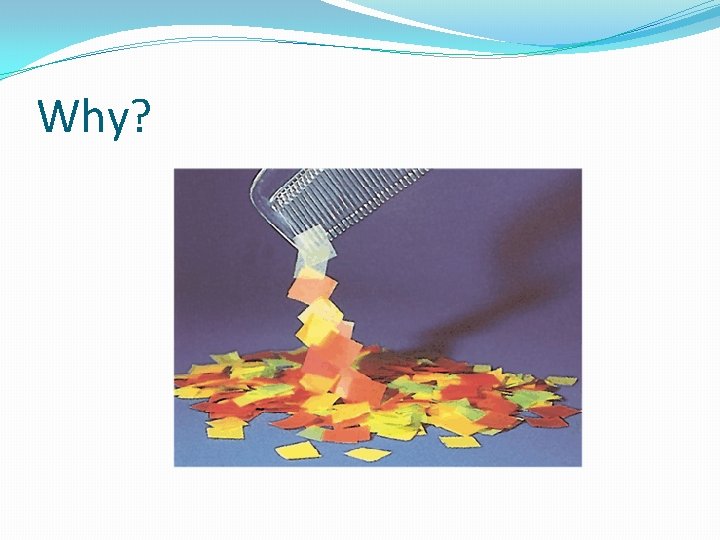
Why?
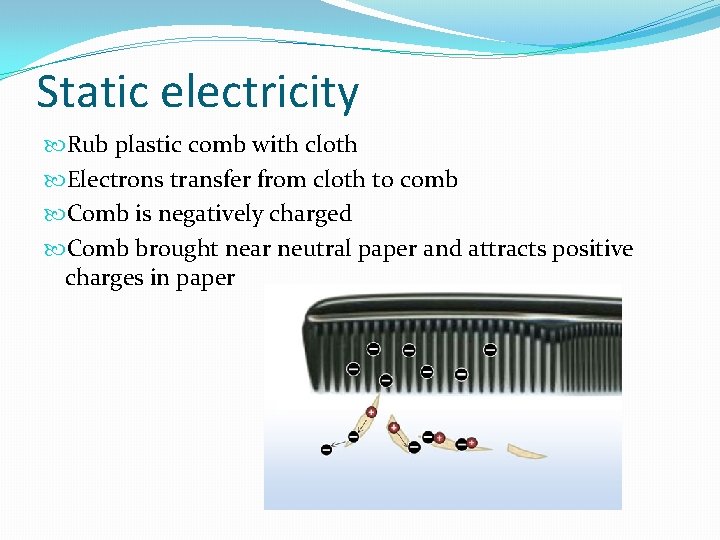
Static electricity Rub plastic comb with cloth Electrons transfer from cloth to comb Comb is negatively charged Comb brought near neutral paper and attracts positive charges in paper
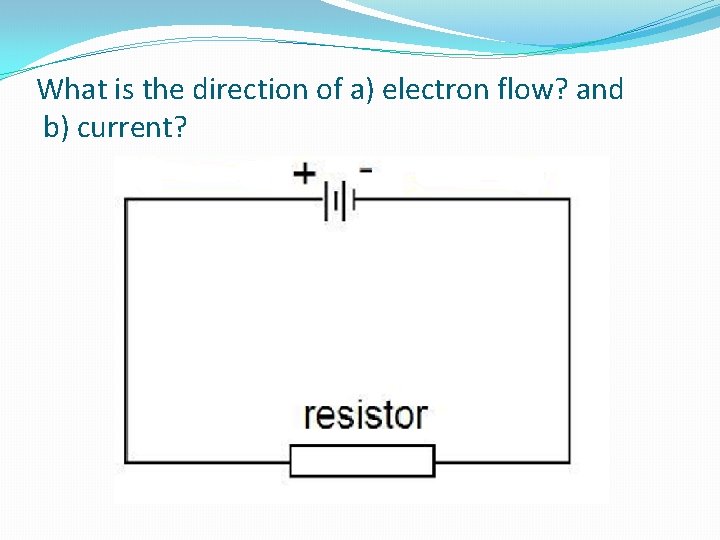
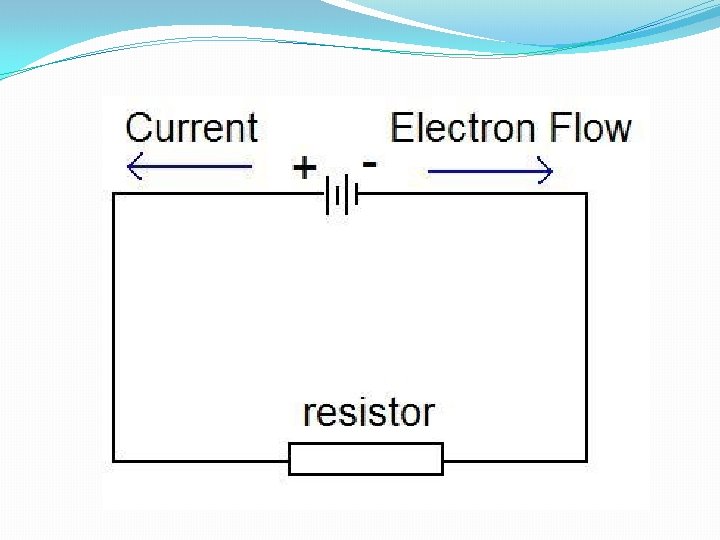
What is the direction of a) electron flow? and b) current? -
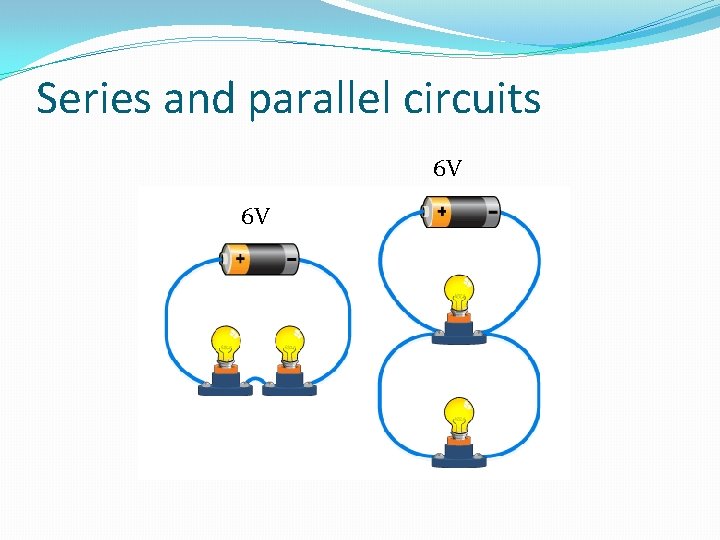
Series and parallel circuits 6 V 6 V
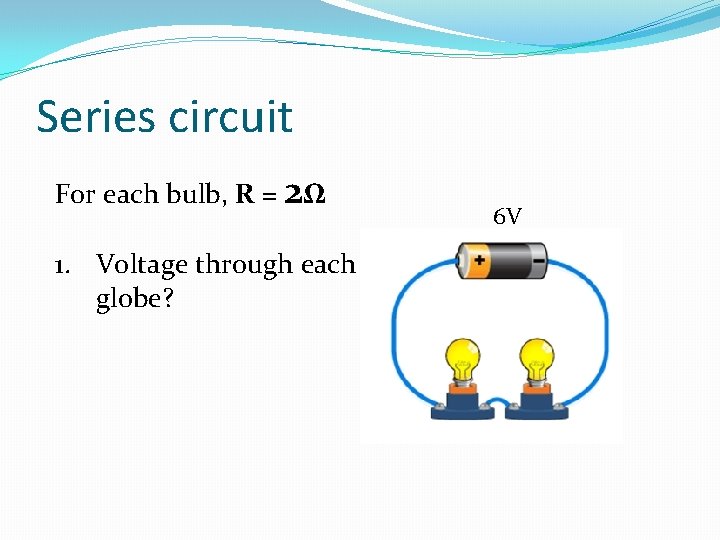
Series circuit For each bulb, R = 2Ω 1. Voltage through each globe? 6 V
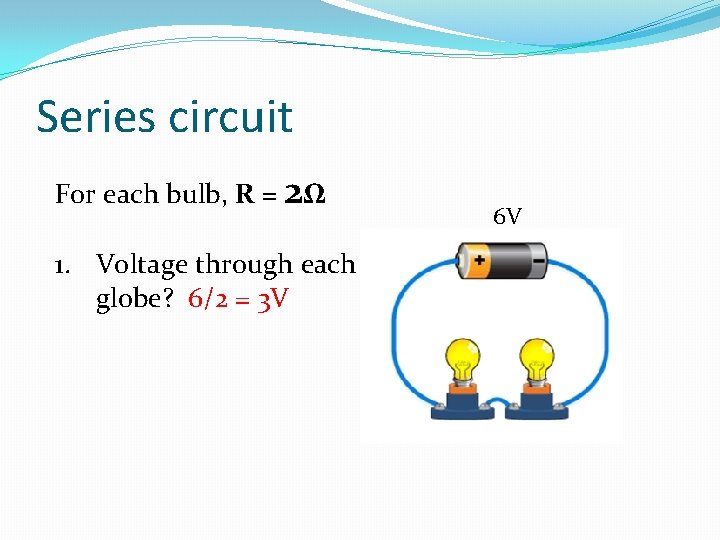
Series circuit For each bulb, R = 2Ω 1. Voltage through each globe? 6/2 = 3 V 6 V
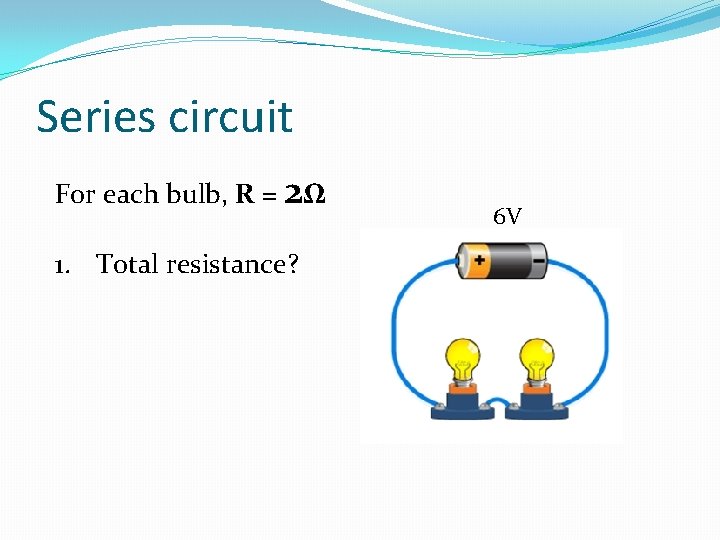
Series circuit For each bulb, R = 2Ω 1. Total resistance? 6 V
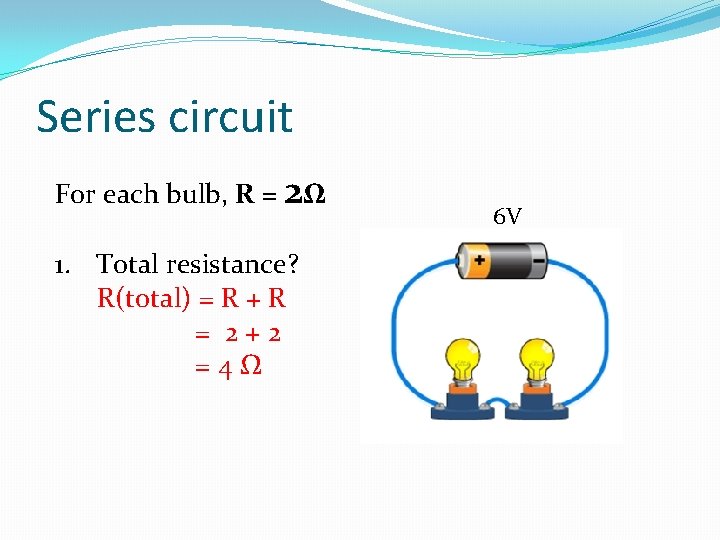
Series circuit For each bulb, R = 2Ω 1. Total resistance? R(total) = R + R = 2+2 =4Ω 6 V
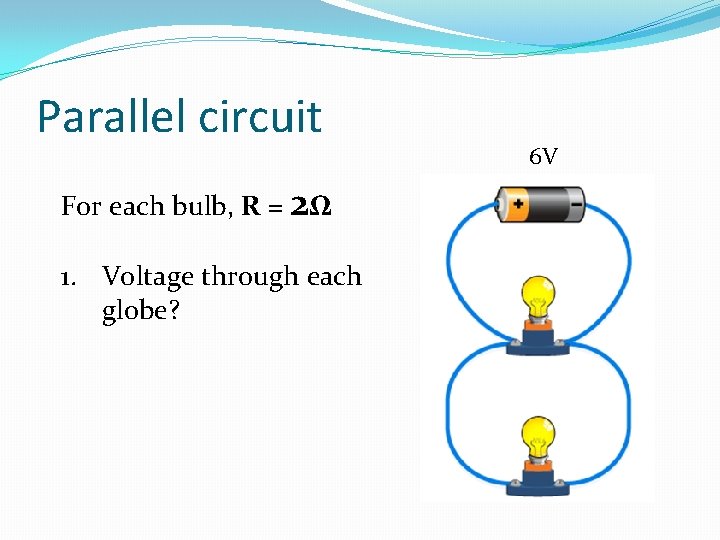
Parallel circuit For each bulb, R = 2Ω 1. Voltage through each globe? 6 V
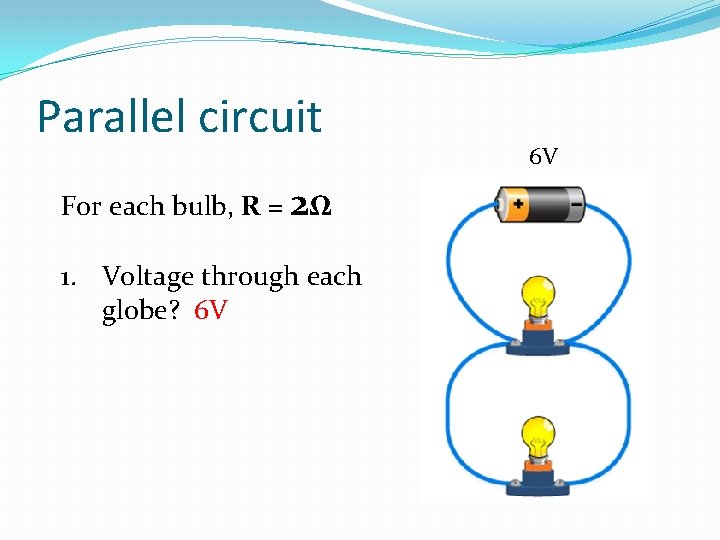
Parallel circuit For each bulb, R = 2Ω 1. Voltage through each globe? 6 V 6 V
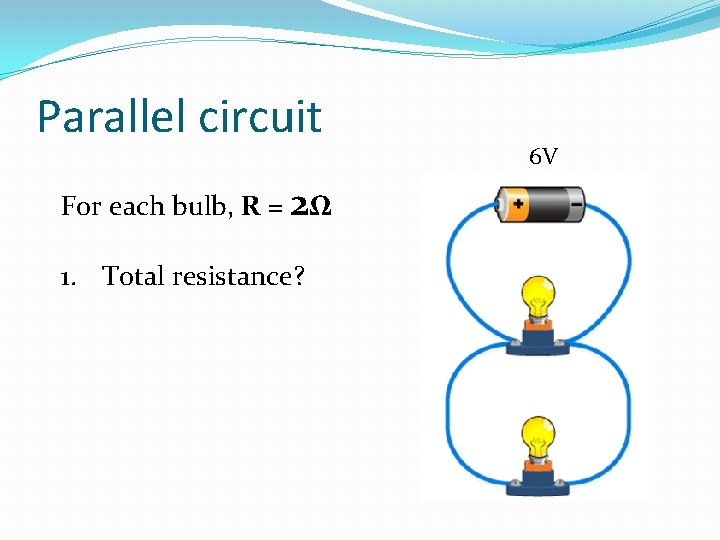
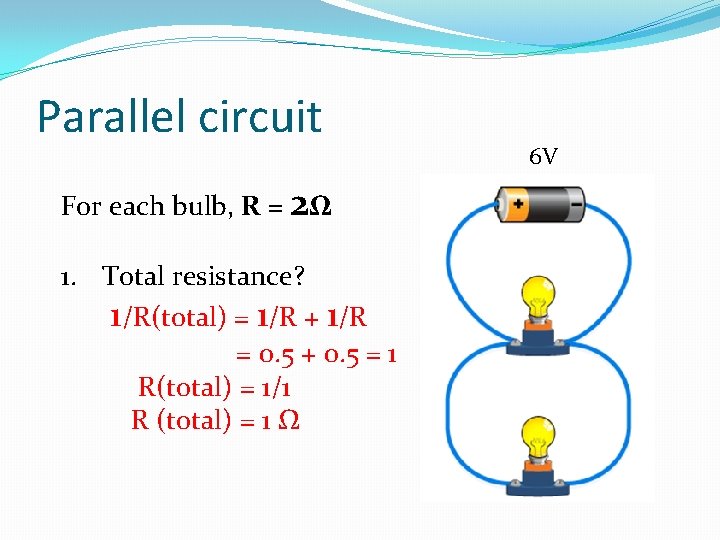
Parallel circuit For each bulb, R = 2Ω 1. Total resistance? 6 V
Parallel circuit For each bulb, R = 2Ω 1. Total resistance? 1/R(total) = 1/R + 1/R = 0. 5 + 0. 5 = 1 R(total) = 1/1 R (total) = 1 Ω 6 V
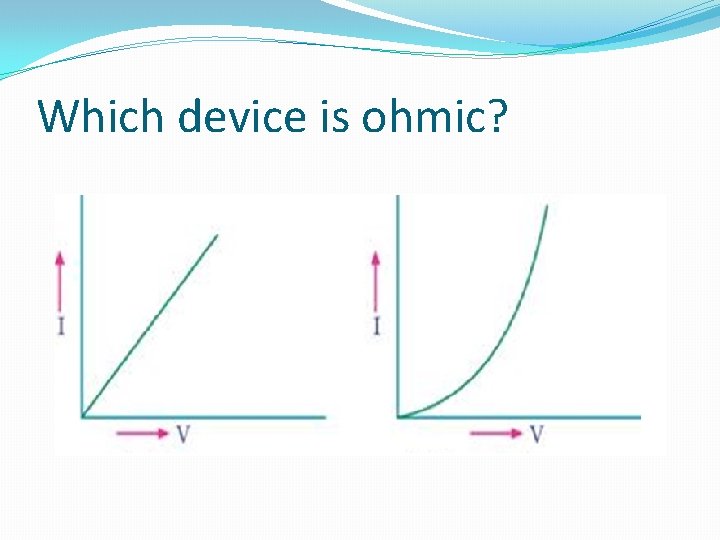
Which device is ohmic?
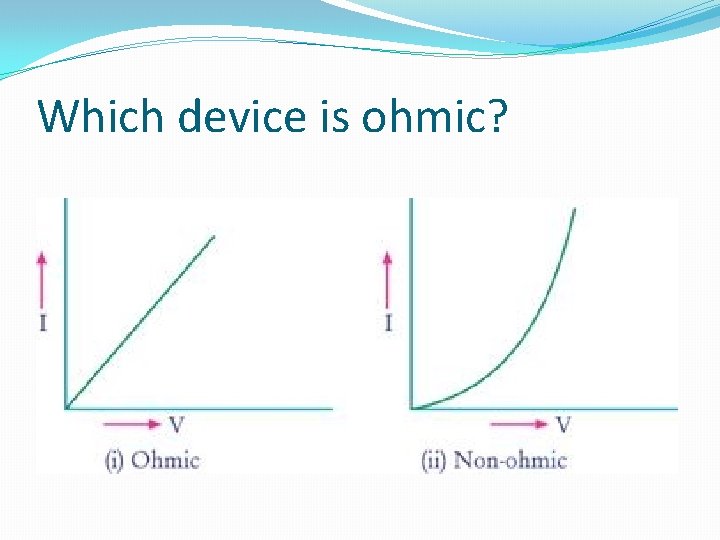
Which device is ohmic?
Rest of lesson… Revise through WACE book OR Revise through STAWA book