
Year 10 Subject Selection Evening HSC Requirements Question
Year 10 Subject Selection Evening HSC Requirements
Question: What are the HSC requirements for the ‘Class of 2021’?
Year 11 • Minimum 12 units • Students must satisfactorily complete the Year 11 course before commencing the corresponding Year 12 course Year 12 • Minimum of 10 units
HSC Course Structure • All courses in the HSC have a unit value • Most are 2 units (=120 hrs, /100) • Some are 1 unit (=60 hrs, /50) • Many 1 unit courses are extension courses, ∴ 3 or 4 units of a course can be studied
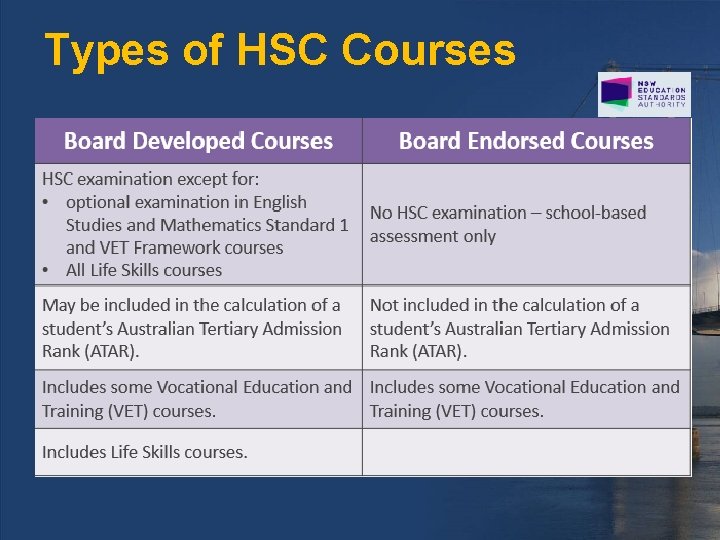
Types of HSC Courses
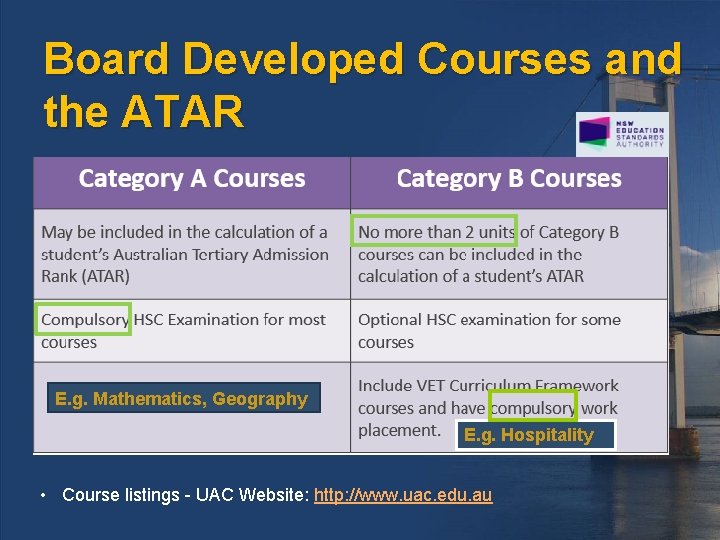
Board Developed Courses and the ATAR E. g. Mathematics, Geography E. g. Hospitality • Course listings - UAC Website: http: //www. uac. edu. au
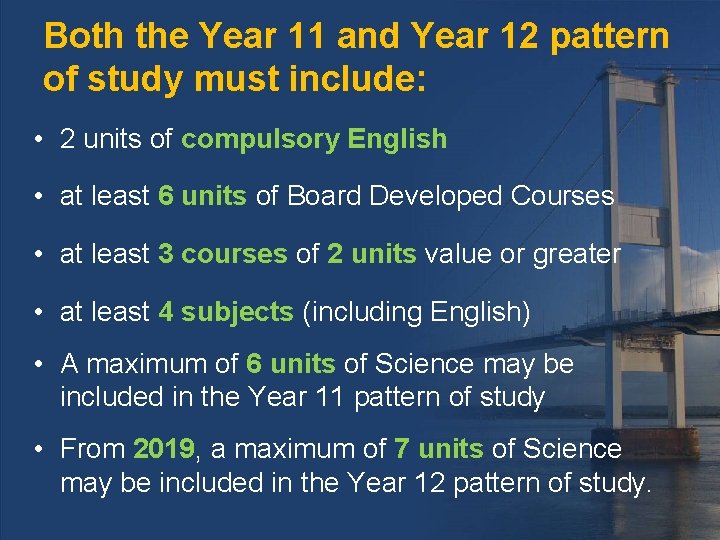
Both the Year 11 and Year 12 pattern of study must include: • 2 units of compulsory English • at least 6 units of Board Developed Courses • at least 3 courses of 2 units value or greater • at least 4 subjects (including English) • A maximum of 6 units of Science may be included in the Year 11 pattern of study • From 2019, a maximum of 7 units of Science may be included in the Year 12 pattern of study.
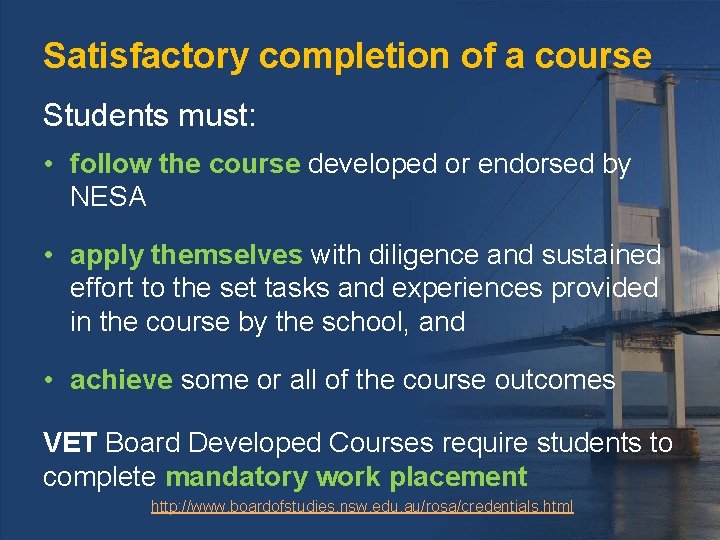
Satisfactory completion of a course Students must: • follow the course developed or endorsed by NESA • apply themselves with diligence and sustained effort to the set tasks and experiences provided in the course by the school, and • achieve some or all of the course outcomes VET Board Developed Courses require students to complete mandatory work placement http: //www. boardofstudies. nsw. edu. au/rosa/credentials. html
Additional completion requirements for HSC courses Students must: • complete HSC assessment tasks that contribute in excess of 50 per cent of available marks in courses where internal assessment marks are submitted, and • sit for and make a serious attempt at any requisite Higher School Certificate examinations for a course

Requirements for the HSC – meeting the minimum standard in literacy and numeracy • From 2020, students need to demonstrate they have met a minimum standard in literacy and numeracy to be eligible for a HSC. • Students will show they meet the HSC minimum standard by passing online tests of basic literacy and numeracy skills, which are available for them to sit when they are ready in Year 10, 11 and 12 and after the HSC.
Question: Are there any prerequisites for studying in the senior school?
YES! • Satisfactory completion of Stage 5 courses • HSC: All My Own Work is a mandatory program designed to help HSC students to follow the principles and practices of good scholarship. http: //educationstandards. nsw. edu. au/wps/portal/nesa/11 -12/hsc-all-my-own-work • ATAR eligibility – 10 units of Board Developed Courses v 6 units BDC for HSC
Question: What is a Ro. SA and how do I get one?
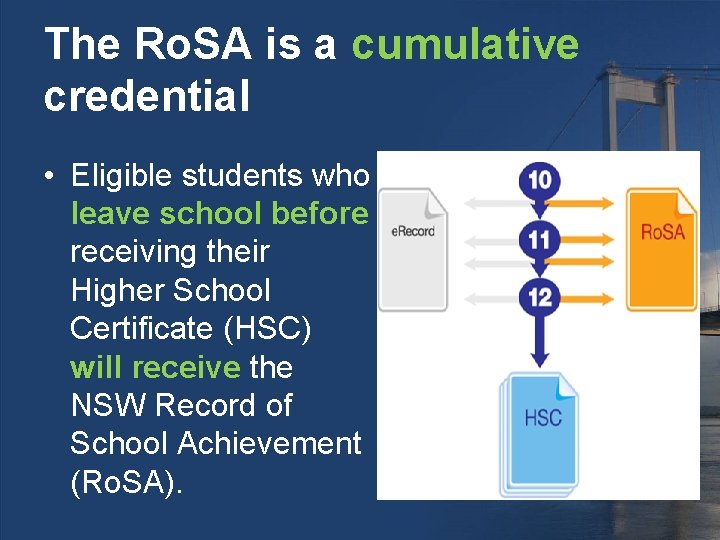
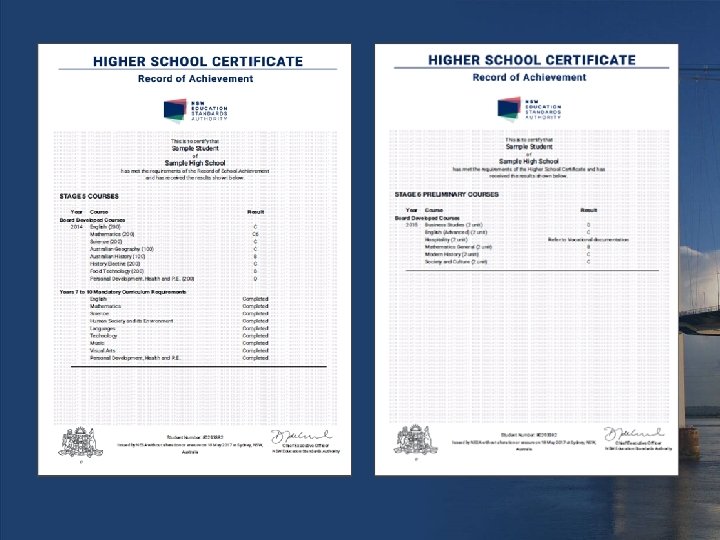
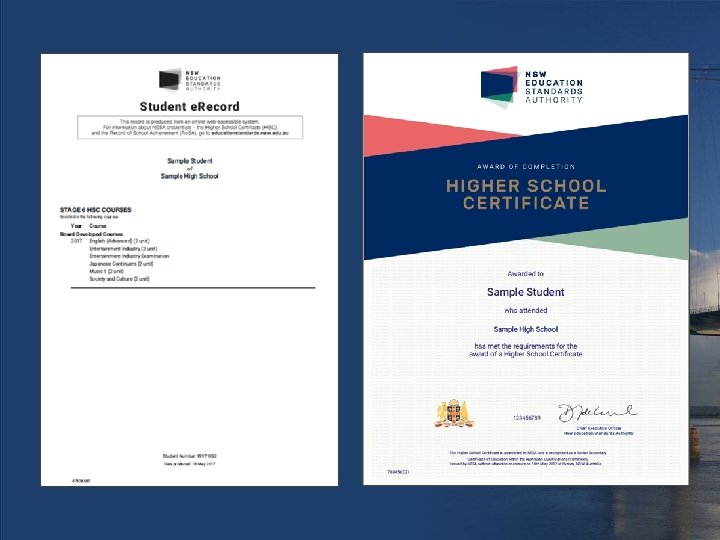
The Ro. SA is a cumulative credential • Eligible students who leave school before receiving their Higher School Certificate (HSC) will receive the NSW Record of School Achievement (Ro. SA).
Question: How is my HSC mark determined?
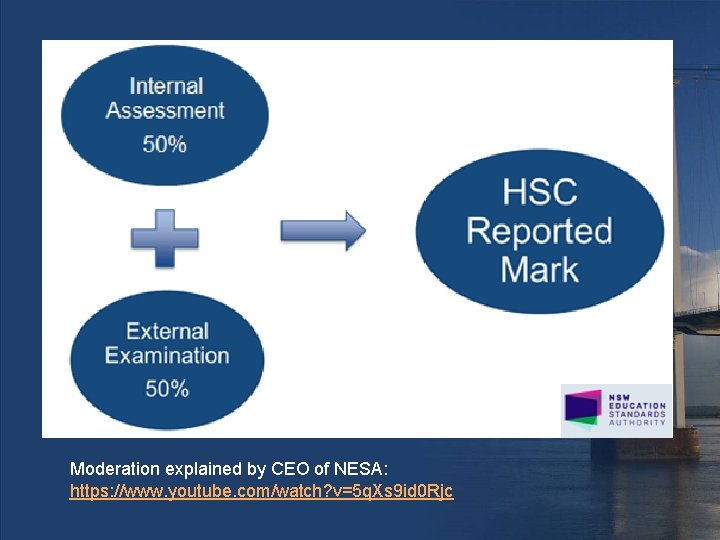
Moderation explained by CEO of NESA: https: //www. youtube. com/watch? v=5 q. Xs 9 id 0 Rjc
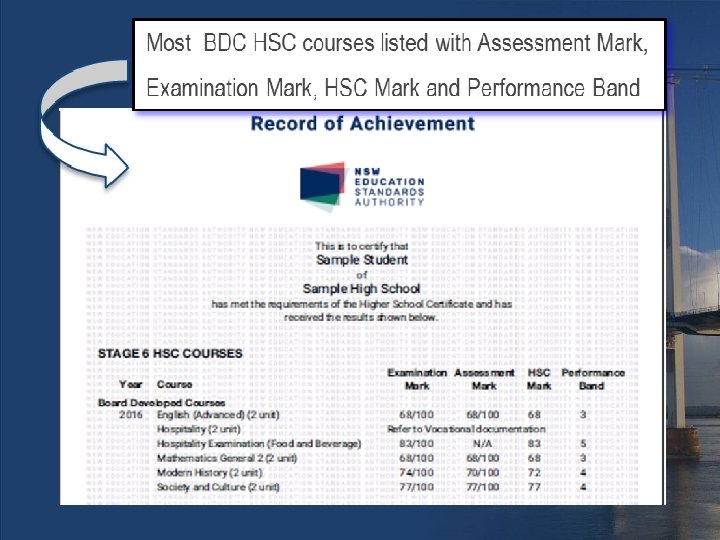
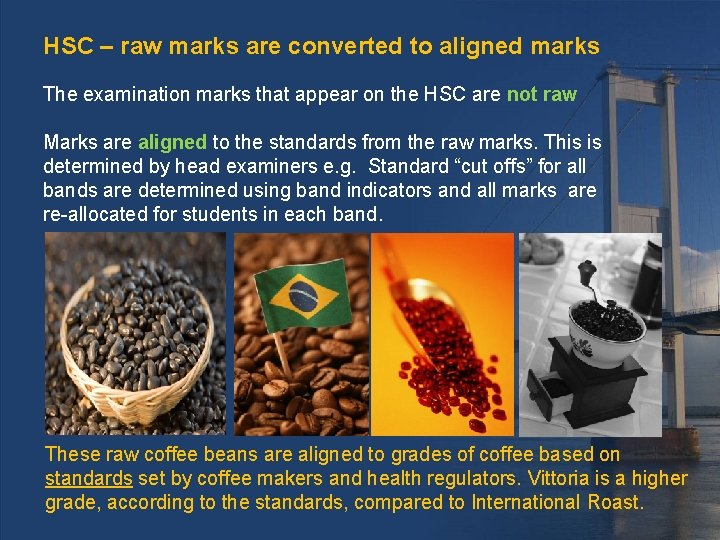
HSC – raw marks are converted to aligned marks The examination marks that appear on the HSC are not raw Marks are aligned to the standards from the raw marks. This is determined by head examiners e. g. Standard “cut offs” for all bands are determined using band indicators and all marks are re-allocated for students in each band. These raw coffee beans are aligned to grades of coffee based on standards set by coffee makers and health regulators. Vittoria is a higher grade, according to the standards, compared to International Roast.
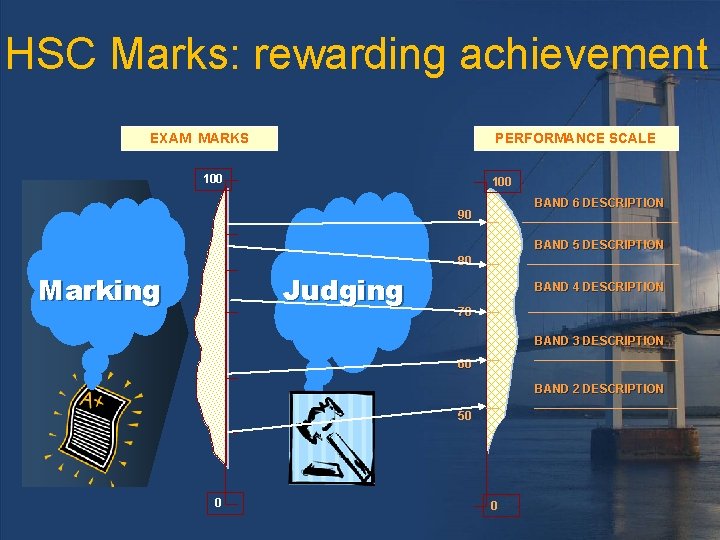
HSC Marks: rewarding achievement EXAM MARKS PERFORMANCE SCALE 100 BAND 6 DESCRIPTION 90 BAND 5 DESCRIPTION 80 Marking Judging BAND 4 DESCRIPTION 70 BAND 3 DESCRIPTION 60 BAND 2 DESCRIPTION 50 0 0
How is the HSC assessment mark determined? School based assessment: • Number of tasks capped − − 3 tasks in Year 11 4 tasks in Year 12 task types suited to the course one formal written examination style task option Accounts for half of the final HSC mark.
Moderation of assessment marks • All raw HSC assessment marks submitted by schools are moderated by NESA in a process called alignment • Alignment adjusts the raw assessments submitted by schools so that the mean (average) of the group’s assessments is set to equal the mean of the aligned HSC exam mark obtained by the group • The top assessment mark is set to equal the top exam mark • The rank order as submitted by the school of students remains unchanged in their group
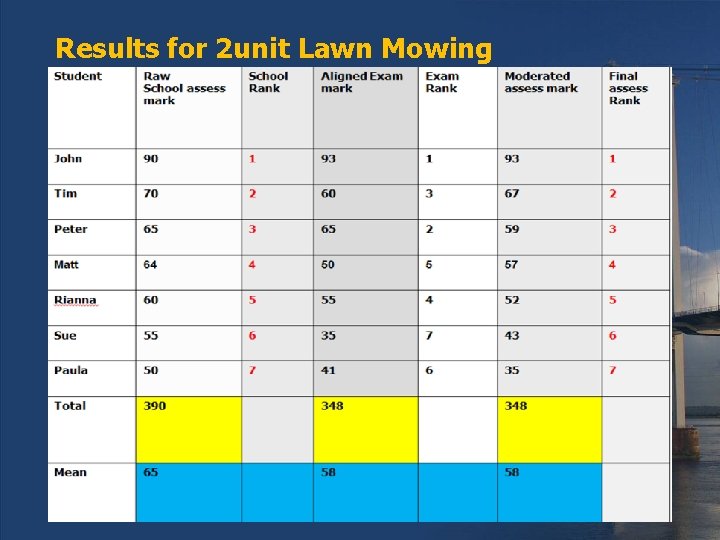
Results for 2 unit Lawn Mowing
ATAR general aspects and scaling
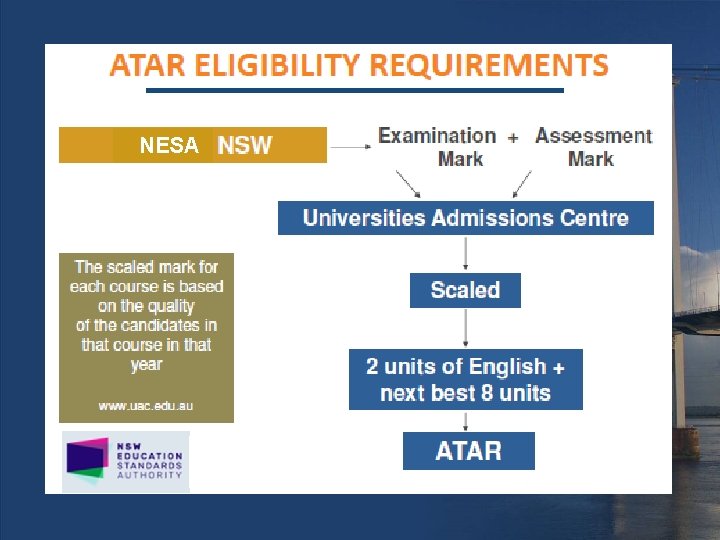
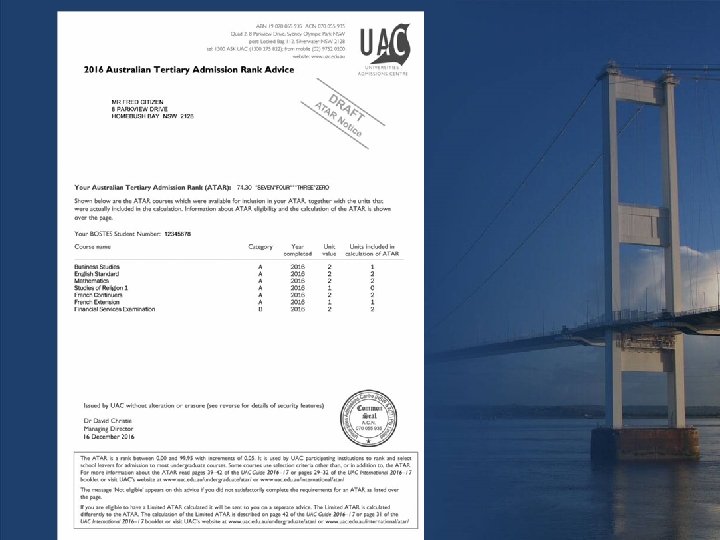
General aspects of the ATAR • The HSC serves many purposes but the ATAR serves only one – to assist universities in RANKING (top to bottom) applicants for universities • Approx 70, 000 will sit for the HSC and about 60, 000 will be eligible for a ATAR • The best 10 units (2 of which could be a category B) of BDCs are used to determine the ATAR. 2 units of English will be included • The ATAR is calculated by universities in NSW and ACT and is released by UAC • The ATAR is a rank. It is not a mark. • Schools do not receive ATARs
General ATAR continued • ATAR is reported as a number between 0 and 99. 95 with increments of 0. 05 • A student’s ATAR indicates the POSITION of that student relative to their Year 7 cohort • 2018 – ATAR of 80. 00 placed in top 20% of their Yr 7 cohort if all the 2013 Yr 7 students completed Yr 12 • ATAR based on a total of the SCALED marks in the best 10 units (must include the best 2 Units of English)
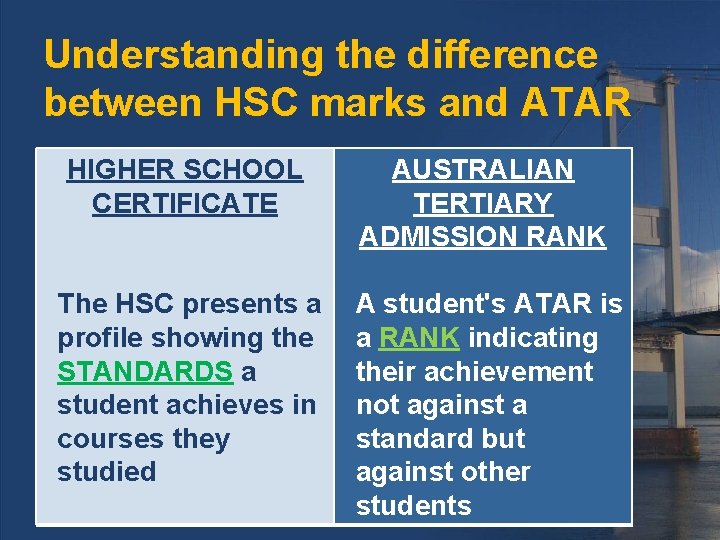
Understanding the difference between HSC marks and ATAR HIGHER SCHOOL CERTIFICATE AUSTRALIAN TERTIARY ADMISSION RANK The HSC presents a profile showing the STANDARDS a student achieves in courses they studied A student's ATAR is a RANK indicating their achievement not against a standard but against other students
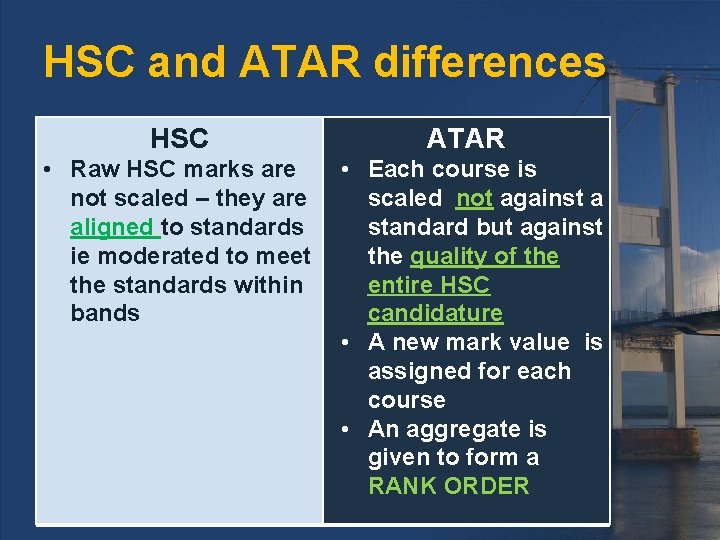
HSC and ATAR differences HSC ATAR • Raw HSC marks are not scaled – they are aligned to standards ie moderated to meet the standards within bands • Each course is scaled not against a standard but against the quality of the entire HSC candidature • A new mark value is assigned for each course • An aggregate is given to form a RANK ORDER
NESA
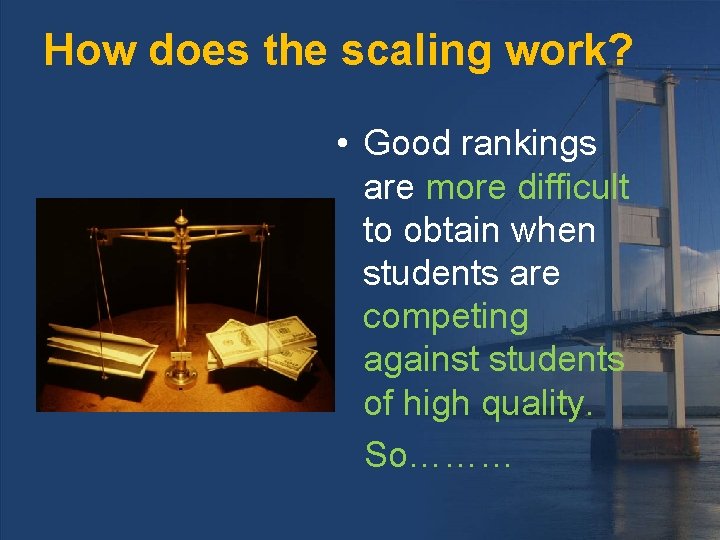
How does the scaling work? • Good rankings are more difficult to obtain when students are competing against students of high quality. So………
ATAR scaling philosophy • The scaling model looks for the “strength of the competition” or the “company you’re in” or the “quality of the candidature”
The most common question: Why is my ATAR low compared to my Year 12 marks?
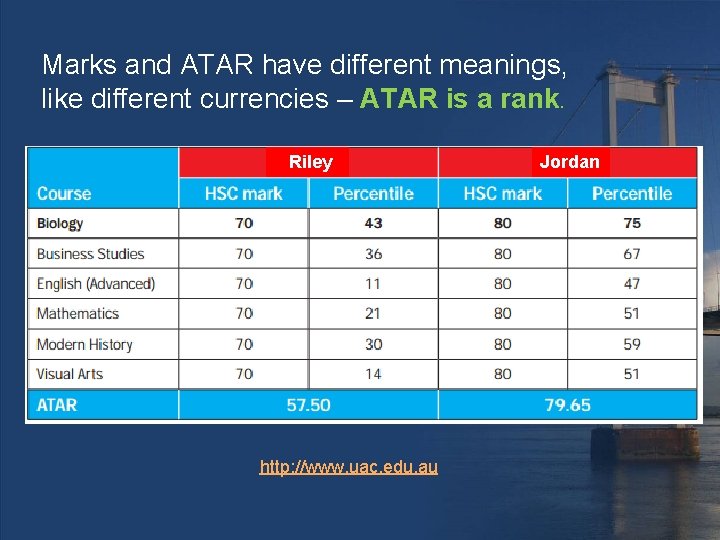
Marks and ATAR have different meanings, like different currencies – ATAR is a rank. Riley http: //www. uac. edu. au Jordan
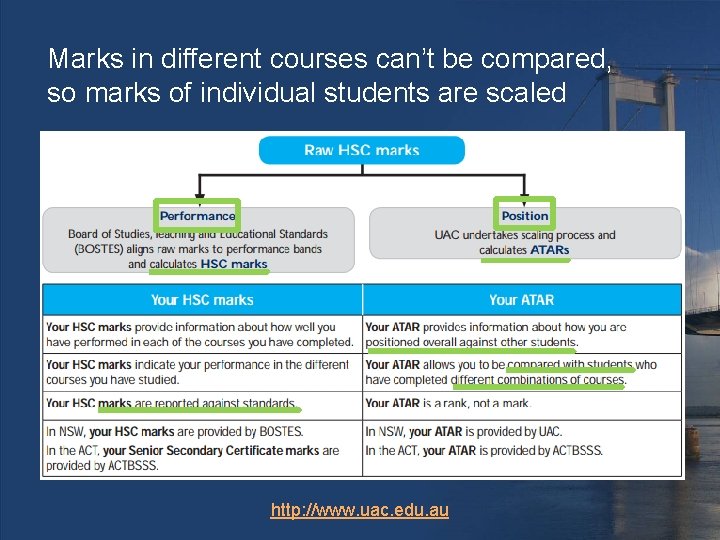
Marks in different courses can’t be compared, so marks of individual students are scaled http: //www. uac. edu. au
Final questions: But what about the ATAR? and Shouldn’t we select the courses that will scale better?
• The underlying principle is that you should neither be advantaged nor disadvantaged by choosing one course over another. • The scaling process is designed to encourage you to study courses you enjoy, are good at, and that best prepare you for future study – just about any combination of courses can lead to a good ATAR – but make sure you understand eligibility rules.
When choosing ask the following: • What am I good at? • What do I like? • What skills are my strengths?
Some Advice to Students • Read everything you have been given • Ask those who know • Identify strengths and weaknesses • Identify some goals • If in doubt aim high • Some advice from UAC: http: //www. uac. edu. au/schoolink/year-10. shtml
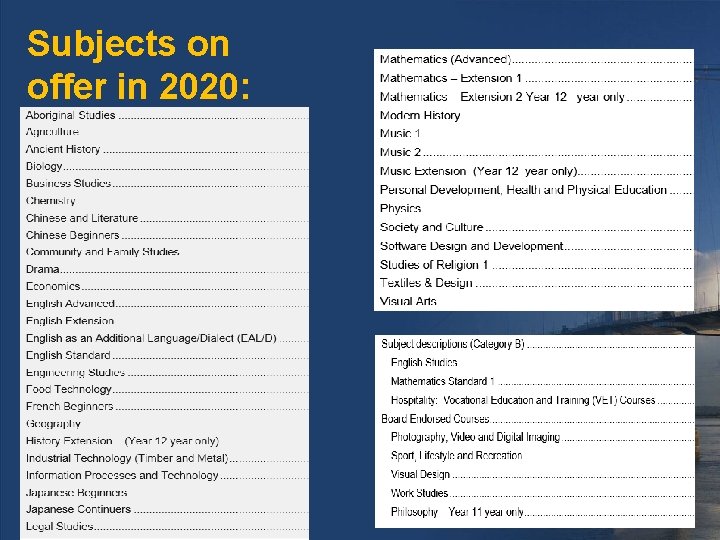
Subjects on offer in 2020:
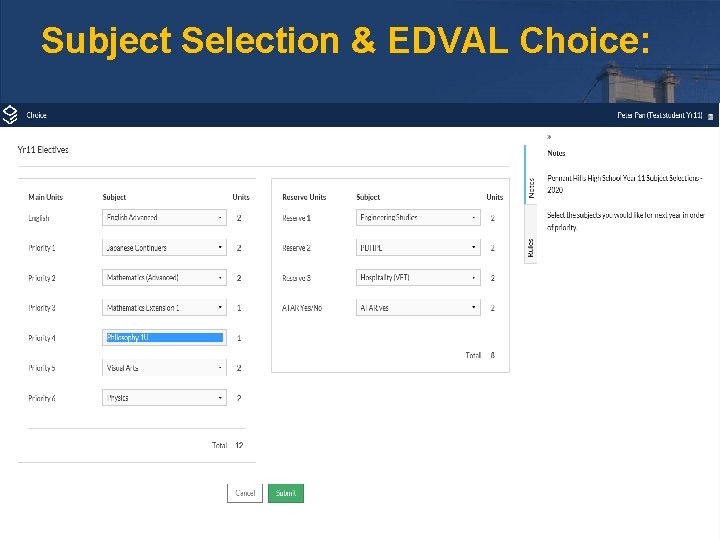
Subject Selection & EDVAL Choice:
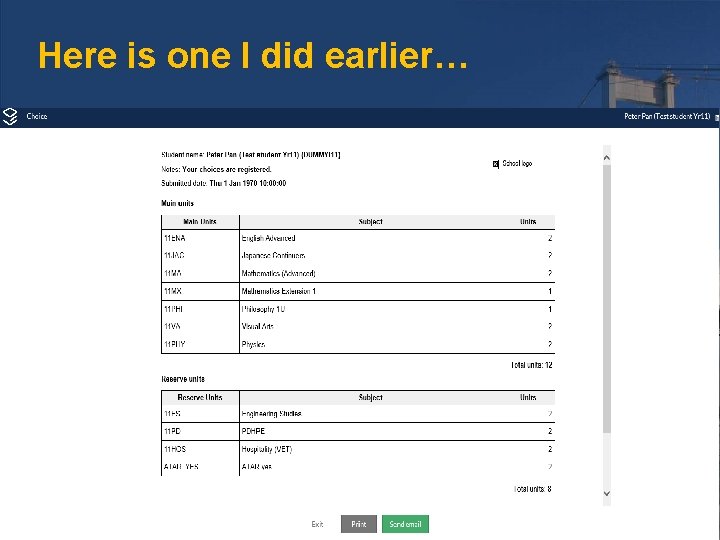
Here is one I did earlier…

PHHS Timeline • Subject selection Information evening 24 th July 2019 • Student Interviews Term III Week 2 2019 • Subject Selection Forms completed and submitted to Mr Phull’s office Monday 5 th August 2019 • Notification of subjects for 2020 Term IV Week 6 2019
Acknowledgements: • http: //educationstandards. nsw. edu. au/wps/ portal/nesa/11 -12/hsc/subject-selection • ‘ATAR Information’ – www. uac. edu. au • http: //ace. bostes. nsw. edu. au/ace-8064 • www. presentationmagazine. com
- Slides: 45