
Year 1 Summer Learning Poetry Learning Objectives Continue
Year 1 Summer Learning Poetry
Learning Objectives • Continue to build up a repertoire of poems learnt by heart • Participate in performances • Use expanded noun phrases to describe • Write poetry
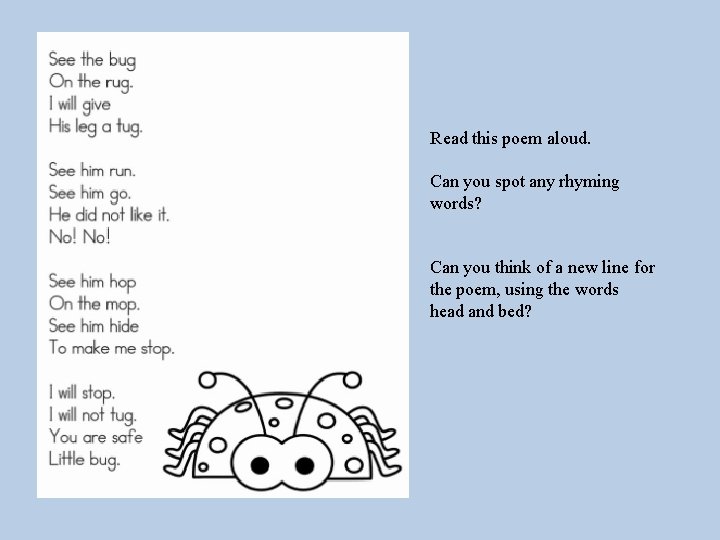
Read this poem aloud. Can you spot any rhyming words? Can you think of a new line for the poem, using the words head and bed?

Rhyming Hot Potato Take a ball or a pair of balled up socks and stand in a circle. The adult should come up with a word e. g. hot. They then throw the ball to another player who has to think of a word that rhymes with hot. Once they’ve said their word, they throw the ball to the next player who does the same. Keep passing the ball until you run out of rhyming words. The person holding the ball who cannot think of a rhyming word is out.
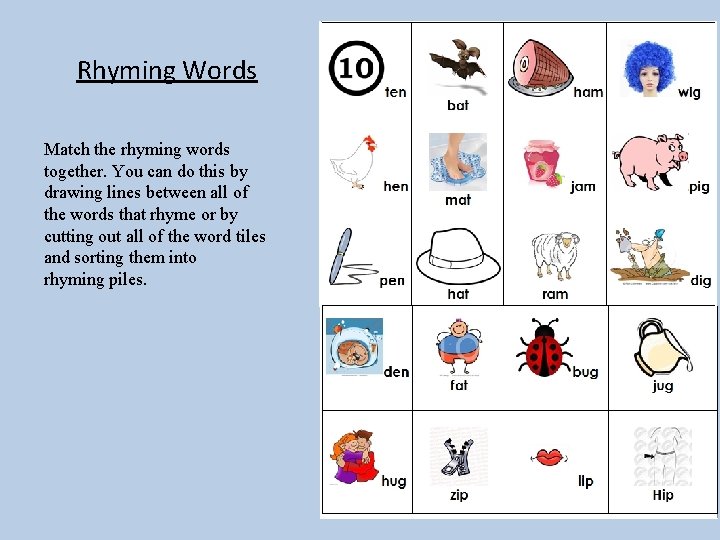
Rhyming Words Match the rhyming words together. You can do this by drawing lines between all of the words that rhyme or by cutting out all of the word tiles and sorting them into rhyming piles.
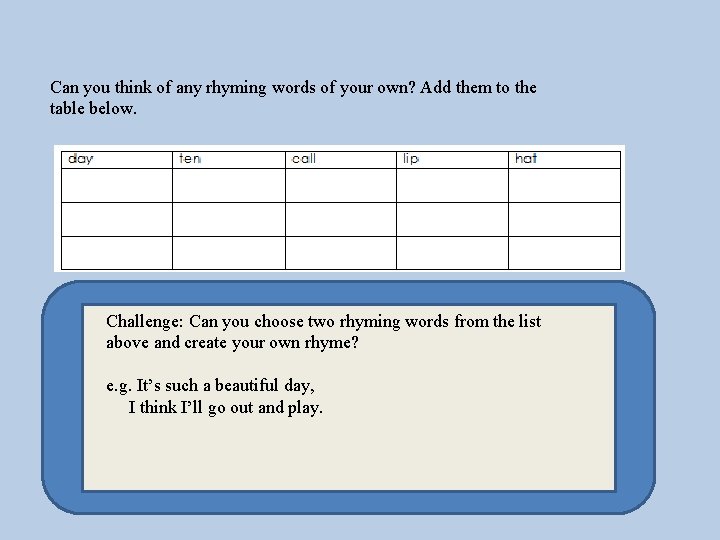
Can you think of any rhyming words of your own? Add them to the table below. Challenge: Can you choose two rhyming words from the list above and create your own rhyme? e. g. It’s such a beautiful day, I think I’ll go out and play.
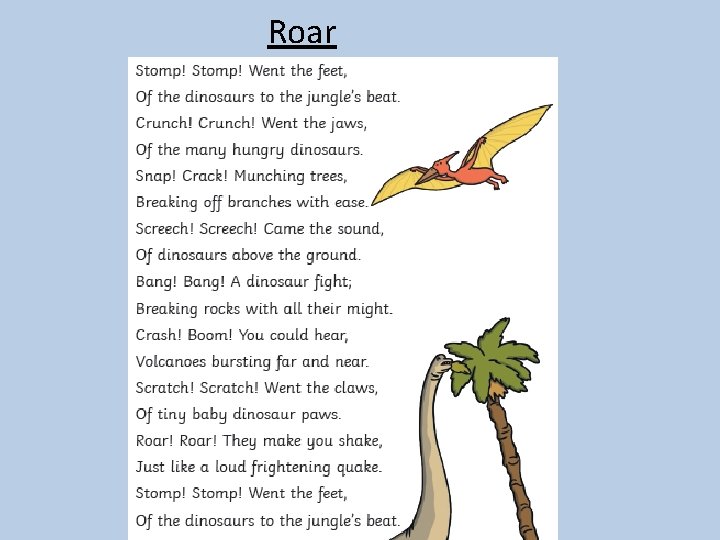
Roar
Questions about the poem 1. What were the dinosaurs breaking in a fight? 2. What is one word used in the poem to describe dinosaurs? 3. Why do you think the poem is called Roar?
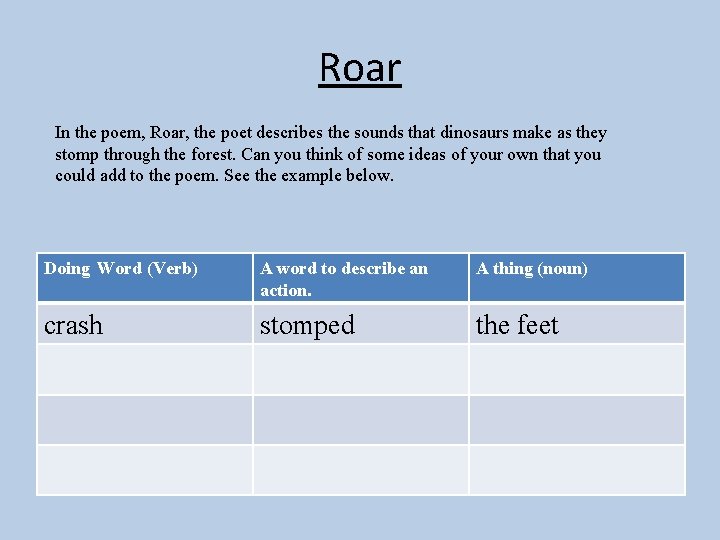
Roar In the poem, Roar, the poet describes the sounds that dinosaurs make as they stomp through the forest. Can you think of some ideas of your own that you could add to the poem. See the example below. Doing Word (Verb) A word to describe an action. A thing (noun) crash stomped the feet
Now can you use one of your ideas and turn it into a sentence? e. g. crunch went the leaves on the forest floor. Have a go yourself and turn one of your ideas into a sentence. _______________________________________________________________
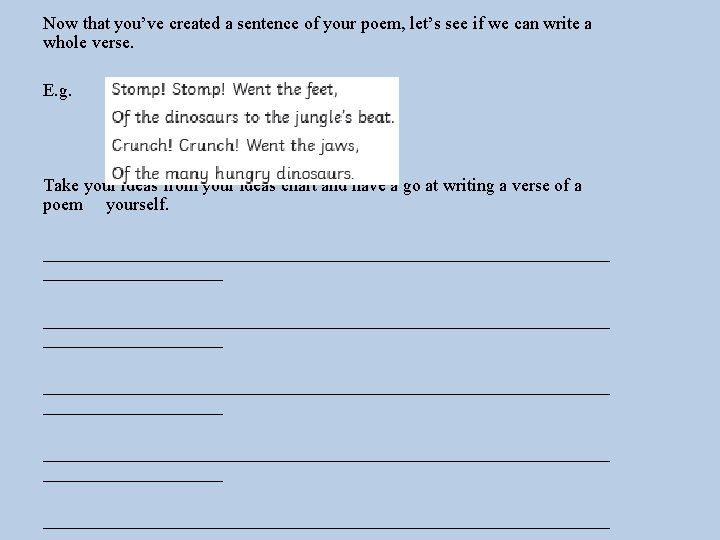
Now that you’ve created a sentence of your poem, let’s see if we can write a whole verse. E. g. Take your ideas from your ideas chart and have a go at writing a verse of a poem yourself. _______________________________________________________________ ____________________ ________________________________
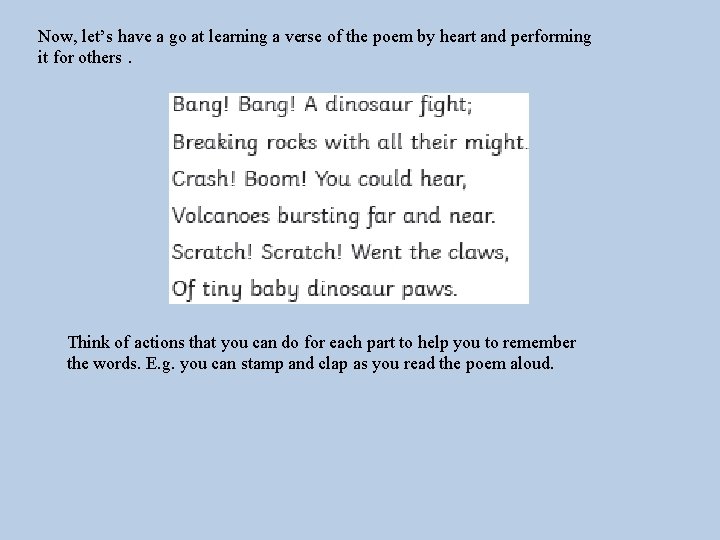
Now, let’s have a go at learning a verse of the poem by heart and performing it for others. Think of actions that you can do for each part to help you to remember the words. E. g. you can stamp and clap as you read the poem aloud.
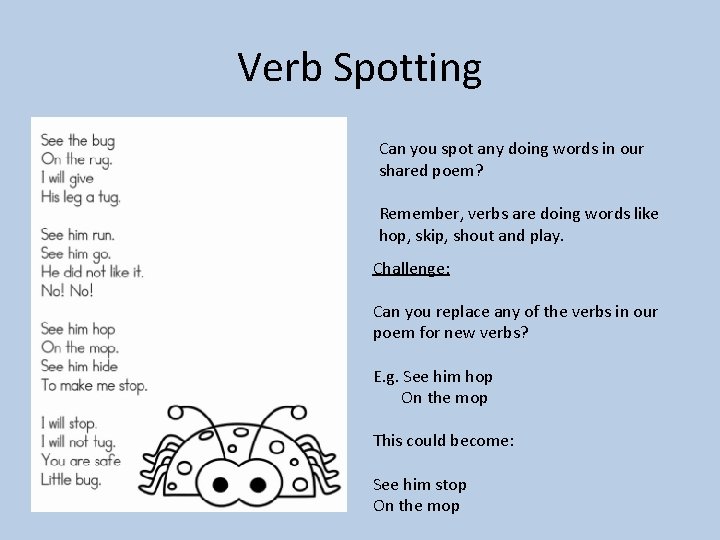
Verb Spotting Can you spot any doing words in our shared poem? Remember, verbs are doing words like hop, skip, shout and play. Challenge: Can you replace any of the verbs in our poem for new verbs? E. g. See him hop On the mop This could become: See him stop On the mop
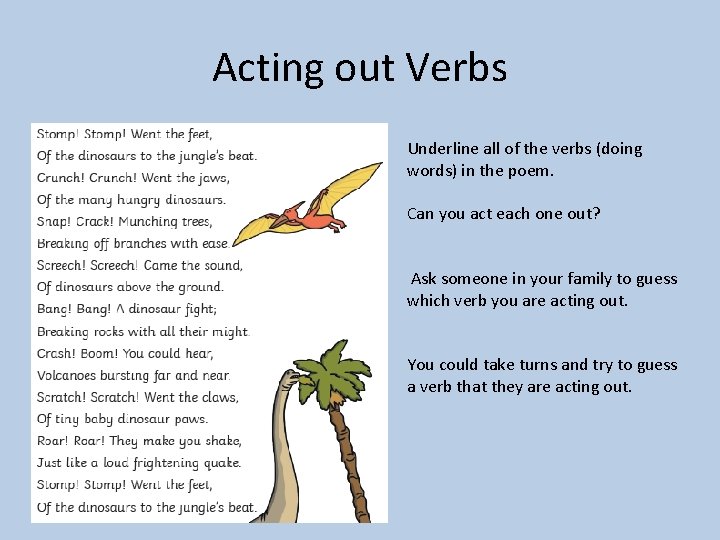
Acting out Verbs Underline all of the verbs (doing words) in the poem. Can you act each one out? Ask someone in your family to guess which verb you are acting out. You could take turns and try to guess a verb that they are acting out.
- Slides: 14