
Yara in a renewable energy world August 2017
Yara in a renewable energy world August 2017 Eystein Leren
Outline 1. 2. 3. 4. 5. Yara at a glance Sustainability ambition Energy consumption/production in Yara How do we believe the energy transition will impact our business We have many questions still. . 2
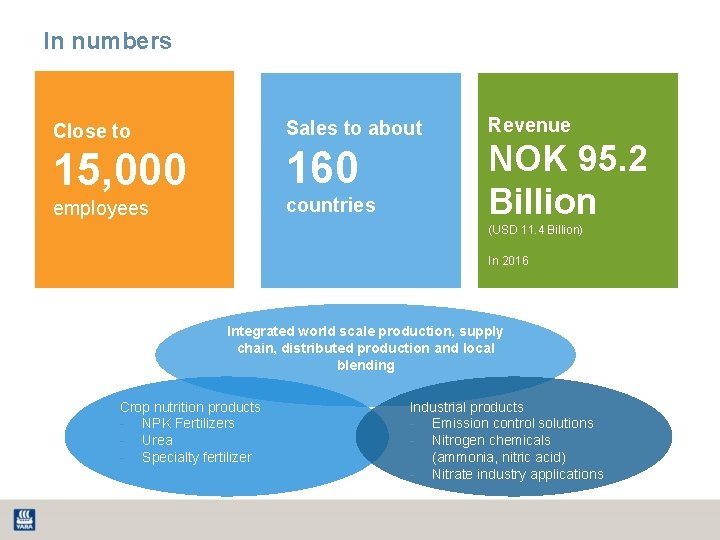
In numbers Close to Sales to about 15, 000 160 countries employees Revenue NOK 95. 2 Billion (USD 11. 4 Billion) In 2016 Integrated world scale production, supply chain, distributed production and local blending Crop nutrition products - NPK Fertilizers - Urea - Specialty fertilizer Industrial products - Emission control solutions - Nitrogen chemicals (ammonia, nitric acid) - Nitrate industry applications
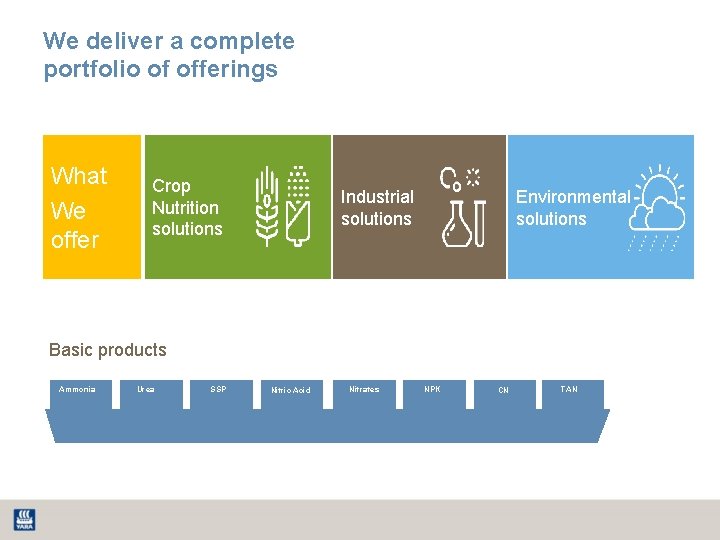
We deliver a complete portfolio of offerings What We offer Crop Nutrition solutions Industrial solutions Environmental solutions Basic products Ammonia Urea SSP Nitric Acid Nitrates NPK CN TAN
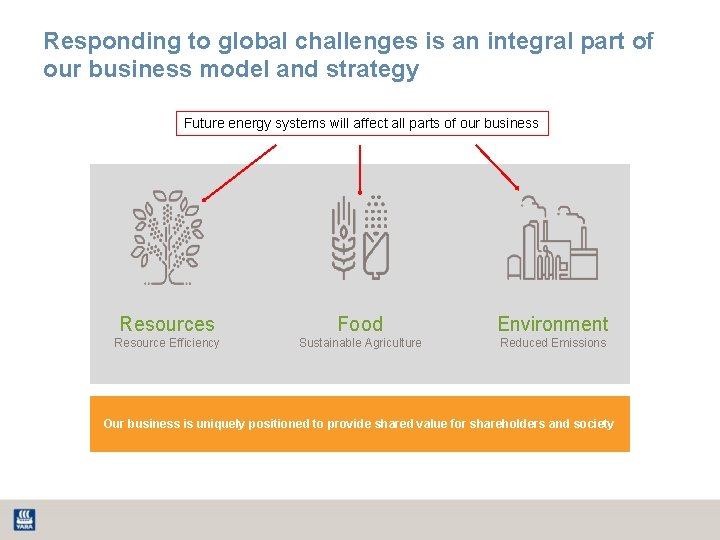
Responding to global challenges is an integral part of our business model and strategy Future energy systems will affect all parts of our business Resources Food Environment Resource Efficiency Sustainable Agriculture Reduced Emissions Our business is uniquely positioned to provide shared value for shareholders and society
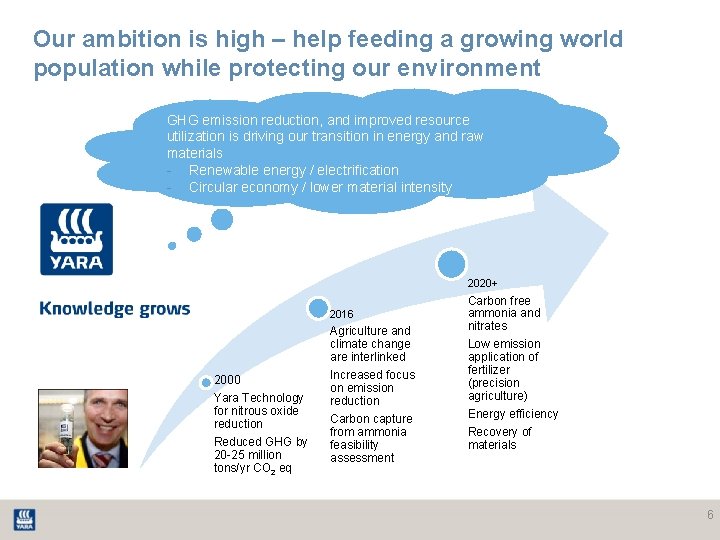
Our ambition is high – help feeding a growing world population while protecting our environment GHG emission reduction, and improved resource utilization is driving our transition in energy and raw materials - Renewable energy / electrification - Circular economy / lower material intensity 2020+ 2016 2000 Yara Technology for nitrous oxide reduction Reduced GHG by 20 -25 million tons/yr CO 2 eq Agriculture and climate change are interlinked Increased focus on emission reduction Carbon capture from ammonia feasibility assessment Carbon free ammonia and nitrates Low emission application of fertilizer (precision agriculture) Energy efficiency Recovery of materials 6
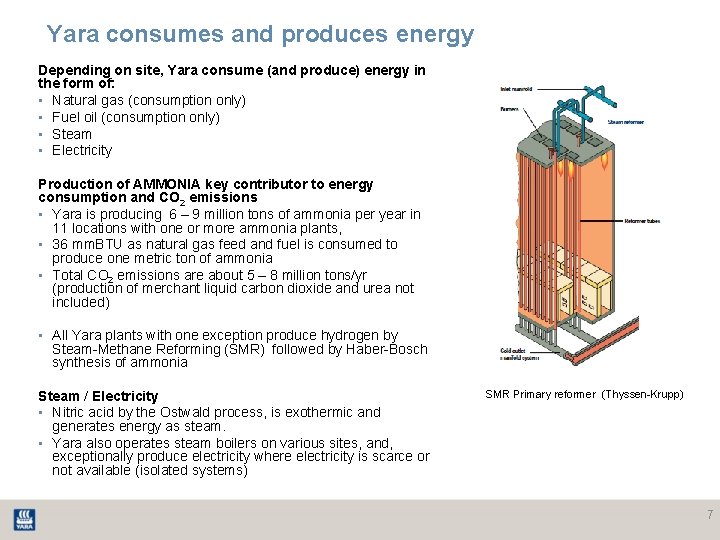
Yara consumes and produces energy Depending on site, Yara consume (and produce) energy in the form of: • Natural gas (consumption only) • Fuel oil (consumption only) • Steam • Electricity Production of AMMONIA key contributor to energy consumption and CO 2 emissions • Yara is producing 6 – 9 million tons of ammonia per year in 11 locations with one or more ammonia plants, • 36 mm. BTU as natural gas feed and fuel is consumed to produce one metric ton of ammonia • Total CO 2 emissions are about 5 – 8 million tons/yr (production of merchant liquid carbon dioxide and urea not included) • All Yara plants with one exception produce hydrogen by Steam-Methane Reforming (SMR) followed by Haber-Bosch synthesis of ammonia Steam / Electricity • Nitric acid by the Ostwald process, is exothermic and generates energy as steam. • Yara also operates steam boilers on various sites, and, exceptionally produce electricity where electricity is scarce or not available (isolated systems) SMR Primary reformer (Thyssen-Krupp) 7
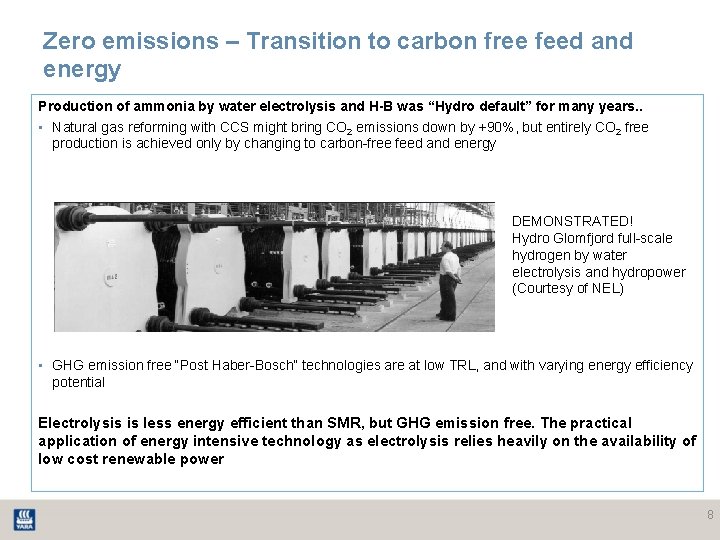
Zero emissions – Transition to carbon free feed and energy Production of ammonia by water electrolysis and H-B was “Hydro default” for many years. . • Natural gas reforming with CCS might bring CO 2 emissions down by +90%, but entirely CO 2 free production is achieved only by changing to carbon-free feed and energy DEMONSTRATED! Hydro Glomfjord full-scale hydrogen by water electrolysis and hydropower (Courtesy of NEL) • GHG emission free “Post Haber-Bosch” technologies are at low TRL, and with varying energy efficiency potential Electrolysis is less energy efficient than SMR, but GHG emission free. The practical application of energy intensive technology as electrolysis relies heavily on the availability of low cost renewable power 8
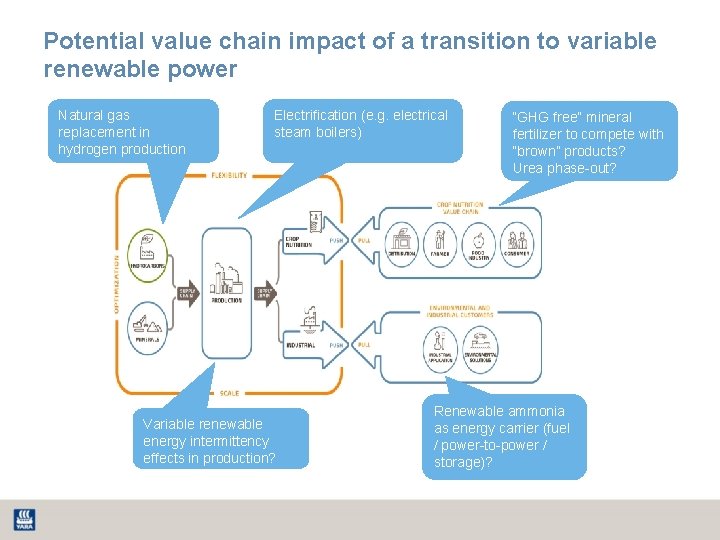
Potential value chain impact of a transition to variable renewable power Natural gas replacement in hydrogen production Electrification (e. g. electrical steam boilers) Variable renewable energy intermittency effects in production? “GHG free” mineral fertilizer to compete with “brown” products? Urea phase-out? Renewable ammonia as energy carrier (fuel / power-to-power / storage)?
The energy transition – when, what and how In a world where 50% or more of all energy is renewable, what can we expect? What will the drivers be for the various development trends? A non-exhaustive and partly interlinked list of questions. . : • Electrification of industry, on what scale and pace? To what extent will electricity replace (hydrocarbon) fuels, and how does that impact the energy market(s)? • Intermittent renewable electricity, what will the intermittency effects mean for an industrial consumer? • Can we expect the same security of supply as today? • Will intermittency compensation measures be on the consumer or supplier side (production/transmission/distribution)? • Price development, and price volatility, will average prices go up or down, and what can we expect in terms of volatility and price variations per day/week/month? • Electricity production, transmission and storage? • What will dominate production? Large and central (e. g. where there is a lot of sun/wind) or decentralized? • Can we expect a broad scale development of electricity transmission capacity, e. g. in Europe/large European countries? Any global trends? Where “copperplate” and where large supply-demand imbalances? • To what extent will short and long term storage of energy be required, what will the scale of storage requirements be? • What will the market mechanisms be when supply comes from both production and stored energy? 10
Thank you for your attention!
- Slides: 11