
Yamato Period 300 710 Began promoting adoption of
Yamato Period: 300 -710 Began promoting adoption of Chinese culture: a a a Confucianism Language (characters) Buddhist sects Chinese art & architecture Government structure “Great Kings” era
Prince Shotoku: 573 -621 a Adopted Chinese culture and Confucianism a Buddhist sects allowed to develop a Created new government structure: § 17 Article Constitution §Highly Confucian §Focused on morals to be expected of government officials and subjects §Ensure smooth running state §Emperor ruled with absolute authority §One of earliest moral dictatorial documents
Heian Period: 794 -1156 a Growth of large landed estates a Arts & literature of China flourished a Elaborate court life [highly refined] a Personal diaries e. The Pillow Book by Sei Shonagon [10 c] e. Story of court life a First novel e. The Tale of Genji by Lady Murasaki Shikibu e[1000 pgs. +] a Moving away from Chinese models in religion, arts, and government
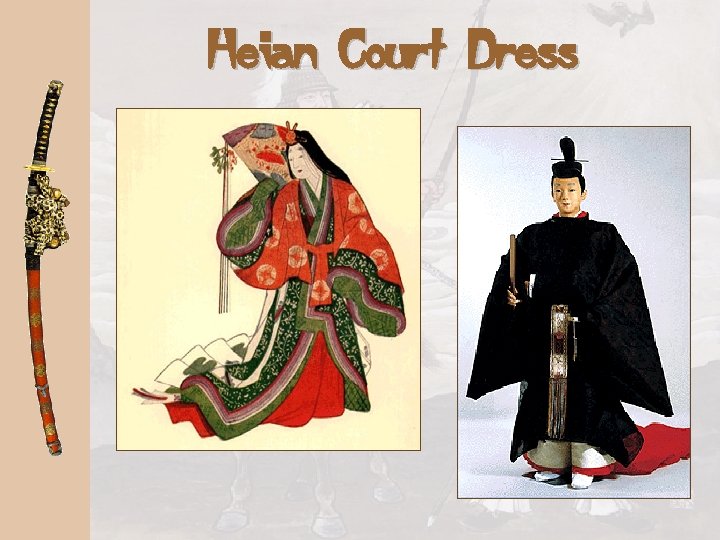
Heian Court Dress
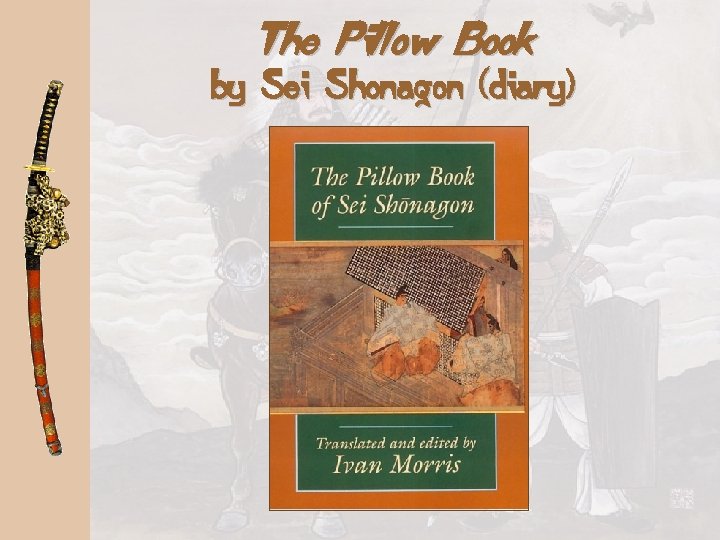
The Pillow Book by Sei Shonagon (diary)
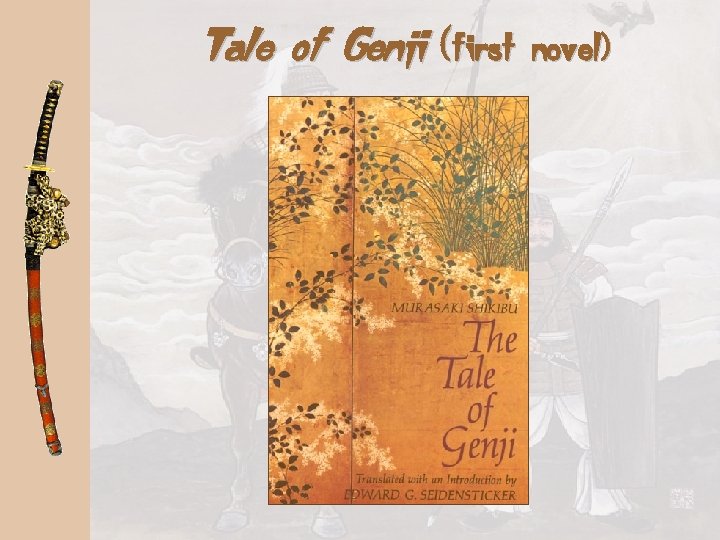
Tale of Genji (first novel)
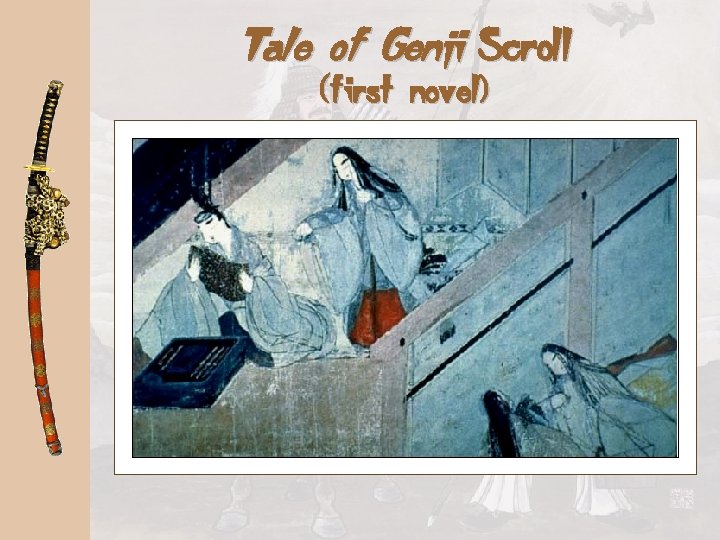
Tale of Genji Scroll (first novel)
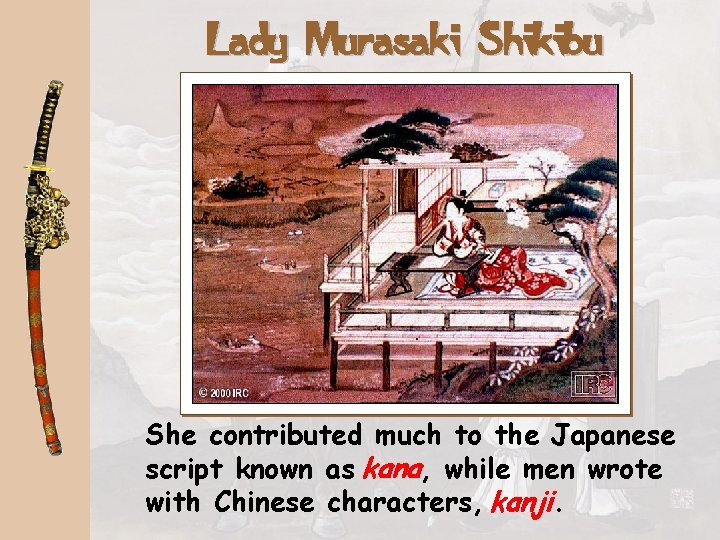
Lady Murasaki Shikibu She contributed much to the Japanese script known as kana, while men wrote with Chinese characters, kanji.
![Heian Period: Cultural Borrowing 1. Chinese writing 2. Chinese artistic styles 3. Buddhism [Zen]](http://slidetodoc.com/presentation_image_h2/eeb69bc131e94da84b06333794b66be8/image-10.jpg "Heian Period: Cultural Borrowing 1. Chinese writing 2. Chinese artistic styles 3. Buddhism [Zen]")
Heian Period: Cultural Borrowing 1. Chinese writing 2. Chinese artistic styles 3. Buddhism [Zen] 4. BUT, not Chinese civil service system!
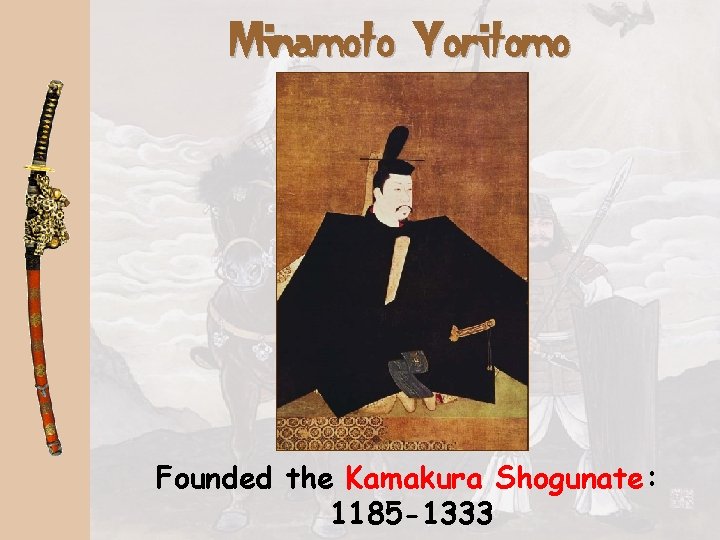
Minamoto Yoritomo Founded the Kamakura Shogunate: 1185 -1333
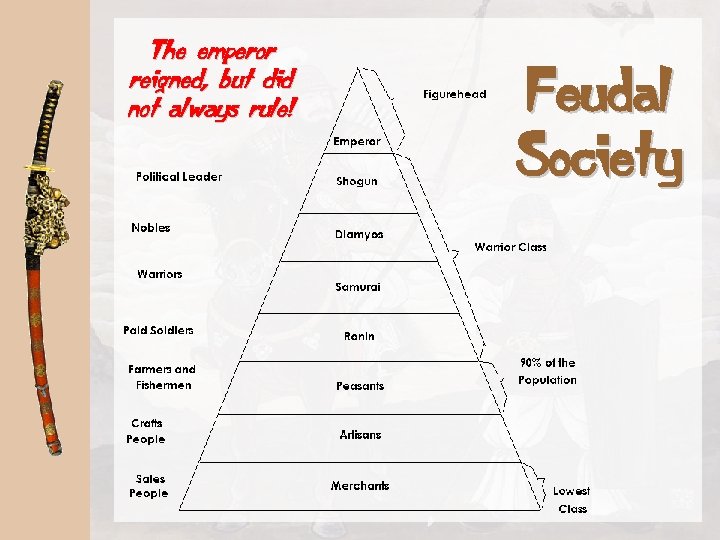
The emperor reigned, but did not always rule! Feudal Society
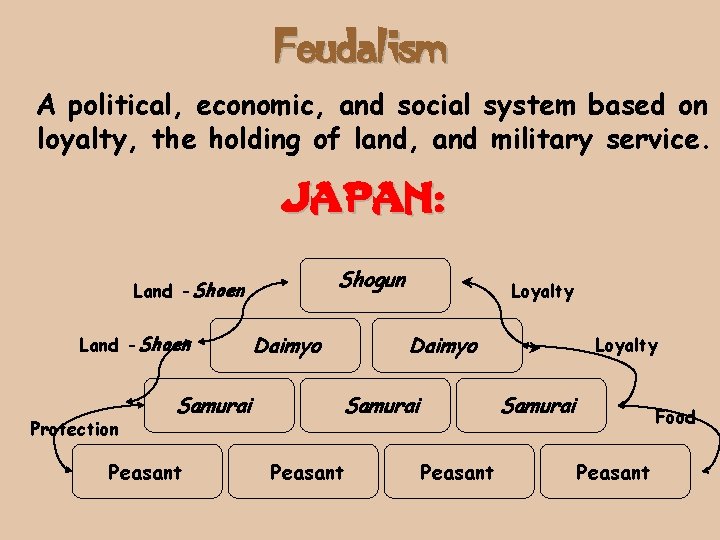
Feudalism A political, economic, and social system based on loyalty, the holding of land, and military service. Japan: Shogun Land -Shoen Protection Samurai Peasant Daimyo Loyalty Daimyo Samurai Peasant Loyalty Samurai Peasant Food Peasant
Code of Bushido * Fidelity * Politeness * Virility * Simplicity
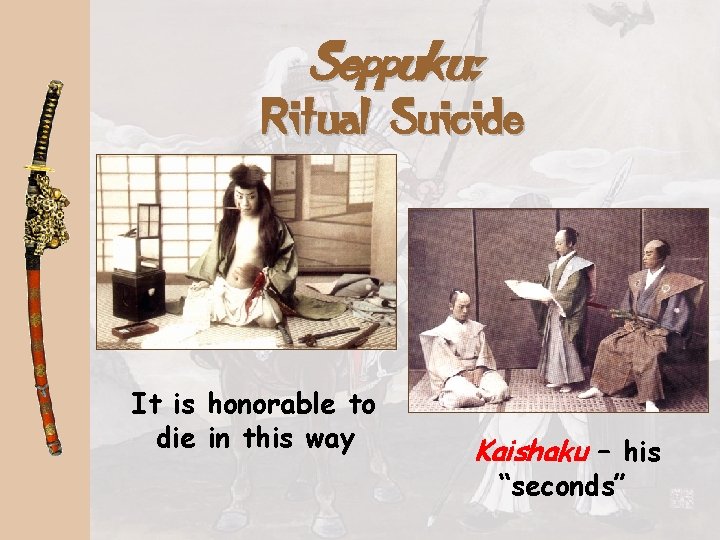
Seppuku: Ritual Suicide It is honorable to die in this way Kaishaku – his “seconds”
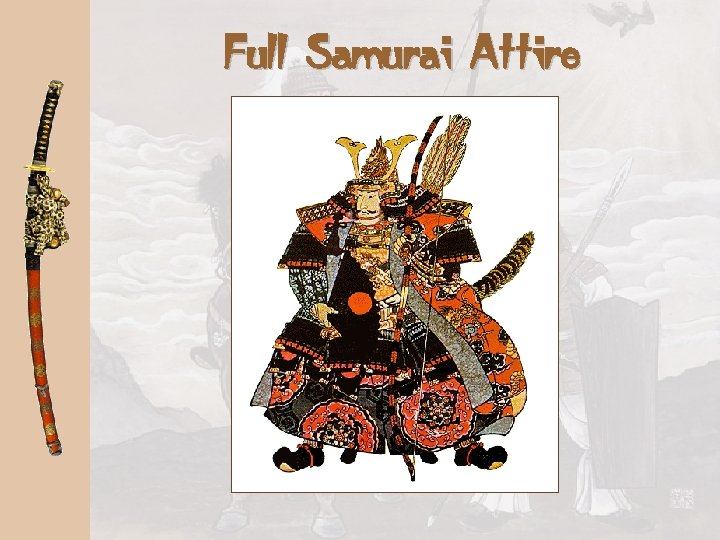
Full Samurai Attire
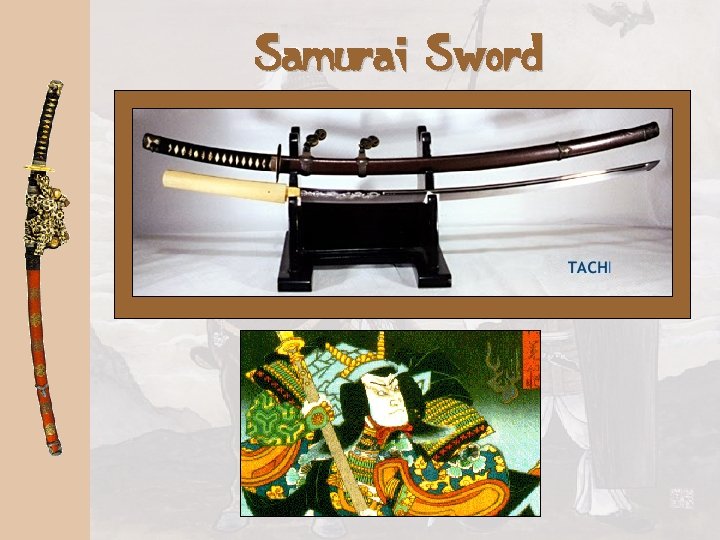
Samurai Sword
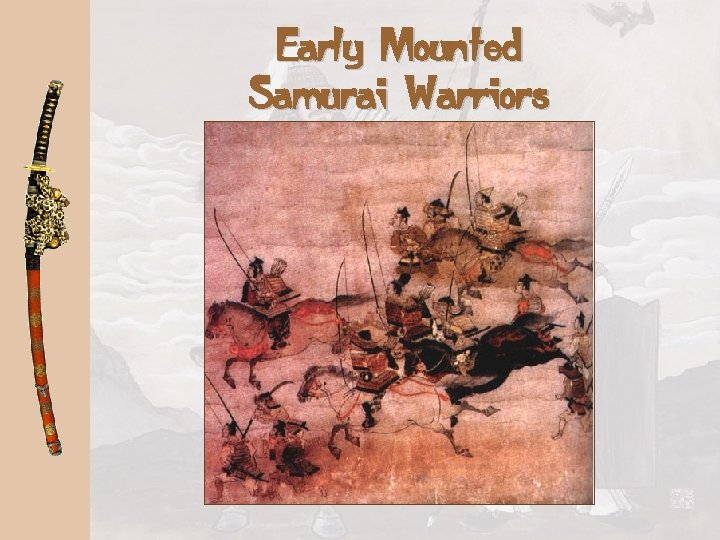
Early Mounted Samurai Warriors
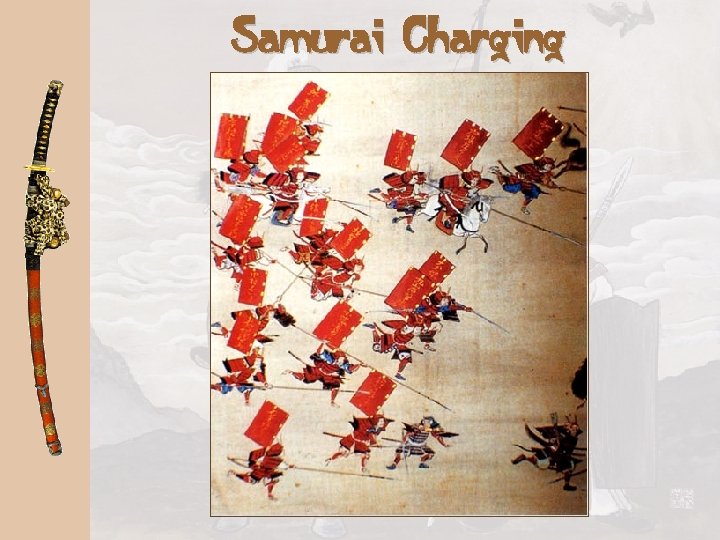
Samurai Charging
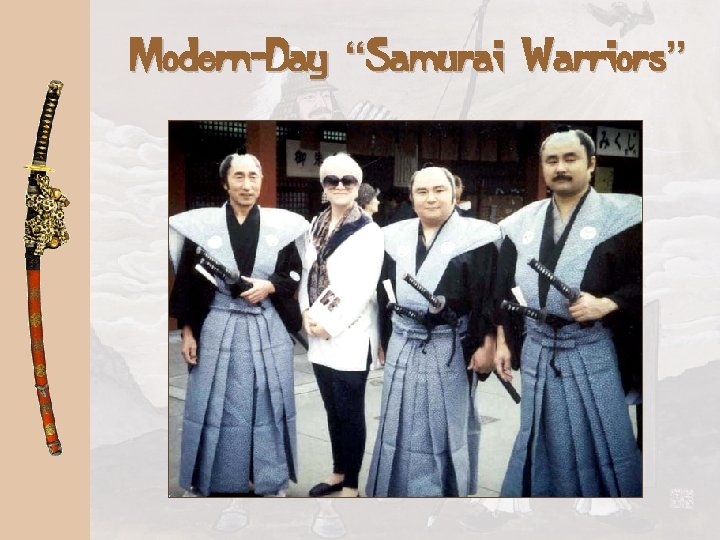
Modern-Day “Samurai Warriors”
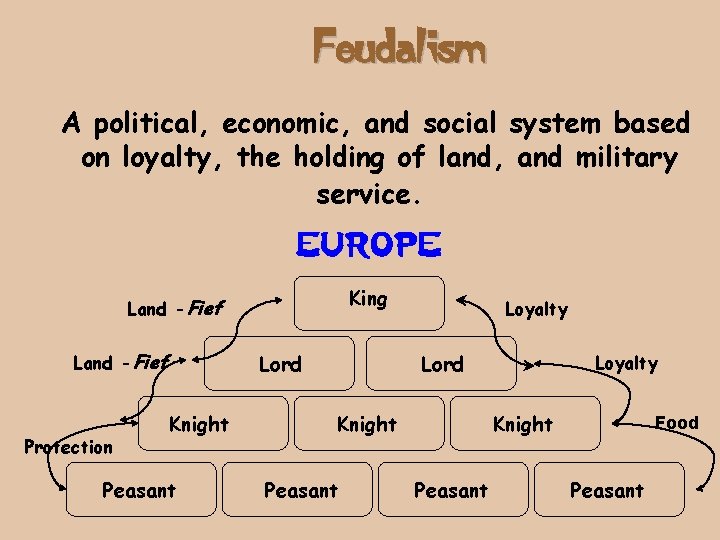
Feudalism A political, economic, and social system based on loyalty, the holding of land, and military service. Europe King Land -Fief Protection Lord Knight Peasant Loyalty Knight Peasant Food Peasant
Code of Chivalry * Justice * Loyalty * Courage * Faith * Humility * Nobility
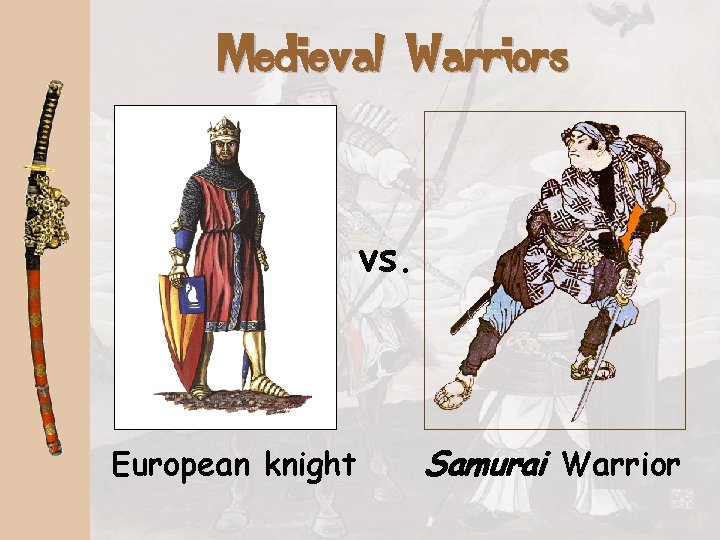
Medieval Warriors vs. European knight Samurai Warrior
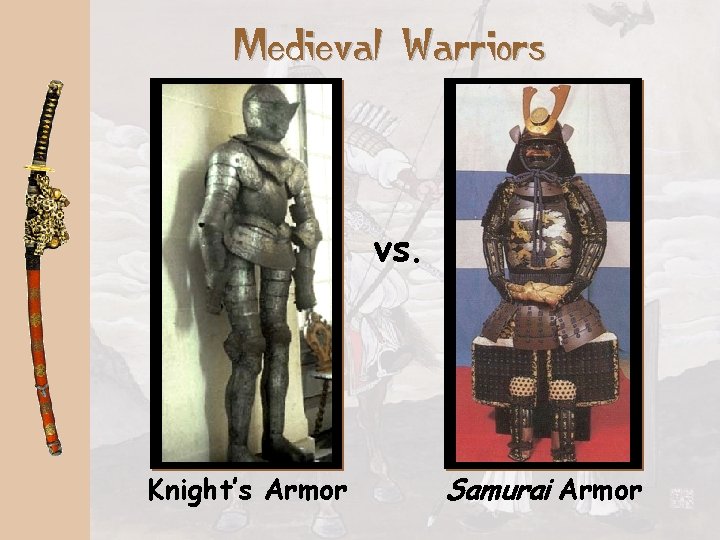
Medieval Warriors vs. Knight’s Armor Samurai Armor
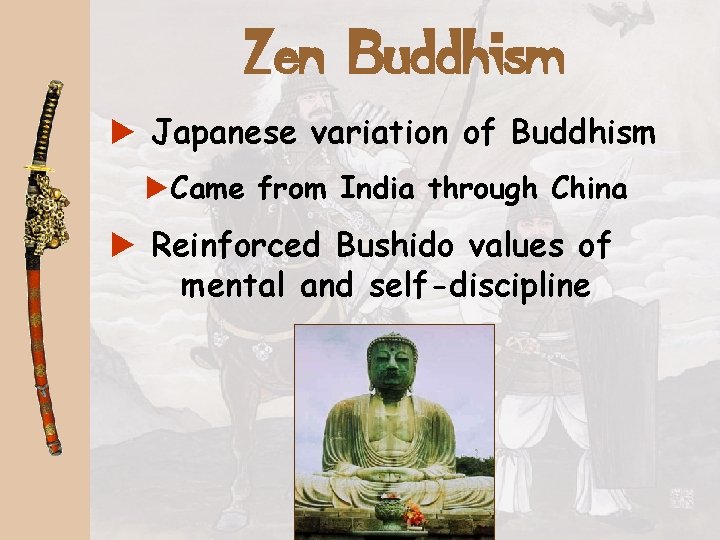
Zen Buddhism a Japanese variation of Buddhism a. Came from India through China a Reinforced Bushido values of mental and self-discipline
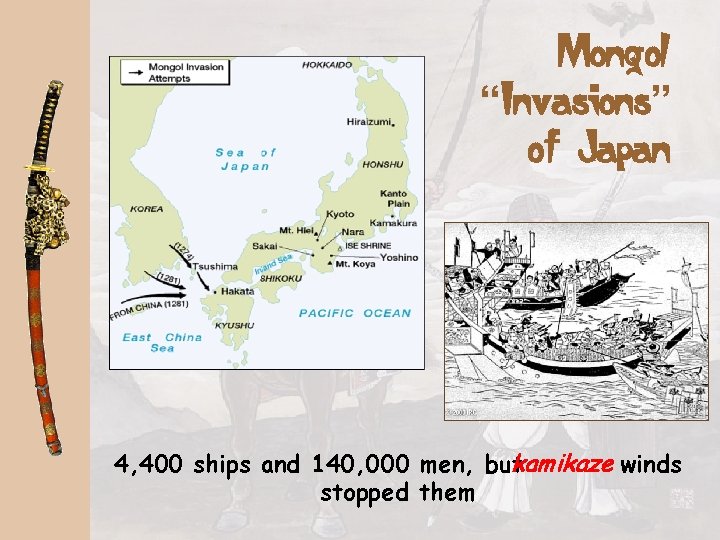
Mongol “Invasions” of Japan 4, 400 ships and 140, 000 men, but kamikaze winds stopped them
Ashikaga Age: 1338 -1573 ► Shoguns fought for power a Laws are unclear a Less efficient than Kamakura a Armies of samurai protected the country
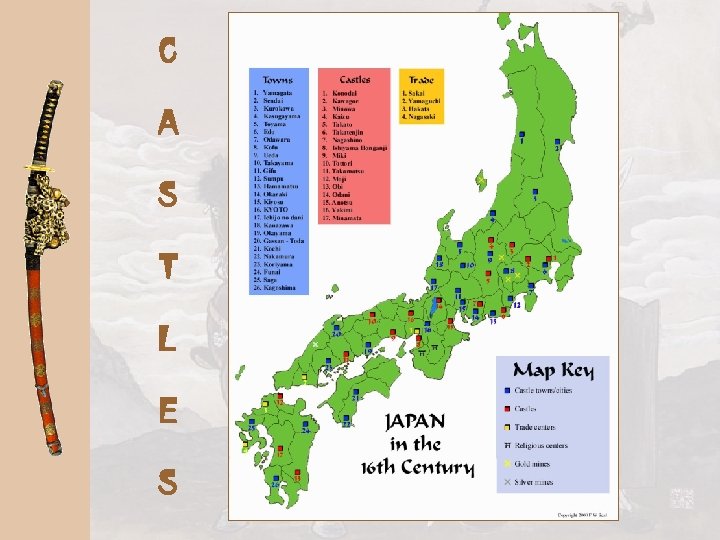
C A S T L E S
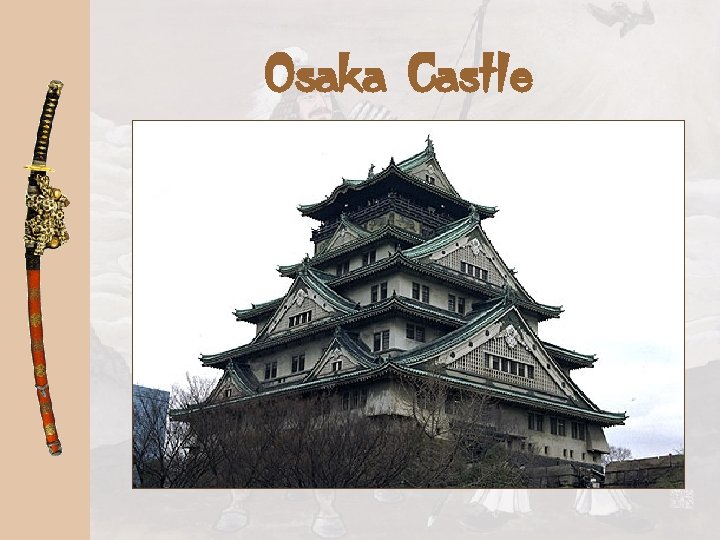
Osaka Castle
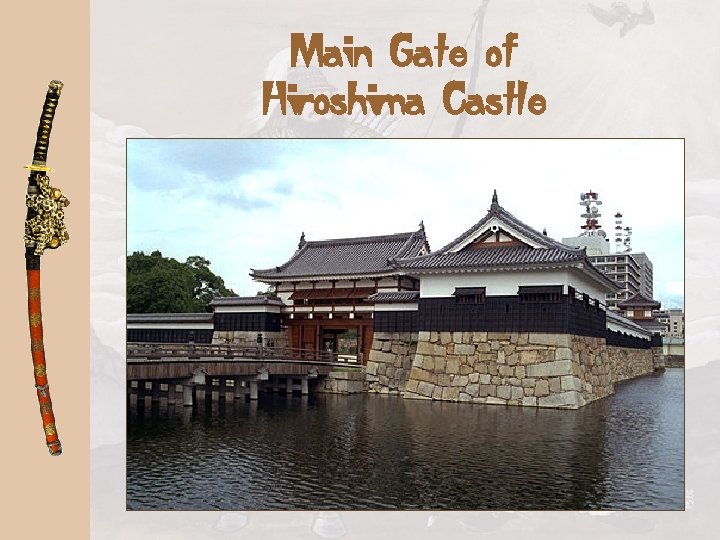
Main Gate of Hiroshima Castle
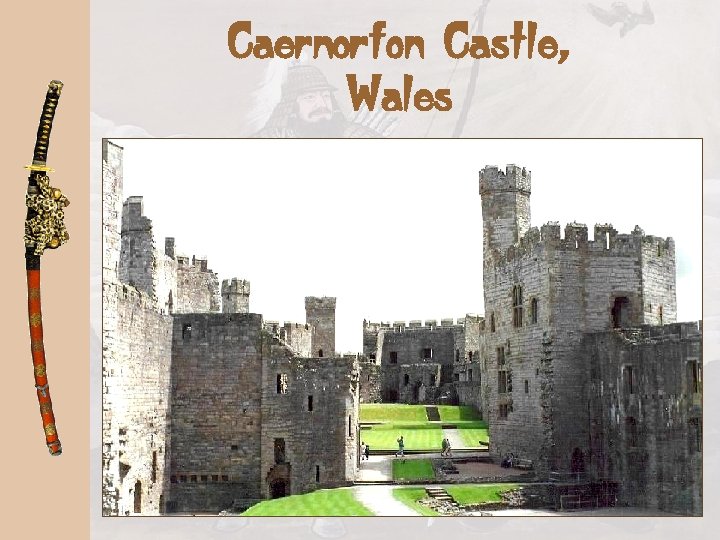
Caernorfon Castle, Wales
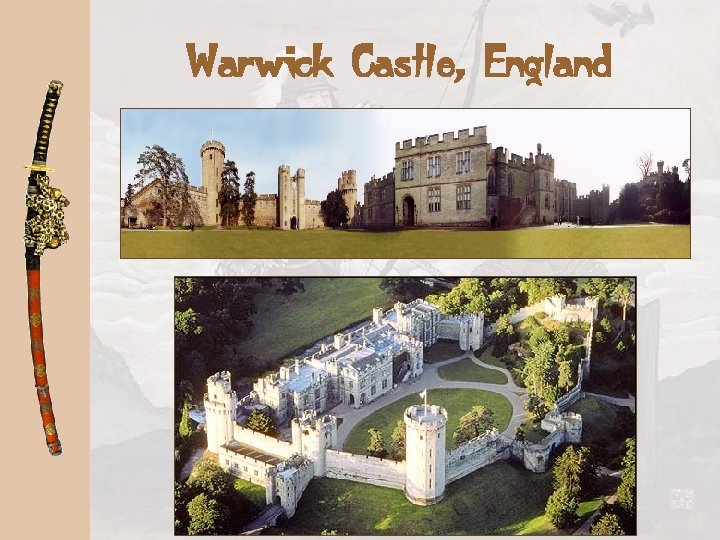
Warwick Castle, England
- Slides: 33