
Y L N O 2018 Clinical Practice Guidelines
- Slides: 27
Y L N O 2018 Clinical Practice Guidelines E A N O Hypoglycemia RS PE S U L Chapter 14 Jean-François Yale MD FRCPC Breay Paty MD FRCPC Peter Senior MD FRCPC
Disclaimer All Content contained on this slide deck is the property of Diabetes Canada, its content suppliers or its licensors as the case may be, and is protected by Canadian and international copyright, trademark, and other applicable laws. Diabetes Canada grants personal, limited, revocable, non-transferable and non-exclusive license to access and read content in this slide deck for personal, non-commercial and not-for-profit use only. The slide deck is made available for lawful, personal use only and not for commercial use. The unauthorized reproduction, distribution of this copyrighted work is not permitted. For permission to use this slide deck for commercial or any use other than personal, please contact guidelines@diabetes. ca
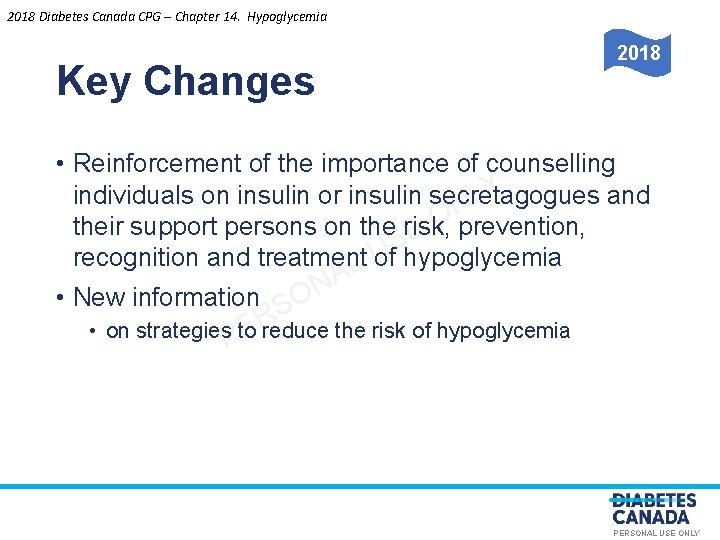
2018 Diabetes Canada CPG – Chapter 14. Hypoglycemia Key Changes 2018 • Reinforcement of the importance of counselling Y individuals on insulin or insulin secretagogues and L N O their support persons on the risk, prevention, E S recognition and treatment of hypoglycemia L U A N • New information SO R • on strategies to reduce the risk of hypoglycemia E P PERSONAL USE ONLY
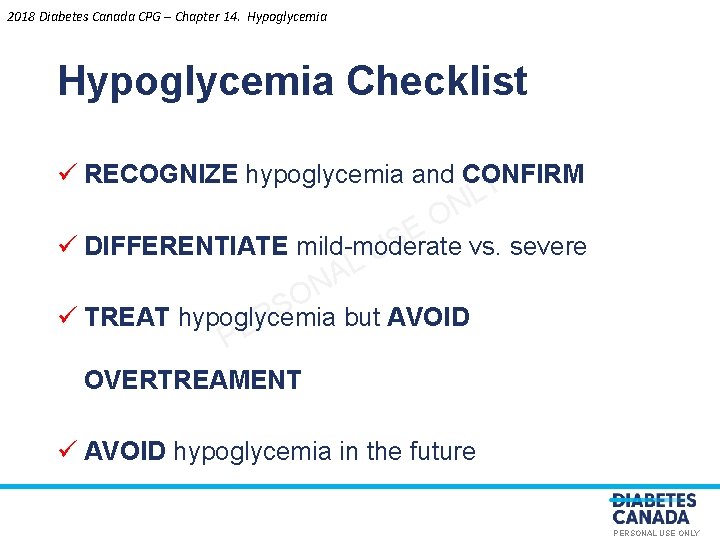
2018 Diabetes Canada CPG – Chapter 14. Hypoglycemia Checklist ü RECOGNIZE hypoglycemia and CONFIRM O E Y L N S ü DIFFERENTIATE mild-moderate vs. severe U L A N O S ü TREAT hypoglycemia but AVOID R E P OVERTREAMENT ü AVOID hypoglycemia in the future PERSONAL USE ONLY
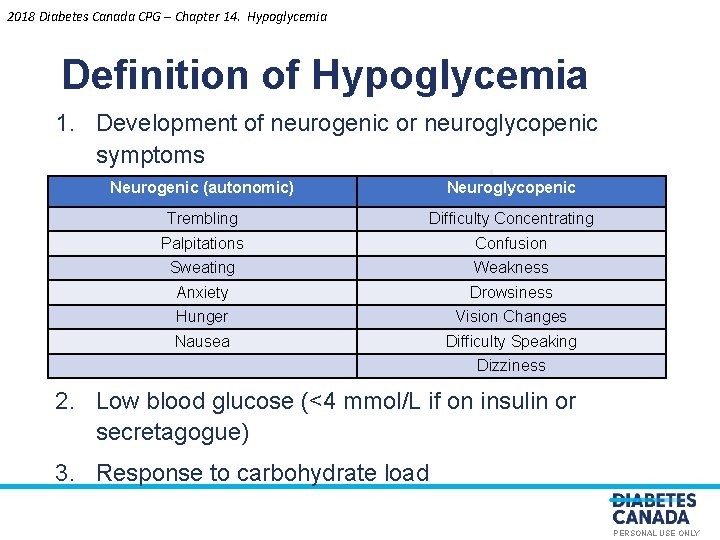
2018 Diabetes Canada CPG – Chapter 14. Hypoglycemia Definition of Hypoglycemia 1. Development of neurogenic or neuroglycopenic symptoms Y L N Neurogenic (autonomic) Neuroglycopenic Difficulty Concentrating O E Trembling S U L Palpitations NA Sweating Anxiety R E Nausea. P Hunger SO Confusion Weakness Drowsiness Vision Changes Difficulty Speaking Dizziness 2. Low blood glucose (<4 mmol/L if on insulin or secretagogue) 3. Response to carbohydrate load PERSONAL USE ONLY
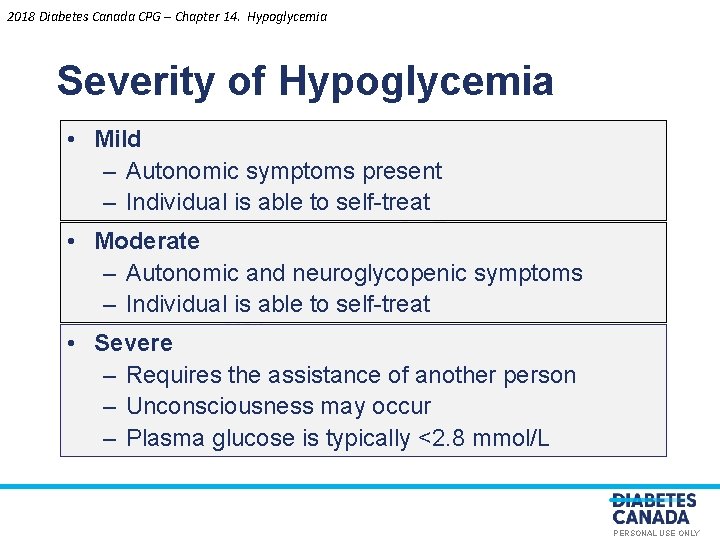
2018 Diabetes Canada CPG – Chapter 14. Hypoglycemia Severity of Hypoglycemia • Mild – Autonomic symptoms present – Individual is able to self-treat O E Y L N • Moderate S U L – Autonomic and neuroglycopenic symptoms A N – Individual is able to self-treat SO R E P • Severe – Requires the assistance of another person – Unconsciousness may occur – Plasma glucose is typically <2. 8 mmol/L PERSONAL USE ONLY
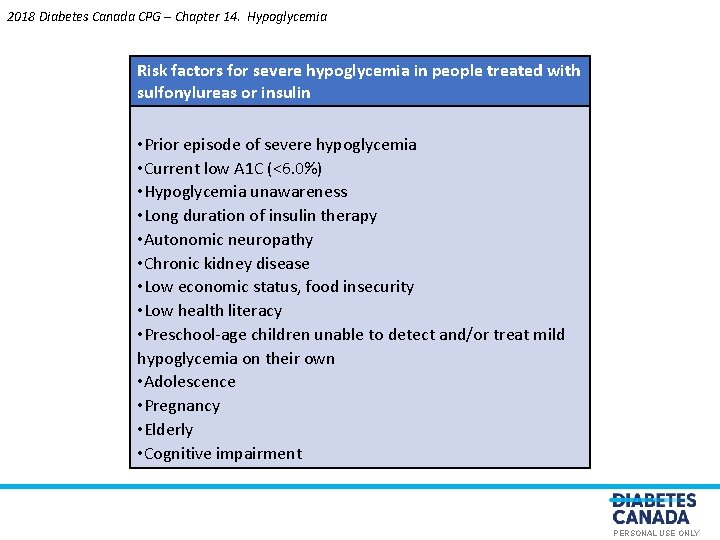
2018 Diabetes Canada CPG – Chapter 14. Hypoglycemia Risk factors for severe hypoglycemia in people treated with sulfonylureas or insulin • Prior episode of severe hypoglycemia • Current low A 1 C (<6. 0%) • Hypoglycemia unawareness • Long duration of insulin therapy • Autonomic neuropathy • Chronic kidney disease • Low economic status, food insecurity • Low health literacy • Preschool-age children unable to detect and/or treat mild hypoglycemia on their own • Adolescence • Pregnancy • Elderly • Cognitive impairment O E Y L N S U L A N O S R PE PERSONAL USE ONLY
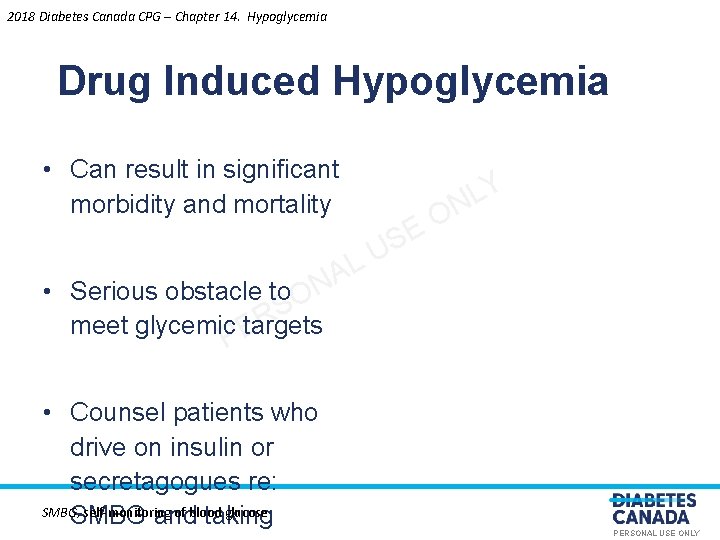
2018 Diabetes Canada CPG – Chapter 14. Hypoglycemia Drug Induced Hypoglycemia • Can result in significant morbidity and mortality • Serious obstacle to ON S R meet glycemic targets E O E Y L N S U L A P • Counsel patients who drive on insulin or secretagogues re: SMBG, self-monitoring of blood glucose SMBG and taking PERSONAL USE ONLY
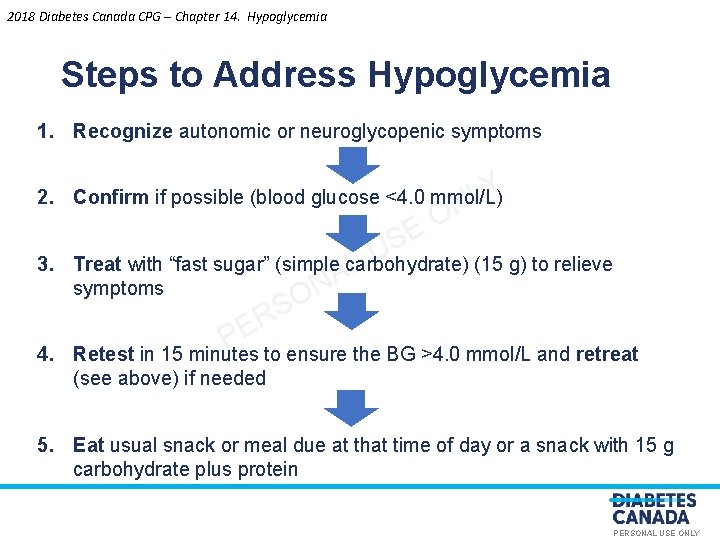
2018 Diabetes Canada CPG – Chapter 14. Hypoglycemia Steps to Address Hypoglycemia 1. Recognize autonomic or neuroglycopenic symptoms 2. Confirm if possible (blood glucose <4. 0 mmol/L) LY O E 3. N S U Treat with “fast sugar” (simple carbohydrate) (15 g) to relieve L A symptoms N O S R E P 4. Retest in 15 minutes to ensure the BG >4. 0 mmol/L and retreat (see above) if needed 5. Eat usual snack or meal due at that time of day or a snack with 15 g carbohydrate plus protein PERSONAL USE ONLY
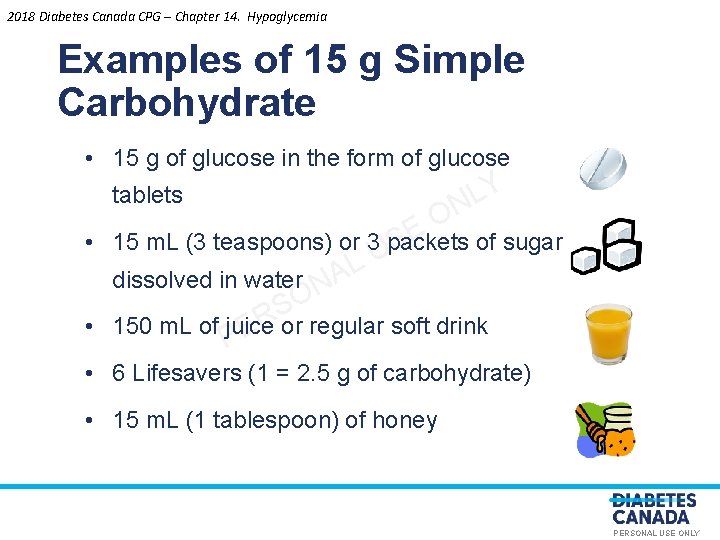
2018 Diabetes Canada CPG – Chapter 14. Hypoglycemia Examples of 15 g Simple Carbohydrate • 15 g of glucose in the form of glucose tablets O E Y L N • 15 m. L (3 teaspoons) or 3 packets of sugar S dissolved in water N O S U L A • 150 m. L of juice or regular soft drink ER P • 6 Lifesavers (1 = 2. 5 g of carbohydrate) • 15 m. L (1 tablespoon) of honey PERSONAL USE ONLY
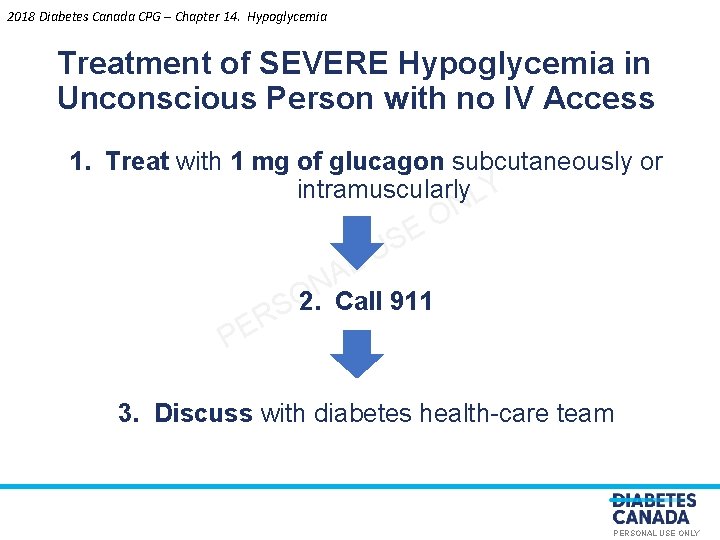
2018 Diabetes Canada CPG – Chapter 14. Hypoglycemia Treatment of SEVERE Hypoglycemia in Unconscious Person with no IV Access 1. Treat with 1 mg of glucagon subcutaneously or intramuscularly LY O E N S U L A N O 2. Call 911 S R PE 3. Discuss with diabetes health-care team PERSONAL USE ONLY
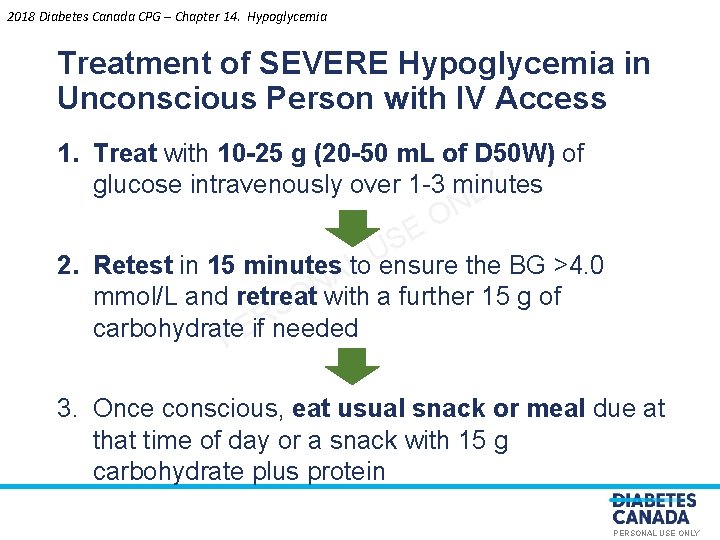
2018 Diabetes Canada CPG – Chapter 14. Hypoglycemia Treatment of SEVERE Hypoglycemia in Unconscious Person with IV Access 1. Treat with 10 -25 g (20 -50 m. L of D 50 W) of glucose intravenously over 1 -3 minutes LY O E N S U 2. Retest in 15 minutes to ensure the BG >4. 0 L A N mmol/L and retreat with a further 15 g of O S R carbohydrate if needed E P 3. Once conscious, eat usual snack or meal due at that time of day or a snack with 15 g carbohydrate plus protein PERSONAL USE ONLY
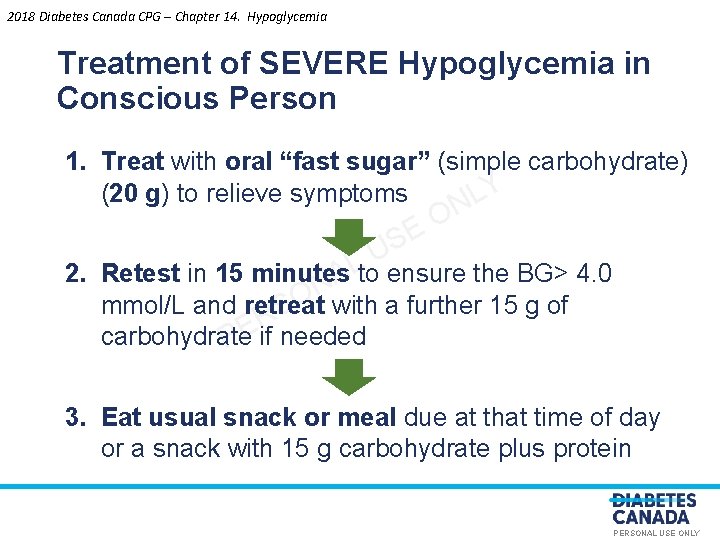
2018 Diabetes Canada CPG – Chapter 14. Hypoglycemia Treatment of SEVERE Hypoglycemia in Conscious Person 1. Treat with oral “fast sugar” (simple carbohydrate) (20 g) to relieve symptoms LY O E N S U L 2. Retest in 15 minutes to ensure the BG> 4. 0 A N O mmol/L and retreat with a further 15 g of S R E carbohydrate if needed P 3. Eat usual snack or meal due at that time of day or a snack with 15 g carbohydrate plus protein PERSONAL USE ONLY
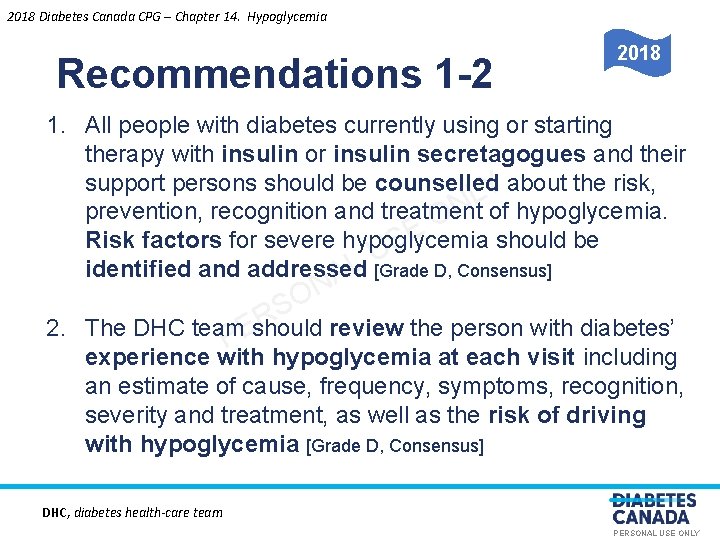
2018 Diabetes Canada CPG – Chapter 14. Hypoglycemia Recommendations 1 -2 2018 1. All people with diabetes currently using or starting therapy with insulin or insulin secretagogues and their support persons should be counselled about the risk, Y L N prevention, recognition and treatment of hypoglycemia. O E Risk factors for severe hypoglycemia should be S U L identified and addressed A [Grade D, Consensus] N O S R 2. The DHC team should review the person with diabetes’ E P experience with hypoglycemia at each visit including an estimate of cause, frequency, symptoms, recognition, severity and treatment, as well as the risk of driving with hypoglycemia [Grade D, Consensus] DHC, diabetes health-care team PERSONAL USE ONLY
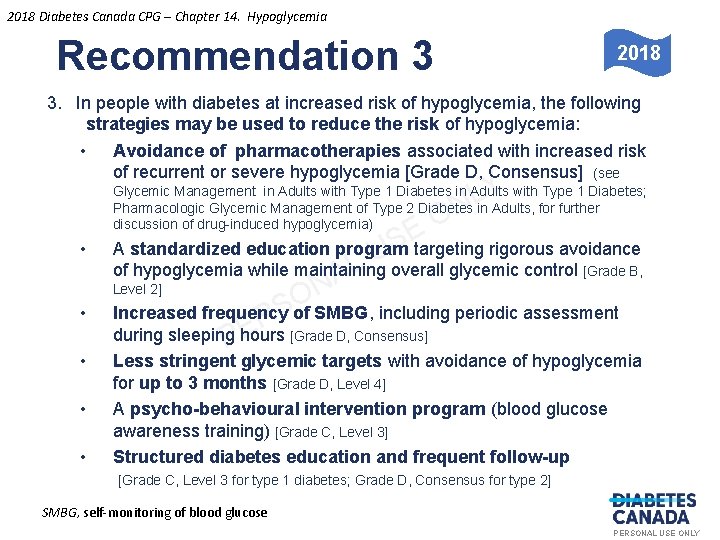
2018 Diabetes Canada CPG – Chapter 14. Hypoglycemia Recommendation 3 2018 3. In people with diabetes at increased risk of hypoglycemia, the following strategies may be used to reduce the risk of hypoglycemia: • Avoidance of pharmacotherapies associated with increased risk of recurrent or severe hypoglycemia [Grade D, Consensus] (see Y L N Glycemic Management in Adults with Type 1 Diabetes; Pharmacologic Glycemic Management of Type 2 Diabetes in Adults, for further discussion of drug-induced hypoglycemia) • O E Level 2] • • S U L A standardized education program targeting rigorous avoidance of hypoglycemia while maintaining overall glycemic control [Grade B, A N O S R PE Increased frequency of SMBG, including periodic assessment during sleeping hours [Grade D, Consensus] Less stringent glycemic targets with avoidance of hypoglycemia for up to 3 months [Grade D, Level 4] A psycho-behavioural intervention program (blood glucose awareness training) [Grade C, Level 3] Structured diabetes education and frequent follow-up [Grade C, Level 3 for type 1 diabetes; Grade D, Consensus for type 2] SMBG, self-monitoring of blood glucose PERSONAL USE ONLY
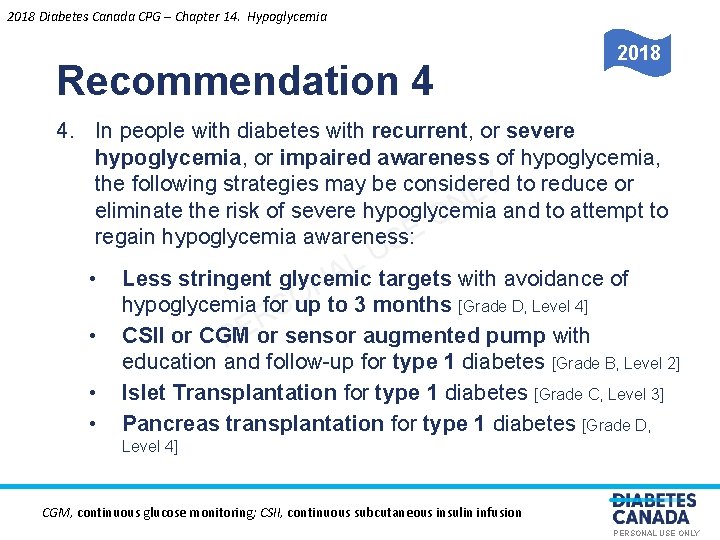
2018 Diabetes Canada CPG – Chapter 14. Hypoglycemia Recommendation 4 2018 4. In people with diabetes with recurrent, or severe hypoglycemia, or impaired awareness of hypoglycemia, the following strategies may be considered to reduce or Y L N eliminate the risk of severe hypoglycemia and to attempt to O regain hypoglycemia awareness: SE • • U L A Less stringent glycemic targets with avoidance of N O hypoglycemia for up to 3 months [Grade D, Level 4] S R E CSII or CGM or sensor augmented pump with P education and follow-up for type 1 diabetes [Grade B, Level 2] Islet Transplantation for type 1 diabetes [Grade C, Level 3] Pancreas transplantation for type 1 diabetes [Grade D, Level 4] CGM, continuous glucose monitoring; CSII, continuous subcutaneous insulin infusion PERSONAL USE ONLY
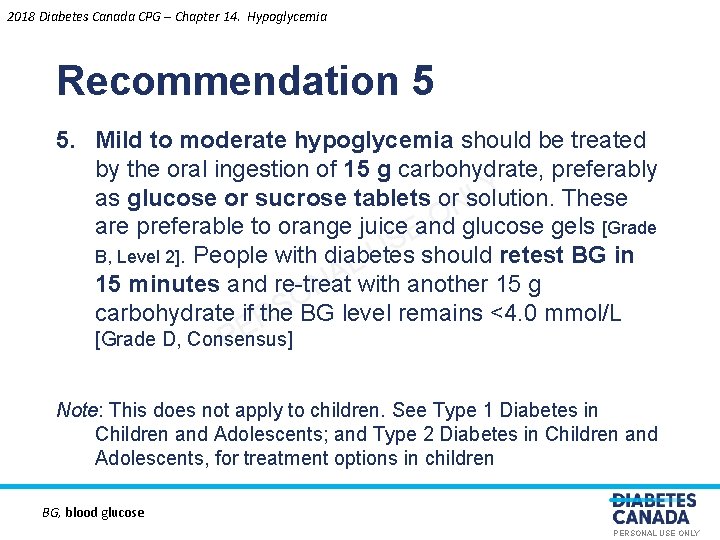
2018 Diabetes Canada CPG – Chapter 14. Hypoglycemia Recommendation 5 5. Mild to moderate hypoglycemia should be treated by the oral ingestion of 15 g carbohydrate, preferably Y L as glucose or sucrose tablets or solution. These N O are preferable to orange juice and glucose gels [Grade E S U B, Level 2]. People with diabetes should retest BG in L A 15 minutes and re-treat with another 15 g N O S carbohydrate if the BG level remains <4. 0 mmol/L R [Grade D, Consensus] PE Note: This does not apply to children. See Type 1 Diabetes in Children and Adolescents; and Type 2 Diabetes in Children and Adolescents, for treatment options in children BG, blood glucose PERSONAL USE ONLY
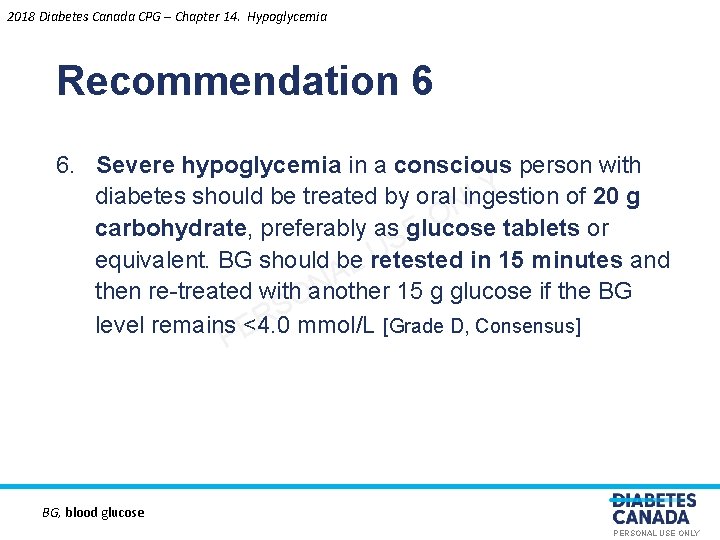
2018 Diabetes Canada CPG – Chapter 14. Hypoglycemia Recommendation 6 6. Severe hypoglycemia in a conscious person with Y diabetes should be treated by oral ingestion of 20 g L N O carbohydrate, preferably as glucose tablets or E S U equivalent. BG should be retested in 15 minutes and L A N then re-treated with another 15 g glucose if the BG O S level remains <4. 0 mmol/L [Grade D, Consensus] ER P BG, blood glucose PERSONAL USE ONLY
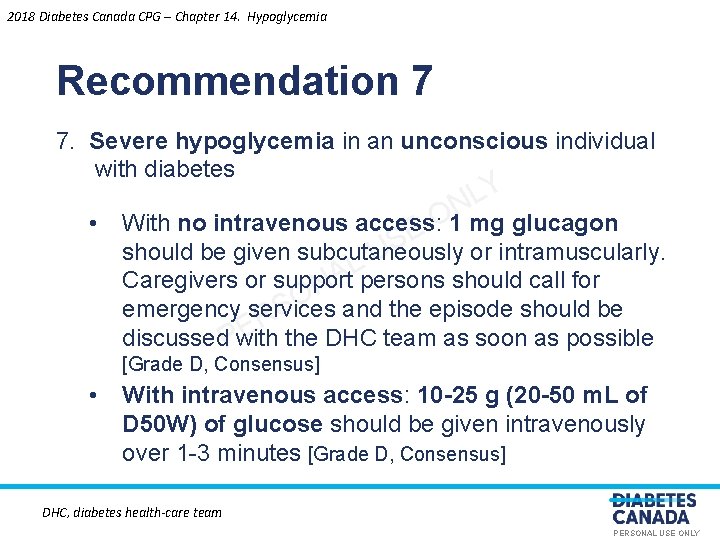
2018 Diabetes Canada CPG – Chapter 14. Hypoglycemia Recommendation 7 7. Severe hypoglycemia in an unconscious individual with diabetes Y L N O • With no intravenous access: 1 mg glucagon E S should be given subcutaneously or intramuscularly. U L A Caregivers or support persons should call for N O emergency services and the episode should be S R E discussed with the DHC team as soon as possible P [Grade D, Consensus] • With intravenous access: 10 -25 g (20 -50 m. L of D 50 W) of glucose should be given intravenously over 1 -3 minutes [Grade D, Consensus] DHC, diabetes health-care team PERSONAL USE ONLY
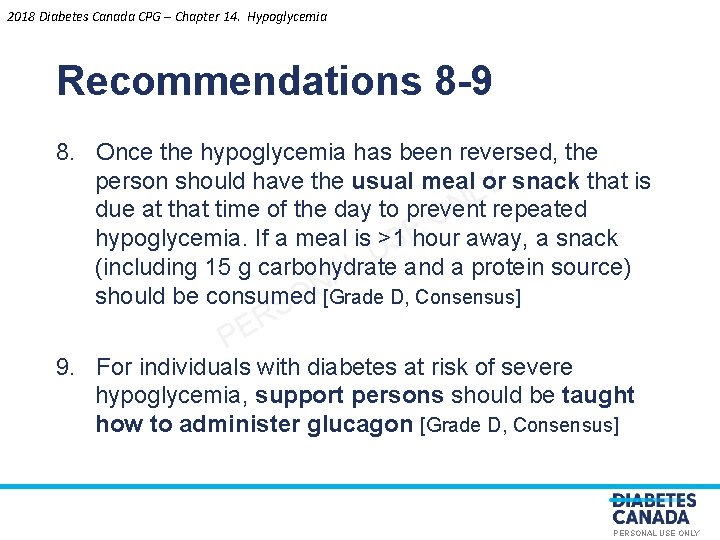
2018 Diabetes Canada CPG – Chapter 14. Hypoglycemia Recommendations 8 -9 8. Once the hypoglycemia has been reversed, the person should have the usual meal or snack that is Y L N due at that time of the day to prevent repeated O E hypoglycemia. If a meal is >1 hour away, a snack S U (including 15 g carbohydrate and a protein source) L A N should be consumed O [Grade D, Consensus] S R PE 9. For individuals with diabetes at risk of severe hypoglycemia, support persons should be taught how to administer glucagon [Grade D, Consensus] PERSONAL USE ONLY
2018 Diabetes Canada CPG – Chapter 14. Hypoglycemia Key Messages • It is important to prevent, recognize and treat hypoglycemic episodes secondary to the use of insulin or insulin secretagogues LY N O • It is safer and more effective to prevent hypoglycemia E S U than to treat it after it occurs, so people with diabetes who L A N are at high risk for hypoglycemia should be identified O S and counselled about ways to prevent low blood glucose R E P • It is important to counsel individuals who are at risk of hypoglycemia and their support persons about the recognition and treatment of hypoglycemia PERSONAL USE ONLY
2018 Diabetes Canada CPG – Chapter 14. Hypoglycemia Key Messages • The goals of treatment for hypoglycemia are to detect and treat a low BG level promptly by using an intervention that provides the fastest rise in blood glucose to a safe level, to Y L N eliminate the risk of injury and to relieve symptoms quickly. O E Once the hypoglycemia has been reversed, the person S U should have the usual meal or snack that is due at that L A N time of the day to prevent repeated hypoglycemia. If a meal O S is >1 hour away, a snack (including 15 g carbohydrate and a R E P protein source) should be consumed • It is important to avoid overtreatment of hypoglycemia, since this can result in rebound hyperglycemia and weight gain BG, blood glucose PERSONAL USE ONLY
2018 Diabetes Canada CPG – Chapter 14. Hypoglycemia Key Messages for People with Diabetes • Know the signs and symptoms of a low blood glucose Y L N level. Some of the more common symptoms of low blood O E S glucose are trembling, sweating, anxiety, confusion, U L difficulty concentrating or nausea. Not all symptoms will A N O be present and some individuals may have other or no S R E symptoms P • Carry a source of fast acting carbohydrate with you at all times such as glucose tablets, lifesavers and/or a juice box PERSONAL USE ONLY
2018 Diabetes Canada CPG – Chapter 14. Hypoglycemia Key Messages for People with Diabetes Y • Wear diabetes identification (i. e. a Medic. Alert® bracelet) NL O E • Talk with your diabetes health-care team about S U L prevention and emergency treatment of a severe low A N blood glucose associated with confusion, loss of O S consciousness or seizure ER P PERSONAL USE ONLY
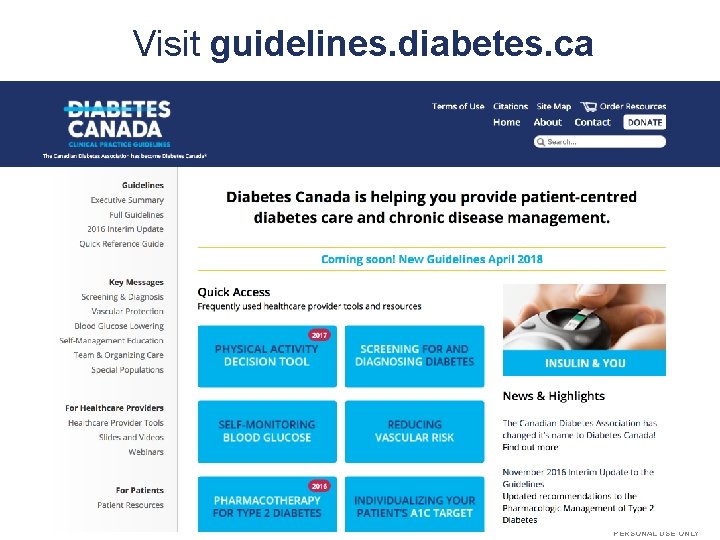
Visit guidelines. diabetes. ca O E Y L N S U L A N O S R PE PERSONAL USE ONLY
Or download the App O E Y L N S U L A N O S R PE PERSONAL USE ONLY
Diabetes Canada Clinical Practice Guidelines Y L www. guidelines. diabete N O s. ca – for health-care E S providers U L A N O S R E 1 -800 -BANTING (226 P 8464) www. diabetes. ca – for people with diabetes PERSONAL USE ONLY