
Xray Burst Accretion Disk Accreting Gas from the


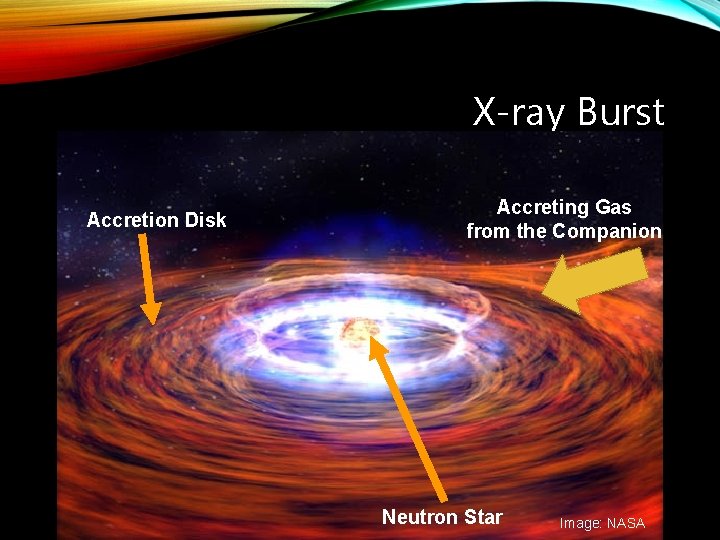
X-ray Burst Accretion Disk Accreting Gas from the Companion Neutron Star Image: NASA
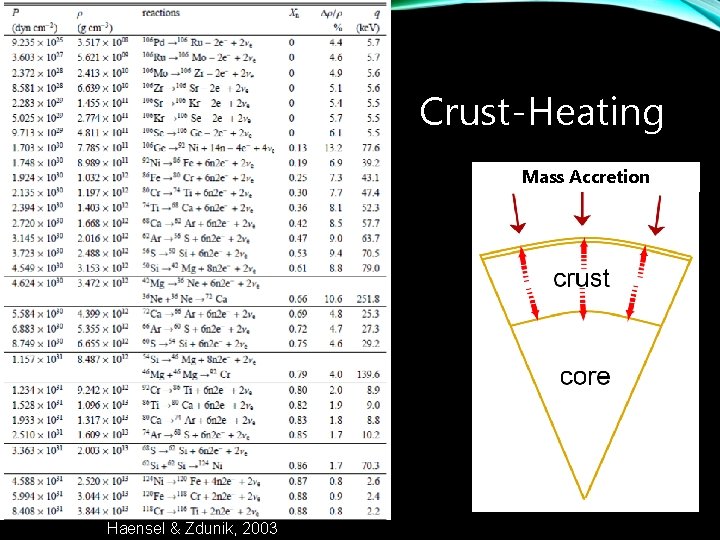
Crust-Heating Mass Accretion Haensel & Zdunik, 2003
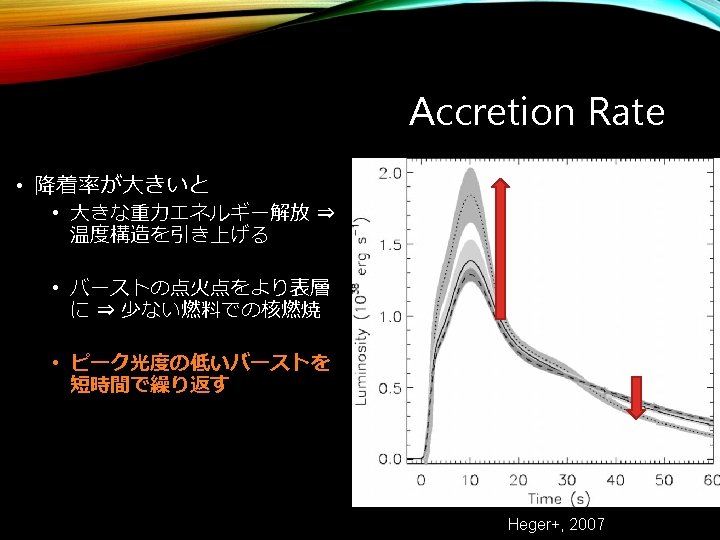
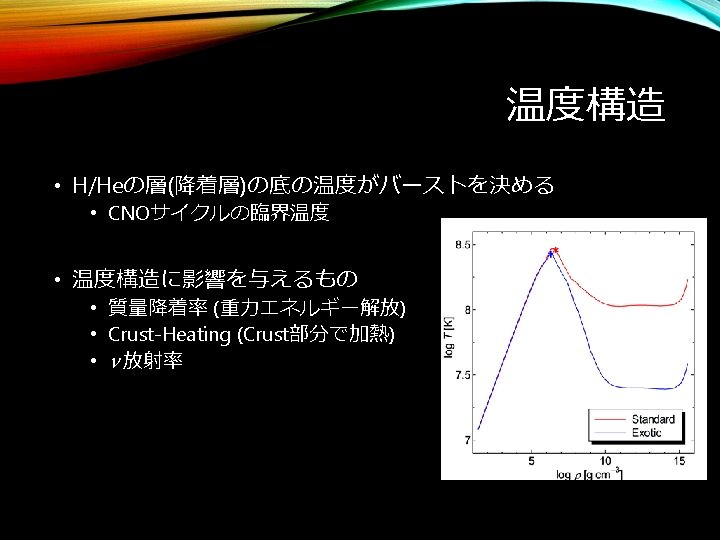

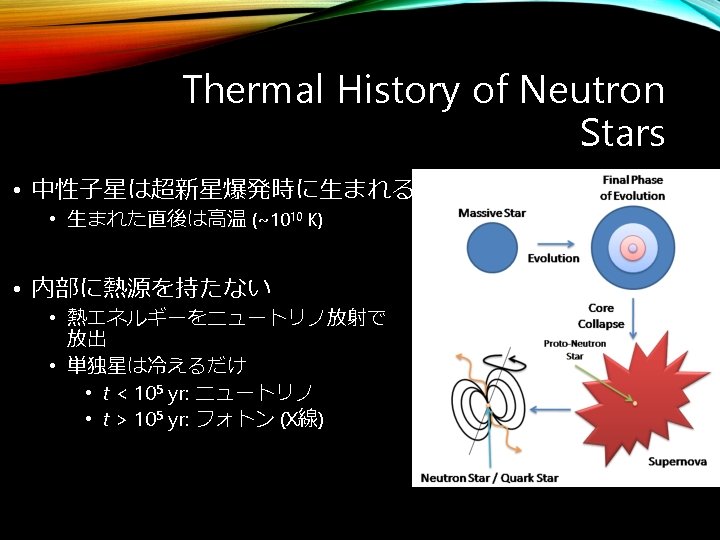
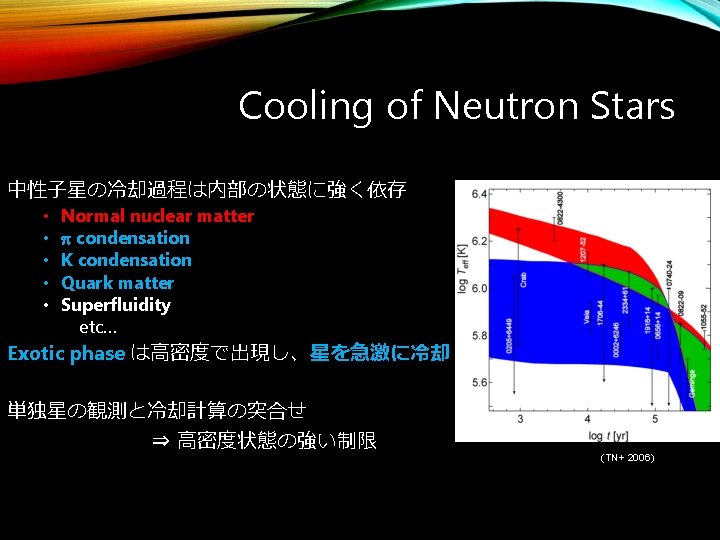
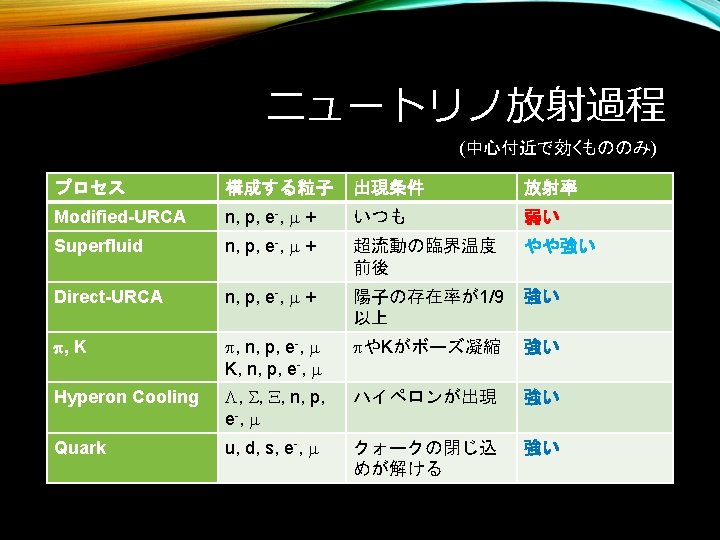
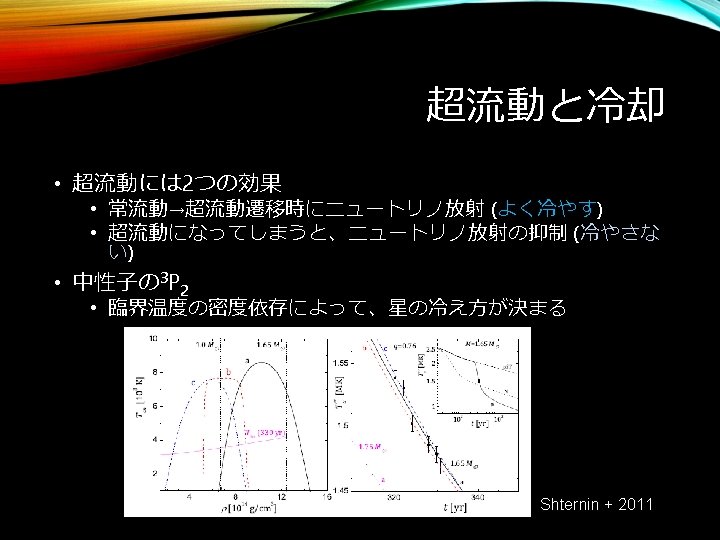
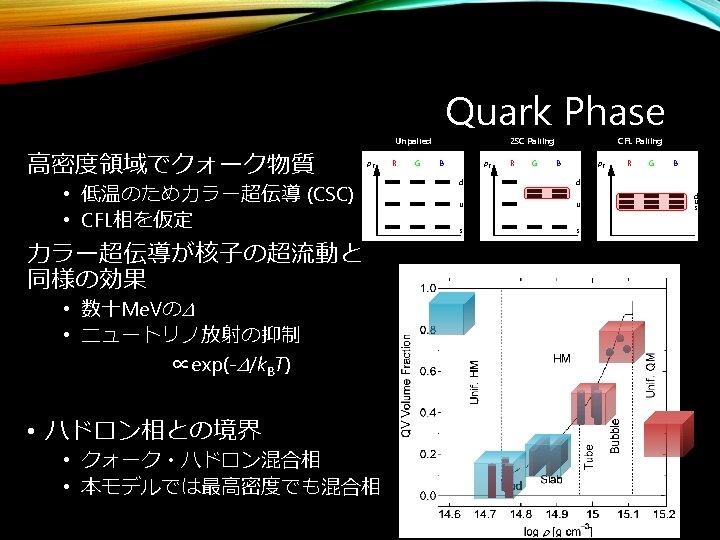
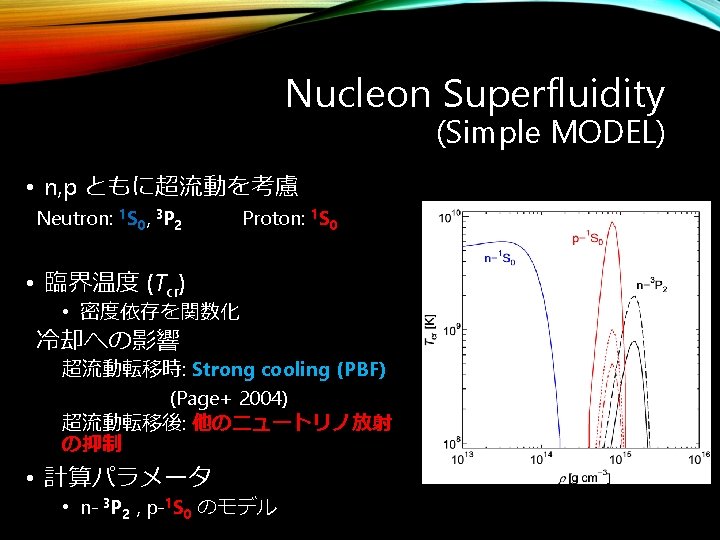
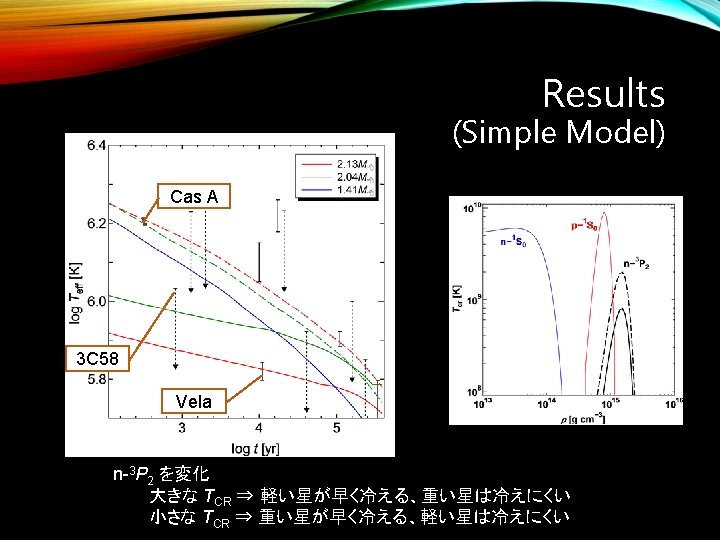
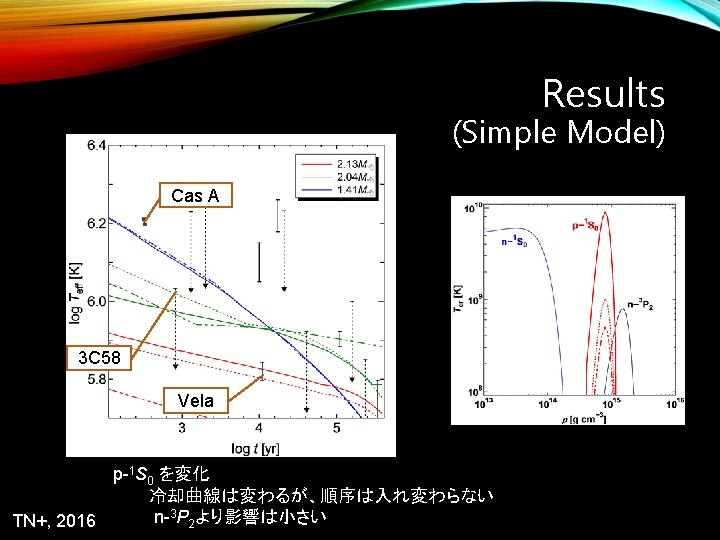
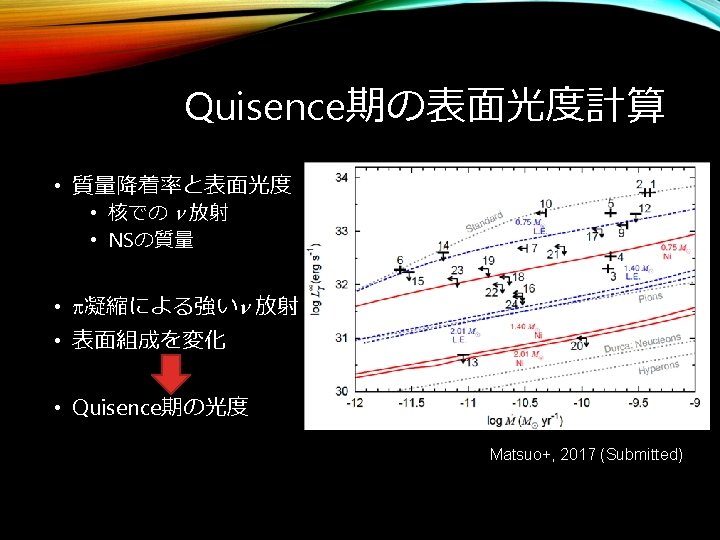
Cooling of Neutron Stars 中性子星の冷却過程は内部の状態に強く依存 • • • Normal nuclear matter p condensation K condensation Quark matter Superfluidity etc… Exotic phase は高密度で出現し、星を急激に冷却 単独星の観測と冷却計算の突合せ ⇒ 高密度状態の強い制限 (TN+ 2006)
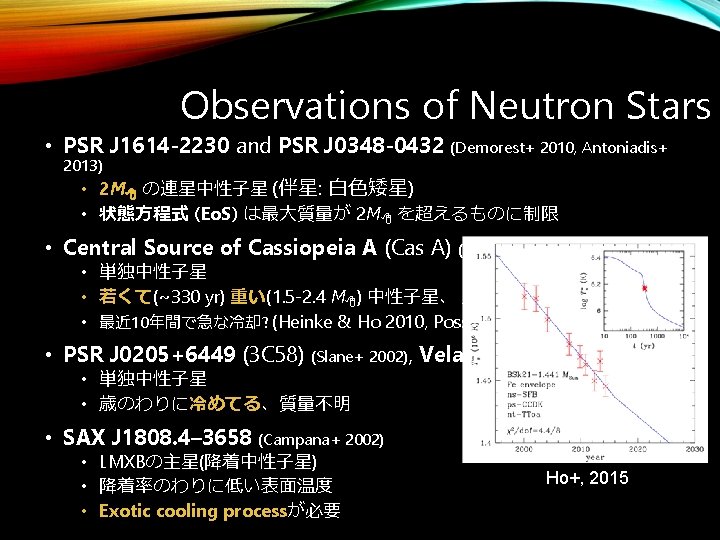
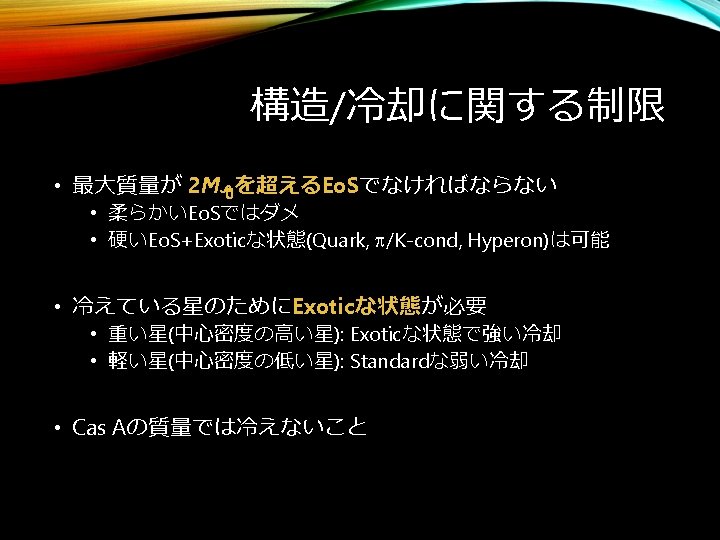
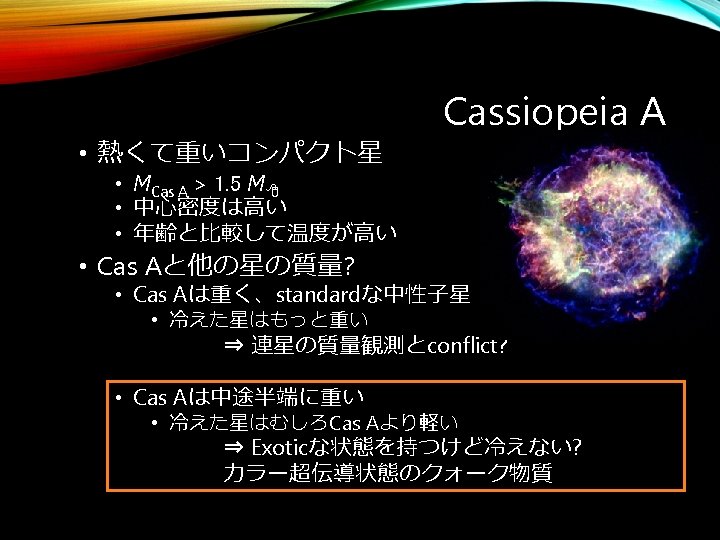
Observations of Neutron Stars • PSR J 1614 -2230 and PSR J 0348 -0432 (Demorest+ 2010, Antoniadis+ 2013) • 2 M 8 の連星中性子星 (伴星: 白色矮星) • 状態方程式 (Eo. S) は最大質量が 2 M 8 を超えるものに制限 • Central Source of Cassiopeia A (Cas A) (Ho & Heinke 2009) • 単独中性子星 • 若くて(~330 yr) 重い(1. 5 -2. 4 M 8) 中性子星、 歳のわりに熱い • 最近 10年間で急な冷却? (Heinke & Ho 2010, Posselt+ 2013) • PSR J 0205+6449 (3 C 58) (Slane+ 2002), Vela Pulsar (Pavlov+ 2001) • 単独中性子星 • 歳のわりに冷めてる、質量不明 • SAX J 1808. 4– 3658 (Campana+ 2002) • LMXBの主星(降着中性子星) • 降着率のわりに低い表面温度 • Exotic cooling processが必要 Ho+, 2015
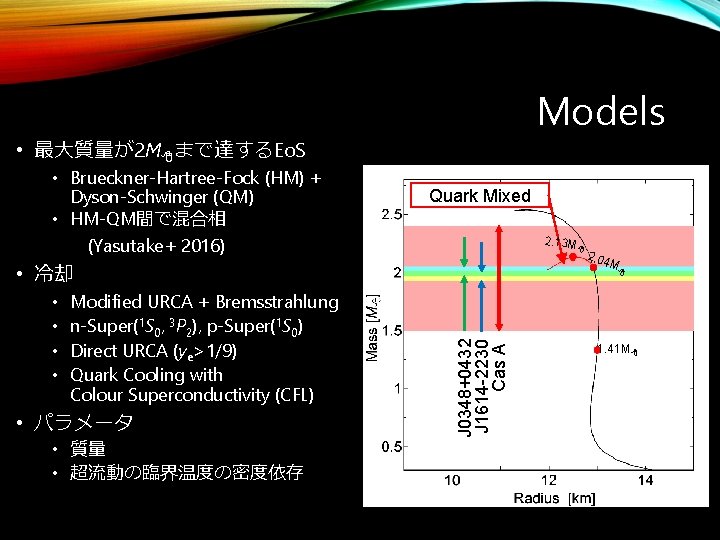
Models • 最大質量が2 M 8まで達するEo. S • Brueckner-Hartree-Fock (HM) + Dyson-Schwinger (QM) • HM-QM間で混合相 (Yasutake+ 2016) Quark Mixed 2. 13 M 8 M Modified URCA + Bremsstrahlung n-Super(1 S 0, 3 P 2), p-Super(1 S 0) Direct URCA (ye>1/9) Quark Cooling with Colour Superconductivity (CFL) • パラメータ • 質量 • 超流動の臨界温度の密度依存 J 0348+0432 J 1614 -2230 Cas A • 冷却 • • 2. 04 8 1. 41 M 8
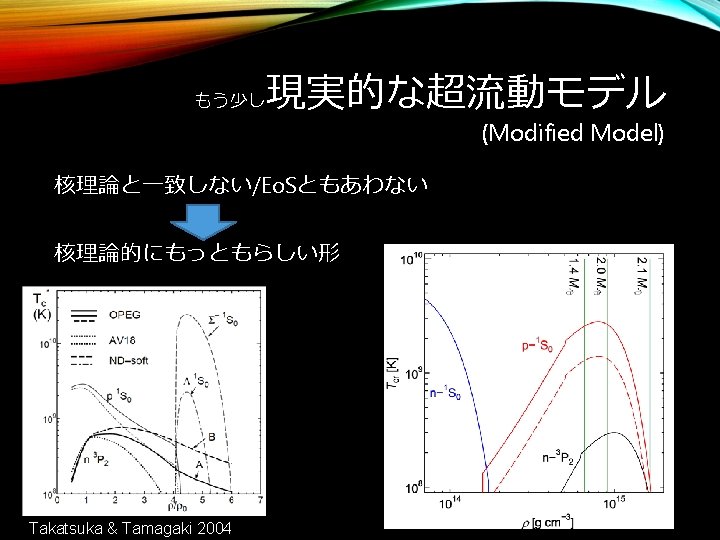
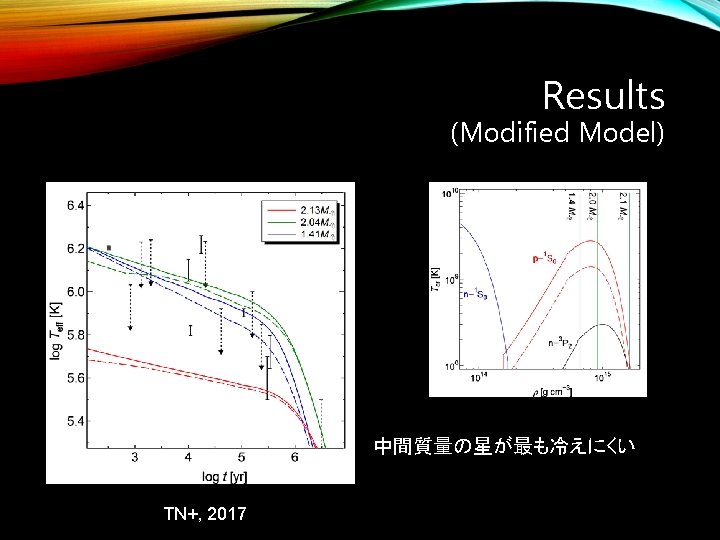
Results (Modified Model) 中間質量の星が最も冷えにくい TN+, 2017
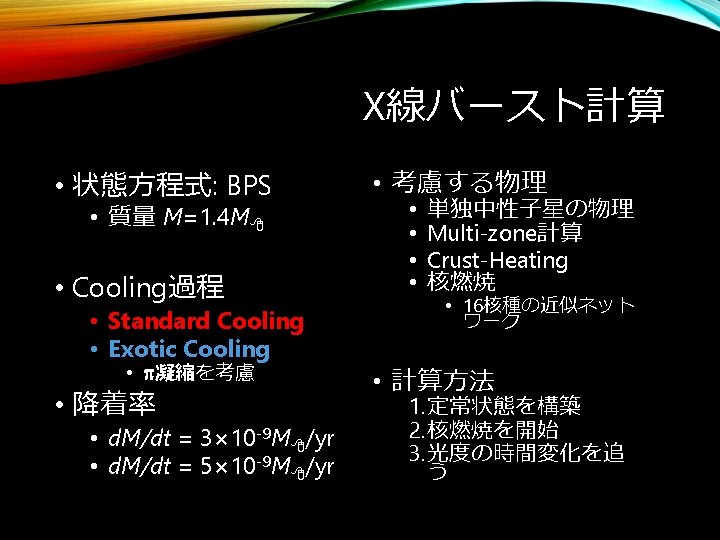
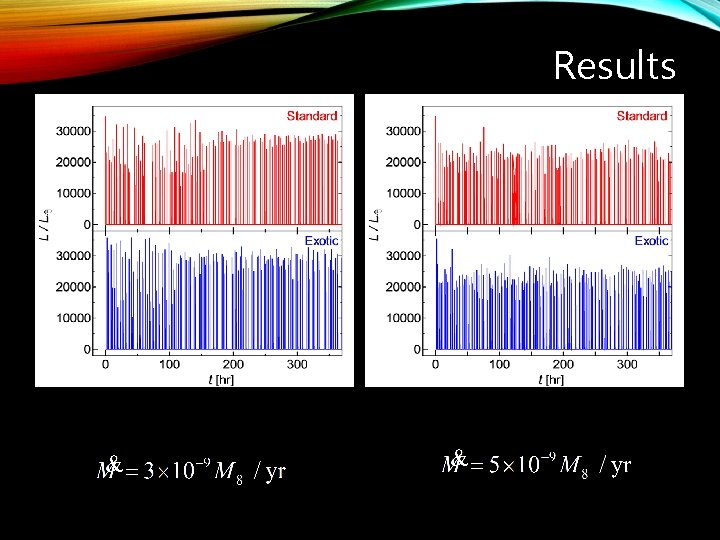
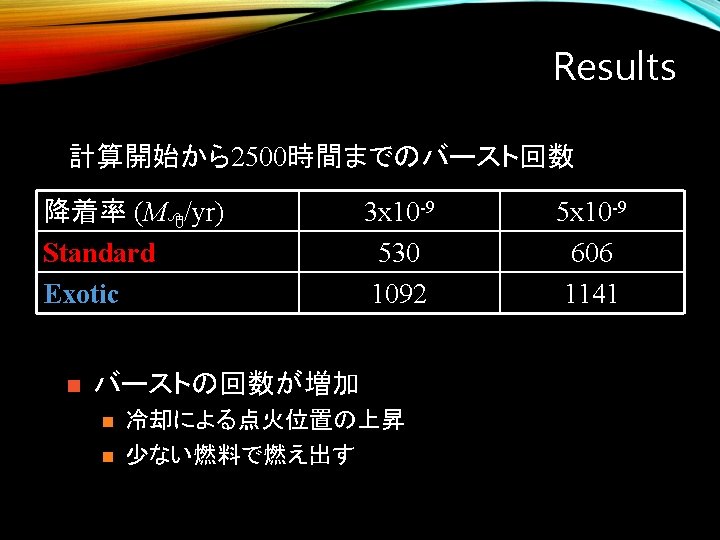
Results
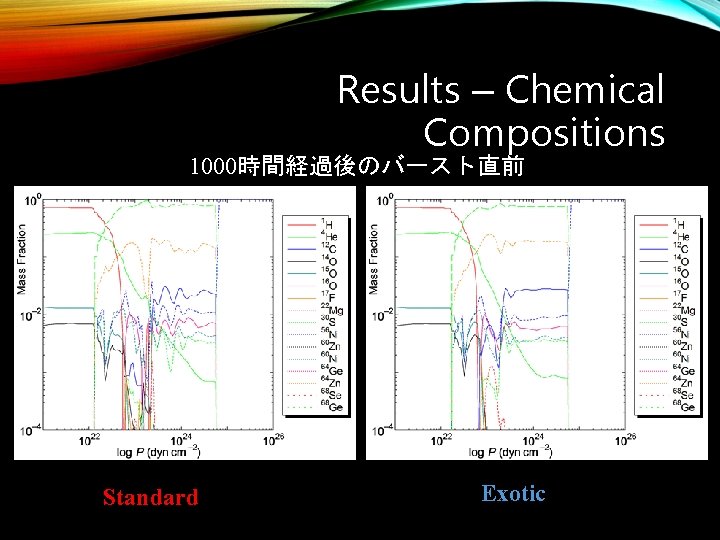
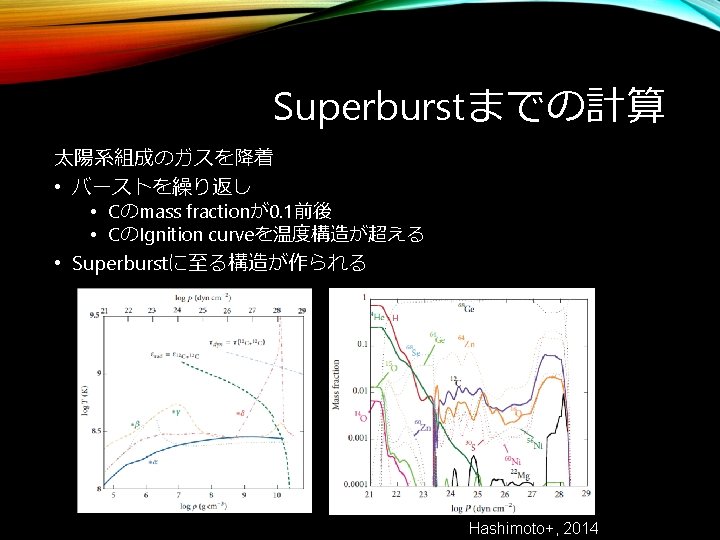
Results – Chemical Compositions 1000時間経過後のバースト直前 Standard Exotic
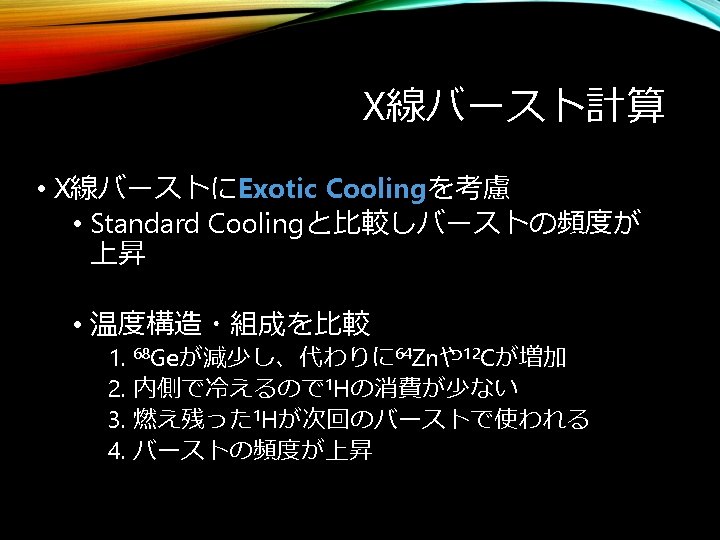
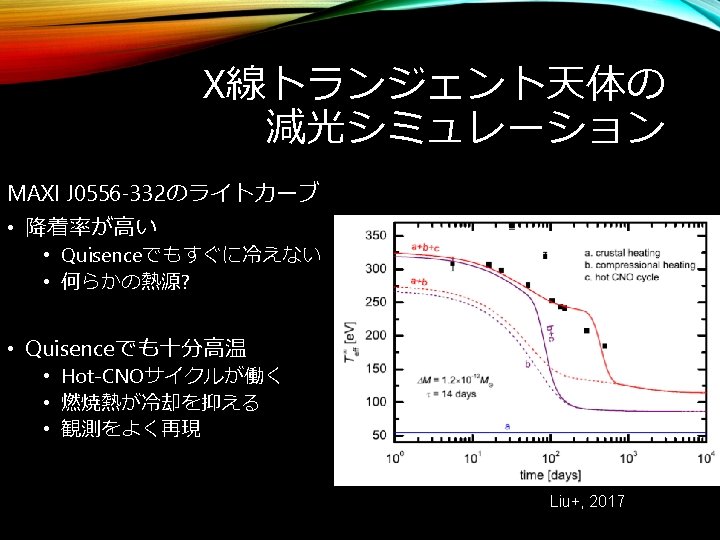

- Slides: 41