
XLIF vs ALIF Combined with PSF Results in

XLIF vs ALIF Combined with PSF Results in a Community Practice Glenn R. Buttermann, MD 1
Introduction • XLIF combined with posterior spinal fusion has increased in popularity for patients with advanced degenerative spinal conditions as well as selective deformity conditions. • Prior studies have predominantly been from academic institutions or by authors who had a financial relationship to a manufacturer with the potential for bias in reported outcomes. • The purpose of this study was to assess outcomes of an XLIF cohort and compare to a previous prospective cohort of traditional 2 -level anterior/posterior spinal fusion patients treated for advanced degenerative disc disease. 2
Present Study • Indications for XLIF patient (n=41) were primary surgical fusion for lumbar DDD, adjacent segment degenerative condition, or as part of a hybrid procedure for spinal deformity. • Prospective study: Visual Analog Scale for back pain and leg pain, pain drawing, ODI. • Follow-up periods were at six-month to one year intervals with minimum two-year follow-up. • Comparative anterior/posterior spinal fusion cohort (n=50) had similar prospective outcomes evaluation. 3
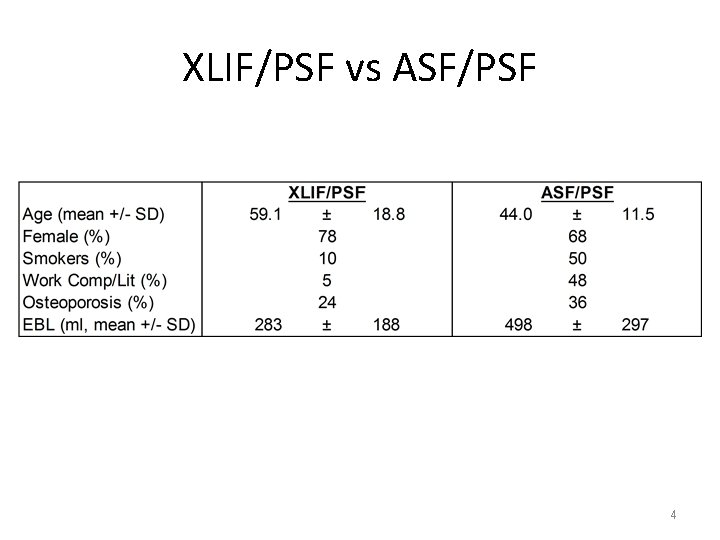
XLIF/PSF vs ASF/PSF 4

Major XLIF Dx • Primary Degenerative condition Example: L 45 post-lami DDD Preop Postop 5

Major XLIF Dx • Adjacent segment degenerative condition Example: L 23 Adj DDD/stenosis/retrolisthesis Preop Postop 6
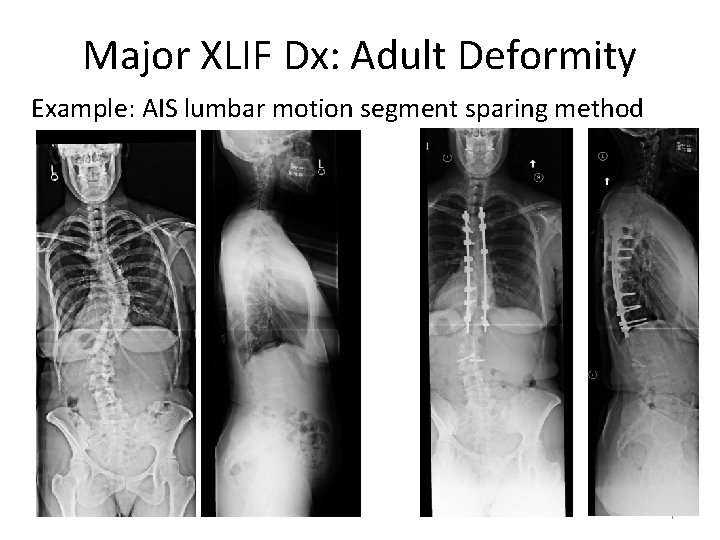
Major XLIF Dx: Adult Deformity Example: AIS lumbar motion segment sparing method 7
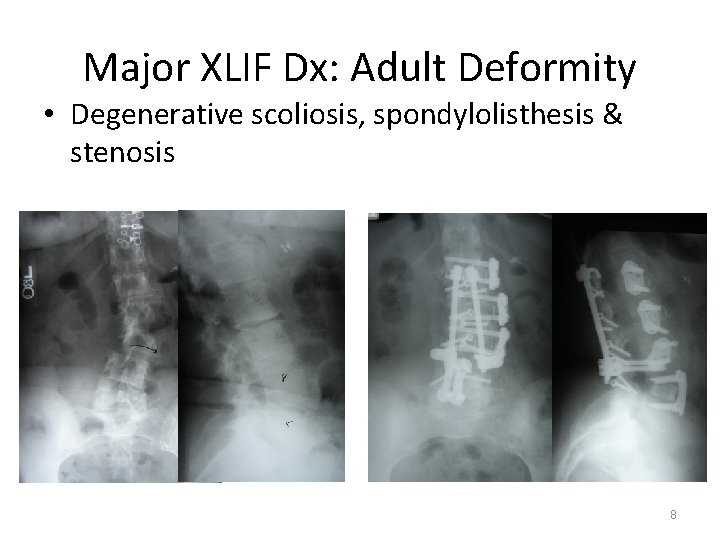
Major XLIF Dx: Adult Deformity • Degenerative scoliosis, spondylolisthesis & stenosis 8
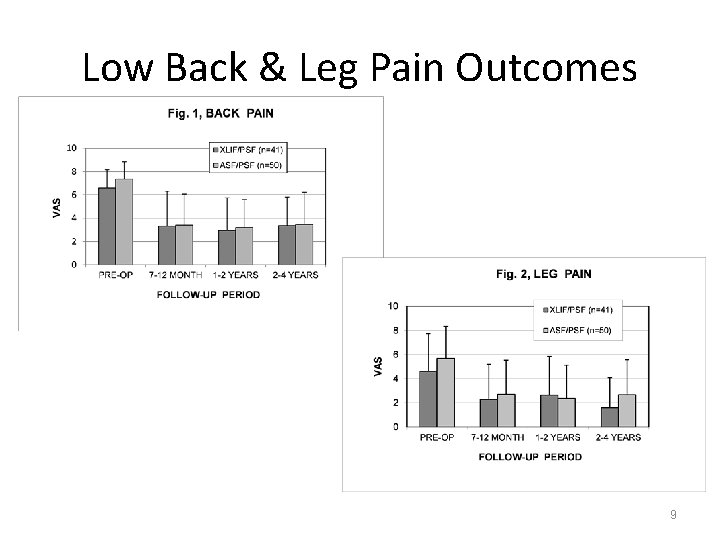
Low Back & Leg Pain Outcomes 9
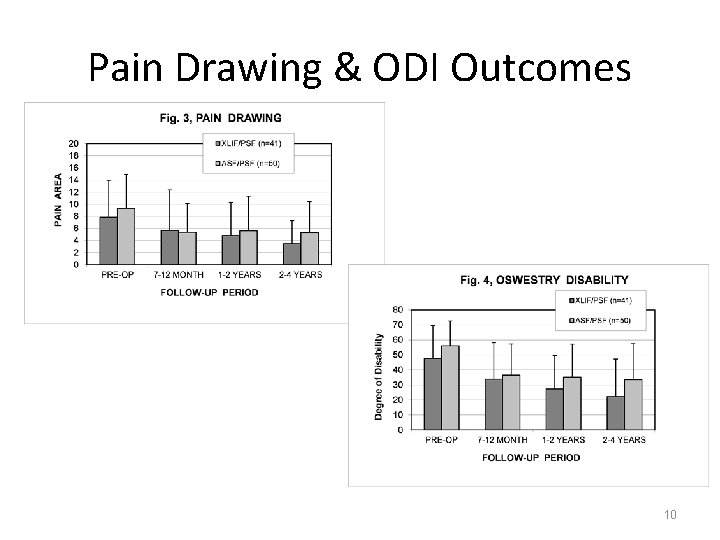
Pain Drawing & ODI Outcomes 10
Results • Most common indication for XLIF was adjacent level degenerative condition s/p prior lumbar fusion (29 of 41 patients). • Both XLIF/PSF and ASF/PSF groups had significantly improved outcomes at all follow-up periods. • There was no significant difference in outcomes between XLIF/PSF and ASF/PSF groups, however demographics differ between cohorts. • Patients in both XLIF and AP fusion groups who had interbody device subsidence were found to have osteoporosis. • Transient neurological deficits were most common at L 4 -5 in the XLIF cohort. 11
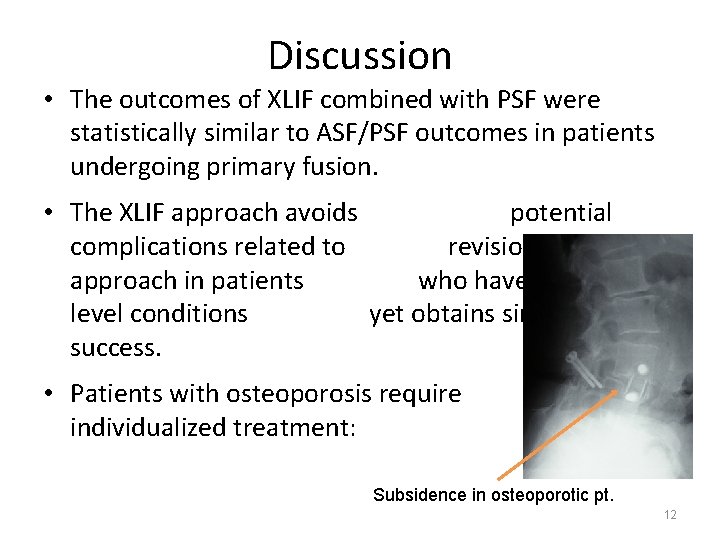
Discussion • The outcomes of XLIF combined with PSF were statistically similar to ASF/PSF outcomes in patients undergoing primary fusion. • The XLIF approach avoids potential complications related to revision ASF approach in patients who have adjacent level conditions yet obtains similar clinical success. • Patients with osteoporosis require individualized treatment: additional Subsidence in osteoporotic pt. 12
- Slides: 12