
WXGE 6103 Software Engineering Process and Practice System
- Slides: 14
WXGE 6103 Software Engineering Process and Practice System Engineering
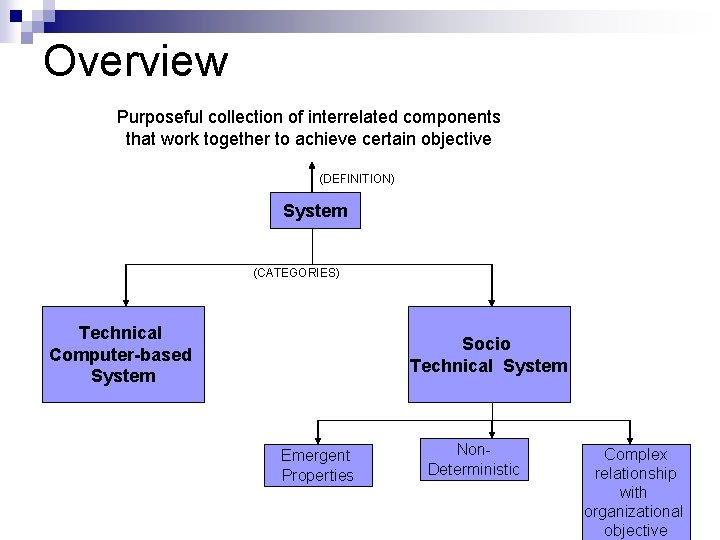
Overview Purposeful collection of interrelated components that work together to achieve certain objective (DEFINITION) System (CATEGORIES) Technical Computer-based System Socio Technical System Emergent Properties Non. Deterministic Complex relationship with organizational objective
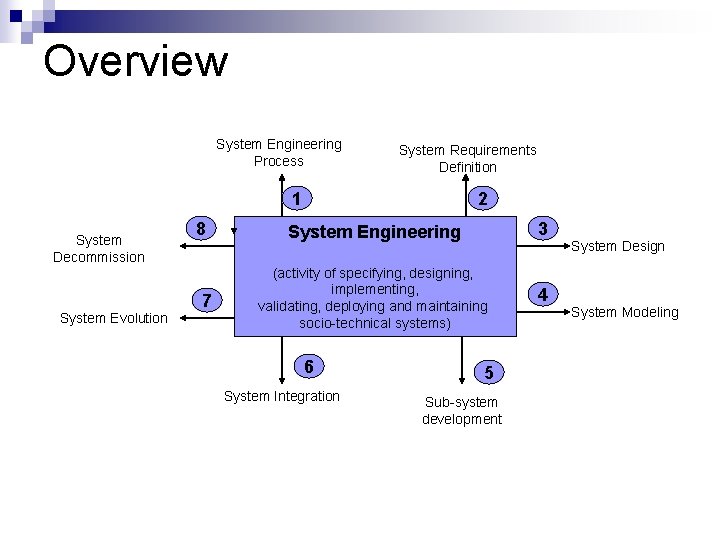
Overview System Engineering Process System Requirements Definition 1 System Decommission 8 7 System Evolution 2 System Engineering 3 (activity of specifying, designing, implementing, validating, deploying and maintaining socio-technical systems) 4 6 System Integration System Design 5 Sub-system development System Modeling
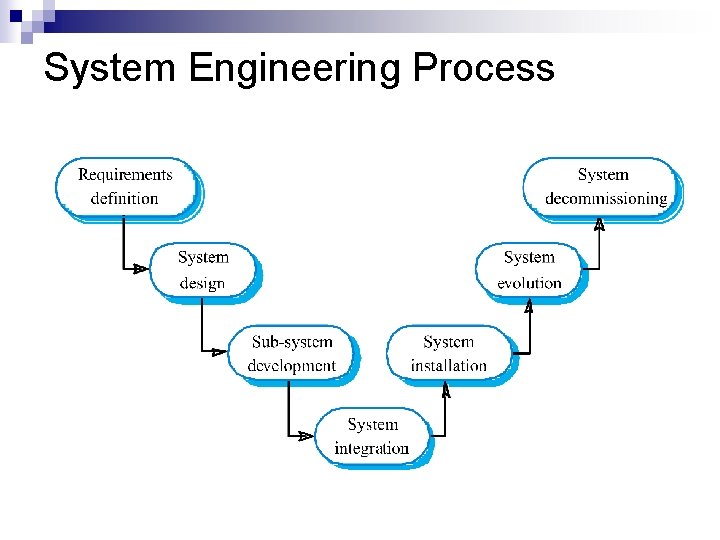
System Engineering Process
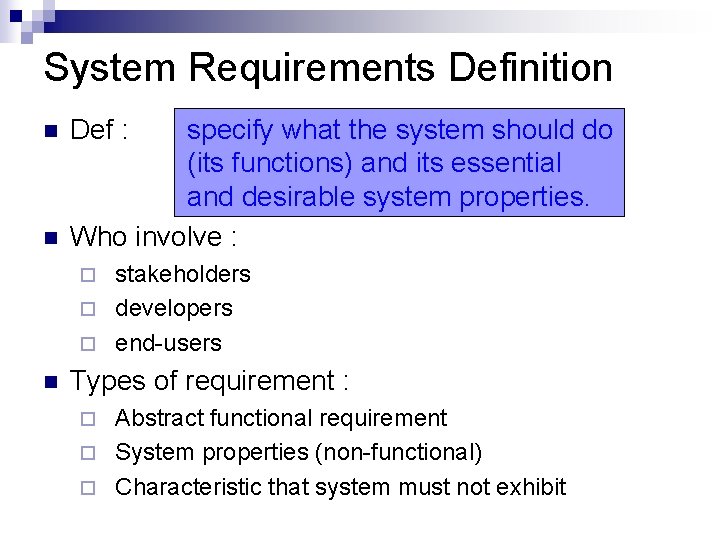
System Requirements Definition n n Def : specify what the system should do (its functions) and its essential and desirable system properties. Who involve : stakeholders ¨ developers ¨ end-users ¨ n Types of requirement : Abstract functional requirement ¨ System properties (non-functional) ¨ Characteristic that system must not exhibit ¨
System Design n Def : Graphical presentation of how the system functionalities is to be provided by the system components
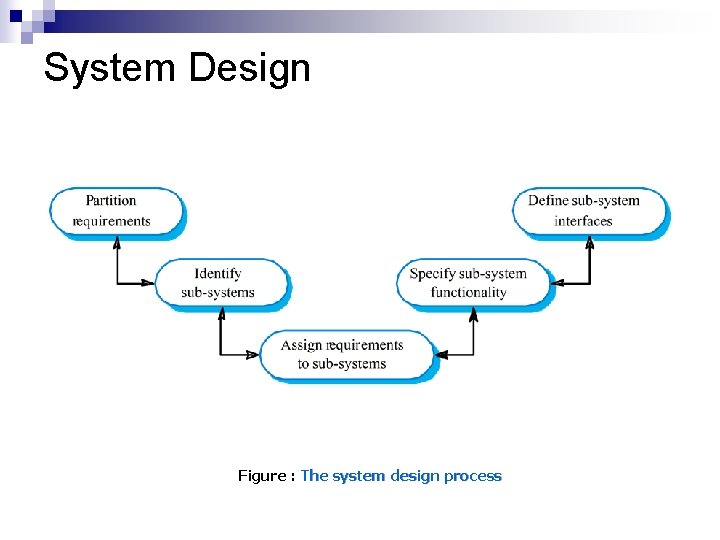
System Design Figure : The system design process
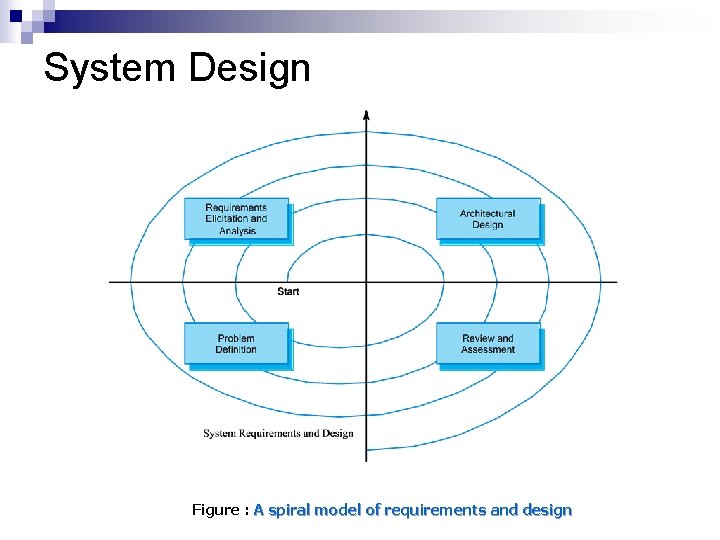
System Design Figure : A spiral model of requirements and design
System Modeling n n Def : An architectural model presents an abstract view of the subsystems making up a system. May include major information flows between sub-systems. Usually presented as a block diagram. May identify different types of functional component in the model.
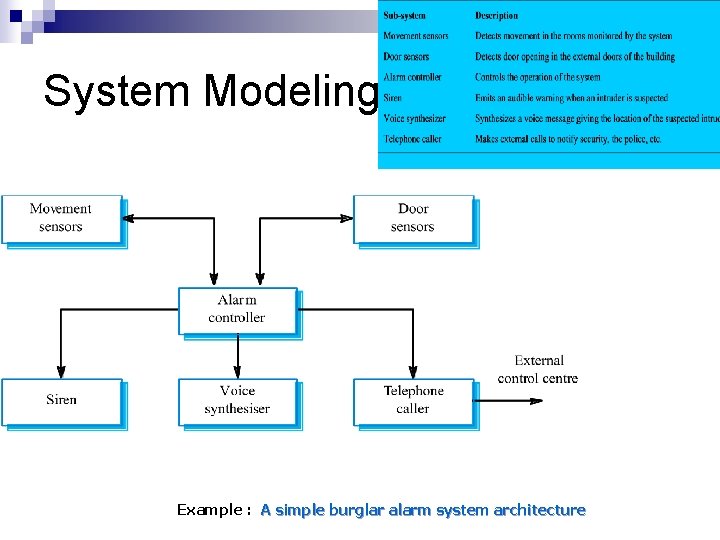
System Modeling Example : A simple burglar alarm system architecture
Sub-system development n n n Sub-systems identified during system design are implemented. (from scratch or COTS) Typically sub-systems are developed in parallel. Lack of communication across implementation teams. Usually involve software changes- during problem occurs Slow mechanism for proposing system changes means that the development schedule may be extended because of the need for rework.
System Integration ¨ During this phase, you take the independently developed sub-systems and put them together to make up a complete system. ¨ The process of putting hardware, software and people together to make a system. ¨ Should be tackled incrementally so that sub-systems are integrated one at a time. ¨ Interface problems between sub-systems are usually found at this stage. ¨ May be problems with uncoordinated deliveries of system components.
System Evolution Large systems have a long lifetime. They must evolve to meet changing requirements. ¨ Evolution is inherently costly n Changes must be analysed from a technical and business perspective n Sub-systems interact so unanticipated problems can arise n There is rarely a rationale for original design decisions n System structure is corrupted as changes are made to it ¨ Existing systems which must be maintained are sometimes called legacy systems. ¨
System Decommission ¨ Taking the system out of service after its useful lifetime ¨ May require removal of materials which pollute the environment. ¨ May require data to be restructured and converted to be used in some other system