
www socrative com Student login WHITE 689 How



![[Title of paper: Basics of research paper writing] Broader context The first sentence addresses](https://slidetodoc.com/presentation_image_h/01c7f7109f7c16b9062d76ccd3d79c2e/image-16.jpg "[Title of paper: Basics of research paper writing] Broader context The first sentence addresses")
![[Title of paper: Basics of research paper writing] Problem The second sentence establishes a](https://slidetodoc.com/presentation_image_h/01c7f7109f7c16b9062d76ccd3d79c2e/image-17.jpg "[Title of paper: Basics of research paper writing] Problem The second sentence establishes a")
![[Title of paper: Basics of research paper writing] Solution and approach The third sentence](https://slidetodoc.com/presentation_image_h/01c7f7109f7c16b9062d76ccd3d79c2e/image-18.jpg "[Title of paper: Basics of research paper writing] Solution and approach The third sentence")
![[Title of paper: Basics of research paper writing] Results The fourth sentence reports the](https://slidetodoc.com/presentation_image_h/01c7f7109f7c16b9062d76ccd3d79c2e/image-19.jpg "[Title of paper: Basics of research paper writing] Results The fourth sentence reports the")
![[Title of paper: Basics of research paper writing] Contribution / So what? The fifth](https://slidetodoc.com/presentation_image_h/01c7f7109f7c16b9062d76ccd3d79c2e/image-20.jpg "[Title of paper: Basics of research paper writing] Contribution / So what? The fifth")
![[Title of paper: ] Broader context The first sentence addresses the broad context. This](https://slidetodoc.com/presentation_image_h/01c7f7109f7c16b9062d76ccd3d79c2e/image-24.jpg "[Title of paper: ] Broader context The first sentence addresses the broad context. This")
![[Title of paper: ] Problem The second sentence establishes a problem related to the](https://slidetodoc.com/presentation_image_h/01c7f7109f7c16b9062d76ccd3d79c2e/image-25.jpg "[Title of paper: ] Problem The second sentence establishes a problem related to the")
![[Title of paper: ] Solution and approach The third sentence says what specific research](https://slidetodoc.com/presentation_image_h/01c7f7109f7c16b9062d76ccd3d79c2e/image-26.jpg "[Title of paper: ] Solution and approach The third sentence says what specific research")
![[Title of paper: ] Results The fourth sentence reports the results. Don’t try to](https://slidetodoc.com/presentation_image_h/01c7f7109f7c16b9062d76ccd3d79c2e/image-27.jpg "[Title of paper: ] Results The fourth sentence reports the results. Don’t try to")
![[Title of paper: ] Contribution / So what? The fifth and final sentence addresses](https://slidetodoc.com/presentation_image_h/01c7f7109f7c16b9062d76ccd3d79c2e/image-28.jpg "[Title of paper: ] Contribution / So what? The fifth and final sentence addresses")
- Slides: 31
www. socrative. com Student login: WHITE 689
How to write abstracts COMP 1205 - Professional Development Steve White (S. T. White@soton. ac. uk) Week 3, Thurs 20 th Oct, 2016
Session aim To introduce the writing of abstracts in terms of: • purpose • content • structure
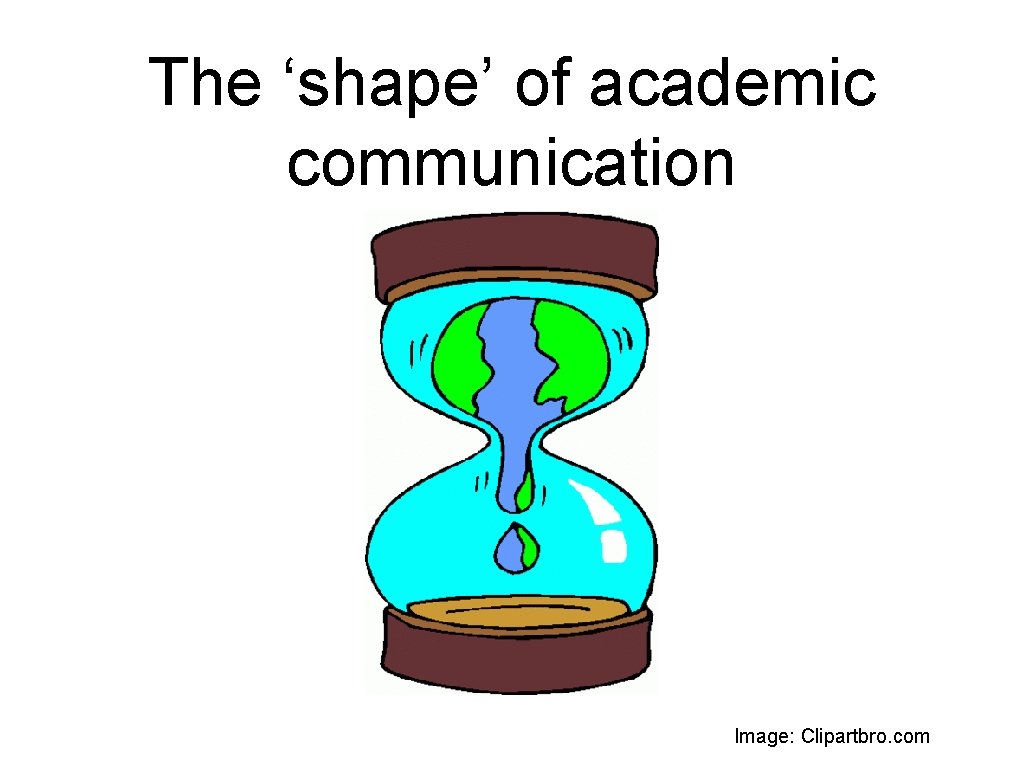
The ‘shape’ of academic communication Image: Clipartbro. com
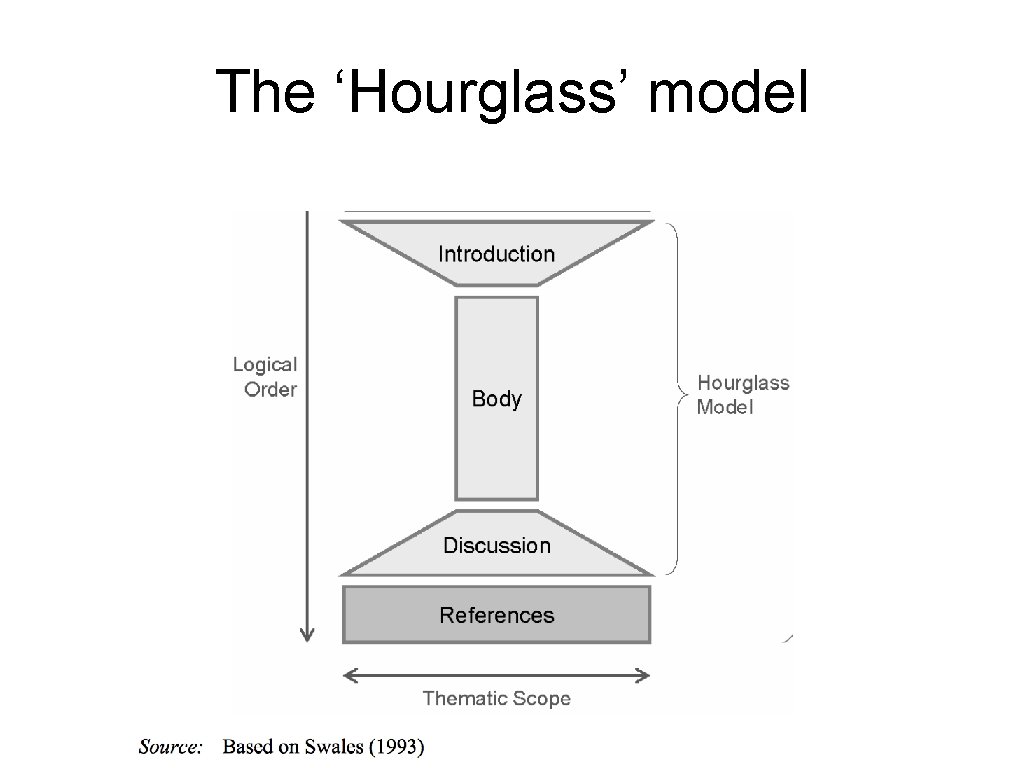
The ‘Hourglass’ model
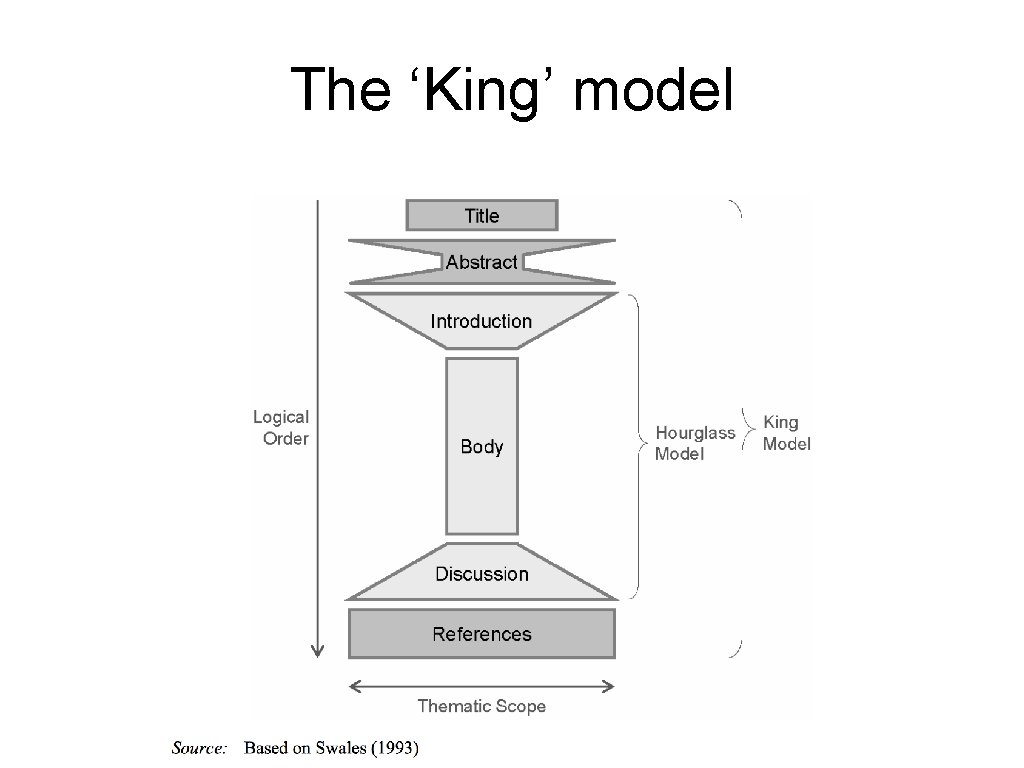
The ‘King’ model
www. socrative. com Student login: WHITE 689
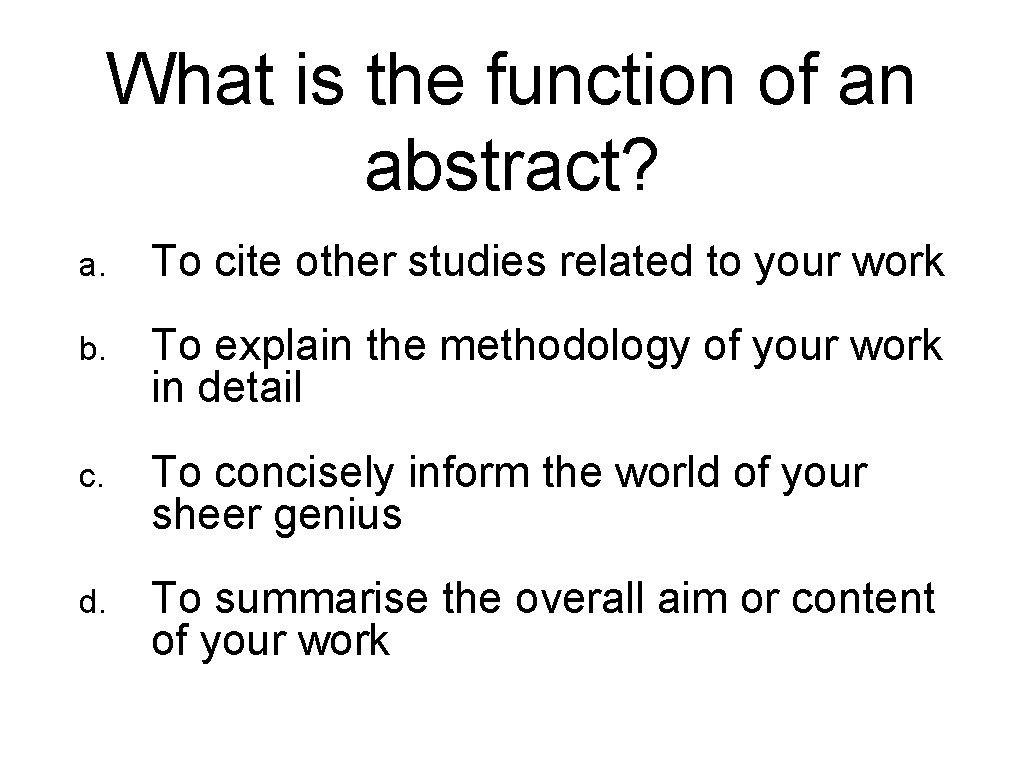
What is the function of an abstract? a. To cite other studies related to your work b. To explain the methodology of your work in detail c. To concisely inform the world of your sheer genius d. To summarise the overall aim or content of your work
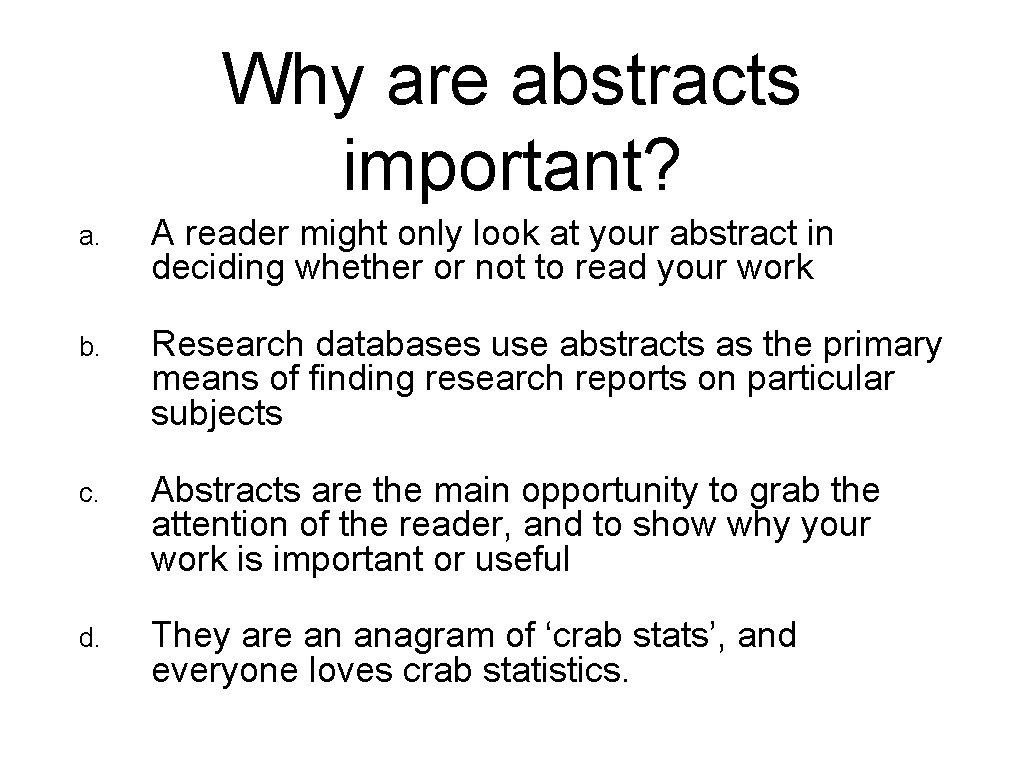
Why are abstracts important? a. A reader might only look at your abstract in deciding whether or not to read your work b. Research databases use abstracts as the primary means of finding research reports on particular subjects c. Abstracts are the main opportunity to grab the attention of the reader, and to show why your work is important or useful d. They are an anagram of ‘crab stats’, and everyone loves crab statistics.
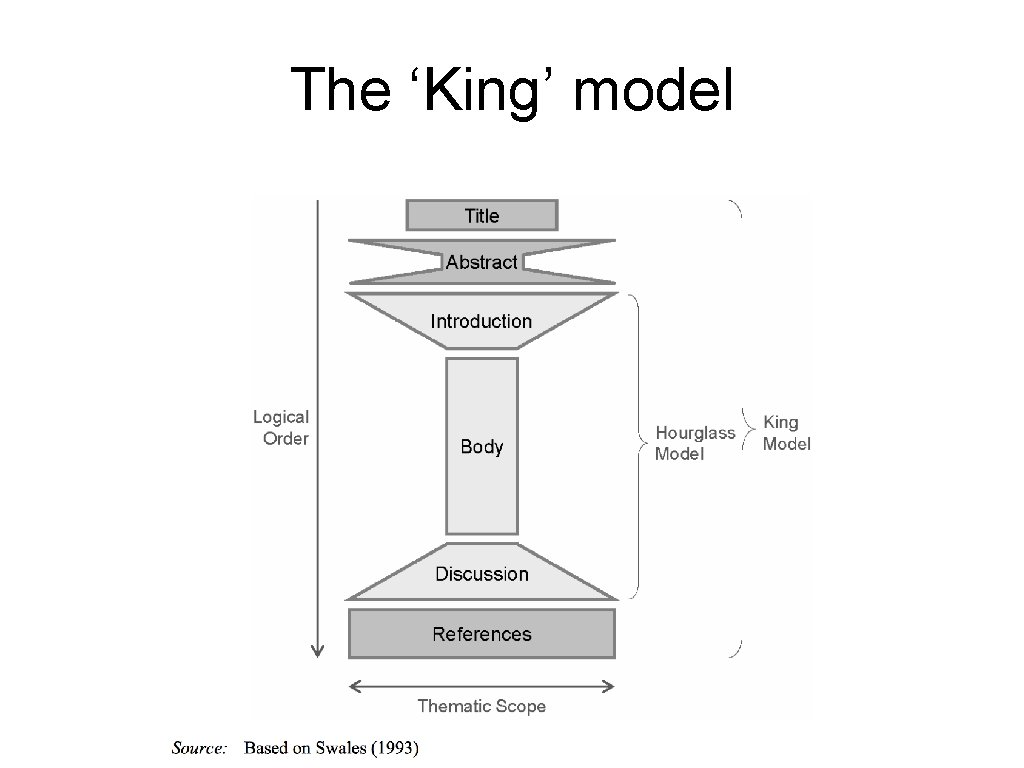
The ‘King’ model
Support resources for your academic skills
Southampton University Lib. Guides: Academic Skills: http: //library. soton. ac. uk/sash/home ECS My. Library: http: //library. soton. ac. uk/ecs Including your subject librarian Fiona Nichols
An “abstract is a miniature version of the whole. It is, if you like, a mini-me. ” Thomson (2016)
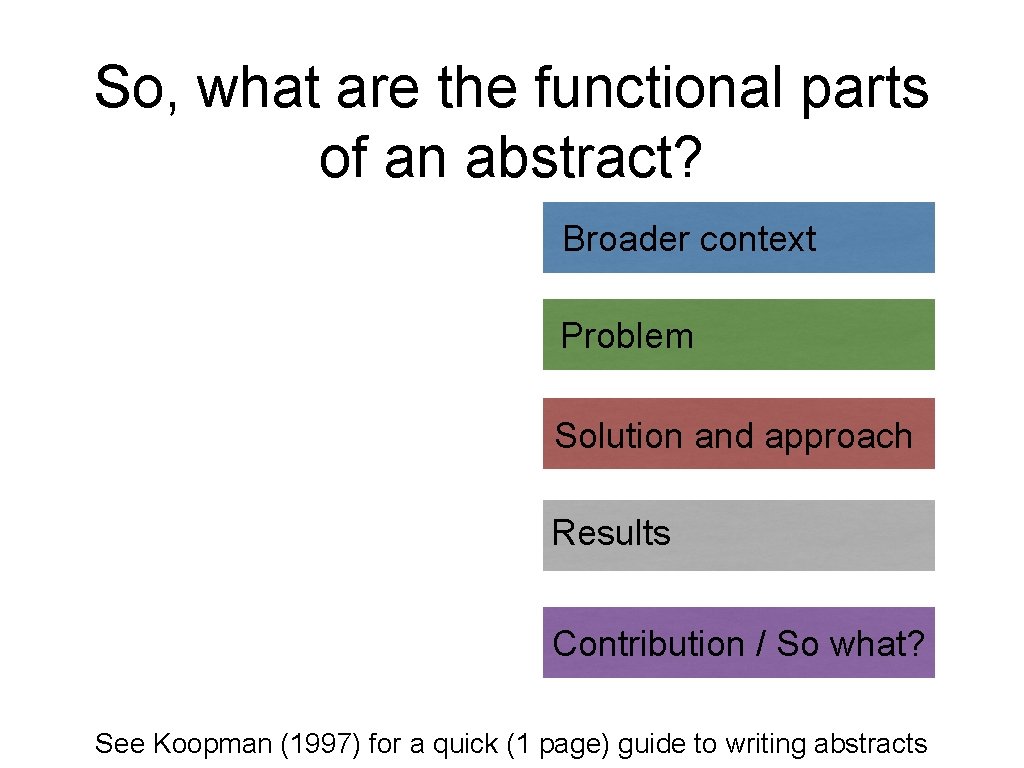
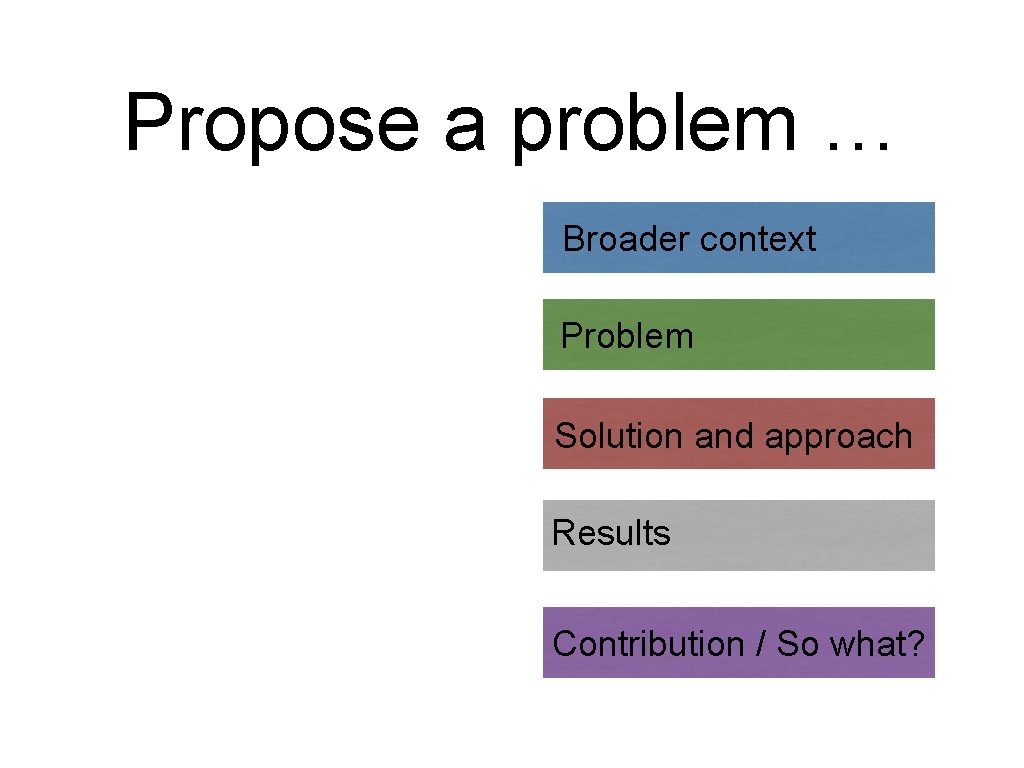
So, what are the functional parts of an abstract? Broader context Problem Solution and approach Results Contribution / So what? See Koopman (1997) for a quick (1 page) guide to writing abstracts
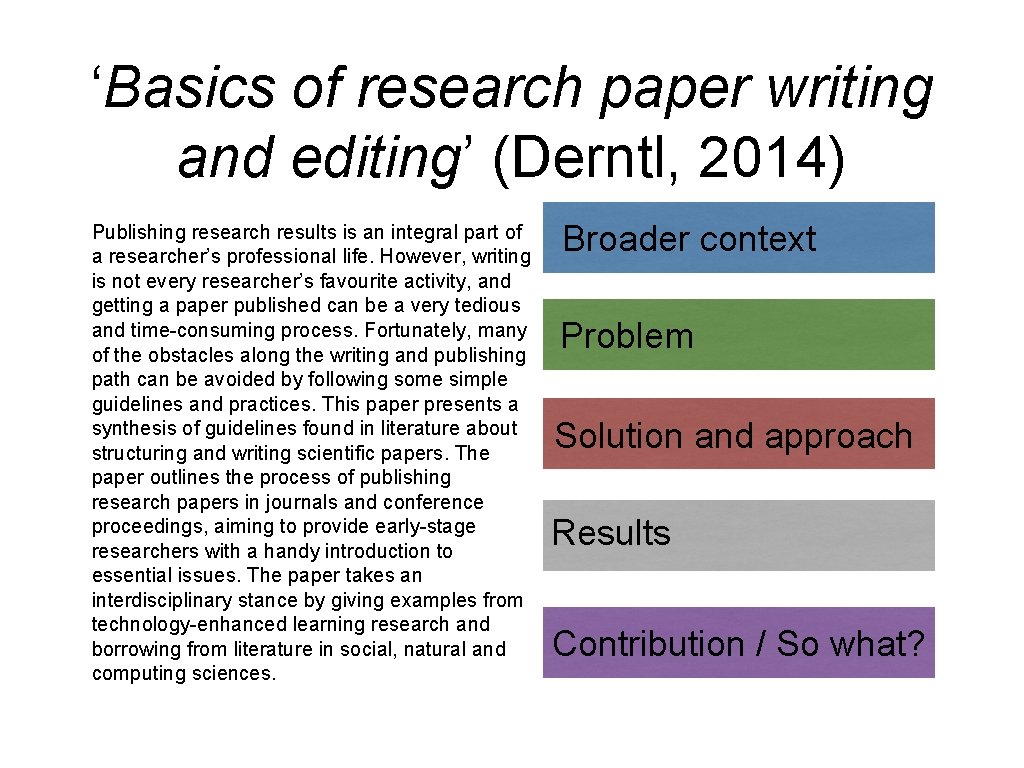
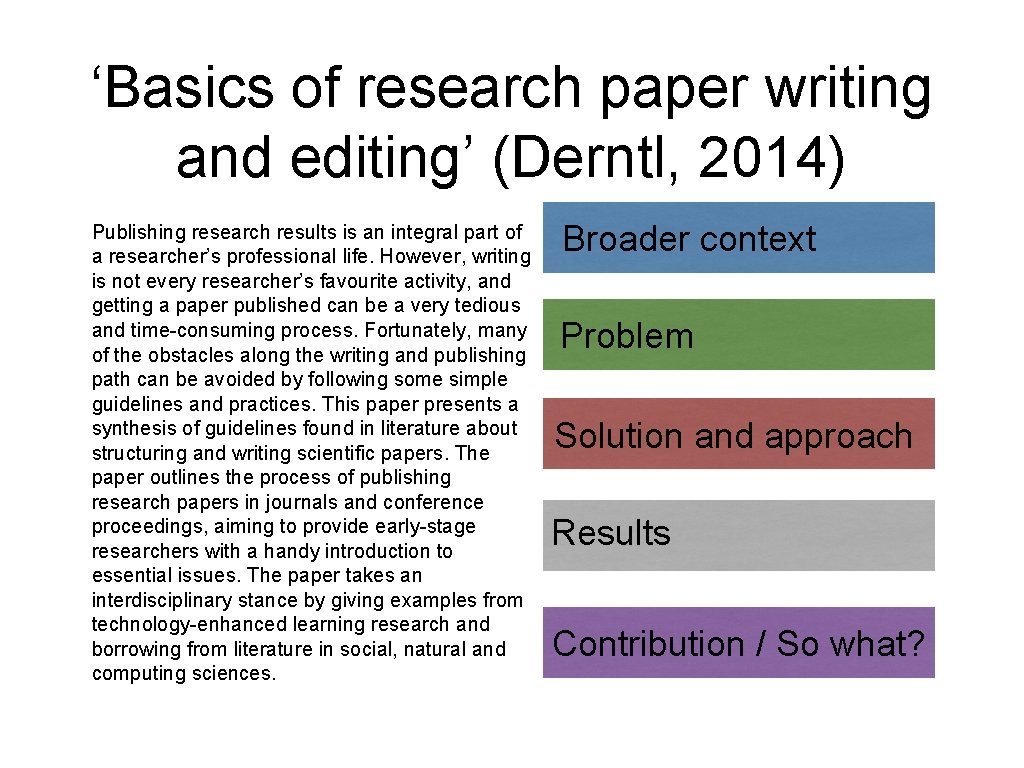
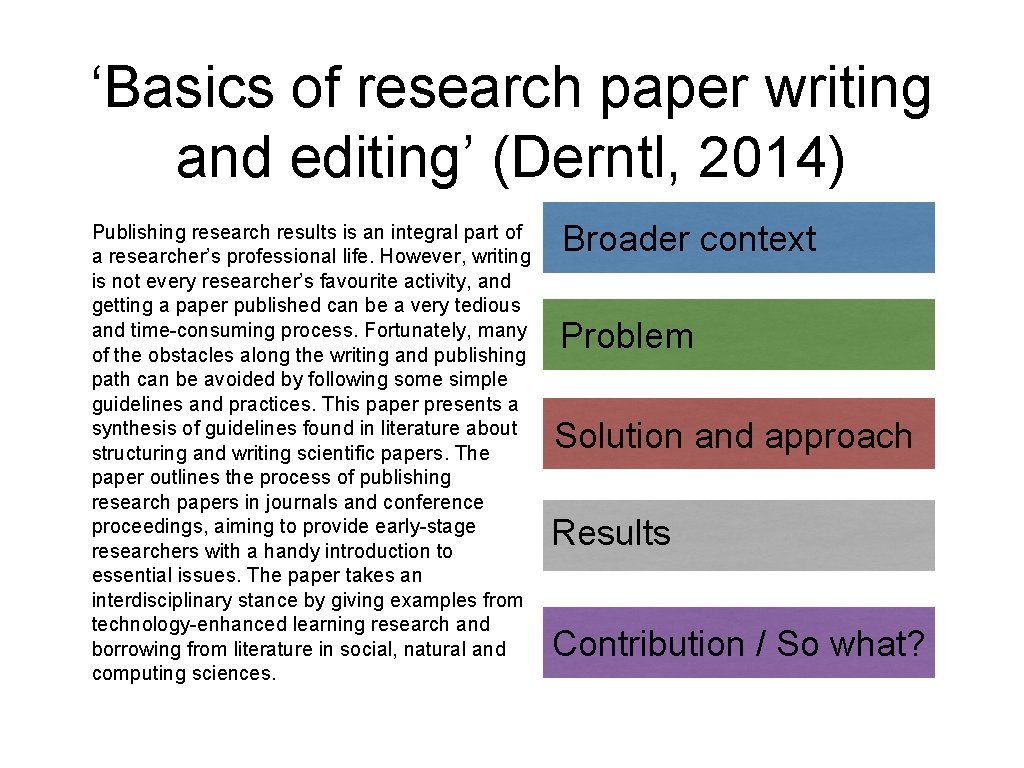
‘Basics of research paper writing and editing’ (Derntl, 2014) Publishing research results is an integral part of a researcher’s professional life. However, writing is not every researcher’s favourite activity, and getting a paper published can be a very tedious and time-consuming process. Fortunately, many of the obstacles along the writing and publishing path can be avoided by following some simple guidelines and practices. This paper presents a synthesis of guidelines found in literature about structuring and writing scientific papers. The paper outlines the process of publishing research papers in journals and conference proceedings, aiming to provide early-stage researchers with a handy introduction to essential issues. The paper takes an interdisciplinary stance by giving examples from technology-enhanced learning research and borrowing from literature in social, natural and computing sciences. Broader context Problem Solution and approach Results Contribution / So what?
[Title of paper: Basics of research paper writing] Broader context The first sentence addresses the broad context. This locates the study in a policy, practice or research field. Publishing research results is an integral part of a researcher’s professional life. Advice in bold from Patter blog, 3/10/2016
[Title of paper: Basics of research paper writing] Problem The second sentence establishes a problem related to the broad context you have set out. It often starts with But, Yet or However… However, writing is not every researcher’s favourite activity, and getting a paper published can be a very challenging and time-consuming process.
[Title of paper: Basics of research paper writing] Solution and approach The third sentence says what specific research has been done. This sentence often starts with ‘This research…’ or ‘I report…’ Fortunately, many of the obstacles along the writing and publishing path can be avoided by following some simple guidelines and practices. This paper presents a synthesis of guidelines found in literature about structuring and writing scientific papers.
[Title of paper: Basics of research paper writing] Results The fourth sentence reports the results. Don’t try to be too tricky here, just start with something like. . ‘This study shows…’, or ‘Analysis of the data suggests that…’ The paper outlines the process of publishing research papers in journals and conference proceedings, aiming to provide early-stage researchers with a handy introduction to essential issues.
[Title of paper: Basics of research paper writing] Contribution / So what? The fifth and final sentence addresses the ‘So What? ’ question, and makes clear the claim to contribution. The paper takes an interdisciplinary stance by giving examples from technology-enhanced learning research and borrowing from literature in social, natural and computing sciences.
‘Basics of research paper writing and editing’ (Derntl, 2014) Publishing research results is an integral part of a researcher’s professional life. However, writing is not every researcher’s favourite activity, and getting a paper published can be a very tedious and time-consuming process. Fortunately, many of the obstacles along the writing and publishing path can be avoided by following some simple guidelines and practices. This paper presents a synthesis of guidelines found in literature about structuring and writing scientific papers. The paper outlines the process of publishing research papers in journals and conference proceedings, aiming to provide early-stage researchers with a handy introduction to essential issues. The paper takes an interdisciplinary stance by giving examples from technology-enhanced learning research and borrowing from literature in social, natural and computing sciences. Broader context Problem Solution and approach Results Contribution / So what?
‘Basics of research paper writing and editing’ (Derntl, 2014) Publishing research results is an integral part of a researcher’s professional life. However, writing is not every researcher’s favourite activity, and getting a paper published can be a very tedious and time-consuming process. Fortunately, many of the obstacles along the writing and publishing path can be avoided by following some simple guidelines and practices. This paper presents a synthesis of guidelines found in literature about structuring and writing scientific papers. The paper outlines the process of publishing research papers in journals and conference proceedings, aiming to provide early-stage researchers with a handy introduction to essential issues. The paper takes an interdisciplinary stance by giving examples from technology-enhanced learning research and borrowing from literature in social, natural and computing sciences. Broader context Problem Solution and approach Results Contribution / So what?
Propose a problem … Broader context Problem Solution and approach Results Contribution / So what?
[Title of paper: ] Broader context The first sentence addresses the broad context. This locates the study in a policy, practice or research field.
[Title of paper: ] Problem The second sentence establishes a problem related to the broad context you have set out. It often starts with But, Yet or However…
[Title of paper: ] Solution and approach The third sentence says what specific research has been done. This sentence often starts with This research… or I report…
[Title of paper: ] Results The fourth sentence reports the results. Don’t try to be too tricky here, just start with something like. . ‘This study shows…’, or 'Analysis of the data suggests that…'
[Title of paper: ] Contribution / So what? The fifth and final sentence addresses the ‘So What? ’ question, and makes clear the claim to contribution.
Review Reflect on whether you understand the writing of abstracts in terms of: • purpose • content • structure
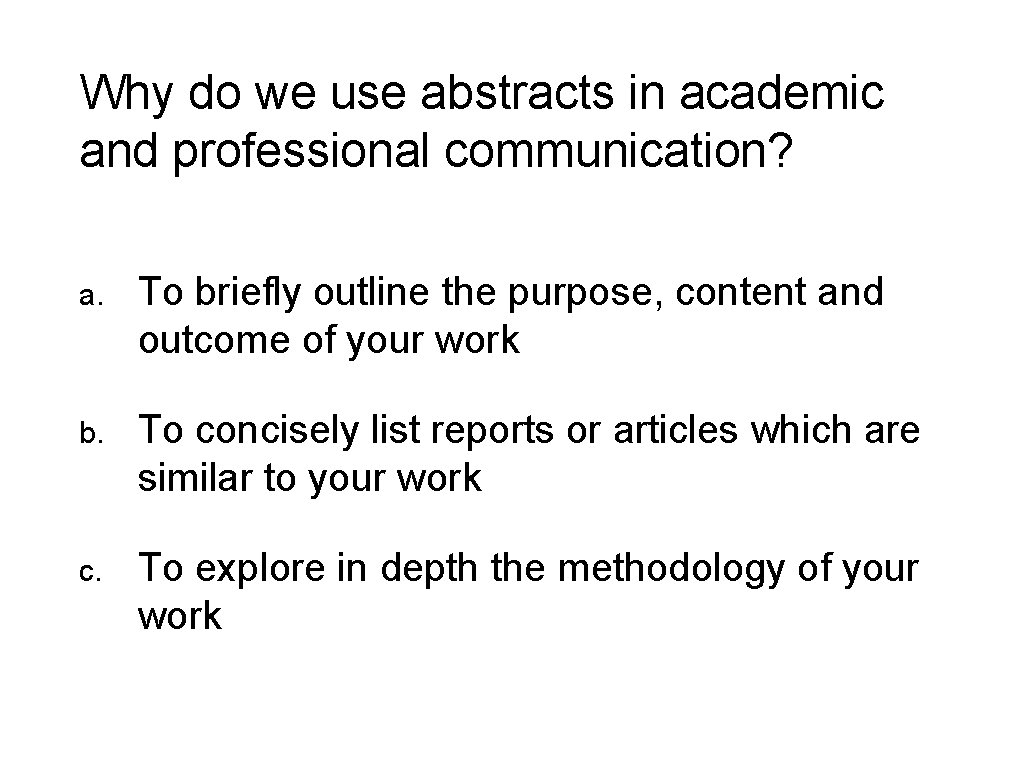
Why do we use abstracts in academic and professional communication? a. To briefly outline the purpose, content and outcome of your work b. To concisely list reports or articles which are similar to your work c. To explore in depth the methodology of your work
References Derntl, M. , 2014. Basics of research paper writing and publishing. International Journal of Technology Enhanced. Available at: http: //www. inderscienceonline. com/doi/abs/10. 1504/IJTEL. 2014. 066856 [Accessed October 8, 2016]. Koopman, P. (1997) How to write an abstract. Carnegie Mellon University. Available at: https: //users. ece. cmu. edu/~koopman/essays/abstract. html [Accessed October 15, 2016] Proctor, M. (2002) The Abstract. University of Toronto. Available at: http: //www. writing. utoronto. ca/advice/specific-types-of-writing/abstract [Accessed Octorber 15, 2006] [Swales, J. , 1990. Genre Analysis: English in academic and research settings, Cambridge: Cambridge University Press. ] Thomson, P. , 2016. Finishing the Ph. D - write a tiny text. Patter. Available at: https: //patthomson. net/2016/10/03/finishing-the-phd-write-a-tiny-text/ [Accessed October 3, 2016].