
www ptvamerica com A Multiclass Dynamic Traffic Assignment
- Slides: 31
www. ptvamerica. com A Multiclass Dynamic Traffic Assignment Model for Special Events Management 12 th TRB National Transportation Planning Applications Conference May 17 -21, 2009 Houston, Texas Fang Yuan, Ph. D. , P. E. Karen Giese, P. E. Kean Lew, P. Eng
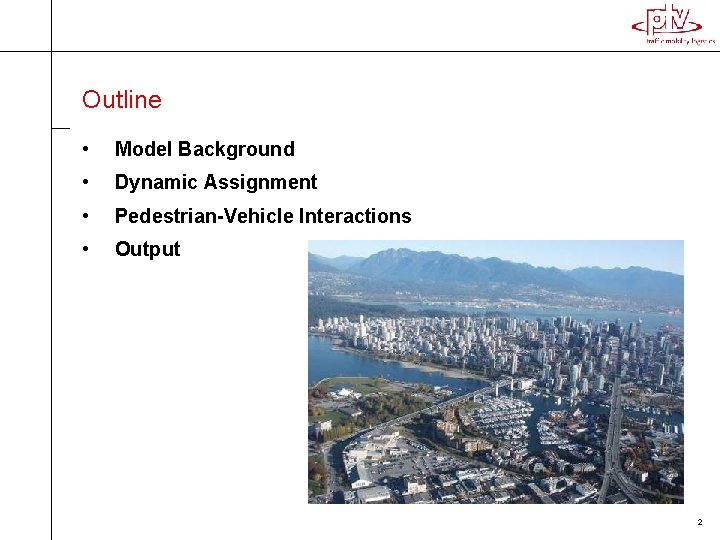
Outline • Model Background • Dynamic Assignment • Pedestrian-Vehicle Interactions • Output 2
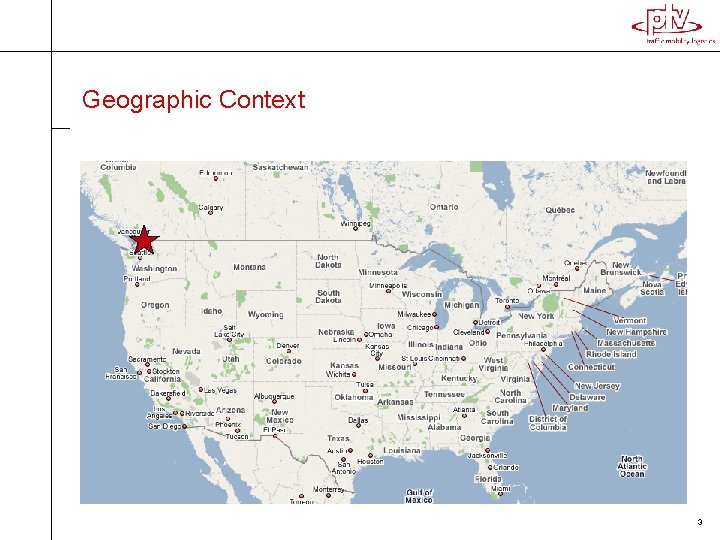
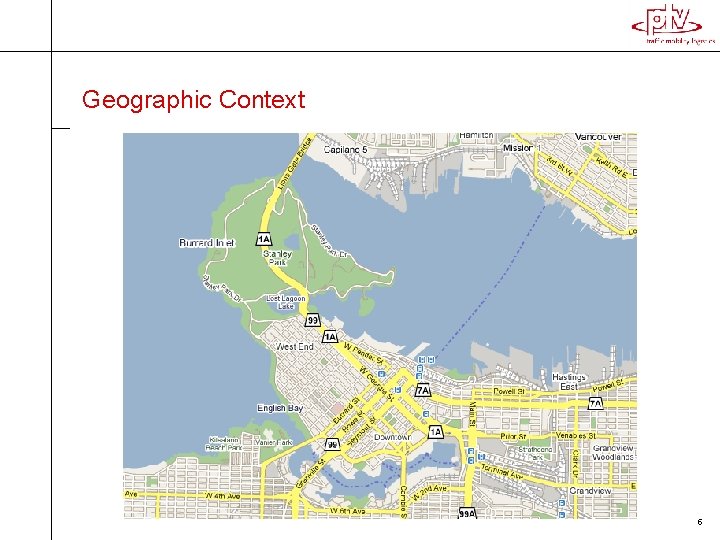
Geographic Context 3
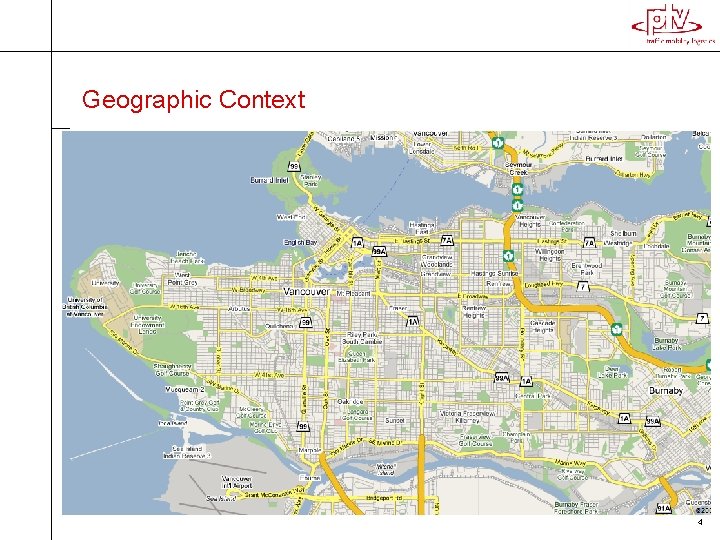
Geographic Context 4
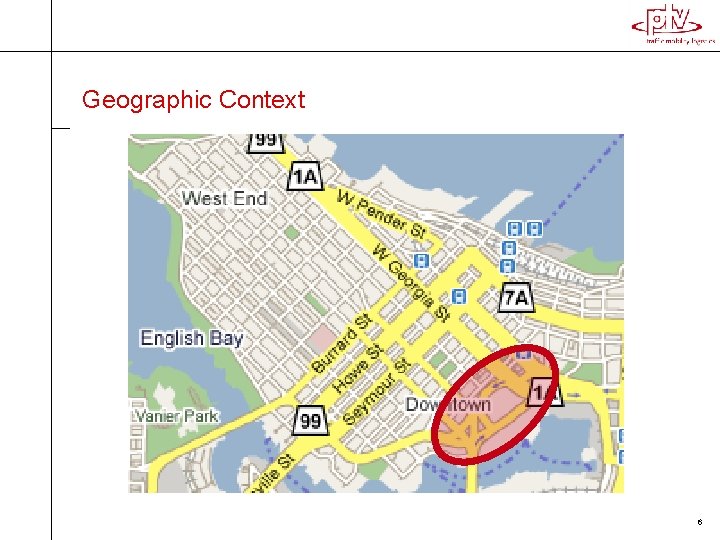
Geographic Context 5
Geographic Context 6
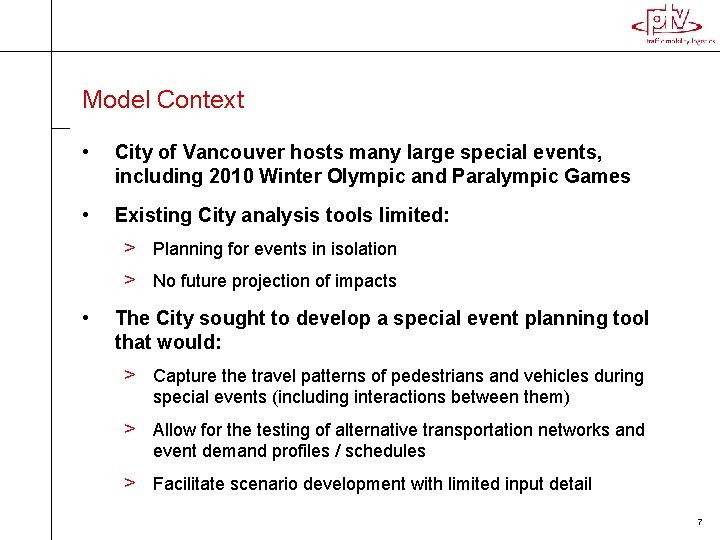
Model Context • City of Vancouver hosts many large special events, including 2010 Winter Olympic and Paralympic Games • Existing City analysis tools limited: > Planning for events in isolation > No future projection of impacts • The City sought to develop a special event planning tool that would: > Capture the travel patterns of pedestrians and vehicles during special events (including interactions between them) > Allow for the testing of alternative transportation networks and event demand profiles / schedules > Facilitate scenario development with limited input detail 7
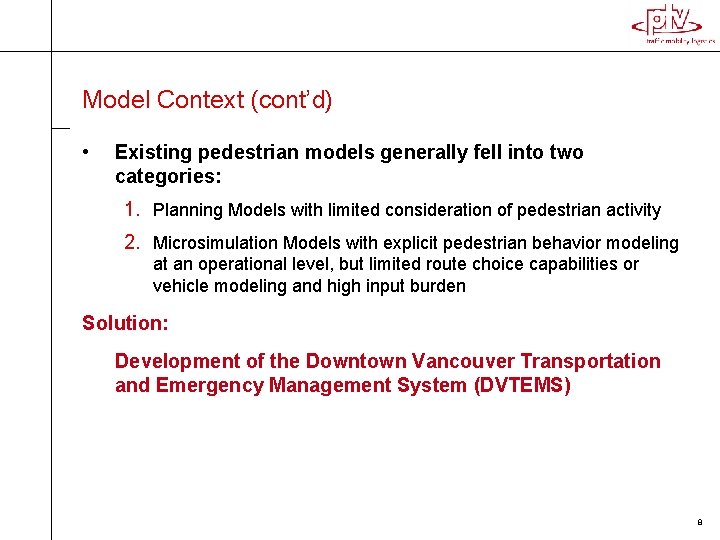
Model Context (cont’d) • Existing pedestrian models generally fell into two categories: 1. Planning Models with limited consideration of pedestrian activity 2. Microsimulation Models with explicit pedestrian behavior modeling at an operational level, but limited route choice capabilities or vehicle modeling and high input burden Solution: Development of the Downtown Vancouver Transportation and Emergency Management System (DVTEMS) 8
DVTEMS Model Features • Planning-level travel demand model • Focus on pedestrian route choice • Feature dynamic assignment • Based on the VISUM platform • Custom pedestrian-vehicle interactions • Communication through visual platform • Quantitative analysis 9
DVTEMS Model Application • Identification of Bottlenecks/Network Deficiencies • Pedestrian Management Strategies • Event Road Closure Plans • Special Event Impacts • Construction Road Closure Alternatives • Emergency Management Planning 10
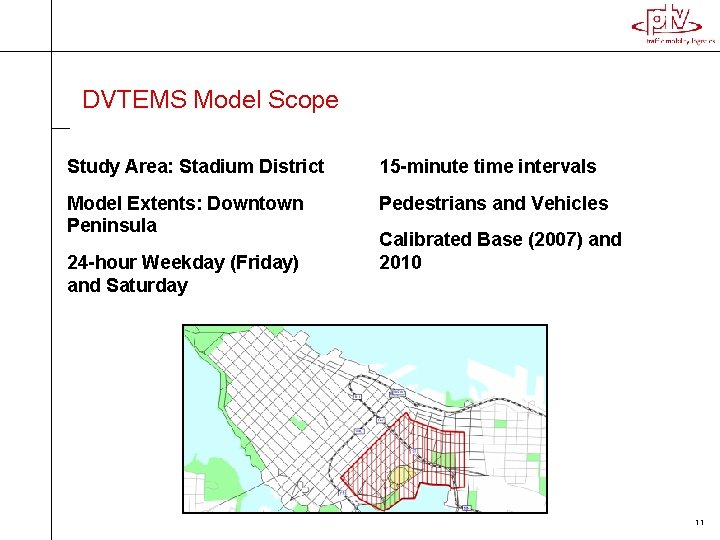
DVTEMS Model Scope Study Area: Stadium District 15 -minute time intervals Model Extents: Downtown Peninsula Pedestrians and Vehicles 24 -hour Weekday (Friday) and Saturday Calibrated Base (2007) and 2010 11
Dynamic Assignment Key Benefits (vs. Static Assignment) • Account for Special Event Temporal Characteristics • Account for Capacity Constraints and Changes • Model Proper Interaction of Real Flows • Model Impacts of Short-Term Measures • Present Congestion Phenomena 12
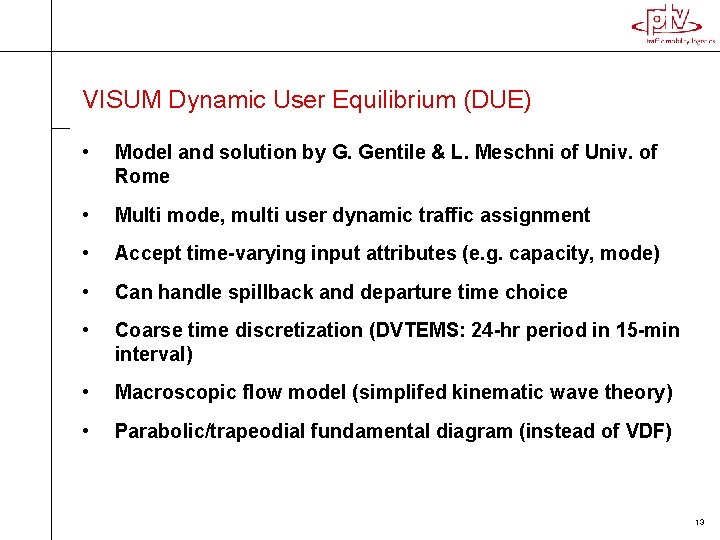
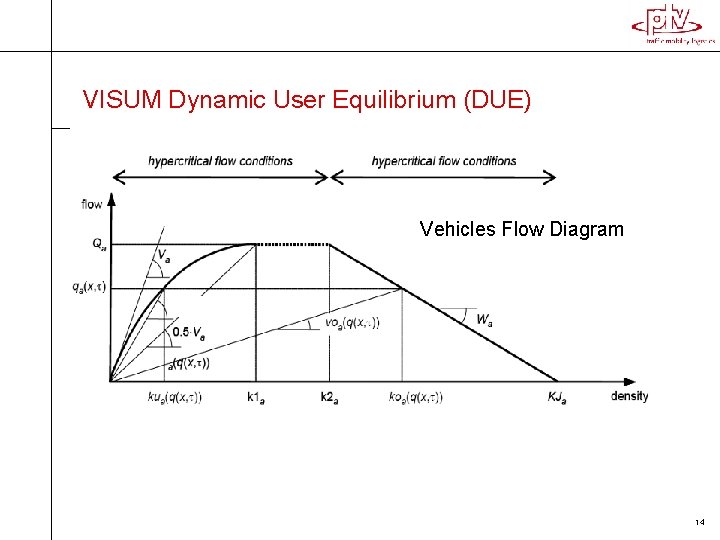
VISUM Dynamic User Equilibrium (DUE) • Model and solution by G. Gentile & L. Meschni of Univ. of Rome • Multi mode, multi user dynamic traffic assignment • Accept time-varying input attributes (e. g. capacity, mode) • Can handle spillback and departure time choice • Coarse time discretization (DVTEMS: 24 -hr period in 15 -min interval) • Macroscopic flow model (simplifed kinematic wave theory) • Parabolic/trapeodial fundamental diagram (instead of VDF) 13
VISUM Dynamic User Equilibrium (DUE) Vehicles Flow Diagram 14
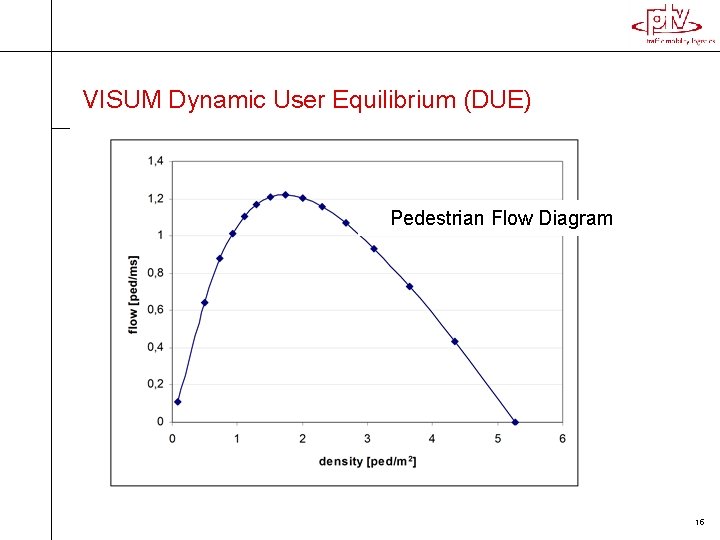
VISUM Dynamic User Equilibrium (DUE) Pedestrian Flow Diagram 15
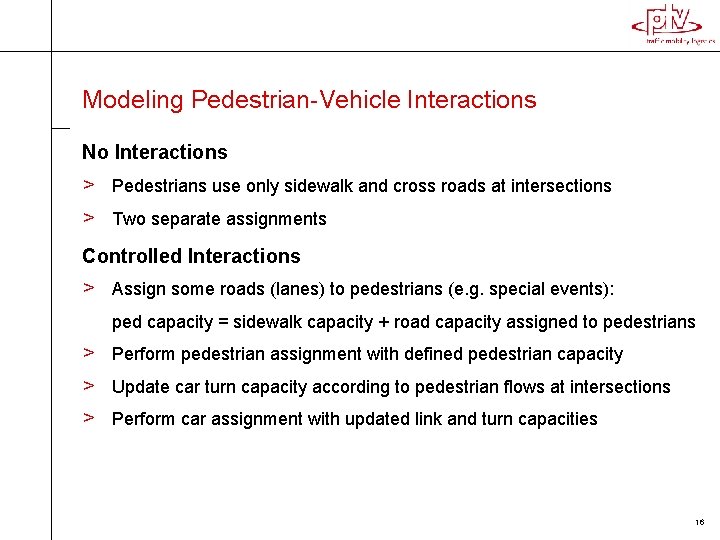
Modeling Pedestrian-Vehicle Interactions No Interactions > Pedestrians use only sidewalk and cross roads at intersections > Two separate assignments Controlled Interactions > Assign some roads (lanes) to pedestrians (e. g. special events): ped capacity = sidewalk capacity + road capacity assigned to pedestrians > Perform pedestrian assignment with defined pedestrian capacity > Update car turn capacity according to pedestrian flows at intersections > Perform car assignment with updated link and turn capacities 16
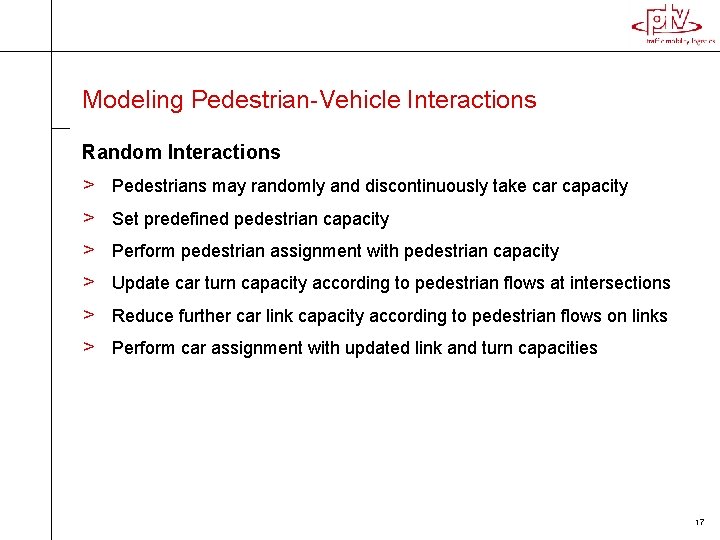
Modeling Pedestrian-Vehicle Interactions Random Interactions > Pedestrians may randomly and discontinuously take car capacity > Set predefined pedestrian capacity > Perform pedestrian assignment with pedestrian capacity > Update car turn capacity according to pedestrian flows at intersections > Reduce further car link capacity according to pedestrian flows on links > Perform car assignment with updated link and turn capacities 17
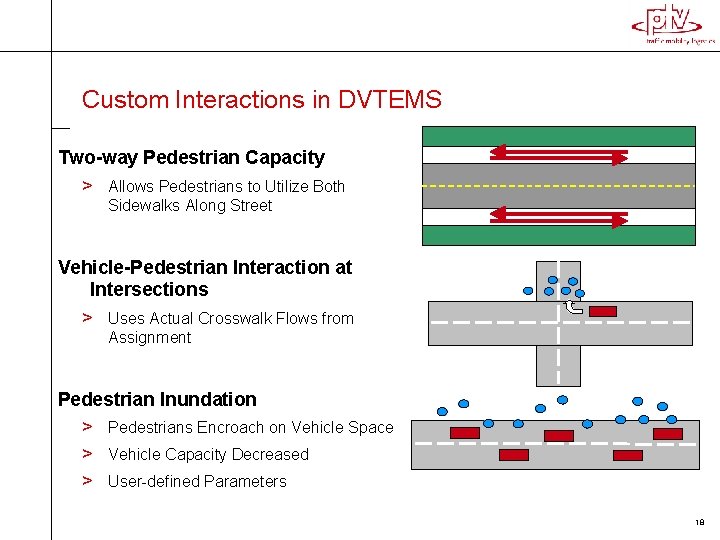
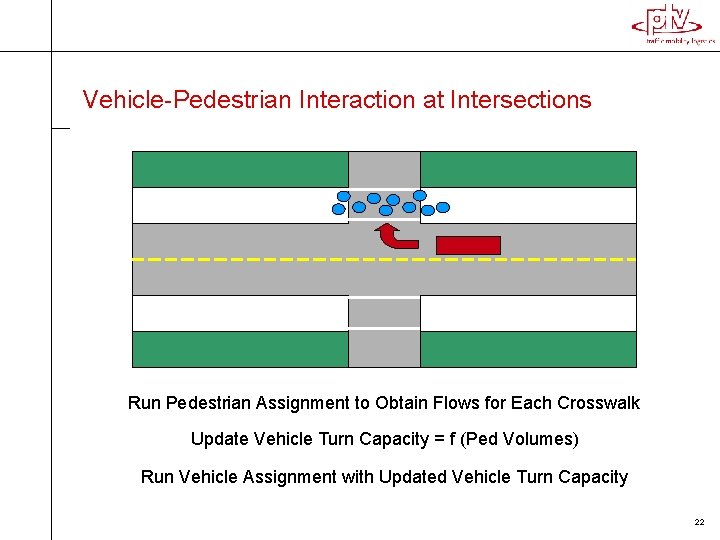
Custom Interactions in DVTEMS Two-way Pedestrian Capacity > Allows Pedestrians to Utilize Both Sidewalks Along Street Vehicle-Pedestrian Interaction at Intersections > Uses Actual Crosswalk Flows from Assignment Pedestrian Inundation > Pedestrians Encroach on Vehicle Space > Vehicle Capacity Decreased > User-defined Parameters 18
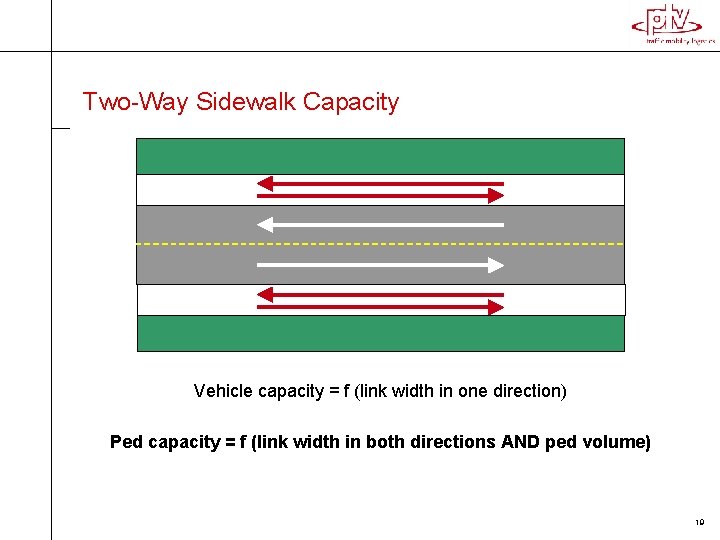
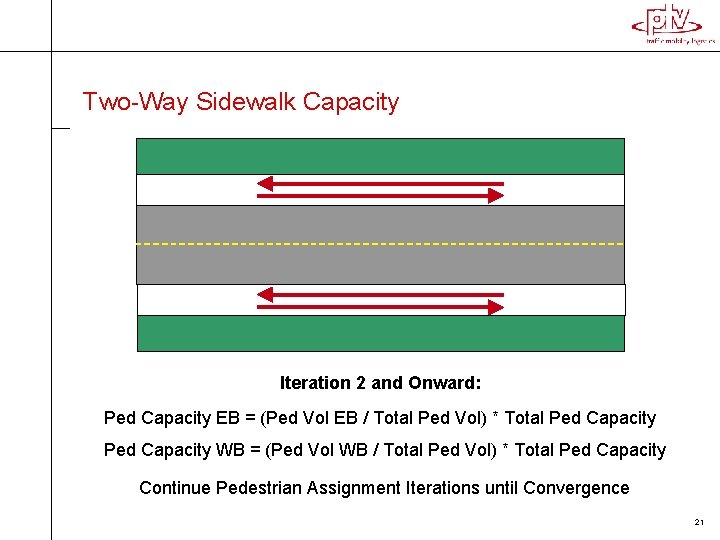
Two-Way Sidewalk Capacity Vehicle capacity = f (link width in one direction) Ped capacity = f (link width in both directions AND ped volume) 19
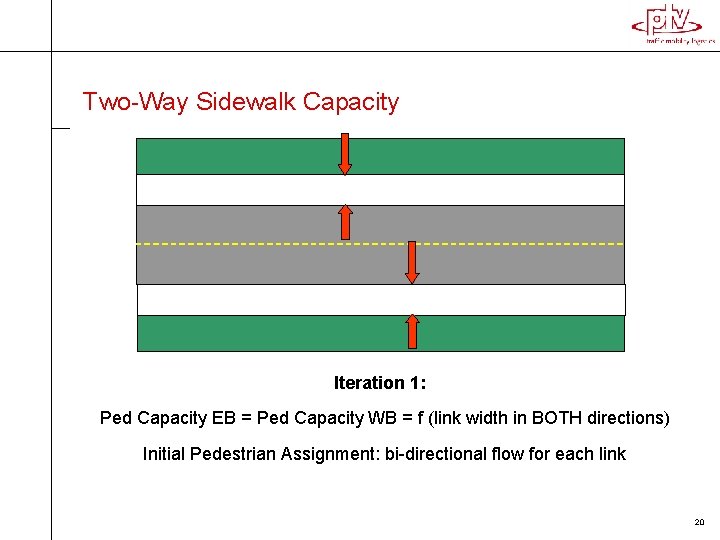
Two-Way Sidewalk Capacity Iteration 1: Ped Capacity EB = Ped Capacity WB = f (link width in BOTH directions) Initial Pedestrian Assignment: bi-directional flow for each link 20
Two-Way Sidewalk Capacity Iteration 2 and Onward: Ped Capacity EB = (Ped Vol EB / Total Ped Vol) * Total Ped Capacity WB = (Ped Vol WB / Total Ped Vol) * Total Ped Capacity Continue Pedestrian Assignment Iterations until Convergence 21
Vehicle-Pedestrian Interaction at Intersections Run Pedestrian Assignment to Obtain Flows for Each Crosswalk Update Vehicle Turn Capacity = f (Ped Volumes) Run Vehicle Assignment with Updated Vehicle Turn Capacity 22
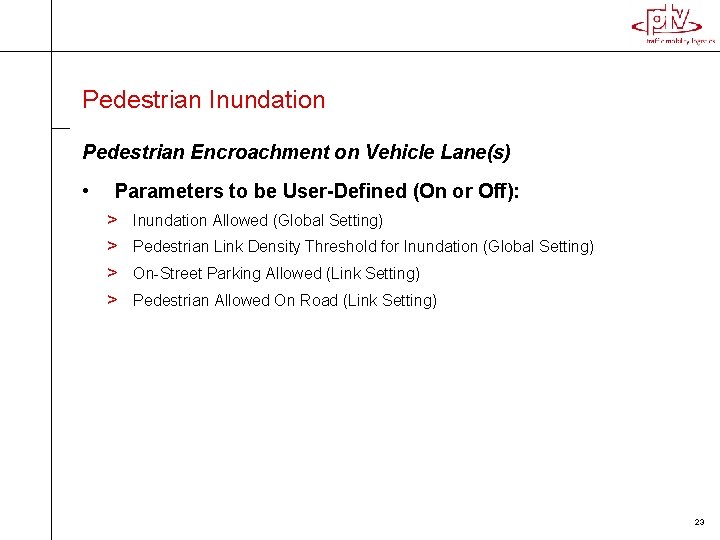
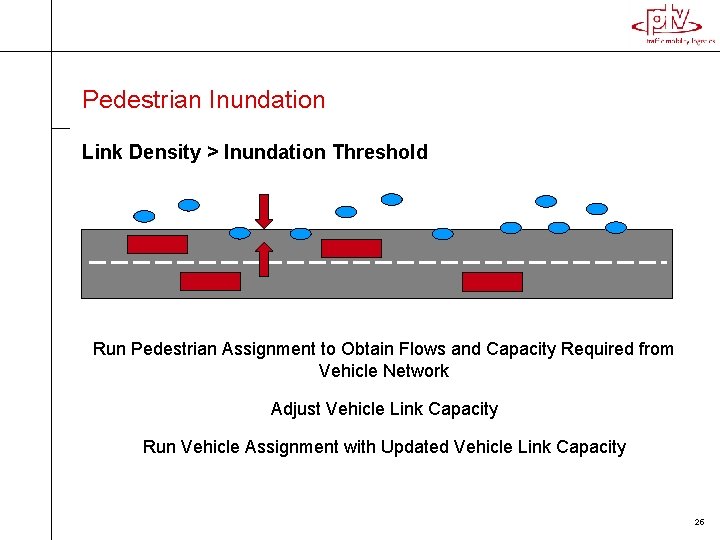
Pedestrian Inundation Pedestrian Encroachment on Vehicle Lane(s) • Parameters to be User-Defined (On or Off): > > Inundation Allowed (Global Setting) Pedestrian Link Density Threshold for Inundation (Global Setting) On-Street Parking Allowed (Link Setting) Pedestrian Allowed On Road (Link Setting) 23
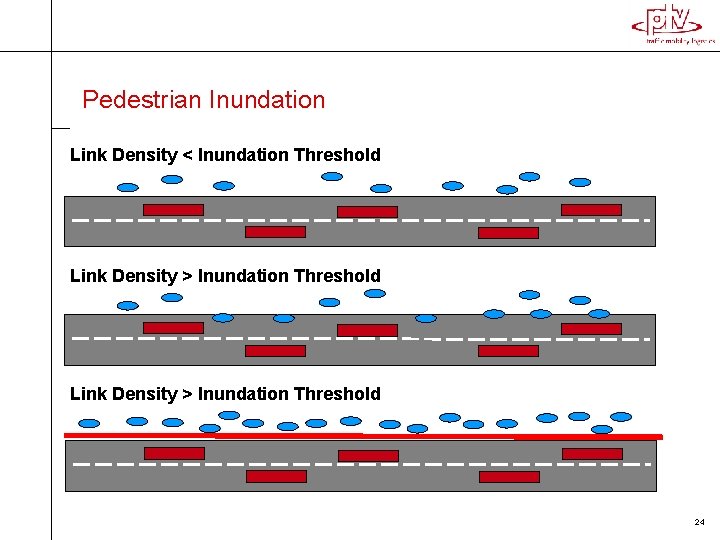
Pedestrian Inundation Link Density < Inundation Threshold Link Density > Inundation Threshold 24
Pedestrian Inundation Link Density > Inundation Threshold Run Pedestrian Assignment to Obtain Flows and Capacity Required from Vehicle Network Adjust Vehicle Link Capacity Run Vehicle Assignment with Updated Vehicle Link Capacity 25
DVTEMS Model Output • Volume by Time Interval and Mode • Pedestrian Density by Time Interval • Pedestrian Level of Service by Time Interval • Inundation Occurrence (Link Density > threshold and parameters allow for inundation) • Travel Times To/From Stadium by Mode 26
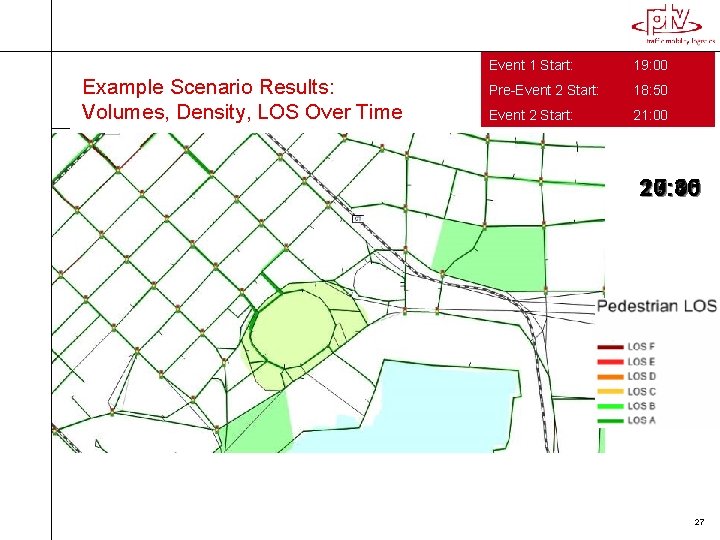
Example Scenario Results: Volumes, Density, LOS Over Time Event 1 Start: 19: 00 Pre-Event 2 Start: 18: 50 Event 2 Start: 21: 00 20: 30 17: 00 17: 45 17: 30 17: 15 18: 00 18: 45 18: 30 18: 15 19: 00 19: 45 19: 30 19: 15 20: 00 20: 15 27
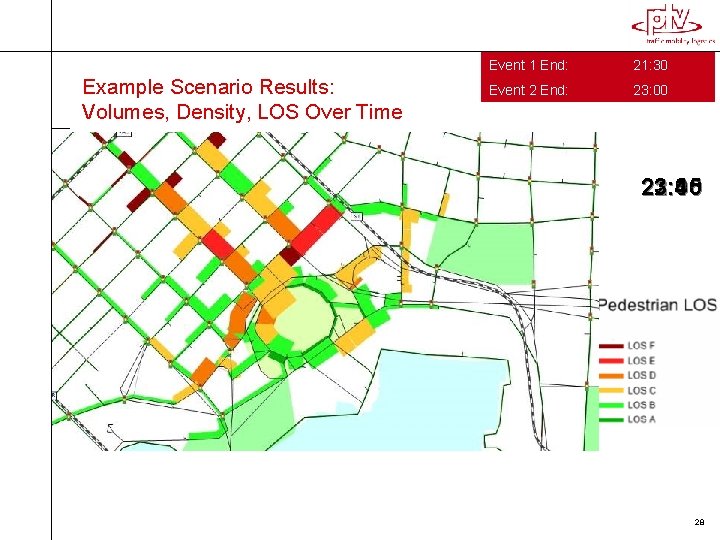
Example Scenario Results: Volumes, Density, LOS Over Time Event 1 End: 21: 30 Event 2 End: 23: 00 23: 45 21: 00 21: 45 21: 30 21: 15 22: 00 22: 45 22: 30 22: 15 23: 00 23: 15 23: 30 28
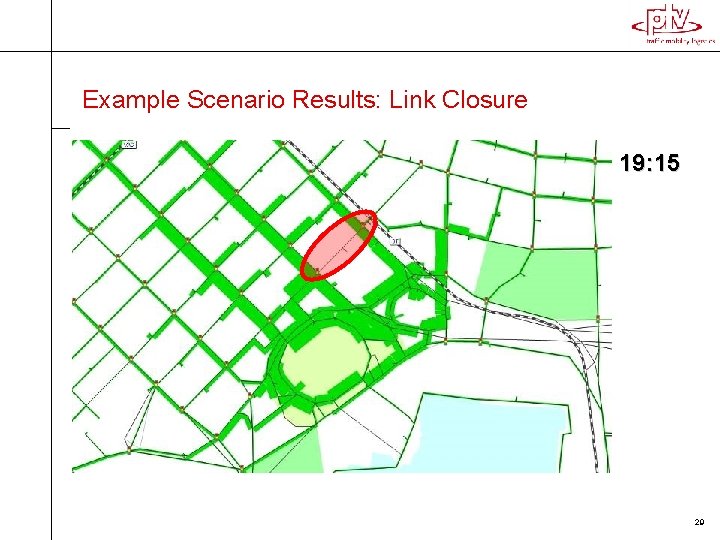
Example Scenario Results: Link Closure 19: 15 29
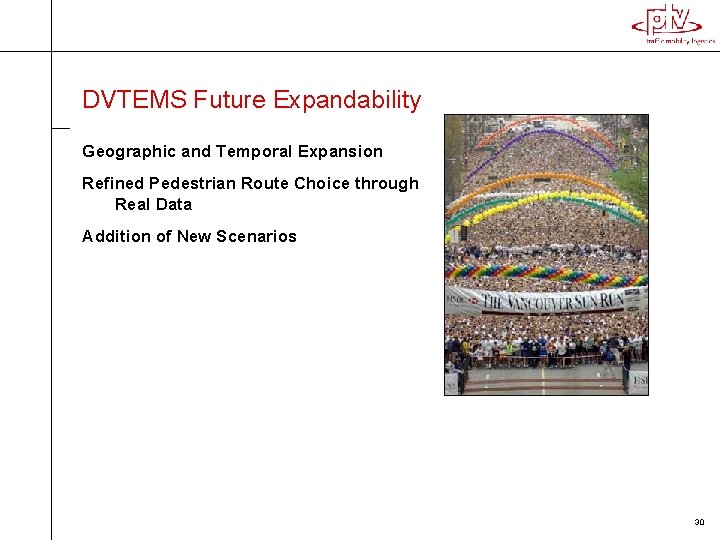
DVTEMS Future Expandability Geographic and Temporal Expansion Refined Pedestrian Route Choice through Real Data Addition of New Scenarios 30
www. ptvamerica. com Questions and Discussion Thank you for your attention. Special thanks to: University of Rome City of Vancouver Presentation Dedicated to Kean Lew, P. Eng. 31