www jst umn edu Chemical Waste An Introduction

- Slides: 7
www. jst. umn. edu Chemical Waste An Introduction
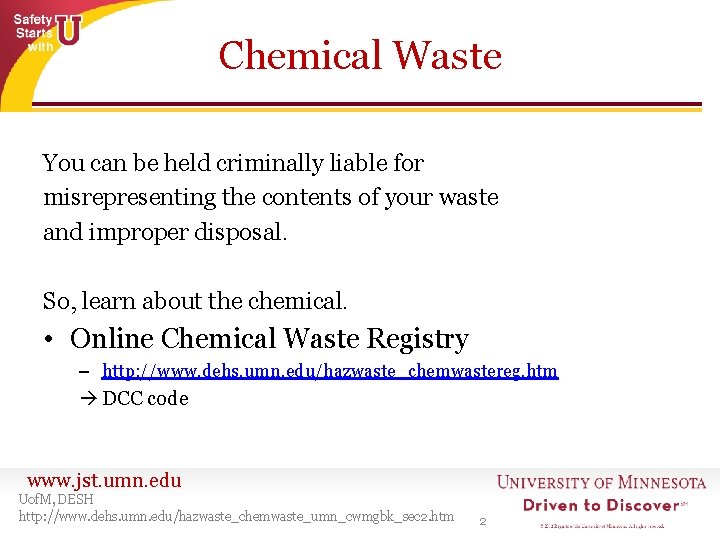
Chemical Waste You can be held criminally liable for misrepresenting the contents of your waste and improper disposal. So, learn about the chemical. • Online Chemical Waste Registry – http: //www. dehs. umn. edu/hazwaste_chemwastereg. htm à DCC code www. jst. umn. edu Uof. M, DESH http: //www. dehs. umn. edu/hazwaste_chemwaste_umn_cwmgbk_sec 2. htm 2
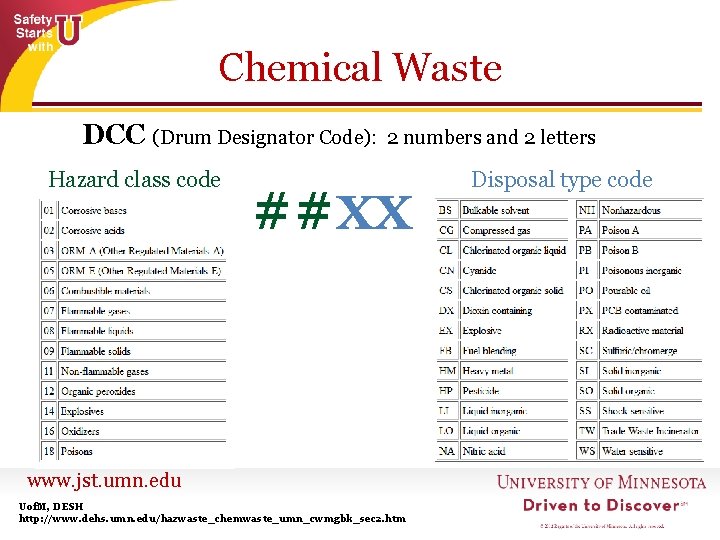
Chemical Waste DCC (Drum Designator Code): Hazard class code 2 numbers and 2 letters ##XX www. jst. umn. edu Uof. M, DESH http: //www. dehs. umn. edu/hazwaste_chemwaste_umn_cwmgbk_sec 2. htm Disposal type code
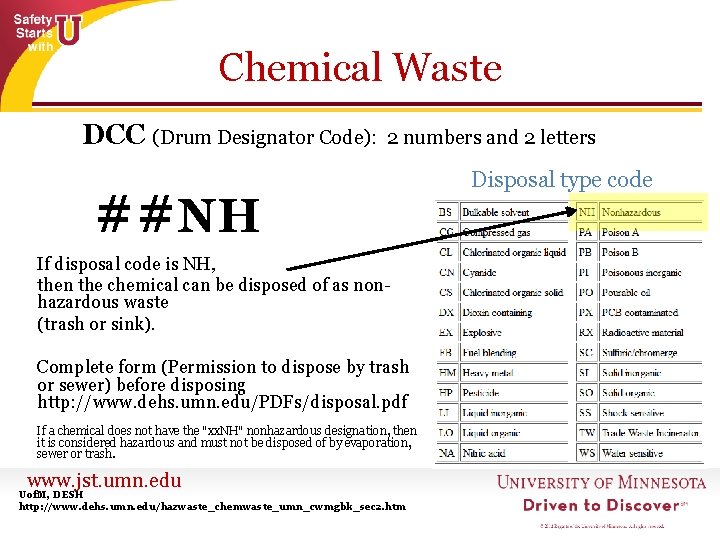
Chemical Waste DCC (Drum Designator Code): 2 numbers and 2 letters ##NH If disposal code is NH, then the chemical can be disposed of as nonhazardous waste (trash or sink). Complete form (Permission to dispose by trash or sewer) before disposing http: //www. dehs. umn. edu/PDFs/disposal. pdf If a chemical does not have the "xx. NH" nonhazardous designation, then it is considered hazardous and must not be disposed of by evaporation, sewer or trash. www. jst. umn. edu Uof. M, DESH http: //www. dehs. umn. edu/hazwaste_chemwaste_umn_cwmgbk_sec 2. htm Disposal type code
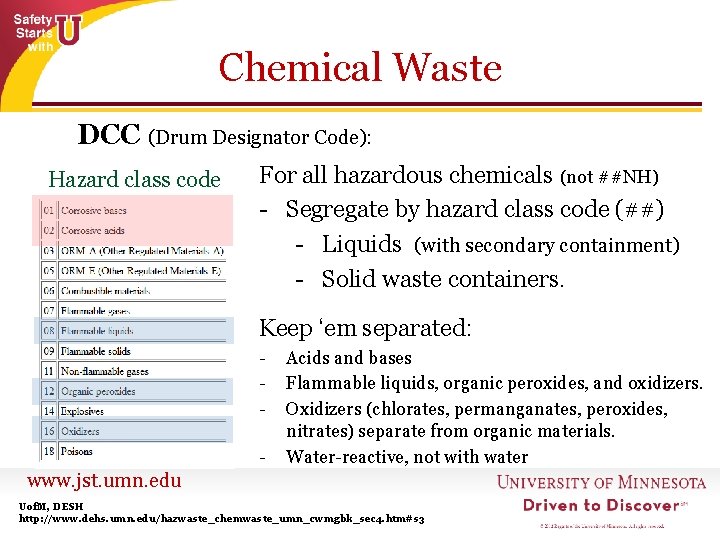
Chemical Waste DCC (Drum Designator Code): Hazard class code For all hazardous chemicals (not ##NH) - Segregate by hazard class code (##) - Liquids (with secondary containment) - Solid waste containers. Keep ‘em separated: - Acids and bases Flammable liquids, organic peroxides, and oxidizers. Oxidizers (chlorates, permanganates, peroxides, nitrates) separate from organic materials. Water-reactive, not with water www. jst. umn. edu Uof. M, DESH http: //www. dehs. umn. edu/hazwaste_chemwaste_umn_cwmgbk_sec 4. htm#s 3
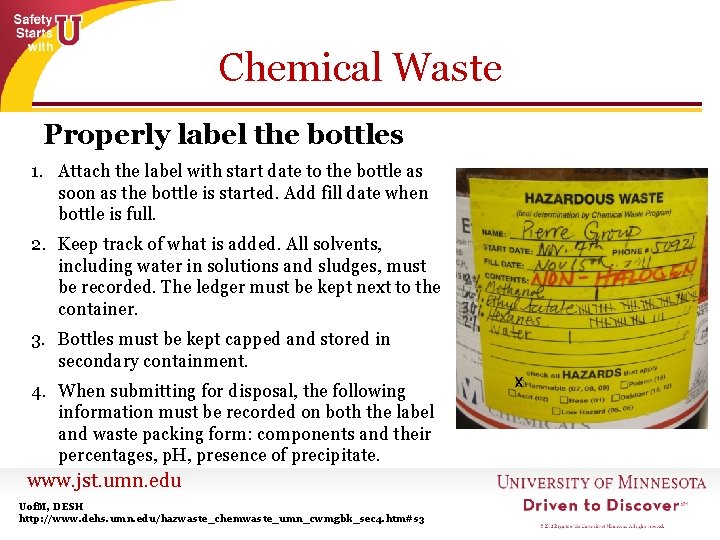
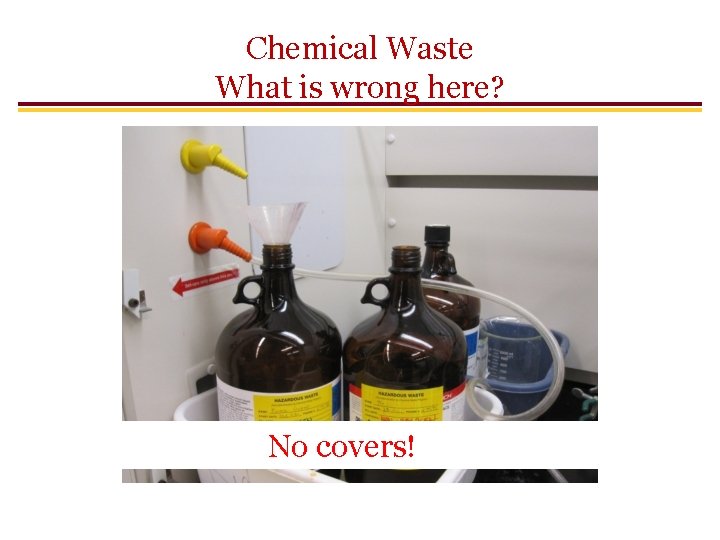
Chemical Waste Properly label the bottles 1. Attach the label with start date to the bottle as soon as the bottle is started. Add fill date when bottle is full. 2. Keep track of what is added. All solvents, including water in solutions and sludges, must be recorded. The ledger must be kept next to the container. 3. Bottles must be kept capped and stored in secondary containment. 4. When submitting for disposal, the following information must be recorded on both the label and waste packing form: components and their percentages, p. H, presence of precipitate. www. jst. umn. edu Uof. M, DESH http: //www. dehs. umn. edu/hazwaste_chemwaste_umn_cwmgbk_sec 4. htm#s 3 x
Chemical Waste What is wrong here? No covers!