
www ibm comcloud Mujdat Timurcin mujdattr ibm com
www. ibm. com/cloud Mujdat Timurcin mujdat@tr. ibm. com 1
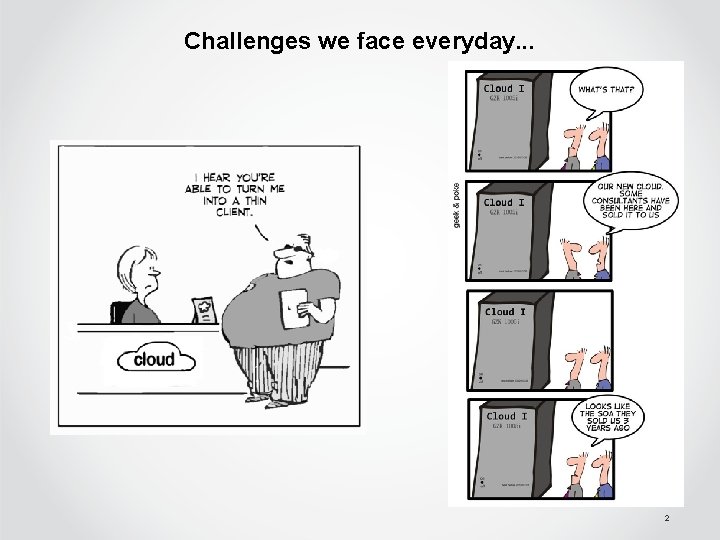
Challenges we face everyday. . . 2
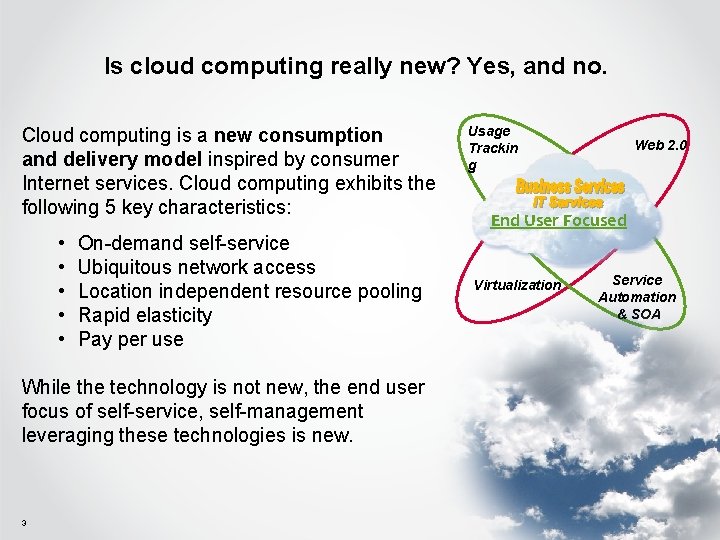
Is cloud computing really new? Yes, and no. Cloud computing is a new consumption and delivery model inspired by consumer Internet services. Cloud computing exhibits the following 5 key characteristics: • • • On-demand self-service Ubiquitous network access Location independent resource pooling Rapid elasticity Pay per use Usage Trackin g Web 2. 0 End User Focused Virtualization Service Automation & SOA While the technology is not new, the end user focus of self-service, self-management leveraging these technologies is new. 3 3
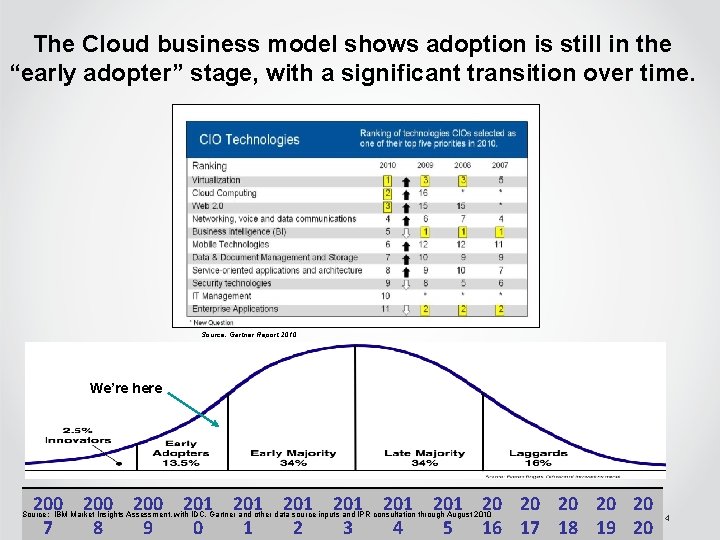
The Cloud business model shows adoption is still in the “early adopter” stage, with a significant transition over time. Source: Gartner Report 2010 We’re here 200 200 201 201 201 20 20 20 7 8 9 0 1 2 3 4 5 16 17 18 19 20 Source: IBM Market Insights Assessment, with IDC, Gartner and other data source inputs and IPR consultation through August 2010 4
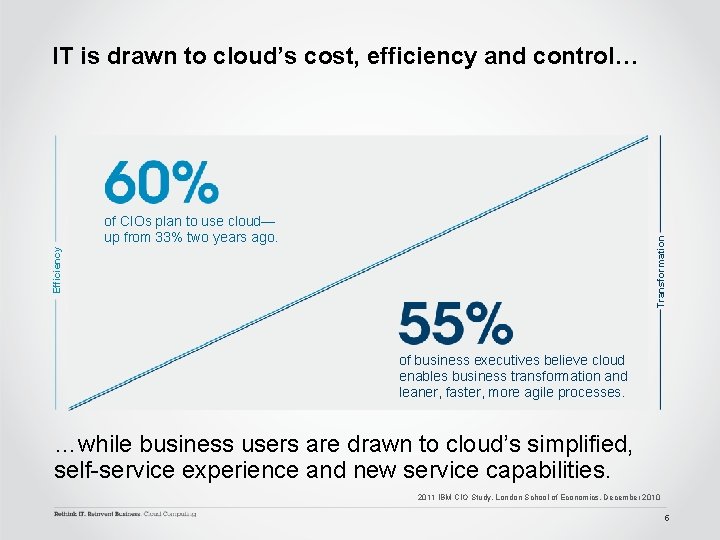
IT is drawn to cloud’s cost, efficiency and control… Efficiency Transformation of CIOs plan to use cloud— up from 33% two years ago. of business executives believe cloud enables business transformation and leaner, faster, more agile processes. …while business users are drawn to cloud’s simplified, self-service experience and new service capabilities. 2011 IBM CIO Study, London School of Economics, December 2010 5
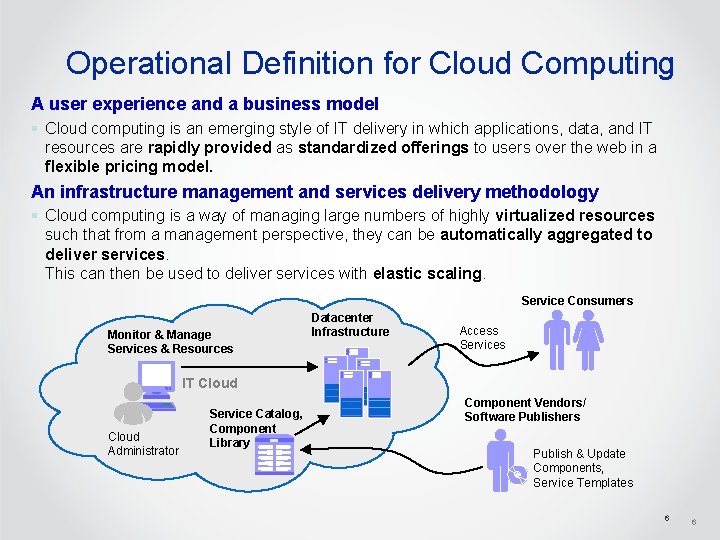
Operational Definition for Cloud Computing A user experience and a business model § Cloud computing is an emerging style of IT delivery in which applications, data, and IT resources are rapidly provided as standardized offerings to users over the web in a flexible pricing model. An infrastructure management and services delivery methodology § Cloud computing is a way of managing large numbers of highly virtualized resources such that from a management perspective, they can be automatically aggregated to deliver services. This can then be used to deliver services with elastic scaling. Service Consumers Monitor & Manage Services & Resources Datacenter Infrastructure Access Services IT Cloud Administrator Service Catalog, Component Library Component Vendors/ Software Publishers Publish & Update Components, Service Templates 6 6
Cloud Computing – A Business Value Cloud computing is a model for enabling cost effective business outcomes through the use of shared application and computing services. The value …. if possible …. is better economics in the execution of business processes. 7
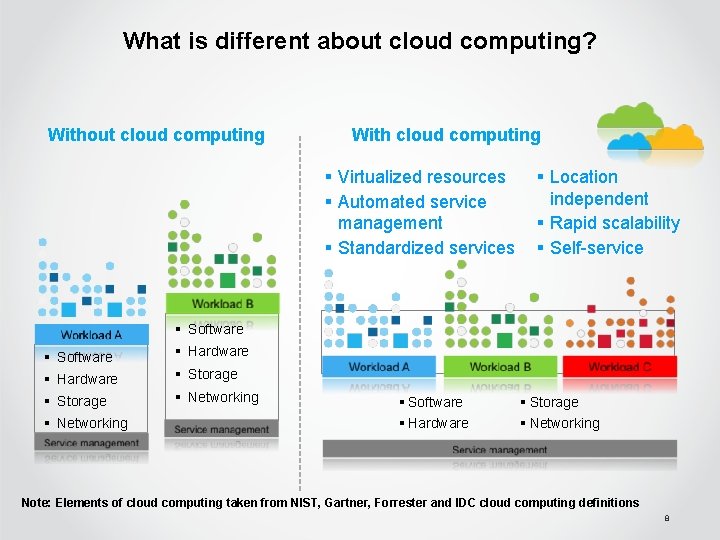
What is different about cloud computing? Without cloud computing With cloud computing § Virtualized resources § Automated service management § Standardized services § Location independent § Rapid scalability § Self-service § Software § Hardware § Storage § Networking Note: Elements of cloud computing taken from NIST, Gartner, Forrester and IDC cloud computing definitions 8
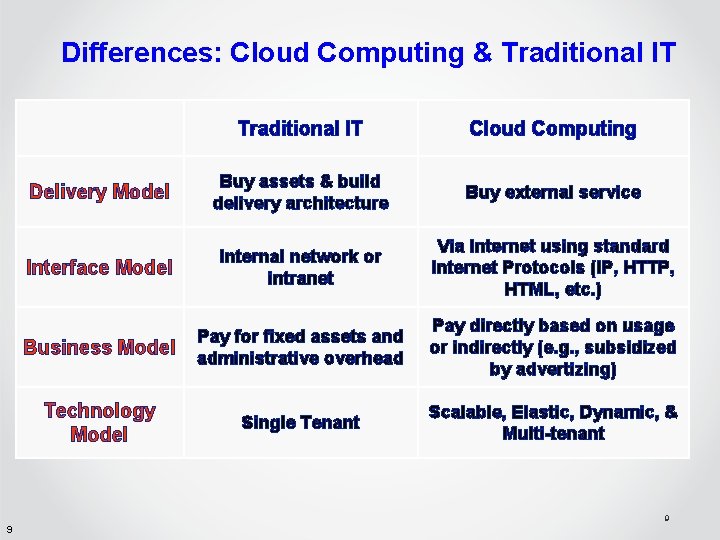
Differences: Cloud Computing & Traditional IT Cloud Computing Delivery Model Buy assets & build delivery architecture Buy external service Interface Model Internal network or intranet Via Internet using standard Internet Protocols (IP, HTTP, HTML, etc. ) Business Model Pay for fixed assets and administrative overhead Pay directly based on usage or indirectly (e. g. , subsidized by advertizing) Technology Model Single Tenant Scalable, Elastic, Dynamic, & Multi-tenant 9 9
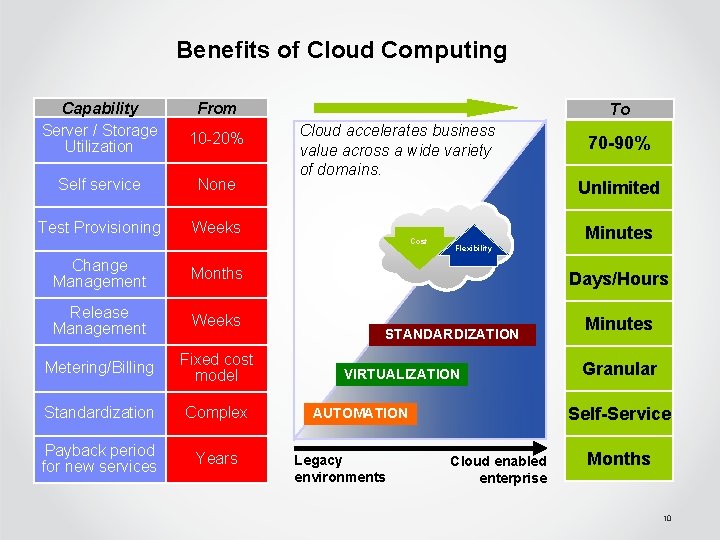
Benefits of Cloud Computing Capability Server / Storage Utilization From 10 -20% Self service None Test Provisioning Weeks Change Management Months Release Management Weeks Metering/Billing Fixed cost model Standardization Complex Payback period for new services Years To Cloud accelerates business value across a wide variety of domains. Cost 70 -90% Unlimited Minutes Flexibility Days/Hours STANDARDIZATION VIRTUALIZATION Granular Self-Service AUTOMATION Legacy environments Minutes Cloud enabled enterprise Months 10
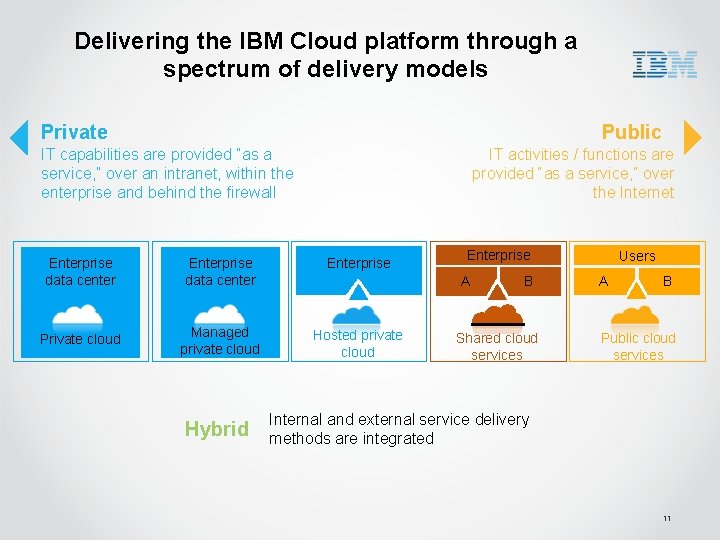
Delivering the IBM Cloud platform through a spectrum of delivery models Private Public IT capabilities are provided “as a service, ” over an intranet, within the enterprise and behind the firewall IT activities / functions are provided “as a service, ” over the Internet Enterprise data center Enterprise Private cloud Managed private cloud Hosted private cloud Hybrid Enterprise A B Shared cloud services Users A B Public cloud services Internal and external service delivery methods are integrated 11
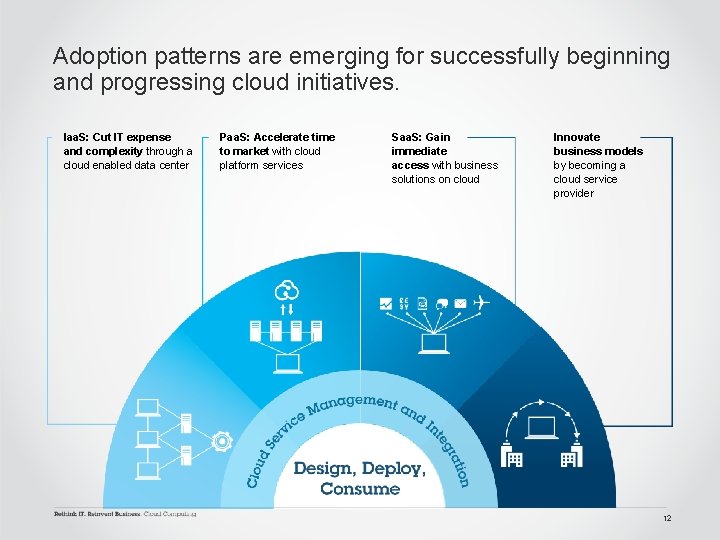
Adoption patterns are emerging for successfully beginning and progressing cloud initiatives. Iaa. S: Cut IT expense and complexity through a cloud enabled data center Paa. S: Accelerate time to market with cloud platform services Saa. S: Gain immediate access with business solutions on cloud Innovate business models by becoming a cloud service provider 12
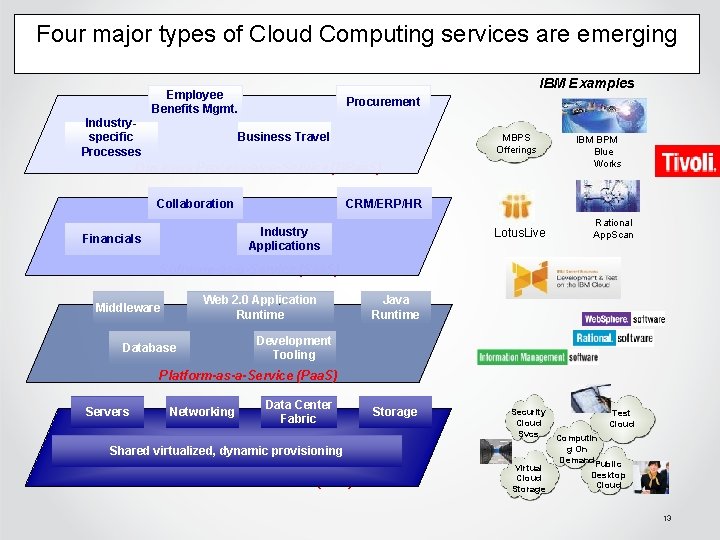
Four major types of Cloud Computing services are emerging IBM Examples Employee Benefits Mgmt. Industryspecific Processes Procurement Business Travel MBPS Offerings Business Process-as-a-Service (BPaa. S) Collaboration CRM/ERP/HR Industry Applications Financials IBM BPM Blue Works Lotus. Live Rational App. Scan Software-as-a-Service (Saa. S) Web 2. 0 Application Runtime Middleware Database Java Runtime Development Tooling Platform-as-a-Service (Paa. S) Servers Networking Data Center Fabric Storage Security Cloud Svcs Shared virtualized, dynamic provisioning Infrastructure-as-a-Service (Iaa. S) Virtual Cloud Storage Test Cloud Computin g On Demand Public Desktop Cloud 13
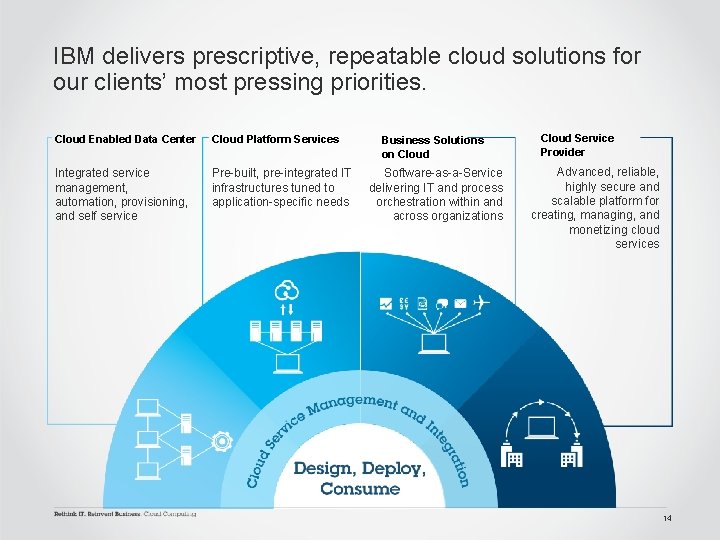
IBM delivers prescriptive, repeatable cloud solutions for our clients’ most pressing priorities. Cloud Enabled Data Center Cloud Platform Services Integrated service management, automation, provisioning, and self service Pre-built, pre-integrated IT infrastructures tuned to application-specific needs Business Solutions on Cloud Software-as-a-Service delivering IT and process orchestration within and across organizations Cloud Service Provider Advanced, reliable, highly secure and scalable platform for creating, managing, and monetizing cloud services 14
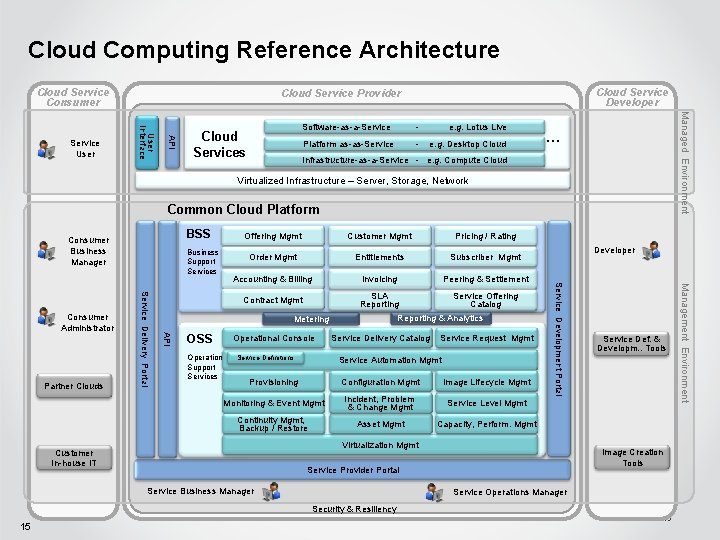
Cloud Computing Reference Architecture Cloud Service Consumer Cloud Services Software-as-a-Service - e. g. Lotus Live Platform as-as-Service - e. g. Desktop Cloud Managed Environment API User Interface Service User Cloud Service Developer Cloud Service Provider … Infrastructure-as-a-Service - e. g. Compute Cloud Virtualized Infrastructure – Server, Storage, Network Common Cloud Platform BSS Consumer Business Manager Order Mgmt Entitlements Subscriber Mgmt Accounting & Billing Invoicing Peering & Settlement Contract Mgmt SLA Reporting Service Offering Catalog Reporting & Analytics OSS Operational Console Operational Service Definitions Support Services Service Delivery Catalog Service Automation Mgmt Provisioning Configuration Mgmt Image Lifecycle Mgmt Monitoring & Event Mgmt Incident, Problem & Change Mgmt Service Level Mgmt Continuity Mgmt, Backup / Restore Asset Mgmt Capacity, Perform. Mgmt Virtualization Mgmt Customer In-house IT Service Def. & Developm. . Tools Image Creation Tools Service Provider Portal Service Business Manager Service Operations Manager Security & Resiliency 15 Service Request Mgmt Developer 15 Management Environment Pricing / Rating Service Development Portal Customer Mgmt Metering API Partner Clouds Service Delivery Portal Consumer Administrator Business Support Services Offering Mgmt
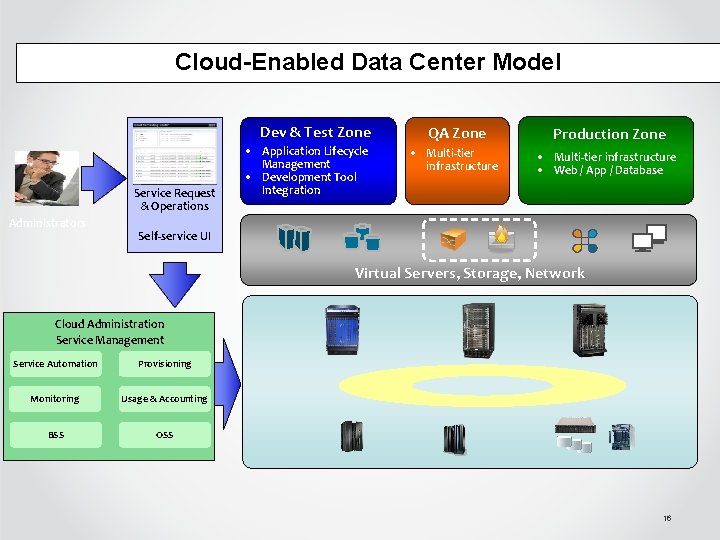
Cloud-Enabled Data Center Model Dev & Test Zone Service Request & Operations Administrators • Application Lifecycle Management • Development Tool Integration QA Zone Production Zone • Multi-tier infrastructure • Web / App / Database Self-service UI Virtual Servers, Storage, Network Cloud Administration Service Management Service Automation Provisioning Monitoring Usage & Accounting BSS OSS 16
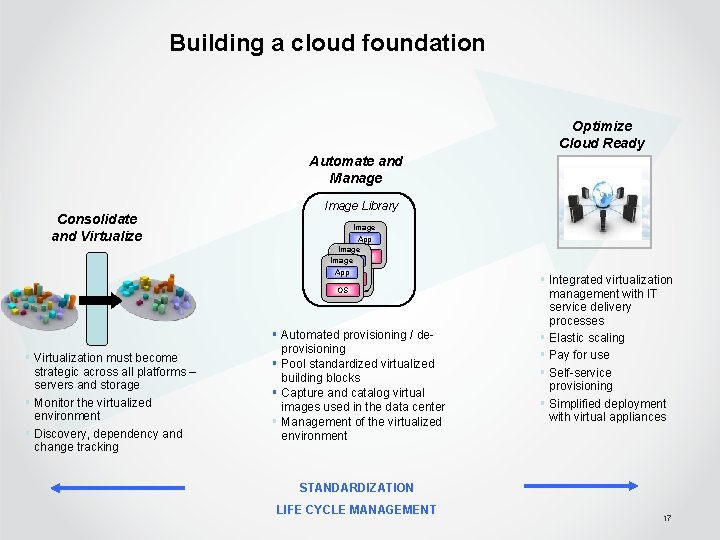
Building a cloud foundation Optimize Cloud Ready Automate and Manage Consolidate and Virtualize § Virtualization must become strategic across all platforms – servers and storage § Monitor the virtualized environment § Discovery, dependency and change tracking Image Library Image App Image. OS Image App App OS OS OS § Automated provisioning / deprovisioning § Pool standardized virtualized building blocks § Capture and catalog virtual images used in the data center § Management of the virtualized environment § Integrated virtualization management with IT service delivery processes § Elastic scaling § Pay for use § Self-service provisioning § Simplified deployment with virtual appliances STANDARDIZATION LIFE CYCLE MANAGEMENT 17
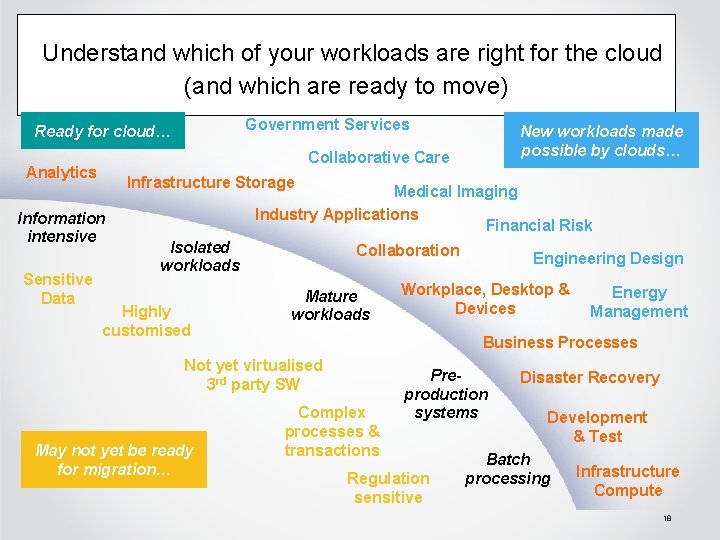
Understand which of your workloads are right for the cloud (and which are ready to move) Government Services Ready for cloud… Collaborative Care Analytics Infrastructure Storage Information intensive Sensitive Data New workloads made possible by clouds… Medical Imaging Industry Applications Financial Risk Isolated workloads Highly customised Collaboration Mature workloads Workplace, Desktop & Devices Energy Management Business Processes Not yet virtualised 3 rd party SW May not yet be ready for migration… Engineering Design Complex processes & transactions Preproduction systems Regulation sensitive Disaster Recovery Development & Test Batch processing Infrastructure Compute 18
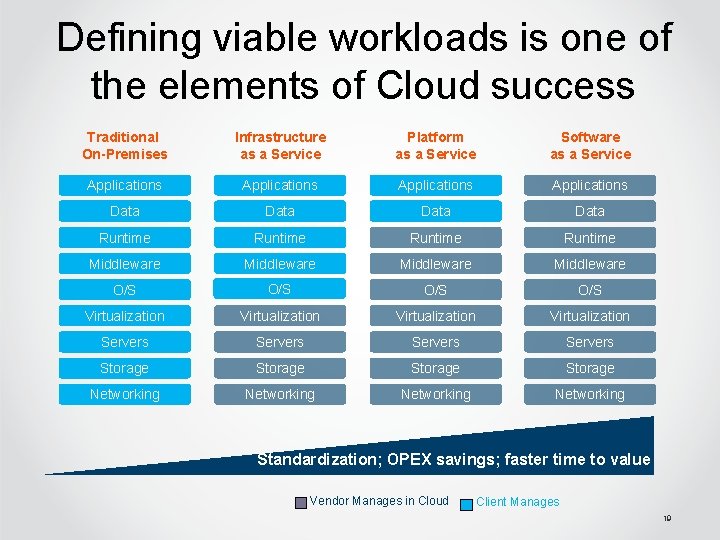
Defining viable workloads is one of the elements of Cloud success Traditional On-Premises Infrastructure as a Service Platform as a Service Software as a Service Applications Data Runtime Middleware O/S O/S Virtualization Servers Storage Networking Standardization; OPEX savings; faster time to value Vendor Manages in Cloud Client Manages 19
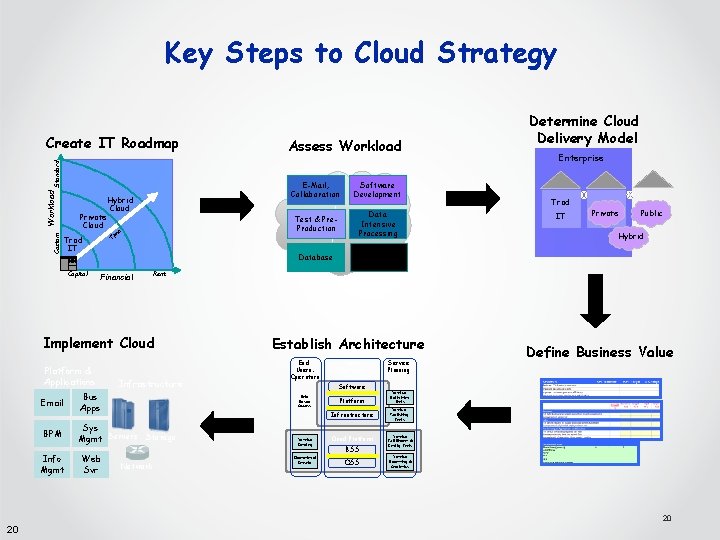
Key Steps to Cloud Strategy Workload Standard Create IT Roadmap m Trad IT Capital Financial Platform & Applications BPM Info Mgmt Software Development Test & Pre. Production Data Intensive Processing Database ERP Infrastructure Bus Apps Establish Architecture End Users, Operators Cloud Services Software Role Based Access Platform Infrastructure Sys Mgmt Servers Storage Web Svr Enterprise Trad IT Private Public Hybrid Rent Implement Cloud Email E-Mail, Collaboration Ti Custom e Private Cloud Hybrid Cloud Assess Workload Determine Cloud Delivery Model Network Service Catalog Operational Console Cloud Platform BSS OSS Service Planning Define Business Value Service Definition Tools Service Publishing Tools Service Fulfillment & Config Tools Service Reporting & Analytics 20 20
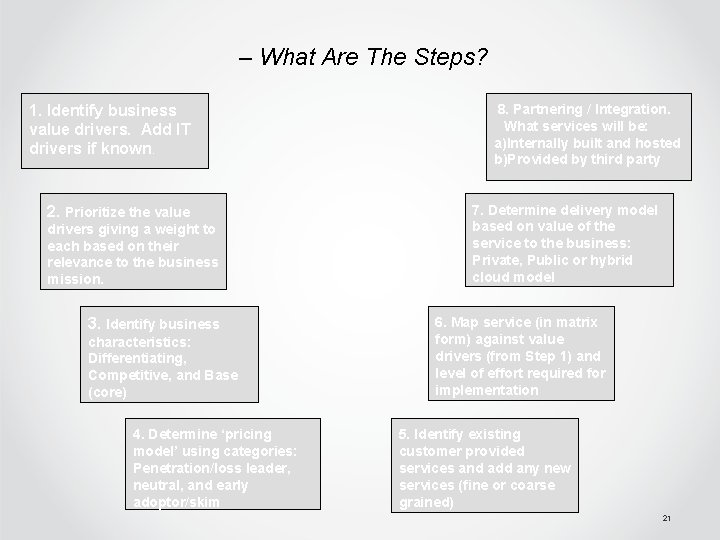
– What Are The Steps? 1. Identify business value drivers. Add IT drivers if known. 2. Prioritize the value drivers giving a weight to each based on their relevance to the business mission. 3. Identify business characteristics: Differentiating, Competitive, and Base (core) 4. Determine ‘pricing model’ using categories: Penetration/loss leader, neutral, and early adoptor/skim 8. Partnering / Integration. What services will be: a)Internally built and hosted b)Provided by third party 7. Determine delivery model based on value of the service to the business: Private, Public or hybrid cloud model 6. Map service (in matrix form) against value drivers (from Step 1) and level of effort required for implementation 5. Identify existing customer provided services and add any new services (fine or coarse grained) 21
- Slides: 21